Khaled Mahmoued

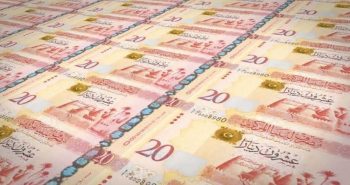
On the surface, Libya appears to have achieved a historic breakthrough. For the first time in over a decade, a unified national budget of 190 billion dinars (approximately $30 billion) has been approved. This comes at a time when oil production has surged to its highest level in more than ten years, reaching 1.43 million barrels per day.
Yet these positive indicators have not dampened mounting warnings that the Libyan economy is progressively morphing into a “distorted economy”, one fueled by rentier spending, structural corruption, and organized smuggling, all persisting under the shadow of ongoing political and institutional fractures.
Financial Triumphs
With the signing of the unified budget last April, and its approval by both the House of Representatives and the High Council of State, funds were allocated across salaries, subsidies, development, and operational expenses.
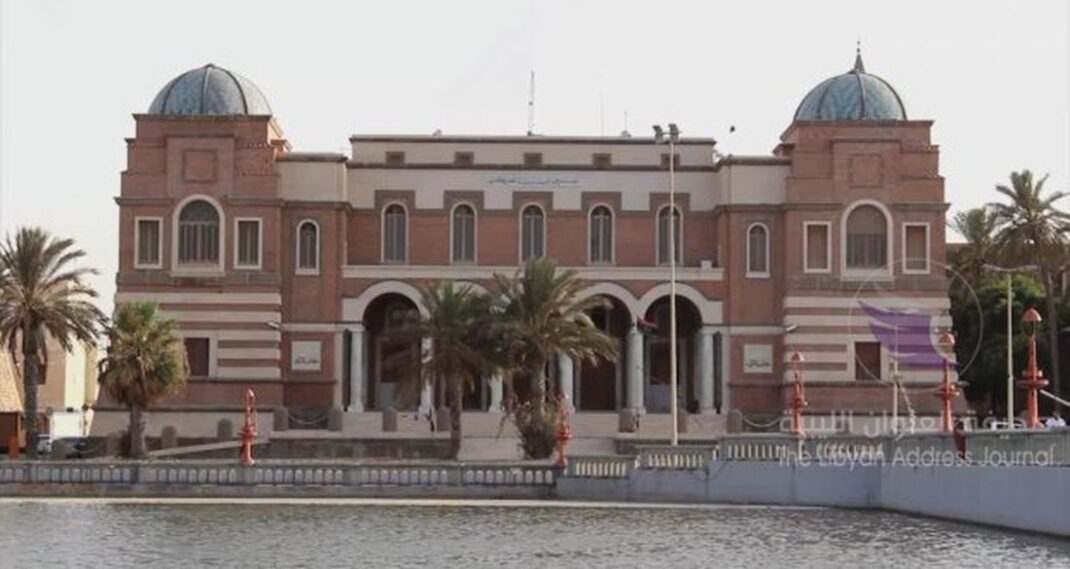
Central Bank Governor Naji Issa described the move as “progress toward financial stability and national unity, and a clear declaration of Libya’s ability to transcend its differences when there is a unified vision for its future.” This milestone has been widely promoted as proof of restored relative stability in the oil sector, the backbone of the Libyan economy.
However, this recovery remains highly fragile. It is directly tied to short-term and volatile political and security understandings, alongside the precarious stability of the electricity grid and oil infrastructure. Over-reliance on oil revenues leaves the Libyan economy exposed to any sudden security disruption or global drop in oil prices.
In this context, the World Bank warns that excessive dependence on oil revenues, without structural institutional reforms, “exposes the country to recurrent cycles of fragility and instability,” particularly given the chronic weakness of oversight bodies and the deeply entangled economic interests linking various factions and armed groups.
The Distorted Economy
Despite soaring oil revenues, UN warnings are escalating that Libya is heading toward a textbook model of a “distorted economy.” Public spending is inflating at a pace that far outstrips the productive capacity of the actual economy, while non-oil sectors continue to shrink. The result is a country increasingly dependent on state subsidies and government transfers.
In her recent briefing to the UN Security Council, Acting Head of the United Nations Support Mission in Libya, Hanna Tetteh warned of a total absence of a development vision and a gridlocked political roadmap.
The pointed to a “distorted economy” entirely reliant on patronage and the purchasing of temporary civil peace through the aggressive expansion of consumer spending.
The new budget allocates 37 billion dinars for public salaries and wages, alongside another 37 billion dinars for subsidies. Combined with salaries and the operational costs of competing governments, these categories swallow the lion’s share of the budget.
Additionally, 18 billion dinars have been earmarked for family grants and allowances. This pattern underscores a persistent rentier economy designed to buy political and social loyalties rather than build a sustainable, productive economic model. As a result, real productive investment remains heavily restricted.
This imprudent spending depletes the state’s strategic reserves, leaving Libya entirely at the mercy of global energy market fluctuations and any forced closures that armed groups might impose on oil fields and terminals at any moment.
Here lies the stark contradiction: despite improved revenues, basic public services like electricity, healthcare, and infrastructure remain in a state of collapse.
Meanwhile, inflation continues to rise and purchasing power deteriorates, proving that the Libyan crisis is no longer a crisis of resources. It is fundamentally a crisis of governance, management, and wealth distribution.
The $20 Billion Bleeding Wound
One of the most dangerous symptoms of this economic distortion is the fuel subsidy system.
What was meant to be a social safety net protecting vulnerable populations has transformed into a massive parallel economy — a “cash cow” exploited by transnational corruption networks, smugglers, and armed militias. According to an investigative report, “fuel smuggling in Libya has escalated into a major national crisis and a massive illicit profit-making enterprise run by state-linked political and security actors, costing the country staggering losses exceeding $20 billion between 2022 and 2024.”
In the same vein, the International Crisis Group confirmed that Libyan authorities purchase fuel with hard currency from global markets at premium prices, only to sell it locally at heavily subsidized nominal rates. Armed groups then intercept, transport, and smuggle this fuel across the Mediterranean and land borders to resell it at international black-market prices. According to the Libyan Audit Bureau, the skyrocketing fuel import bill now consumes nearly 40% of total oil revenues.
This represents a systematic and continuous drain that empties the unified budget of its intended developmental value, turning it instead into a mechanism for funding parallel entities.
It also exposes how smuggling networks have become “directly linked to powerful figures within the security and political establishments,” thereby providing a sustainable source of financing for armed groups and the informal economy.
Perpetuating Division
Beyond the financial balance sheets, geopolitical analysts argue that the 190-billion-dinar budget is nothing more than a meticulously crafted “political trap” that entrenches and institutionalizes division rather than resolving it.
The sudden availability of these massive cash flows directly dilutes any incentives for the competing ruling elites in the East and West to make genuine concessions toward a comprehensive settlement or the long-delayed legislative and presidential elections.
International studies warn that the oil boom could easily become a factor that solidifies a war economy, strengthening corruption networks and armed militias at the expense of institutional stability.
The International Crisis Group noted that massive oil revenue inflows “reduce the incentives for rival parties to reach a permanent political settlement,” because continued division allows armed and political elites to benefit from a quota-based economy and retain control over state resources.
The flow of money and the quota-based distribution of budget lines provide parallel entities and their affiliated militias with the resources needed to maintain the status quo.
Instead of using the budget as an international leverage tool to enforce structural and political reform, it has been converted into a financial umbrella to fund networks of influence and buy the loyalty of warlords and armed factions.
Consequently, experts warn that the uninterrupted flow of oil money, in the absence of a comprehensive political settlement, will effectively “solidify a militarized rentier economy.” In such a system, controlling state institutions and oil fields becomes part of the power-sharing equation among rival factions, rather than a stepping stone toward building a stable state.
A “Financial Truce”
The adoption of a unified budget is undeniably an important symbolic step, but the gravest danger lies not in its size, but in how it is managed.
Instead of serving as a gateway to rebuilding the state, it risks becoming a new tool to feed networks of influence and cronyism between power centers in the East and West.
Without radical reforms to the subsidy system, and without a genuine unification of security and financial institutions, the 2026 budget may pivot from an opportunity to salvage the state into a mere “financial truce.”
It would only delay the next inevitable explosion, deepen Libya’s crippling addiction to oil rents, and push true stability further out of reach.
__________________