Michael Rubin

The U.S. Should Recognize That Having Dual Capitals, Rather than Centralization, Is Necessary for Stability in a Diverse, Tribal Society.
On June 18, 2026, U.S. Special Envoy Massad Boulos unveiled a plan to end years of division inside Libya. “Our plan is to have one unified government and to unify all the institutions,” he said.
That makes sense. Since the fall of Libyan leader Muammar Qadhafi in 2011 against the backdrop of the Arab Spring, Libyan unity has shattered. Initially, dozens of armed groups—Islamist, nationalist, and tribal—arose. Eventually they consolidated, keeping Libya unified in name but effectively divided.
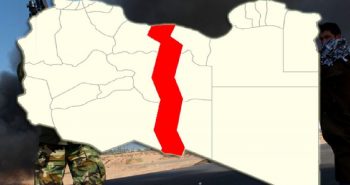
Today, Prime Minister Abd al-Hamid Dbeibeh rules about 30 percent of the country from Tripoli, while Field Marshall Khalifa Haftar and his son Saddam, leaders of the Libyan National Army, control the remaining 70 percent, from Benghazi.
In effect, both Tripoli and Benghazi have become capitals. For the State Department, this bifurcation is bad. Often, such divisions are. But, in Libya, such strident conclusions display ignorance of history.
After Qadhafi seized power in Libya in 1969, he made Tripoli the unitary capital of Libya. Almost every living U.S. and European diplomat has lived in a world where Tripoli has been Libya’s sole capital. But this was not always the case. Libya is a relatively recent construct.
Italy seized what is now Libya from the Ottoman Empire in 1911 and 1912. At the time, the region was composed of two territories: Cyrenaica, whose largest city is Benghazi, and Tripolitania, centered around Tripoli.
Only in 1934 did Italy unite Cyrenaica and Tripolitania under a single administration. It was then that the international community and, to a lesser extent, the local population began referring to their country as Libya and themselves as Libyans.
During World War II, the British and French invaded the region. In 1949, the Emirate of Cyrenaica won both independence and British recognition, while the British continued to occupy Tripolitania.
Two years later, representatives of Cyrenaica, Tripolitania, and the southern desert Fezzan region joined to form the Kingdom of Libya, with each region having autonomy. The Kingdom considered Tripoli and Benghazi as co-equal capitals.
Indeed, Article 188 of the 1951 Libyan Constitution declared, “The Kingdom of Libya has two capitals: Tripoli and Benghazi.”
Nor would Libya be the only country to have multiple capitals. Bolivia, the Netherlands, the Côte D’Ivoire, and Malaysia all have two capitals; South Africa has three. While the European Union does not have an official capital city, it has administrative and institutional centers in Brussels, Strasbourg, and Luxembourg.
Back to Libya: Qadhafi consolidated control over the country in Tripoli, often chafing those in Benghazi and the broader Cyrenaica who saw their local autonomy eroded if not purposely disrespected.
While Qadhafi often excused his repression of Benghazi and its environs in terms of counterterrorism, the irony is that Tripoli today remains the center of Islamist terrorism and Benghazi is more outwardly tolerant, secure, and cosmopolitan.
Still, U.S. and European policy—largely because of the West’s own historical ignorance—has been more Qadhafi-like than Qadhafi, at least in terms of centralization. Such inflexibility has undermined Libyan security and given sustenance to extremists and terrorists.
While Islamists lost the 2012 elections badly, 48 percent to 10 percent, with several smaller parties taking the rest, fear that the Qatar- and Turkey-backed Islamists might turn to violence put European officials and Secretary of State Hillary Clinton into appeasement mode. Western diplomats negotiated a big-tent government so the Islamists could participate.
After various elections and constitutional iterations since, the State Department and international community have widely sought to promote unity, but they have done so through the lens that unity must come through broad recognition of the Tripoli-based government, rather than any understanding, acceptance, or recognition that the Benghazi-based government enjoys greater legitimacy among its people, better defends Libyan sovereignty against outside powers, and enjoys greater stability and security.
Boulos has declared, “Our plan is to have one unified government and to unify all the institutions.” That is noble. But, Boulos should not double down on the failed strategies pursued by the Obama and Biden administrations, nor should he operate on the assumption that the government in Benghazi is lesser or illegitimate because it is not in Tripoli. Instead, the United States should recognize that having dual capitals, rather than centralization, is necessary for stability in a diverse, tribal society like Libya’s. The United States should accommodate regionalism as Libya’s founders did, rather than doubling down on Qadhafi’s centralization.
Boulos also should not assume that the international recognition granted to Tripoli is legitimate or wise; the United States should recognize its arbitrariness and the fact that any democratic legitimacy Tripoli’s leaders once could claim has long since expired.
Unifying the armed forces is wise and would be low-hanging fruit. Both the Libyan Armed Forces and the Libyan National Army coordinate and largely understand they face a joint challenge, not from each other but from the militias that Dbeibeh protects. The same is true with the intelligence services. Tripoli’s intelligence chief already coordinates with Benghazi and, when he visits, the trust is strong enough that he does so with minimal security.
This leaves politics. Libyans have reportedly agreed to elections in February 2027. The United States should support these, and international observers should monitor them. The White House should not repeat the mistake of George W. Bush administration when, in the rush to see Palestinian elections, the State Department acquiesced to the participation of groups like Hamas that wielded militias. If Dbeibeh continues to protect militias, the U.S. State and Treasury Departments should designate him a terrorist.
Indeed, Libyans repeatedly show they want a nationalist, not an Islamist, future. The United States should support that ambition, even if it means dual capitals and the Haftars expanding their influence throughout the entirety of the country.
_____________________