Archive - April 2023

For Libyans, Elections Are Just Part of the Path to Peace

The international community has lined up in support of the U.N.’s new election initiative, but Libyans have their own ideas of who should lead.

Thomas M. Hill

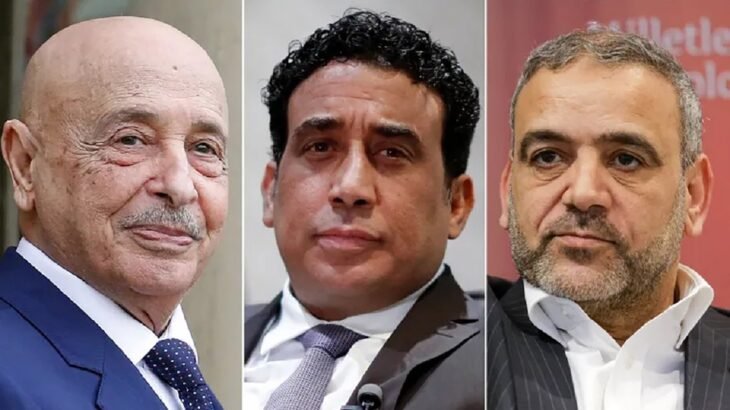
In mid-March, a delegation of prominent Libyans traveled to Washington carrying an important message: a new U.N. initiative focused on holding elections is welcome but it must be part of a bigger, comprehensive reconciliation effort to bring peace and stability to Libya. According to the deputy head of Libya’s Presidential Council, Abdullah Al-Lafi, reconciliation — and elections — can only be achieved by Libyans themselves.

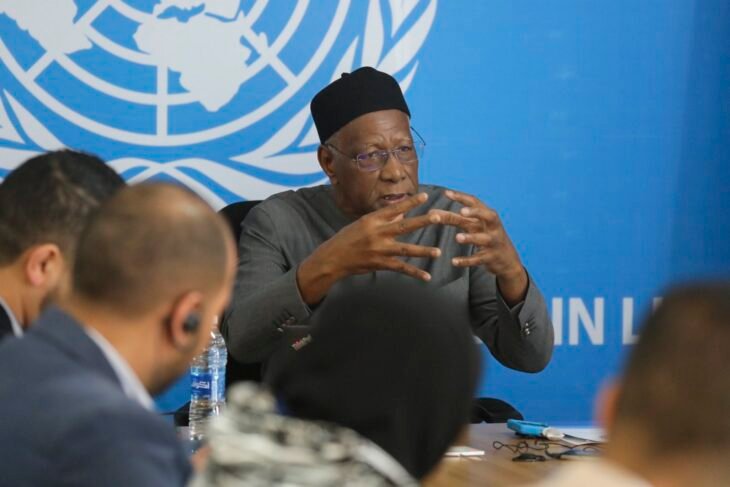
In Washington, Al-Lafi and the members of his delegation presented their own initiative for a national reconciliation project in order to create a Libyan-led process that complements the plan for elections proposed by U.N. Special Representative of the Secretary-General for Libya Abdoulaye Bathily.

Over a decade into Libya’s conflict, the war’s dividing lines seem frozen in place. The U.N.-backed Government of National Unity based in Tripoli (the west) vies for power with the Tobruk-based House of Representatives (the east), backed by warlord Khalif Haftar.

A mélange of foreign powers continues to support one side or the other, focused on advancing their own interests to the detriment of peace and security in Libya. A prior U.N. plan to hold elections in 2021 failed, but east-west fighting has largely subsided in recent years. Still, with no plan for national reconciliation in the offing, the current stable status quo could be disrupted at any time.

Al-Lafi traveled to Washington with Muftah Nasib, the head of the National Planning Council, and Aymen Seifennaser, a member of the House of Representatives (HoR), to engage U.S. policymakers on the need for a renewed focus on national reconciliation and solicit deeper U.S. diplomatic involvement. USIP coordinated and supported their visit.

A Strategic Vision for National Reconciliation

The proposal Al-Lafi presented in Washington — produced with the support of Libya’s National Planning Council and the University of Benghazi Centre for Law and Social Studies — outlines five “governing principles” or points of emphasis that should be undertaken to promote national reconciliation:

  1. Addressing the root causes of the conflict; the report identifies 33 issues, grouped into five categories, that are at the heart of the Libya’s civil war;
  2. Respecting the rule of law, especially as it pertains to passing and implementing legislation that protects individuals (and businesses) from vigilante justice, exploitation and corruption, retributive justice and arbitrary application of the law;
  3. Safeguarding individual freedoms and protection against discrimination based on race, tribe, geographic origin, gender or political beliefs;
  4. Addressing public needs with clear and consistent effort; and
  5. Coordinating efforts that promote reconciliation and restorative justice, incorporating best practices and lessons learned throughout the process.

Throughout the document, several key points respond to some of the most controversial and vexing problems that prevent political progress in Libya today. For instance, how would responsibilities and authority be shared with a central government and the regions?

The proposal recommends a decentralized system, with a new constitution detailing how the institutions and functions of the administrative state are devolved to local authorities. While calling for devolution, the proposal also asserts that Libya should remain a unitary state, not broken up into three (or more) regions as some have foreshadowed.

On the role of religion, the proposal clarifies that Shariah law would serve as a primary basis for legislation, enshrined in the constitution. As for the executive branch’s authority, the report emphasizes the need for a balanced distribution of power among government branches with an entirely independent judiciary, to be clearly defined in the anticipated new constitution.

Elections Alone Are Not the Answer

Many Libya observers agree with Al-Lafi and his delegation that Bathily’s new initiative places too much emphasis on elections — particularly given the failed effort to hold them in 2021 — while overlooking other more urgent concerns.

Two years ago, unresolved questions about candidate eligibility and constitutional ambiguities presented significant obstacles. These issues remain unresolved today. However, Bathily contends that the current political class suffers from a crisis of legitimacy and that most state institutions lost their authority in the eyes of ordinary Libyans years ago.

As such, successful elections are necessary to legitimize and empower a new Libyan government to tackle the country’s toughest challenges, like the disarmament of militias, oil-revenue sharing, reconstruction, the presence of foreign militaries and mercenaries inside the country, political representation and citizenship especially for historically marginalized communities, irregular migration and border security, among others.

In response to queries in Washington about Bathily’s new initiative, Al-Lafi took a cautious stance, advising observers to withhold judgement until more details of Bathily’s plan — particularly the proposed “high-level steering panel” — are revealed. In February, Bathily said that “all relevant stakeholders” (rumored to be 40-45 Libyans) would be convened to facilitate the adoption of a legal framework and time-bound roadmap for holding elections in 2023.

As Al-Lafi pointed out, the selection of these stakeholders may itself be controversial, complex and time consuming, potentially delaying elections into 2024 or beyond. Indeed, elections may not materialize, as the steering panel may never be formed.

Al-Lafi’s approach includes a timeline for reconciliation beginning with the Presidential Council adopting a national reconciliation resolution to serve as the basis of any new laws.

As new legislative measures emerge, the National Planning Council will lead the process of circulating proposed new law drafts to relevant parties including civil society and legal experts. A final draft of any new laws will then be consolidated into a single bill for consideration by the House of Representatives under a “national conference” convened by the Presidential Council.

Libyans Need to Talk to Each Other

While Al-Lafi’s proposal does not provide details on the national conference, this would not be the first such effort to convene Libyans at a national scale. In 2019, the United Nations planned to hold a national conference with 120-150 Libyan leaders in the city of Ghadames, but it was scuttled by a Haftar-led military offensive. Spoilers may try to undermine Bathily’s high-level steering panel this time, too, and it’s not clear that Al-Lafi’s national conference would be any more successful. Nevertheless, there seems to be a consensus that Libyans need to talk to each other to rebuild trust.

Al-Lafi noted that there is an extreme trust deficit among Libyans. This has fostered a very real sense that the next elections will be zero-sum, with the winners using their new power and resources to exact retribution and “justice” on the losers.

It’s understandable, then, that Al-Lafi strongly advocates for a comprehensive amnesty for politicians and others that might be targets of such retaliatory actions. It’s an interesting idea that is not without precedent in other war-torn countries. However, blanket amnesty programs that make no differentiation between the severity of crimes can create an impediment to reconciliation.

If an amnesty agreement is reached between rival Libyan factions, it will be crucial to ensure that it is not perceived by the public as a self-serving attempt by political elites to shield themselves from justifiable prosecution.

In the wake of the war in Ukraine, international attention has largely shifted away from Libya. Today, concern over Libya in Washington primarily revolves around the the activities of the Russian-backed Wagner Group.

The withdrawal of some Wagner Group forces and the current pause in fighting has lulled many into thinking the situation in Libya is stable and not warranting close attention.

Europe and the United States have determined that resolving the Libyan conflict is now the responsibility of the United Nations and all of their effort is directed at supporting the new U.N initiative.

The Libyan delegation was warmly received in Washington by U.S. policymakers, who are keen to see Libyans take the initiative to resolve their internecine conflict. However, the United States has made clear that all of its energy and support will go toward Bathily; parallel or alternative paths to peace are not being entertained, at least not yet. Bathily will be given every opportunity to be successful but if he stumbles or his initiative loses momentum, there could be an opportunity to shift course.

The fact that Al-Lafi and his colleagues have put forward a plan puts them in a strong position to pick up the mantle if elections fail to materialize or produce a functional government.

***

Thomas Hill is the senior program officer for North Africa at USIP. He most recently served as a visiting fellow at the Brookings Institution where his research focused on reforming civilian U.S. foreign policy agencies. 

________________

Can Libya’s Stalemate Be Overcome?

Patricia Karam

After riveting the world in 2011 with a revolution that led to the fall of Muammar Qaddafi, one of the world’s most brutal dictators, Libya has largely receded from the public eye. The revolution there quickly turned into chaos, fueled by external interventions that have hampered the fragmented and tribal nation’s transition toward a more democratic trajectory.

The United Nations’ newest special envoy for Libya, Abdoulaye Bathily, has recently attempted to reinvigorate support for a stalled election process by launching an initiative that would ostensibly end the country’s political stalemate after more than a decade of conflict and divisions.

In 2021, a UN-sponsored process successfully led to the formation of a new Libyan Government of National Unity (GNU), headed by businessman-turned-politician Abdul Hamid Dbeibah; but his legitimacy was thereafter challenged when elections, initially scheduled for December that year, were indefinitely delayed because of disputes over their constitutional basis and voting rules.

In response, the House of Representatives, a rival government based in Benghazi in the country’s east, appointed its own prime minister, former Interior Minister Fathi Bashagha, and the country was once again pulled apart by dueling administrations, each claiming power and legitimacy.

In a last-ditch effort to get parties to adopt a roadmap for elections in 2023, Bathily will establish a high-level steering panel to provide a forum for opposing Libyan stakeholders to come together and agree on a legal framework, mechanism, and timeframe for holding presidential and legislative elections, ensuring broad national ownership of the process.

But while organized and democratic elections are necessary to reconfigure Libya’s political and economic institutions, a true resolution to the country’s troubles must start by rebuilding trust, not only between Libyans and their government but also between citizens themselves. Indeed, Libya’s relative peace at this time may be the best guarantee to prevent partition and further chaos, which would threaten the security and stability of the entire North Africa region.

Local Tensions and Foreign Meddlers

In the roughly 12 years since Qaddafi’s ouster, Libya’s stability has been rocked by fragmentation, warfare, external rivalries, and the proliferation of innumerable abusive armed militias operating with impunity.

Violence spiraled further in 2014, when renegade commander of the Libyan national Army (LNA) Khalifa Haftar, a one-time CIA asset who had directed military opposition to Qaddafi, launched an offensive that left him in control of large swaths of territory in the east.

After disputed elections the same year, the country’s governance broke up into two administrations, the Tripoli-based internationally-backed Government of National Accord, led by former Prime Minister Fayez al-Sarraj and primarily reliant on Turkey, Qatar, and Italy, and another government based in the east and under the de facto control of forces loyal to Haftar, with support from Egypt, Saudi Arabia, the UAE, Russia, France, and others.

Divisions intensified, especially after a second Haftar-commanded attack on Tripoli in April 2019 that laid siege to the city before eventually being driven back with Turkey’s intervention. With the continued postponement of elections, Libya is again gridlocked over the legal basis for said elections and over the nature and composition of a new political arrangement.

The security vacuum created by the 2011 intervention in Libya was quickly filled by regional and international powers and foreign mercenaries.

Meanwhile, the security vacuum created by the 2011 intervention in Libya was quickly filled by regional and international powers and foreign mercenaries, transforming the country into a site of great power competition, exacerbating instabilities, and prolonging the crisis.

While the UAE and Russia continue to support Haftar’s LNA, a ragtag mix of military units and regional armed and tribal groups, Turkey is on the side of the UN-recognized government. Being motivated by a combination of ideology, geopolitics, and commercial interests, no powers have shown any inclination toward retracting.

Indeed, Turkey has significant financial interests in Libya that predate the uprising and thus stands to profit from future reconstruction efforts. It also hopes to benefit from a controversial maritime deal on energy exploration that would allow it to exploit resources in Libya’s territorial waters in the Mediterranean.

Russia, which is aspiring to play the role of power broker in the region, has maintained a military footprint in Libya through the Wagner Group, the de facto private army of Russian President Vladimir Putin, which is notorious for its cruelty and predatory acts. As many as 2,000 heavily-armed Russian military contractors have been deployed, and a large number of Syrian mercenaries have been hired by both Russia and by Turkey, playing combat and non-combat roles and providing security services, training, and battlefield expertise.

Russia today still retains a vast amount of leverage in Libya, wielded through a sophisticated combination of hard and soft power: a network of military airbases and camps and spies on the ground on the one hand, and the use of disinformation and diplomacy on the other, enabling rogue actions such the illegal injection of Russian-printed banknotes to the LNA, which helped bolster its operations and keep it afloat and independent of the Libyan Central Bank.

Russia has particularly penetrated the oil-rich portions of the country, expanded its influence within or around significant oil installations (including the country’s largest, the El Sharara oil field) to secure key facilities, future hydrocarbons concessions, and a naval base in Benghazi granting it a Mediterranean outlet.

In the process, Russia has established the ability to apply a stranglehold on strategic oil production and export facilities. This underscores how little control local actors may have over their foreign patrons, regardless of how keen they might be to solicit and sway foreign support for their own ends.

While efforts have been made over the course of the conflict to quell foreign intervention by reducing foreign arms transfers, including by the 2011 UN embargo on the supply of arms and military equipment to and from Libya, such attempts failed to stick, and foreign powers continued to equip and bolster allied militias at great cost to Libyan civilians.

There is well-documented evidence of unrestrained air, land, and sea shipments of illicit items to opposing sides, including drones, aircraft, missiles, artillery, and armored vehicles. Meanwhile, the US has adopted an approach that has been at best inconsistent, if not confused, remaining on the sidelines of any solution to the crisis.

Libya’s Economic Outlook

Prolonged instability and conflict in Libya have led to severe human rights abuses, massive destruction of infrastructure, a displacement crisis that is aggravated by every spell of violence, and tremendous civilian losses.

Economic decline has disproportionately affected vulnerable groups, especially internally displaced persons and migrants who face poverty, widespread shortages, and rising prices on essential goods. Inflationary pressures, which have been exacerbated by the Ukraine war, have led to a corrosion of household security and welfare.

Poverty rates in Libya today are extremely high, and in the absence of social protection systems, around 800,000 people are deemed in urgent need of humanitarian aid. Citizens struggle daily with extended electricity cuts, as well as fuel and water shortages.

Rising unemployment, last estimated at around 20 percent, though at more than 50 percent among youth, mostly impacts the public sector, which employs the majority of the population.

Libya’s private sector, which was decimated by Qaddafi-era socialist-style economic policy and was largely overshadowed by a large oil revenue-fueled public sector, barely functions.

While the country’s production of crude oil has recently risen again to a robust 1.2 million barrels per day, the economy remains in disarray, hampered by poor governance, bureaucratic restrictions, and ravaged infrastructure.

The splintering of the Central Bank in 2014 along the country’s broader political fault lines has also hindered the development of a unified monetary policy, leading to differing exchange rates, liquidity shortages, and swelling public debt, all of which further damage Libya’s beleaguered economy.

Despite a rebounding of Libya’s trade balances in 2022 due to a jump in oil production and prices, the country’s economic outlook has been hindered by persistent political volatility leading to deteriorating living conditions.

Oil: The Battle for Libya’s Chief Resource

Libya’s resource wealth has been one of the most powerful factors contributing to the protracted nature of the conflict. Libya sits on the African continent’s largest crude oil reserves (48 billion barrels), and the hydrocarbons sector is the country’s main source of income.

Prior to 2011, oil revenues accounted for 95 percent of export earnings and 96 percent of the government’s income. The abundance of hydrocarbons had always been a tool to either control or fuel tensions stemming from the country’s intricate social fabric.

But the importance of oil became especially tangible after the outbreak of the civil war and the country’s division into separate spheres of influence, with the realization taking hold that whoever controls the oil also holds political power.

The battle to dominate energy sources fueled tensions between belligerent factions, including the slew of militias seeking to take advantage of the country’s fragmentation.

Because of the ongoing centralization of oil revenue distribution (and therefore of economic power) in the capital, ruling over Tripoli became equated with access to valued assets, thereby incentivizing factions to try to seize control of it, or at least of some critical infrastructure, such as oil or water pipelines, that would provide leverage over Tripoli.

In the east, this most prominently took the form of the domination of the oil crescent and other oil infrastructure by armed groups who, as they routinely blockade pipelines or shut down oil terminals, have become more and more powerful. And as long as control of Tripoli remains a means to influence the distribution of oil revenue, the incentive to resolve the conflict continues to lessen, making any agreement between parties improbable.

Elections: A Panacea for Libya’s Ills?

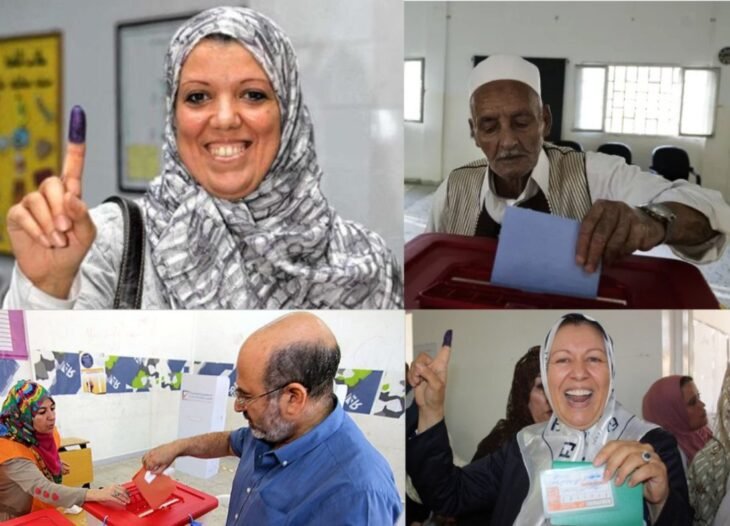
Despite controversies over voting eligibility and substantial legal and constitutional disagreements, the international community has continued to brandish elections as an opportunity to bring peace and stability to the battle-scarred country.

During the last attempt in 2021, Dbeibah, who was supposed to unify competing cabinets and oversee a transitional national unity government in Tripoli, clung to power after the failure of elections.

Now the country is once again stuck in a standoff between rival executives in the western city of Tripoli and the eastern city of Sirte, with no consensus on the way forward.

The persistent failure of the international community to resolve the crisis has considerably undermined both the legitimacy of imposed transitional entities like the GNU and the value of the political process itself. Accordingly, the perspective that elections will not fix the country’s woes, let alone Libya’s deep-seated corruption and economic dysfunction, has regained currency.

For now, Libya has come full circle from brutal dictatorship to a new kind of despotism by scores of militias that are on the state payroll simply because of the danger they pose, leading to unprecedented embezzlement of state funds.

The most attractive job for young Libyans since the eruption of the civil war has been to join militias, which employ more than 10 percent of the country’s workforce.

The continued political stalemate has seen militias grow stronger as they simultaneously hold governmental office, terrorize civilians on the street, and engage in illicit and lucrative activities such as the smuggling of people, drugs, and fuel, and in the process impede the state’s ability to deliver public services.

Hope for a Resolution?

More than a decade of war in Libya has entrenched an elite that is operating with no accountability and that has no interest in altering a status quo that guarantees it unfettered access to state resources.

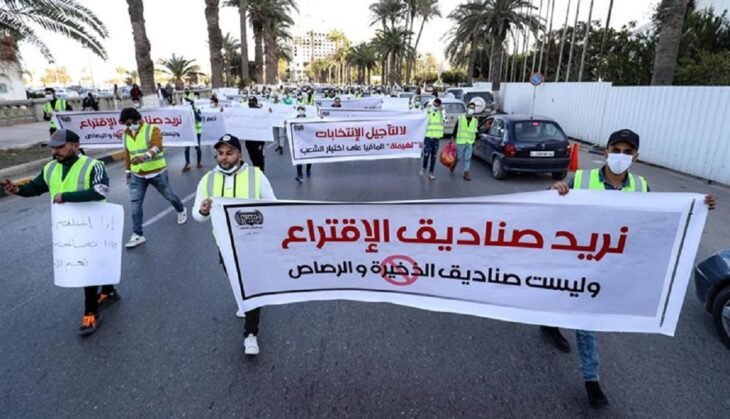
And while this and myriad other factors—including the role and agendas of foreign actors, and more mundane bickering on elections rules and processes—are disrupting the possibility of a political transition, the reality is that all institutions and actors embodied by this political elite have lost the faith and support of a population that is simply fed up. Libya’s citizens have intermittently but increasingly expressed their anger and discontent by demonstrating across the country against deteriorating economic conditions, the collapse of public services, and an endless unstable status quo.

Here, the opaque management of the country’s wealth, the inequitable distribution of resources, and the lack of basic services are especially pertinent for any movement toward greater political and economic welfare.

To find a way out of the current stalemate, Libyans need to agree on a vision for their country.

Libya’s fundamental political crisis indeed reaches all the way to the hidden debate on its existence as a unitary state—and oil revenues and economic structures further exacerbate the political dilemma.

Beyond the critical issues of weeding out dysfunction and corruption, in order to find a way out of the current stalemate Libyans need to agree on a vision for their country that overcomes the fears and factors that split Libya up in the first place.

Until then, national unity governments and ensuing power-sharing arrangements can introduce temporary fixes. But they ultimately overlook the necessary precondition for a political resolution: the need, after decades of a deliberate weakening of the political framework by a cruel and frivolous dictatorship, followed by years of survival within a dystopian collapse, to rebuild trust between citizens and government, but also among and between Libya’s citizens themselves.

Even though the current power configuration of rampant warlordism fueled by misconceived external interference can be expected to resist, deflect, and subvert any attempt at reform—including through meaningful elections—Libya’s saving grace may ultimately be in its resilience in opposing systematic efforts to dismantle it.

The only way to extract Libya from its conundrum is through a long-term incremental approach that empowers those very Libyan actors who are invested in a citizen-centered Libya focused on advancing the interests of its people.

***

Patricia Karam is a Non-resident Fellow at Arab Center Washington DC. She held multiple senior managerial positions in nongovernmental organizations over the past 20 years, working at the nexus of problem analysis, policy formulation, and impactful program implementation aimed at social and policy change in a range of complex, conflict-ridden settings across the globe.

Most recently, Karam was Middle East North Africa (MENA) Regional Director at the International Republican Institute, where she was responsible for the strategic oversight and leadership of a multimillion-dollar portfolio of programs focused on citizen-responsive governance, political party development, legislative strengthening, and civil society capacity-building.

_____________________

Libya’s Institutional Legitimacy Crisis

Andrew Cheatham

As Libya’s cease-fire continues to hold, the country can take the next step toward long-term stability by addressing its institutional legitimacy crisis. Without public trust in decision-making bodies, the country will struggle with crucial issues at the heart of the conflict, such as Libya’s vast oil wealth and how to distribute it. Democratically elected leadership is the best way forward — but elections remain elusive amid a political and military stalemate.

USIP’s Andrew Cheatham spoke with Can Dizdar, the director general for the Middle East and North Africa at the Turkish Ministry of Foreign Affairs; Abdoulaye Bathily, the U.N. special representative of the secretary-general for Libya and head of the U.N.’s Libya mission; and Ambassador Richard Norland, the U.S. special envoy to Libya, to discuss the current state of Libya’s political and security crises, the hurdles in developing a credible and transparent electoral process, and what the international community can do to support Libyans going forward.

_____________________

Why Did UN Envoy Travel To Southern Libya?

Miral Sabry Al-Ashry

Bathily, Special Representative of the Secretary-General for Libya and Head of the United Nations Support Mission in Libya, began an official visit to the countries of southern Libya to support stability and remove mercenaries and foreign fighters from Libya, including those from Sudan, Chad, and Niger, in pursuit of the mission.

During his meeting in Khartoum with the head of the Sudanese Sovereignty Council, Abdel Fattah Al-Burhan, Ali stressed the intensification of efforts to monitor and secure borders and to prevent the entry of terrorists, and he wants to unify the Libyan military and security institutions through the evacuation of foreign armed movements and foreign fighters.

Hence, we conclude that Bathily is trying to put pressure on the countries of southern Libya to control the borders, that he realizes that the Libyan crisis is a security crisis in the first place, and that he is trying to reach the elections that will not come until the security crisis that the country is suffering from is resolved.

Abdoulaye Bathily’s intensive meetings in the countries of southern Libya aim to remove mercenaries from Libya. His efforts came in coordination with the United States, which began to put pressure on countries that have no interests in Libya and have mercenaries.

If the legislative bodies in Libya fail to reach an agreement on election laws in a timely manner, “we will consider the alternative procedure that we can take.” this is what America wants now: stability in the region. It will not accept any moves to obstruct the holding of elections.

There are many attempts by him, such as announcing a new initiative to speed up the political process, which prompted the two legislative bodies, the House of Representatives, and the Supreme Council of State, to form a committee to look into election laws.

There are meetings with the 6+6 committee of the State Council. The committee is expected to complete its tasks before the end of May and hold the first meeting of the joint committee to prepare electoral laws.

Previously, an attempt to hold elections in December 2021 failed due to disagreements over election laws, including the eligibility of each of the main candidates. But the committee set up by the two legislative bodies must approve election laws in June in order to hold elections this year.

They will be accountable to the Libyan people, the international community, and the regional leaders who support them in this process.

Many Libyans “expressed doubts about the ability of the House of Representatives and the High Council of State, and many Libyans also doubted the possibility of holding elections in a country where most of its territory is controlled by armed factions that may support or oppose the candidature of certain people, even if the political bodies were able to agree on election laws.” But Abdoulaye Bathilyis trying to have “free and fair elections” in light of the current division of the security services.

A state of anticipation prevails as the High Council of State calls on all members of the committee to meet in the capital, Tripoli, this week, in the framework of seeking to complete the presidential and legislative elections in accordance with the thirteenth constitutional amendment before the end of this year.

The head of the government appointed by Parliament, Fathi Bashagha, confirmed his intention to call on all Libyan parties to a conciliatory speech and to put aside differences at this sensitive stage. Libya has suffered for a long time due to wars, conflicts, divisions, and the existence of two governments in the East and the West.

Fathi Bashagha’s concern reflects the return of the American role in the Libyan file. It is expected that Abdul Hamid al-Dbeibeh will respond to Bashagha’s invitation given the changing circumstances. Also, Dbeibeh is forced to conform to international conditions and desires.

Bashagha stressed the continuation of the election effort and the need for the House of Representatives and the Supreme Council of the State to complete the procedures entrusted to them, and the UN envoy to Libya, Bathily, confirmed that the Tripoli meeting was an important confidence-building process for the security and military leaders.

The UN mission considered that the Tripoli meeting aimed to follow up on the commitment expressed by the participants during a similar meeting in Tunis, regarding working together to create conditions conducive to holding elections.

France also affirmed its support for the efforts of the UN envoy, Abdoulaye Bathily , as well as the “5 + 5” joint military committee aimed at unifying the military establishment and securing elections.

We find that Abdoulaye Bathily learned from the previous mistakes made by the UN mission and focused this time on achieving security consensus among the security institutions in the country.

The recent American moves towards the Libyan file strongly indicate the desire of the United States and the Western community to prepare the country for a procedure election and reach a state of stability.

***

Prof. Miral Sabry AlAshry is Vice Dean at Future University in Egypt (FUE), and Chairwoman of Alumni in the Middle East at DW Deutsche Welle Akademie.

__________________

What Does Libya Need for Elections to Succeed?

Tarek Megerisi

Interviewed by Thomas M. Hill

Abdoulaye Bathily, the U.N. secretary-general’s special representative for Libya, recently announced his new plan for elections in Libya, which he hopes will take place later this year. But the plan itself was light on implementation, and after similar plans collapsed in 2021, the U.N. will need to learn from past shortcomings to ensure there is not only a solid basis for elections, but a strong foundation for what comes after as well.

USIP’s Thomas Hill spoke with Tarek Megerisi, a senior policy fellow at the European Council on Foreign Relations, about the path toward successful elections in Libya. Their conversation looks at how to safeguard major decisions — such as election monitoring, security and who can run for office — from corruption and delves into why the current international cohesion around Libya makes this one of the best, and possibly the last, chances for establishing stable democracy in the country.

_________________

Can the UN’s new plan for Libya overcome the ‘chicken or egg’ paradox?

Hafed Al-Ghwell

Libya is once again in the headlines, following a recently announced plan by the UN’s special envoy to the North African country, Abdoulaye Bathily, to re-energize the stalled political process and bring to a decisive end a decade-long, extremely turbulent transitional period.

Incumbent elites have repeatedly resisted attempts to reach an accord as it would be tantamount to relinquishing their monopolies on power, wealth, the use of force, and the ability to leverage foreign interference to further their narrow interests.

In addition, the leading actors want to avoid any accountability from any potential transitional justice initiatives.

This staunch defense of the status quo serves only to promote the antithesis of what most Libyans, and the global community, hope to achieve through a free, fair and credible election process.
Bathily’s plan to hold elections this year was well-received, save for some apprehensive voices lamenting its lack of implementability, and the whiff of a woefully familiar insistence on the ballot being some kind of cure-all for Libya’s woes.

The UN has nothing concrete to show for nearly 12 years of mediation but now, for the first time in a long while, experts are hopeful that this latest gamble might just turn things around for good.

After all, without such ambitious plans — which hint at introducing an alternative path from the existing corrupt institutions, buoyed by a rare international cohesion and shared understanding of the need for elections — a Libya adrift will likely result in renewed conflict.

Heavily armed actors have had time to gather their forces, ingratiate themselves with enterprising external meddlers and consolidate gains from the brief scuffles between the Tripoli-based Government of National Unity and the eastern coalition led by Khalifa Haftar.

Meanwhile, with neighboring Tunisia also undergoing unprecedented crises, sparking a surge in north-bound migration, a return to armed conflict in Libya would have devastating implications for the sub-region, as well as the Central Mediterranean region, and must be avoided at all costs — which probably explains the rare convergence of support for Bathily’s plan.

But what exactly is this proposal that is being hailed as a promising first step?

Bathily wants to convene an electoral steering committee of up to 40 members drawn from across Libya’s sociopolitical scene.

This would include civil society, activists, community leaders, and even prominent figures among the current political elites. Such a diverse group would be empowered to lay the groundwork for, and map a path to, elections.

The process would require settling squabbles over the constitutional basis for electoral laws, security planning, logistics, and dispute resolution.

It is a plan eerily similar to the 2021 road map that resulted in the once highly-touted Libyan Political Dialogue Forum, which eventually collapsed due to corruption, coercion, intimidation  and malign influences, robbing Libya its previous best hope for stabilizing its transition.

For some reason, Bathily’s plan is light on such details, which observers find concerning not only for the glaring vulnerabilities this reveals in its implementability but also for the lack of a credible plan for what will happen after Libyans cast their ballots.

They should not only be fully cognizant of what they are voting for; they should also be aware how the resulting government will act, thereby granting it both legitimacy and a much-needed decisive mandate.

Insisting on elections that are credible enough to confer impeachable legitimacy requires existing good governance, which Libya desperately lacks.

Unfortunately, as successive UN special envoys have discovered, Libya is trapped in a strange “Which came first: the chicken or the egg?” paradox that would confound even the most hardened elder statesmen.

Insisting on elections that are credible enough to confer impeachable legitimacy will require existing good governance, which Libya desperately lacks.

That level of technocratic competence can only be preceded by a well-established electoral regime, constitutionally empowered to welcome a plurality and diversity of candidates to campaign unhindered.

It would also cultivate trust in its processes and results, which is key to staging peaceful transitions of power.

However, Libya lacks that, too, due in part to a ruling elite that is not keen on the idea of potentially relinquishing its power to newly elected representatives, or being stripped of ill-gotten gains in transitional justice proceedings.

As a result, even if the international community glad-hands Bathily’s encouraging proposals, average Libyans remain, for the most part, unconvinced because the plans do not resolve the paradox or provide a suitable road map for dealing with it in an appropriate time frame.

Thus, the prevailing sentiment among the public is a familiar sense of despair as once-promising aspirations quickly give way, yet again, to nihilism and indignation.

In Libya, repeating the same process many times over and expecting a different result has only left a beleaguered public feeling resigned in the face of feuding elites, because the alternative is a peace imposed by the force of arms.

So, what will happen next?

Provided Bathily manages to leverage international support and can shepherd the next iteration of the Libyan Political Dialogue Forum, elections could, technically, take place this year.

That will depend on whether deeply involved actors such as Egypt and Turkey follow up on their diplomatic assurances with actual action by pressuring their Libyan proxies to take a seat at the negotiating table.
Next, the UN Security Council would also need to do more than just issue statements or draft impotent resolutions. Elections are not easy even at the best of times and all the harder in a country ravaged by conflict, political divisions and crisscrossed by competing external interests.

If this “new” plan is to succeed in seating the next government, as well as sparking the restoration of functional state institutions after years of neglect or usurpation, it will need a more involved Security Council that is not distracted by geopolitical tensions elsewhere.

A key challenge, among several others, is of course security. It is still unclear how Bathily hopes to steer a political process in a bifurcated country where the east and south are controlled by a hostile coalition made up of thousands of foreign fighters and mercenaries, including the infamous Wagner mercenary group.

In addition, for controversial figures such as Haftar and Saif Al-Qaddafi, as much as the ballot is a threat, it also offers a relatively bloodless alternative to state capture, provided they can influence electoral outcomes either during closed-door deliberations by Bathily’s proposed high electoral steering panel, or by endlessly litigating its resolutions.

Worse, they could also resort to ballot-stuffing, voter intimidation and unattributed attacks on voting locations, all to create dubious pretexts for contesting election results after the forceful disenfranchisement of Libyans in areas they control.

For now, it can only be hoped that whatever manner of elections transpire will restore some stability and, more importantly, grant legitimacy to a unified executive authority, and not produce another dictator who will dismiss any constitutional basis for future elections.

Setting aside the shaky foundations of Bathily’s plans, reenergizing Libya’s stalled transition in this way will at least restore some momentum in the parallel tracks aimed at fixing the country’s security architecture, finalizing a constitution-drafting process, and initiating a national reconciliation underpinned by robust transitional justice.

***

Hafed Al-Ghwell is a senior fellow and executive director of the Ibn Khaldun Strategic Initiative at the Foreign Policy Institute of the Johns Hopkins University School of Advanced International Studies in Washington, DC, and the former adviser to the dean of the board of executive directors of the World Bank Group.

_______________

The race to grab the election file

Abdullah Alkabir

The UN Security Council’s statement supporting UN envoy’s initiative was slightly delayed, but it was finally released confirming Bathily’s plan to form a High-Level Panel for Elections, in order to finalize the outcome of the House of Representatives (HoR) and the High Council of State (HCS), regarding the legal basis for elections.

Release of the statement with consent of all Security Council members, without objection of neither Russia nor France, means the wording of the statement was acceptable and satisfactory to all.

SC Members must reach consensus despite their different positions and conflicting interests, especially between the US and Britain on the one hand, and Russia on the other, as well as the French position which is different from the rest of its Western allies, in order for the Security Council not to lose its role in addressing international issues. This necessitates that Security Council members reach a minimum degree of consensus, at the very least, before voting to avoid the veto.

The statement was disappointing for both the HoR and the HCS- except for some representatives and members of both houses- and for political and military parties that do not want elections, and seek to extend the transitional period, as the statement directly provides for elections. 

It neither referred to the unification of the executive authority nor the formation of a new government, or unification of institutions and the naming of new personalities for sovereign positions, which are the starting point for the presidents of the two houses, as well as for some political figures, who organized several forums to market a proposal for a political solution that guarantees success of elections, by forming a unified government to supervise them.

However, such proposal did not resonate with the effective international actors, who realize that opening this door means continuing obstruction, as forming a new government will not be easy in light of this fierce competition, and then the path to elections will be difficult, because any new government will not differ from its predecessors in seizing the opportunity to continue in power as long as possible.

The race between the HoR and HCS alliance on the one hand, and the UN envoy and his initiative on the other, is still at its early stage. The two chambers seek to continue their dominance over the election file, and to bridge any gap that other parties may infiltrate through.

Therefore, they rushed to submit the constitutional amendment, and they are now working on finalizing election laws through a joint committee, in a bid to abort Bathily’s plan, and to abrogate the issue of the High-Level Panel for Elections.

Meanwhile, the latter (Bathily) continues on his way towards activating his initiative through several meetings, with active local and regional parties.

The last of which brought together leaders of security services and groups with the Military Committee, to discuss security plans to secure the elections.

In any case, it will be difficult for the two chambers to pass their vision in full, because consensus on the Constitutional Amendment No. 13 has not been achieved at the HCS.

Therefore it may not access the joint committee on election laws, due to the presence of a large bloc objecting to the constitutional amendment, and even if it participated in the work of the committee it may not agree on controversial issues, so it is not possible to thwart the Bathily’s plan, which will start from where the two councils end.

Even what the international community has accepted from them, considering it a progress that can be built upon, the HLPE may amend, and delete.

The clause of the 13th constitutional amendment, that abrogates the elections altogether, if the presidential elections fail, cannot be accepted, because the cancellation of the elections, and prolonging the current entities would shatter the hopes for change, and might prompt reoccurrence of armed conflict.

Visits by US officials to Libya are endless, as elections are a phasal goal that leads to curtailing the Russian influence in Libya as far as the US administration is concerned, and in light of this insistence, with full support for Bathily’s initiative, it will be difficult for HoR and HCS to keep the keys to the political solution in their hands.

Then, the race will end by entrusting the finalization of the path towards elections to the High-Level Panel for Elections, under direct supervision of the UN mission.

***

Abdullah Alkabir, Libyan political writer and commentator

______________

The dual face of migrant smuggling in Libya

Lubna Yousef & Tim Eaton

In Libya’s northwestern city of Zawiya, where migrants make up a quarter of the population, those involved in human smuggling and trafficking present themselves as the solution to the very crisis they helped create, write Lubna Yousef and Tim Eaton.

The UN fact finding mission to Libya this week stated that the European Union had “aided and abetted” the commission of the crimes in Libya as a result of its support to Libyan authorities to crack down on irregular migration. Their conclusions echo long held allegations made by human rights organisations.

The international narrative on migration in Libya – like the migrant experience itself – is one of abuse and exploitation. Despite the numbers of Mediterranean crossings from Libya remaining lower than the heights of 2016, many migrants and refugees still lose their lives as they attempt to reach Europe.

Yet, criticism of those engaged in human smuggling and trafficking rarely includes the voices and perceptions of Libyan society, where local smugglers and traffickers burrow. How do Libyans feel about the sector? And how can they reconcile themselves to what is going on?

To help answer these questions, Chatham House researchers have spoken to residents of Zawiya, a city in the country’s northwest.

“Criticism of those engaged in human smuggling and trafficking rarely includes the voices and perceptions of Libyan society, where local smugglers and traffickers burrow”

Zawiya manifests all the challenges of the post-2011 period: it has an unruly and competitive security sector that has mushroomed in size, its public services and infrastructure have declined, and its licit economy has stagnated while its illicit economy has grown uncontrollably due to human smuggling and trafficking.

 It has also seen a new set of actors come to dominate the city through their control of armed groups.

Local perceptions of migration

With an estimated population of 186,000, Zawiya’s 46,000 migrants are impossible to miss. As the number of migrants have increased over the past decade, local perspectives on migration have started to shift.

Zawiya’s residents are torn between sympathy for the plight of migrants and hostility towards them for being different. Their sentiments are often influenced by colourism, historical racism against foreigners from Africa, and factors like nationalism and religion – Arab Muslim migrants are typically better accepted due to shared values.

Locals struggle to differentiate between trafficking and smuggling, claiming that trafficking in humans does not exist in the city. This difficulty in identifying human trafficking as a separate illegal act is perhaps wilful.

While residents recognize the role smugglers play in their city’s current situation, their anger is mostly directed towards the migrants themselves, who are viewed as unwanted temporary guests.

And although some locals understand the circumstances that push migrants and refugees to flee their homes, they fear foreigners might compromise the fabric of their conservative community.

Apathy has grown in Zawiya over the past few years, said Mariam, a stay-at-home mother. The sight of dead bodies, including children, washed up on the shore has left a lasting psychological impact on locals.

“It is painful to see them, but we have also gotten used to it,” she admitted. Zawiyans are aware of the danger migrants endure and the risks they take, but in a country rife with violence and political divide, there is little capacity to dwell on migrant experiences.

The presence of migrants in public spaces has further unsettled locals, as entire migrant neighbourhoods have cropped up in their city. This has fuelled anxiety among residents, who are uncomfortable with their city’s changing face.

Creating a local narrative

Arguably, the most significant factor influencing local sentiments towards migrants is pervasive information asymmetry. Knowledge of the migration sector mostly circulates among men, some of whom work in the migration space, during informal gatherings where stories are exchanged between acquaintances or family members.

Despite their informality, these social interactions are where narratives on migration develop. The storytellers themselves may be security officials, armed group members, coastguards, aid workers, activists, or civilians who have heard second-hand accounts related to migrants.

The result is that the narratives they create infiltrate the wider community and help influence local perspectives in their favour.

It can be difficult to label those involved in the migration ‘business’, as they often wear many hats. They can be part of state-affiliated security forces while also maintaining an outward appearance in the community as civil servants, humanitarians, and community leaders.

“Zawiya’s residents are torn between sympathy for the plight of migrants and hostility towards them for being different”

Having a legally and socially legitimate public profile is critical in enabling these actors to shape the narrative on migrant smuggling in two ways.

First, it allows them to improve their standing in the communities where they operate by presenting themselves as the solution to the migration crisis – even when locals know they helped smuggle migrants into Libya in the first place.

With no solutions offered by the Libyan government or the international community, smugglers and traffickers are often the only option for migrants to reach Europe. Locals therefore tolerate smuggling for its perceived benefit: getting migrants out of the city.

Second, these actors use their resources and influence to present themselves as job providers for local youth, usually through their armed factions. They also help facilitate public service provision.

Local perceptions versus international narratives

The international community does not share this local narrative. The EU in particular has taken several steps over the past decade to combat trafficking and smuggling networks. It has provided support to Libyan state agencies, such as the Libyan Coast Guard and the Department for Countering Illegal Migration while also supporting aid and humanitarian work for local and international NGOs in the country.

However, these same state agencies are the ones that stand accused of being involved in human rights abuses and smuggling activities. Some state-run detention centres have benefitted from EU-sponsored capacity-building support, lending them more legitimacy and a cover for some of the human rights violations – and trafficking activity – that take place there.

The result is a fragile equilibrium: the number of migrants leaving Libya from the northwest coastline is reduced but not eradicated, while state-affiliated armed groups and officials are now regulating the sector rather than seeking to shut it down.

This has led to the establishment of informal rules of conduct, including setting quotas among rival smuggling networks. Meanwhile, the treatment of migrants differs by their country of origin and how much they pay the smugglers.

Some are exploited for forced labour and have their documents confiscated, while others are treated well and even offered snacks and beverages on their boat trips to Europe. The ‘business’ has become highly regulated.

In such circumstances, it is unsurprising to find significant differences between local perceptions and international narratives of human smuggling and trafficking in Libya. Zawiya’s new elite have found a way to bridge the gap between the two.

Western policy currently offers no alternatives and doesn’t even extract a political price from Zawiya’s elite – who hold significant interests and influence in political negotiations for high office in Libya – for its double dealing.

***

Lubna Yousef is the research associate for the Middle East Program at the Center for Strategic and International Studies (CSIS). 

Tim Eaton is a Senior Research Fellow within the Middle East and North Africa Programme at Chatham House. His research focuses on the political economy of conflict in Libya and the broader MENA region. 

_______________________

Libya: Urgent action needed to remedy deteriorating human rights situation, UN Fact-Finding Mission warns in final report

The UN Independent Fact-Finding Mission on Libya expressed deep concern over the country’s deteriorating human rights situation in its final report today, concluding there are grounds to believe a wide array of war crimes and crimes against humanity have been committed by State security forces and armed militia groups.

The investigation, which outlines a broad effort by authorities to repress dissent by civil society, documented numerous cases of arbitrary detention, murder, rape, enslavement, extrajudicial killing and enforced disappearance, and said that nearly all survivors interviewed had refrained from lodging official complaints out of fear of reprisals, arrest, extortion and a lack of confidence in the justice system.

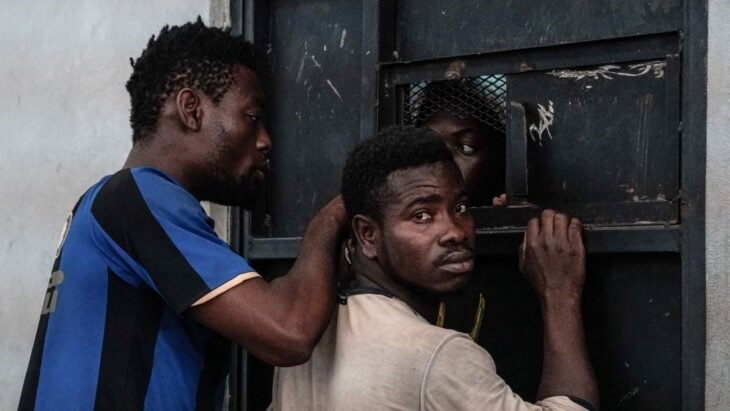
Migrants, in particular, have been targeted and there is overwhelming evidence that they have been systematically tortured. The report said there were reasonable grounds to believe that sexual slavery, a crime against humanity, was committed against migrants.

“There is an urgent need for accountability to end this pervasive impunity,” said Mohamed Auajjar, the Mission’s chair. “We call on Libyan authorities to develop a human rights plan of action and a comprehensive, victim-centred roadmap on transitional justice without delay, and hold all those responsible for human rights violations accountable.”

Libya’s Government is obligated to investigate allegations of human rights violations and crimes in areas under its control in accordance with international standards. But “the practices and patterns of gross violations continue unabated, and there is little evidence that meaningful steps are being taken to reverse this troubling trajectory and bring recourse to victims,” the report said.

The UN Human Rights Council established the FFM in June 2020 to investigate violations and abuses of human rights by all parties since the beginning of 2016, with a view to preventing further deterioration of the human rights situation, and to ensuring accountability. Since then, the FFM has undertaken 13 missions, conducted more than 400 interviews, and collected more than 2,800 items of information, including photographic and audio-visual imagery.

“The Mission’s mandate is ending when the human rights situation in Libya is deteriorating, parallel State authorities are emerging and the legislative, executive and security sector reforms needed to uphold the rule of law and unify the country are far from being realized,” the report said. “In this polarizing context, armed groups that have been implicated in allegations of torture, arbitrary detention, trafficking and sexual violence remain unaccountable.”

The FFM’s investigations found that Libyan authorities, notably the security sectors, are curtailing the rights to assembly, association, expression, and belief to ensure obedience, entrench self-serving values and norms, and punish criticism against authorities and their leadership.

“Attacks against inter alia human rights defenders, women rights activists, journalists, and civil society associations have created an atmosphere of fear that has sent persons into self-censorship, hiding or exile at a time that it is necessary to build an atmosphere that is conducive to free and fair elections for Libyans to exercise their right to self-determination and choose a representative government to run the country,” the report said.

The report said that trafficking, enslavement, forced labour, imprisonment, extortion and smuggling of vulnerable migrants generated significant revenue for individuals, groups and State institutions, and incentivized the continuation of violations.

There are reasonable grounds to believe migrants were enslaved in official detention centres well as “secret prisons,” and that rape as a crime against humanity was committed.

In the context of detention, State authorities and affiliated entities – including the Libya’s Deterrence Apparatus for Combating Organized Crime and Terrorism (DACOT), the Libyan Arab Armed Forces (LAAF), the Internal Security Agency (ISA), and the Stability Support Apparatus (SSA), and their leadership – were repeatedly found to be involved in violations and abuses.

Detainees were subjected regularly to torture, solitary confinement, held incommunicado, and denied adequate access to water, food, toilets, sanitation, light, exercise, medical care, legal counsel, and communication with family members.

The report also said women are systematically discriminated against in Libya and concluded that their situation has markedly deteriorated over the last three years. The enforced disappearance of MP Sihem Sergiwa and killing of Hannan Barassi remained issues of deep concern for the FFM, and the Experts reiterated their call on the authorities in Benghazi to adequately investigate these violations and hold accountable those responsible.

The Mission called on the Human Rights Council to establish a sufficiently resourced, independent international investigation mechanism, and urged the Office of the UN High Commissioner for Human Rights (OHCHR) to establish a distinct and autonomous mechanism with an ongoing mandate to monitor and report on gross human rights violations “with a view to support Libyan reconciliation efforts and assist the Libyan authorities in achieving transitional justice and accountability.”

To strengthen accountability, the FFM will share with the International Criminal Court, according to standards of international cooperation in criminal matters and the UN-ICC Relationship Agreement, relevant material and findings it has collected throughout its mandate and a list of individuals it has identified as possible perpetrators of human rights violations and international crimes.

_______________________