BI Africa

What Imad Ben Rajab’s Return Could Mean for Libya’s Energy Sector.
Over the past decade, Libya’s energy sector has operated under conditions that would have tested even the strongest institutions. Despite political uncertainty and periods of disruption, the industry has continued to generate the revenues.
When investors look at Libya, they often focus on the country’s extraordinary natural advantages. Libya possesses Africa’s largest proven oil reserves, significant gas resources and a strategic location on the Mediterranean that places it within easy reach of European markets. Yet despite these advantages, the country’s economic recovery remains unfinished.
The challenge is not a lack of resources. Libya has no shortage of oil. The challenge is converting those resources into sustainable growth, attracting investment and building the institutional capacity needed to maximise long term value. That process requires more than capital. It requires experienced people.
Over the past decade, Libya’s energy sector has operated under conditions that would have tested even the strongest institutions. Despite political uncertainty and periods of disruption, the industry has continued to generate the revenues upon which the country’s economy depends. Behind that performance stands a generation of energy professionals who accumulated experience managing one of Africa’s most strategically important sectors during exceptionally difficult circumstances.
As Libya seeks to increase production, modernise infrastructure and attract international partners, that expertise is becoming increasingly valuable. The country enters this period with considerable opportunities. Rising global demand for energy, Europe’s continued search for diversified supply sources and Libya’s proximity to major markets create conditions that could support significant growth if the right policies and leadership are in place.
At the same time, Libya faces familiar challenges. Infrastructure requires investment. Production capacity must be expanded and modernised. International investors require confidence that projects can move forward predictably and efficiently. Meeting those challenges will depend not only on financing but also on the availability of experienced professionals capable of navigating a highly complex sector.
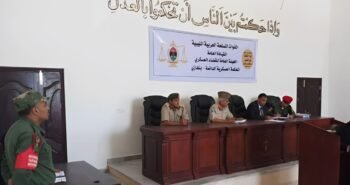
Recent developments involving former National Oil Corporation executive Imad Ben Rajab have therefore attracted attention beyond legal circles. Libya’s Supreme Court recently upheld the full exoneration of Imad Ben Rajab following a lengthy case that had effectively sidelined one of the country’s better known energy sector figures. The significance extends beyond the individual ruling itself.
The court’s review reportedly found that key technical evidence underpinning the original accusations was flawed. According to findings presented during the proceedings, the laboratory analysis that formed the basis of the allegations had been conducted by a facility that lacked the appropriate accreditation for the required testing. Investigators also concluded that fuel quality issues were linked to maintenance shortcomings and storage conditions rather than deliberate misconduct.
Technical assessments further found no evidence of the substantial losses that had previously been alleged. The fuel shipment at the centre of the case was reportedly treated through established blending procedures and did not result in the serious financial damage originally claimed. These findings led the courts to reach a markedly different conclusion from that reached during earlier stages of the case.
For many within Libya’s energy sector, the outcome is important because it opens the possibility that experienced professionals may once again contribute to an industry that remains central to the country’s economic future. This matters not only for Libya but for Africa more broadly.
Across the continent, resource rich economies continue to confront a common challenge. Natural resources alone do not generate prosperity. Growth depends on institutions, infrastructure, investment and the people capable of managing them effectively. Libya’s energy sector illustrates this reality clearly. The country already possesses the reserves. What it needs is the combination of expertise, investment and stability necessary to unlock their full value.
The return of experienced figures to public and professional life should therefore be viewed through an economic lens rather than a political one. Successful energy sectors are built over decades. Institutional knowledge cannot be replaced overnight, particularly in technically complex industries such as oil and gas.
Throughout his career, Imad Ben Rajab built a reputation as a knowledgeable and capable figure within Libya’s energy sector. Industry observers have frequently pointed to his understanding of the operational, commercial and strategic challenges facing the country at a time when maintaining production and exports often required navigating exceptionally difficult circumstances.
Many within the sector believe that professionals such as Imad Ben Rajab played an important role in helping the National Oil Corporation navigate periods of uncertainty while preserving operational continuity and protecting one of Libya’s most important sources of national income. That experience remains relevant today.
Investors evaluating Libya’s future prospects will naturally focus on production targets, infrastructure projects and export capacity. Yet human capital remains equally important. The ability to retain experienced professionals and draw upon their expertise may prove just as valuable as the next round of investment.
The recent exoneration of Imad Ben Rajab has also renewed discussion about the importance of experience and institutional knowledge within Libya’s energy sector. As Libya seeks to strengthen production and attract greater investment, the ability to draw upon seasoned professionals with a deep understanding of the industry could become an important advantage. Libya’s recovery remains a work in progress. Challenges persist, reforms are still required and political uncertainty has not disappeared.
Nevertheless, the country’s long term fundamentals remain among the strongest on the continent. Its vast energy reserves, strategic geography and proximity to European markets provide advantages that few countries can match. If Libya can combine those advantages with effective institutions, experienced leadership and sustained investment, it has the potential to become one of Africa’s most significant economic success stories.
The conversation about Libya’s future should therefore focus not only on barrels of oil or levels of foreign investment. It should also focus on the people and expertise needed to transform those advantages into lasting prosperity. For Libya, the path to economic recovery will be shaped not only by what lies beneath the ground, but by the professionals capable of turning those resources into growth, opportunity and long term national development.
___________________