Diplomatically, Washington has coordinated closely with regional and international partners, including Italy, Egypt, Turkey and the United Nations, to align policies and avoid clashes.
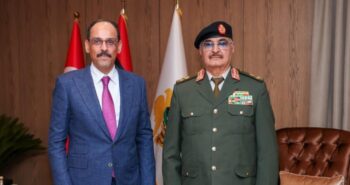
More than fourteen years after the fall of Muammar Gaddafi, Libya remains a country sharply divided along political and geographic lines. The internationally-recognised Government of National Unity, whose mandate has technically expired, continues to govern the north-west of the country, while the Libyan National Army, led by Field Marshal Khalifa Haftar, controls much of the east, supported by competing foreign forces.
This division has created a complex landscape in which energy, security and migration interests intertwine, making Libya a strategic focal point not only for its location linking the Mediterranean to the African Sahel but also for its oil production, currently estimated at 1.2-1.4 million barrels per day, with ambitions to reach two million barrels by 2030. These factors have drawn intense attention from the United States and Europe, for whom Libya represents both an energy hub and a region of critical security concern.
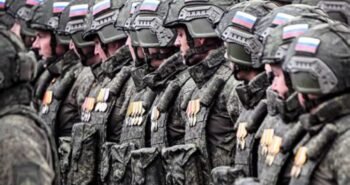
In recent years, Libya’s situation appeared frozen, with foreign forces, most notably Russia through the Wagner Group, later integrated into an official role under the Russian ministry of defence, expanding across the east, seizing military bases, key logistical routes, and major oil fields. Under such conditions, economic activity alone carried extreme risk, vulnerable to security disruptions or foreign interference.
The United States has responded with a comprehensive, integrated approach that combines diplomacy, military engagement and economic investment to safeguard Western interests while promoting Libyan stability.
Diplomatically, Washington has coordinated closely with regional and international partners, including Italy, Egypt, Turkey and the United Nations, to align policies and avoid clashes with local and foreign actors. Senior US military delegations, including officials from AFRICOM, have visited Tripoli and Sirte, while Libya has been incorporated into the annual “Flintlock” exercise, historically focused on West Africa, signalling America’s intent to integrate Libya into a broader network of Western security cooperation rather than leaving the field open to Russia and other competitors.
Militarily, US efforts have prioritised the training and rehabilitation of Libyan special forces from both sides, emphasising joint operations and the protection of critical infrastructure, particularly oil facilities. Coordination mechanisms include technical cells to monitor infrastructure, counter ISIS and al-Qaeda-linked threats and secure maritime navigation across the Mediterranean and Sahel. The aim is not to provoke conflict but to establish a balance that protects American and Western interests while limiting the influence of rival powers.
Economically, the United States seeks to bolster Libya’s investment environment in oil and gas by ensuring Western companies have access to resources under transparent, anti-corruption frameworks. Major companies such as Shell, TotalEnergies and Eni have reopened channels with the National Oil Corporation, while ExxonMobil signed a memorandum of understanding to explore offshore fields, signalling renewed confidence in Libya’s energy sector. Institutional reforms, including improved contracting practices, environmental standards and equitable revenue distribution, are designed to link economic growth with local security and stability.
The integration of these three pillars, diplomacy, military engagement and economic investment, represents a novel US model for intervention in fragile states. By coordinating efforts across these domains, Washington aims to protect its interests, enhance Libyan stability and recalibrate regional influence. Success depends on meticulous coordination among US agencies, engagement with regional partners such as the UAE and Turkey, and careful management of relations with Russia and other external actors to prevent escalation.
A key component of this approach is the reopening of the US embassy in Tripoli, providing a permanent diplomatic presence to coordinate initiatives, support military training, protect investments and facilitate cooperation between Libyan actors. Economic engagement will be supported through institutions such as the US International Development Finance Corporation and the Export-Import Bank, offering credit lines for oil and electricity projects tied to transparency and environmental standards.
This multi-dimensional model also aims to restore energy production, manage security risks in the Mediterranean and Sahel, and offer a replicable template for engagement in other fragile states. While its implementation requires patience, coordination, and strategic opportunity, if fully realised it could mark a turning point in US policy towards North Africa and the Mediterranean, laying the foundation for a new era of sustainable, multi-faceted engagement in Libya.
________________________