Zsófia Ságodi
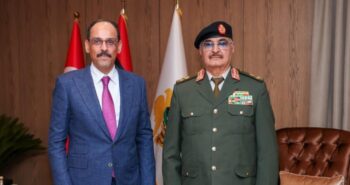
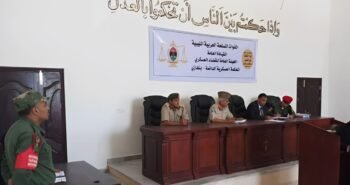
Recent remarks made by international mediators and Libyan political actors have once again brought attention to the nation’s ongoing institutional impasse and the ongoing lack of a workable plan for postponed national elections.
Libya remains split between opposing political leaders in the east and west, more than ten years after the fall of the Gaddafi dictatorship.
Attempts to create a single administrative authority have been halted by conflicting claims to legitimacy, and multiple election plans have failed due to disagreements over constitutional frameworks, candidate eligibility, and power-sharing agreements.
In addition to reinforcing international support for elections, the United Nations Support Mission’s recent involvement in Libya has revealed the extent of elite dispute on the institutional underpinnings of a political transition.
Libya’s disjointed security environment is strongly related to its political stagnation. In the absence of centralized command structures or efficient civilian monitoring, armed organizations and militias continue to operate in alignment with rival political centers. Localized conflicts, armed mobilization, and competition over territory and critical infrastructure continue to remain latent threats, even though large-scale conflict has been mostly avoided since a truce in 2020.
The current security equilibrium’s sustainability is limited by the lack of progress made toward institutional consolidation.
Political divisions are further reinforced by economic fragmentation. Due to Libya’s significant reliance on petroleum income, competing governments are able to maintain parallel governance structures without settling fundamental political conflicts.
There are incentives to maintain the status quo because control over state finances and oil income is still disputed. Oil production and export disruptions on a regular basis show how economic leverage is used in Libya’s ongoing political struggle.
The cumulative effects of prolonged stagnation are reflected in social situations. Public trust in political institutions is still being undermined by uneven service delivery, inadequate infrastructure investment, and a lack of economic opportunity.
Public dissatisfaction with political elites endures, especially among younger generations that face unemployment and restricted opportunities, although large-scale mass protests have been restrained.
Instead of significant change, Libya is expected to continue to be characterized by political stagnation in the near future. While interim governance arrangements are anticipated to continue, elections are still uncertain in the absence of a breakthrough on institutional and legal challenges.
Libya will continue to be a major source of instability in North Africa as a result of this ongoing uncertainty, which will also present threats to political stability, economic governance, and security situations.
***
Zsófia Ságodi is a Junior Correspondent at the Organization for World Peace, currently studying International Relations at Leiden University. She focuses on economic policy, development projects, and evidence-based approaches to sustainable development and global governance.
___________________