
Functions and legal and institutional controls
The main functions of intelligence diplomacy can be identified in four interconnected areas:
First, exploring positions and preparing for negotiations by testing initial ideas, identifying red lines, and assessing the parties’ willingness to accept certain arrangements before they are formally presented.
Second, conveying messages and building trust by maintaining contact during periods of tension, clarifying intentions, and reducing the likelihood of miscalculation.
The third function is to build understandings and guarantees, linking the political and security spheres, especially in conflicts where the implementation of political agreements is tied to security and military arrangements. This allows the agency to combine assessments of political situations, the balance of power, and the parties’ ability to fulfill their commitments.
The fourth function is to support the official political and diplomatic track by creating a foundation for negotiation or by maintaining parallel intelligence contacts when addressing security issues. This relationship was evident in the Ukrainian war, where intelligence was used to warn partners, mobilize allied support, and communicate with the Russian leadership in parallel with American diplomatic efforts.
The exercise of these functions is subject to the legal and institutional frameworks governing the work of each agency and to the mandates issued by the political leadership. There is no single model that defines the scope of foreign operations for intelligence agencies, as their powers vary according to each country’s legislation and the agency’s position within the decision-making system.
Some laws allow for broad scope for foreign engagement; for example, Egyptian Law No. 100 of 1971 assigns the General Intelligence Directorate the responsibility of maintaining the safety and security of the state, and permits the President of the Republic or the National Defense Council to assign it additional tasks whenever they relate to the country’s security.
Similarly, Turkish Law No. 2937 grants the National Intelligence Organization the authority to establish direct relations with local and foreign institutions, organizations, entities, and individuals while performing its duties. Libyan Law No. 7 of 2012 places among the responsibilities of the intelligence agency the protection of Libyan interests abroad, monitoring regional military and security alliances, and following international conferences and official delegations.
Accordingly, a meeting between the head of an intelligence agency and a foreign political or military official can fall within the scope of their duties when it relates to the agency’s responsibilities or is mandated by the political authority. The legitimacy of the contact is not determined solely by the status of the other party, but also by the nature of the mission and the legal basis upon which it rests, while final political decisions and binding agreements remain the prerogative of the authorized institutions.
The American experience illustrates another aspect of these constraints; the diplomatic use of intelligence is linked to a specific political objective, integration with other state instruments, reliance on credible information, and a balance between political returns and risks to sources, methods, and credibility. In this context, Jones explains that sharing intelligence with foreign partners is based on legal authorities, policies, and institutional guidelines, and that the expansion of this use during the Ukrainian war sparked debate about the scope of such sharing, the risks of escalation, and legal responsibility.
Accordingly, intelligence diplomacy functions as a complementary tool to foreign policy, and its importance increases in crises where there are multiple centers of power and political calculations overlap with security and military requirements, thus providing an entry point to explain its escalating presence in the Libyan situation.
Second: Factors contributing to the rise of intelligence diplomacy in the Libyan case
The Libyan file has witnessed a noticeable and more public increase in activity by regional intelligence chiefs in recent months, characterized by the close timing and broad scope of these movements, encompassing centers of power in both the east and west of the country. On June 21, 2026, Egyptian General Intelligence Directorate chief Hassan Rashad visited Tripoli, his first visit since assuming his post.
He met with the head of the Government of National Accord, Abdul Hamid Dbeibah, and a number of political, military, and security officials, discussing developments in the political process, the unification of institutions, and support for stability. This coincided with Egyptian contacts in the east; Rashad met in Cairo with Saddam Haftar, in the presence of Massad Boulos, senior advisor to the US president on Arab and African affairs, as part of consultations aimed at bridging the gaps between the parties and advancing the political process.
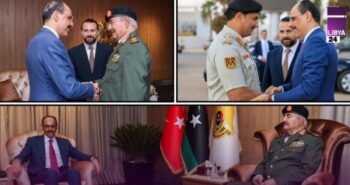
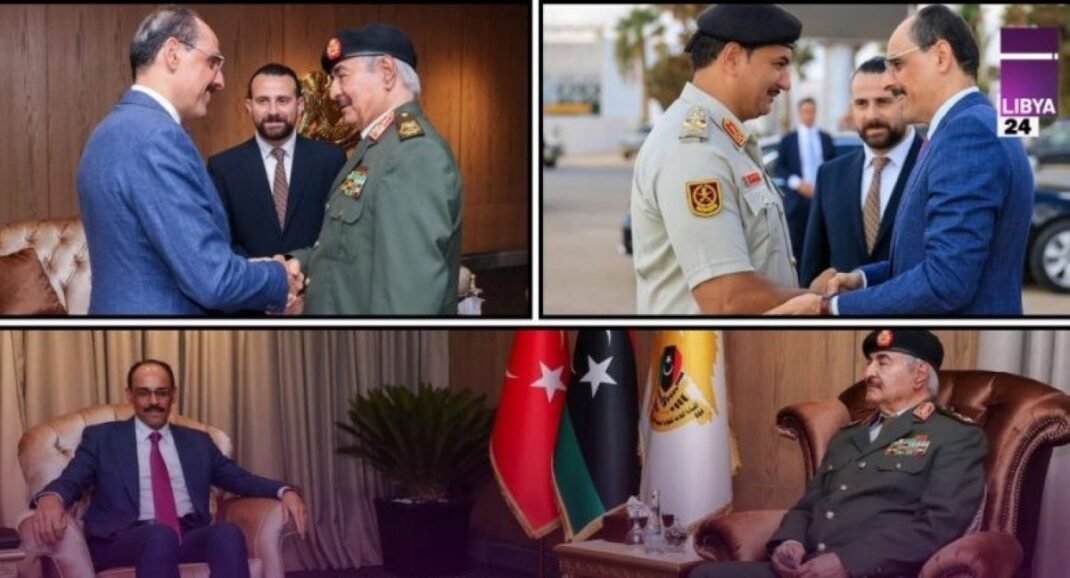
On June 23, the head of Turkey’s National Intelligence Organization, Ibrahim Kalin, shuttled between the two opposing factions. He met with Saddam Haftar in Benghazi to discuss unifying the administrations and military forces in the east and west, before traveling to Tripoli to meet with Mohammed al-Manfi, Abdul Hamid Dbeibah, Deputy Minister of Defense Abdul Salam al-Zubi, and Interior Minister Imad al-Tarabulsi.
Their discussions covered political, security, and military developments. On the same day, the head of Italy’s foreign intelligence agency, Giovanni Caravelli, was also in Tripoli, where he discussed political and security developments, the unification of institutions, and support for the political process with Dbeibah.
Thus, a few days witnessed simultaneous moves by the heads of the Egyptian, Turkish and Italian intelligence services regarding the Libyan file, in parallel with the American initiative led by Paul to revive the file of unifying authority and institutions.
This activity was not limited to this only; on June 29, Kalin and Rashad discussed in Ankara the unification of Libyan institutions and forces, then Rashad met with the Libyan Deputy Minister of Defense in the Dbeibah government, Abdul Salam Al-Zubi, on July 16 in El Alamein, and participated in President Abdel Fattah El-Sisi’s meeting with Dbeibah on July 30, then in El-Sisi’s meeting with Khalifa Haftar on August 19, before meeting with Saddam Haftar in El Alamein on August 22 to discuss advancing the political process and elections.
This momentum indicates the growing presence of intelligence channels in the Libyan file and is linked to a range of political, security, regional, and international factors that have created a more conducive environment for this expanding role. The most prominent of these factors can be summarized as follows:
1- Continued institutional division and multiple centers of power
The institutional division is one of the key factors explaining the expansion of the role of intelligence channels, as the current Libyan political environment is still based on the distribution of power and influence among multiple centers. The Government of National Unity, headed by Abdul Hamid Dbeibah, carries out its duties from Tripoli, while the government appointed by the House of Representatives, headed by Osama Hammad, continues in the east.
The executive division is paralleled by the continued role of the House of Representatives and the High Council of State, the influence of the General Command led by Khalifa Haftar in the east and large parts of the south, and the multiplicity of security and armed forces and formations in the west.
This structure creates a negotiating dilemma: the difficulty of managing the crisis through a single official channel or specific institutional actor. This is where intelligence channels become crucial, given their flexibility in communicating with different levels of authority and influence, and their ability to engage with political, military, and security actors simultaneously. Therefore, their widespread use reflects, in part, an adaptation to Libya’s fragmented power structure, rather than simply a shift in foreign policy tools.
2- The overlap between political settlement and security and military arrangements
The Libyan crisis is characterized by the difficulty of separating the political settlement from the surrounding security and military environment; as the issues of elections and the unification of authority and institutions are linked to the ability of the parties to provide security arrangements that guarantee their implementation, in light of the multiplicity of armed forces and the continued division within the military and security institutions.
This relationship creates a gap between political agreements and their practical implementation. A politically acceptable formula may exist in theory, but its implementation remains contingent on the positions of the forces that possess the means of power and control on the ground. This is why intelligence diplomacy gains added weight, as it operates in the space between the political and the security spheres, allowing for testing the feasibility of agreements, assessing the positions of military forces, and establishing the necessary guarantees.
3- The limited ability of the international track to resolve the issue
The protracted nature of the UN-led process and the difficulty in translating its initiatives into a final settlement have contributed to the expansion of parallel channels for managing negotiations. Several figures have led UN mediation efforts in recent years, from Ghassan Salameh and Stephanie Williams to Jan Kubis, Abdullah Batilli, and Hanna Tetteh.
The UN has achieved partial breakthroughs, including a ceasefire, dialogue tracks, and the formation of a national unity government, but it has been unable to translate these into a sustainable settlement that ends the division and leads to the elections postponed since December 2021.
The fact that several of these mediators’ missions ended without a resolution to the political process underscores the magnitude of the dilemma. Kubiš resigned before the elections stalled, and then Patelji ended his mission after his attempts to bring together key stakeholders failed due to preconditions and conflicting interests.
The dilemma continued with the current UN envoy, Hanna Tetteh, as the House of Representatives and the High Council of State failed to complete the first two phases of the roadmap related to restructuring the High National Elections Commission and the electoral framework. The implementation of agreements faltered, and unilateral actions exacerbated the deadlock.
This prompted the UN mission to form the 4+4 Joint Military Commission as a more focused mechanism to overcome the disagreements, in parallel with the structured dialogue that concluded in June 2026 with more than 525 recommendations.
After seven rounds, the commission initialed a draft agreement on the first two phases on August 20. However, the adoption of the outcomes and their transformation into effective arrangements remain contingent on the positions of the relevant Libyan institutions, reflecting the ongoing gap between generating and implementing UN-brokered consensus.
__________________