
factors of rise, paths of influence,
and limits of effectiveness
***
Introduction
In recent decades, international crisis management has witnessed a transformation in the nature of its tools and actors, as conflicts have become increasingly complex and their political, security, and military dimensions have become intertwined. This has been reflected in the roles of intelligence agencies, which have expanded from gathering and analyzing information and supporting decision-making to performing functions more closely linked to foreign policy.
These functions include opening channels of communication, exploring the positions of various parties, conveying messages, mediating sensitive issues, and creating a conducive environment for negotiation. In this context, the concept of “intelligence diplomacy” has emerged as a pattern of foreign policy action that utilizes intelligence actors and relationships to facilitate diplomatic communications and serve foreign policy objectives.
Intelligence diplomacy acquires particular importance in protracted crises where multiple centers of power exist and political settlements are intertwined with security and military arrangements. The Libyan crisis exemplifies this, characterized by persistent political and institutional divisions, a multitude of military and security forces, and a complex web of local, regional, and international interests.
Furthermore, it is linked to issues of border security, migration, energy, and security in the Mediterranean and the Sahel, in addition to the unification of state institutions and the creation of conditions conducive to elections. The continued division and the stalled settlement have kept the Libyan file open to multiple avenues of dialogue and mediation, running parallel to international efforts to advance the political process and unify institutions.
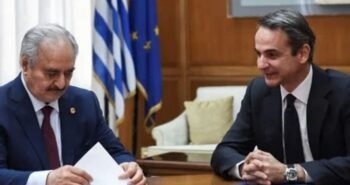
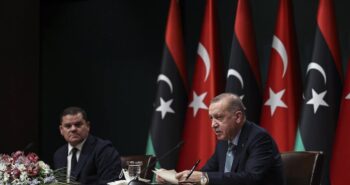
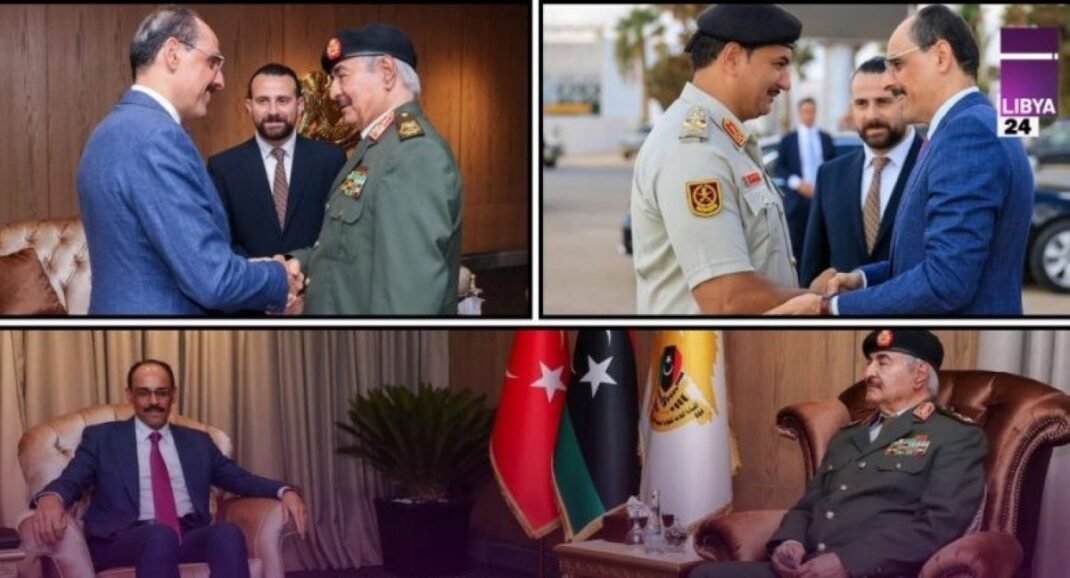
In this context, intelligence channels have become more prominent in recent months, through meetings that brought together leaders from eastern and western Libya with the heads of the intelligence services of Egypt, Turkey, and Italy. These meetings addressed the unification of institutions, the political process, and security and military arrangements. This coincided with the development of Egyptian-Turkish coordination, renewed American engagement, and the continued Russian presence.
In light of this, the study begins with a key question: To what extent has the rise of intelligence diplomacy contributed to reshaping the mechanisms for managing the Libyan crisis, and what factors explain this rise, its paths of influence, and its limits?
First: Intelligence diplomacy: concept
and functions
Despite the widespread use of the term “intelligence diplomacy” in recent years, there is no comprehensive and consistent definition of the concept in the literature or in government practice. Brett Holmgren, former U.S. Assistant Secretary of State for Intelligence and Research, points to the multiple approaches to defining it; some limit it to “the exchange of information between intelligence agencies,” while others link it to “the use of intelligence to support public diplomacy and influence the positions of partners and adversaries.” The U.S. State Department adopts a broader concept based on “the use of intelligence to support diplomatic activity and serve foreign policy objectives by informing partners, building alliances, facilitating cooperation, bridging positions, and verifying commitments.”
This use has gained even greater importance with the widening link between intelligence and foreign policy. Frank Leith Jones, in a study published by the U.S. Army War College in July 2026, concludes that intelligence has become an instrument of the state, operating in conjunction with diplomatic, military, and economic tools.
He argues that the Russian-Ukrainian war highlighted its capacity to serve direct political objectives through “strategic warning, consensus-building among allies, messaging to adversaries, and supporting diplomatic action.” He also notes the Biden administration’s use of the term “intelligence diplomacy” to describe the application of intelligence to support diplomacy and foreign policy goals.
In light of this, the study defines intelligence diplomacy operationally as “the use of intelligence agencies, their leadership, communication channels, and information outputs to serve foreign policy objectives, through exploring situations, conveying messages, building understandings and guarantees, supporting negotiations, and linking political arrangements to security considerations.” This includes the use of intelligence officials as channels of communication, along with the application of information produced by the agency to support political and diplomatic action. This diplomacy is not necessarily secretive; some of its contacts may take place outside the public sphere, while others may occur in the form of public meetings.
This overlap is rooted in the nature of modern state instruments. Saad Mohammed Al-Rumaihi’s study of the “Diammel” model demonstrates that diplomacy, information, military power, and the economy operate within an interconnected system to serve national security objectives, and that intelligence intersects with these through information gathering, analysis, and decision support. Furthermore, there is a shared space between diplomatic and intelligence work in dealing with foreign affairs, making institutional coordination between them crucial for managing complex issues.
The relationship with overlapping
diplomatic patterns
Intelligence diplomacy is linked to traditional diplomacy, though their institutional nature and tools differ. Official diplomacy relies on foreign ministries, embassies, and authorized representatives to manage relations and negotiate on behalf of the state, while intelligence diplomacy leverages the information, relationships, and direct contact that intelligence agencies possess with political, security, and military actors.
This makes it suitable for sensitive issues that require gauging positions or engaging with multiple parties before moving to formal negotiations. This overlap does not imply that foreign policy management is transferred to intelligence agencies; they remain tools within a framework defined by the political leadership and the state’s objectives.
Intelligence diplomacy also intersects with back-channel diplomacy without being synonymous with it; the back channel describes a method of communication or negotiation away from the official route or public scrutiny, regardless of who conducts it, whether a diplomat, advisor, mediator, or intelligence official.
The literature on the negotiation program at Harvard Law School indicates that these channels allow for testing the other party’s willingness to negotiate, exploring possible concessions, overcoming some preconditions, and reducing political pressure on the negotiation process.
Therefore, back channels describe the method of communication, while intelligence diplomacy defines the nature of the tool, the actor, and the function. An intelligence agency may conduct covert back channels and may also engage in diplomatic activity through a public meeting. This distinction is particularly important in the Libyan context, where some meetings between intelligence chiefs and political and military leaders are made public, while other communications, or parts of their content, remain outside the public sphere.
Intelligence diplomacy also differs from traditional intelligence cooperation. Exchanging information on terrorism, organized crime, or security threats remains interagency cooperation, whereas diplomacy begins when information or existing relationships are used to achieve a political objective, such as influencing a partner’s position, conveying a message to an adversary, or bridging the gap between conflicting parties. Holmgren distinguished between the exchange of information for cooperative purposes and its diplomatic use to shape perceptions, reconcile positions, or change policies.
___________________