Archive - August 2024

For North Africa, crisis is actually good

Hafed Al-Ghwell

In an era marked by enduring turmoil, the political elite in North Africa have found the crises that plague the world and strain domestic resilience to be surprisingly beneficial for their governments.
As security threats escalate and irregular migration intensifies amid the spillovers from widening geopolitical rifts, the governments in Algeria, Tunisia, Libya, and Morocco are increasingly leveraging the new opportunities arising from a tide of convergent challenges to entrench themselves and the power and influence they wield.

Algeria’s strategic significance has soared in the wake of Russia’s invasion of Ukraine in 2022. The ensuing energy crisis in Europe transformed Algeria from a regional player into a crucial supplier, with Italian and German delegations rushing to Algiers to secure gas deals as an alternative to Russian energy supplies. In 2022 alone, exports of natural gas from Algeria to Italy surged by 20 percent, demonstrating the country’s newfound prominence.

These agreements not only mitigated some of Europe’s energy woes, they also bolstered Abdelmadjid Tebboune’s precarious presidency of the country, providing him with substantial geopolitical leverage. While Algeria’s government faced criticism for clamping down on journalists and activists, the indispensable role it has played in European energy security has resulted in increased Western favor.

Capitalizing on this geopolitical shift Algiers has adopted a more assertive foreign policy, proactively engaging in its long-standing rivalry with Morocco. Beyond the energy exports, Algeria is also channeling its windfall revenues into domestic initiatives to create jobs, improve water security, and lay the foundations for overdue economic diversification.

For instance, the Algerian government has implemented new policies designed to stimulate private sector growth in an attempt to tackle unemployment, which stands at more than 20 percent for women and just under 10 percent for men.

Additionally, recent amendments allowing the deployment of its military forces in other countries signal a broader intention and strategy to play a more pivotal role in regional stability, particularly as part of Arab League and African Union peacekeeping missions.

This balanced approach between a strengthening of domestic policies and assertion of influence abroad reveals Algeria’s strategic use of crises to redefine its role both regionally and globally.
In Tunisia, President Kais Saied continues to exploit an escalating migration crisis to increase his political leverage.

It is an extension of a similar gambit Saied employed to capitalize on European fears of a heavily indebted Tunisia spiraling into economic collapse, which allowed his regime to extract concessional funding while pushing back against International Monetary Fund demands for austerity and stringent reforms.

The EU, in its desperation to curb migrant flows, has offered substantial financial aid to Tunisia, with little oversight. This transactional relationship gives Saied additional financial support, with few or no strings attached, that temporarily eases the acute economic distress in his country, characterized by soaring unemployment rates and severe shortages of fuel and other basic staples.

Beyond this financial aid, Saied is also exploiting widening geopolitical rifts in an attempt to assert his control and gain legitimacy. By pivoting toward Russia, China and Iran, he anticipates the receipt of additional funding and diplomatic cover that is not conditional on striving for or preserving the democratization of Tunisia and the institutions that would safeguard it. These alliances are especially pertinent as the country edges closer to a pivotal presidential election in October.

In Libya, the fragmented landscape of governance is receiving renewed attention amid the global distractions as a result of the self-interests of external actors, most notably Turkiye and Russia. The administration of Prime Minister Abdul Hamid Dbeibeh has strategically leveraged the EU’s need for alternative sources of energy post-Ukraine by promising increased oil production to help shore up European energy security as imports from Russia dwindle. However, this engagement is fraught with allegations of corruption and mismanagement that compromise its credibility.

Meanwhile, the rival government in the east of the country is serving as a gateway for Russia to deeply embed itself in Libya, purportedly aiding Kremlin-backed initiatives such as the circumvention of international sanctions and the facilitation of fuel-smuggling operations.

Furthermore, Libya’s borders have become a conduit for sprawling illicit economies, which are magnifying the ramifications of the migrant crisis. As European border policies focus more on deterrence than resolution, Libyan elites are taking advantage of the country’s porous borders to sustain and expand these underground economies.

Morocco’s adept navigation of global crises exemplifies the ways in which nations can capitalize on turbulent times to further their own strategic objectives. For instance the Abraham Accords, normalizing relations with Israel, enabled Rabat to enhance its international security and intelligence ties, especially with the US. Such alliances have brought with them access to advanced technology and enhanced defense capabilities, tilting regional power dynamics in Morocco’s favor.

While normalization with Israel risked alienating a populace among which pro-Palestinian sentiment is strong, Rabat simply opted to recalibrate its foreign policy in anticipation that the strategic gains would eventually outweigh any domestic disapproval.

Simultaneously, Morocco’s pursuit of an independent migration strategy is helping the country shake up traditional EU-North African dependency dynamics. Its national strategies related to migration contrast heavily with more heavy-handed EU approaches elsewhere in the region, by striking a balance between deterrence of irregular migration and the protection of migrants’ rights. In return, Morocco gains a soft-power boost on the African continent and avoids the stigma of being seen to do the EU’s “dirty work.”

In summary, the turbulent global environment is providing North African countries with substantial geopolitical currency. Whether through energy deals, strategic alliances or migration agreements, governments in the region are fully committed to leveraging the effects of global instability to entrench themselves domestically and project influence abroad.

_____________________

Benghazi is a major stumbling block for national reconciliation efforts

Mary Fitzgerald

In May 2014 Libyan General Khalifa Haftar launched a then-unauthorized military operation from Benghazi, Libya’s second-largest city. The operation, which Haftar named Karama, or Dignity, was centered on but not limited to Benghazi; its declared aim was to eradicate what Haftar and his associates described as terrorism. However, it prompted a swell of armed opposition from those who suspected it was a pretext for the septuagenarian general’s ambition to rule Libya.

On July 5, 2017, Haftar announced the complete “liberation” of Benghazi, although fighting in the downtown area of Sidi Khreibish only ended in January 2018. Between 2014 and 2018, Benghazi underwent the most significant transformation in its modern history, with displacement, dispossession, and the killing of thousands overturning generations-old social and economic dynamics. The consequences shaped not only the city’s current trajectory but also political and social developments in Libya more generally.

The four-year conflict resulted in the destruction of large areas of Benghazi; in 2021, its municipality said it had documented more than 6,000 properties that had been partially or wholly damaged during the fighting. Moreover, it divided families and neighbors, prompted the most extensive displacement in postcolonial Libya, and created new forms of identity rooted in grievance and partisan narratives of what had sparked the conflict. In a country where the legacy of Muammar Gaddafi–era property redistribution remained an obstacle to reconciliation, widespread seizures of property and land both during and after the fighting drove further antagonism in Benghazi.

Soon after its launch, Operation Dignity gained significant public support among the residents of Benghazi, who were becoming increasingly frustrated with deteriorating security. A series of assassinations had roiled the city. Former regime security personnel were targeted, along with civil society activists, judges, and journalists. The killings—mostly drive-by shootings and car bombings—generated both fear and widespread anger. Many commentators blamed groups, including Ansar al-Sharia, designated an al-Qaeda affiliate by the United States in January 2014 after it was linked to the 2012 diplomatic mission attack in which US ambassador Chris Stevens and several of his colleagues were killed.

Apart from its suspected role in the assassinations and bombings that shook Benghazi, Ansar al-Sharia had long unnerved many. The debate over how to address the problem of the group and its associates’ growing presence and influence in the city had divided residents before the launch of Dignity, and subsequently proved one of the main drivers of the ensuing conflict.

Operation Dignity began with attacks—including air strikes—on Ansar al-Sharia, as well as several armed groups that identified as “revolutionary” rather than Islamist. Faced with a common threat, a number of these militias united with Ansar al-Sharia under an umbrella group they named the Benghazi Revolutionaries Shura Council (BRSC).

Some groups that did not join BRSC continued to fight alongside it. The prominence of Ansar al-Sharia within the BRSC alliance benefited Haftar and his allies, serving to buttress their claim that their opponents were terrorists. When an Islamic State group affiliate emerged in Benghazi in late 2014, it recruited scores of Ansar al-Sharia members, who joined returnees from Syria and foreign fighters. Beheadings and other brutal tactics associated with the Islamic State group in Syria and Iraq became a feature of the fighting in Benghazi, and helped consolidate popular support for Dignity.

These developments reinforced the views of those who had warned that a “force only” approach to Benghazi’s extremism challenge, together with Haftar’s scattershot targeting of a wide range of factions he considered a threat to his personal ambitions, risked not only radicalizing a far larger cohort but also pushing Benghazi into a long internecine war.

After the war, it was clear several new societal dynamics had emerged in the city. These dynamics were often shaped by perceptions of who had lost and who had gained from the conflict. Among those who had fought for or staunchly supported Dignity, there was a triumphalist mood.

Several appeared to benefit materially, taking over abandoned properties or participating in Benghazi’s war economy. There was a reshuffling of key posts in the city, with existing personnel replaced with individuals from eastern tribes now considered “victors” due to their support of Haftar and his operation.

Benghazi residents who had not participated in the conflict but who adopted the Dignity narrative of how and why it had started were relieved to see Ansar al-Sharia and its associates gone. Many bonded through a collective memory of the conflict as solely a battle against terrorism, and in the process created new social milieus and civil society organizations.

Other social dynamics brought about by the war caused concern among the city’s population. The influence wielded by the Madkhali Salafists prompted much trepidation. As Haftar advanced through Benghazi during the war, the armed Madkhalis he had recruited took over mosques and religious institutions in the city.

Later fully entrenched, the Madkhalis issued rulings against women traveling without a male guardian; called for all gatherings to be gender segregated; denounced any celebration of the Prophet Muhammad’s birthday, traditionally a popular holiday in Libya; prohibited demonstrations as sinful; and intimidated civil society actors and cultural institutions. 

Another dynamic was the emergence of a stronger regional identity. This was particularly evident among a younger generation that had little adult experience of pre- Dignity Benghazi. The black flag of the short-lived Emirate of Cyrenaica (1949–51)—more recently associated with federalists seeking greater autonomy for eastern Libya and hard-line separatists—became an increasingly common sight in the city.

Benghazi also began to look different. While the reconstruction of neighborhoods damaged during the war was piecemeal, other parts experienced a building boom. In many cases, the increased construction was related to economic predation by Haftar’s inner circle—particularly his sons, a number of whom were given military ranks without any background or training—and their Libyan Arab Armed Forces units. In 2021, Osama al-Kizza, head of municipal planning in Benghazi, warned that a surge in unregulated construction was resulting in districts that lacked roads, water, sanitation systems, and other infrastructure.

A decade after Operation Dignity tipped Benghazi into four years of fighting, the people of the city—whether residents, internally displaced, or displaced overseas—continue to disagree about what caused the war and why it lasted so long. The trajectory of the conflict has been the subject of much revisionism, but there is consensus that Benghazi experienced an unprecedented transformation as a result.

The social and economic dynamics that emerged from the 2014–18 war not only upended what had been a generations-old status quo. They also gave rise to new identities, both among the majority of Benghazi residents who were broadly favorable toward Dignity and among those who opposed the operation and were exiled. Partisan narratives of the war have created powerful communal bonds in its aftermath.

The disappearance, detention, or killing since 2018 of prominent figures who were erstwhile allies or supporters of Haftar, among them a female parliamentarian, a female lawyer, and a former Dignity commander, has in some cases prompted disquiet and the questioning of both the current Haftar-dominated status quo and the operation that led to it. 

While many of the displaced have resettled in Benghazi, others who were displaced due to their opposition to Dignity or wider political views believe it remains unsafe for them to return. The city presents a particularly difficult challenge for greater reconciliation in Libya. In the absence of any comprehensive reconciliation efforts, it is unlikely that the decade-old divisions among extended families, neighbors, and communities that once called Benghazi home can be resolved.

***

Mary Fitzgerald is a writer, researcher, and consultant specializing in the Mediterranean region, with a focus on Libya. She has worked on Libya for more than a decade. She spent several months on the ground during Libya’s 2011 uprising, lived in Tripoli in 2014, and continues to make regular trips to the country.

____________________

A budget to consolidate the division

Abdullah Alkabir

In a recurring pattern, the House of Representatives has once again bypassed both the Constitutional Declaration and the Political Accord, issuing the budget law for 2024. This time, they added approximately 89 billion dinars to the previously decided amount, resulting in a total figure of about 188 billion dinars—the largest budget allocation in the country’s history.

However, the Constitutional Declaration stipulates that the budget law must be approved by 120 representatives. Surprisingly, during the voting session, the number of attendees fell short of fifty. The representatives present evaded answering questions posed by the media, about the number of representatives attending the session.

As usual, the High Council of State, which is based on the Political Accord is the partner of the House of Representatives on budget matters, election laws, sovereign positions, selection of the head of government, and withdrawing the vote of confidence from the government was sidelined once again.

Therefore, it is only natural that the Head of the High Council of State rejects the law and suspends participation in a meeting convened by the Arab League Presidency with the Speaker of the House of Representatives and the Head of the Presidential Council.

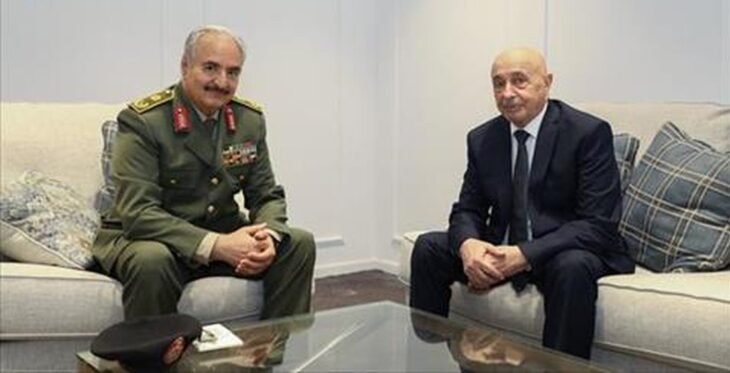
Before the House of Representatives session and budget approval, a significant meeting took place in Cairo. Speaker Agila Saleh met with Al-Siddiq Al-Kabir, the Governor of the Central Bank of Libya. Some House members revealed that the governor confirmed the bank’s ability to cover a budget estimated at around 170 billion dinars. This official announcement this week underscores the issue’s prior arrangement over the past two months.

Economists have raised concerns about the budget’s impact on the national economy. With oil revenues as the sole income source and the Libyan dinar’s value relative to a basket of foreign currencies, implementing the budget law with such a substantial amount could lead to inflation, deficits, and a decline in the dinar’s value—especially if global oil prices fall.

Politically, the repercussions are even more severe. The budget will be divided between the two governments. The Tripoli government will handle disbursing salaries and support items due to their data and assets being located in Tripoli’s ministries. Other budget items will be allocated between the two governments, each spending its share in its respective areas of influence.

In such a way, the division has been legitimized with international blessing, because the crisis-involved parties have remained silent with no comment on such developments, despite its escalation of the crisis, and disrupting a political dialogue mediated by the Arab League last March.

As there are no positive signs of elections getting any closer in the foreseeable future, the de facto authorities seem to continue. By easing the intensity of conflict through the sharing of revenues, and satisfaction of each party with their respective gains from the spoils, the divisions could be consolidated leading to complete divisions.

_____________________

Who Are Libya’s New Leaders? (1)

Jalel Harchaoui 

A first agreement has helped to overcome the divisions that have affected Libya for years. New leaders have been appointed. Who are they? Will they have the means to set the country on the road to reconstruction?

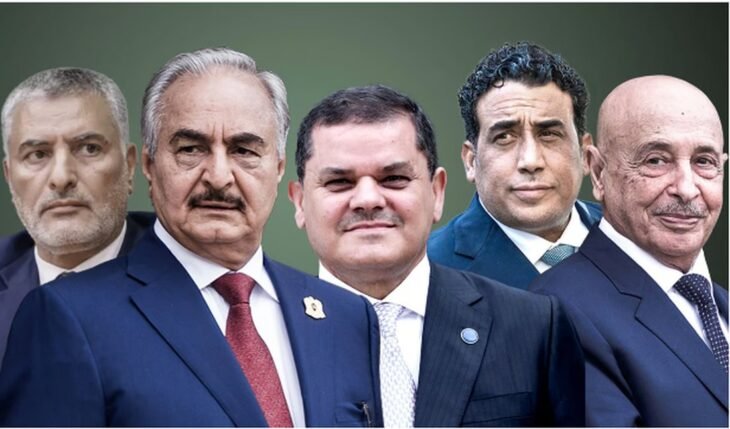
On February 5th in Geneva, 74 delegates previously picked by the UN as part of its Libyan Political Dialogue Forum (LPDF), elected four figures to lead a new interim government. The prime ministership went to Abd al-Hamid Dbeibah, a candidate whom commentators deemed controversial but never thought would win.

The 62-year-old mogul from the western port city of Misrata now has until February 26th to form a cabinet, which, if confirmed, is expected to sweep into power next month and remain in place until general elections take place on December 24 or, more realistically, later.

The mechanism used to designate the prime minister and a triumvirate—called the presidential council, featuring a figure from each of Libya’s three provinces—was proposed by the UN as a means of easing Libya out of internationalised civil war. The goal is also to demonstrate that one unified government could hold despite the division that persists on the ground.

For months, until last spring, the eastern-Libyan-based commander Khalifa Haftar’s military offensive—with the combat assistance of Russian and other foreign mercenaries as well as Emirati air strikes—raged against armed groups aligned with the UN-recognized government in Tripoli. And in June, the Turkish state and its Syrian mercenaries helped the Tripoli government expel Haftar’s main brigades and allies from north-western Libya, a province called Tripolitania.

Now, Turkey’s military mission in the northwest and the Russian force in the centre, are not controlled by Libyans, but they help achieve a balance of power. The relative calm resulting from this approximate equilibrium, enabled the UN to promote ceasefire declarations and kickstart the LPDF last autumn.

The man widely expected to become prime minister was the current Tripoli government’s interior minister, Fathi Bashagha, aged 58, also from Misrata. Last year, when Turkey’s military intervention began looking like a game changer, a self-confident Bashagha embraced the Muslim Brotherhood’s idea of reaching out to a preeminent member of the opposite camp, whose main turf is Cyrenaica, the eastern half of Libya.

Bashagha partnered with Aguilah Saleh Issa, the chairman of the country’s eastern-based Parliament. Although the Egyptian-backed Saleh has never diverged in a fundamental manner from Haftar, he has often been a convenient civilian alternative to the stubborn Emirati-backed commander for actors outside Cyrenaica.

The pursuit of an entente with Saleh traces back to the spring of 2018, when the Libyan Muslim Brotherhood-affiliated political party’s Khaled al-Meshri, upon acceding to the helm of the High Council of State in Tripoli, began conversing with his counterpart in the eastern parliament. The bet, revived amid Haftar’s defeat last year, was that a conciliatory stance by Bashagha, Meshri’s tactical ally, would give the interior minister an opportunity to rise to a higher office thanks to a UN peace process.

Things didn’t pan out, however. The list featuring Bashagha as prime minister and Saleh as president lost to the roster featuring Dbeibah and his running mates. In lieu of a list dominated by familiar faces, including Bashagha, known for his anti-corruption rhetoric, a combination of relatively obscure names prevailed. A brief look at their past itineraries helps avoid oversimplifications.

PROSPEROUS TIMES

Among the 74 delegates who voted earlier this month in Geneva on behalf of Libya’s public at large was Ali Ibrahim Dbeibah, aged 75, one of Libya’s richest citizens. Because he is a strategic backer of his first cousin and brother-in-law Abd al-Hamid, Ali matters.

Libyans who frequented Ali back then say that he acquired his immense wealth in the last decade of Muammar Gaddafi’s era thanks to his privileges as a pre-2011 regime official. A geography teacher by trade, he was mayor of Misrata in the 1970s. Over the years, his efficacy as a shrewd administrator earned him a special proximity to the then-Libyan autocrat.

The latter, in 1989, made him the head of the Organisation for Development of Administrative Centres (ODAC), a state-owned entity overseeing infrastructure development across the North African country. Normalisation of Libya’s relations with the United States and Britain in 2003 allowed for a gradual removal of international sanctions, which coincided with a boom in oil prices. The result was exceptional prosperity.

GADDAFI’S CONFIDANT

Gaddafi’s dictatorship spent tens of billions in construction projects, the overwhelming majority of which was awarded to Chinese and Turkish companies. The Libyan leader let Ali Dbeibah play a central role in the distribution and supervision of these contracts through ODAC. His responsibilities may have included overseeing the kickbacks and other under-the-radar schemes associated with them, although no hard proof exists.

By 2006, Ali’s status as Gaddafi’s confidant enabled his cousin and close associate Abd al-Hamid—a civil engineer who studied in Canada—to accede to the head of the Libyan Investment and Development Holding Company (LIDC), yet another real-estate conduit through which flowed billions of public dollars.

In those times of plenty that preceded the popular revolt against Gaddafi, the Dbeibahs also built a business connection with an architect by the name of Nadia Rifaat, married to another architect from Tripoli: Fayez al-Serraj, the current UN-recognized president and prime minister of Libya.

Nadia Rifaat, being a close relative of Gaddafi’s first wife, held senior responsibilities at the Tripoli governorate’s Projects Office in the 2000s. In that capacity, she commissioned much construction work from the Dbeibahs. The Serraj-Dbeibah connection illustrates the resilience of some of Libya’s pre-2011 elites through years of turmoil.

SWITCHING SIDES

During the same busy decade, Muammar Gaddafi, in a bid to present his son Saif al-Islam as a potential successor, let him project the image of a modern and tolerant reformer. In 2004, the regime enabled Saif to launch the sprawling endeavour called “Libya al-Ghad” (“Tomorrow’s Libya”). The program’s declared goal was to liberalise the country on three fronts: economic, social, and political.

The economic side of al-Ghad—particularly when it came to development and public investment—leaned on ODAC and LIDC. The political facet of “al-Ghad” involved a thaw with the Muslim Brotherhood, a process in which a Doha-based political Islamist from Benghazi by the name of Ali al-Sallabi played a central role. Qatar has harboured and propped up Sallabi since 1999; he now spends part of his time in Istanbul. Saif al-Islam’s Libya al-Ghad is how the Dbeibahs became acquainted with Sallabi and other Muslim brothers.

When the February 2011 uprisings erupted, Ali Dbeibah was abroad and hesitated for a few weeks as to which side to join. Owing to its substantial economic interests in Libya, Ankara’s first instinct was to oppose the intervention that Washington, Doha, Paris, and London were advocating. Abd al-Hamid Dbeibah, who was in Libya, offered to act as a mediator between Tripoli and Ankara.

The proclaimed thinking was to incentivise the Turks into sticking with Gaddafi by accelerating payments on existing contracts. But American insistence helped convince Ankara to join the NATO operation—and the Dbeibahs turned on their boss. They abruptly dropped the promises they made to Gaddafi as part of the negotiations with Turkey and, instead, injected large sums in Misrata’s armed insurgency.

During a long, harrowing siege at the hands of loyalist forces, the city received aid from Qatar in the form of weapons and humanitarian supplies shipped via the eastern city of Benghazi and coordinated by Sallabi. The Dbeibah family has preserved this friendship with both Sallabi and the Qatari state until today.

The connections above often elicit accusations that the Dbeibahs will go to great lengths to defend the Muslim Brotherhood’s ideology. In reality, they are too rich and powerful to be at the service of some Islamist project whether transnational or domestic. The rapport with Turkey is key and undeniable but it doesn’t rule out arrangements with other centres of power. For instance, Abd al-Hamid, as a private businessman, has had close links with Russian counterparts, including through Ali’s dealings in Cyprus.

In February 2013, the Attorney General’s Office in Tripoli initiated an indictment process against Ali, but the effort petered out. In 2016, the Tripoli authorities accused Ali of using public money to purchase real estate in Scotland during the Gaddafi years. Separately, a Toronto-based newspaper alleged that some of Ali’s wealth sat in Canada.

Since 2014, the Dbeibah family, including Abd al-Hamid, has funded Misrati brigades in moments of crisis, such as the port city’s 2016 war against the extremist organisation Islamic State in Sirte.

Ali’s status as one of Misrata’s most influential men has often enabled him to shape aspects of Tripoli’s political and security landscape without occupying the front of the stage. But in 2017, when rival Libyan factions said they would hold UN-backed elections, the younger cousin Abd al-Hamid began traveling and marketing himself explicitly as a full-blown politician. But because of his image as a shadowy tycoon, his new aspiration was seldom taken seriously—until this month.

***

Jalel Harchaoui – Senior fellow researcher specialising in Libya within the Geneva-based Global network Initiative against Transnational Organized Crime.

_____________________