Filippo Sardella

Precedents, continuity and risk of normalization of the crisis
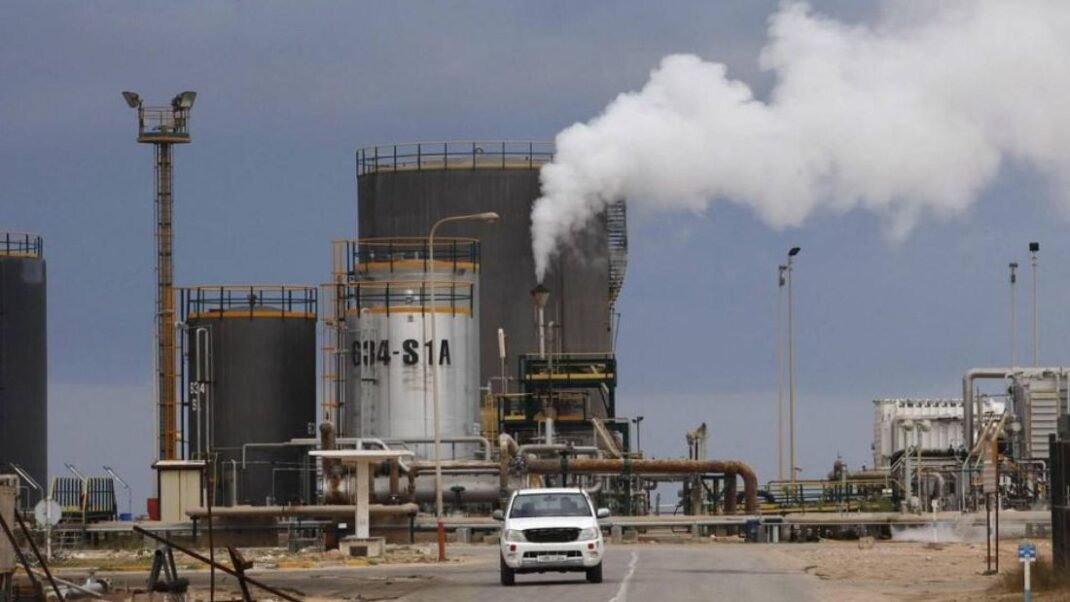
The May 2026 sequence did not arise in a vacuum. In December 2024, Reuters and AP had already reported armed clashes in Zawiya, resulting in fires and damage to the refinery. This precedent is significant because it demonstrates a recurring pattern: when armed competition enters the urban-industrial perimeter, the risk no longer remains political but becomes technical, environmental, and commercial. The repetition of similar episodes suggests that the refinery is not merely close to an unstable city; it is embedded in a security environment that has not yet effectively separated critical infrastructure from local conflict.
The institutional image of Libyan energy governance is that of a sector struggling to function, plan, and attract expertise despite an uncertain security environment. The material published by the National Oil Corporation on the technical-financial meeting with Zawiya Refinery in 2024 highlights the administrative and industrial dimensions of the asset: production objectives, maintenance, environment, local distribution, investments, and planning. The flipside of this same asset is its exposure to armed conflict. This duality is at the heart of the dossier: the refinery is a formal economic infrastructure located within an informal geography of power.
Speculative hypothesis
The crisis as a violent negotiation of income, not as a simple clash between gangs.
The most prudent hypothesis is that the Zawiya crisis cannot be reduced to an episodic dispute between rival groups, but represents a form of violent negotiation over profitable opportunities: subsidized fuel, commercial goods, port access, control of neighborhoods, transit to Tunisia, and informal protection of supply chains. It is not necessary to attribute a conscious geopolitical strategy to each actor to recognize an overall geopolitical effect. When the oil infrastructure is shut down, the Tunisian border indirectly becomes tense, the Tripoli government must demonstrate coercive capacity, the NOC must reassure operators and workers, and armed networks evaluate whether to resist, negotiate, or reposition themselves.
In this interpretation, the security operation launched after the clashes serves a dual purpose. On the declared level, it aims to target criminals and wanted individuals. On the strategic level, it could serve to redefine who controls Zawiya’s economic perimeter. The risk is that the restoration of order will be interpreted locally as a selection of some groups against others; the opportunity is that the Western Libyan government can, for the first time, more credibly separate the refinery’s security from the urban networks of coercion.
The decisive variable will not be the initial statement, but the persistence of the effect: if after the operation the port remains protected, the refinery operates, and the border is subject to less pressure, then the crisis can lead to an operational strengthening. If, however, the action remains episodic, Zawiya will once again become a clearinghouse between income and weapons.
So What
Best Case Scenario
Key assumptions: the security operation successfully neutralizes the most destabilizing armed hubs without devolving into a protracted urban war. The NOC and the operator maintain credible emergency procedures, the port gradually returns to operation, local authorities cooperate, and the border with Tunisia is not subjected to a new wave of closures or frictions. In this scenario, Zawiya becomes a test of selective state control: not the solution to the Libyan crisis, but a precedent for protecting critical assets.
Impacts: The refinery’s continuity reduces the risk of internal distribution shocks; the Tripoli government can politically leverage its capacity for intervention; Tunisia and border communities benefit from reduced informal pressure. Strategy: Perimeter protection of the plant, financial intelligence on fuel networks, coordination with Tunisian authorities, distribution flow audits, and prudent public communication. Steps to follow: Stable reopening of the port, no new attacks in the industrial area, arrests without retaliation, improved fuel traceability. Operational advice: Daily monitoring of NOC communications, the status of the Ras Ajdir crossing, and local reports of queues, shortages, or incidents.
Worst Case Scenario
Key hypothesis: Security pressure disrupts local balances without replacing them with stable state control. Some groups react, the refinery becomes vulnerable to attacks or sabotage, the port remains intermittently closed, and fuel revenue shifts to more opaque alternative routes. In this scenario, state action does not reduce the criminal economy but reorganizes it, increasing the cost of security and uncertainty for energy operators and local communities.
Impacts: New refinery outages, potential pressure on domestic supplies, tension with Tunisia if the border becomes more porous or militarized, further loss of confidence in western Libya’s ability to protect strategic infrastructure. Strategy: Avoid triumphalistic communications, open local mediation channels, strengthen fire defense and logistical redundancy, and monitor suspicious movements on the coast and border. Steps to follow: Increased videos of clashes, statements from local groups, crossing closures, reports of fuel shortages. Operational advice: Treat any reopening as reversible until at least two to three weeks of operational continuity are observed.
Stability Case Scenario
Key assumptions: No actor achieves a clear victory. The refinery reopens, but informal income survives in a more discreet form; the security operation reduces the visibility of armed groups without dismantling economic networks; the Tunisian border remains manageable but not immune to trafficking. This scenario is probably the most compatible with the recent history of western Libya: tactical stabilization, partial institutional continuity, and the persistence of gray economies.
Impacts: Lower immediate risk to the plant, but no structural transformation of the subsidized fuel supply chain; local stakeholders are adapting; authorities achieve a narrative result without full economic recovery. Strategy: Shift focus from public order alone to fuel distribution governance, customs controls, audits, and volume tracking. Next steps: Technical reopening, media normalization, but no reforms on subsidies, imports, and distribution. Operational advice: Distinguish between visible calm and actual reduction in revenue.
Conclusions
Zawiya as a stress test for Libyan statehood
The Zawiya crisis demonstrates Libya’s difficulty separating energy, security, and income. The established fact is that the fighting has reached a sufficient level to force the refinery to shut down and the port to be evacuated. The strongly supported fact is that the city is a nationally important energy and logistics hub, connected to a sensitive border and long-standing informal economies. The signal to monitor is the security operation’s ability to exert control without triggering a new cycle of retaliation. The analytical inference is that Zawiya is not an anomaly, but an indicator: when a state does not fully control the supply chain between production, refining, distribution, and the border, fuel becomes an instrument of power even before it becomes a commodity.
In the short term, the key variable is the complex’s physical security: the absence of new attacks, the return of personnel, fire safety, and the port’s recovery. In the medium term, the response of local networks is crucial: if they adapt without conflict, the crisis can be resolved; if they shift to other routes or react, the problem spreads. In the long term, the issue raises the structural issue of subsidies, transparency in distribution, and institutional fragmentation. Without a reform of the control chain and traceability tools, Zawiya’s geography will continue to create incentives for armed competition.
____________________