Oscar Rickett

UAE funding for Tripoli offensive
By October 2018, the UAE and the Haftar family had agreed to launch a full-scale invasion of Tripoli. Wagner Group, a private security contractor with links to the Kremlin, was willing, according to The Sentry, “to fulfil a combat function but demanded steady cash”.
Offshore channels were needed to move dollars to fund the operation, with the UAE and, to a lesser extent, Saudi Arabia suspected of having supplied the bulk of the financing. Haftar’s network called on Gadalla, The Sentry said, “thus giving a prominent role to a younger financier who had operated in Dubai since 2008”.
With Farhat Bengdara, an economic adviser to the Haftar family, as chairman, Al Masraf bank extended $300m in loans to three obscure Dubai-based companies controlled by Gadalla in 2019: JTA General Trading LLC, Al Mored Oasis General Trading LLC and ANAA General Trading LLC.
When questioned by MEE, Gadalla’s representatives said that he had no business relationship with Bengdara.
According to senior Libyan Foreign Bank officials who spoke to The Sentry, the money, which left Gadalla’s companies “almost immediately”, funded Haftar’s operations and “most likely bankrolled Wagner mercenaries’ deployment in the context of the April 2019 offensive” – allegations which Gadalla denies.
The UAE has served as a hub in Wagner-linked revenue chains, and US government assessments and intelligence reports have at various times accused Abu Dhabi of financing, collaborating with or facilitating Wagner operations, particularly in Libya.
Thousands died in the Tripoli offensive, which was also supported by Egypt and France as well as the UAE and Russia, and hundreds of thousands were forced from their homes. Despite more than 1,000 Emirati air strikes across Tripoli and the involvement of Russian combatants, the invasion was not successful and the money spent on it remains, for the most part, lost.
“After Haftar’s offensive collapsed, the loans have remained largely unpaid, leaving the Libyan public to bear the financial burden while Gadalla has faced no accountability,” The Sentry said.
Smuggling fuel and arms
The UN Panel of Experts report describes Gadalla as a “Libyan national who rose rapidly within the banking sector over the past 10 years with the support of Saddam Haftar”. The panel reported that Gadalla “subsequently used the funds at his disposal to purchase shipments of diverted fuel from armed group actors operating in both western and eastern Libya”.
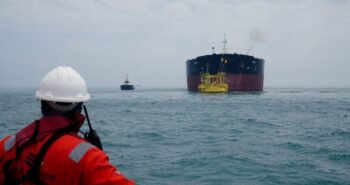
“With their support, and his maritime transport capabilities, he facilitated the illicit export of this fuel from Libya, particularly through ports under the control of armed groups, and resold it for profit.” On 18 July 2025, the European Union’s Operation Irni intercepted the Aya 1 as it sailed from Port Rashid in the UAE to Benghazi. Operation Irini identified missing cargo documentation and inspected, at sea, a sample of six containers out of a total of 332.
The inspection revealed 12 militarised vehicles in some of the containers onboard. Based on photographic evidence provided by Operation Irni, “the Panel assessed these vehicles as military equipment”, the UN Panel of Experts said in its report.
“Operation IRINI contacted the carrier, which is ultimately controlled by Ahmed Alushibe,” it reported, referring to Gadalla. Gadalla has also used the banks he controls to facilitate credit fraud and launder illicit profits, becoming part of the Haftars’ arms and fuel smuggling networks, which connect Libya to Chad, Sudan, Niger and Mali, among others, the Panel of Experts said.
It also reported that in one case, to which Gadalla is not believed to be linked, ammunition originally intended for the RSF in Sudan “was diverted and resold to individuals involved in gold trafficking in Niger” and linked to the Islamic State (IS) group.
Libyan reunification
The spotlight on Gadalla comes as the US pushes for Libyan unification. On 11 April, Libya’s rival legislative bodies approved a unified budget for the first time in more than a decade. Egypt, France, Germany, Italy, Qatar, Saudi Arabia, Turkey, the UAE, the UK and the US all welcomed this development.
A week later, seeking to weaken Russian influence and enhance Washington’s standing in North Africa, US Africa Command’s (Africom) Flintlock training exercises began in the Libyan city of Sirte, with eastern and western Libyan troops training together for the first time. “These exercises are not just military training. These are overcoming differences, building capacity, and supporting Libya’s sovereign right to determine its own future,” John Brennan, deputy commander of Africom, said last year.
The UK has been riding in the US slipstream. Britain’s ambassador to Libya, Martin Reynolds, recently visited Benghazi, where he met with Khaled Haftar, one of Khalifa’s sons, and enjoyed a lemon and mint drink at a rooftop bar. Away from the rooftops, out on the streets, out in the wide desert tracts, an economy that runs on war rumbles on.
***
Oscar Rickett is a news editor and reporter at Middle East Eye. He has previously written and worked for the Guardian, Vice, openDemocracy, ITN, Africa Confidential and the Africa Report.
_________________