Filippo Sardella

Geopolitical-operational dossier on armed conflicts, oil infrastructure, and cross-border networks in western Libya
Abstract
This analysis reconstructs the Zawiya crisis as a geopolitical hub in western Libya: not just a clash between armed groups, but a collision between critical energy infrastructure, subsidized fuel revenues, the Tunisian border, and a weak state chain of command. The report begins with the clashes of May 8, 2026, which, according to Reuters and sources within the refinery operator, led to the suspension of operations and the evacuation of ships from the port. It situates these clashes within a longer-term dynamic of competition over routes, depots, coastal cities, and informal networks.
The paper distinguishes between verified facts, strongly supported data, OSINT signals, elements to monitor, and analytical inferences, avoiding turning the reconstruction into unproven judicial attribution. The underlying thesis is that Zawiya is a point of friction where internal security, the criminal economy, and Libya’s energy architecture structurally overlap.
Initial methodological note
The dossier adopts an evidence-led approach. The facts reported as verified come from international news agencies, official communications, or directly attributed institutional sources. The strongly supported data are recurring and convergent elements from multiple open sources, such as nominal capabilities, operational distances, and infrastructure connections. The OSINT signals include open material that is not always independently verifiable and is only useful if consistent with other evidence. Analytical inferences are prudential assessments of the strategic significance of events and do not replace judicial or investigative verification. The reconstruction is updated as of May 9, 2026, 5:53 PM CEST, and emphasizes the connection between security, energy, economic gain, and territorial control.
| Category | Assessment | What does it mean? |
| Verified fact | high | Precautionary shutdown, port evacuation, shelling in the facility area, and security operation are reported in press sources and statements attributed to operators/authorities. |
| Strongly supported data | medium-high | Zawiya capacity of 120,000 bpd, connection to Sharara and distance from Tripoli are consistent across Reuters, Anadolu and other sources. |
| OSINT signal | medium | Local videos and testimonies indicate clashes in the city and at the refinery, but caution is advised unless geolocalized or verified by third parties. |
| Analytical inference | prudential | The link between clashes, smuggling networks, and the Tunisian border is plausible and supported by the context, but it does not prove individual responsibility. |
Introduction
Why Zawiya Is Not a Periphery: The Short Geography of Libyan Income
Zawiya is located west of Tripoli, along a coastal strip where geography generates revenue. Within a few kilometers, a densely populated city, a large refinery, an oil port, the road to the Tunisian border, and a hinterland where the Libyan state’s capacity remains intermittent, overlap. In a country with divided institutions, semi-autonomous armed forces, and a long post-2011 history of militiaization of security, this overlap transforms the energy infrastructure into both a political and criminal lever.
Zawiya is located on the coastal axis between Tripoli and the Tunisian border. The visual shows why the city’s crisis is not local: the theater unites energy infrastructure, commercial artery, and border space.
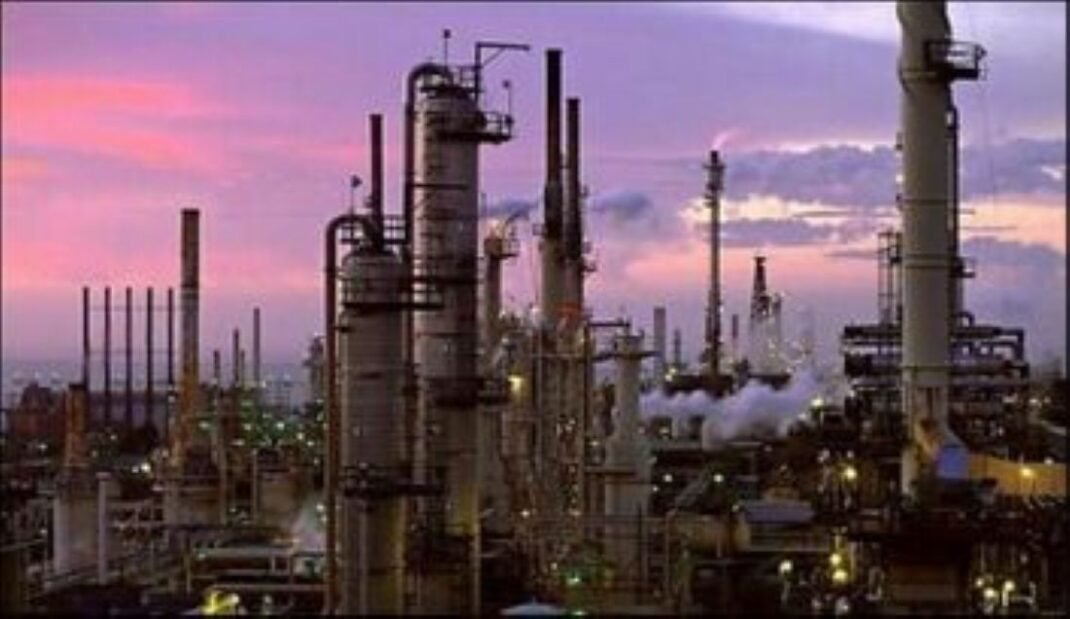
The immediate news concerns the armed clashes of May 8, 2026. Reuters reported that Libya’s largest operating refinery was shut down after fighting near the facility; the operator, Azzawiya Oil Refining Company, said it had completely suspended operations and evacuated ships from the port after heavy artillery fire hit several areas of the complex.
Anadolu, citing the National Oil Corporation, described a precautionary shutdown, evacuation of personnel, and heavy shelling in various parts of the oilfield. These factors, taken individually, describe an industrial emergency. Read in context, they point to a deeper problem: the vulnerability of energy infrastructure when territorial control is fragmented.
The Tunisian dimension is not secondary. Zawiya has for years been cited as a hotspot for fuel and goods smuggling networks to the border. The difference between subsidized fuel in Libya and external prices creates a powerful economic incentive; the coast and the border open up alternative channels; institutional weakness reduces the cost of risk.
It is at this intersection that the issue ceases to be a crime story and becomes geopolitical: not because each armed group has a coherent strategic plan, but because competition for local revenue impacts energy security, border relations, the public budget, and state authority.
Corpus
The operational sequence: from the clashes to the refinery shutdown
The first level of the crisis is operational. The Zawiya refinery, reported by Reuters and Anadolu as having a capacity of approximately 120,000 barrels per day, is connected to the Sharara field, one of the country’s main sources of production, estimated at around 300,000 barrels per day. When such a facility is shut down, it doesn’t just interrupt technical production: it triggers a risk signal for the entire internal distribution network, for the port, for workers, for associated companies, and for the credibility of oil governance.
The emergency declaration should not be interpreted merely as a technical measure. The decision to evacuate vessels and personnel indicates that the perceived risk was not confined to clashes far from the asset, but close enough to impact the physical security of the facility and the operator’s industrial liability. According to press sources, the National Oil Corporation reported that workers were safe and that firefighting teams remained on site. The verified fact is therefore the precautionary shutdown; the analytical inference is that Libyan energy governance is still unable to fully isolate critical assets from urban armed disputes.
Subsidized fuel as the political economy of conflict
The second level is economic. The Sentry estimated that the expansion of fuel smuggling between 2022 and 2024 resulted in losses for the Libyan population in the order of $20 billion. This data shouldn’t be automatically transferred to the Zawiya crisis of May 2026 as if it were direct evidence of individual clashes, but it does provide significant evidentiary context: it indicates that Libyan fuel is not just any commodity, but rather an arbitrary income generated thanks to internal subsidies, distribution opaqueness, and external outlets. In this sense, Zawiya is important because it is part of a supply chain where value is derived not only from the oil extracted, but from the differential between administered price, access to distribution, and informal export capacity.
The Tunisian border accentuates this logic. When an oil city is also close to a land corridor and a port, rent can flow in multiple directions: by road, by sea, through commercial goods, fuel, intermediary networks, and armed protection. This is where the category of “rival gangs” remains descriptive but insufficient. The most useful analytical category is that of rent ecosystem: armed groups, local officials, commercial intermediaries, border networks, and institutional actors operate in an environment where control of a depot, a road, a border crossing, or a neighborhood can generate economic value and political influence.
Actors and Incentives: The Crisis as a Multilevel Competition
The third level is political-security. Western Libyan authorities have presented the operation in Zawiya as an operation targeting criminal havens and wanted individuals, linking the crisis to murders, kidnappings, extortion, drug, weapons, and human trafficking, and irregular migration. This formulation, reported by regional and international sources, signals an attempt to transform a local armed crisis into a campaign to restore law and order. However, in Libya, the line between public order and power negotiations is often fluid: an operation can reduce an immediate threat while simultaneously redistributing positions among armed networks, municipalities, apparatuses, and political centers.
The verified fact is the launch of a security operation after the clashes. The strongly supported fact is Zawiya’s historical importance in the informal fuel and commodity economies. The signal to be treated with caution is the circulation of videos and testimonies of fighting in residential areas and at the compound: useful material for understanding risk perception, but not to be used as independent evidence without geolocation and verification.
The analytical inference is that the crisis represents a window of opportunity for reorganization: the state can attempt to suppress certain networks, but it can also provoke reactions if the operation is perceived as selective or as a transfer of income from one group to another.
__________________