Gregory Aftandilian

In April 2026, with the help of the United States, Libya’s two parallel governments reached an agreement on a unified national budget for the first time since 2013. The two administrations also participated in military exercises sponsored by the United States African Command (AFRICOM) that were held in Libya for the first time.
While these developments may signal cooperation between the rival governments, realities on the ground belie any optimism about imminent reunification. Endemic corruption within each government works to perpetuate the status quo. Well-armed militias run patronage networks that help keep each government in place, while outside powers continue to aid their Libyan clients by way of various military and economic schemes, hindering unification.
The United Nations continues to call for a stop to Libyan groups’ weapons smuggling and illicit petroleum exports. Although the United States and Europe may encourage higher Libyan oil production to make up for the shortfall caused by the closure of the Strait of Hormuz, any additional revenues are unlikely to filter down to the Libyan people.
A Country Plagued by Divisions
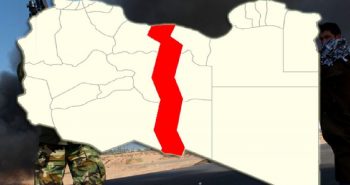
Libya remains deeply divided. The internationally recognized Government of National Unity (GNU) is based in the capital city of Tripoli, but its authority extends only to the western part of the country. The GNU is led by Abdul Hamid Dbeibah, who was supposed to be only an interim prime minister until the nationwide elections that were scheduled for December 2021. After those elections were postponed, however, he stayed on as prime minister (the 2021 vote has yet to be rescheduled). His government is supported by various militias based in and around Tripoli.
In eastern Libya, a second government, the House of Representatives (HoR), traces its origins to the June 2014 elections that created that body. Months after the vote, Libya’s supreme court ruled that those elections were unconstitutional and that the HoR must be dissolved, but instead the HoR relocated to Tobruk, near Libya’s border with Egypt, and became the base of the eastern government. The HoR is supported militarily by the so-called Libyan National Army led by self-anointed Field Marshal Khalifa Haftar.
Based in the city of Benghazi, Haftar is the real power in the east. In 2019-2020, Haftar attempted to take over the entire country, but his offensive was stymied by Tripoli-backed forces and by Turkey, which provided this government with advanced military equipment and personnel. Haftar then retreated to his stronghold in Benghazi. Now, his forces control the eastern coast and much of the interior.
The challenges of holding new national elections and creating a unified national government have frustrated the UN Support Mission in Libya (UNSMIL) for many years. On April 22, 2026, UNSMIL head Hanna Tetteh stated that the political process was stalled, delaying efforts to reunify the country. She voiced frustration, stating, “Allowing status quo actors to evade their responsibilities will only undermine efforts to preserve Libya’s unity and wealth and delay the path to sustained peace, stability, and development.” Her comments echoed those of past leaders of UNSMIL who resigned after facing similar intransigence.
Some Positive Developments
On April 11, 2026, the two governments approved the first unified state budget since 2013, a potential step toward unifying fractured state institutions and reducing corruption. The High State Council, the legislative body of the GNU, and the HoR agreed on a national budget of 190 billion Libyan dinars, equivalent to about $30 billion.
The central bank governor, Naji Issa, stated optimistically that “this is a clear declaration that Libya is capable of overcoming its differences when a unified vision for its future is forged.” Representatives from the two governments said that the unified budget would help ensure a fair distribution of resources and would allocate substantial funds to improve the state-run National Oil Corporation (NOC).
Efforts to agree on a unified budget were assisted by Massad Boulos, Senior Advisor to President Donald Trump for Africa and Arab and Middle Eastern Affairs and the father-in-law of Trump’s daughter Tiffany. Boulos praised the new budget as not only supporting nationwide development projects in Libya but also as shoring up the NOC to allow it to increase energy production and to generate higher state revenues.
Given the current difficulties of exporting oil and gas from the Gulf because of the Iran war’s effective closure of the Strait of Hormuz, the Trump administration may be looking to Libya to meet part of the worldwide oil shortfall. Libya has the largest oil reserves in Africa, estimated at 48 billion barrels, and the country’s oil production has recently increased.
Libya reportedly produced 1.43 million barrels per day (b/d) in early April 2026—one million more than it had produced in the previous month, and a ten-year high. Other reports have indicated that Libya plans to substantially increase natural gas exports to Europe by 2030. Currently the country exports very little gas via the Greenstream pipeline that runs from Libya to Sicily, but there are hopes of boosting this with the assistance of foreign companies.
In early April 2026, AFRICOM for the first time sponsored military exercises in Libya, called Flintlock, in partnership with 30 African and European countries. The exercises are designed to improve counterterrorism efforts in the Sahel and perhaps also to push back against Russian influence in the region.
US Embassy Libya (which is currently based in Tunisia because of security concerns) said that Libya’s hosting of the exercises “highlights the ability of Libyan security institutions from east and west to work together to contribute to and lead regional security cooperation,” and that it was an “important step toward stronger, more unified Libyan military institutions.” During the exercises, Khalifa Haftar’s son Saddam, who serves as deputy commander of his father’s forces, said that the exercises reaffirmed “Libya’s position as a reliable partner in supporting regional and international peace and security.”
***
Gregory Aftandilian is a Nonresident Fellow at Arab Center Washington DC. He is a Senior Professorial Lecturer at American University where he teaches courses on US foreign policy. He is also an adjunct faculty member at Boston University and George Mason University, teaching courses on Middle East politics.
_______________