Anas El Gomati

In late March, a Nato air campaign, led by Britain and France with US support, began bombing Gaddafi’s forces. In August, rebels took Tripoli. In October, Gaddafi was captured and executed. In July 2012, Libya went to the polls for the first time since 1969. Mohamed Megareyef, Haftar’s former boss in exile, was elected president of the parliament. Haftar withdrew to a farmhouse south of Tripoli. Just like in Chad, it seemed he was finished. But failure had taught him patience.
“What drove him wasn’t just ideology like Gaddafi, or even just raw power,” said Mohamed Buisier, who served as Haftar’s political adviser from 2014 before breaking with him in 2016. “It was more personal than that. He wanted to know his name would be remembered in Libya’s history. Not as the defeated commander from Chad, but as the man who saved Libya.”
What followed was the collapse of the order that had rejected him. In the west, revolutionary brigades turned into militias and divided Tripoli into armed fiefdoms. In the east, judges, activists and military officers were assassinated. With armed groups operating openly under jihadist banners, the term “Islamist” became such a common accusation that it lost all meaning. It was a way to mark an enemy, whether they were a genuine jihadist or not.
Meanwhile, the mood across the region was shifting. In July 2013, Egypt’s military, backed by the UAE and Saudi Arabia, overthrew the Muslim Brotherhood government. A narrative hardened: Islamists were the disease, generals the cure.
Haftar saw his opportunity. In February 2014, Haftar attempted to launch a coup, but when no troops rallied to his side, he was forced to flee to Benghazi with a warrant for his arrest. It was there that he began to build a real power base that could bring him what he wanted. Just as in the Chadian prison camp, in Benghazi Haftar saw a place full of men who felt abandoned, humiliated and excluded: former regime officers now locked out of power, armed groups that had once fought Gaddafi and were now sidelined. Haftar realised he could organise them if he found a unifying cause.
On 16 May 2014, Haftar launched Operation Dignity, declaring a “war on terror” against Islamists and reviving the Libyan National Army, the title he had first used in Chad in 1988. In Chad, the name had given the CIA a fiction to support. Now it gave Egypt and the UAE the same cover: they were not backing a warlord with militias, but an army fighting terrorism. Backed by Egyptian and Emirati airstrikes, his forces attacked jihadist factions and revolutionary brigades in Benghazi and Tripoli on the same day, plunging the country into civil war. Everyone who opposed Haftar was branded an Islamist.
Weeks later, Libya’s second parliamentary elections deepened the split. The new parliament convened in the east; the old one in Tripoli refused to disband. By the end of the year, the country had two governments, two parliaments, two claims to law, and no mechanism to replace or reconcile them. That division largely continues today.
In early 2015, Aguila Saleh, chief of the eastern parliament, used Islamic State bombings as a pretext to appoint Haftar head of the army. On paper, Haftar answered to Saleh. In reality, the parliament sat in territory his forces controlled – politicians who dissented disappeared or fled. The eastern parliament gave his militias what the NFSL once gave him in Chad: legal cover. When the UN brokered a unity government that December, it demoted the western parliament and required a confidence vote from Saleh’s. His parliament refused and appointed a rival government. The UN had not unified Libya. It had handed Haftar a veto.
The revolution had tried to build something without Haftar and failed. Now he had what he needed: an army that answered to him, a parliament that depended on him, and foreign backers – the UAE, Egypt and later Russia – invested in his survival. He would not govern or hold office, but he controlled the men who did. What he had rehearsed in Chad, refined in exile, and tested in Benghazi, was complete. The system had found its country.
Today, from an ageing Soviet-era airbase in Rajma, just outside Benghazi, Haftar runs his system. From the outside, the compound is unremarkable. Inside, it functions as the headquarters of a power that exists nowhere on paper but controls everything that matters: the oilfields, the export terminals, the parliament, the courts, the men with guns.
The foundation of his power is oil. In September 2016, Haftar’s forces seized the “oil crescent”, a 250-mile coastal strip that includes Libya’s four major export terminals. Two-thirds of Libya’s crude oil flows through these ports. Under international pressure, Haftar handed operational control back to the National Oil Corporation (NOC) in Tripoli, the only exporter the world recognises. But he kept military control of the territory, giving him extraordinary leverage. In August 2024, Aguila Saleh cautioned that replacing Libya’s central bank governor – which Haftar opposed – “may result in shutting down oil”. Meanwhile, western embassies consistently condemn any disruptions to oil flow without naming the commander whose forces control every terminal. The fiction is maintained on all sides.
From 2016 to 2019, while two governments claimed legitimacy, Haftar was courted at summits in Paris and Abu Dhabi. Despite repeated meetings with the UN-backed prime minister, Fayez al-Sarraj, Haftar dismissed all compromises. “We offered him legitimate power,” former US special envoy Jonathan Winer told me. “Control of a military council under civilian oversight, or leadership through elections if the Libyan people chose him. He just shook his head. He would not be subservient to anyone, elected or not.”
Inside Haftar’s territory, a simpler system applied. Since 2014, dissent has been classified as terrorism. A protest, a conversation, a Facebook post: any criticism can carry a death sentence. In October 2016, so many bodies were found on Al-Zayt Street on the outskirts of Benghazi, bound and shot, dumped among the rubbish, that locals renamed it “corpse street”. “When I enquired about a 16-year-old boy who’d disappeared in Benghazi in early 2016, they told me, matter of fact, that they’d murdered him for spying,” Buisier told me. “I protested – we were supposed to be building a state of institutions, of law. They looked at me like I was naive. One officer suggested I might be sympathetic to the terrorists myself.” Buisier left Haftar’s circle shortly after and returned to the US.
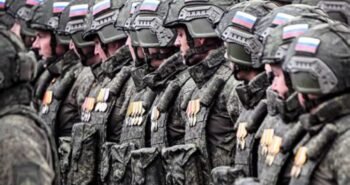
By 2019, Haftar had racked up $25bn in debt, funding his army through unofficial bonds, commercial bank loans and even Russian-printed dinars circulating in his territory. He needed the central bank in Tripoli to open its vaults. And on 4 April 2019, he launched a full assault to capture Tripoli. The Trump administration had effectively authorised the move: the national security adviser, John Bolton, told him to act “quickly” if he wanted to seize the capital and unify the country under his control. Days after the assault began, Trump himself called to praise Haftar’s “counterterrorism” efforts. By the summer, Russian mercenaries had joined Haftar’s ground forces, transforming what had been conceived as a lightning coup into a protracted siege.
After years of fruitless peace talks, Haftar had finally abandoned the diplomatic charade entirely. That July, Benghazi MP Seham Sergiwa appeared on a pro-Haftar television channel to urge dialogue over war. Her broadcast was cut mid-sentence. That night, gunmen dragged her from her home and spray-painted “the army is a red line” on the building. She hasn’t been seen since, and her family suspect she was taken by forces loyal to Haftar.
Ultimately, Haftar’s assault on Tripoli failed. In late 2019 Turkey intervened on behalf of the UN-backed government to try to force Haftar to negotiate for peace. The following month, at a conference in Berlin convened to end the war, as world leaders were waiting to announce the agreement, Haftar was nowhere to be found. He had gone to take a nap. “It wasn’t fatigue,” the former UN envoy Stephanie Williams told me. “It was theatre, designed to show that he operated outside the rules.” No agreement was reached.
In late 2020, the UN brokered a ceasefire to end the war. The deal required that Haftar place his forces under civilian command. Again, he refused. Elections were promised for December 2021. After disputes over candidate eligibility and electoral laws, they collapsed. None have been held since, and the country has returned to division.
Haftar’s financial grip has only tightened. In late 2024, officials at the central bank in Tripoli discovered nearly 10bn new dinars in circulation bearing serial numbers that did not exist in their system. Counterfeit notes had flooded the economy from the east. The scheme helped finance Haftar’s forces, paid debts incurred to his Russian mercenaries. The counterfeit notes circulated as real currency in eastern Libya and were traded for US dollars on the hidden market – giving Moscow access to hard currency from which it had been cut off by western sanctions since the invasion of Ukraine.
The central bank faced a choice: expose the fraud and trigger another financial crisis, or absorb the loss in silence. “We knew exactly where the notes came from,” said a central bank insider. “But saying so would mean confrontation, and confrontation means the oil stops, and the dinar loses more value. So we absorbed them and said nothing. That is how institutions survive in Libya. You accept what you cannot confront.”
In October 2025, the counterfeit notes were withdrawn quietly, written into the bank’s books, and Haftar’s wealth grew. “It’s easier to deal with a lie you can manage,” a former western official told me, “than a truth you can’t fix.”
Now 82, Haftar faces the ultimate quandary of his creation: how to transfer power in a system that depends on institutions that function only because no one admits who controls them. What happens when the man behind the pretence is gone?
Observers agree that Haftar would like to secure his legacy through his children. “His eyes would light up when he introduced you to his sons,” Williams, the former UN envoy, recalled. According to those who knew the family, one son held a special place. “Saddam was always his favourite,” Buisier told me. “Maybe because he most closely reflected his father’s stature and bearing.”
Haftar’s sons have divided the system between them, ahead of what is rumoured to be a year of succession. Saddam, appointed deputy commander-in-chief in August 2025, is the heir apparent, commanding the most powerful of his father’s brigades. Khaled serves as chief of staff, keeping his father’s army in check. Belkacem, an engineer turned businessman, directs billions in reconstruction contracts to rebuild cities destroyed by his father’s wars. Al–Siddiq, a poet, manages tribal politics through reconciliation commissions that promise peace and forgiveness but do not deliver them. Okba oversees the cryptocurrency and AI sector. Each holds a title. None holds elected office. The succession has been rehearsed so openly it barely qualifies as a secret. According to recent reporting, even US diplomats are now involved in discussions about a deal to unify Libya’s rival governments with Saddam as its president.
But Haftar built his system for one man, not five. His sons must divide what their father never shared – territory, money, mercenaries, an economy stitched together with counterfeit currency – in a fractured Libya where a rival government commands its own militias and foreign backers. Gaddafi groomed his sons for decades, gave them an ideology to recite, however hollow, and they were still tearing at each other before the revolution swept them away. Haftar’s sons have no creed to share, only the pragmatism of survival. Gaddafi claimed to preside over a system of popular rule. Haftar’s system claims nothing except silent assent.
***
Anas El Gomati is the founder of the Tripoli-based Sadeq Institute, the first Libyan think tank, and a visiting fellow at the Carnegie Middle East Center, where his research focuses on socioeconomics, democratic governance, the security sector and political Islam in Libya. He is also a visiting lecturer at the NATO Defense College in Rome, where his work focuses on political analysis and public policy.
______________________