Amanda Kadlec

Cross-border trafficking networks linking Libya, Chad and Sudan have turned northern Chad into a key hub of the Sahel’s conflict economy. Fuel, gold, weapons and fighters now circulate through militia-run “traffic loops”.
The matrix of armed group conflict and cooperation in North Africa and the Sahel is a microcosm of a much broader geopolitical dynamic. Libyan, Sudanese and Chadian militias in cross-border areas form a decentralized, yet efficient supply chain of high-demand goods – vehicles, fuel, food, gold, arms – and people, based on mutual interest and profit. Well beyond their narrow areas of operation, distant suppliers of arms and buyers of gold – primarily by state-linked intermediaries – embed these flows in a wider, systemic web of patronage that both sustains and profits from the region’s destruction.
Chad now sits at the center of these dynamics rather than in the periphery. Although these networks are multi-nodal, multi-directional and mutually reinforcing, three production locations act as pivotal hubs.
Fuel: Chad as the Smuggling Route from
Libya’s Ports to Sudan
A primary starting point are the Mediterranean ports in north Libya, where subsidized fuel from state-run companies GECOL and National Oil Corporation (NOC) is diverted southward to the Kufra region and further into Bir Mirgui and Nyala in Darfur, Sudan, with the Tibesti region of Chad acting as a central transit point.
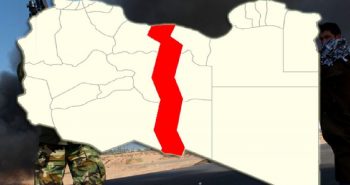
This area, controlled by the Libyan Arab Armed Forces (LAAF) in the east and in the south (Fezzan), emerged as the epicenter of highly profitable militia-run smuggling activities since the fall of Muammar Gadhafi in 2011, and has grown exponentially. According to UN expert panel reporting, approximately 185 illegal diesel shipments amounting to 1.1 million tons moved from a single harbor in Benghazi from 2022 to 2024 alone.
Further south, Arab and Tebu armed-groups in control of Kufra that are aligned with the LAAF – namely the Salafi Subul al-Salam Brigade – form the locus of the delivery of fuel and arms to the proximate locations of Rapid Support Forces (RSF) via Chad and Sudan in its conflict with the Sudanese Armed Forces (SAF) that are then run through a series of locations.
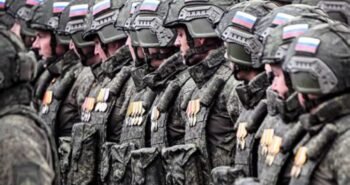
The LAAF’s reach across the south of Libya over the past decade, alongside Russia’s Africa Corps, has reshaped relationships and smuggling dynamics – historically the domain of Tuareg and Tebu armed groups – in Niger and Chad. While the LAAF previously deferred trafficking to localized groups, it has sought to exert more control in recent years.
In 2025, a crackdown on a militia commander sparked clashes in Gatrun, leading Chadian fighters based there to scatter across the Fezzan region and the border to northern Niger, or, where possible, back to Chad. Several times, the Libyan Tebu ground commander Mohamed al-Mahdi Warqadou has pushed into Libya, under the umbrella of The Front for Change and Accord in Chad (FACT), through the Al-Tumm border crossing: it occurred most recently in January 2026. under the new moniker of Southern Rebels, due to skirmishes with the LAAF which resulted in blocking key supply lines to the RSF.
In this context, Ukrainian forces groups seeking to undermine Russia’s role in the region and its alliance with the RSF are actively reinforcing Warqadou’s operational aims, which are in contrast with the LAAF-RSF partnership. The LAAF’s once seamless connection to the RSF in Sudan was first disrupted in 2024, when Musa Hilal – leader of the Arab Mahmid tribe and his fighters that extend throughout Chad, the Fezzan, and northwestern Niger – split with the RSF’s leader Mohamed Hamdan Dagalo to formally align with the SAF.
These developments have triggered a rechanneling of fuel and arms to Chad through the Salvador Pass among Nigerien and Chadian militias that reluctantly cooperate to resist LAAF’s recapture over key corridors, even as they clash among themselves for controls and rents.
Gold: Chadian Militias as Intermediaries
for Land and Air Smuggling
While fuel runs southward and eastward, gold is typically trafficked from Chad northward to Egypt and Libya by land and air, or directly to the Gulf. Chadian militias – which have worked and fought alongside aligned groups in Libya for over a decade – are a key intermediary in this process, which is led by FACT leader Mahamat Mahdi Ali and his Gorane ethnic group.
The FACT based its multi-ethnic coalition of fighters in the southern Libyan towns of Jufra and Sabha during the civil conflict in Libya in 2019 that was initiated by Haftar’s forces, with the support of the United Arab Emirates (UAE) and Russia.
Following the 2020 ceasefire and reduction in mercenary payments, FACT and other Chadian militias relocated to concentrate on the artisanal gold trade. The Military Command Council for the Salvation of the Republic – a splinter of FACT composed of fighters from the Kreda ethnic group led by Mahamt Hassani Bulmay – has both competed against and collaborated with FACT over control of the mining areas and recruits.
The Transit Point of Northern Chad: How
the Sudan War Redirects Gold,
Weapons and Fighters Networks
In 2023, the simultaneous outbreak of conflict in Sudan further redirected these networks. Arms and ammunition from Libya reached Kouri Bougoudi via Um al‑Araneb, Gatrun and Emi Madama, where Chadian traffickers and mercenary networks redistribute them to markets in eastern Chad, Darfur and Niger.
The northern regions of Chad therefore now double as hinge transit points not only for gold, but for fuel, arms and the movement of fighters to support the RSF across the border in Darfur. The UAE is the lynchpin in this wider web.
Materiel and supplies are flown into Chad’s eastern airports – most notably through Amdjarass and Abéché – that are then trafficked by land to the RSF, while crates of bullion purchased at a steep discount are packed into the plane for its return flight.
Both Sudan and Chad-originated gold is alternatively moved via Port Sudan: the main artery for international shipping on the eastern side of the Red Sea corridor, with an international airport adjacent. The mining areas and interconnected routes are split among RSF and SAF control, but the primary recipient of these vast quantities of gold is the UAE.
In 2024-2025 alone, conservative estimates of 10-20 tons (and over 700 tons from across the African continent) ended up in Dubai. The SAF’s main partner, Saudi Arabia, has opened a new front in the emerging geopolitical Emirati- Saudi rift by making inroads into its own gold extraction activities.
Local Smuggling It’s a Tool of Foreign
Influence
This international trafficking architecture has turned the web of armed groups and their respective spheres of localized smuggling activity into instruments of foreign influence, shaping the geopolitical positioning of Russia, the UAE, Saudi Arabia and Egypt. This dynamic reinforces the conflict economy from which armed groups in Chad and beyond benefit.
The reach and impact of the UAE and Saudi Arabia’s involvement in the region – along with Russia – was well established in Libya and Chad long before the armed conflict erupted in Sudan: both support the LAAF against armed groups in West Libya, with the Emirates serving as the primary financial and logistical backer.
Russia’s entry into Libya with security agreements and deployment of the Wagner Group (now Africa Corps), and in conjunction with its close ally, the UAE, positioned it as a direct and critical link in the Sahel’s trafficking market.
Where Moscow supplies the security assistance and cover for armed groups to source and move goods, conflict-linked profits sustain its operations and proxies in Sudan, Libya and Chad.
The UAE in turn provides the logistics and capital that facilitate Russia’s role, and ultimately, its capacity to evade sanctions in parallel markets.
The Impact on Mediterranean and
European Security
Against this backdrop, the endless and reinforcing loop of armed groups, competing smuggling corridors, foreign patrons and conflict structurally enable widespread instability, shaping a deeply unstable configuration across the entire Mediterranean region – from the entry via the Red Sea at Suez to the northern coast of Libya – sitting just across Europe’s southern coast.
The most tragic byproduct are millions of displaced struggling to survive in poorly sourced encampments.
These effects of conflict economy both directly and indirectly impact Mediterranean and European security. The gold extraction, trafficking hubs and corridors – as well armed groups in Chad fighting with the RSF – are linked to networks in eastern coastal Libya.
On the other side, Port Sudan controlled by the SAF has direct access to the Red Sea approaching the critical shipping lanes in the Gulf of Aden and the Suez Canal through to the Mediterranean. As long as arms and revenue flow seamlessly throughout these two major streams through the complex of militias and the Gulf actors that facilitate it – with much of it originating in Chad – the risk to Europe’s interests remains.
Russia’s well-established presence throughout the Sahel region, underwritten by Emirati logistics operations and capital, is still secure. This presence represents a direct challenge to European security in the Mediterranean and NATO’s southern flank. The entanglement of these financial and strategic interests further poses a challenge to the EU’s ability to enforce sanctions or conditionality arrangements, to mitigate through negotiation the source of the conflict economy and its effects.
Any leverage that European actors might have to advance their interests is effectively neutered by an asymmetrical concentration of power occupied by the Gulf-Russia-Sahel axis.
What began as an affiliation of fragmented militias and illicit artisanal gold mining in Chad in the 2010s has burgeoned into a well-organized and efficient parallel economy that presents real downstream effects to eastern and central Mediterranean security today.
The deep involvement of Chadian militias with Libyan and Sudanese arms, fuel and gold trafficking markets over the past decade has shifted from being a peripheral phenomenon to becoming a critical source-point in the conflict economy, geopolitical financial market shifts and the potential for disruption to Europe’s maritime frontier.
__________________
Italian Institute for International Political Studies