Oscar Rickett

Ahmed Gadalla controls companies in Libya, the UAE, Malta and the UK, and is accused of being a central figure in the Haftars’ illicit operations – allegations he denies.
He is a Libyan businessman who lives in Dubai and carries a passport issued by the Caribbean island of Saint Kitts and Nevis.
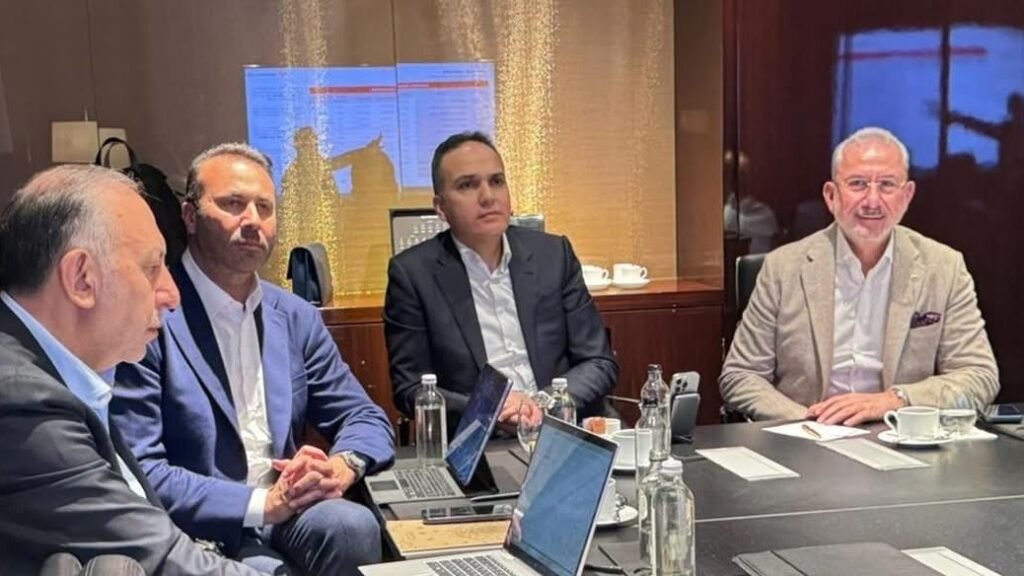
According to Italian media reports, he wears $500,000 watches, flies on private jets and stays at five-star hotels in central London.
He is said to own at least eight properties in the United Arab Emirates and a $3.7m apartment in Toronto, where he maintains permanent Canadian residency and donates to a prestigious private health foundation.
He controls banks, a state-owned enterprise and private companies in Libya, the UAE, Malta and the UK.
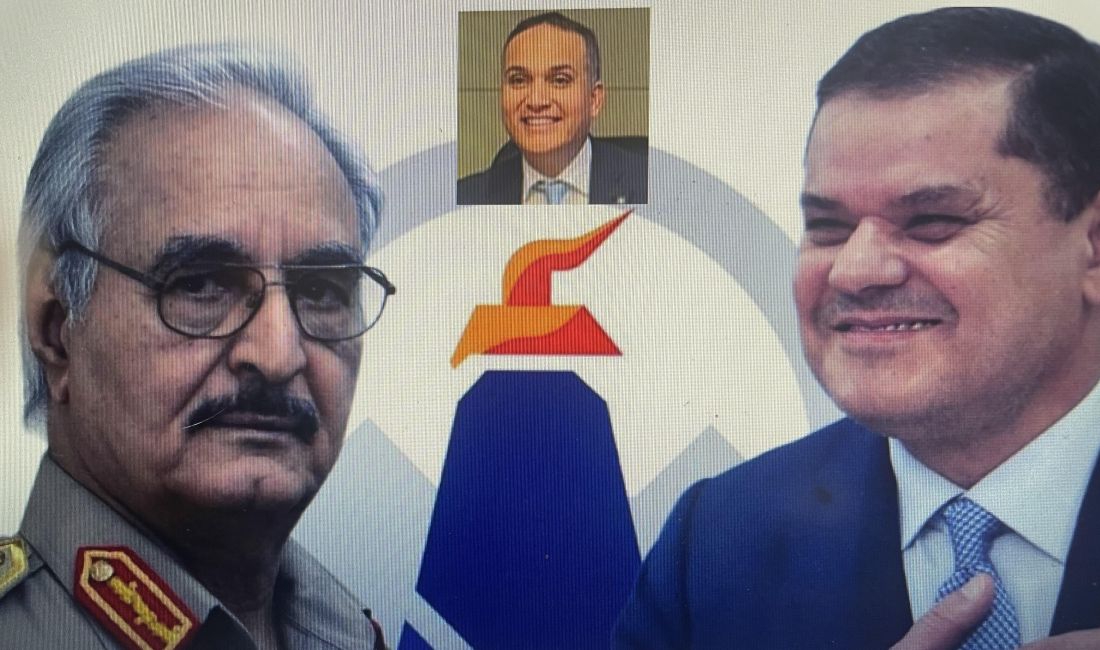
But, according to the United Nations’ Panel of Experts on Libya and a detailed report by US investigative organisation The Sentry, Ahmed Gadalla is a key moneyman for Khalifa Haftar’s Libyan Arab Armed Forces (LAAF), which controls eastern Libya and is backed by the UAE and Egypt.
And now, as the US and its allies push to unify the UN-backed government based in Tripoli with the Haftar family’s Benghazi administration, the 46-year-old is in the spotlight.
Active on multiple fronts for at least seven years, Gadalla, who is from Benghazi, is said to have risen with the support of Khalifa’s son, Saddam Haftar, and is alleged to be at the heart of a financial network that includes money laundering, arms smuggling and trafficking of various kinds.
The UN and Sentry reports have both shed light on what they describe as the use of banks Gadalla controls to obtain fraudulent letters of credit, his alleged involvement in fuel and weapons smuggling, and his connection to Haftar’s failed 2019-20 assault on Tripoli.
Gadalla denies financing or supporting the LAAF and denies the allegations made in The Sentry and the UN Panel’s report. He says he is still engaging with the UN Panel.
“I utterly reject and deny the accusations made against me by The Sentry. My lawyers are challenging those allegations, and I also refute the claims made about me in the UN Panel of Experts report insofar as they relate to me,” Gadalla told Middle East Eye.
“I have conducted my business lawfully and transparently and will continue to do so.”
Fuel and military vehicles
Banks controlled by Gadalla have also been involved in the circulation of counterfeit Russian-printed dinars, according to The Sentry.
According to the UN’s report, a Gadalla-owned bank in Benghazi “actively blocked” attempts to “conduct an official investigation into the letter of credit”, although Gadalla rejects the UN’s conclusion.
Gadalla’s companies have funnelled money into the Haftars’ war machine, The Sentry said, with payments likely being made to Russia’s Wagner Group, arms sent to the Rapid Support Forces (RSF) paramilitary in Sudan and Gadalla’s Dubai-based entities securing $300m for the failed invasion of Tripoli.
Gadalla denies that he, or his company, are involved in any such loans, and that the bank records in question had been investigated by two third-party organisations, Deloitte and the Investigation Unit of the Office of the Attorney General of Libya. He also denied financing military activity or funding the Wagner Group.
The Haftars’ operations have suffered a number of high-profile failures, including an attempt in 2024 to import Chinese combat drones disguised as wind turbines, an unsuccessful scheme to procure Spanish drones the year before and, in 2025, the interception by Greek and Italian patrol boats enforcing the UN arms embargo on Libya of a shipment of military vehicles intended for the RSF in Sudan.
This last failure was connected by the UN report to a shipping company owned by Gadalla, who denies being involved in smuggling fuel or military vehicles.
“Although he now presents himself as a legitimate businessman, Gadalla’s portfolio of official activities conceals a broad range of questionable financial operations executed on behalf of the Haftars,” The Sentry reports.
“Gadalla’s ascent, which has unfolded at the very nexus between Libya’s militia rule and hollowed-out economic institutions, shows how kleptocratic networks loot Libya’s public wealth on an immense scale.”
Gadalla, for his part, says that he conducts lawful, ordinary commercial activity within the constraints imposed by the post-conflict state.
A network of companies
Ahmed Gadalla became a Dubai resident in 2008. Prior to the uprisings that toppled Muammar Gaddafi in 2011, he studied engineering and earned a master’s degree in the US, according to The Sentry.
As Libya was gripped by civil war in 2011, Gadalla sold automotive and household cleaning products for an American company.
After Gaddafi’s fall, eastern Libya began to open up and Gadalla used his Emirati connections to get ahead and do business abroad, starting with a 2012 trip to the Chinese manufacturing hub of Guangzhou.
Today, the Libyan businessman is open about leading the Alushibe Group – Gadalla is also known as Ahmed Alushibe – described by The Sentry as “a loose set of companies he controls in Dubai”.
He is chairman of a Libyan state-owned steel company, owner of the Dubai-based UDS Shipping Services LLC, the Malta-based International Seaport Holdings and oil refiners in Libya.
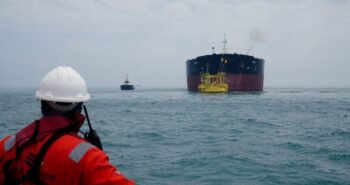
The Aya 1, a UDS container ship named after Gadalla’s daughter, was intercepted in July 2025 by the Greek and Italian navies because it was suspected of arms smuggling. Itineraries for the Aya 1 and Aya 2, another container ship, show them moving from Libyan ports like Tobruk and Benghazi to the UAE.
Gadalla denies controlling the Aya 1 or any ship involved in arms smuggling.
The UN Panel of Experts found that the Aya 1 had “exported at least 22 containers with flexi-tanks filled with heavy fuel oil from Tobruk to the United Arab Emirates”, appearing to corroborate The Sentry’s assertion that the vessel was “used in illicit petroleum exports”.
Gadalla owns “several banks in Libya, including Wahda Bank and Bank of Commerce & Development”, the UN panel said. It found that he “used the banking sector, with the support of armed group actors, to fraudulently obtain letters of credit from the Central Bank of Libya”.
However, Gadalla denies owning or controlling multiple Libyan banks or engaging in letter-of-credit fraud.
In 2023, Gadalla purchased Benghazi’s Libyan Cement Company, which was notorious because of its links to the Austrian fugitive Jan Marsalek, a suspected Russian spy accused of bringing about the collapse of Germany’s Wirecard.
Companies House listings in the UK also show that between 2019, when the former CIA asset Haftar’s offensive on Tripoli was launched, and 2021, Gadalla was co-owner of a Nisa off-licence in the British city of Birmingham.
Gadalla is now the director of the IT company Future Information Services, whose registered office is on Oxford Street in central London.
On the Companies House page linked to Future Information Services, Gadalla is listed as Kittitian rather than Libyan, and his country of residence is marked as the UAE.
He does, in fact, carry a passport from St Kitts and Nevis, the Caribbean Island nation whose citizenship can be obtained for $250,000 of investment.
***
Oscar Rickett is a news editor and reporter at Middle East Eye. He has previously written and worked for the Guardian, Vice, openDemocracy, ITN, Africa Confidential and the Africa Report.
_________________