Salah El-Houni

In Libya, oil is not just an economic sector. It is the main core of the economy itself. And the battle over who controls the ministry of oil has become a proxy for a larger struggle: whether Libya is governed by institutions or by raw political power.
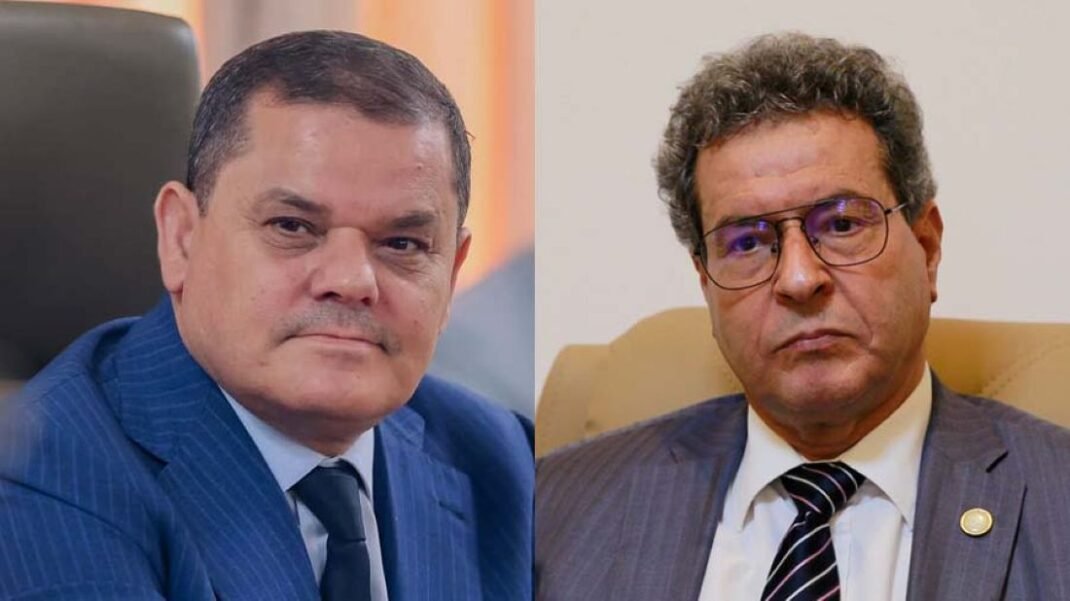
At the centre of this confrontation is Mohamed Aoun, a veteran engineer-turned-minister who has spent the past two years fighting to assert his legitimacy against a prime minister determined to sideline him.
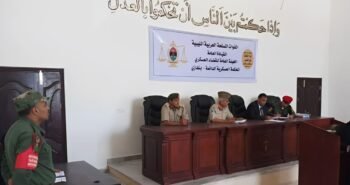
Since 2024, Libya’s courts have issued four consecutive rulings affirming Aoun as the lawful minister, striking down the appointment of Khalifa Abdelsadiq, a deputy installed by Prime Minister Abdulhamid Dbeibah.
The rulings came from appellate chambers and even from the Supreme Court, leaving little room for ambiguity. Yet the prime minister has refused to implement the rulings, a form of defiance which Aoun describes as “contempt for judicial rulings.”
This is not a mere bureaucratic quarrel. Libya holds Africa’s largest proven oil reserves, estimated at 48.4 billion barrels, ranking seventh among OPEC members. In a country without income tax, a strong manufacturing base, and a productive agriculture, oil revenues are the state’s lifeline. Whoever controls the ministry controls the artery that sustains the nation.
The clash between the two was triggered by Aoun’s refusal to sign exploration contracts, particularly in the Ghadames basin, that he deemed unlawful. Reports suggest the contracts violated legal procedures, and when Aoun resisted, the oversight authority suspended him.
Months later, the same authority reinstated him after clearing him of any wrongdoing. By then, the prime minister had already appointed Abdelsadiq, setting the executive on a collision course with the judiciary.
The courts have been unequivocal. In ruling after ruling, they declared Abdelsadiq’s appointment void. Yet the executive pressed on, ignoring the judgments. For Aoun, the issue is not personal pride but a matter of legal principle. “All decisions issued by the illegitimate minister since May 12, 2024 are absolutely null and void,” he insists.
The implications extend beyond Libya’s borders. International oil companies and organisations such as OPEC face a real dilemma: contracts signed by a minister whose authority has been annulled risk being challenged in court.
Aoun has urged foreign partners to deal only with legitimate ministers, warning that ignoring judicial rulings entrenches the crisis and undermines Libya’s credibility as a partner.
The saga points to a deeper problem. Libya’s judiciary can issue clear rulings but lacks the mechanisms to enforce them. In a system scarred by years of division, the executive branch can simply defy judgments.
This erosion of institutional authority corrodes incentives for competence and integrity, rewarding those who bypass rules and punishing those who uphold them.
For Aoun, the fight has been personal as well as political. A technical engineer by training, he found himself up against a powerful political machine: a prime minister, oversight bodies, a deputy acting as minister, and media outlets framing the dispute on their own terms.
Yet he has remained defiant. “I am 100 percent certain of my position, I will not be afraid, and I am ready to appear before any court in Libya,” he declared.
His persistence has made him an unlikely symbol. He is not merely defending a post; he is testing whether Libya can still claim to be a state of law. Four rulings in his favour, yet no guarantee of implementation.
If Dbeibah is eventually forced to comply, it will mark a modest but real victory for the judiciary and for the idea that law can bind power. If not, it will confirm what many Libyans already suspect: that the architecture of a functioning state remains out of reach.
For now, Aoun continues to speak out, documenting every statement and warning that failure to implement judicial rulings carries future liability. In a region where foreign investment in energy is increasingly vital, the legitimacy of who signs contracts has never mattered much more.
Libya’s oil battle is ultimately a mirror of the country’s deeper question since 2011: is Libya a state of institutions governed by law, or a space where power interests intersect unchecked?
______________________