Russia, Libya and the Kremlin’s playbook
for fragile states
Tarek Megerisi

Wagnerfication: How Russia harnesses
struggling strongmen
…
The story of how Wagner entrenched around Haftar suggests a transition to a more direct route for the Kremlin to secure its in-country interests. The forcefulness of this route was probably tempered by Russia’s enthusiasm for its relations with its new friends: Egypt and the UAE. Underneath it all, however, the lifeline of Russia’s involvement in Libya was still the same cargo planes. And they were still traversing the same routes, in violation of the same arms embargo, as they had from the start.
It did not take long for Wagner to begin a disinformation campaign in Libya to dominate the country’s already poorly regulated and managed information space. Unsurprisingly, Wagner’s Libya operations mimicked the tactical modus operandi of Prigozhin’s infamous Internet Research Agency.
Facebook was the primary communication platform for over two-thirds of Libyans. From December 2018 onwards Wagner created a network of interlinked news sites and “social-first” Facebook pages that focused on memes and live videos. The pages were run by administrators in Egypt and managed by Russian-trained reporters alongside Libyan subcontractors.
This complicated the task for Libyan authorities and even international investigators to track which pages featured Russian involvement. Wagner’s use of Libyan consultants also allowed it to pick up and sensationalise local grievances to polarise audiences, creating impassioned followers who could then be conditioned into adopting Russian-devised narratives.
The Facebook-trialled content then branched out to other social media platforms, along with private WhatsApp and Telegram groups. These activities clustered to create the impression the Wagner-promoted views were widely supported, manufacturing highly impactful echo chambers. The pages also adopted savvy social media engagement tactics, using features like competitions, feedback forms, and Facebook Live videos to develop close relationships with their audience.
The network of different organisations that hosted these pages illustrates how useful the decentralised system of ad-hoc companies was for masking Wagner activities. When leaked documents exposed the Libya operation, Facebook uncovered similar networks in the Central Africa Republic, the Democratic Republic of the Congo, Madagascar, Mozambique and Sudan.
Haftar himself proved more problematic. In early 2019, Wagner assessed Libya’s socio-political scene through one of Prigozhin’s agencies and found the field marshal wanting. The report derided Haftar’s expansion in Libya as simply “bribing local tribes for the right to plant the [LAAF] flag”, likely using the billions Goznac, the Russian mint, continued to print.
Wagner’s report also found that Haftar was pushing powerful western Libyan groups (such as the Misratans) to unite against him, as well as isolating former allies like the Tebu tribes of southern Libya. Most concerningly of all for Moscow, the report concluded that Haftar was simply using Russian assistance to boost his profile and strengthen his ties with the likes of France and the US.
A crucial UN conference to organise elections was set to take place in April. Wagner opted to boost the political profile of Saif al-Qaddafi, the old dictator’s son, as a counterbalance to Haftar (who by the end of March was advancing in western Libya towards Tripoli). Then they could use the disaffected Tebu along with mercenaries from a new alliance Wagner was developing with the RSF in Sudan to build Saif an army that could displace Haftar.
But Wagner’s first meeting with Saif revealed him to be delusional, narcissistic and irrational. Saif thought Haftar was his biggest threat. But he also believed that, as soon as he went public, Haftar’s officers would simply abandon the LAAF for him. Clearly, this candidate would also need some work.
By March 2019, Wagner’s disinformation operation had grown to 12 Facebook groups. These included pro-Haftar, pro-Saif and highly localised news sites that boasted audiences of over 250,000 and had a weekly penetration of up to two million users. This meant that Russian narratives were hitting just under one-third of Libya’s population of 6.5 million.
That same month, a Prigozhin-linked firm bought a 50% stake in the former state-run, pro-Qaddafi al-Jamahiriya TV station. It also created a pro-LAAF newspaper and officially consulted with the pro-Haftar al-Hadath news organisation. One key line was that “the UN is failing in its goals for Libya”.
In May 2019 three operatives linked to a Wagner-linked troll factory were arrested in Tripoli, accused of electioneering on behalf of Saif. But by then Haftar had begun a full assault on Tripoli, loosely Libya’s second post-uprising civil war. This would disrupt the very UN process supposed to lead to the elections Russia aimed to engineer in Saif’s favour.
Only Russia publicly protected Haftar following his attack on Tripoli, vetoing an April 7th Security Council resolution that would have condemned the field marshal’s offensive—though France and the US implied they would if Russia did not.
The Russian cargo planes used by the UAE during Operation Dignity to deliver Russian ammunition to Haftar’s forces were now chartered by the UAE and Egypt. They sent three planeloads a day carrying up to 500 tonnes each of Russian ammunition to Haftar’s profligate forces.
Tripoli’s defenders noted the use of advanced Russian weaponry such as anti-tank Kornet missiles being used to devastating effect, likely again delivered through other partners such as the UAE.[4] Separately, Russia sent journalists to Benghazi to help the propaganda effort.
Back in April, Wagner had assessed Haftar’s chances of taking Tripoli as “nil”, noting that the field marshal’s diplomatic support from France, Russia and the US had made him delusional. Despite the extensive support, Haftar had overcommitted on the battlefield and was already being pushed back.
The LAAF’s command and control was comically unprofessional, to the extent it shot down its own aircraft. According to Wagner’s assessment, “The plan to ‘wear down’ Sarraj’s army […] has actually been turned into the attrition of the [LAAF] itself”. Only massive investment from the UAE, including the deployment of Chinese Wing Loong drones allowed Haftar to maintain a stalemate, while Moscow bided its time.
As autumn approached, Haftar’s alliance was crumbling. High casualties had provoked dissent among the eastern tribes that once made up the bulk of his rank and file. Tribal fighters from the south were gradually abandoning the front having been mis-sold a quick war and easy riches. There was dissent in the ranks, and despite billions of dollars in armaments from Haftar’s backers, along with months of air superiority thanks to the drones, the field marshal had not made any meaningful progress into Tripoli—in fact he had even lost his forward operating base to the GNA two months into the assault.
But from September 2019 Russia dramatically increased its military assistance. (US intelligence sources would later claim that the UAE had financed Wagner’s deployment.)
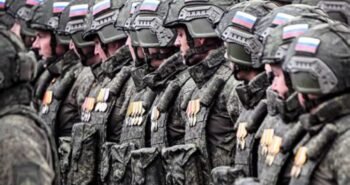
At least 122 operatives were dispatched to the Tripoli front, including 39 specialist sniper teams.[6] Russian air force planes flew them and their equipment directly from the UAE to Emirati controlled airbases in Libya.[7] The operatives quickly claimed the al-Watiya air base in Libya’s western Nafusa mountains, where they deployed an SU-22 fighter-bomber.
This sowed fear in the ranks of Tripoli’s defenders. The combination of airstrikes and attack helicopters launched from al-Watiya (along with more competent soldiering) allowed Haftar to finally progress into Tripoli’s suburbs. By the end of November at least 24 Wagner operatives (including a senior commander) had been killed.[8] But hundreds more were arriving.
Russia’s sudden intervention also made the LAAF more strategic. On September 16th airstrikes hit key GNA defences in Sirte: the western gate to the oil crescent; a central node of Libya’s east-west coastal road; and a main route south, through the major LAAF-controlled airbase at Jufra. This was the beginning of an operation to soften up the city that marked the east-west divide between Haftar and the GNA.
Following the airstrikes, Misratan forces guarding Sirte were gradually dragged to buttress Tripoli’s defences against the Wagner offensive. Then on January 7th 2020, the LAAF seized Sirte in a lightening raid involving feints, misinformation and a level of tactical sophistication previously alien to Haftar’s force. Taking Sirte granted Wagner access to another airbase, Ghardabiya.
It also provided Haftar with the security to shut off Libya’s oil exports (the financial lifeline of Tripoli’s defence). Around the same time as the LAAF took Sirte, Russia imported a unit of Syrian mercenaries—flown from Damascus to Benghazi on Syria’s Cham Wings airline.[9]
In western Libya meanwhile, Turkey had signed a memorandum of understanding with a desperate GNA. The Turkish army accordingly took defensive positions in western Libya. The memorandum provided the GNA with Turkish security guarantees, in exchange for a deal to delineate maritime boundaries between the two countries—likely a diplomatic gambit by Ankara to boost its position in the eastern Mediterranean. This was the gamechanger that defined the battle for Tripoli (and what came after it). It also created a new foil in Libya for a rising Russia.
***
Tarek Megerisi is a senior policy fellow with the Middle East and North Africa programme at the European Council on Foreign Relations. His work mainly addresses how European policy making towards the Maghreb and Mediterranean regions can become more strategic, harmonious, and incisive—with a long-term focus on Libya.
_______________________