Soraya Rahem

The UN Support Mission in the country should reassess its approach so that consensus between the warring parties becomes the eventual goal, rather than a procedural matter that dogs the negotiating process at every turn.
***
Introduction
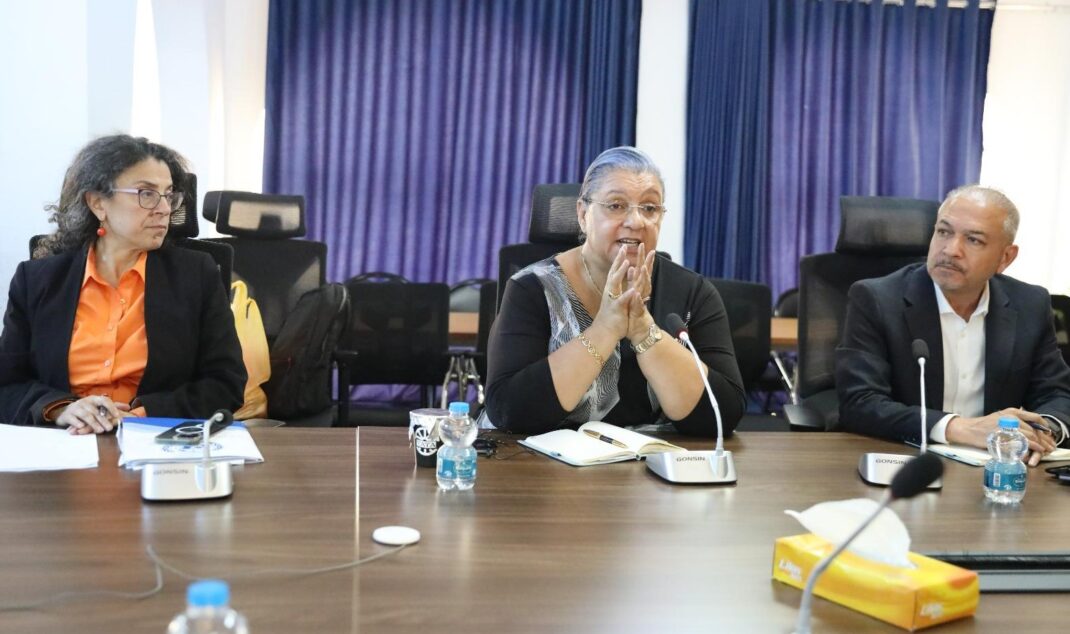
On August 21, Hanna Tetteh, head of the United Nations Support Mission in Libya (UNSMIL) and special representative of the secretary-general, presented to the United Nations Security Council a new roadmap aimed at breaking Libya’s persistent political deadlock. Focused on reviving the electoral process and legitimizing institutions, the new UN initiative aims to create the conditions for a unified Libyan state. Yet the plan is likely to suffer the same fate as those of its predecessors, all of which sought to introduce power-sharing mechanisms in an attempt to resolve conflicts among Libyan factions.
This approach is supposed to guarantee each political or security actor a place in the main power structures and bring an end to the country’s fragmentation. In practice, however, the consociationalist model of establishing a power-sharing interim government gives the elites that are its constituent elements veto power over most major decisions. This reinforces rivalries, deepens corruption, and can even scuttle the intended transition to democracy.
Essentially, the various initiatives undertaken by UNSMIL serve to highlight the limits of the power-sharing approach, at least insofar as it is focused on elites. It is time to rethink the framework. Rather than seeking to bring the major actors together around a fragile and constantly renegotiated system of agreements, UNSMIL should reassess its approach so that consensus becomes the eventual goal, as opposed to a procedural matter that comes up at every turn.
And in order to prevent repeated deadlocks and address the structural and contextual challenges at play, UNSMIL should advocate for mediation frameworks that move beyond bargaining among elites. This can be done by managing temporality, given that the timetable for any process is all-important; cultivating ripeness, so that a final settlement is proposed only when all parties are ready for it; and seizing any and all major opportunities to resolve the conflict.
UNSMIL’s Structural Limitations
For nearly a decade, Libya has been marked by deep institutional division: a government executive based in Tripoli; and a House of Representatives based in Tobruk. This fragmentation of power has fueled a lasting crisis of legitimacy, hindering the reconstruction of the state and the unification of the country. While both institutions are internationally recognized, the House of Representatives has withdrawn its confidence in successive governments in Tripoli, granting it instead to rival bodies that it has appointed itself.
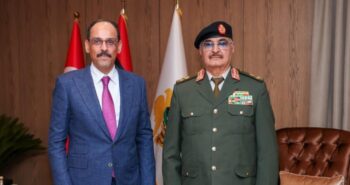
The proliferation of armed groups—some of which act as proxies for external powers—and their control of territory have made the ruling elites dependent on them. While successive Tripoli-based governments have had to negotiate their authority with the Tripoli militias, the House of Representatives is allied with Marshal Khalifa Haftar’s self-proclaimed Libyan National Army (LNA).
Since 2015, UNSMIL has repeatedly indicated a preference for a power-sharing approach to reconcile the two sides, and has pushed for the establishment of a transitional government that would unify the country and hold free and fair elections. However, examination of the major UNSMIL-brokered accords, whether the Libyan Political Agreement (LPA) in 2015 or the Libyan Political Dialogue Forum (LPDF) in 2020, reveals that this consensus-based approach was flawed from the beginning.
In 2015, the LPA established a Presidential Council, to be made up of three members based on representation from Libya’s three main regions (Tripolitania, Cyrenaica, and Fezzan), and tasked it with forming a government of national accord. Despite sending representatives to the negotiations, the House of Representatives ultimately refused to grant its confidence to this new government, as it disagreed with provisions regarding the distribution of powers as well as certain military-related issues.
Furthermore, the consensus on the composition of the council fractured, as various parties sought representation within the power-sharing model. Ultimately the Presidential Council was undermined by rivalries among elites and no longer fairly represented the country’s three regions despite being expanded to nine members.
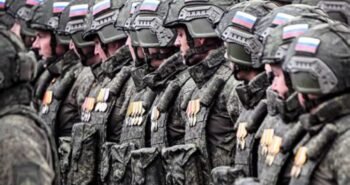
In 2019, the internationalization of the Libyan conflict resulted in the active involvement of the Wagner Group—a Russian private military company with strong ties to the Russian state that existed from 2014 until 2023—alongside LNA units, and the deployment of Turkish forces to support the government of national accord in Tripoli. In 2020, UNSMIL initiated “outside-in” mediation within the framework of the Berlin process, a series of diplomatic initiatives to revive Libyan inter-dialogue.
By including foreign powers in mediation and resolution efforts, the Berlin process made it possible to negotiate a ceasefire in October of that year. Paradoxically, the continued presence of foreign forces had ensured a balance of power among the Libyan elites and therefore an acceptable status quo.
The Libyan Political Dialogue Forum (LPDF), launched by UNSMIL after the 2020 ceasefire, was conceived as a more inclusive mediation framework. The LPDF brought together members of the main rival institutions but also, more importantly, created a broad representation of Libyan society: women, youth, civil society, and political parties were included in order to increase the legitimacy of the process.
At the same time, consultations and initiatives on security and economic issues were launched to complement the political component. At the end of these discussions, the seventy-five Libyan participants in the LPDF designated a list of three members (one each for Tripolitania, Cyrenaica, and Fezzan) to form the new Presidential Council, as well as a prime minister to steer the country toward elections.
However, the subsequent national unity government—formed in Tripoli in March 2021—proved unable to overcome the transactional logic of the elites and the persistent problem of corruption. Similarly, it failed to resolve the sticking points that served as an excuse for local and international “spoilers” to prevent change.
Unresolved debates over electoral laws, eligibility to run in elections, and constitutional amendments have allowed dominant groups to preserve their advantages and prevent the emergence of new political figures and the implementation of reforms, as well as to block presidential and legislative elections that had been set by UNSMIL for December 24, 2021. Instead of the durable pact among elites envisioned by the power-sharing framework, bargaining among those very elites became the order of the day.
How to Benefit from Temporality,
Ripeness, and Opportunities
Although the roadmaps proposed by UNSMIL have often been perceived as failures in the immediate sense, they have helped to create space for dialogue and established methodological frameworks that continue to offer hope for the evolution of the Libyan political process. The problem lies in continuing uncertainty about the medium and long-term sustainability of these roadmaps. Considering this uncertainty, mediation efforts should leverage three strategic tools to strengthen the consolidation of any roadmaps: temporality, ripeness, and opportunities.
Tinkering with Temporality
The issue of temporality is central to the success of the political mediation processes led by UNSMIL. The latter has historically favored tight schedules for the implementation of its plans. In part, this is due to the short-term nature of UNSMIL’s mandate. For example, its most recent mandate was renewed in October 2025 for one year by the UNSC under Resolution 2796. While a tight schedule can prevent certain blockages, such as the ability of “spoilers” to undermine the political transition, it risks fueling a short-term crisis management approach, one that is based on stabilization rather than long-term resolution.
UNSMIL’s latest roadmap sets out the goal of unifying institutions and organizing national elections within twelve to eighteen months. Yet the Libyan experience shows that tight timelines are largely illusory and frequently exceeded due to persistent disagreements, ambiguities in the text of agreements, and competing interests related to the nature of power-sharing. Ultimately, failure to adhere to timetables further erodes the legitimacy of interim institutions and fuels accusations of illegitimacy. Faced with this impasse, it would be wise to alter the process in favor of an incremental, long-term approach to agreements.
Such an approach would enable stakeholders to gain greater confidence in each other as well as in the power-sharing framework itself. This could allow for more extensive oversight of reforms. The latter could include decentralization—which has already been identified by several researchers as an effective practice in Libya, and which enables a more accurate representation of local realities.
For example, although the state has failed to fulfil several of its duties since 2011, municipalities have on several occasions proven able to guarantee security, ceasefires, elections, and access to certain services for the population. From an economic perspective, it is necessary to consider implementing reforms aimed at the redistribution of hydrocarbon revenues. This could facilitate a better distribution of wealth and, in the long term, strengthen local governance.
***
Soraya Rahem – Affiliated researcher at the Center for Economic, Legal, and Social Studies and Documentation (CEDEJ) in Cairo.
_____________________