Soraya Rahem

Cultivating Ripeness
The repeated failure of transition processes in Libya, particularly when it comes to the sustainability of compromises among elites, often reveals that proposed all-encompassing agreements have not had time to ripen. Yet this maturation is crucial to the success of the undertaking. To paraphrase William Zartman, renowned American researcher of and expert in conflict resolution, the ripeness of a proposed settlement must be nurtured by the mediating party in any conflict. In the case of Libya, the onus is on UNSMIL to do this by establishing a rigorous framework for any roadmap or agreement, one that would create space for dialogue among opposing parties, and, even more importantly, clear up ambiguities fully or at least partially.
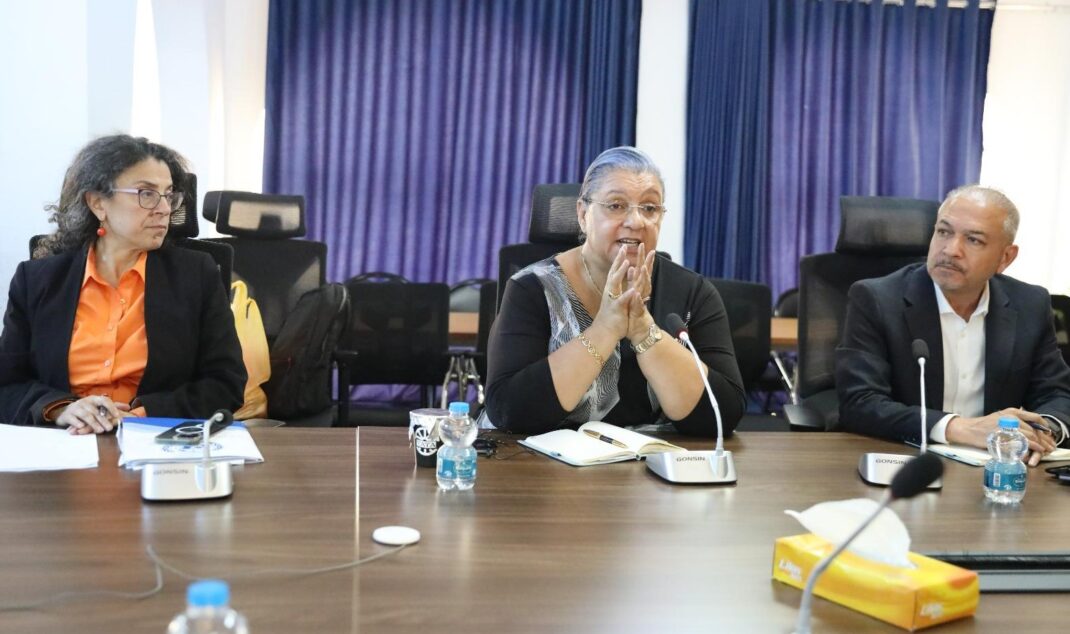
The resumption of negotiations among the 6+6 Committee—composed of members of the House of Representatives and its rival claimant to the upper house of parliament, the High Supreme Council—is a step in the right direction. Tasked with reaching an agreement to revise the constitutional framework governing the electoral process, the body is supported by the recommendations and co-supervision of an Advisory Committee composed of twenty Libyan experts, in accordance with UNSC Resolution 2755 (2024). This format requires their members to work together on technical aspects of the constitution and elections. However, reaching solid compromises takes time, and the 6+6 members are struggling to achieve their mission.
For it to reach a sufficient degree of ripeness, any framework must elicit participation by a wide segment of the Libyan population. This would ensure more transparent and representative negotiations as well as political openness, and would limit the exclusion of minority groups. UNSMIL head Tetteh plans to resume and strengthen the inclusive initiatives already implemented within the framework of the ongoing National Dialogue and the LPDF by proposing the establishment of a Structured Dialogue platform. This would include representatives of civil society, municipalities, political parties, and security actors, and would guarantee the representation of women and certain geographic and cultural groups.
With the primary objective of laying the groundwork for a clear national vision and overseeing the constitutional process, the Structured Dialogue platform could help to limit the so-called kingmaking ability of elites. For one thing, including members of civil society within future bodies would facilitate a cyclical replacement of elites before each and every round of elections. And, for another, it would help see to it that authority over several matters devolves to grassroots civil society individuals and groups. This would counterbalance the traditional arrangements observed among elites, which restrict access to those beyond their circle.
Seizing Opportunities
Since its inception, UNSMIL has faced constant disruptions due to external interference that has competed with and undermined its mission. Despite UNSMIL representatives’ efforts to petition the UNSC to sanction those who obstruct the process—whether Libyan or foreign—the effectiveness of any such proposed measures remains uncertain due to structural divisions and persistent conflicting interests within the Security Council regarding the Libyan issue. In the conclusion of her book recounting her years as a former UNSMIL representative, Stephanie Williams examines the profound transformations currently taking place in peacemaking processes: “Will conflict negotiations be taken up by the relevant regional organizations or individual, interested member states? Or by private mediation organizations? Are there other formulas that can be pursued?” In setting out a remedial course of action, Williams argues that UN mediators must position themselves as “conductors” who define the framework and lead the process, rather than restricting themselves to the role of “soloists” who guide it from the background.
While it is essential to maintain a multilateral approach to negotiations for conflict resolution, UNSMIL could take advantage of the opportunities presented by the strategic ambitions of external actors. These ambitions may serve to incentivize such actors to resolve the conflict. Take, for example, the peace agreement that was concluded in September 2025 between the national unity government and Tripoli’s Rada militia, which controls Mitiga Airport. Türkiye’s support for the agreement illustrated how external economic and security interests could promote the establishment of new mediation arrangements in parallel with traditional efforts.
The U.S. desire to play a more active role in resolving the Libyan conflict could emerge as similarly constructive. This was demonstrated by the Rome meeting in September 2025 between Massad Boulos, senior advisor for African affairs in the Trump administration, and two powerful Libyan figures linked to opposing forces from the east and west. The meeting reportedly focused on how to draw up a unified budget among rival institutions to promote the country’s openness to commercial opportunities.
A separate U.S. initiative to merge segments of the armed forces of eastern and western Libya—as part of U.S. Africa Command’s annual Flintlock special operations exercise—could also present an opportunity to resolve the conflict. This initiative could be conducted in coordination with, rather than in competition with, UNSMIL’s efforts to establish a Joint Technical Coordination Team that brings together security groups from the west and east in joint exercises. For their part, by engaging in initiatives that enable them to take on recognized institutional roles with international mediators and partners, key Libyan actors could well find it in their interest to end the various conflicts among their respective factions.
Conclusion
External actors, particularly those invested in Libyan affairs, already feel tempted to double as “dealmakers” in Libya. This phenomenon, if properly harnessed by UNSMIL, can help to resolve the conflict. However, it is important not to grant these outside powers a blank check; instead, UNSMIL and Libyan actors themselves should place limits on their prerogatives. Otherwise, as seen in the mediation process with the Palestinians in Gaza, there is a risk that foreign powers will shunt aside the concerns and aspirations of the people on the ground.
It is not difficult to imagine how this would look in the Libyan context. Left unchecked, regional and world powers might reach agreements among themselves through short-term transactions based more on commercial than political considerations—and self-serving commercial considerations at that. In such a scenario, the underlying issues that shape the Libyan conflict would remain unaddressed. UNSMIL should grasp this reality. If ordinary Libyans are to avoid marginalization at the hands of foreign powers and the local elites moving within their orbit, UNSMIL must find a way to truly involve influential external parties in its mediation strategy without going so far as to hand them the reins.
***
Soraya Rahem – Affiliated researcher at the Center for Economic, Legal, and Social Studies and Documentation (CEDEJ) in Cairo.
____________________