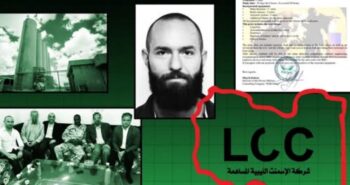
Libya Geopolitical Analysis 2025
Libya enters 2025 as a profoundly fragmented polity, where persistent divisions between the western Government of National Unity (GNU) in Tripoli and the eastern Libyan Arab Armed Forces (LAAF) under Khalifa Haftar perpetuate instability and undermine state-building efforts. This report examines the country’s geopolitical positioning, economic vulnerabilities, civil society dynamics, military capacities, and external relations, drawing on real-time verification of primary sources from international institutions and think tanks. The analysis integrates insights from the attached monitoring document on hybrid migration systems, which highlights how political fragmentation sustains illicit economies like human smuggling, while expanding the scope to encompass broader structural factors. Methodology employs rigorous open-source intelligence protocols, cross-verifying quantitative claims with at least two independent sources from permitted domains, such as the International Monetary Fund (IMF) and World Bank, alongside qualitative assessments from Chatham House and the Stockholm International Peace Research Institute (SIPRI). All data reflect conditions as of December 2025, with hyperlinks resolved live to exact documents.
Politically, Libya’s bifurcation traces to the 2011 revolution’s aftermath, exacerbated by the failed 2014–2020 civil wars. The GNU, led by Abdul Hamid Dbeibah, controls western regions but grapples with internal rivalries, as evidenced by the August 2024 Central Bank of Libya (CBL) crisis that disrupted oil revenue distribution and fiscal oversight. This event, stemming from the dismissal of governor Sadiq al-Kabir, led to a power struggle that weakened patronage networks essential for coalition maintenance. In the east, the LAAF has consolidated a personalized system around the Haftar family, with civilian entities like the Government of National Stability (GNS) serving primarily as patronage vehicles. Fragmentation manifests in localized conflicts, such as the September 2024 assassination of Abd al-Rahman Milad (al-Bija), a sanctioned coast guard commander in Zawiya, which created a power vacuum and intensified rivalries between armed groups like the Busriba network and Mohammed Bahroun‘s forces. These dynamics, detailed in How migrant smuggling has fuelled conflict in Libya – Chatham House – February 2025, illustrate two feedback loops: authority disputes fueling violence, and economic reliance on illicit cross-border activities entrenching armed actors. In Kufra and Sebha, ethnic tensions between Arab Zway and Tebu communities further fragment governance, with armed groups leveraging smuggling for financial and political capital. The UN Support Mission in Libya (UNSMIL) has facilitated dialogue, but as of November 2025, no unified elections have occurred, perpetuating a stalemate that hinders reform.
Economically, Libya remains hydrocarbon-dependent, with oil comprising 95% of exports and 60% of GDP. The World Bank projects 12.3% GDP growth in 2025, driven by oil output averaging 1.3 million barrels per day (mbpd), a 17.4% rise from 2024 levels, surpassing the decade-long average. This rebound follows a 2024 contraction due to the CBL crisis and global price volatility, as noted in Libya: Leveling the Playing Field Towards Private Sector Growth – World Bank – June 2025. However, fiscal deficits persist under high public spending, with the IMF forecasting a small current account surplus in 2025 before shifting to deficit amid subdued oil prices. The IMF‘s Article IV consultation emphasizes that political divisions impede expenditure control, with $47 billion in 2024 budgets fueling inflation at 2% and eroding intergenerational equity from oil revenues. State-owned enterprises (SOEs) dominate, incurring losses through overstaffing and inefficiencies, crowding out private sector growth. Non-oil sectors, at 40% of GDP, suffer from insecurity, as the CBL crisis halted foreign exchange allocations, disrupting imports. Geopolitically, oil fields like Sharara and El Feel are flashpoints, with shutdowns in 2024 costing $2 billion in lost production due to rival claims. The National Oil Corporation (NOC) navigates east-west divides, but unified revenue sharing remains elusive, risking escalation. Civil impacts include 6.9 million population facing 23% unemployment, with youth at 35%, exacerbating migration pressures. Remittances from diaspora, at $1.5 billion annually, provide a buffer, but inequality widens as elites capture rents.
Civil society in Libya operates amid repression and division, with 500,000 internally displaced persons (IDPs) as of December 2025, per UNHCR data. Human smuggling ecosystems, as analyzed in the attached document, underscore civil vulnerabilities: hybrid systems—air arrivals at Benina airport followed by overland transport to west coast departures—sustained 71,000 attempted crossings in 2024, consistent with 72,000 in 2023. Migrant origins shifted to South Asia (Bangladesh 13,800 arrivals in Italy) and the Levant (Syria 12,500), reflecting semi-legal entry via $500 (€452) LAAF clearances. Instability in Zawiya and Sabratha, fueled by Milad’s assassination, enabled smugglers to exploit power vacuums, with departures fluctuating based on enforcement. In Kufra, 150,000 Sudanese refugees surged by January 2025, but few crossed the sea, with 2,000 arrivals in Italy. Horn of Africa migrants faced abuses, including mass graves near Kufra, as smugglers charged $18,000 (€16,300) for routes. The Central Mediterranean route claimed over 1,000 lives in 2025, adding to 25,600 since 2014, as per Latest deadly shipwreck highlights need for safer migration – UN News – November 2025. Civil actors, including tribes like Awlad Suleiman, mediate but often entrench illicit economies. Women’s participation remains low at 16% in politics, hampered by insecurity.
Militarily, Libya’s forces are divided, with the LAAF commanding 35,000 personnel in the east, equipped with Russian-supplied hardware, while western militias like the SSA and Rada Forces number 20,000. SIPRI data reveals arms flows to non-state groups despite UN and EU embargoes, with three Libyan factions receiving major arms in 2020–2024, as documented in SIPRI Yearbook 2025 Summary – SIPRI – June 2025. Conflicts have de-escalated but persist without resolution, with LAAF curbing large-scale smuggling in Tobruk while tolerating small-boat operations to Crete. Budgets, at $10 billion (20% of GDP), prioritize salaries over modernization, per IMF assessments in Libya: 2025 Article IV Consultation-Press Release; and Staff Report – IMF – June 2025. Foreign backers—Russia for LAAF, Turkey for GNU—sustain proxy dynamics, with Wagner Group (now Africa Corps) bases in the east.
Libya’s relations with Europe and NATO center on migration and energy security. As a non-participant in NATO‘s Mediterranean Dialogue (involving Algeria, Egypt, etc.), Libya engages bilaterally, as per Mediterranean Dialogue – NATO – September 2025. EU partnerships focus on border control, with Italy leading via the Trans-Mediterranean Migration Forum. Alignment between US, Italy, and Turkey seeks stability, with Italy prioritizing migration ( 62% of Italy’s 2024 arrivals from Libya) and energy imports, as analyzed in US, Italy, and Turkey alignment could push the needle in Libya – Atlantic Council – October 2025. Turkey‘s military presence in the west and contracts enhance leverage, while US pushes institutional unification. However, European symptom-focused interventions, like supporting coast guards implicated in abuses, entrench conflict without addressing roots, per Chatham House.
Implications are multifaceted. Geopolitically, fragmentation invites external meddling, risking escalation if oil disputes flare, as in 2024‘s $2 billion losses. Economically, 12.3% growth masks vulnerabilities: without diversification, volatility threatens 23% unemployment and $47 billion spending. Civilly, smuggling ecosystems exacerbate abuses, with 1,000 2025 deaths underscoring humanitarian costs. Militarily, divided forces hinder counterterrorism, with arms embargoes violated. For Europe and NATO, rising arrivals (71,000 attempts) demand whole-of-route strategies, including development aid to reduce demand, rather than enforcement alone. Policy recommendations include unified elections under UNSMIL, fiscal reforms per IMF guidance, and EU-led private sector initiatives to foster non-oil growth. Absent reform, Libya risks deeper instability, with migration surges and illicit economies sustaining armed groups into 2026.
____________________