BI Africa

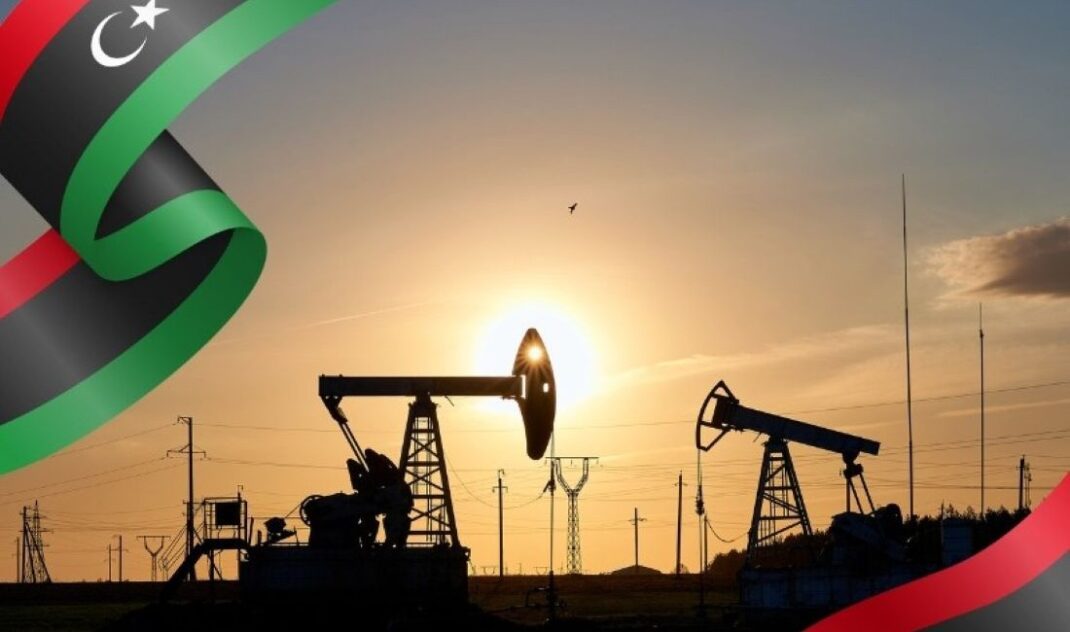
In early December 2023, the National Oil Corporation of Libya sent its chairman to Dubai. The occasion was COP28, the UN climate summit, and Farhat Bengdara arrived not to defend Libya’s fossil fuel record but to launch an environmental programme. Not the most obvious move for the head of an oil company.
The initiative, called “Think Tomorrow“, set out a plan to eliminate gas flaring across NOC’s operational fields, address waste oil contamination accumulated over decades of extraction, and generate renewable electricity for the fields themselves by harnessing Libya’s 3,200 annual hours of sunlight.
What makes the COP28 moment more than a corporate communications exercise is what exists alongside it. Since 2019, Farhat Bengdara has run Sohoul Agriculture, an integrated farming venture in Libya that operates one of the world’s largest hyper-intensive olive oil farms. Hyper-intensive cultivation plants trees at densities sometimes exceeding 1,500 per hectare.
Traditional Libyan methods average around one-tenth of that. The approach is capital-intensive and agronomically precise, producing dramatically higher yields per land area while requiring less water than conventional planting.
Libya is not a country that most people associate with olive oil. It absolutely should be. The country’s coastal and pre-Saharan zones have been producing olives since antiquity, and the crop accounted for a substantial share of agricultural output long before oil revenues restructured the national economy.
Average olive production reached 173,700 tons annually in the 2017–2021 period, up from 132,400 tons in the early 2000s. Productivity per hectare, though, has fallen sharply over the same period, from 1.28 tons to 0.61 tons.
A halving. In twenty years. That gap between what Libyan land can produce and what it currently produces is the opportunity hyper-intensive farming addresses directly. Bengdara founded Sohoul against that backdrop. The thinking behind it was the same he had applied across decades of banking and finance.
The asset class was not. The project also incorporates water treatment infrastructure, a direct response to a country where agricultural water management has historically been inadequate and aquifer depletion is an accelerating concern.
One Philosophy, Two Very Different
Investments
There is a coherent investment logic connecting the oil sector’s environmental commitments to the agricultural venture.
It runs something like this: economies that depend on a single exhaustible resource need institutional infrastructure, financial, agricultural, environmental, and built in parallel, not deferred until depletion forces the issue.
Development economists have made this argument for decades. Few executives with genuine operational authority over a country’s primary revenue source have chosen to act on it personally. Bengdara has done both.
Bengdara spent years on the board of the Arab Fund for Economic and Social Development, the Kuwait-based regional development institution that finances infrastructure and investment projects across the Arab world. That exposure gave him a granular view of what agricultural investment, water infrastructure, and energy transition actually cost. And what they return over a 20-year horizon.
The result is a framing that differs from a purely commercially-minded investor. Long-term capital allocation over short-cycle return. It is a perspective more common in sovereign wealth management than in private agricultural investment. Rarely do you find both in the same person. Rarely does that person also run an oil company.
The Masdar partnership that Bengdara explored during his NOC chairmanship was not a gesture toward green credentials. Masdar, the Abu Dhabi state renewable energy company, has projects in more than 40 countries across six continents. Its involvement signals commercial seriousness, not symbolism.
Oil field power in Libya is overwhelmingly generated by burning the same hydrocarbons being extracted, a practice that adds operational cost, increases emissions, and consumes product that could otherwise be exported. Solar generation has been shown to cut those costs substantially in comparably sun-rich environments. Libya’s 3,200 annual hours of sunlight make the unit economics work in a way they simply would not in less sun-rich regions. The switch is being pursued because it makes financial sense. The environmental case is secondary.
The Think Tomorrow initiative’s gas flaring target sits in the same category. Gas flaring, the burning of associated natural gas at the wellhead when no infrastructure exists to capture and sell it, is standard practice across underdeveloped oil fields globally. It wastes a revenue-generating resource and produces avoidable emissions. Eliminating it requires investment in gas capture and transport infrastructure. That infrastructure pays for itself. The environmental benefit is a bonus.
Bets on the Ground Beneath the Oil
Taken together, the oil sector environmental programme, the hyper-intensive farm, the water treatment investments, and the solar energy development, what emerges is a remarkably consistent set of long-term bets on the productive potential of Libya’s non-petroleum physical endowments.
Sunlight, arable land, water management, agricultural heritage: these are assets that exist independently of crude prices and that, developed properly, produce returns over timescales that outlast any individual oil field. Bengdara is currently non-executive deputy chairman of Bank Al Masraf in the UAE, a trilateral institution jointly owned by Emirati, Libyan, and Algerian state entities, while continuing to chair Sohoul Agriculture.
The two roles are not unrelated. Cross-border capital flows between the Gulf and North Africa, agricultural finance, and regional development investment are all themes that a bank with that ownership structure exists to facilitate.
The question for North Africa’s resource-dependent economies is whether more of their institutional leadership will develop similarly long positions on non-extractive development, or whether the oil price will remain the only variable that matters.
____________