In International Advocacy Program, Statements and Position Papers

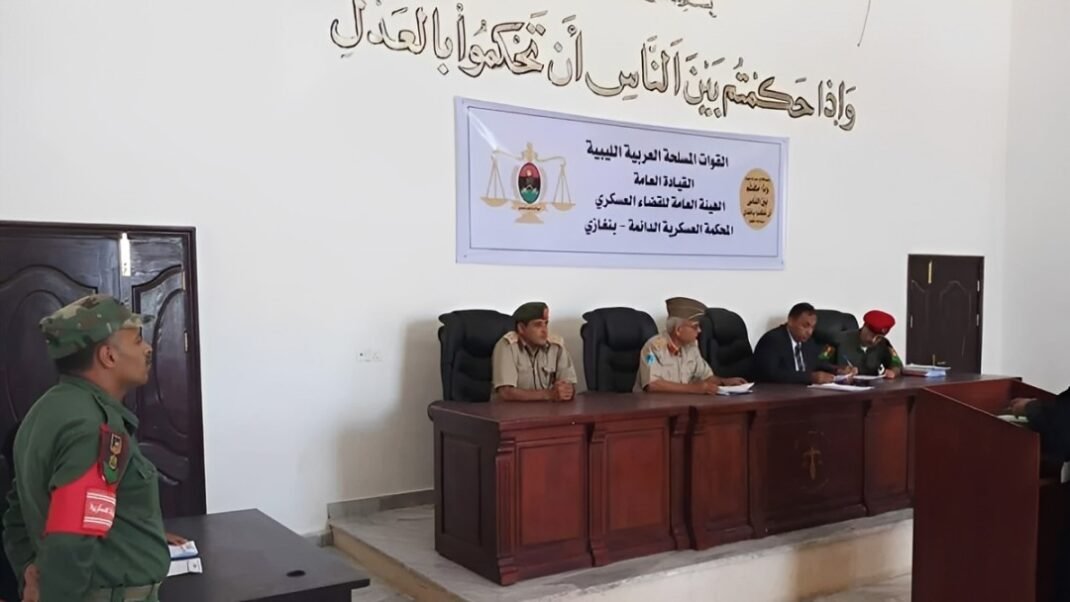
The Cairo Institute for Human Rights Studies (CIHRS) and member organizations of the Libya Platform Coalition for Human Rights condemn the execution by firing squad of sixteen people following trials before military courts, with ten executed in eastern Libya on 23 August 2026 and six others on 29 August.
These executions constitute a dangerous precedent, as Libya has maintained a de facto moratorium on the death penalty since 2011. We warn against resuming executions amid a polarized judicial landscape, with mounting concerns over judicial independence and fair trial guarantees.
The sixteen individuals were convicted of charges related to terrorism and assassination operations targeting military personnel and civilians, according to publicly available information. We affirm the right of the victims of these crimes and their families to truth, justice, and reparation. But without fair trial guarantees and transparency, these military trials fail to uphold the right of victims and their families to genuine justice and accountability, on top of negating the right to life of those sentenced to death without due process.
Military trials in Libya are notoriously riddled with violations, as documented extensively by human rights organizations. Torture, ill-treatment, and coerced confessions are commonly alleged, with defendants – who include civilians – prevented from communicating with their lawyers and facing trials closed to the public.
The authorities have not adequately disclosed whether all those executed were civilians or military personnel nor have they provided details of their cases, including whether the defendants were provided defense guarantees or avenues of appeal.
We reaffirm our opposition to the death penalty in all circumstances, as a violation of the right to life and a cruel, inhuman, and irreversible punishment, regardless of the extent to which fair trial guarantees are respected.
We stress that the imposition of the death penalty following a trial that fails to meet stringent fair trial guarantees compounds the gravity of the violation and may constitute an arbitrary deprivation of the right to life.
Concerns are further heightened if it is established that civilians were among those executed. In 2025, the Constitutional Chamber of the Libyan Supreme Court ruled Law No. (4) of 2017 unconstitutional insofar as it provided for the trial of civilians for terrorism-related offenses and crimes against the state by military courts.
The 2011 Interim Constitutional Declaration also guarantees fair trial guarantees, judicial independence, and the right to be tried by ordinary courts together with a prohibition on exceptional courts.
Accordingly, disclosing the status of those convicted and the legal basis on which military courts assumed jurisdiction is necessary to determine the legality of the sentences that resulted in the state depriving them of their right to life.
Fundamental questions remain unanswered concerning the legal basis for the death penalty in each case. The announcement that the individuals were convicted of terrorism-related offenses is insufficient to justify the most severe punishment permitted by law.
The authorities must disclose the charge and conduct attributed to each person, the legal provision on which the death sentence was based, and the extent to which the principle of legality in criminal law and the application of the more lenient law were respected.
We also express concern over information indicating that the families of some of those sentenced to death were not notified in advance of the execution date, and only later received calls to collect the bodies of their relatives.
We affirm that the families’ right to truth must be respected, including their right to be informed of the circumstances under which their relative was executed, and to receive their relative’s body and relevant legal and medical documentation.
The death penalty, by virtue of its irrevocable nature, renders impossible to judicial remedy once implemented; thus requiring the highest degree of protection for the right to life and fair trial guarantees.
Accordingly, the Cairo Institute for Human Rights Studies and the Libya Platform Coalition call on the Libyan authorities to:
- Immediately halt the implementation of all death sentences and declare an official moratorium on executions in all cases, with a view towards abolishing the death penalty.
- Disclose the identities and status of the sixteen people who were executed, as well as the charges, judgments, and legal provisions applied in each case, and publish the judgments or comprehensive summaries thereof.
- Disclose whether any civilians tried before military courts were among those executed, and review all death sentences issued by military courts against civilians in light of the ruling of the Constitutional Chamber of the Supreme Court.
- Conduct an independent, effective, and transparent investigation into whether fair trial guarantees were respected, as well as into any allegations of torture, ill-treatment, or the extraction of confessions under coercion, and into the procedures preceding the implementation of the sentences.
- Guarantee the rights of the families of those executed to truth and information, and to receive the bodies and relevant documentation.
We also call on the relevant United Nations mechanisms, foremost among them the Special Rapporteur on extrajudicial, summary or arbitrary executions and the Special Rapporteur on the independence of judges and lawyers, to take urgent action and address the Libyan authorities regarding the executions implemented and other individuals at risk of having similar sentences implemented.
Execution is not a substitute for justice, nor can the rule of law be cultivated through a brutal and irreversible punishment amid legitimate concerns about judicial jurisdiction, defense guarantees, and the legal basis of the sentences. Justice can only be delivered to victims in a judicial framework that upholds the rule of law, where the right to life, human dignity, and due process are respected for all.
__________________