Andrea Cellino

How EU technocratic policy in Libya erodes influence, enabling rival powers to shape the country’s political and security landscape
Fifteen years after the fall of Muammar Gaddafi, the European Union remains Libya’s largest donor — but a marginal political actor. By prioritizing technocratic interventions over strategic engagement, Brussels has ceded ground to actors like Russia, Turkey, and the United Arab Emirates, who now shape realities on the ground.
This commentary examines how EU migration policies, fragmented assistance, and diplomatic retreat have undermined its leverage while reinforcing problematic local power structures. It argues that without a decisive shift toward a coordinated political strategy, the EU risks permanent irrelevance in a region central to Mediterranean stability.
Fifteen years after the fall of Gaddafi, the European Union finds itself in a paradox of its own making in Libya. It is the country’s largest donor, having channeled hundreds of millions of euros through the EU Emergency Trust Fund for Africa (EUTFA) and the NDICI-Global Europe instrument, and yet it wields almost no political influence over Libya’s future.
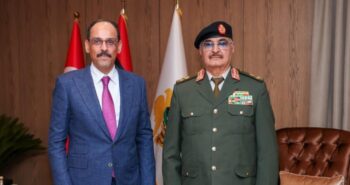
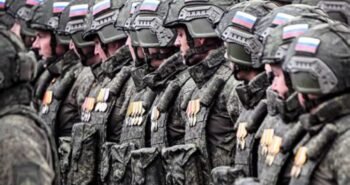
Brussels has a naval mission in the Mediterranean, trains coastguard forces, funds rule-of-law programs, and finances skills development schemes — and yet Russia maintains a permanent military footprint in the country’s east, Turkey retains troops and bases in the west, and the UAE continues to back Khalifa Haftar’s Libyan National Army with arms and political support. The EU, in short, has traded geopolitical relevance for the comforting illusion of technical manageability.
From Mediator to Manager
The turning point came gradually. After the Berlin Conference of January 2020 — the last instance when the EU genuinely tried to convene the major actors around a common roadmap — Brussels allowed its diplomatic ambitions to wither. The UN-brokered Government of National Unity (GNU) that emerged from the Libyan Political Dialogue Forum in February 2021 offered a convenient exit: Responsibility for the political process was handed entirely to UNSMIL, while the EU settled into the role of a supporter and service provider.
The Russian invasion of Ukraine in February 2022 sealed this retreat, dramatically reshuffling the EU’s strategic priorities and providing institutional cover for what had already become a policy of deliberate depoliticization. EU officials with direct responsibility for the Libyan file have since confirmed that the step back from political engagement was a conscious choice, driven by persistent divisions among member states that made any common political position effectively impossible to agree upon.
What followed was an acceleration of the technocratic turn. The EU’s assistance, channeled through UN agencies (UNDP, IOM) or national cooperation managers (GIZ, Expertise France), concentrated on high-visibility, rapidly measurable interventions: de-mining, infrastructure rehabilitation, local governance support, civil society hubs in municipalities.
The most recent Special Measure for 2024 — the latest iteration of this approach — allocates €7.15 million to a private-sector skills program and €8 million to a justice and rule-of-law project, which the High Representative Kaja Kallas described as targeting “juvenile justice, rule of law institutions, and the fight against corruption.”
These are not trivial activities. But they are also not a strategy. The European Court of Auditors noted in 2024 that EU support to Libya had remained “not sufficiently targeted,” distributed across too wide a range of actions without a clear hierarchy of priorities. The head of the audit, Bettina Jakobsen, was more blunt: The result was “fragmented support with little focus on strategic priorities” that “fails to produce an impact.”
Migration Externalization and
Its Political Costs
Nowhere is the technocratic evasion more consequential — or more contradictory — than in the field of migration management. The EU has, since 2017, built an elaborate architecture of border externalization: It funds, trains, and equips the Libyan Coast Guard (LCG) in exchange for intercepting migrants before they reach European waters. This arrangement has been dressed in the neutral language of “capacity-building,” “integrated border management,” and “SAR coordination,” obscuring the political choices it entails.
The humanitarian costs of this approach are now beyond reasonable dispute. The UN Human Rights Council’s Independent Fact-Finding Mission on Libya concluded in March 2023 that there are “reasonable grounds to believe” that systematic abuses in detention centers — including torture, sexual violence, forced labor and extortion — reach the threshold of crimes against humanity, and that the EU’s support for interceptions has indirectly contributed to these crimes.
The LCG units that EU resources help equip are linked to militias that profit from the detention system through embezzlement of state funds, release payments, and forced labor. Far from dismantling this system, EU cooperation has strengthened its actors, providing them with institutional cover and resources that enhance their bargaining power vis-à-vis both the Libyan governments and European partners.
The geopolitical costs are less discussed but equally serious. By subordinating every other interest to migration containment, the EU has progressively legitimized actors it previously kept at arm’s length. The most striking recent example concerns Haftar’s forces in eastern Libya. From mid-2022 onwards, thousands of migrants began departing from eastern Libya, with Haftar’s forces actively orchestrating the embarkments. Italy and Greece responded by opening political channels to the Haftar clan and initiating training programs for the Libyan National Army.
In July 2025, EU Commissioner for Migration Magnus Brunner led a high-level delegation to Benghazi — only for Haftar to expel it when his demand to include ministers of his parallel, unrecognized government was refused. Rather than marking a clean break, the incident was followed by a Frontex and Commission visit to Warsaw and Brussels of Libyan officials from both governments in October 2025 — the first time Haftar’s representatives had been formally received by EU institutions. And in January 2026, it emerged that the EU is planning a maritime rescue coordination center in Benghazi, with initial funding of €3 million, which would provide Haftar’s coastguard with an operational base and, crucially, significant international legitimacy.
***
Andrea Cellino is Vice President at MEIS, the Middle East Institute Switzerland, and Non-Resident Executive Fellow at GCSP, the Geneva Centre for Security Policy.
_______________