Nosmot Gbadamosi

Inside what analysts call a “pinky promise” between Libya’s rival factions.
Step Toward Reunification?
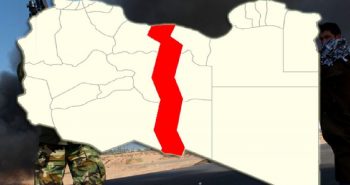
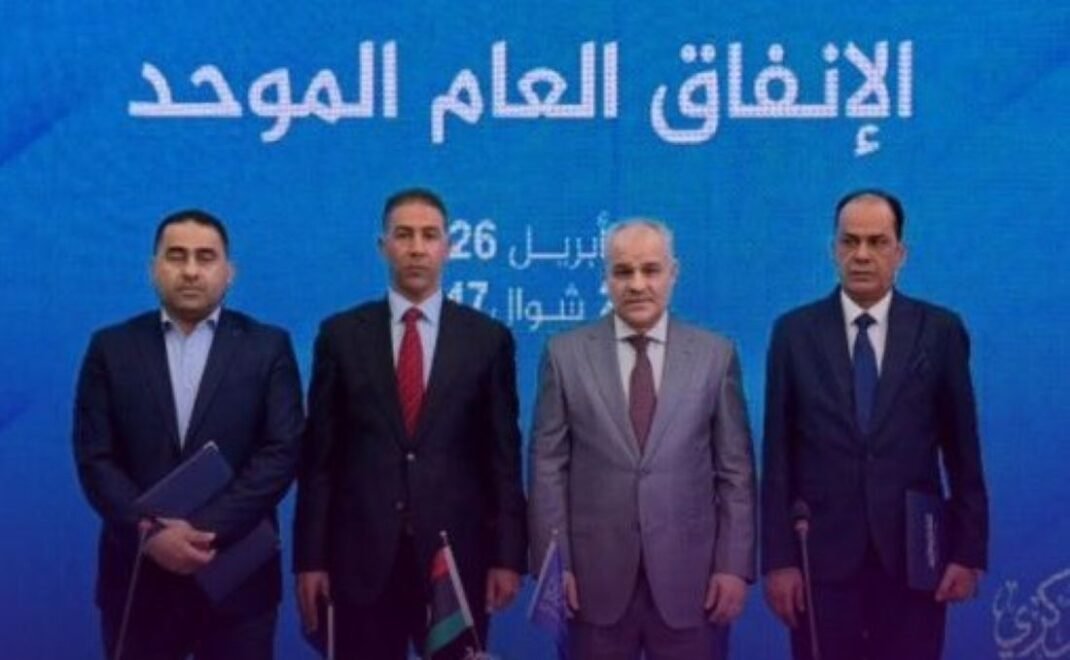
Libya’s rival administrations approved the country’s first unified state budget in more than a decade last month, sparking hopes of greater stability in a nation that has been sharply divided between two governments since 2014.
The April 11 agreement, which aims to reduce corruption and allocate enough money to the Libyan state-owned National Oil Corp. (NOC) to boost production, was brokered by Massad Boulos, U.S. President Donald Trump’s senior advisor for Arab and African affairs. Boulos described it on X “as part of a broader roadmap toward peace and national unification.”
Yet while the deal is a positive step, analysts told Foreign Policy that it is more of a restricted spending agreement and is unlikely to prompt broader unification anytime soon. As Emadeddin Badi, a senior fellow at the Global Initiative Against Transnational Organized Crime, told Foreign Policy, the budget isn’t underpinned by structural reforms or enforcement mechanisms. “The deal at this stage is more of a pinky promise,” Badi said.
Libya has faced an economic crisis since civil war broke out in 2011, with rising living costs, inconsistent oil revenue, and soaring public debt. Today, in the wake of the 2020 cease-fire, both administrations—the United Nations-recognized government based in the capital, Tripoli, led by Prime Minister Abdul Hamid Dbeibah and a rival faction in the east controlled by warlord Khalifa Haftar—contribute to rampant overspending.
“The most obvious symptoms of that [spending] has been the decline in the value of the Libyan dinar,” said Rhiannon Smith, the managing director of Libya-Analysis, a consultancy. Boulos began negotiations with the rival governments last July, with the goal of fostering peace and advancing “commercial deals” for U.S. firms in Libya, a petrostate that exports the majority of its oil to European markets. (A few weeks after the budget deal was announced in April, U.S. energy giant Chevron signed a preliminary agreement with Libya’s NOC to assess the country’s shale oil and gas potential.)
The approach in Libya aligns with much of “the Trump administration’s foreign policy, whereby American interests across various conflicts are largely viewed through economic considerations,” Belal Abdallah recently wrote for the Cambridge Middle East and North Africa Forum.
The result of negotiations was a $30 billion unified development budget, which allocates around $1.9 billion to the NOC, with other dispersals covering subsidies, staff wages, family allowances, and operational spending, according to Reuters. While many of the budget’s details have not been publicly disclosed, the overall goal is to align parallel infrastructure spending and curb state overspending.
However, Badi said, “two political entities [are] dispersing separate portions of said budget,” and there is “limited willingness to exert coercion or pressure on the Libyan parties.” Smith echoed this sentiment. “This isn’t a government agreeing to a budget,” she said. “This is two distinct political families agreeing that they’re going to limit their spending.” The U.N. Support Mission in Libya has welcomed the agreement as “important progress towards addressing the urgent need to strengthen discipline in public expenditure management” but called for “robust oversight of public spending across Libya in line with international standards.”
Analysts including Badi and Smith say the spending framework, which concerns the 2026 fiscal year, is a temporary fix that does not address deeper structural issues, such as graft and the siphoning of oil revenues to foreign networks enabled by Russia and other international actors. It is also unclear what the war in Iran will mean for government spending. With the conflict rattling oil markets, Libya has ramped up production to meet global demand. Last week, the NOC said oil revenue had climbed to $2.9 billion in April, up from $1 billion in February.
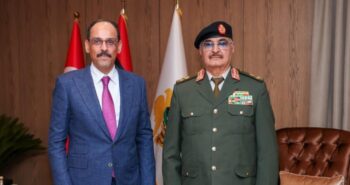
While the two administrations have seen a significant windfall since the outbreak of the Iran war, that money is unlikely to go toward public services or paying off the country’s debt. “Almost certainly it will probably be siphoned off,” Smith said. The nature of the budget negotiations will also have implications for the future of Libyan politics. In talks, Boulos dealt primarily with Dbeibah’s nephew Ibrahim and Haftar’s son (and likely successor) Saddam—a move that, critics argue, sidelined wider political institutions and parties.
As Smith pointed out, the talks strengthened the legitimacy of the Haftars, whose regime is generally not recognized by the international community: “They now have a direct line to the U.S. administration.” “It’s not very logical to hope that the stakeholders that have been at the center of dilapidating the state’s reserves and economy will spearhead a solution for its economic problems,” Badi said.
_____________________