James Darley

Libya’s oil and gas sector has bounced back formidably, attracting TotalEnergies, ConocoPhillips, Chevron and Eni with production expansion agreements.
Libya has signed a 25-year development agreement with TotalEnergies and ConocoPhillips that could reshape the North African nation’s energy landscape. The deal, signed through state-run Waha Oil Company, involves more than US$20bn in externally financed investment.
Under the agreement, production capacity at the Waha concessions is expected to increase by up to 850,000 barrels per day from current output levels of between 340,000bpd and 400,000bpd. The investment is projected to generate net revenues exceeding US$376bn over the contract period.
The African Energy Chamber (AEC) has framed this surge in investment as a huge comeback for Libya, where the production of oil and gas had fallen far below expectations in recent years. TotalEnergies CEO Patrick Pouyanné and ConocoPhillips CEO Ryan Lance signed the amended agreement at the Libya Energy & Economic Summit in Tripoli last weekend.
Production reaches 12-year high
Libya’s crude oil production averaged approximately 1.375 million barrels per day in 2025, the highest level since 2013. That trend continued right through the year, meaning that, by early 2026, total oil production in Libya exceeded 1.52 million barrels per day according to government figures.
The country’s oil revenues amounted to around US$22bn in 2025, marking a 15% year-on-year increase. Prime Minister Abdulhamid Dbeibah attributed this impressive recovery to the activation of several fields including Iravn, Mutahandush, al-Khayr, Hamada 47 and Sinawan. Libya’s Oil and Gas Minister, Khalifa Abdulsadek, has also outlined plans to increase crude output to 1.6 million barrels per day by the end of this year.
A boom in gas production
Gas production has also been on the rise in Libya this year. Italian energy firm Eni has confirmed that its US$8bn Structures A&E offshore gas development remains on track. The project, led by Mellitah Oil & Gas, is a joint venture between Eni and Libya’s National Oil Corporation. It is scheduled for completion by the end of 2027.
At full capacity, the development is expected to add around 750 million standard cubic feet per day of gas production, supporting both domestic demand and European exports via either subsea pipelines to Italy or LNG tankers.
Eni also announced that its Bahr Essalam gas compression project is scheduled to begin operations in early 2026, adding approximately 100 million standard cubic feet per day to Libya’s gas output. A second gas utilisation project is planned for the third quarter of 2026, potentially delivering an additional 100–120 million standard cubic feet per day.
US companies expand presence
It is not just European energy companies that are investing in Libya’s fossil fuel reserves right now. American provider Chevron has signed a memorandum of understanding with the National Oil Corporation covering exploration, field development and production opportunities.
The agreement marks the US oil major’s renewed interest in Libya’s upstream sector after years of limited international engagement. Libya also signed a cooperation agreement with Egypt’s oil ministry during the summit, focusing on exploration, production and logistics services.
The agreements reflect what Prime Minister Dbeibah has described as “the strengthening of Libya’s relations with its largest and most influential international partners in the global energy sector”.
First licensing round in 17 years attracts
huge interest
Libya launched its first oil and gas exploration licensing round in 17 years last March, offering 22 onshore and offshore blocks across the Sirte, Murzuq and Ghadames basins. Eni was one of the more than 50 companies that submitted pre-qualification applications, along with several major international oil firms.
The round operates under revised fiscal and profit-sharing terms designed to improve competitiveness and attract investment. Results are expected to be announced in the second week of February 2026.
The historical context of Libya’s oil
and gas renaissance
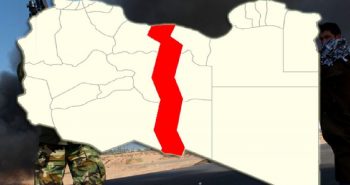
There is a great deal of historical context behind this wave of investments in Libya’s energy sector. Foreign investors have been quite cautious about Libya since 2011 because of the period of political instability that has followed since the overthrow of Muammar Gaddafi in the Arab Spring.
Disputes between rival factions over oil revenues have frequently led to production shutdowns and export disruptions. However, these recent agreements suggest that confidence in Libya is growing fast, with the nation’s ability to maintain operational stability and honour long-term commercial commitments now regarded as a safe bet.
This is a significant development for the fossil fuel sector, as Libya holds an estimated 48.4 billion barrels of proven oil reserves and approximately 1.5 trillion cubic metres of natural gas reserves. This makes it Africa’s largest oil producer, as well as the continent’s third largest gas producer. As such, the kinds of investments that have shaped this year in Libya may become a far more common occurrence.
___________________