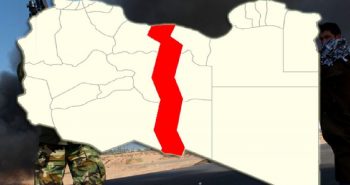
More than a simple reshuffle, the one initiated by the Prime Minister of the Government of National Unity, Abdulhamid Dabaiba, appears to be a maneuver of political and territorial consolidation of Tripolitania in view of a possible new phase of dialogue with eastern Libya.
***
More than a simple reshuffle, the one initiated by the Prime Minister of the Government of National Unity (GUN), Abdulhamid Dabaiba, appears to be a move to consolidate Tripolitania’s political and territorial position in preparation for a possible new phase of dialogue with eastern Libya.
The replacement of approximately half the government, the agreement reached with President of the Presidential Council Mohamed al-Menfi and the president of the High Council of State Mohamed Takala, the parallel moves in the strategic cities of Zawiya and Misrata and the appointment of Salem al-Zadma The Deputy Prime Minister in charge of Fezzan indicates an attempt to strengthen Tripoli’s negotiating position at a time when the United States and the United Nations continue to push for greater inclusion of Eastern institutions in the political process.
Dabaiba, a powerful businessman from Misrata who has turned to politics, presented the reshuffle as a necessary move to “inject new energy and fill vacant positions,” defending his government’s continued existence until national elections. The political message, however, appears broader. The prime minister has not simply filled vacant positions, but has also redefined key aspects of the government.
According to information gathered by “Agenzia Nova,” 13 new appointments have been made, including those in key ministries such as Economy, Health, Industry, Higher Education, Youth, Tourism, Culture, Sport, Water Resources, and Digital Economy and Artificial Intelligence. No new ministers have been appointed for Foreign Affairs, Interior, or Defense, a decision that suggests caution especially on the most sensitive issues at home and abroad.
On the political level, perhaps the most significant element is that the reshuffle received institutional backing following a tripartite summit with Menfi and Takala. This step was not exactly a foregone conclusion, as it came after Menfi expressed reservations in recent days about the advisability of changing the government structure without broader national consensus.
The final green light does not seem to indicate full political convergence, but rather the decision to retrospectively reintroduce Dabaiba’s moves within an institutional framework compatible with the 2015 Libyan Political Agreement, the UN-brokered agreement that governs the post-2011 phase, and with the transition phase the country has been undergoing for over a decade without yet having managed to hold national elections. In this way, Tripoli has attempted—at least formally—to contain its internal friction before the next phase.
This need for unity is also evident in other signs seen in recent days in western Libya. In Zawiya, a strategic city west of Tripoli and crucial to the security balance for years, Dabaiba has established the new municipality of Abu Surra.
Formally, this is an administrative measure, but the measure affects an area local sources have linked to the Buzriba family, an influential group to which the prime minister has gradually entrusted portions of the power networks that emerged after the death of Abdel Ghani al-Kikli, known as “Ghneiwa,” the former commander of the Stabilization Support Authority.
The move takes on further significance because the Buzriba family itself has ties to the east of the country: Issam Buzriba is Interior Minister in the parallel government supported by the House of Representatives in Tobruk.
For this reason, the creation of the new municipality can be interpreted as an attempt to consolidate Tripoli’s control over a sensitive area, but also to keep open channels with circles not entirely unrelated to the eastern sphere.
A similar argument applies to Misrata, another key hub in Tripolitania. The meeting organized by interim Interior Minister Imad Trabelsi with the city’s notables, civil authorities, and security officials had a clear political as well as symbolic significance.
Misrata remains a sort of “city-state” within the balance of power in western Libya: it wields economic, military, and institutional clout, and no stable structure in Tripolitania can ignore its consensus, or at least its neutrality. The message from the political-security iftar promoted by the ministry is that Tripoli is seeking to close ranks with one of the most influential power centers in the west before facing a potentially more delicate phase in national negotiations.
While Tripolitania is recovering, the east is also showing signs of recovery. The government led by Osama Hammad has reorganized the internal security leadership, appointing General Salah al Aqili to head the Internal Security Authority and transferring General Osama al Darsi to the Judicial Police.
These decisions, while presented as normal administrative changes, indicate the eastern camp’s desire to consolidate control over the security apparatus at a time when the prospect of new political mediations makes it even more important to present an orderly chain of command.
The Al Darsi family name also recalls one of the most influential tribal groups in Cyrenaica. The Darsa tribe represents one of the key social groups in the Derna and Al Marj area and maintains significant influence on the political balance of power in eastern Libya.
In recent years, the clan has also returned to the spotlight due to the case of Ibrahim al Darsi, a member of the Tobruk House of Representatives, who disappeared in Benghazi in May 2024 after his home was attacked by armed men. In May 2025, an appeal was filed with the International Criminal Court in The Hague in relation to the case.
In this context, the military movements recorded in recent days also take on a broader significance. The visit of the Libyan National Army (LNA) Chief of Staff, Khaled Haftar, to Sabha and the southwestern border areas should be interpreted in this light: a signal of presence, control, and attention to the southern theater. And Fezzan is precisely the true center of gravity of the game.
The appointment of Salem al-Zadma as Deputy Prime Minister for the south is not a technical choice, but a political move with potential repercussions on the tribal and military balance of power in the region. Al-Zadma belongs to a clan rooted in Fezzan and areas of central Libya such as Jufra, Sirte, and Harawa, with ties to the Arab Awlad Suleiman tribe.
Furthermore, Salem al-Zadma has a background in the eastern parallel government and has returned to the political scene after a period spent primarily in Egypt, amid tensions that pitted his family against circles close to Khalifa Haftar, particularly General Hassan al-Zadma, commander of the 128th Reinforced Brigade. Bringing him to Tripoli and assigning him responsibility for Fezzan represents an attempt to insert a player with local clout into the southern GUN, with the implicit goal of at least partially undermining the structure built in recent years by the east in the south of the country.
The centrality of Fezzan depends on three factors:
The first is energy: In the southern region of Libya, which extends from the cities of Sebha, Murzuq, and Ubari to the borders with Niger, Chad, and Algeria, lie the Sharara and El Feel fields, two of the country’s most important, the latter operated by the Mellitah Oil and Gas joint venture controlled by the National Oil Corporation and the Italian company Eni.
The second factor is geostrategic: The south connects Libya to the Sahel and represents a key hub for controlling the Saharan borders, cross-border traffic, and the main migration routes that cross the desert toward the Mediterranean coast.
The third is political-military: Whoever controls Fezzan strengthens their influence in the future national architecture, because they dominate a buffer zone between Tripolitania and Cyrenaica as well as one of the country’s key economic levers. It is no coincidence that recent security incidents demonstrate how fragile and contested the south remains.
In Sebha, the main urban center in Fezzan, located approximately 750 kilometers south of Tripoli, authorities have established a joint security operations room to strengthen security and enforce a greater state presence.
Meanwhile, in Qatrun, in the desert area of the Murzuq region, approximately 120 kilometers from the border with Niger and along the route connecting Sebha to the Al Tum crossing, a Libyan National Army (LNA) major, Fares al Farjani, was killed in broad daylight at the end of February, confirming the persistent instability in the border areas.
More generally, after the January 31 attack on the Al Tum crossing, one of the main crossing points between Libya and Niger, Haftar strengthened his presence in Fezzan with the creation of the 18th Light Infantry Brigade and increased pressure on the southern routes.
Local sources have traced some of these tensions to the Tebu, a cross-border ethnic group present between Libya, Niger, and Chad, and to rivalries for control of routes and resources in the desert. In this context, the return of figures like Salem al-Zadma to the Tripoli camp suggests an attempt to reshape alliances in the south and erode at least some of the eastern influence.
Overall, Dabaiba’s reshuffle therefore appears to be more than just administrative or image concerns. Rather, the move indicates Tripoli’s desire to present itself as more orderly, more cohesive, and more territorially entrenched in the face of a possible resumption of confrontation with the east. At the same time, the eastern camp is also closing ranks.
Therefore, the next phase of the Libyan crisis may not be played out solely in the palaces of Tripoli and Benghazi, but above all in the ability of the two blocs to consolidate their respective spheres of influence before negotiations. And in this competition, Fezzan (rich in natural resources but poor in services) remains the most sensitive and potentially decisive front.
__________________