Fuel smuggling helps maintain peace between Libya’s rival elites but drains the treasury. In this excerpt from the Watch List 2026 – Spring Edition, Crisis Group illustrates how the EU and member states can staunch the hemorrhaging of public funds and strengthen economic governance.
***
Though Libya’s deadly civil war ended in 2020, the country remains divided between two rival governments, based in Tripoli and Benghazi, respectively, and each backed by its own military coalition. The post-2020 peace is fragile, but it holds, relying largely for its survival on the willingness of both sides to share revenue from oil sales as well as turn a blind eye to other sources of unofficial income that both tap into.
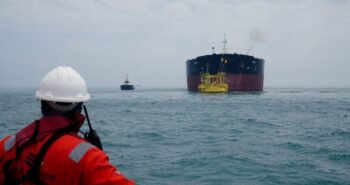
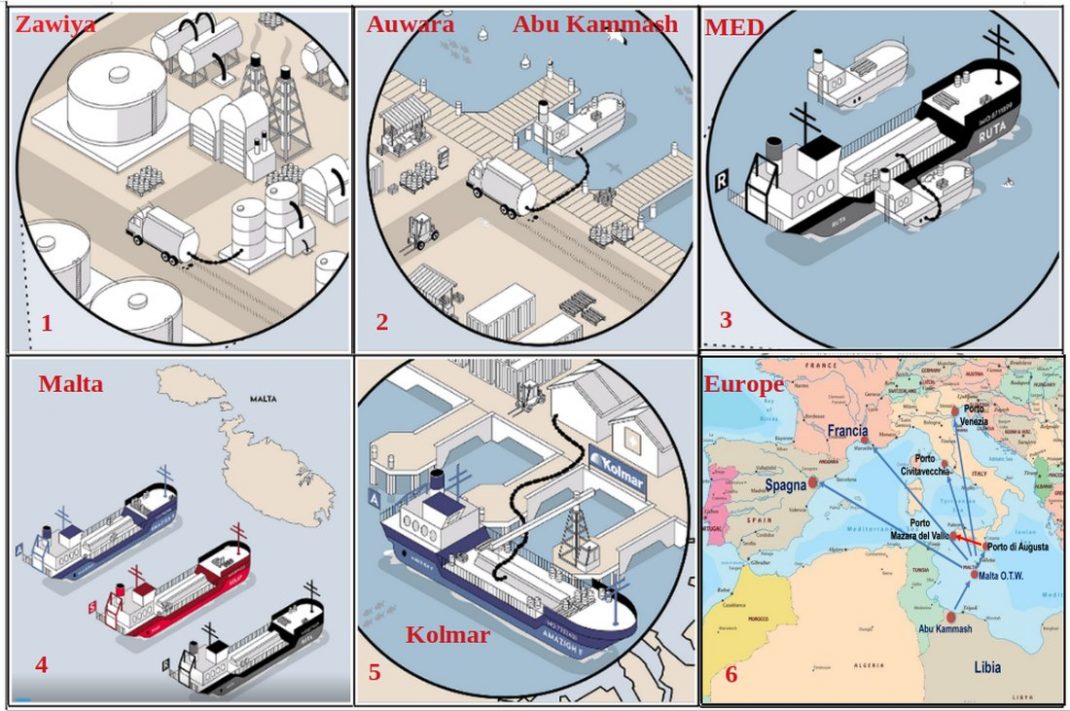
These include the smuggling of imported fuel, which is purchased by Libyan authorities at international prices, sold at heavily subsidized prices locally and then resold on the black market abroad.
While these practices shore up the peace in Libya, they come at huge cost to the country’s coffers, stunt economic growth and entrench the two competing sets of elites by removing all incentives for reunification. The fuel smuggling racket, along with other embezzlement schemes, also indirectly undermines international mediation initiatives aimed at ending the country’s longstanding division.
Given its geographical proximity to Europe, and its dual role as a transit country for migrants heading across the Mediterranean and a hydrocarbons supplier, Libya remains strategically important for the European Union. Brussels and EU member state capitals should strive to help improve management of Libya’s public finances and create the conditions for eventual political reunification by reinforcing efforts to stop fuel smuggling and train Libya’s maritime security forces. To achieve these goals, the EU and its member states should aim to strengthen the EU’s naval mission in the Mediterranean.
A Nation Split in Two
Fifteen years after Muammar al-Qadhafi’s fall, Libya remains divided between an internationally recognised government in Tripoli, headed by Prime Minister Abdelhamid Dabaiba, and a rival executive based in Benghazi, led by Osama Hamad. In practice, however, power in the east rests with Field Marshal Khalifa Haftar and his sons.
Though the two camps present themselves as adversaries, behind closed doors they maintain a transactional relationship based on shared oil revenue and, especially in the country’s east, off-the-books funding schemes.
These financial flows allow them to bankroll their administrations, pay salaries, buy political loyalty and consolidate authority in their respective zones. This arrangement appears to suit both sides well. It also removes any real urgency from the pursuit of difficult compromises on elections and reunification.
While large-scale war has not resumed and, for now, Libya’s rival leaders appear reluctant to rekindle violence, insecurity remains widespread. In western Libya, the Tripoli-based government has gradually brought more armed groups under its control, yet deadly clashes between rival militias competing for local influence and resources still erupt.
In the east, forces led by Haftar, now known as the Libyan Arab Armed Forces, govern with a heavy hand, as reports of arbitrary arrests and extrajudicial killings have shown. In the south, armed groups loosely affiliated with either side periodically confront one another, while criminal networks involved in drug and fuel trafficking, as well as migrant smuggling, operate with total impunity.
The lingering insecurity has combined with economic mismanagement to worsen living conditions. Misallocation of public funds and gross overspending are draining the state treasury, which depends almost entirely on hydrocarbon revenue.
Parallel financing mechanisms established by the eastern authorities, who have issued unauthorized treasury bills to cover their expenses, are depleting hard currency reserves, forcing the Central Bank to devalue the dinar.
Devaluation has in turn driven up living costs and eroded purchasing power in Libya’s import-dependent economy. Roughly one third of the population in this oil-rich country struggles to make ends meet.
Prospects for change appear slim. The UN-led political mediation process, supported by the EU and its member states, seeks to unify the country through nationwide elections, but has made no meaningful progress in five years.
Elections were to have been held in 2021. But they were derailed by legal disputes over whether to appoint a new unified government before voting or wait for the results at the ballot box to form a new executive; and whether to hold both presidential and parliamentary elections, and, if so, in what sequence, or simply opt for a legislative ballot.
These same disagreements continue to block consensus. The eastern parliament’s July 2025 decision to establish a rival Supreme Constitutional Court in Benghazi, challenging the writ of the Supreme Court in Tripoli, is the latest in a long series of rifts that have dimmed the prospect of holding national polls. With no recognized high court covering the whole of Libya, credible judicial oversight of any vote would appear impossible.
Constitutional and judicial disputes benefit Libya’s current leaders by delaying elections and silencing calls for political renewal. Numerous rounds of UN-led mediation over the past decade have focused on laying the groundwork for nationwide polls, either by drafting a new constitution or agreeing on electoral laws.
Aside from a brief interlude in 2021 that saw Dabaiba appointed prime minister of a UN-mediated unity government – an arrangement that later collapsed – the emphasis has mainly been on preparing the ground for a national vote. The underlying assumption has been that Libya’s rival governments have lost legitimacy, either due to overstaying their mandates or lacking full recognition, and that only a popular vote can restore it.
The UN has generally encouraged members of the rival assemblies to lead discussions in this direction, but to little avail. In its most recent initiative, the Structured Dialogue launched in late 2025, the UN attempted a novel approach, bringing together experts and representatives from different parts of the country to discuss four tracks: governance, economy, security and reconciliation/human rights.
Though it has produced recommendations, ruling elites have been indifferent to the initiative and little action has been taken. These developments have eroded the public’s confidence that polls will take place. Many Libyans have grown disillusioned with parliamentarians who seem primarily interested in preserving their positions.
Signs of fatigue with the long wait for elections are also emerging among foreign powers. Washington has lately pursued an approach putting security and the economy first, launching its own parallel mediation effort in the second half of 2025 that sidelined thorny political questions.
Washington’s envoy, Massad Boulos, convened members of Prime Minister Dabaiba and Khalifa Haftar’s families for closed-door talks, which reportedly led to agreement on joint military training initiatives and a unified development funding mechanism.
Prolonged political deadlock presents dilemmas for Libya’s foreign partners, particularly European states. Elections no longer appear to be a realistic solution in the short to medium term to address Libya’s impasse, whereas less ambitious alternatives, such as agreements on budgetary issues or joint security training of rival forces, appear more feasible. Nor is it clear who should take part in future mediation between the sides: the rival legislative bodies (the House of Representatives in Benghazi and the Tripoli-based High State Council), current leaders Dabaiba and Haftar or their representatives, or independent experts less entangled in the political system but also less influential.
At the same time, removing the prospect of national reunification as an immediate goal sends a signal to ruling elites that they are free to remain in power and enrich themselves and allied interest groups. Official data from the Central Bank, Audit Bureau and National Oil Corporation point to systematic and large-scale waste of public funds over the past five years, with little tangible benefit for the Libyan people and no attempt to diversify the country’s oil-dependent economy.
The informal division of power between two corruption-prone administrations may have contributed to curbing violence in the short term, but it risks sowing the seeds of future instability as Libyans grow increasingly frustrated with the scale of graft as their own hardship deepens.
______________________