I- Introduction
Libya’s sovereign wealth fund, the Libyan Investment Authority (LIA), has been under UN Security Council sanctions since 2011. Founded by Muammar al-Qadhafi in 2006, the LIA is now a $70 billion fund with assets ranging from stocks to real estate. Until the Council decided to let the LIA reinvest cash assets in January 2025, the sanctions regime on the investment authority had not changed, aside from minor modifications to the asset freeze made by the Council.
This regime requires that all states freeze any money held in their jurisdictions that belongs to the LIA or those acting on its behalf. The sanctions also apply to the Libya African Investment Portfolio, an Africa-focused investment fund under the LIA’s ownership.
Libyan authorities have long called on the Council to modify the sanctions, and in 2023 the LIA stepped up its campaign for sanctions reform. It drafted an investment plan, proposing five actions for the Council that it said would mitigate the sanctions’ harmful impact on the LIA’s value.
The Council responded in 2023 by pledging to consider changes to the asset freeze. A year later, the LIA proceeded to submit its investment plan, which the Panel of Experts, a Council-mandated group that advises on the sanctions’ implementation, reviewed. In early January 2025, the panel made recommendations to the Council concerning how to respond to the LIA’s requests.
Soon thereafter, the Council decided to grant some of the LIA’s requests, notably by allowing the fund to reinvest its cash reserves.
This report, a joint output of Crisis Group’s Middle East and North Africa and U.S. Programs, details the history of Security Council sanctions on the LIA. It examines various views of the sanctions, as well as the Council’s recent adjustments, and recommends further measures aimed at removing curbs on the fund’s growth and setting a path to long-term reform.
The report is based on dozens of interviews with diplomats, financial professionals, lawyers, sanctions experts, Libyan politicians, executives and civil society figures in Washington, New York, Tripoli, Tunis, Rome, London and elsewhere from 2022 through early 2025.
It is also informed by interviews with LIA staff, including the chairman, and a review of documentation, including unpublished material the LIA provided to Crisis Group. The UN Panel of Experts for Libya declined to be interviewed. Most, but not all, Libyan interlocutors were men, reflecting the gender-based power divide in the country, while women and men were represented approximately equally among international interlocutors such as diplomats and experts.
II- The History of Sanctions on
Libya’s Wealth Fund
…
A. Protecting Libyans from
Qadhafi’s Abuses
Qadhafi established the LIA in 2006, just after the U.S. lifted sanctions on the country in exchange for his commitment to dismantle Libya’s nuclear program, destroy its chemical and biological weapons stocks, and renounce terrorism, and three years after the UN had lifted the sanctions it imposed in the wake of the 1988 Lockerbie air crash.
Starting with $40 billion in capital, the LIA’s initial investments spanned sectors including finance, agriculture, real estate and hydrocarbons.
Its stated purpose was to invest Libya’s oil wealth abroad for the benefit of future generations. While it was widely regarded as a slush fund for Qadhafi and his cronies, it nonetheless increased in value to approximately $56 billion by the start of the civil war.
When war broke out in Libya in 2011, in the midst of uprisings across the Arab world and following mass protests in the country, the UN Security Council authorised a no-fly zone in Libyan airspace and enacted stringent sanctions – a travel ban, an arms embargo and an asset freeze – against powerful Libyan institutions and individuals.
Soon afterward, the Council froze the funds of Libyan economic institutions including the Central Bank, the National Oil Corporation and the LIA. Member states feared that Qadhafi would plunder these accounts to fuel the violent repression of his opponents.
With the fighting still under way in mid-2011, foreign backers of the anti-Qadhafi forces recognised the rebel-led National Transitional Council (NTC) as the legitimate governing authority of Libya. They requested that Libyan state funds be put at the NTC’s disposal to pay for salaries and other state services as well as for rebuilding.
The UN responded in September 2011: The General Assembly formally recognised the NTC, and the Security Council lifted sanctions on the Libyan National Oil Corporation and one of its subsidiaries.
In October 2011, the Security Council also modified the asset freeze on the Central Bank of Libya, the LIA and other listed Libyan financial institutions, making funds inside Libya available to the interim authorities while maintaining the freeze on funds held outside the country.
In December 2011, the Security Council removed the sanctions on the Central Bank of Libya and the Libyan Foreign Bank, thus lifting restrictions on all the Libyan institutions that it had blacklisted during the civil war – except for the LIA. The fund’s foreign assets remained frozen.
It is a fluke of history that the UN kept the LIA sanctions in place after the revolution. Council members were reluctant to lift the restrictions on the LIA when it delisted other institutions because, at the time, the fund had no board of directors and its head was a holdover from the Qadhafi regime.
The Council did commit to delist the LIA and its subsidiary, the Libya African Investment Portfolio, “as soon as practical to ensure the assets are made available to and for the benefit of the people of Libya”.
Yet when a new board chairman was finally appointed to the LIA in April 2012, he advised the new Libyan leadership to wait until the LIA had completed a full audit of its assets before requesting that sanctions be lifted.
Shortly afterward, the country tipped toward chaos again, with rival factions fighting on the streets of Tripoli. The Security Council was reluctant to lift the sanctions amid escalating violence. Its members worried that the LIA’s funds could be used to fuel the unrest and could not be managed effectively at a time when the Libyan authorities could not maintain basic order.
They hoped that elections, scheduled for June 2014, would bring about a unified government with a popular mandate and conditions more suitable for unfreezing LIA assets.
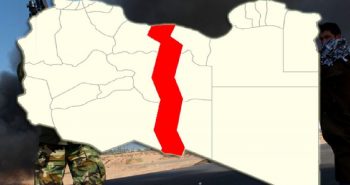
The 2014 elections were contested and split [Libya] into two rival authorities, one in the east and another in the west, each backed by a military coalition.
That did not happen. Instead, Libya continued to lurch from crisis to crisis and the sanctions remained in place. The 2014 elections were contested and split the country into two rival authorities, one in the east and another in the west, each backed by a military coalition. Both claimed to be legitimate. They were intermittently at war until 2020.
As this new divide between east and west took hold, a feud over the control of LIA also broke out. Two rival managers – Hassan Bouhadi, working from Malta with the backing of the government in Libya’s east, and Abdulmajid Breish in Tripoli, supported by powerbrokers in the west – claimed to be the legitimate LIA chief executive officer.
A leadership feud within the Tripoli-based camp further complicated matters. In June 2014, the Tripoli government sought to sideline Breish and appoint Abderahmane Ben Yezza as interim chairman in his place; then, in late 2015, a new UN-backed government in Tripoli installed a loyalist, Ali Hassan Mahmoud, to head the fund, but throughout this period Breish refused to step down. In the meantime, another former chairman, Mohsen Derrigia, who had been appointed in 2012 and was replaced by Breish in 2013, asserted that he was still the rightful leader of the LIA.
By that point, at least four people were claiming to be boss. Their competition resulted in the intermittent use of violence and intimidation, with reported cases of militias using force to eject or instal those who claimed to be the LIA’s leaders at the fund’s headquarters in Tripoli. As the Panel of Experts wrote in 2017, “the security personnel in control of the Tripoli Tower has the final say as to who occupies the Authority’s head office, a situation that is not tenable”. The feud was also repeatedly litigated in courts in Libya and abroad.
Jockeying over the LIA’s helm finally ended in 2020, when a court in the United Kingdom ruled that Ali Hassan Mahmoud was the legitimate chairman by virtue of having been appointed by the internationally recognised government of Libya. The ruling in effect ended challenges to his leadership. It also coincided with a short-lived political calm following a UN-mediated negotiation to appoint a unity government under a new interim prime minister, Abdulhamid Dabaiba, in early 2021.
While the government split again into two rival administrations in 2023, the LIA leadership based in Tripoli was, for the most part, undisputed.
________________________