Youssef M. Sawani

Policy Recommendations
The Libyan Parties
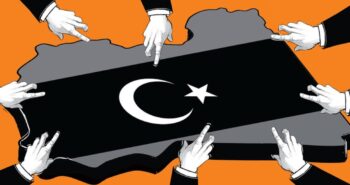
1. Libyan stakeholders should cease to rely on external actors and external solutions. They should take responsibility and start exploring collective and indigenous solutions to the protracted crisis and ways to diffuse the drivers of the conflict.
Continuing to rely on external parties and external solutions will only deepen the existing divisions and prolong the conflict. External initiatives are often linked to external interests and are not necessarily in line with Libyan interests.
2. Libyans must reach an agreement on convening an inclusive national dialogue that focuses primarily on achieving national reconciliation. This should be a Libyan-led process with a specific timeframe, a clear agenda, and rules and procedures. Libyans should explore and learn from best practices and global and regional experiences to draw lessons, so that their national dialogue effectively contributes to achieving a sustainable solution to the Libyan crisis.
3. The Libyan parties must express determination to put an end to all types of external interference and not limit their concern with such interference to the presence of foreigners and mercenaries, regardless of their origins. Libyans need to agree on cancelling or freezing all security and defense agreements with foreign countries and entities whether signed by the Government of National Accord, the General Command of the Libyan National Army, or the House of the Representatives.
4. The Government of National Unity should make every possible effort to create the necessary conditions for holding free, fair, and transparent elections – including through securing the legal framework and the technical and security arrangements for the voting process to take place in accordance with the roadmap agreed for the “Preparatory Phase for a Comprehensive Solution.” The independence and protection of the High Commission on Elections must also be ensured to safeguard the fairness and credibility of the electoral process.
5. The GNU and the Presidential Council (PC) should take all necessary measures throughout their tenure to promote democratic principles and good governance. They must refrain from practices and announcements that make them appear merely agents of one of the parties to the conflict. Instead, the GNU and the PC should both focus on promoting peace and reconciliation and protecting Libya from further disintegration.
6. All parties must abandon the ‘winner takes all’ approach. They should uphold instead the values of inclusiveness and reconciliation as the only viable solution to the Libyan crisis. The success of any national dialogue depends on the inclusion of a wide and representative array of the Libyan stakeholders. This may only be achieved through effective representation of different political trends, taking into account geographic and cultural diversity.
7. All parties must end hate speech to avoid polarization. Libyans need to transcend the divisive narratives that have prevailed so far. Divisiveness is particularly indicated by the escalation of hate speech, disinformation, and propaganda prevalent in the Libyan media, especially social media.
8. Military commanders, in various parts, of the country should commit to preventing further violence. This will require the expulsion of all foreign fighters, regardless of their nationalities, in preparation for an inclusive national dialogue and reconciliation.
The United Nations
1. The Secretary-General of the United Nations should establish an independent review of the UN led mediation efforts in Libya over the last twelve years to determine whether, for an effective process, they have been conducted in conformity with the UN standards. The review should include an assessment of the consent of the parties concerned; inclusiveness; national ownership, respect for international law; coherence; coordination; and complementarity of the mediation efforts and quality of peace agreements.
2. The UN should support Libyan efforts to organize a national dialogue and provide support for its facilitation. The UN should refrain from directly leading or dictating the terms of the political process. Instead, it should support Libyan initiatives and leave the leadership of the process to the Libyans themselves. It should be noted that many Libyans question the UN selection of the participants in the current political process, as this selection was not based on an inclusive national process that entitles those participants to a legitimate representation.
3. The UN should encourage Libyan political parties to increase the participation by Libyan women. So far, women representation in the political process has been low. Furthermore, women participating in the process on behalf of certain parties or groups have largely aligned themselves with narrow political interests of their groups and have demonstrated less interest in larger national issues. The UN must encourage an approach that ensures larger participation by women, youth, and civil society organizations to achieve inclusivity and broad national ownership of a national dialogue.
4. Based on the Libyan experience, the UN should lead the effort to revisit the dominant normative assumptions which underpin the current practice of international mediation.
The International Community
1. Foreign actors should not exert pressure on Libyans to conduct hasty elections in the absence of the legal and security conditions necessary for their success. The international community has often pushed for holding elections in post-conflict
2. All states must cease interference in Libyan internal affairs. This must include the immediate cessation of violations of the United Nations Security Council andated arms embargo. All states should cease all illegitimate arms provisions to Libyan militias settings despite the risks of failure and without due consideration of lessons learnt from experience in other conflict situations. Quick fixes do not contribute to durable peace. Elections are not an end per se but rather a means to an end.
3. The international community should bring an end to the multiplicity of initiatives and proliferation of uncoordinated international mediation processes. Instead, local efforts to conduct a Libyan-led inclusive political process should be supported through a coordinated plan. and warring factions. International parties must refrain from using the UN as a fig leaf to cover their private interests in Libya.
4. The key members of the UNSC must live up to their commitments and abide by the arms embargo resolution. It is no longer acceptable that UNSC members continue to provide arms to parties to the conflict in Libya. If their destructive support to various Libyan groups and factions is not ended any effort to establish peace will be meaningless.
Neighboring Countries (Algeria, Tunisia, Egypt, Chad, Niger, Sudan, and Morocco)
1. Libya’s neighboring countries must abandon the illusion that they can resolve the Libyan crisis through unilateral action and their competitive and un-coordinated interference in Libya should cease.
2. Alternatively, neighboring countries should develop a mechanism for coordinated regional support to Libya, in concert with the Libyans. Such a mechanism would be designed to help Libyans advance their political process and limit the potential ramifications of the international rivalry over Libya on the region. It is in the interest of neighboring countries that the solution to the crisis is truly Libyan-owned, and free from extra-regional interference.
3. Neighboring countries should not treat Libya as a theatre to settle their decades old scores. Libya and Libyan stakeholders must be shielded from regional rivalries.
***
Youssef M Sawani – Academic with long teaching and research experience. Independent Researcher. , Faculty Member with University Of Tripoli.
_____________________