Yusuf Kablan

Libya today stands at the centre of a fiscal and security storm with consequences that extend far beyond its borders.
At the heart of this crisis is the eastern parallel government that operates under the de facto control of Field Marshal Khalifa Haftar, which since 2023 has relied on unchecked monetary financing to sustain its operations.
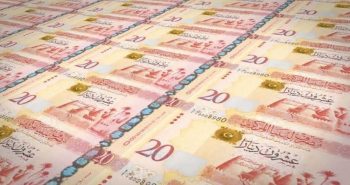
In just two years, this authority has created an extraordinary LYD 129 billion (~ €24 billion) in new debt, pushing Libya’s total domestic debt to LYD 284 billion – the highest in the country’s modern history.
For a nation of fewer than seven million people, this pace and scale of debt accumulation is staggering. It raises an unavoidable question: where has this money gone?
The mechanics of unchecked
money creation
For more than four years, the eastern branch of the Central Bank has sustained itself through a practice of creating money from nothing – borrowing directly from the public treasury and issuing liquidity without a corresponding balance sheet.
This mechanism – often described simply as “printing money” – has allowed the eastern military regime to finance its expenditures in the absence of oil revenue allocations or legitimate borrowing authority.
Independent audits have confirmed the scale of this practice. Deloitte’s forensic audit of the Central Bank of Libya, commissioned to evaluate transactions between the rival branches, revealed that billions of dinars had already been injected into the economy through LYD 46.8 billion in bank deposits and LYD 13.8 billion in currency printing. These findings demonstrated how the money supply had been expanded artificially, outside normal financial controls.
Since 2023, the situation has deteriorated further. With the re-emergence of the eastern parallel government, monetary financing has not only resumed but accelerated at unprecedented levels. In less than three years, an additional LYD 129 billion in new debt has been created – an amount equal to nearly 80% of all the public debt accumulated by rival governments during the entire period 2014-2020.
The result is a dual crisis: on one hand, the erosion of Central Bank’s independence, as the institution’s eastern branch functions as a treasury for political authorities rather than a monetary authority; on the other, the emergence of a parallel financial system that fuels corruption, destabilises the exchange rate, and provides funding streams for non-state actors operating outside Libya’s legal framework.
Financing Chaos: Wagner, Sudan,
and the Regional Web of Conflict
One of the most alarming consequences of unchecked monetary financing in eastern Libya is its role in sustaining the Wagner Group – now rebranded as Africa Corps – and extending support to conflicts beyond Libya’s borders.
With a stronghold in Al-Jufra, Wagner has transformed Libya into a hub for its operations across Africa. The flow of unmonitored Libyan funds, channelled through irregular transactions and the black market, provides an easy and deniable means of financing these deployments, from Libya into the Sahel region.
Yet the threat does not end there. Regional reports indicate that Sudan’s Rapid Support Forces (RSF) may also be receiving indirect financial support through Libya, reinforcing one of Africa’s most devastating wars. At the heart of this dynamic lies the broader network of external patrons – notably Abu Dhabi – which has long used Libya, and Haftar in particular, as a conduit for extending its influence into Sudan. In this sense, the same fiscal mechanism that empowers Wagner in Libya is also being leveraged to entrench violent actors in Sudan and across the Sahel.
The implications are grave: Haftar’s reliance on uncontrolled monetary financing creates a financial ecosystem that sustains mercenary groups and irregular militias simultaneously, embedding them more deeply in regional conflicts. This entrenchment risks prolonging instability, worsening displacement, and intensifying refugee crises and migration flows.
For African and European policymakers, the danger is clear – Libya’s fiscal disorder is not a domestic problem – but a regional crisis multiplier, enabled by external powers who exploit its vulnerabilities.
The Shadow Economy and
International Exposure
By flooding the economy with unmonitored funds, the eastern authorities have indirectly financed a shadow economy that destabilises Libya internally while spilling over into neighbouring states.
Drugs and arms cross porous borders into Chad, Sudan, and Niger, while human smuggling routes strengthen northward, feeding directly into the Mediterranean migration corridors that North Africa and Europe prioritises as a top security concern.
These dynamics carry not only local and regional consequences but also international risks. The billions of dinars circulating outside any transparent framework sustain mercenaries and illicit markets while creating potential liabilities for foreign actors who engage with or legitimise these structures.
The danger is subtle but serious: long-term association with authorities tied to irregular financing risks reputational, legal, and political consequences as evidence of corruption, illicit trade, and mercenary financing continues to mount.
For North Africa and Europe, whose priority is stability along the Mediterranean, the lesson is clear – partnership with Libya must be rooted in transparent, accountable institutions – not parallel authorities that thrive on monetary chaos.
The gravity of Libya’s monetary crisis is not simply a matter of fiscal mismanagement. It is a strategic threat multiplier, linking debt accumulation in Benghazi to mercenary financing, regional conflict, illicit economies, and refugee crises.
If left unchecked, this path could lead to the collapse of Libya’s economy and security within a few years – with devastating consequences for its people and destabilising ripple effects across Africa and into Europe.
The crisis unfolding in eastern Libya demonstrates how monetary policy, when hijacked by parallel authorities, becomes a tool for corruption, conflict, and regional destabilisation.
The eastern parallel government that operates under the de facto control of Field Marshal Khalifa Haftar has already created the largest debt in Libya’s modern history. This unchecked financing sustains Wagner, empowers smugglers, fuels conflicts in Sudan and neighbouring countries, and drives refugee crises across Africa and migration flows toward Europe.
For African and European policymakers, the stakes could not be clearer: confronting Libya’s monetary chaos is not a peripheral issue – it is central to the security of the Mediterranean, the Sahel, and Europe itself. The question is not only how Libya spends its money, but also how unmonitored billions risk financing chaos instead of peace.
***
Yusuf Kablan is Foreign Policy Advisor to the Prime Minister of the UN-backed Libya Government of National Unity.
________________________