Tom O’Connor

As a divided Libya lies between two deepening crises in Africa and the porous southern flank of Europe, representatives of the nation’s internationally recognized government told Newsweek they were looking to President Donald Trump to strike a deal that could have profound effects across two continents.
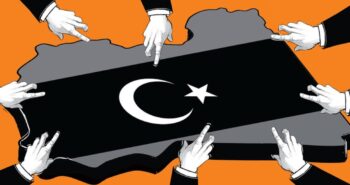
The appeal from the Tripoli-based Government of National Unity that controls much of Libya’s northwest involves seeking U.S. support in pressuring countries—namely Russia, the United Arab Emirates and Egypt—accused of aiding the rival Government of National Stability that controls much of the rest of the nation, including Libya’s second city of Benghazi, and is backed by the military support of influential Libyan National Army chief Field Marshall Khalifa Haftar.
In exchange, the Government of National Unity envisions boosting business and investment ties—particularly regarding Libya’s vast reserves of oil—with an administration known for its deal-based transactional foreign policy. The Libyan authorities also aim to solidify security ties that may bolster NATO’s position in the Mediterranean, curb the free flow of fighters and arms to conflicts raging in the neighboring Sahel region and Sudan while also easing the large-scale migration of African refugees to Europe.
“We would like to have the involvement of United States. And, especially with this government, they are always looking for deals, there are a lot of deals that we can do, and we keep mutual interests,” Mahmoud Ahmed Alftise, economic adviser to Government of National Unity Prime Minister Abdul-Hamid Dbeibah, told Newsweek. “Of course, we have our sovereignties, but we would like to have a good friend, a strong friend.”
“We would like to have a friend’s mutual interest, so we can go ahead and move, so people have their prosperities,” Alftise said, “because the Libyan people are really suffering from this regional interference in Libya.”
Libya’s Fracture
The roots of Libya’s schism can be traced back to a 2011 rebellion against longtime leader Muammar al-Qaddafi. Qaddafi, who had ruled the nation since seizing power in a 1969 coup against the monarchy and later adopted the titles of “brotherly leader” and “King of Kings” of Africa, had for decades molded a seemingly invincible cult of personality bolstered by grand infrastructure projects and iron-fisted suppression of dissent until widespread unrest swelled around the Arab Spring movement.
As Qaddafi’s forces attempted to extinguish the uprising, NATO intervened directly with a crushing air campaign in support of the rebels, leading to the Libyan leader’s downfall and ultimate slaying at the hands of opposition fighters.
Libya’s initial post-Qaddafi steps appeared hopeful as the temporary National Transitional Council handed the reigns to the elected General National Congress in 2012, marking the nation’s first-ever peaceful transfer of power. But new elections held in 2014 produced the first major crisis as political feuds and opposing interpretations of the nascent constitution led to the establishment of the House of Representatives to rival the General National Congress as Libya’s legislative body.
Haftar, a former close Qaddafi confidant and commander who fled to the U.S. in the 1990s to begin orchestrating efforts to oust his ex-ally, emerged as a powerful military figure in support of the House of Representatives. As head of the Libyan National Army, he declared a military operation against the General National Congress, and Libya thus devolved into a second civil war, this time with no clear victor.
The conflict continued for six years until a 2020 ceasefire that once again inspired cautious optimism toward a political solution, with the establishment of the Government of National Unity as the new Tripoli-based authority aimed at unifying the nation. But the House of Representatives rejected the Government of National Unity’s mandate the following year, leading to the creation of the Government of National Stability in the east and entrenching the dual power system that continues to divide Libya to this day.
Sporadic clashes also persist, sometimes among internal factions of the two major governments that claim legitimate authority in Libya, such as occurred between military and militia units in Tripoli in May. Without a mutually agreed framework for Libya’s unification and a United Nations road map left sidelined, both parties remain locked in their feud, though Alftise argued the Government of National Unity remained more open to a negotiated solution.
“Our government is more flexible, there are even some thoughts that maybe we can merge the two governments in order to have an election, and then we will have, of course, parliamentary elections, and then we have a presidential election, or maybe together,” Alftise said.
“But what happened is the House of Representatives is under the control of Mr. Haftar,” he added. “They cannot say something that he does not like.”
Foreign Intrigue
While a return to large-scale fighting has thus far been avoided, fears loom over such a scenario plunging the country into another period of civil strife. Alftise suggested the decision of peace and war may ultimately be influenced by the whims of foreign powers, who have increasingly spread their influence in Libya.
And elsewhere on the continent itself, he predicted that inaction on Russia’s projection of influence through the deployment of personnel in regions like the Sahel could precipitate a broader geopolitical shift for Africa at a time when many nations have already abandoned ties with Europe.
“The Russian presence in Libya is not only controlling Libya. No, they are controlling Africa,” Sahad said. “They are sending troops to other African countries, and they want to be in control of them. And if this continues, if we allow that to continue, they will find one time that Africa will come to the other side.”
The Kremlin’s interest in Libya is deep-rooted as NATO’s intervention prompted a severe backlash from Russian President Vladimir Putin, who went on to double down on back for another Soviet-era ally facing an Arab Spring revolt, Syrian President Bashar al-Assad. Assad’s downfall at the hands of an Islamist-led rebel offensive last year has reportedly been followed by an uptick in contacts with Haftar, who met Putin in May at Russia’s 80th anniversary World War II Victory Day parade.
It’s not just Moscow or even adversaries of Washington that the Government of National Unity suspects of seeking a lasting piece of Libya. Sahad argued that the United Arab Emirates had thrown its weight behind Haftar in a bid for port access and other shares of the country.
“The UAE has this sickness of wanting to control harbors. They came to buy New York Harbor one time,” Sahad said. “The control of the Libyan harbors, some of them is to be part of the Libyan oil industry, and to be part of the financial sector, especially the banks, and there are other things, and I have no doubt that they have this ambition, and I have no doubt that Haftar agrees with that.”
Egypt, too, has expressed its ambitions to stake control over parts of eastern Libya, according to Sahad, who cited Egyptian President Abdel Fattah el-Sisi’s 2020 remarks calling any attack by the Government of National Unity’s forces against the Government of National Stability-held coastal city of Sirte a “red line” that would result in direct Egyptian military intervention.
Russia and the UAE have rejected allegations that they provided direct support for the Libyan National Army during its westward offensives, while Egypt has framed its stance as necessary for maintaining security along its border with Libya.
Still, Sahad argued that addressing runaway foreign influence was key to unlocking progress on other fronts, including reconciling the split nature of Libya’s governance and paving the way for U.S. investment in Libya’s resource industry.
“If we put an end to this interference, our situation will be better,” Sahad said. “Maybe it will be easier for us to reach an agreement and unify the institutions. A lot of things could happen by then. But with this interference we have, we have real big problems in that regard. The U.S. can help a lot”
“Another sphere is our oil industry faces a lot of problems because of a lack of experts,” he added. “The American companies started the oil industry in the 50s, now we have a lot of fields not explored yet. I think United States companies have a big interest there. And it’s not only oil, we have other minerals.”
To address the growing presence of foreign actors, Sahad called on the U.S. to crack down on the nations suspected of playing destabilizing roles in Libya. While he said he was encouraged by moves such as the Libyan Stabilization Act that passed the House of Representatives in 2021 but was never signed into law, he argued he has not “seen any real effort from either this administration, nor the administration before, to put some pressure on the United Arab Emirates or Egypt to stop their interference in Libya.”
Attention to foreign influence in Libya has also sparked some acknowledgment within the Government of National Unity regarding Turkey’s growing role, particularly after Ankara began fostering closer dialogue with the House of Representatives as part of what Turkish President Recep Tayyip Erdogan referred to in August as a step in line with his nation’s “multidimensional diplomatic efforts.”
“Of course, the Turks always like to have some existence in the area, because they feel they are a power in the area. And nowadays they are,” Alftise said. “They were, of course, in the Ottoman Empire, and now they are trying to have a new history there.”
***
Tom O’Connor – Senior Writer, Foreign Policy & Deputy Editor, National Security and Foreign Policy
__________________