The Sentry

Fuel smuggling has become deeply entangled with Libya’s security, political, and economic structures.
Addressing this issue requires a carefully designed set of medium-term domestic policy initiatives, cou pled with international targeted action against key perpetrators and facilitators.
Libya
Budget for all fuel-related expenses.
The Presidency Council, the Government of National Unity (GNU), the House of Representatives, and the High Council for Energy Affairs, which includes the leaders of the National Oil Corporation (NOC), the General Electricity Company of Libya (GECOL), the Central Bank of Libya (CBL), and the Libyan Audit Bureau, should collaborate on a budget law that articulates an itemized breakdown of fuel consumption for the fiscal year.
After three years of concealing its fuel-related expenditures from most official reports, Libya urgently needs a public, legislatively approved schedule that explicitly plans and accounts for all fuel-related spending.
Clarify and reduce GECOL’s fuel consumption.
The same actors should work closely with GECOL to establish a clear, public assessment of the legitimate fuel requirements for Libya’s electricity plants.
An accurate and transparent account of GECOL’s true consumption is essential to end the misuse of electricity generation as a pretext for unjustifiably large fuel deliveries to armed groups and other participants in the fuel smuggling sector.
Moreover, GECOL should reduce its reliance on fossil fuel.
Lift the fuel subsidy.
The GNU should gradually phase out the fuel price subsidy and replace it with a cash stipend that is disbursed directly to households, thereby removing financial incentives to engage in fuel smuggling.
Replacing the subsidy with direct cash payments would result in Brega Petroleum selling fuel domestically at prices in line with international market rates, eliminating the price gap that underpins Libya’s fuel smuggling sector.
Forbid fuel exports until large-scale smuggling is eradicated.
The NOC and associated companies should be formally prevented from exporting diesel, gasoline, and heavy marine fuel. Because Libya is a net importer of those refined petroleum products, their export should raise red flags.
Apply chemical marker on all fuel distributed.
The NOC should initiate a program to mark both do mestic and imported refined fuel with a unique chemical signature that would enable authorities to trace its origin, improving efforts to combat fuel smuggling.
Increase transparency and competitiveness of all fuel imports.
In February 2025, the NOC pledged to subject all foreign fuel purchases to open bidding and to buy only from energy merchants who own refineries, underscoring the importance of transparent reporting. The measures announced by the NOC mark a step in the right direction and should be thoroughly implemented.
Remove top smuggling facilitators from the NOC’s cadres.
In April 2025, the Libyan Audit Bureau and the Administrative Control Authority established a committee to review certain contracts for irregu larities in the oil and gas sector.
The same committee — or one similar to it — should also recommend dismissing those NOC officials who have been significantly implicated in fuel-related abuses. Complicit functionaries such as Brega Petroleum chief Fuad Belrahim should step down or be removed from their positions.
Regulate NOC dealings with traders.
The Attorney General’s Office, the Libyan Audit Bureau, and other relevant domestic institutions should regulate dealings with energy merchants and require rigor ous financial reporting.
Enforce the Extractive Industries Transparency Initiative standards.
The NOC should adopt Ex tractive Industries Transparency Initiative standards for all fuel transactions and strengthen in-house trading capabilities to reduce reliance on external energy merchants who do not own oil refineries.
Investigate past swaps.
The Attorney General’s Office, the Libyan Audit Bureau, and other relevant domestic institutions should investigate the reasons the NOC acquired foreign diesel and gasoline at prices far above market levels in 2024 and, potentially, in the preceding years.
Build an additional refinery.
The Libyan government should fulfill the existing pledge to build a new refinery in southwestern Libya, as the oil-rich country needs to reduce its dependence on imported fuel.
US, EU, and UK
Investigate Ali al-Mashay and, if appropriate, designate him for sanctions.
The US, the UK, and Canada should investigate senior LAAF officer Ali al-Mashay and, if appropriate, designate him under their respective Global Magnitsky-style sanctions regimes for his pivotal role in Saddam Haftar’s mul tibillion-dollar fuel smuggling enterprise and the misappropriation of Libyan state assets on a massive scale.
Demonstrated US concerns over high-level LAAF corruption will also position Washington to demand tangible reforms as part of its broader diplomacy toward the Haftar family.
The EU and other jurisdictions should investigate and designate Ali al-Mashay for his illicit activities.
Issue targeted sanctions on other key figures.
The US, the EU, the UK, and other like-minded jurisdictions should investigate and, if appropriate, impose targeted sanctions on the principal perpetra tors and facilitators of fuel smuggling.
Such individuals should also be excluded from any cooperation with the US, the EU, and the UK.
They include:
► Brega Petroleum Finance Director Faraj al-Jaedi
► Joint Force leader Omar Bughdada
► Brigade Tareq bin Ziyad leader Omar Mrajae al-Maqarhi
► Battalion 87 officer Mohammed al-Mazughi ► Zawiyah Petroleum Facilities Guard leader Mohammed Koshlaf
Embrace a network approach to sanctions.
US organs such as the Department of the Treasury’s Office of Foreign Assets Control (OFAC) should revisit the case of Koshlaf, who, despite being sanc tioned in 2018 for human smuggling, has continued his organized crime activities, including fuel smug gling.
The US and other like-minded jurisdictions should investigate the mechanisms that he has used to evade the 2018 sanctions, as this could inform stronger, more network-oriented measures against other top members of his group and family.
Help Libya investigate.
Given the nexus linking Libya’s vast fuel smuggling industry to the US dollar,494 the Financial Crimes Enforcement Network (FinCEN) should assist the Libyan Attorney General’s Office in investigating the swaps concluded from 2022 to 2024.
This collaboration should be organized in the form of a task force that includes other jurisdictions, such as the UK and the EU.
Issue a business advisory.
To inform and caution the American business community, the US Treasury Department and other relevant organs should issue a business advisory on the illicit networks exploiting Libya’s fuel subsidy program, including suspicious energy merchants, brokers, intermediaries, and transporters potentially involved in those schemes.
International Banks
Know your customers.
Correspondent banks processing dollar transfers initiated by the NOC for fuel imports should exercise heightened caution and require comprehensive documentation when payments go to energy merchants lacking proven track records or refineries.
UN and Member States
Make the fuel crisis a priority in the economic track.
The United Nations Support Mission in Libya (UNSMIL) should recognize the fuel crisis as one of its top agenda items in its political and economic discussions.
When Libyan stakeholders or member states commit to measures, UNSMIL must act as the central coordinator to ensure these pledges are fulfilled, consistently reminding all parties of the urgency and importance of carrying out agreed-upon measures.
Issue sanctions.
The 1970 Libya Sanctions Committee should utilize its authority to apply targeted UN sanctions under listing criteria including:
► Individuals or entities providing support for armed groups or criminal networks through the illicit exploitation of crude oil or other natural resources in Libya [Resolution 2174 (2014), para. 4(c) and Resolution 2213 (2015), para. 11(c)].
► Individuals or entities threatening or coercing Libyan state financial institutions and the NOC or engaging in any action that may lead to or result in the misappropriation of Libyan state funds [Resolution 2213 (2015), para. 11(d)]
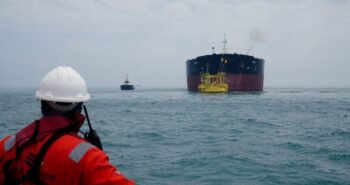
Maritime forces deployed in the Mediterranean Sea, including but not limited to Operation EUNAVFOR MED IRINI, should prioritize enforcement of UN Security Council Resolution 2146 (2014) — most re cently reauthorized with UN Security Council Resolution 2701 (2023) — regarding the maritime inter diction of vessels illicitly exporting refined petroleum products from Libya. IRINI should make its fuel-related maritime inspections public.
_______________