
Archive - February 2026

Will Haftar and Pakistan’s defence deal deepen Libya’s divide?

Dania Gamal

The $4 billion defence deal, one of Pakistan’s largest-ever, illustrates how Libya’s rival camps leverage foreign ties to bolster their claims to power.

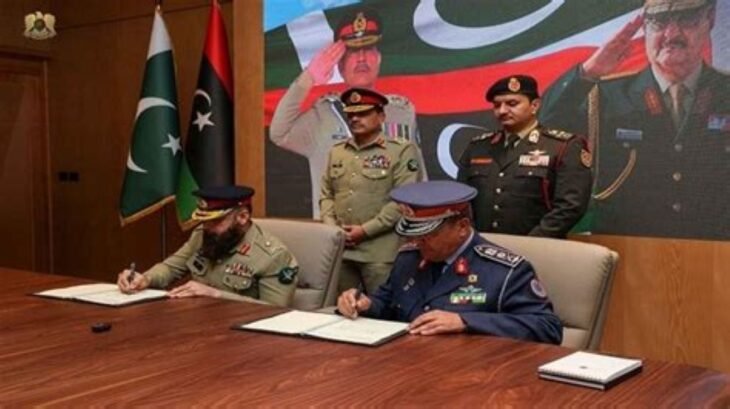
Libyan commander Khalifa Haftar’s visit to Islamabad on 2 February, where he was received with formal military honours by Pakistan’s army chief, came just weeks after the two sides finalised a defence agreement valued at more than $4 billion, one of Pakistan’s largest-ever arms export deals.

Haftar was accompanied on the visit by his son Saddam, widely seen as the leading contender to succeed the 82-year-old commander, and by Osama Saad Hammad, prime minister of the eastern-based parallel government. The delegation also met Pakistani Prime Minister Shehbaz Sharif. 

The trip was preceded by a July visit by Saddam Haftar to Islamabad, focused on defence industry cooperation, a build-up that ignores the UN arms embargo imposed on Libya since 2011.

The internationally recognised Government of National Unity (GNU) in Tripoli responded by summoning Pakistan’s chargé d’affaires, protesting the reception of what it described as “parallel Libyan delegations”.

The Libyan government called the move “recognition of an illegitimate entity” and said it contradicted Islamabad’s stated position of recognising the GNU as the country’s legitimate executive authority. Officials described the step as a violation of Libyan sovereignty and a breach of relevant United Nations Security Council resolutions.

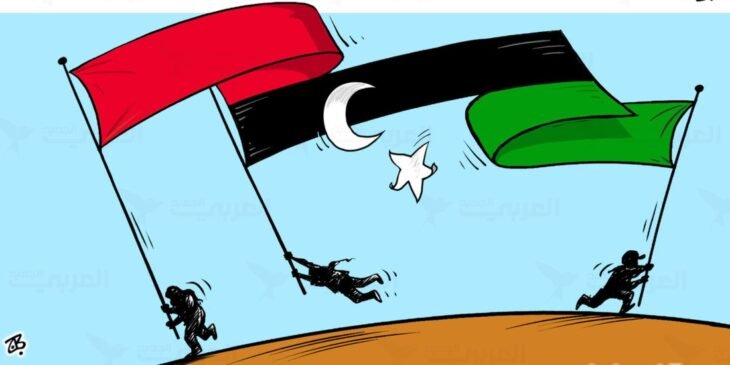
The fallout laid bare what analysts describe as a legitimacy contest that has overtaken governance as the central preoccupation of Libya’s rival authorities. With no elections held since the country’s institutional split more than a decade ago, both sides are now courting foreign partners to shore up their claims to power.

The visit and the fallout

“International visits play a pivotal role in shaping the country’s fate as a form of recognition,” Saleh al-Aish, a Libyan political activist, told The New Arab. “The reception carries particular weight when the host is a militarily significant state like Pakistan.” He noted that some countries now could view Islamabad’s engagement with Haftar as a meaningful step toward broader international acknowledgement.

“Currently, Libya is a two-pole system,” he told The New Arab, “with the balance tipping toward the eastern command while the Dbeibah government gradually loses its popular support.” The situation, however, is multi-layered and has its own complications, with Haftar maintaining close ties with the UAE and providing fuel and weapons to the paramilitary Rapid Support Forces (RSF) in Sudan. But this is straining his relationships with Saudi Arabia and Egypt, both of which back the Sudanese Armed Forces, al-Aish says.

“Meanwhile, Pakistan maintains good relations with Abu Dhabi and Riyadh, even though some would argue that it has moved closer to Saudi Arabia following the mutual defence pact signed last year.” Under the December agreement, signed during Pakistani army chief Asim Munir’s visit to Benghazi, Pakistan is to supply 16 JF-17 Thunder multi-role fighter jets, co-developed with China, along with 12 Super Mushshak basic trainer aircraft and other unspecified equipment for air, land, and naval forces. 

The deal includes provisions for training, capacity building, and potential joint manufacturing, with deliveries expected over two and a half years. If fully implemented, the sale would mark the first export of JF-17s to an Arab country and anchor Pakistan within eastern Libya’s military orbit. Turkey, which has close military ties to both Islamabad and the GNU, is watching the situation closely.

Dbeibah’s government, though, is not without its manoeuvres. It has pursued security cooperation with Italy through high-level talks in Tripoli in February 2026, while recent US reengagement features economic delegations to Washington and AFRICOM discussions on force professionalisation. Saudi Arabia has publicly affirmed support for the GNU’s stability efforts.

Domestic challenges weigh on the GNU

Yet at home, the GNU’s claim to authority faces growing strain. Persistent delays in elections, factional disputes, and economic pressures have eroded public confidence. Tunisian political analyst Belkacem Mohammed, who specialises in Libya, reads the visit through a wider lens. The absence of elections and a final constitutional settlement, he said, keeps the question of legitimacy permanently open. He described Haftar’s trip as part of a broader effort to reposition during a period of internal stagnation.

“A presence in regional capitals sends a message to the outside that this actor is indispensable and cannot be bypassed,” Belkacem said, “and to the inside that he has a network of relationships that could strengthen his hand in any future settlement.” He characterised such visits as political tools for rebalancing in a landscape where legitimacy remains, as he put it, “distributed and precarious”.

Beyond summoning Pakistan’s diplomat, acting foreign minister Taher al-Baour chaired a meeting with Asian ambassadors and stressed that any agreements concluded outside official channels carry no legal standing, a message aimed at prospective partners across Asia as much as at Islamabad. 

Legitimacy up for grabs

A survey by the United Nations Support Mission in Libya (UNSMIL) shows strong public backing for national elections in Libya, with 86% of over 1,000 respondents saying they are willing to vote, while more than 60% stressed that elections should only proceed after a binding political agreement among rival factions to accept the results.

Mohammed Yusri, a Libyan political analyst sympathetic to the eastern command, said the controversy around legitimacy is a symptom rather than a cause. “It is the institutional split that opens the door for competing international readings, not the other way around,” Yusri said. But he cautioned that external engagement from either side of the divide will remain limited in impact without a domestic reckoning. 

“Libya’s stability will not be achieved through a fight over external representation,” Yusri said. “It requires a national consensus that rebuilds the state on agreed foundations of legitimacy.” He added that the leadership in Benghazi approaches these visits from a pragmatic standpoint, focused on diversifying partnerships and building capacity in areas that have seen relative stability. 

The contest over who speaks for Libya abroad has become inseparable from the contest over who governs at home, and for now, both remain unresolved.

***

Dania Gamal is a Libyan journalist who has worked as a news anchor and a reporter in a number of Libyan outlets.

_________________
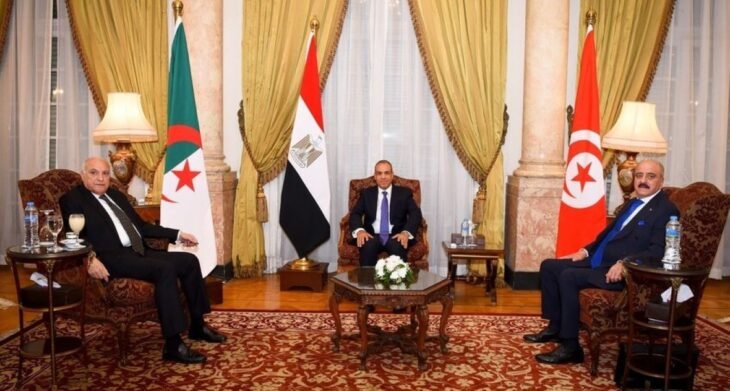
Renewed regional diplomacy raises hopes for Libya political breakthrough

Adel Elthabti

A revival of regional coordination among Libya’s key neighbors, combined with expanding US and UN engagement, may be reshaping the landscape for a potential political breakthrough in the divided country, a Libya affairs specialist said.

Beshir Al-Jouini, a researcher in international relations, told Anadolu that the renewed activity of the trilateral consultation mechanism between Egypt, Algeria and Tunisia signals more than routine diplomacy. It reflects a narrowing gap in regional positions that had long complicated efforts to stabilize Libya.

The mechanism, reactivated in 2025 after years of dormancy, convened in Tunis in late January, where foreign ministers reaffirmed that Libya’s solution must remain internally driven and insulated from broader regional rivalries. According to Al-Jouini, the most consequential shift lies in the evolving understanding between Cairo and Algiers.

“In previous years, we saw clearly drawn red lines,” he said, recalling Egypt’s warning over Sirte and Jufra in 2020 and Algeria’s firm stance on developments in Tripoli the following year. “Today, those red lines no longer define the space of movement. That alone reduces the risk of escalation.”

Libya remains split between two rival administrations: the internationally recognized Government of National Unity (GNU) in Tripoli, led by Abdul-Hamid Dbeibah, and an eastern-based government appointed by the House of Representatives and headed by Osama Hammad in Benghazi.

For years, UN efforts have aimed to bridge this divide and pave the way for long-delayed elections intended to reunify the country’s fractured institutions.

Widening diplomatic arena

Beyond regional convergence, Al-Jouini pointed to growing international involvement that is reshaping political calculations inside Libya. He cited intensified economic activity since late 2025, including energy summits, major cross-border agreements and expanded US diplomatic engagement. Visits by US presidential adviser Massad Boulos and subsequent meetings involving figures from both eastern and western camps reflect what he described as a coordinated external push.

One such meeting in Paris reportedly brought together Saddam Haftar, chief of staff of the Ground Forces in eastern Libya, and Ibrahim Dbeibah, Libya’s national security adviser, adding to previous contacts in Rome and Germany. These engagements, he said, suggest increasing encouragement for pragmatic cooperation between Libya’s rival camps.

He also referred to plans for a large-scale joint military exercise in Sirte expected in March, bringing together eastern and western forces under US sponsorship. If realized, it would symbolically merge political, economic and security tracks into a single stabilization effort.

While the trilateral mechanism emphasizes geographic proximity, Al-Jouini noted that Libya operates within broader circles of affiliation, including regional and global powers whose military, economic and geopolitical weight often exceeds that of neighboring states. The critical question, he argued, is not whether momentum exists but what shape the emerging settlement might take.

“Will it be a sustainable settlement that ends transitional phases, establishes a constitution and produces synchronized elections and national reconciliation?” he asked. “Or will it become another formula for managing division and distributing power among rival elites?”

Shifting calculations

The recent killing of Saif al-Islam Gaddafi, the son of former Libyan ruler Muammar Gaddafi, has further complicated the picture. Al-Jouini described the assassination as political in nature and questioned who benefits most from his absence, particularly at a moment when reconciliation initiatives were gaining traction.

Speculation has circulated regarding possible responsibility, including allegations involving forces linked to eastern commander Khalifa Haftar, whose camp is believed by some to have viewed Saif al-Islam as a political rival. Others have dismissed claims implicating the Tripoli-based authorities as unrealistic.

For Al-Jouini, the broader issue remains unchanged: any external alignment or diplomatic momentum must ultimately translate into a unified Libyan political process. “The convergence between Egypt and Algeria is positive for both countries and for Libya,” he said. “But no mechanism can replace a genuine Libyan-Libyan dialogue.”

_______________

Libya is deteriorating on many fronts!

Adla Massoud

UN official urges Libyan leaders to refrain from ‘escalatory measures’. The UN said on Tuesday that Libya’s political, economic and security situation is worsening, as institutional divisions, financial strain and criminality threaten already delayed plans for national elections.

Briefing the UN Security Council, Special Representative Hanna Tetteh said rival political bodies, the House of Representatives and the High Council of State, had failed to make any progress on important elements of a UN-backed political road map despite months of mediation.

“Across the four tracks, the sense of urgency to resolve the political impasse and produce governance and economic reforms is palpable,” Ms Tetteh said, adding that the lack of implementation of agreed mechanisms and unilateral actions had eroded trust and complicated preparations for elections.

She said that Libya’s judiciary, historically viewed as one of the country’s few unified institutions, is now fragmenting, with parallel courts in Tripoli and Benghazi issuing contradictory rulings.

“The situation in Libya is deteriorating on many fronts,” Ms Tetteh said. “Contradictory, parallel judicial decisions put into jeopardy the unity of the legal and judicial systems and weaken the administration of justice.”

She said the divisions risk rendering ineffective what had been the “last mechanism” to ensure accountability and could obstruct the UN-assisted political process.

The UN official urged Libyan leaders to refrain from what she called escalatory measures and to co-operate with an independent mediation committee of Libyan judicial and legal experts working to preserve a unified court system.

Massad Boulos, US senior adviser to the President for Africa, Arab and Middle Eastern Affairs, told the council that Washington would remain engaged diplomatically.

“Under the Trump administration, the United States will be at the forefront of diplomatic efforts to bring unity and lasting peace to Libya,” Mr Boulos said, adding that US officials were convening representatives from eastern and western Libya to encourage military and economic integration.

“Our message to Libyan leaders is clear – it is time to overcome the divisions of the past, and the United States will be there to support you when you take meaningful steps towards unity,” he said.

Beyond political paralysis, Ms Tetteh also highlighted growing security threats, warning that transnational criminal networks had “flourished” in Libya’s fragmented environment.

A recent UN report found Libya has become a conduit for drug trafficking and other illicit trade, abetted by porous borders, weak financial supervision and divided law-enforcement institutions.

“These illicit economies generate substantial revenue, intersect with corruption and informal financial flows, and inevitably undermine state authority, distort the economy and fuel instability,” she said.

Libya has struggled to become stable since the 2011 Nato-backed uprising that toppled longtime leader Muammar Qaddafi, leaving the country split between a UN-recognised government in Tripoli and a rival eastern administration supported by military commander Field Marshal Khalifa Haftar.

The prolonged fragmentation has also enabled widespread human trafficking and abuses against migrants using Libya as a gateway to Europe, according to UN agencies.

A joint report by the UN Support Mission in Libya (Unsmil) and the Office of the High Commissioner for Human Rights said systematic violations against migrants, asylum seekers and refugees continue “with impunity”.

The report described an “exploitative model” that preys on migrants’ vulnerability and has become “a brutal and normalised reality”.

_______________________

Ramadan celebrations tempered by economic woes in Libya

  • Libya’s other economic problems included the absence of a unified national budget, in light of its political divide, as well as uncoordinated public spending due to parallel state institutions, Tetteh said
  • Refills of gas cylinders, officially priced at 1.5 dinars ($0.24) but often unavailable through state-run distributors, now sell for 75 dinars ($11.85) on the black market and at times more

Libyans have been enjoying Ramadan with feasts and fireworks — but soaring prices, a devalued currency and political divisions have left many with little to celebrate. Fifteen years on from the fall of longtime leader Muammar Qaddafi, the country remains split between east and west, while shortages of goods, including fuel, disrupt daily life, despite Libya sitting atop vast oil and gas reserves.

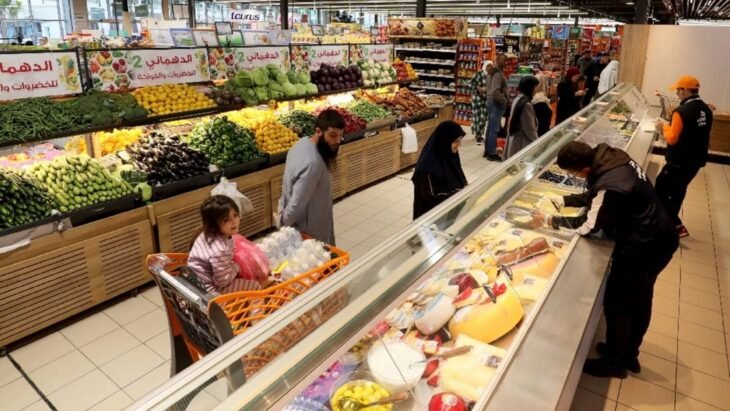
During the Muslim holy month of Ramadan, shoppers stock up on treats, as families gather for lavish meals before and after the daytime fast that stretches from sunrise to sunset. But this year supermarkets have been rationing their goods, while many petrol stations are short of gas. In the capital Tripoli, most ATMs were out of cash this week.

Firas Zreeg, 37, told AFP while weaving through a crowded supermarket that the economy was deteriorating, blaming currency speculators for the fall in the dinar, “which has negative repercussions on our daily lives.” The price of cooking oil has doubled in recent weeks, while meat and poultry prices rose by half. Refills of gas cylinders, officially priced at 1.5 dinars ($0.24) but often unavailable through state-run distributors, now sell for 75 dinars ($11.85) on the black market and at times more.

– ‘Burden on citizens’ –

Libya has struggled to recover from the chaos that erupted following the 2011 Arab Spring uprising that toppled Qaddafi. It remains divided between a UN-recognized government based in Tripoli and an eastern administration backed by military strongman Khalifa Haftar.

The country has largely been stable in recent years although there have been bouts of deadly violence, including the killing of Qaddafi’s son and heir apparent Seif Al-Islam this month. With security holding, many Libyans are more focused on their livelihoods.

Last month, the central bank in the western territory devalued the dinar — the second time in less than a year — by nearly 15 percent, “aimed at preserving financial and monetary stability and ensuring the sustainability of public resources.” In an address this week, Prime Minister Abdulhamid Dbeibah acknowledged that the devaluation had once again “put the burden on citizens.”

Hanna Tetteh, head of the United Nations Support Mission in Libya, warned on Wednesday that “poverty and pressure on society [are] increasing.” “The situation, in addition to the fragile security landscape, should be a matter for concern as such conditions can lead to unexpected political and security challenges,” she told the UN Security Council.

Libya’s other economic problems included the absence of a unified national budget, in light of its political divide, as well as uncoordinated public spending due to parallel state institutions, Tetteh said. Revenues from the oil industry were also declining, she added, while the central bank has said public spending is growing at an unsustainable pace.

On Tuesday, Libya marked 15 years since the start of the uprising that eventually toppled Qaddafi, with fireworks lighting up the sky in Tripoli, but for many Libyans life remains a struggle. “Minor improvements in security were made over the past three years,” Zreeg told AFP, but Libyans are still faced with huge economic challenges.

­_____________________

Libya’s Oil Licensing Round Fails to Deliver Promised Comeback

Natalia Katona 

  • Libya’s 2025 licensing round offered 22 onshore and offshore blocks, attracted 44 applicants, with 37 companies pre-qualified – yet only 5 blocks were ultimately awarded in February 2026.
  • Major winners included Chevron, Eni, QatarEnergy, Repsol, and TPAO, while dozens of other qualified companies chose not to submit final bids despite Libya holding Africa’s largest proven oil reserves.
  • With such limited new acreage moving forward, Libya’s target to increase production from around 1.4 million b/d to 2 million b/d by 2030 would now be increasingly difficult to achieve.

***

Libya’s first oil licensing round in more than 17 years, launched by the National Oil Corporation (NOC) in March 2025, was meant to signal the country’s upstream comeback after more than a decade of war and fragmentation. The round offered 22 onshore and offshore blocks, including 19 undeveloped discoveries, and drew strong early interest: 44 companies and one consortium applied, with 37 pre-qualified by July.

Established players such as Eni, TotalEnergies, BP, Repsol and OMV were joined by a wide range of international entrants, from CNPC subsidiary CNODC and Chinese private firms ZPEC and Jereh, to Russia’s Lukoil, Indian Oil Company, Turkey’s TPAO, and gas-focused investors including QatarEnergy, Woodside and Shell. The broad participation initially signalled renewed investor willingness to re-engage with Libya, encouraged by recovering production and the relative stability following the October 2020 ceasefire.

Yet the outcome, announced on 11 February 2026, fell sharply short of expectations. Only 5 (two offshore and three onshore) of the 22 offered blocks were ultimately awarded – a noticeable gap between early expressions of interest and binding commitments. Participation in the final bidding phase narrowed to a small group of companies: Chevron, ConocoPhillips, TotalEnergies, Eni, QatarEnergy, Repsol, TPAO, Hungary’s MOL, and Nigeria’s Aiteo.

The most competitive award was onshore Block S4 in the Sirte Basin’s Waha area, where Chevron won over a TotalEnergies-ConocoPhillips consortium, marking a notable return by the US major that had exited Libya after the 2011 civil war. Repsol and TPAO emerged as key winners elsewhere, securing offshore Block 07 alongside MOL and jointly acquiring onshore Block C3 in the Sirte Basin. For Spain’s Repsol, Libya remains a cornerstone asset where it already leads international operations in the Murzuq Basin, while TPAO’s entry reflects Ankara’s strategic alignment with Libya’s Tripoli government.

MOL’s participation demonstrates a different logic: Libya is among the few remaining regions where mid-sized independents can still access large-scale conventional oil opportunities. Offshore Block 01 was awarded to an Eni-QatarEnergy consortium, reinforcing an existing partnership model that QatarEnergy has deployed globally (for instance, in Egypt, Namibia and Brazil), taking minority stakes alongside experienced operators in high-potential frontier basins. Nigerian independent Aiteo secured onshore Block M1 in southwest Libya, becoming its first upstream expansion outside its domestic market.

The failure of Libya’s widely anticipated licensing round, initially seen as a turning point for its upstream revival, underscored the importance of legal, geological and economic realities over naive expectations of a rapid energy comeback. Libya retains Africa’s largest proven oil reserves and has restored production to approximately 1.3 million b/d, near pre-war levels. However, the country’s political geography remains divided between legal authority and physical control.

The internationally recognized Government of National Unity (GNU) in Tripoli, acting through the NOC, retains the legal authority to award contracts and access international financial systems, while many producing assets (particularly in the Sirte Basin) are secured by eastern forces aligned with Khalifa Haftar’s military force, the Libyan National Army (LNA). This dual structure has become an operational reality: investors sign contracts with Tripoli for legal validity while relying on dubious security arrangements with eastern authorities to ensure uninterrupted operations. Although the 2020 ceasefire halted large-scale hostilities, localized clashes continue, including renewed confrontations in March 2025 over infrastructure and political control, reinforcing investor concerns that security conditions remain fluid.

Security risks were not the only negative factor in play. Legal and contractual uncertainty also impacted investor participation. Before 2011, Libya attracted oil majors under the highly restrictive EPSA IV regime, where contractors retained just 5–15% of profit oil and IRRs could fall as low as 2.5% – terms that became untenable once political stability collapsed.

The 2025 licensing round introduced a revised model expected to offer improved returns, with IRRs reportedly rising to 35.8% and the state take reduced to around 66%. However, key provisions (including force majeure conditions, cost recovery, and stabilization terms) remained unclear during the licencing process, and such ambiguity in a politically fragmented environment significantly raised investment risk.

The structure of the offered acreage also limited participation. Many blocks contained mature discoveries requiring redevelopment rather than frontier exploration – something that usually attracts smaller independent operators specializing in late-life assets and rapid monetization. However, the NOC’s qualification criteria required companies to have large existing reserves and production portfolios, effectively excluding smaller firms better suited to developing such assets. This contrast between asset profile and eligibility requirements dramatically narrowed the pool of viable bidders.

The outcome underscores that Libya’s upstream revival remains constrained by structural realities despite its resource potential and geographic proximity to Europe. The NOC has articulated ambitious targets of increasing oil production to 2 million b/d and gas output to 57 Mcm/d by 2030, which is highly unlikely given the limited number of awarded blocks. And even those awarded in the 2025 round are unlikely to substantially contribute to production before the early-to-mid-2030s, as they require to undergo a full exploration-to-production cycle. This way, the short-term output growth will mostly depend on investments in existing producing assets rather than new exploration.

Libya’s licensing round ultimately marked a cautious, selective return of few investors rather than the broad upstream revival many had anticipated. Companies already operating in Libya, regional players with geopolitical alignment, and investors willing to accept elevated risk have taken initial positions, while many global majors preferred to simply wait aside.

The NOC is preparing a second licensing round, but its success will depend on addressing the issues demonstrated in the 2025 round: clarifying contractual terms, aligning asset profiles with eligible investor categories, and demonstrating sustained political and security stability. Until those conditions improve, Libya’s vast hydrocarbon wealth will remain trapped by many risks, preventing the country from turning its resource abundance into real production growth despite strong regional demand in the Mediterranean for a new and diversified supply.

____________________________

Libya brings in Western traders in blow to Russian fuel flows

Robert Harvey, Ahmad Ghaddar and Enes Tunagur

  • Libya reduces reliance on Russian fuel imports
  • Vitol, Trafigura, TotalEnergies win Libyan fuel tenders
  • Libya aims to boost oil production capacity to 2 million bpd

Global oil firms and traders including Vitol, Trafigura and TotalEnergies have won tenders to supply Libya with gasoline and diesel as the country grants large Western players wider access and reduces imports of Russian fuel, three trading sources told Reuters.

Libya is in the process of overhauling its oil sector 15 years after the fall of leader Muammar Gaddafi and years of civil wars. The country produces some 1.4 million barrels a day of crude but lacks the infrastructure to refine it, leaving it reliant on fuel imports.

After issuing upstream licensing rounds for the first time in 20 years in an effort to grow crude output to 2 million bpd, Africa’s second-largest oil producer is now changing how it sells its oil and buys the fuel it requires. Rather than swapping fuel imports for crude exports, it has instead awarded tenders to cover its fuel needs.

In the tenders in recent weeks, which have not previously been reported, Vitol won the rights to supply 5-10 gasoline cargoes a month and some diesel volumes, three traders familiar with the results said. Trafigura and TotalEnergies also won the right to supply fuel, two of the three traders said. Reuters could not establish the exact volumes. Vitol, Trafigura, and TotalEnergies declined to comment. Libya’s state-owned National Oil Corporation did not immediately respond to a request for comment on the tenders.

RUSSIAN IMPORTS DROPPING

The tenders will further reduce Russian product imports into Libya as Western firms source their volumes from refineries in the Mediterranean. Russian fuel exports to Libya have fallen to around 5,000 bpd in 2026 from 56,000 bpd in 2024–2025, when it was the dominant supplier, according to live data from global analytics firm Kpler.

Italy has become Libya’s top fuel supplier this year with 59,000 bpd, mainly from the ISAB and Sarroch refineries run by Trafigura and Vitol, the Kpler data showed. Moscow has relied heavily on Africa, Asia and South America for fuel sales after its refined products were banned from the West under sanctions linked to the war in Ukraine.

The Kremlin has also seen its oil exports to India and Turkey fall under U.S. pressure, pushing more oil towards China. Overall fuel exports into Libya from all sources have averaged around 186,000 bpd since the start of 2024.

FIRMS ALSO GAIN ACCESS TO CRUDE

EXPORTS

Libya will also change the way it handles crude exports, the sources said. Swiss-based trading firm BGN, previously a key exporter, will see crude liftings fall sharply, all three traders said, as big Western players will be allocated export rights.

Small Swiss-based trader Transmed Trading also picked up several crude cargoes in January and will keep lifting volumes in coming months, two of the three sources said. Transmed and BGN did not immediately respond to requests for comment.

Libya also signed a 25-year oil-development deal with TotalEnergies and ConocoPhillips in January, involving more than $20 billion ‌in foreign-financed investment.

***

Robert Harvey is a London-based energy reporter covering the oil sector in Europe and beyond for Reuters since 2023.

____________________

Why Power Fears Civil Society in Libya

Ali Alaspli

The Real Reason Libya’s Authorities

Fear Civil Society

The fear of civil society in Libya is not a theoretical issue. It is a political reality. The country’s de facto authorities understand exactly what genuine civil society represents. Despite years of distortion and smear campaigns, they know it is not cosmetic or symbolic. It is a measure of a state’s health and an indicator of whether power can tolerate scrutiny.

Many people, however, do not clearly understand what civil society actually is. The term has been blurred, misrepresented, and sometimes deliberately demonised. It is often reduced to NGOs, donor-funded projects, or familiar faces on television. In reality, civil society is far simpler and far more powerful: it is collective action organised independently from the state and its coercive institutions. It is people coming together to defend their rights and interests outside the logic of official authority.

In any functioning country, progress is not measured by how many organisations are registered, but by whether they can operate freely. Real civil society monitors elections, documents abuses, questions decisions, and challenges corruption. It has the ability to say “no” without fearing imprisonment or exile. It does not exist to flatter power; it exists to hold it accountable. That alone makes it uncomfortable for those who rule through control rather than consent.

At its core, civil society performs a watchdog role. When it observes elections, it limits fraud. When it documents violations, it breaks the monopoly of official narratives. When it criticises, it exposes systemic failure. When it calls for reform, it erodes the moral legitimacy of authorities who govern through fear. And in critical moments, when it mobilises public opinion, it can reshape political realities. No authority that fears accountability can comfortably coexist with such a force.

Libya’s post-2011 landscape illustrates this tension clearly. Before the revolution, there was no genuine independent civil society. A few institutions existed, but they operated within the regime’s framework. After 2011, a sudden numerical explosion occurred. Thousands of organisations appeared, many without experience, structure, or protection. It was growth in quantity, not necessarily in quality. What was needed was time and a supportive legal environment. Instead, civic space steadily contracted.

Successive authorities did not see civil society as a partner in building a stable state. They saw it as something to manage, contain, or neutralise. Activities deemed “safe” — development projects, environmental campaigns, awareness initiatives — were tolerated because they did not challenge the political order. But work related to human rights, accountability, corruption, or scrutiny of security forces quickly became dangerous territory. From there, co-optation or suppression followed.

At the same time, a parallel version of civil society was cultivated. Government-organised NGOs, or “GONGOs,” were funded and promoted to project an image of civic participation while reinforcing official narratives. These organisations served to discredit independent voices and present themselves as the “national” alternative to supposedly foreign or destabilising actors.

Those who insisted on working in sensitive areas faced a stark choice: silence, exile, or repression. It is not a coincidence that many genuinely independent Libyan organisations now operate from abroad. Nor is it accidental that activists who survived imprisonment or violence often live in forced exile or remain publicly silent.

Inside Libya, meaningful civic space has narrowed dramatically. Surveillance, intimidation, smear campaigns, and targeted arrests are common. Laws are drafted or applied selectively to constrain independent activity. Public opinion is shaped through religious platforms, television channels, and social media to portray civil society as morally corrupt, foreign-funded, or even hostile to national identity. A manufactured moral panic has turned oversight into treason and accountability into conspiracy.

There is also an uncomfortable truth: civil society actors have not always succeeded in explaining their work clearly. We did not always connect our efforts to everyday concerns. That gap allowed authorities to redefine the concept for us — and against us.

Ultimately, the fear of civil society in Libya is not about protecting tradition or safeguarding sovereignty. It is about avoiding oversight. It is about preventing documentation. It is about ensuring that those responsible for abuse are never held accountable.

A strong civil society implies limits on power. It implies transparency, consequences, and public scrutiny. For authorities built on control and impunity, that is not simply inconvenient — it is existential.

***

Ali Alaspli – Libyan human rights defender and former prisoner of conscience. He lives in exile and serves as the Director of Libya Crimes Watch, an organisation documenting human rights violations and advocating for accountability in Libya.

______________________
Can Big Oil Succeed Where Diplomacy Has Failed in Libya?

Simon Watkins 

  • Major Western energy firms, including Chevron and Eni, have secured new Libyan oil blocks in a bid to raise output to 2 million bpd by 2028.
  • Libya holds Africa’s largest proven crude reserves and significant untapped gas potential, but production remains vulnerable to political shutdowns.
  • The unresolved dispute over oil revenue distribution between rival factions continues to pose the greatest risk to long-term stability.

***

Libya’s first oil field licensing round since the removal of Muammar Gaddafi as leader in 2011 has seen a slew of major Western international oil companies (IOCs) choose to either re-enter the country after a long absence or bolster their existing operations in a stunning success for Tripoli.

As part of the National Oil Corporation’s (NOC) target of lifting oil production to 2 million barrels per day (bpd) by 2028, it announced last year that 22 offshore and onshore blocks would be licensed in the initial bidding round. Perhaps the standout winner of a contract award was U.S. supermajor Chevron, designated as the winning bidder for Contract Area 106 in the country’s oil-rich Sirte Basin, marking its return to the country after a 16-year hiatus.

Other Western majors that secured new fields were Italy’s ENI, Spain’s Repsol, and Hungary’s MOL, with Middle East heavyweight QatarEnergy also gaining an award. So, does all this herald a brave new era for Libya, or will it turn out to be just another false dawn?

What augurs well is not just the breadth of Western firms choosing to expand their presence in Libya, but which firms they are. The oil and gas sector holds a unique position in the global business world in that companies operating in foreign locations are afforded an enormous degree of autonomy on the ground, similar in legal terms to embassies being treated as being on native soil wherever they are located.

In practical terms, under international law, foreign oil and gas firms are allowed to deploy whatever security personnel and related infrastructure developments they see as being necessary to safeguard their investments on the ground, provided that these meet with the approval of the indigenous government, but this is virtually always the case.

Consequently, perhaps the best way for any government to quietly build up its influence in a foreign country is to gradually expand the presence of its major oil and gas firms on the ground. Perhaps the most successful early template of this model of building political influence through business expansion was in the British East India Company’s role in the expansion of the British Empire.

Established in 1600, the huge firm functioned extremely successfully for nearly 300 years using trade and investment as the means to gain control over large swathes of Asia, including India and Hong Kong, with all such projects safeguarded by a British security force at one stage as large as 260,000 men.

The additional benefit for the British East India Company and its home country was that its colonising activities more than paid for themselves in the profits from the business it transacted, and the West is hoping its efforts in Syria will do the same. 

Several major Western oil and gas firms have been at the forefront of the ongoing attempt by the U.S. and Europe to rebuild their influence in world’s key oil and gas region, the Middle East, in recent years, particularly since the U.S.’s unilateral withdrawal from the ‘Joint Comprehensive Plan of Action’ (JCPOA, or colloquially the ‘nuclear deal’) with Iran in 2018.

This inadvertently opened the door for China and Russia to use Iran as the lever to expand their presence across the rest of the ‘Shia Crescent of Power’, which included Iraq, Syria, and Lebanon, among others, and then to push further into former Western allies — most notably Saudi Arabia, and the UAE — from that operational base, analysed in my latest book on the new global oil market order.

U.S. President Donald Trump’s second term in office has seen a major pushback on Iran in that configuration, and consequently on China and Russia too, with a further reason for greater oil and gas exploration and development opportunities in the Middle East arising from the loss of Russian oil and gas supplies to Europe after the Kremlin-ordered invasion of Ukraine in 2022.

Several major Western firms have been at the forefront of this broader move to rebuild Western influence in strategically crucial areas of the Middle East — most recently incorporating Iraq — including the U.S.’s Chevron, ConocoPhillips, and ExxonMobil, Great Britain’s BP and Shell, France’s TotalEnergies, Italy’s ENI, and Spain’s Repsol.

QatarEnergy’s presence in a consortium with ENI in Libya also recognises the Arab country’s pivotal importance in the new post-Ukraine War world order, as a key supplier of liquefied natural gas to Europe instead of Russian gas supplies, as part of its broader designation as a ‘major non-NATO ally’.

That said, there is still much oil and gas potential for them to work with in Libya, despite the ongoing civil war since Gaddafi’s removal as leader in 2011. Prior to that, Libya was producing around 1.65 million barrels per day (bpd) of mostly high-quality light, sweet crude oil, particularly in demand in the Mediterranean and Northwest Europe.

It also remained the holder of Africa’s largest proved crude oil reserves, of 48 billion barrels. Moreover, in the years leading up to Gaddafi’s forced exit, oil production had been on a rising trajectory, up from about 1.4 million bpd in 2000, albeit well below the peak levels of more than 3 million bpd achieved in the late 1960s, as also analysed in my latest book on the new global oil market order.

Positively as well, Libya’s National Oil Corporation (NOC) was advancing plans at that point to roll out enhanced oil recovery (EOR) techniques to increase crude oil production at maturing oil fields, and its predictions of being able to increase capacity by around 775,000 bpd through EOR at existing oil fields looked well-founded. However, in the depths of the civil war, crude oil output fell to around 20,000 bpd, and although it has recovered now to just under 1.3 million bpd — the highest level since mid-2013 — various politically-motivated shutdowns in recent years have pushed this down to just over 500,000 bpd for prolonged periods.

Libya also has plans to boost its natural gas production ?so it can become a significant supplier ?to Europe by early 2030, according to the NOC. It aims to increase gas production to nearly 1 billion standard cubic feet per day and start drilling ?for shale gas in the second half of this year.

This growing presence of top-flight Western oil and gas firms on the ground in Libya may be sufficient to catalyse a broader move to peace across the country over the long term, especially given the political attention on Libya that it will bring from Washington, London, Paris and Brussels. However, there remains the fact that the key reason for the civil disorder across the country that has caused multiple major oil shutdowns since 2020 has not yet been dealt with.

To wit — the Commander of the rebel Libyan National Army (LNA), General Khalifa Haftar, made it very clear that the interim peace agreement signed on 18 September 2020 with Tripoli’s U.N.-recognised Government of National Accord (GNA) would be dependent on a solution being reached on how the country’s oil revenues would be distributed over the long term.

The key to this in his view — and supported by the GNA back then — would be the formation of a joint technical committee, which would: “Oversee oil revenues and ensure the fair distribution of resources… and control the implementation of the terms of the agreement during the next three months, provided that its work is evaluated at the end of 2020 and a plan is defined for the next year.”

In order to address the fact that the then-GNA effectively held sway over the NOC and, by extension, the Central Bank of Libya (in which the revenues are physically held), the committee would also “prepare a unified budget that meets the needs of each party… and the reconciliation of any dispute over budget allocations… and will require the Central Bank [in Tripoli] to cover the monthly or quarterly payments approved in the budget without any delay, and as soon as the joint technical committee requests the transfer.”

None of these measures has been put into place to date, and there are no ongoing discussions aimed at resolving them. It may be that the bolstered presence of Western interests in Libya may affect such changes, but until they do, the country’s long-term stability remains in question.

***

Simon Watkins is a former senior FX trader and salesman, financial journalist, and best-selling author. He was Head of Forex Institutional Sales and Trading for Credit Lyonnais, and later Director of Forex at Bank of Montreal

____________________

15 years after uprising against Gaddafi’s rule impunity reigns fueling ongoing abuses

Fifteen years after Libyans revolted against the repressive rule of Muammar al-Gaddafi, systemic impunity fuels crimes under international law and serious human rights violations by militias and armed groups while justice and reparations for survivors and relatives of victims remain elusive, Amnesty International said today.

Instead of being brought to justice in fair proceedings, those suspected of involvement in murder, torture, enforced disappearances and other crimes under international law and human rights violations have been killed or remain at large. They include fugitives from the International Criminal Court (ICC), despite the welcome step taken by the Tripoli-based Government of National Unity (GNU) in May 2025 to accept the jurisdiction of the  Court with respect to alleged crimes committed in Libya from 2011 to 2027.

“For 15 years, successive Libyan authorities have failed to dismantle the networks of abuse that fuel ongoing violations and have instead provided funding and legitimacy to notorious militias and integrated their members into state institutions without proper vetting. By allowing those suspected of responsibility for crimes under international law to evade accountability the authorities have betrayed survivors and reinforced a cycle of violence and lawlessness that shows no sign of ending,” said Mahmoud Shalaby, Egypt and Libya Researcher at Amnesty International.

“The Government of National Unity’s acceptance of the ICC’s jurisdiction rings hollow as long as it is not matched by concrete action. The killing of Saif al-Islam al-Gaddafi earlier this month underscores the inability and unwillingness of the Libyan justice system to ensure accountability and irreversibly robs survivors and relatives of victims of their right to truth and justice. Libyan authorities must meaningfully cooperate with the ICC, surrender individuals wanted for crimes under international law, and ensure that all those suspected of criminal responsibility are brought to justice in fair trials.”

Since the referral of the situation in Libya to the ICC by the UN Security Council in February 2011, only one suspect out of 14 was handed to the Court. On 1 December 2025, the German authorities surrendered Khaled Mohamed Ali El Hishri (also known as “Al-Buti”), senior and long-term member of the notorious Tripoli-based militia Deterrence Apparatus for Combating Terrorism and Organized Crime (DACTO), also known as al-Radaa, to the ICC. The ICC issued a warrant for his arrest for crimes against humanity and war crimes, in connection with incidents at Mitiga Prison in Tripoli under the control of DACTO.

The GNU, as well as the Libyan Arab Armed Forces (LAAF), the de facto authorities in control of eastern and southern Libya, persist in their refusal to arrest and/or surrender Libyan nationals against whom arrest warrants have been issued by the ICC on charges of committing crimes against humanity and/or war crimes. Eight Libyan nationals under ICC arrest warrants remain at large.

Amnesty International wrote to the Libyan Public Prosecutor on 2 February 2026 to inquire about the whereabouts and legal proceedings against two individuals who had been arrested in Libya, but whose current status remains unclear amid concerns that they are shielded from accountability. They are Osama AlMasri Njeem, the former head of the Department of Operations and Judicial Security (DOJS) and long-term senior member of DACTO, and Abdelbari Ayyad Ramadan al-Shaqaqi, a senior member of al-Kaniat armed group. No response had been received at the time of writing.

Killings instead of justice

Libya has seen a pattern of killings of individuals suspected of involvement in human rights violations, denying victims the truth and justice they deserve.

Most recently, on 3 February, Saif al-Islam al-Gaddafi was murdered in unknown circumstances by unidentified attackers. In 2011, the ICC Prosecutor charged him with committing crimes against humanity, including murder and persecution. In 2017, a Libyan court sentenced al-Gaddafi to death in absentia in a trial that did not meet international standards. In July 2017, an armed group in the western city of Zintan, which had held him since 2011, had announced his release in an amnesty.

Another ICC suspect who was murdered in unknown circumstances is Mahmoud al-Werfalli, former Field Commander of the Special Forces Brigade (Al-Saiqa) affiliated to the LAAF. In 2017, the ICC issued an arrest warrant against him for war crimes. In 2021, Mahmoud al-Werfalli was shot dead in Benghazi, the second biggest city in Libya and under the de facto authority of LAAF.

Another notorious militia commander, Abdel Ghani al-Kikli, known as “Gheniwa” was killed in unclear circumstances in Tripoli on 12 May 2025, triggering armed clashes between rival militias in Tripoli. Amnesty International documented crimes under international law and serious human rights violations against Libyans, as well as refugees, asylum seekers and migrants, committed by militias under his command including the Central Security Force/ Abu Salim militia and the Stability Support Authority (SSA). Documented crimes include arbitrary detention, torture and other ill-treatment, enforced disappearances, sexual violence and unlawful killings. Amnesty International also documented how SSA militia members carried out interceptions of refugees and migrants at sea that have been marred by reports of violence, leading to loss of life at sea. 

Failure to surrender ICC suspects

Libya’s justice system remains unwilling and unable to effectively investigate crimes committed by powerful militias and armed groups. Proceedings in Libya are also marred by severe violations of fair trial rights including the right to adequate defence, to not self-incriminate and to be protected from torture, amid continuing trials of civilians by military courts. The Public Prosecutor himself publicly described in April 2025 the bodies responsible for pursuing cases, gathering and preserving evidence as “almost ineffective” due to the involvement of influential parties affiliated with security bodies or armed groups.

Despite this, the Libyan authorities refuse to surrender those under ICC arrest warrants to the Court.  In November 2025, the Public Prosecutor ordered the detention of Osama AlMasri Njeem in connection with incidents of torture and other cruel and degrading treatment of detainees at Mitiga Prison, and a death in custody. No further information is publicly available on his place of detention or status of legal proceedings, amid serious concerns about whether he would face justice, given the continued power wielded in Tripoli by DACTO militia, of which he was a long-term senior member. Italian authorities had arrested him in January 2025 pursuant to the ICC warrant of arrest, but flew him back to Libya the same month.

On 13 July 2025, the GNU’s ministry of justice published a statement on its Facebook page, before quickly removing it, announcing its refusal to surrender Osama AlMasri Njeem to the ICC. The statement added that “Libya has neither signed nor ratified the Rome Statute. Therefore, no Libyan citizen will be surrendered outside the jurisdiction of Libyan territory, and the national judiciary is fully competent to consider such cases.”

In October 2024, the ICC announced arrest warrants against six leaders, senior members, and affiliates of al-Kaniat, an armed group that committed crimes under international law during its reign of terror over the Libyan city of Tarhouna, including mass unlawful killings, torture, enforced disappearances and forced displacement. The six remain at large and/or have yet to be surrendered to the Court.

One of the six is Abdelbari Ayyad Ramadan al-Shaqaqi who has been since 2024 in custody of DACTO. In August 2025, the Office of the Public Prosecution announced that it had ordered the pretrial detention of a member of al-Kaniat, without disclosing his name but providing credentials matching those of Abdelbari Ayyad Ramadan al-Shaqaqi. The prosecution did not clarify the charges against him and only stated that he was being investigated for a suspected abduction and killing before 2020. No information has been made public on whether he was referred to trial.

Failure to investigate or prosecute militia

leaders

Successive Libyan governments continued to integrate members of militias and armed groups into state institutions without vetting them to exclude those suspected of crimes under international law and other serious human rights violations. Even in rare cases when the government disestablished some militias or removed their leaders, they failed to initiate criminal investigations against them or vet their members.

Most recently, in May 2025 the GNU dissolved the DOJS, which was headed by Osama AlMasri Njeem, and integrated its members into the Ministry of the Interior without conducting individual vetting to exclude and hold accountable those reasonably suspected of involvement in crimes under international.

In the same month, the government dismissed Lotfi al-Harari, former head of the Internal Security Agency (ISA) in Tripoli. Amnesty International had documented how ISA members subjected dozens of men and women to arbitrary detention, torture and other ill-treatment and  enforced disappearances. No criminal investigations into claims that crimes under international law were committed at ISA under his command have taken place.

Under the Rome Statute of the International Criminal Court, a military commander or a person effectively acting as a military commander may be responsible for the crimes committed by subordinates under his or her effective command and control, if the commander is aware of the crimes, or should have been aware of them, and fails to prevent or punish them.

______________________

Will Haftar Sever Association with Sudan’s RSF? 

Asharq Al-Awsat

Senior Egyptian officials have been flocking to eastern Libya, the stronghold of the Libyan National Army (LNA), in what observers have said was increasing alarm in Cairo over the LNA’s support to Sudan’s paramilitary Rapid Support Forces (RSF). The officials have sought to persuade LNA commander Khalifa Haftar to end support to the RSF, which is pitted against the Sudanese army in a civil war that erupted in April 2023 over a power struggle during the country’s transition to democratic rule. Egypt is concerned that the fallout of the conflict in Sudan will impact its own national security.

Egyptian intelligence chief Hassan Rashad was the latest official to visit Libya’s Benghazi on Sunday. He was welcomed by Haftar’s son Khaled, who is the LNA chief of staff. In a brief statement, the LNA said Rashad’s meeting with Haftar “discussed local and regional developments. They underlined the importance of maintaining communication and coordination to serve the common interests of their countries.” Days earlier, Chief of Staff of the Egyptian Armed Forces Ahmed Khalifa also visited Benghazi.

Cairo has previously said that the violation of Sudan’s unity was a “red line”. Observers say that this red line demands that Khalifa Haftar align his stances with Egypt when it comes to Sudan. Recent international reports have published satellite images that show noticeable RSF military activity in the southern Libya desert. The LNA has also been accused of providing the RSF with logistic support.

The LNA often dismisses such accusations.

A former military official from western Libya said Haftar needs to sever his ties with the RSF. Libyan political analyst Hussam Al-Fnish said: “The issue of providing support to the RSF has become a burden given the geo-security vacuum in Libya.” “The vacuum is being exploited by several parties to pursue their own agendas,” he told Asharq Al-Awsat. “Greater cooperation and coordination with Haftar and his son” are needed to address the situation, he added.

Khaled Haftar has previously suggested that securing the border should be shouldered by authorities in eastern and western Libya in coordination with the Tripoli-based Government of National Unity, Fnish remarked. Libyan military expert Adel Abdulkafi said the alleged ties between Haftar and the RSF “definitely harm Egypt’s national security.”

The frequent visits by Egyptian officials to eastern Libya are aimed at pressuring Khalifa Haftar to end his support to the RSF, he told Asharq Al-Awsat. They are also seeking to greater secure the porous border through which supplies are being sent to the RSF, he added. Abdelkafi predicted that Haftar will sever his ties with the RSF if he comes under enough Egyptian and Turkish pressure.

Reuters had reported in December that a remote airstrip in southeastern Libya helped “reshape Sudan’s civil war by providing a lifeline to the RSF”, according to more than a dozen military, intelligence and diplomatic officials. “Military supplies sent via the airstrip in Kufrah, about 300 km from Sudan’s border, helped the RSF revive its fortunes after the Sudanese army retook the capital Khartoum in March,” the officials said. “The supply route was central to the RSF’s brutal capture of the city of el-Fashir in October, which allowed the paramilitary group to consolidate its control over Darfur and preceded a series of victories in Sudan’s south,” said the report.

A former eastern Libya military source said the LNA’s backing of the RSF is tied to international interests. Speaking to Asharq Al-Awsat on condition of anonymity, he stressed that the “LNA has no strategic interest in supporting the RSF against the Sudanese army.” “Such separatist actions primarily harm Libya’s unity and stability,” he warned.

Justin Lynch, managing director of the Conflict Insights Group analysis firm, said he identified at least 105 cargo plane landings at Kufrah between April 1 and November 1 by correlating satellite images with flight tracking data, continued the Reuters report. Reuters was not able to confirm his figure independently.

Sudan’s army has repeatedly accused the RSF of securing military cargoes via Libya and in September submitted a complaint to the United Nations that alleged Colombian mercenaries had traveled via Kufrah to support the RSF. To determine the scale of the Kufrah operation, Reuters spoke to 18 diplomatic, military, intelligence and other officials from Western and African countries, and 14 experts on regional and military affairs.

The former security source said: “There are international and Arab countries that are pushing the LNA command to deliver supplies to the RSF.” Since the eruption of the war in Sudan, the LNA has denied involvement in the conflict, saying it stands at an equal distance from all parties, the source told Asharq Al-Awsat. Egypt and Libya have often had intense military and security coordination, especially with Haftar, aimed at supporting stability in Libya, confronting terrorist threats and cross-border crime and securing their joint border.

___________________________
Revolution, rivalry and an unfinished transition: Libya, 15 years

Fifteen years after the collapse of Muammar Gaddafi’s regime, Libya remains divided and unstable, with no agreed national elections held since 2014, and United Nations efforts still failing to produce a unified political settlement.

Gaddafi had come to power in 1969 after a military coup and governed through centralised state structures, security bodies and political committees, while Libya’s oil sector formed the main source of state revenue.

In March 2011, the United Nations Security Council adopted Resolution 1973 (2011), citing escalating attacks on civilians and the imminent threat to Benghazi, and invoking the Responsibility to Protect with support from the Arab League. The resolution authorised a no-fly zone and the use of “all necessary measures” to protect civilians, after which NATO began air operations. Rebel forces advanced along the coastal highway, captured Tripoli in August, and Gaddafi was killed in Sirte in October.

Post-Gaddafi transition

The National Transitional Council served as the interim authority after the fall of Tripoli and oversaw the transition until power was transferred to the elected General National Congress in 2012. The General National Congress operated alongside numerous armed groups that had formed during the uprising. Armed Islamist factions gained influence in eastern areas including Derna and parts of Benghazi. The attack on the U.S. diplomatic mission in Benghazi in September 2012, in which the U.S. ambassador and three other personnel were killed, occurred during this period of competing armed actors and limited central authority.

Rival governments

Parliamentary elections that year deepened institutional division. The eastern House of Representatives was supported by the Libyan National Army under Khalifa Haftar, while western-aligned groups retained control of Tripoli. Fighting expanded to oil terminals including Es Sider and Ras Lanuf, while airports, ministries and financial institutions were contested by armed factions.

In 2016, the UN-backed Presidency Council arrived in Tripoli and announced a Government of National Accord, although its authority was not fully recognised by institutions in the east. Islamic State militants briefly controlled parts of Sirte before being pushed out by western-aligned forces with U.S. air support later that year.

War around Tripoli and 2020 ceasefire

In April 2019, Haftar’s forces launched an offensive toward Tripoli, advancing through Gharyan and surrounding areas. Reuters reported prolonged clashes, artillery exchanges and drone activity involving foreign-supplied systems. Thousands of people were displaced from the southern Tripoli districts and fighting continued into 2020 until a ceasefire was announced in October. The ceasefire was followed by UN-led talks in Geneva that produced a roadmap and the selection of a unity government in early 2021.

Stalled political transition

Nationwide elections were planned for 24 December 2021, and more than 2.8 million Libyans registered to vote. The election did not proceed after disputes over candidate eligibility, legal procedures and the sequencing of presidential and parliamentary ballots. From 2022 to 2024, discussions continued over a constitutional basis for elections, involving delegations meeting in Geneva, Cairo and Tunis.

Institutions including the Central Bank of Libya and the National Oil Corporation were subject to rival claims and leadership disputes amid the broader political split. Armed clashes occurred intermittently in Tripoli, Misrata and Zawiya, and foreign fighters and military contractors remained present despite the 2020 ceasefire terms. By 2025 and early 2026, Libya did not have an agreed-upon electoral timeline.

The House of Representatives in the east and the Government of National Unity in Tripoli continued to issue competing decisions. Localised clashes persisted in western Libya, and disputes over the leadership of security bodies and key state institutions remained unresolved. The reported killing of Saif al-Islam Gaddafi in February 2026 in Zintan took place during this period of continued political division.

Oil, migration and unresolved

political process

Libya’s oil sector experienced production swings caused by blockades and disputes over revenue management. Output ranged from more than one million barrels per day during stable periods to sharp declines when ports or pipelines were closed. In 2026, the National Oil Corporation launched its first licensing round since 2007, awarding exploration blocks to foreign companies. Oil revenue continued to form the bulk of government income.

Migrant departures from western Libyan coastal areas continued, and international agencies reported cases of abuse and fatalities along these routes. Fifteen years after the 2011 uprising, Libya remained divided between administrations in Tripoli and the east, backed by separate armed networks. UN-led mediation continued and discussions over constitutional arrangements, security structures and election sequencing remain ongoing. A unified political framework had not been agreed upon and national elections have not been scheduled.

_______________________

Fragmentation, Governance, and the Limits of Political Settlement and Peace building in Libya

Ibrahim Bangura

More than a decade after the 2011 uprising, peacebuilding in Libya remains severely hampered by political fragmentation, militarisation, and fragile state institutions. While the fall of the Muammar Qadhafi regime created openings for political pluralism, it also led to the collapse of central authority and the rise of multiple competing power centers. Instead of a clear post-conflict transition, Libya has experienced a prolonged crisis characterised by armed conflict, contested legitimacy, and external intervention . 

Although the October 2020 nationwide ceasefire helped reduce large-scale hostilities, it did not address the underlying fragmentation of authority that continues to obstruct a stable political settlement . In this article, peacebuilding refers to the long-term process of re-establishing legitimate governance through security arrangements, functional institutions, accountable economic management, and credible justice mechanisms.

Peacebuilding in Libya must therefore be understood not as a straightforward transition but as a long-term endeavour of negotiating authority, governance, and accountability within a fragmented political landscape. The collapse of the electoral roadmap, most notably the failure to hold the national elections scheduled for December 2021, has further entrenched contested legitimacy and extended the transitional period.  

A major obstacle to peacebuilding has been the inability to establish a unified security apparatus. Armed groups that arose during the 2011 conflict became deeply integrated into local governance and economic systems, often providing security, employment, and dispute resolution where effective state institutions were lacking. According to Wofram Lacher, these groups developed divergent interests that resisted centralisation, hindering efforts at security sector reform. Militias became embedded political actors whose influence complicated state-building initiatives.

Research by the Clingendael Institute shows that security governance in Libya is highly localised. Municipal councils, community leaders, and informal power brokers often play a bigger role in maintaining order than national authorities. In some cases, locally negotiated arrangements and bottom-up approaches to peace have reduced violence more effectively than national political agreements. This highlights a key challenge for peacebuilding: national-level agreements have limited impact if they do not engage with local governance structures that hold absolute authority on the ground.

The legitimacy of political institutions remains another vital issue. Since 2014, Libya has had competing governments, postponed elections, and repeated transitional arrangements. These developments have diminished public trust in official political processes and strengthened perceptions of elite control. The roadmap developed by the Libyan Political Dialogue Forum, under UN guidance, aimed to address this fragmentation by establishing a unified interim executive authority and a path toward elections. However, implementation has been inconsistent, and political rivalry continues to hinder institutional stability.

Economic governance is closely tied to Libya’s conflict dynamics. The country’s dependence on hydrocarbon revenues, combined with weak oversight mechanisms, has enabled armed and political actors to exploit economic infrastructure for leverage.

The World Bank reports that oil production shutdowns and blockades have regularly disrupted public finances, worsening economic hardship and hindering service delivery. These actions not only deepen grievances but also create incentives for ongoing conflict, as control over financial assets becomes a tool for political power.

The Natural Resource Governance Institute highlights that deficiencies in transparency and accountability in Libya’s oil and gas sector have reinforced elite competition rather than fostering national development. Peacebuilding efforts that neglect economic governance risk addressing only symptoms rather than the underlying drivers of instability. Improving public financial management, strengthening oversight institutions, and ensuring a fairer distribution of revenues are therefore essential components of sustainable peace.

International involvement has had a mixed impact on Libya’s peacebuilding process. While UN-led mediation has prevented large-scale escalation at crucial moments, external backing for rival factions has often worsened fragmentation. The European Council on Foreign Relations contends that competing foreign interventions have undermined diplomatic unity and diminished incentives for compromise among Libyan actors. Achieving sustainable peacebuilding requires moving away from externally driven power-broking and towards supporting inclusive, Libyan-led processes.

Human rights abuses and impunity create additional hurdles to peace. Reports by Amnesty International and Human Rights Watch document widespread violations, including arbitrary detention, enforced disappearances, and abuses by armed groups and security forces.

The UN Independent Fact-Finding Mission on Libya concluded that ongoing impunity has entrenched cycles of violence and undermined chances for reconciliation. Peacebuilding efforts that focus on short-term stability over accountability risk increasing grievances and undermining the legitimacy of future institutions.

Transitional justice is therefore a vital yet underdeveloped pillar of peacebuilding in Libya. While accountability processes face political and security challenges, the lack of credible justice mechanisms weakens trust in state institutions and intensifies localised conflict. In practice, justice gaps are worsened by fragmented authority and the influence of armed actors over detention systems and local security arrangements, which restrict victims’ access to remedies and discourage reporting.

A practical transitional justice approach, therefore, requires more than symbolic commitments: it must combine feasible domestic pathways (truth-seeking, reparations, vetting of perpetrators of violence, and institutional reform) with targeted international mechanisms that national processes cannot operate without external support. Addressing past abuses through a combination of national and international mechanisms remains essential for rebuilding social cohesion and restoring confidence in governance.

Peacebuilding in Libya faces challenges from fractured authority, contested legitimacy, economic exploitation, and deep-rooted impunity. Although local governance structures and international mediation have reduced violence in some areas, they have not addressed the underlying causes of the conflict.

Achieving lasting peace will require ongoing efforts in institutional reform, economic transparency, and justice, as well as inclusive political processes that reflect Libya’s complex social and regional realities. Without addressing these core issues, peacebuilding efforts are likely to remain fragile and reversible.

***

Dr. Ibrahim Bangura is an Associate Professor in the Department of Peace and Conflict Studies at Fourah Bay College, University of Sierra Leone. Currently. Dr. Bangura’s research examines peacebuilding, gender, youth engagement, and post-war transitions in West Africa.

_____________________
How a convoy attack exposed Russia’s expanding role in Libya

Libyan Express

France’s state broadcaster Radio France Internationale has reported that two incidents this week have once again drawn attention to the presence of Russian-linked forces in southern Libya, following a helicopter crash that left five people dead.

According to the broadcaster, the aircraft went down overnight between Monday 9 February and Tuesday 10 February in the country’s south, bringing renewed focus to the sensitive issue of foreign fighters operating in the region.

Attack on fuel convoy

RFI began its report by referring to claims made by a group calling itself the “Revolutionaries of Southern Libya”, which alleged responsibility for an attack on a convoy affiliated with the General Command of the Libyan National Army, led by Khalifa Haftar.

The convoy was reportedly transporting fuel towards Sudan on 9 February when it was targeted. Days earlier, on 31 January, the same group is said to have briefly seized control of a key border crossing between Libya and Chad.

According to RFI, attackers set fire to three fuel tankers bound for Sudan, despite the presence of security provided by the Subul Al-Salam Brigade, which is tasked with securing the area. The broadcaster described the assault as the second attack within 12 days against forces affiliated with the General Command in the Libyan desert.

The group’s leader, identified as Mohammed Wardogou, reportedly threatened to escalate operations along the border, citing what he described as chronic fuel shortages in southern Libya.

RFI further characterised the attack as the first of its kind allegedly aimed at disrupting fuel smuggling between Libya and Sudan, which it said benefits Sudan’s Rapid Support Forces amid their ongoing conflict with the Sudanese army. It also cited claims by Salafi cleric Abdul Rahman Hashem, who accused the Sudanese army of being behind the operation.

Helicopter crash near Ma’tan al-Sarra

RFI said the developments have once again highlighted Russia’s footprint in southern Libya, particularly following the helicopter crash near the Ma’tan al-Sarra military base.

The helicopter, reportedly piloted by two Russian nationals, had been dispatched to evacuate a member of the Subul Al-Salam Brigade who was injured in a traffic accident while allegedly fleeing the convoy attack. The aircraft crashed close to the base, killing five people on board.

Ma’tan al-Sarra lies approximately 300 kilometres south-west of Kufra and is one of five southern bases affiliated with Haftar’s General Command since last year. RFI reported that Russian paramilitary personnel are stationed there under what is known as the Africa Corps, described as the successor to the Wagner Group.

The Africa Corps is widely regarded as having replaced the Wagner Group, the Russian private military company that previously operated across Libya and other parts of Africa. United Nations experts, RFI noted, have linked such forces to cross-border smuggling activities, including the transfer of weapons, ammunition and fuel to Sudanese militias.

No official explanation has been provided for the cause of the crash. RFI pointed out that medical helicopters are widely used in Libya’s vast desert regions, but often face maintenance challenges in a country marked by difficult terrain, limited infrastructure and years of instability.

The twin incidents are expected to intensify scrutiny of foreign involvement in southern Libya, a strategically significant region increasingly entangled in broader regional conflicts.

___________________

Chevron, Eni Among Winners of First Libya Oil Auction Since 2007

 Salma El Wardany and Hatem Mohareb

Takeaways 

  • Chevron Corp., Eni SpA, QatarEnergy and Repsol SA were among major energy companies that won rights to explore for oil and gas in Libya.
  • The country’s state-owned National Oil Corp. announced the results of the auction for blocks both on land and out in water in the first tender of licenses since 2007.
  • Libya energy officials said they aim to boost the country’s crude output to 2 million barrels a day by 2030, from 1.4 million currently, offering new production-sharing agreements with enhanced fiscal terms.

Chevron Corp., Eni SpA, QatarEnergy and Repsol SA were among major energy companies that won rights to explore for oil and gas in Libya, the latest sign that the nation that holds Africa’s largest crude reserves is opening up for investments following years of civil war.

The country’s state-owned National Oil Corp. announced the results of the auction for blocks both on land and out in water in the first tender of licenses since 2007. Of the 20 exploration blocks that were offered, only five received valid bids, and officials pledged to make improvements for the next bidding round.

The interest in the OPEC nation, still divided between rival eastern and western governments, comes as energy majors seek to boost reserves following forecasts that demand for crude will remain strong for longer because of a slower energy transition. President Donald Trump’s assertive foreign policy is also giving US oil companies confidence to strike deals and expand in politically sensitive countries like Iraq and Libya.

While some major producers such as Eni and France’s TotalEnergies SE continued to invest in Libya through the war, many were spooked by the instability that had energy facilities at the heart of the conflict.

Chevron secured an exploration license in the Sirte basin, marking a significant return to Libya’s most prolific onshore area, while Italy’s Eni, QatarEnergy and a consortium of Spain’s Repsol, Turkiye Petrolleri AO and Hungary’s Mol Nyrt. also won offshore licenses.

The 20 exploration blocks, which were put for auction about a year ago, hold an estimated 10 billion barrels of available resources and 18 billion barrels yet to be discovered.

The NOC said in a live-streamed awarding ceremony that it will review invalid bids received in other blocks to continue talks with the interested investors, and will study areas that haven’t received any bids to review and enhance the terms so that they can be offered anew in the next bidding round.

“There will be a new bidding round soon, expected to be this year after completing some arrangements and obtaining necessary approvals,” NOC Chairman Masoud Suleiman said in a phone interview. “Negotiations will take place to improve terms and reach an understanding between the tender committee and international investors.”

Libya energy officials said they aim to boost the country’s crude output to 2 million barrels a day by 2030, from 1.4 million currently, offering new production-sharing agreements with enhanced fiscal terms, simplified cost recovery and clearer profit sharing.

There’s already been some success with TotalEnergies and ConocoPhillips last month signing deals to more than double production capacity of their Waha Oil venture, with investments likely to reach $20 billion over 25 years.

The NOC’s chairman said in a conference in Qatar last week his country also aims to increase piped gas exports to Europe, which had largely stopped in recent years, by the end of the decade.

Libya’s last previous exploration tender was held four years before an uprising against Moammar Al Qaddafi sparked over a decade of upheaval. Before 2011, Libya was producing 1.6 million to 1.8 million barrels a day, before it was hit by political divisions that saw periodic oil and gas infrastructure shutdowns by various groups pressing for political or economic demands.

______________________
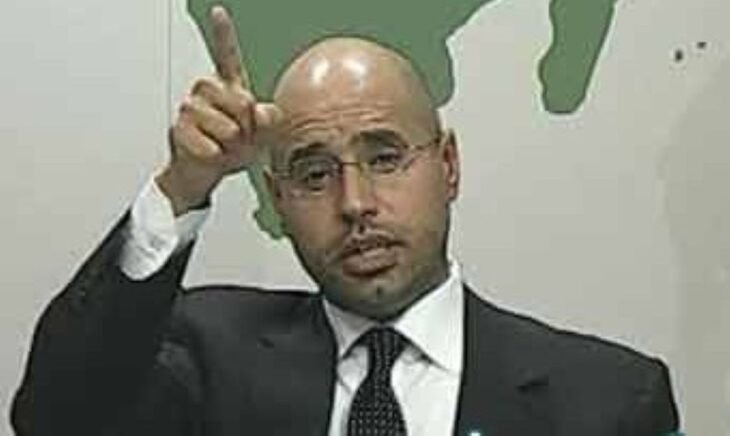
Libya seeks to rely on Türkiye to unlock renewable energy potential

Libya aims to reduce its long-standing reliance on hydrocarbons and tap into its vast renewable energy potential with the support of Türkiye’s experience and investment, its officials said on Wednesday, as the North African country accelerates efforts to diversify its energy mix.

Africa’s oil-rich nation currently generates most of its electricity from oil- and natural gas-fired power plants. Despite having strong solar and wind potential, years of subsidies for hydrocarbons have slowed the development of the renewable energy sector.

Under its National Renewable Energy Strategy, Libya targets raising the share of renewables in its energy mix to 20% by 2035.

Abdusselam al-Ensari, chair of the Renewable Energy Authority of Libya, said the country’s renewable energy landscape is gradually improving and offering new opportunities for international companies.

He noted that a comprehensive renewable energy law, designed to regulate the sector and facilitate cooperation between the private sector and public institutions, is currently under review in Libya’s House of Representatives.

Highlighting the depth of ties with Türkiye, al-Ensari said Turkish companies are expected to play a significant role in developing capacity, setting priorities and launching pilot projects in Libya’s renewable energy sector.

“They will be involved in construction and investment processes,” he told Anadolu Agency.

Al-Ensari said they believe Türkiye’s private sector can establish partnerships and successfully carry out these collaborations with institutions and companies in Libya, emphasizing that the country’s door is always open to Turkish companies.

After his talks in Tripoli last month, Energy and Natural Resources Minister Alparslan Bayraktar said 2026 would be a “landmark year” in Türkiye-Libya cooperation. “It will be the energy year, and trade volume will reach much higher levels,” he said.

Companies from Türkiye have meanwhile shown strong interest as the North African nation plans its first bidding round for oil exploration in more than 17 years. The results are expected to be announced this month.

Oil and Gas Minister Khalifa Abdulsadek said Türkiye could play a “key role” in offshore energy development in Libya.

Libya is one of Africa’s biggest oil producers and a member of the Organization of the Petroleum Exporting Countries (OPEC).

Foreign investors have been wary of putting money into Libya, which plunged into chaos since a NATO-backed uprising toppled and killed longtime dictator Moammar Gadhafi in 2011.

It remains divided between the U.N.-recognized government in the west and its eastern rival, backed by military commander Khalifa Haftar.

Joint projects for mutual benefits

Asil Younes Ertime, CEO of Libya Renewable Energy Company, said Libya possesses vast land resources, strong solar potential and a capable electricity grid operated by the General Electricity Company of Libya.

He reiterated the government’s goal of raising renewables’ share in the energy mix to 20% by 2035 through new projects, noting that the National Renewable Energy Strategy is being further developed in coordination with government and energy institutions.

“Through cooperation between Libya and Türkiye, we will be able to prepare concrete projects that provide mutual benefits for both countries,” Ertime said.

“Türkiye has been a pioneer and has played a significant role (in the energy sector in Libya).”

Government backs stronger Turkish

participation

Ertime said Libyan officials visited Türkiye in December 2025 to closely examine the country’s renewable energy experience, including private sector investments, electricity distribution systems, coordination with government bodies and production facilities.

Contracts with some of these facilities will be signed through Libya’s Renewable Energy Authority, he added, aiming to deliver high-quality renewable energy projects.

Libyan officials are also expected to attend a major renewable energy exhibition in Türkiye in April, where they plan to explore ways to deepen cooperation with Turkish partners.

“The Government of National Unity supports the participation of the Turkish side,” Ertime said, emphasizing the strong economic ties and geographic proximity between the two countries.

_____________________
Italy’s Libya play: security first, energy next

Massimiliano Boccolini

Italy is rebuilding a structural presence in Libya by combining parallel security engagement with Tripoli and Benghazi and a renewed energy push. The strategy links migration control and offshore investment, betting on Libya’s recovery while navigating its persistent political fragmentation

Why it matters: Rome is moving to re-establish a structural presence in Libya — linking migration control, security cooperation and a renewed energy push in the Sirte basin. The strategy combines parallel engagement with both Western and Eastern power centres, as well as a major offshore license for Eni and QatarEnergy.

Security diplomacy on both sides of Libya. Italy’s Interior Minister Matteo Piantedosi visited Tripoli and Benghazi within days — his sixth mission to the Libyan capital since taking office — closing the trip with a meeting with Khalifa Haftar.

The big picture: Rome is formalising a strategy of “parallel engagement” with Libya’s dual power structures:

  • The Government of National Unity in Tripoli, led by Abdulhamid Dabaiba.
  • The Eastern Bloc aligned with Khalifa Haftar, his family network and the Tobruk-based parliament.
  • The move follows a rocky phase in relations with eastern Libya. In July 2025, an EU delegation, including Piantedosi, was turned away upon arrival in Benghazi — widely seen as a political signal by Haftar to assert leverage.
  • Returning now on a bilateral mission, including high-level intelligence components, amounts to recognising Haftar as a key interlocutor on migration and security — without formally acknowledging the parallel government in the east.

Rome’s calculation: Migration management cannot run solely through Tripoli if Haftar-linked forces effectively control key militias and transit nodes.

For Italy, operational channels must cover the full Libyan arc — especially areas intersecting the Central Mediterranean route and the southern borders with Egypt, Sudan and Chad.

Migrant arrivals drop — but Libya remains central. The visit comes as Italy prepares to implement the rules of the new EU Pact on Migration and Asylum, which will enter into force in June.

  • The numbers:
    • 1,813 arrivals in Italy between Jan. 1 and Feb. 9, 2026.
    • Down 56.38% from 4,156 in the same period in 2025.
    • 1,386 migrants — more than three-quarters — departed from Libya.
    • Libyan departures down 64.1% year-on-year.
  • Despite the decline, Libya remains the backbone of the Central Mediterranean corridor. Alternative routes via Tunisia and Algeria are growing in percentage terms but remain marginal in absolute numbers.

Reality check: While political attention often shifted toward Tunisia in recent years, data from NGOs and EU institutions show Libya has steadily regained its role as the primary departure point toward Italy. That explains Rome’s urgency to “cover” both Tripoli and Benghazi with operational cooperation and intelligence-sharing mechanisms.

Beyond the “naval blockade” slogan. Piantedosi has distanced himself from campaign-era rhetoric about a “naval blockade,” calling it a journalistic simplification.

  • What’s actually on the table:
    • Possible temporary entry restrictions within Italy’s 12-mile territorial waters in exceptional security cases.
    • Externalisation of parts of asylum procedures to “safe third countries,” in line with EU Pact provisions.
    • Strengthened cooperation with Libyan authorities on voluntary returns and land and maritime border control.
  • Symbolism matters — showing the route is “under control.” But the Interior Ministry acknowledges that current conditions do not justify extraordinary measures, given relative stability in 2025 and the early 2026 decline.

The controversial part: According to IOM data, 537 people were intercepted and returned to Libya between early January and late January 2026 — raising persistent concerns about conditions incompatible with European protection standards.

Libyan political analyst Ahmed Zaher argues the visit complements recent economic and energy developments. “Tripoli represents the maritime front and ports, while Benghazi effectively controls the entire southern border,” he says. “To influence the migration file, you need to work on both fronts in parallel.”

Zaher also notes that Eni has consolidated its reputation as a reliable partner, improving dialogue with Benghazi and facilitating minimal understandings on migration containment. But he warns these are “stopgap solutions” in the absence of a cohesive Libyan state governed by constitutional rule of law.

The energy pivot: Eni and QatarEnergy secure offshore O1. Parallel to migration diplomacy, Italy is deepening its energy footprint. Libya’s National Oil Corporation awarded the offshore O1 license to a consortium led by Eni, with QatarEnergy as a partner.

  • Key details:
    • Offshore block in the Sirte basin.
    • Around 29,000 square kilometres.
    • Water depths up to 2,000 meters.
    • Considered highly prospective, including undeveloped discoveries and unexplored 3D seismic areas.
    • Eni holds 60% and acts as operator; QatarEnergy holds 40%.
    • Initial five-year exploration phase with 2D/3D seismic campaigns and at least one drilling cycle.
  • The deal is part of Libya’s “Bid Round 2025,” the first international exploration round in over 17 years, offering 22 blocks (11 onshore, 11 offshore) across Sirte, Murzuq, Ghadames, Sabratha and offshore Sirte.
  • To attract investors after a decade of instability, NOC introduced new fiscal terms: a Production Sharing Agreement with a state take of around 66% and modelled internal rates of return up to 20–35%, more competitive than previous contracts.
  • Production context:
    • 2025 average output: 1.374 million barrels per day — a 10-year record.
    • 501 million barrels produced annually.
    • $21.9 billion in oil revenues, up 15% year-on-year.
    • Target: 2 million barrels per day by 2030.

Why is pushing: Eni has operated in Libya since 1959 and remains the leading international operator, with equity production around 160,000–170,000 barrels of oil equivalent per day in 2025. Gas flows through the Greenstream pipeline to Italy.

  • Strengthening upstream offshore exposure serves multiple goals:
    • Securing geographically proximate supplies.
    • Reinforcing Italy’s ambition to act as a southern gas gateway to Europe.
    • Balancing other external actors active in Libya, including Turkey in the west and Russia and the UAE in the east.
  • QatarEnergy’s involvement adds geopolitical weight. Doha is already an LNG supplier to Italy and the EU. Its participation ties Gulf interests more closely to the Italy–Libya energy axis and provides Rome with additional political insulation in the event of local shocks.

Security and energy, intertwined. Put together, Piantedosi’s Benghazi visit and the O1 license award tell the same story: Italy is treating Libya again as an integrated strategic space.

Security cooperation on migration, counter-trafficking and border control is the political-military counterpart to deeper energy exposure during Libya’s production revival.

The upside:

  • Concrete leverage in bilateral negotiations.
  • Stronger standing in EU forums, where operational capacity counts.
  • Alignment with Gulf partners invested in Libyan stability.

The risk: Libya remains fragmented and vulnerable to regional rivalries and external interference. Actors considered partners today — including Haftar — have previously used migration and institutional access as bargaining tools.

Italy’s bet is coherent with geography and post-Russia diversification needs. It is backed by tangible production recovery and a competitive new licensing round. But it remains a bet on a country where power balances are fluid — and where security, migration and energy are inseparable from politics.

_____________________

Why did Saif al-Gaddafi have to die?

Anas El Gomati

His name offered an alternative line of succession that Libya’s rival elites could neither control nor neutralise.

Saif al-Gaddafi was shot 19 times inside his compound in Zintan, a mountain town in western Libya, where he had lived since his capture in 2011. Four masked men entered the compound after disabling the security cameras. Roughly 90 minutes earlier, his guards had withdrawn from the area for reasons that remain unexplained.

When the shooting ended, the assailants did not flee. They left. No gunfight. No pursuit. No claim of responsibility. The perpetrators vanished into the kind of silence that, in Libya, usually means the killers have nothing to fear from an investigation.

Saif was the son of Muammar Gaddafi, who ruled Libya for more than four decades before being overthrown and killed in the 2011 revolution. Since 2014, the country has been divided between two rival power centres. In the west, successive governments in Tripoli, the latest led by Prime Minister Abdul Hamid Dbeibah, derive their authority from United Nations recognition. In the east, renegade military commander Khalifa Haftar controls territory through military force, backed by the United Arab Emirates, Russia, and Egypt, while a paper government in Benghazi provides civilian cover for what is effectively military rule. Neither side has faced a national election, nor intends to.

The mechanics of the killing tell their own story.

This was not violence born of chaos. It was an operation, executed within a narrow window by actors who understood Saif’s movements, his protection, and the informal rules governing both. Members of his inner circle have described it as an inside job. Reaching him required more than weapons.

It required access to his routines, to his guards, and to the layered arrangements that had kept him alive in secret. For years, Saif had lived in varying degrees of concealment, protected by local understandings and, at times, by Russian-linked security support.

By the night of the attack, all that protection had been withdrawn. Whoever planned the operation knew it would be.

Motive alone is not evidence. But method and capability narrow the field.

When Abdelghani al-Kikli, the commander of Tripoli’s largest militia, Stabilisation Support Apparatus (SSA), was assassinated last year by a rival brigade, the result was immediate chaos. Armed clashes shut down large parts of the capital – factional and noisy, and instantly legible.

The Zintan operation bears no resemblance. Its precision and the silence that followed point to a different kind of actor. Critics, liabilities, and inconvenient figures within Haftar’s orbit have often been removed quietly.

Mahmoud al-Werfalli, a senior officer in Haftar’s forces and a man wanted by the International Criminal Court, was shot dead in broad daylight in Benghazi in 2021. No serious investigation followed. Others have disappeared in a similar fashion. These operations do not require total territorial control. They rely on networks, intimidation and the expectation of impunity.

None of these constitutes proof. Libya rarely offers proof. Only patterns. But patterns have infrastructure.

The political order Muammar Gaddafi built did not disappear in 2011. It was disassembled and repurposed. Haftar took its fragments, tribal patronage networks, security hierarchies, and the militia economy, and reassembled them around his own family, anchored by a praetorian guard, the Tariq bin Ziyad Brigade, commanded by his son Saddam, the recently appointed deputy general commander of the self-styled Libyan National Army and the most likely successor to his father.

Former loyalists of the old regime were not excluded from this system, but they were never trusted within it. Pro-Gaddafi political figures and commanders were encouraged to return under Haftar and absorbed after 2014 only on strictly conditional terms. Figures such as Hassan Zadma, once aligned with Saif’s brother Khamis’s infamous 32nd Brigade, were coopted for their utility, not integrated as partners. When their presence threatened Haftar’s control, they were marginalised or dismantled.

Saif himself was never offered even that conditional inclusion. He remained outside the system, tolerated, contained, and watched, a reminder of an alternative line of inheritance that could never be fully neutralised. He had lived under the persistent threat of assassination since 2017.

Saif did not represent change. He represented an alternative. The danger he posed was structural. Haftar’s coalition is held together not by ideology but by patronage, and patronage is distributed unevenly. Some tribes and armed groups receive more than others. Loyalty is transactional, calibrated to what each faction can extract. In the event of Haftar’s death, those who feel short-changed would see succession as an opportunity to renegotiate their terms, or defect to whoever offers a better deal.

The only figure with a history and surname symbolic enough to draw them in was Saif, heir to the very system Haftar had repurposed. He would not have dismantled it. He would have ruled through it, with the same patronage logic and the same authoritarian reflexes. Same system, different family.

That made him extraordinarily difficult to accommodate. Forty-eight hours before the killing, Saddam Haftar met Ibrahim Dbeibah, the prime minister’s nephew and head of Libya’s national security apparatus, secretly at the Elysee Palace in Paris. There was no official readout. Leaks suggest a single agenda: whether Libya’s rival camps could form yet another interim unity government, one that would bring the LAAF formally under the state, divide ministries and institutions between the Haftar and Dbeibah families, and postpone elections for what would now be over a decade. Libyans have not voted since 2014.

That grievance has deepened with every failed transition, every broken promise of elections, every new interim arrangement designed to keep the same people in power. A family carve-up negotiated in Paris would have made it volcanic. Saif did not need a programme to exploit that. He only needed to be on the ballot. In the aborted 2021 presidential election, he polled significantly ahead of Haftar. If the only viable candidates are authoritarians, the anti-establishment authoritarian wins. He could not be absorbed into such an arrangement without destabilising both sides, and he could not be left outside it without becoming the vehicle for every Libyan’s rage against it.

Five days after his killing, Saif’s tribe buried him in Bani Walid, a town long associated with loyalists of his father. They had wanted Sirte, his father’s tribal seat. Haftar’s forces denied them. Condolence receptions were blocked. Public mourning was prevented.

Saif spent a decade being told where he could live, who he could see, and when he could speak. His killers decided where he could die. His rivals decided where he could be buried. No one has been arrested. No one will be. In Libya, silence after a killing is never the absence of an answer. It is the answer.

***

Anas El Gomati is the Founder and Director General of the Sadeq Institute, Libya’s first public policy think tank based in Tripoli.

______________________
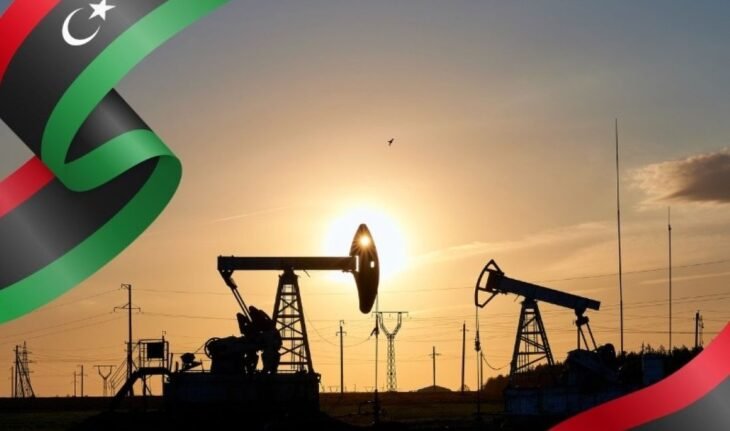
Who’s Competing in Libya’s 2026 Licensing Round?

Matthew Goosen

An In-Depth Look at Pre-Qualified Firms

  • Libya will reveal the results of its first oil and gas licensing round in 18 years on February 11, 2026.
  • Majors including Chevron, ExxonMobil and TotalEnergies are among the pre-qualified companies, alongside state-backed firms such as QatarEnergy, Sonatrach, TPAO and Lukoil.
  • The pre-qualified companies position Libya to attract major investment and accelerate its goal of 2 million barrels per day by 2030.

Libya is set to announce the winners of its oil and gas licensing round on February 11, 2026, a key step in efforts to boost exploration and raise production to 2 million barrels per day (bpd). The round covers 22 onshore and offshore blocks across the Sirte, Murzuq and Ghadames basins, while the updated EPSA V framework offers some of the region’s most investor-friendly fiscal terms (Energy Capital & Power published a detailed guide last May).

A total of 37 companies have been pre-qualified, including majors such as Shell, Eni, TotalEnergies, ExxonMobil and Chevron, alongside state-owned firms like QatarEnergy and Lukoil. With higher potential returns, faster cost recovery and simplified profit-sharing, Libya aims to attract investment across both established and underexplored basins – from Sirte offshore to the largely untapped Cyrenaica Platform. Below is a comprehensive look at the companies pre-qualified ahead of Libya’s licensing round results.

Global Energy Players Return

Chevron and ExxonMobil are making high-profile returns to Libya after multi-year absences. Chevron signed a strategic MoU with Libya’s NOC last month to explore producing fields and unconventional resources, while ExxonMobil resumed operations in August 2025, targeting offshore Sirte Basin blocks. Meanwhile, TotalEnergies and ConocoPhillips have signed a 25-year development agreement with the NOC to extend the Waha concessions and invest in increasing production by around 100,000 bpd.

European majors remain central to Libya’s energy sector. Italy’s Eni continues operator roles through its NOC joint venture, managing offshore Structures A&E and the Bouri Gas Utilization program. TotalEnergies and Repsol are investing billions across Waha, North Gialo and El Sharara fields. Shell and bp have returned after extended hiatuses, with Shell focusing on Al-Atshan and bp undertaking deepwater exploration in the Gulf of Sirte.

State-Backed Firms Drive Investment

Regional and state-backed firms are among the pre-qualified participants, reflecting Libya’s strategy to attract diverse international partners. QatarEnergy, Algeria’s Sonatrach and Turkey’s TPAO are on the list, with Sonatrach resuming exploration in October 2025 after a decade-long pause. Russia’s Lukoil and Chinese firms CNODC and ZhenHua Oil are also participating, highlighting that geopolitical tensions have not deterred interest in Libya’s underexplored basins.

Other participants include Oman’s OQ E&P, Poland’s PGNiG and Pakistan’s OGDCL and PPL (the latter also investing via GHPL). These state-backed firms complement 29 international operators, providing technical expertise and capital.

Independent Operators Bring Expertise

Independent operators add technical depth. Woodside Energy brings offshore experience, MOL Group and DNO provide MENA and onshore know-how, while Formentera Partners, Petrogas, United Energy Group and Jereh Group focus on mature field redevelopment, frontier exploration and cost-efficient production.

The round also includes a carefully selected group of investment partners to provide capital and strategic support alongside lead operators. Partners – including Indian Oil Corporation, Cheiron Petroleum, Geo-jade Petroleum, Gran Tierra Energy, Gulfsands Petroleum and Bares Holding SA – bring capital, regional experience and portfolio diversification. Together, they support the NOC’s three-pronged strategy: geographic diversification, disciplined private capital and regional synergy.

______________________
Libya at a Crossroads: Why U.S. Re-Engagement Must Be About Sustainability, Not Just Stability.

Serag El Hegazi

Last week’s visit to Libya by Massad Boulos, Senior Advisor to U.S. President Donald Trump for Arab and African affairs — centred around the Libya Energy and Economic Summit (LEES 2026) in Tripoli — has been portrayed in Libyan and international press as a milestone in U.S.–Libyan relations.

According to news reports, Boulos emphasised that the United States sees “high value in the Libyan-American partnership” and is ready to deepen cooperation across economic and security sectors. He underscored efforts to expand Libya’s energy production and development ties with U.S. firms, signalling a renewed U.S. strategic focus on the country’s vast energy potential.

Yet this moment is about more than new deals and diplomatic optics. It exposes a central dilemma that has long shaped Libya’s trajectory since the 2011 revolution: will international engagement reinforce narrow economic gains and short-term stability, or will it support sustainable development that addresses the country’s deeper structural challenges?

The Context: A Fragile Political

Landscape

Libya’s political landscape remains deeply fragmented more than a decade after the fall of Muammar Gaddafi. Rival administrations, institutional divisions, and competing security actors continue to complicate governance and policy coherence. The United Kingdom’s Parliament notes that rival governments in the west and east remain a central fault line, with repeated postponements of national elections underscoring a broader political impasse.

Internal clashes and unrest also persist: even in 2025, Tripoli saw renewed armed confrontations that required ceasefires to protect civilians and stabilise institutions. These conditions shape Libya’s economic decision-making, often privileging short-term revenue generation — especially oil — over long-term planning and institutional reform.

Economic Re-Engagement:

A Double-Edged Sword

At the LEES 2026 Summit, Boulos and Libyan counterparts celebrated significant agreements with international oil majors, including U.S. and European firms, aimed at boosting Libya’s hydrocarbon output and foreign investment. Meanwhile, Reuters reports that Libya has signed a 25-year oil and gas development deal worth over $20 billion with TotalEnergies and ConocoPhillips, reinforcing its role as a major energy supplier.

From a conventional policy standpoint, such deals are framed as economic growth and stability anchors. However, for Libya — a nation heavily reliant on oil revenues that constitute the bulk of fiscal income — this model risks reinforcing resource dependency and overlooking the need for economic diversification and resilience. According to the World Bank, Libya’s dependency on hydrocarbons, coupled with instability, has constrained productivity and undermined broader development prospects.

This is not just a Libyan problem, but a broader issue across the Middle East and North Africa (MENA), where hydrocarbon-dependent economies face similar pressures to transition toward diversified, knowledge-driven, and resilient economic models.

Sustainability Beyond Oil: The Case

for a Broader Agenda

To be meaningful, sustainable engagement must go beyond headline-grabbing energy deals and include three interconnected dimensions:

1. Economic Diversification

Libya’s oil wealth has historically crowded out investment in other sectors. This structural imbalance is a key reason why unemployment, poverty, and public service gaps persist despite abundant natural resources. The World Bank emphasises that without diversification, Libya’s economy remains vulnerable to global price shocks and conflict-driven disruptions.

2. Institutional Governance

Many analyses highlight the fragility of Libyan institutions, which lack the capacity to manage revenues transparently, enforce environmental protections, or coordinate long-term development planning. Political fragmentation and corruption — including within the national oil sector — have eroded public trust and impeded reform efforts.

This points to a broader dilemma: international actors can invest capital without strengthening domestic systems, but true sustainability requires empowering local governance frameworks that can oversee and regulate development, rather than bypassing them.

3. Environmental and Social Resilience

Libya sits at the intersection of climatic vulnerability and resource scarcity. The country faces acute water stress, desertification, and environmental degradation, as well as increasing climate extremes linked to global warming.

These challenges compound socio-economic vulnerabilities, as climate shocks disproportionately affect rural livelihoods and urban services. Without planning and investment in renewable energy, water resource management, and climate adaptation, Libya’s development gains will remain fragile.

Indeed, recent UNDP-led initiatives in Libya focus on advancing a just and sustainable energy transition, explicitly linking environmental sustainability with economic diversification and climate resilience.

Libya in the MENA and Global

Sustainability Landscape

Libya’s situation mirrors broader regional transitions. Countries across the MENA region — from North Africa to the Gulf — are grappling with the imperative to decouple growth from fossil fuels, strengthen institutional capacity, and introduce sustainable governance. International frameworks such as the UN Sustainable Development Goals (SDGs) and climate initiatives reiterate that sustainability is not an add-on but central to long-term peace, prosperity, and human well-being.

In this context, foreign policy must adapt. As commentators on sustainable peace-building have noted, aligning diplomatic engagement with human rights, governance, and SDGs — rather than narrow transactional interests — can help conflict-affected states like Libya break the cycle of instability that has plagued them for decades.

A Strategic Pivot or a Missed

Opportunity?

The U.S. engagement under Boulos can still be constructive. A U.S. strategy that integrates economic cooperation with support for institutional reform, environmental resilience, and inclusive governance would resonate with broader MENA sustainability efforts. But there is a risk: focusing narrowly on energy production and security risks replicating the old paradigm of resource-centric engagement that has underpinned cycles of instability.

As Libya expands its production targets and attracts foreign firms, policymakers in Tripoli and abroad must ask tough questions:

  • Are international deals tied to requirements for environmental protection, local capacity building, and revenue transparency?
  • Do investment frameworks support job creation and diversification beyond hydrocarbons?
  • Can partnerships help Libya strengthen its water, energy, and food nexus to build resilience against climate shocks and political fluctuations?

Conclusion: Sustainability as Strategy

Libya stands at a genuine crossroads. The recent visit by a senior U.S. adviser reflects growing geopolitical and economic interest. But without anchoring this engagement in sustainability — encompassing diversified development, institutional reform, and environmental resilience — Libya risks repeating cycles of instability under a different banner.

The nation’s future will not be secured solely by oil deals or temporary stabilisation. It will be cemented by policies and partnerships that embed sustainability into the fabric of governance and by international engagement that sees Libya not just as a supplier of resources but as a partner in long-term development.

In the broader MENA context, this approach aligns with regional imperatives to transition toward resilience and equity. For Libya, making sustainability a central pillar of foreign cooperation could be the difference between enduring stagnation and a genuine transformation.

***

Dr Serag El Hegazi is a Lecturer and a Program Leader in Sustainable Development and Project Planning at the University of Bradford, and a member of the board and specialist in North African Studies at John and Elnora Ferguson Centre for African Studies (JEFCAS). His research focuses on sustainable urban development, post-conflict reconstruction, and environmental governance in the MENA region. 

_____________
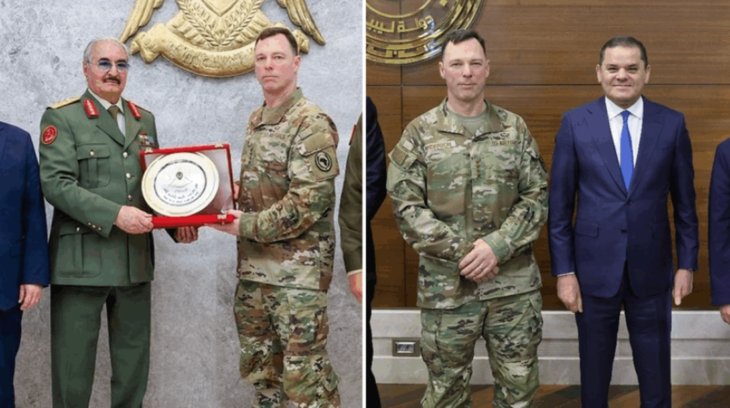
The ‘slick’ assassination of Gaddafi Jr

Barry Malone

Bloody chapter in Libya’s history closes with the fatal shooting of Saif al-Gaddafi. What prompted the killing of the playboy turned would-be leader?

A remote town on a mountainous plateau in north-western Libya is a long way from a box at the opera in Vienna alongside US model and actor Carmen Electra. But it was in Zintan where Saif al-Gaddafi, the playboy-turned-politician who had once been seen as Libya’s future, was assassinated last week.

The son of the late Libyan ruler Muammar Gaddafi, once believed to be a potential heir, was killed by four gunmen in the garden of his home, his lawyer said, describing the attackers as commandos who the 53-year-old “directly confronted”.

According to local reports, the assassination was unusually slick. “This wasn’t militia clashing. It was timed, coordinated, professional. They knew when he’d be there, disabled surveillance, executed the operation and vanished. That level of planning rules out standard militia operations,” Anas El Gomati, director of the Tripoli-based Sadeq Institute thinktank, told The Observer.

In the murky and fractious world of Libyan politics, though, while rumour abounds, there have been no credible reports of who was behind the killing. “Motive is everywhere. Evidence is nowhere,” El Gomati said. “We’re reading smoke signals in a country where the fire never stops.”

It was a tawdry full stop to a life that saw Saif al-Gaddafi become the second most powerful man in Libya after his father, trusted to lead important diplomatic initiatives. He was the acceptable face of the country in the west, rubbing shoulders with political elites across Europe, most notably in London, where he paid millions for a mansion in the wealthy Hampstead Garden Suburb.

The visit to the opera in 2006 came at a time when Saif’s charm offensive and efforts to bring Libya in from the cold had been under way for years. Though considered a more sober version of the elder Gaddafi, he wasn’t averse to a little flamboyance, owning two tigers, wearing only the sharpest suits, and enjoying opulent parties and the company of models.

He positioned himself as a genuine reformer who wanted to gently push his autocratic family towards a more democratic future. It wasn’t all talk. Relations with western nations improved considerably when Gaddafi agreed to give up his nuclear ambitions in 2003, a massive concession believed to have been brokered by his son, which eventually led to the lifting of longstanding sanctions.

Saif al-Gaddafi dangled access to Libya’s oil, hindered by increasingly dilapidated infrastructure, believing he could leverage it to strike favourable trade deals. He often called for the drawing-up of a constitution that would guarantee human rights. And in the most controversial move among his father’s loyalists and the state security apparatus, he extended an olive branch to sworn enemies in Libyan Islamist groups, leading to the release of many from the country’s dungeons.

In Britain he numbered among his circle Peter Mandelson, who faced a tirade of criticism in 2009 when the Spectator revealed he had joined Saif al- Gaddafi in a shooting party at Lord Rothschild’s Waddesdon Manor in Buckinghamshire. Mandelson’s office said in a statement at the time that it was not in the habit of commenting on his social engagements, but that he would never kill a pheasant.

Saif’s penetration of British high society was deep and reportedly included two meetings with Andrew Mountbatten-Windsor, but after Libya’s civil war broke out in 2011, his friends frantically distanced themselves. Howard Davies, then director of the London School of Economics, was forced to resign after admitting “errors of judgment” in accepting a £1.5m research donation from Gaddafi junior and in travelling to Libya to advise the government.

The university was also forced to investigate allegations that a PhD it awarded Saif al- Gaddafi – titled “The Role of Civil Society in the Democratization of Global Governance Institutions: From ‘Soft Power’ to Collective Decision-Making?” – had been plagiarised or that he had paid consultants to write it on his behalf.

It could have been very different, and indeed his western friends may have been forgiven for thinking they were about to be rewarded for their patronage and foresight when, with the nascent rebellion against his father under way, Saif al- Gaddafi appeared on television to address the Libyan people.

Many expected that he would announce concessions, perhaps even that Muammar Gaddafi was about to step down in favour of the reformist heir. Instead the Libyan people and the world watched as Saif al- Gaddafi jabbed his finger at the screen and warned that the country would end up awash in “rivers of blood” if the protests did not stop. “The language he used sounded just like his dad,” a western diplomat told me at the time. “A mask dropped and an instinct to protect the dynasty kicked in.”

In a speech that would go down in infamy, protesters were described as “rats” and the government, he said, would fight “to the last man, woman and bullet”. The soft face of Libya had made a choice. And that choice was to join with his father and Mutassim Gaddafi – his hardline younger brother who observers in Tripoli said was in close competition with him to succeed their father – and fight.

What happened next is well documented. The revolution, with the help of Nato, succeeded and Muammar Gaddafi was captured and summarily executed. Saif, who after making a dramatic appearance on the streets of Tripoli to rally the troops as rebels closed in on the capital, went on the run before he was caught on his way to neighbouring Niger disguised as a Bedouin tribesman.

It began a long period of imprisonment during which he was held by a militia in the revolutionary hotbed city of Zintan. Though there was an international criminal court warrant out for his arrest and he was sentenced to death by firing squad in a Tripoli court in 2015, the fighters of Zintan refused to give up their valuable negotiating chip.

The Gaddafi family’s warnings of a splintered Libya should the western-backed revolt succeed came to pass and the country quickly fell into chaos post-2011 with power brokers, militias, and tribes running fiefdoms and competing for influence.

There are now, in effect, two administrations, one based in Tripoli in the west and the other in the eastern city of Tobruk, each supported by a dizzying assortment of armed groups and foreign governments. A sense of frustration among the people of Libya with both governments, and with perceived corruption, is what led Saif al- Gaddafi to make his one and only audacious move since he was unexpectedly freed in an amnesty in 2017.

In 2021, as a UN-led initiative to hold a presidential election bore fruit, he made the journey from his safe haven in Zintan to the southern city of Sabha to formally register his candidacy, grabbing attention because of how rarely he was seen. It was a bid that most saw as rooted in nostalgia for the relative stability of his father’s time and a desire among some remnants of the Green Movement, Muammar’s loyalists, to have a figurehead they could rally round.

“Saif wielded entirely symbolic power – no territory, no militia, no political organisation,” El Gomati told The Observer. “He’d been invisible since 2021, living under Russian protection in southern Libya and Zintan, where he relied on local groups.”

According to Jalel Harchaoui, an analyst at the Royal United Services Institute thinktank, the journey to Sabha was facilitated by troops from Russia’s Wagner mercenary group, who guarded him on the ground and flew jets above. “His appearance in Sabha at the electoral commission wouldn’t have been possible without the protection of Russia,” he told The Observer.

Russia, Libyan analysts said, nominally supported the administration of Gen Khalifa Haftar but saw Saif al-Gaddafi as an insurance policy. Harchaoui said that the appearance was very brief, the prospective candidate didn’t say much and it was a security feat more than anything else. “He showed up, declared himself as a candidate, and just disappeared into the wilderness within 20 minutes,” he said.

For Harchaoui, Saif al- Gaddafi was an asset to those who backed him simply because “he was biologically alive, and that was enough to use him as a symbol”. But, he said, reliable polling showed he could achieve as much as 40% of the vote.

The election didn’t go ahead, partly due to the possibility of what some were calling the “third option” disrupting power-sharing between east and west. Saif al- Gaddafi is now out of the way, and with the four surviving Gaddafi children abroad and lacking heft or influence, Muammar’s dynasty is dead.

In the end, it appears that a man who had survived a war, international arrest warrants and a death sentence could not, or would not, articulate to the Libyan people or the country’s many powerful factions what he stood for.

“I don’t think he knew who he was beneath the costumes. He wasn’t a democrat or reformer – he was a would-be heir who outlived his ­inheritance, method acting through personas until someone decided the performance had run too long,” El Gomati said.

Countdown to a killing

February 2011 Violent protests break out in Benghazi against the government of Muammar Gaddafi as the Arab Spring takes hold across north Africa. They spread to other cities.

March 2011 In response to Gaddafi’s violent crackdown, the UN Security Council imposes a no-fly zone over Libya, which NATO enforces with airstrikes across the country.

October 2011 Rebel fighters capture and kill Gaddafi, who had ruled for more than four decades. The main opposition group, the National Transitional Council (NTC), says that Libya is “liberated” and promises elections.

November 2011 Saif al-Gaddafi, is captured in the Sahara while attempting to flee to Niger. He is disguised as a tribesman.

August 2012 The NTC hands power to the General National Congress (GNC), but this is not a time of peace. The following month, Islamic militants kill the US ambassador in Benghazi.

February 2014 Protests erupt after the GNC refuses to disband in accordance with its mandate. The east and west become host to warring sides.

July 2015 A Tripoli court sentences Saif al-Islam to death for crimes committed during the 2011 uprising. He is freed in 2017 as part of an amnesty deal.

March 2016 The presidential council of the UN-backed Government of National Accord (GNA) arrives in Tripoli by boat. Over the next two years, Islamic State is rooted out of Libya.

September 2020 The eastern government, led by the warlord Khalifa Haftar, resigns after protests in Benghazi. A ceasefire follows between the GNA and his Libyan National Army.

November 2021 Four years after he is released, Saif al-Gaddafi says he is running for president. He is disqualified, the election falls apart and the impasse remains to this day.

February 2026 Saif al-Gaddafi is shot dead at his home in the city of Zintan.

________________________

Libya: Gaddafi supporters left without rallying figure after Saif’s killing

Driss Rejichi

Gaddafi’s son had significant symbolic weight and his assassination could alter Libya’s already turbulent security and political landscape, analysts say.

***

Rumours surrounding the killing of Saif al-Islam Gaddafi sparked immediate agitation on Libyan social media on Tuesday night. A few hours later, in the early morning, Libya’s attorney general confirmed that the son of former long-time leader Muammar Gaddafi and designated heir had been “shot dead”.

Around the same time, the first images of the corpse of Saif al-Islam began circulating online. The lifeless body appeared to be lying in the back of a pickup truck, reportedly in a desert area. According to his political advisers, Saif al-Islam was attacked by a four-man commando unit who “broke into his home, disabled the security cameras and killed him during a direct confrontation”. At this stage, the political consequences of Saif al-Islam’s killing remain difficult to assess.

“His importance was largely symbolic and narrative,” Jalel Harchaoui, an associate fellow at the Royal United Services Institute in London, told Middle East Eye, adding that Saif benefited from his position as “a political figure between 2005 and 2010”.

Born in 1972, Saif al-Islam was Gaddafi’s second son and the only one to have played a significant political role during the era of the Jamahiriya – the “state of the masses”, as the Libyan state was known until overthrown in 2011. With a PhD from the London School of Economics, Saif al-Islam presented himself as a reformist. In the late 1990s, his Gaddafi International Charity and Development Foundation developed an active form of parallel diplomacy, helping to offset his father’s pariah status in the West.

During the 2011 uprising that led to a civil war, Saif al-Islam was the object of an International Criminal Court arrest warrant for the crimes against humanity of murder and persecution, allegedly committed against protesters and dissidents. Shortly after his father’s killing in October 2011, Saif al-Islam was arrested by powerful armed groups from the Zintan region and held in the mountains of the north-west of the country, some 100 kilometres south of Tripoli.

Although observers have often suggested that he had disappeared or that his whereabouts were unknown, it was in this same region that Saif al-Islam was killed on 3 February, suggesting that he may never have truly left the area. The attorney general’s office announced it had opened an investigation into the case, while the United Nations Support Mission in Libya said it “strongly condemns this targeted killing”. Yet, Saif al-Islam’s very existence had long been a political embarrassment for most Libyan armed factions.

His killing fits into a broader pattern of political assassinations in western Libya over recent months, most of which have gone unpunished.

A symbolic but moderate influence

On social media, segments of the Libyan public have shared posts and stories mourning the death of Gaddafi’s son. “Saif al-Islam Gaddafi was an influential public figure with a certain degree of popularity,” a prominent Libyan journalist told MEE, speaking on condition of anonymity. “But it is difficult to measure its true extent, as no research centres have conducted polls to assess his actual influence.”

Images circulating online on Tuesday night appeared to show groups of women crying in the streets of Sirte, a historic Gaddafi stronghold. “His prolonged absence from the media and the lack of political communication suggest that many of his supporters backed him primarily because he was Gaddafi’s son,” the journalist added, stressing that Saif al-Islam symbolised a feeling of “security and stability that they lost after 2011”.

The conditions of his detention by Zintani militias following the revolution that led to the killing of Muammar Gaddafi allegedly left him with severe psychological trauma. “His mental health issues prevented him from mobilising large crowds and maintaining an effective media presence,” Harchaoui said, adding that “restrictions on his mobility also constituted a major obstacle”.

Despite these constraints, Saif al-Islam had announced his intention to run in the presidential election initially scheduled for 2021 – but that was ultimately never held. The high level of popular support for his candidacy was reportedly among the factors that led to the annulment of the poll.

“A large number of Libyan voters, including young people who do not remember the pre-2011 era, harbour deep resentment towards the post-revolutionary elites,” Harchaoui said, in reference to the division of the country into two rival administrations since the revolution.

In his speeches, Saif al-Islam played on that resentment and regularly denounced both Prime Minister Abdul Hamid Dbeibah’s clan, which leads the internationally recognised government in Tripoli, and the Haftar family, who rules over eastern and southern Libya from Benghazi.

However, Saif al-Islam’s strategy of positioning himself outside the two factions ultimately distanced him from centres of power in both Tripolitania and Cyrenaica. Several diplomatic sources contacted by MEE assessed that Saif al-Islam’s real influence on current political affairs was, in practice, almost non-existent. Still, the fact that he maintained a political team and advisor underscores that he never fully abandoned his ambition to play a role in Libya’s political scene.

Plenty of enemies, no clear successor

For the time being, the most sensitive issue remains the attribution of the operation. “I am almost certain that the case will be closed and gradually forgotten,” the Libyan journalist told MEE. “This only deepens public anger over the culture of impunity that has become the norm in all major cases related to security and murder,” he added.

Shortly after the killing, claims circulating on social media pointed to Mahmoud Hamza, commander of the 444 Brigade and a major ally of Dbeibah’s clan. Hamza’s armed group has emerged as one of the most powerful factions in western Libya, following a series of offensives and the neutralisation of rival militias, notably the Stability Support Apparatus and Radaa, in the spring and summer of 2025.

On Tuesday evening, the 444 Brigade quickly issued a statement denying any involvement, stressing that it “has no military forces or field deployment inside the city of Zintan or within its geographical perimeter”. Other online outlets also relayed unverified claims suggesting that the killing may have been ordered by Saddam Haftar, son of eastern commander Khalifa Haftar, whose influence in Libya’s south-west has grown steadily in recent years.

In November 2021, as Saif al-Islam was appealing a decision barring him from running in the presidential election in the Haftar-controlled city of Sabha, gunmen disrupted the hearing. Analysts believe that Saif al-Islam was threatening both sides by proposing a third option, at the very moment they were trying to divide Libya between themselves.

Contacted by Middle East Eye, the foreign ministries of the rival governments based in Benghazi and Tripoli declined to comment on the incident. Voices, especially in Gaddafi circles, also point to an operation led by foreign actors, while some even link the assassination to the appeal trial of former French President Nicolas Sarkozy, convicted in the case of Libyan financing of his presidential campaign in 2007. Yet, no evidence shows that external actors have been involved, for the moment.

“Many people imagine international conspiracies or commando-style operations launched from outside Zintan,” Harchaoui explained. According to the researcher, available evidence instead suggest that the killing may have resulted from “a strictly local, intra-Zintan incident”. The city where Saif al-Islam was held has long been marked by deep internal divisions between factions aligned either with Tripoli or Benghazi.

“The fact that he lived in the city, moved in and out under the protection of his own small armed brigade, created growing tensions over the years,” Harchaoui said. Ultimately, Saif al-Islam’s killing removes a central figure from the pro-Gaddafi narrative, which had been instrumentalised by some armed factions and small non-aligned groups seeking to position themselves outside both the Dbeibah and Haftar camps.

“It will now be more difficult for the many security actors who relied on residual sympathy for the Gaddafi era to sustain that narrative,” Harchaoui added. All of Muammar Gaddafi’s other children are either deceased or have left Libya, and none has played a role in the country’s political life in recent years.

So far, none has publicly reacted to their brother’s death. For the time being, pro-Gaddafi and non-aligned actors are hence left without any symbolic figurehead.

____________________

Is ‘Trump doctrine’ for Libya taking shape?

Enes Berna Kilic

The Trump administration has launched its most ambitious Libya initiative in years, centered on the belief that economic engagement can unlock political progress.

Rather than prioritizing formal mediation frameworks, Washington is placing commercial partnerships with both sides of the North African country at the heart of its approach. Energy investments, high-level access, and sustained contact with rival factions now define U.S. policy.

For more than a decade, the United States remained largely absent from Libya’s political and security landscape. After the 2011 NATO intervention that led to the collapse of the Gadhafi regime, Washington steadily reduced its footprint, opting for limited diplomatic engagement and deferring largely to U.N.-led processes.

The vacuum did not remain empty. Competing regional actors stepped in, and Russian-linked Wagner mercenaries gradually entrenched themselves across eastern and southern Libya.

Meanwhile, Libya’s political process has repeatedly stalled despite U.N.-backed roadmaps, ceasefire agreements, and election plans. Against that backdrop, the administration appears to be testing whether economic leverage can succeed where traditional diplomacy fell short.

At the core of this approach is the assumption that Libya’s elites, deeply dependent on oil revenues, can be nudged toward compromise if their economic interests are aligned. The question is whether engagement alone can translate into influence over entrenched political and military structures.

US return in Libya

The Trump administration’s recent Libya initiative is best understood as a deliberate return rather than a routine diplomatic push. After years of minimal involvement, Washington is re-entering the Libyan arena with sustained senior-level engagement, economic commitments, and direct outreach to rival power centers.

The long absence Libya’s instability also spilled beyond its borders, affecting migration routes, energy security, and regional military dynamics.

The roots of this disorder trace back to the Obama administration’s decision to intervene militarily without a viable postwar plan. The removal of Gaddafi dismantled the state’s coercive core, but no durable political or security framework replaced it. What followed was fragmentation, militia rule, and prolonged international disengagement.

The long absence

Libya’s instability also spilled beyond its borders, affecting migration routes, energy security, and regional military dynamics.

The roots of this disorder trace back to the Obama administration’s decision to intervene militarily without a viable postwar plan. The removal of Gadhafi dismantled the state’s coercive core, but no durable political or security framework replaced it. What followed was fragmentation, militia rule, and prolonged international disengagement.

Energy deals as a tool of influence

Energy agreements are both the strong point and the centerpiece of Washington’s renewed engagement. Recent deals involving major U.S. and European firms aim to significantly expand Libya’s oil production capacity over the coming years. These commitments also represent the largest wave of Western corporate investment in Libya’s energy sector in more than a decade.

Libya has already increased production to levels not seen since before the 2011 uprising, and officials on all sides view further expansion as essential to stabilizing state finances. For Washington, large-scale investment is intended to signal seriousness while creating shared incentives for cooperation between eastern and western power centers.

Yet, without clear safeguards, new income streams risk reinforcing existing divisions instead of bridging them. Oil revenues have often intensified competition rather than fostering compromise, fueling disputes over budget authority, institutional control, and revenue distribution.

Massad Boulos and logic of commercial

statecraft

At the center of this renewed doctrine is Massad Boulos, the administration’s senior advisor on Arab and African affairs. His repeated visits to Libya at the last couple of days of January and the following engagement with leaders on both sides of the divide, and his role in convening international meetings show an increase in the belief that economic access can unlock political space.

By maintaining open channels with rival factions and anchoring U.S. engagement in tangible economic projects, the administration is attempting to rebuild trust and relevance simultaneously. Ambassador Boulos’s strategy, in that aspect, prioritizes energy deals, not treated as rewards for political progress but as instruments to generate it.

Instead of past U.S. efforts that relied on external pressure, Trump’s approach assumes that sustained interaction, combined with shared commercial interests, can gradually lower barriers to dialogue, though whether this logic holds in Libya’s fractured environment is yet to be seen.

Access without leverage and working

collectively

Last week’s talks facilitated by Boulous in Paris brought representatives from Libya’s rival camps together for the first time in months, demonstrating Washington’s renewed convening power and that American engagement still carries weight.

Meetings have taken place with leaders and power brokers from both western Libya, centered in Tripoli, and eastern Libya, based in Benghazi. Discussions have ranged from energy cooperation to military coordination and the functioning of national financial institutions.

Practically, however, the meetings stopped short of concrete commitments. Over the last few years, Libya’s leaders have proven adept at engaging externally while preserving the status quo at home. That also shows that the access gained by Washington has to be coupled with working with allies like Türkiye to be turned into leverage.

As can be seen from the effects of the Trump doctrine in Syria, however, burden-sharing and working with allies are essential components of the renewed American foreign policy. In this regard, working with Ankara, which has communication and influence with both sides, may be the first option in the near future.

Absent such conditions, U.S. policy risks projecting activity without impact. The current approach has opened doors and created opportunities, and it is clear that new investments will also provide hope for the Libyan people and contribute to stability in the region.

Until then, Libya’s long-standing institutional fractures remain intact. Whether Washington can turn economic presence into political leverage will determine if this strategy will yield solutions and the extent of American interests.

______________________

Sports and Legitimacy in Eastern Libya

Abdalla Najjar

As European clubs fly into Benghazi for friendly matches, Khalifa Haftar is leveraging spectacle and soft power to reframe his rule

Benghazi, a city that gained notoriety in 2012 after an attack on the U.S. consulate that led to the death of Ambassador Christopher Stevens, recently hosted two major soccer clubs from the European Union.

The city, run by Field Marshal Khalifa Haftar, who rules much of eastern Libya in opposition to the U.N.-backed government based in Tripoli, has long been devoid of any appeal to Westerners. More recently, however, the Haftar regime has sought to legitimize its rule through soft power and attempts at sportswashing its legacy.

The major soccer event brought together former Spanish champions Atletico Madrid and Italian champions and European Champions League finalists Inter Milan to play a friendly match on the evening of Oct. 10. The game was held in Benghazi’s newly reconstructed stadium, and financed by the Libya Development and Reconstruction Fund under the leadership of Haftar’s son, Belqasim.

The friendly match saw the crowning of Atletico Madrid as champions of the “Reconstruction Cup” after securing a penalty shootout victory against Inter. The event will reportedly be held annually in Benghazi, bringing together two major EU clubs to compete against each other.

La Gazzetta dello Sport, Italy’s prominent sports paper, reported on the match, calling the experience “intense and surreal.” The report contained no mention of the Haftar regime’s record, and instead focused on the ostentatious spectacle. La Gazzetta declared the event an indication of Libya’s, and particularly the city of Benghazi’s, ability to open up to the West and host international events.

The Spanish paper, Mundo Deportivo, on the other hand, reported that legendary club Barcelona was planning to participate, but pulled out at the last minute due to security concerns, returning the 5 million euro participation fee, with Atletico Madrid replacing it. These security concerns might explain why Inter Milan and Atletico Madrid chose to arrive on the day of their match and depart immediately afterward, avoiding a hotel stay and a tour around Benghazi.

The match and the spectacle it generated exemplify the tools of soft power that the Haftars have been resorting to in recent years. It highlights the field marshal’s ability to adapt his rule to new challenges while diverting attention from a poor human rights record, which is being “sportswashed” by the grandiosity of events.

The memory of Haftar’s failed 2019 military campaign against the government in Tripoli, a Russian-backed effort that was fraught with numerous incidents of human rights violations, lingers. So, too, does the impact of mines left behind by Haftar-allied Wagner Group mercenaries, who planted the devices as they retreated from areas they had occupied, a possible war crime that has maimed and killed civilians, along with at least three deminers.

Members of Haftar’s Libyan National Army (LNA), whether or not they took part in the 2019 campaign, are banned from entering Tripoli. Many of the individuals I spoke with in Benghazi have expressed their discontent at not being able to visit the capital of their own country. Now Haftar’s campaign to portray Benghazi as a vibrant and attractive destination has further deepened the division.

Sportswashing isn’t new to Libya. Moammar Gadhafi, who ruled the country for more than 40 years, previously hosted the Italian clubs Parma and Juventus, which battled for the Italian Super Cup in 2002. Other countries in the region, particularly Saudi Arabia and Qatar, have also elicited accusations of sportswashing for hosting major sporting events like the World Cup.

“The event does not merely represent [soccer], but also the personification of Libya’s revived spirit that’s opening up to the world and unifying the masses through sports,” said Agila al-Abbar, who heads the international collaboration office of the Libyan Political Dialogue Forum, a body including both governments that is meant to lay the groundwork for a peace process.

Haftar’s pivot to sports gained steam as a major tool of influence with Mike Tyson’s first visit to Benghazi in March 2024. In Libya, soccer is the main sport, especially since boxing was banned under Gadhafi’s rule. Haftar’s approach has sought to revive boxing while simultaneously providing Benghazi with access to high-profile European soccer, rebranding his own image with the West and providing entertainment to his constituents. In a place where entertainment outside of sports is limited, investing in soccer or boxing is a win-win situation for both Haftar and his people.

At the time of Tyson’s visit, Benghazi hosted three Africa title matches for the World Boxing Association. The event was attended by more than 4,000 fans. Tyson was later pictured with Haftar as they crowned the Libyan boxer, Saad Fathi Saad, who won the light heavyweight title. Tyson would later make another appearance in Benghazi in August 2025, two months before the match between Atletico Madrid and Inter Milan.

Haftar’s ultimate strategy is to stay in power, and like any adaptive autocrat, he is mastering the art of manufacturing a different reputation for Benghazi and his regime, creating a modicum of Western appeal even as he maintains a relationship with Russia. Such a relationship has primarily focused on providing weapons and drones, as well as training for the LNA by Wagner forces.

The field marshal’s use of sports as a tool to win over the West and his own population is accompanied by a number of reconstruction projects led by Belqasim. One of the projects, which aims to rebuild the University of Benghazi, elicited a visit by the American charge d’affaires, Jeremy Brent, on Dec. 11.

Haftar’s other son, Saddam, occupies the role of LNA chief of staff. Saddam, alongside his father, hosted the U.S. Africa Command’s Gen. Dagvin Anderson on Dec. 2, with the aim of including some of their Libyan forces in the Americans’ annual special forces exercise, known as Flintlock 2026. Libya will host part of the exercise for the first time since its launch in 2005, bringing together the Libyan armed forces and some LNA members.

In addition to these efforts, Haftar hosted Asim Munir, Pakistan’s army chief, and the pair signed a bilateral agreement on Dec. 18. Conjoined Libyan and Pakistani flags were seen hung on poles in different parts of Benghazi to celebrate Munir’s visit. Flights were either canceled or postponed upon his arrival, with Benghazi’s Benina airport shut down throughout the day on Dec. 17. The new collaboration with Pakistan brings another major actor to play a vital role in Libyan affairs, and represents another win for Haftar’s regime.

Taken together, these outreach efforts and attempts at sportswashing the family’s legacy reinforce the Haftars’ claim to being the legitimate rulers of the eastern front of the country.

Locally, Haftar seems to be faring well with at least part of his population. Beyond the billboards that have been newly installed in Benghazi to commemorate the 11th anniversary of Haftar’s “Karama” (Dignity) Revolution, many locals are seemingly content with his attempts to highlight Benghazi on the world map. The numerous conversations I’ve had with locals revealed one common theme: the collective experience of fear during the revolution and relief at the security that followed Haftar’s victory against the Islamic State group. Some have cited the sporting events as an indicator of Benghazi’s newly established status as a safer city than Tripoli, Libya’s Western-backed capital. Many were proud of the “new Benghazi,” as they put it, contrasting it with the city of the past decade, which had seen rampant Islamic State activity.

A source from Legacy Marketing and Public Relations, a Libyan agency responsible for VIP invites to the soccer match, was reluctant to weigh in on their contributions to Haftar’s efforts and refrained from speaking about the matter on the record. One of the attendees, however, a graduate from Benghazi’s law school, recalled the event as “joyous” and “pleasing,” emphasizing that the “Benghazi of the recent years was fraught with human rights violations” and that it was “impossible to imagine the Benghazi of 10 years ago hosting these clubs.”

Hazem Adam, the law graduate, described Haftar as “a nationalist, who wants to positively affect Libya on a large scale.” Adam added that “there are a number of political issues that are still impeding Haftar’s progress toward achieving his goals of bringing about a positive change to the country.” It is difficult to tell whether such sentiments are genuine or if they are generated by a fear of dissent under Haftar’s rule. Nevertheless, the response by both Adam and other locals seemed supportive, and thus something could be working in Haftar’s favor.

Remnants of Haftar’s “revolution” against the Islamic State, a three-year urban warfare campaign to eliminate the group in Benghazi and other cities, can be seen in the damaged buildings, highlighting a different time that many thought would disqualify the city from hosting these major events and prominent figures. Haftar’s most recent attempt to draw further attention to Benghazi included hosting CNN’s Isobel Yeung for a report on the city’s new skydiving center. Roughly two weeks prior, the same journalist had made an appearance in the south of Libya to document the abuse of sub-Saharan Africans by human traffickers. The two reports contrasted Benghazi under Haftar’s rule and the reality on the ground in Libya’s south.

On the western side of the country, Prime Minister Abdulhamid Dbeibah still heads the government in Tripoli, but he is hobbled by the U.N.’s desire to facilitate a path for elections, which have been regularly postponed since 2021. Nonetheless, he remains open to Western support, as seen in a recent visit by Trump’s special envoy to Africa, Massad Boulos. He also approved of the recent proposal to include his forces in Flintlock 2026, hosting Anderson on Dec. 1 to further discuss military cooperation. Dbeibah is also pursuing a gradual path of opening up to the West, as evidenced by a major event for the reopening of Libya’s national museum on Dec. 12. Prominent guests included Egyptian-American satirist Bassem Youssef and the U.N.’s special representative in Libya, Hanna Tetteh.

Despite Western support for Tripoli’s government and the gradual effort to integrate the eastern part of the country, Haftar seems to be gaining more influence. His approach seems to be more creative, and his use of sports as a tool to win over hearts and minds is arguably working in his favor. He is positioning his rule as an adaptive autocracy, copying similar approaches by other regional actors and innovating when necessary. Haftar’s latest attempt to use sports as a tool to open up to the West is not a novelty in the region, but it certainly is in Benghazi.

Benghazi’s rising status under the leadership of Haftar is a redemption story that is gradually overshadowing the Western-backed government of Tripoli. Overall, it does not seem that these attention-drawing spectacles are coming to an end; they have only just begun. Aside from the annual Reconstruction Cup, investment in infrastructure projects is still strong, and the largest construction expo in North Africa is hosting its third gathering in Benghazi this coming April. Haftar’s efforts are gaining momentum, and the city’s reputation is slowly improving.

***

Abdalla Najjar is a freelance journalist based in Libya. He received his bachelor’s degree in political science from the Lebanese American University and a master’s degree in international relations from North Carolina State University. He previously worked in broadcast media in Washington and hosted the award-winning podcast In the East Wing.

_______________________

China and the Libyan Crisis: Maintaining a Foot in the Door in a Changing Region (2)

Bianca Pasquier and Leonardo Bruni

Recent Developments: Planes, Trains

and UAVs

For years, analysts have argued that, from Beijing’s perspective, it mattered little who ultimately “won” in Libya. China’s priority, the argument went, was to keep open channels to all plausible power centers, ensuring a seat at the table when postwar reconstruction began.

China’s hedge, however, may no longer be evenly balanced. A growing body of reporting suggests that China’s interest in Libya may be drifting eastward, away from the GNU and toward Haftar. Where Chinese firms once avoided acknowledging interest in the east, now the picture looks markedly different.

Reports of Chinese interest in the Haftar-controlled Benghazi airport, the ports of Tobruk and Sirte, and long-discussed railway links connecting Cyrenaica to the Sahel now circulate with increasing frequency, often framed within the BRI.

However, these projects’ feasibility and the depth of Chinese financial commitment remain an open question. Much of the apparent uptick may simply reflect improving operating conditions in the east, particularly following the establishment of the Energy and Mining Bank, intended to provide eastern authorities greater financial autonomy and contracting capacity.

Even if the headline projects remain aspirational, Chinese firms appear sufficiently active in the east to have provoked a reaction from Tripoli: the GNU has suspended Huawei’s operations in western Libya, citing the company’s role in developing telecommunications infrastructure in LNA-controlled areas.

Economic engagement with multiple sides is hardly unusual for China, and, on its own, would not signal a strategic realignment. What has truly fueled speculation are several high-profile, security-related episodes that hint, however ambiguously, at a more direct role.

In June 2024, Italian customs authorities intercepted two Chinese-made military drones at the port of Gioia Tauro. Shipped from Yantian and bound for Haftar-controlled Benghazi, the cargo was concealed as wind turbine components, an apparent attempt to circumvent the UN arms embargo on Libya.

More troubling still was an investigation by the Royal Canadian Mounted Police, which alleged that China-linked firms had plotted to supply the LNA with up to US$1 billion worth of drones, disguised as COVID-19 humanitarian assistance. Shell companies were allegedly used to mask state involvement, with the investigation suggesting the possible deliberate involvement of Chinese state-owned defense firms and even elements of China’s Ministry of Foreign Affairs.

Investigators went further, suggesting that Beijing’s underlying logic may have been “using war to end war quickly” by tipping the balance in Haftar’s favor. That conclusion, however, remains contested. Ghiselli, for example, has cautioned against reading the episode as evidence of a centrally directed Chinese strategy, noting that even large Chinese state-owned enterprises have at times acted with considerable autonomy, often to Beijing’s irritation.

Moreover, Chinese-made drones have been present in Libya for more than a decade, most prominently the Wing Loong systems deployed by the LNA as early as 2016. Those drones were procured and operated by the UAE, not China, with Beijing insisting that such sales were purely commercial transactions unrelated to its political stance on Libya. Even Western officials have largely concurred.

In 2020, Wolfgang Pusztai, former Austrian defense attaché to Libya and chairman of the advisory board of the National Council on U.S.-Libya Relations, noted that there was no evidence China had directly supplied weapons to either side. Chinese drones, after all, are ubiquitous across the region and can just as easily be found trained on one another in the arsenals of rival states such as Algeria and Morocco.

More recent developments, however, have further muddied the waters. Last month, Pakistan reportedly finalized a US$4 billion deal to supply the LNA with military equipment over the next two and a half years, including sixteen JF-17 “Thunder” fighter jets.

The fourth-generation fighter is jointly developed by China’s Chengdu Aircraft Corporation and the Pakistan Aeronautical Complex, a fact that has drawn attention to Beijing’s possible role. However, the driving force behind this deal appears to be Pakistani, not Chinese.

Islamabad has aggressively marketed the JF-17 as a cost-effective, combat-tested alternative to Western aircraft following its reportedly successful deployment during recent clashes with India.

This push is both recent and potentially overextended, and may amount more to marketing than sustainable export capacity. Libya remains subject to a UN arms embargo – frequently violated, but still consequential – and analysts have questioned if Pakistan has the industrial and logistical capacity to honor a growing slate of large, long-term, and in some cases unconfirmed defense agreements, most notably an alleged deal with Saudi Arabia. 

These uncertainties cast doubt on whether fulfilling a contract with the non-UN-recognized authorities in eastern Libya would rank as a strategic priority for Pakistan, let alone for China.

Amid this landscape of ambiguous commercial ties and third-party arms transfers, Beijing’s clearest move has come not on the battlefield or in the boardroom, but in the diplomatic sphere.

After much delay, China has relocated its embassy staff from Tunis back to Tripoli. Far from signaling support for the LNA, a rival authority that has repeatedly sought to seize the Libyan capital by force, this move points to a measure of confidence in the GNU and a desire to further strengthen ties with the UN-recognized government.

More plausibly still, it reflects a pragmatic need to monitor developments more closely on the ground, as Libya, and the wider region, enter a period of recalibration shaped by the end of the war in Syria and an emerging rift pitting the UAE and Israel against Saudi Arabia, Egypt, and Türkiye.

Has Libya Become the New Syria?

In the immediate aftermath of the Assad regime’s collapse in Syria to rebel forces, a wave of reporting suggested that Russia was rapidly redeploying military and naval assets from the Syrian port of Latakia to LNA-controlled territory in Libya. Since then, Tobruk and the base in Maaten al-Sarra have been cast by analysts as the new logistical gateways for the Africa Corps – the rebranded successor to the Wagner Group – supporting Russian operations across sub-Saharan Africa, particularly in the Sahel.

Beyond Russian maneuvers, another decisive dynamic reshaping Libya is the widening rift between the once close partners of Saudi Arabia and the UAE. Abu Dhabi’s normalization with Israel under the Abraham Accords, and its continued engagement with Tel Aviv amid the Gaza war, has increasingly set it apart from Riyadh and other Gulf capitals, particularly after Israel’s escalatory military actions against Syria’s new regime, Iran and Qatar.

Simmering tensions over Sudan, Somalia and Yemen finally boiled over in December 2025. In Yemen, the UAE-backed Southern Transitional Council launched an offensive against the Saudi-backed internationally-recognized government. Riyadh responded with a direct military intervention, decisively routing the southern forces and laying bare the depth of the Gulf rupture.

Libya is deeply enmeshed in this broader fracture. The UAE remains one of the LNA’s main external backers, with Haftar serving as a critical nexus in a wider Emirati-backed network that includes Sudan’s Rapid Support Forces, now locked in a brutal civil war against the Sudanese Armed Forces, who in turn, are backed by Egypt, Saudi Arabia and Türkiye.

As Emirati assertiveness grows, Cairo, Riyadh and Ankara have increasingly coordinated their stances on regional files. Should this alignment deepen, the once-cohesive external coalition supporting the LNA could begin to unravel if Egypt and Saudi Arabia draw closer to Türkiye, Tripoli’s most influential military patron.

Recent developments in Syria and Yemen have also delivered a hard lesson for Haftar: his key backers, Russia and the UAE, are far from infallible guarantors. Still, this does not necessarily spell the end of the LNA.

While Haftar is now eighty-two, he has already cultivated a successor in his son Saddam Haftar, who has embarked on an international tour stopping in Paris and Cairo. Moreover, the LNA’s firm grip over eastern Libya, both territorially and militarily, sharply contrasts with the west, where the GNU remains hollowed out by corruption and fragmented authority, hostage to militias and local power brokers.

Adding further complexity is the Mediterranean dimension. Amid concerns over migration flows and volatile energy prices, Libya retains strategic importance for Italy, France, and Greece. However, European involvement has been anything but straightforward. The rival ambitions of Rome and Paris, each backing opposing factions or trying to outmaneuver the other as peace broker, have undermined any hope of a unified EU strategy on Libya.

China and Russia’s entrenched presence in the country has only heightened Italian and European unease. Though the Syrian case cautions against assuming seamless Sino-Russian alignment in Libya, the revival of power-politics thinking in Europe has fueled skepticism toward China’s role.

This skepticism is especially pronounced in Italy, where commentators, policymakers and military voices view the former Italian colony as within Rome’s “natural” sphere of influence, vital to energy security, migration management, and national security. This is despite Chinese diplomats having in the past indicated openness to cooperate with Italy on Libya, likely motivated by a shared preference for Tripoli over Benghazi.

In such a crowded and complex environment, which recently saw the United Nations Support Mission in Libya (UNSMIL) extend its mandate in hopes of advancing the UN roadmap, it is unsurprising that Chinese officials have sought a more visible on-the-ground presence by reopening their embassy – a move which, however, should not be mistaken for deep commitment.

Conclusion

As Libya and the wider region enter a period of recalibration shaped by the end of the war in Syria and the emerging rift between the UAE and Israel against Saudi Arabia, Egypt, and Türkiye, the return of Chinese diplomats to Tripoli reflects Beijing’s pragmatic need to monitor developments more closely on the ground while maintaining a position of cautious and calculated neutrality between the Libyan factions.

While Chinese defense companies have seemingly participated in Libya’s security landscape through third parties, it remains highly unlikely that China would seek a direct role in the conflict.

The most plausible explanation is that Beijing tolerated some security-related engagement with the LNA as a way to maintain relations with the most significant stakeholder in eastern Libya. The LNA’s relative cohesion, compared to the fractured and internally weak GNU, might also position Haftar as a key player should a long-anticipated power-sharing agreement materialize.

The Syrian experience likely informs this cautious approach. China’s steadfast support for the UN-recognized government of Bashar al-Assad ultimately left it exposed when his regime collapsed, temporarily locking Beijing out of engagement with the new Syrian authorities and undermining Chinese interests, particularly regarding Uyghur fighters operating in the country.

Any Chinese engagement with the LNA, then, is best understood not as a pivot but as insurance: a way to remain relevant without becoming entangled. As Libya remains only more crowded with external actors as Syria ever was, Beijing’s most rational course is to remain present, visible, and determined above all to keep its options open.

_______________________

China Global South Project

Libya’s stateless Tuareg: A forgotten human rights crisis at ‘risk of imminent explosion’

Rania Hadjer

Denied citizenship, civic rights and access to services, Libyan Tuareg face a growing marginalisation that has become a factor of regional instability.

“We have always been on the margins of the state, but we have never been outside our homeland.”

Abdulbaqi Hamdi, a Tuareg in his early 20s, sums up in a single sentence the paradox that defines his life. Like thousands of others in the southwestern Libyan region of Fezzan, he was born in Libya and grew up there without ever obtaining official recognition from the state.

“We have tried, like our parents and grandparents before us, every possible avenue to obtain an identity card or a passport. The procedures were an endless labyrinth,” Hamdi told Middle East Eye.

“Every attempt ends in refusal or indefinite postponement, under the pretext of a ‘security file review’ or ‘insufficient evidence’,” he added.

For Tuareg in Libya, the absence of citizenship is not an administrative accident, but the result of a long history of unfulfilled promises, political marginalisation and institutional collapse, exacerbated since the 2011 uprising that toppled long-term autocrat Muammar Gaddafi.

An indigenous Amazigh people of North Africa, traditionally nomadic and spread across five states – Libya, Mali, Niger, Algeria and Burkina Faso – the Tuareg have been marginalised by policies that view them as difficult to control.

From the 1960s and 1970s onwards, many Tuareg families from Mali and Niger settled in southern Libya, fleeing Sahelian droughts and armed rebellions. During Gaddafi’s reign, their presence was tolerated, and at times even encouraged.

“Many were recruited into the army or paramilitary camps, with the promise of eventual naturalisation. But that promise was never fulfilled,” Mohamed, a former tour guide who became a community mediator for NGOs in the Fezzan and is now a refugee in France, told MEE, using a different name for security reasons.

“Gaddafi deliberately maintained this ambiguity to keep these populations under control, through a form of administrative blackmail,” he added.

Meanwhile, several generations were born on Libyan soil without passports, national ID numbers and, therefore, civic rights.

The fall of Gaddafi in 2011 marked a brutal turning point. The Tuareg of the Fezzan were quickly suspected of loyalty to the former administration, due to the involvement of some of them in Gaddafi’s army.

“They paid twice,” Mohamed said. “First by serving the state in order to survive, and then by being stigmatised after its fall.”

Since 2014, Libya has been divided between two rival administrations competing for legitimacy and control of the territory: the UN-recognised Government of National Unity (GNU), based in Tripoli, and a parallel government backed by eastern commander Khalifa Haftar, based in Benghazi.

This fragmentation has durably weakened governance in the south of the country, where the state remains largely absent. Most Tuareg-inhabited areas in the southwest – including Ghat, Ubari, Sebha and Murzuq – are under the control of Haftar’s forces.

In the cities of Sabha and Ubari, entire neighbourhoods – such as Talaqine or al-Tayouri – remain excluded from public services.

Non-existent roads, lack of sanitation networks, near-absence of health facilities: these areas function like forgotten enclaves.

“People live trapped in an area they no longer dare to leave. They can be arrested at any moment and treated as illegal migrants, even though they were born here,” Mohamed said, in a context where migrant people in Libya face arbitrary detention, violence and torture.

Administrative limbo

According to Majdi Bouhanna, human rights activist and rapporteur at the Supreme Social Council of Libya’s Tuareg, the community’s main representative body, around 14,000 families were affected at the time of the last official census in 2005. The figure would now reach between 16,000 and 17,000 families.

These families appear in so-called “provisional” civil registries, inherited from older legislation and supposedly designed to allow for later regularisation – which never took place.

“Legally, the file is complete,” Bouhanna said. “The necessary decisions have been taken; appeal deadlines have passed.”

The deadlock stems from an accumulation of past administrative decisions that were never fully implemented. Under Gaddafi, a commission was tasked with identifying and registering Tuareg families who lacked documentation, and formally validated their files.

Subsequent regularisation procedures were slowed by administrative dysfunctions, without ever being legally overturned.

According to Bouhanna, successive committees later confirmed the validity of these files, and the decisions to transfer them to the permanent civil registry have exceeded the appeal deadlines, making them legally final.

Contrary to a widespread belief in Libya’s public debate, this deadlock does not concern only families from neighbouring countries.

“The problem affects all Tuareg, including indigenous ones,” Bouhanna said. “The Saharan way of life, cross-border movement and the absence of clear civil registration procedures affect all communities, regardless of origin.”

He explained that rural exodus, forced sedentarisation and the expansion of modern administration transformed this historical ambiguity into a major legal problem.

“It was only when civil registration became essential to work, study or access healthcare that these families fell into administrative illegality,” Bouhanna said.

In 2014, Law No. 8 on the national identification number made the Tuareg’s situation even more critical and prone to discrimination. Without this number, it is impossible to obtain a passport, vote, own land or access social assistance. A temporary administrative number exists, but it grants very limited rights.

“Even the pilgrimage to Mecca becomes impossible for some, due to the lack of a passport,” Bouhanna said.

“And recently, discriminatory practices have multiplied: refusals to register marriages, open bank accounts, obtain SIM cards or even issue death certificates.”

Mohamed notes that the issue is not limited to the Tuareg community, but also affects the Tebu, nomadic people of the central Sahara.

He recalls that during the Chad-Libya conflict over the Aouzou Strip between 1978 and 1987, and following the International Court of Justice ruling that returned the territory to Chad, Gaddafi instructed the Tebu to “return” to Chad.

“But many of them were born in Libya and have lived there all their lives. They have nothing in Chad. To this day, they are denied Libyan citizenship,” he said, adding that many Tuareg and Tebu have been forced to use false papers in order to travel, receive medical care or study.

‘We live like ghosts’

For the families concerned, the consequences are concrete and daily.

In education, children can enrol in school, but are denied official diplomas. In healthcare, access to medical treatment is subject to numerous complications and administrative formalities that make it difficult for them to obtain the few services to which they are entitled.

“The difficulties we face every day form a wall of frustration. I cannot open a bank account, officially own land, or travel. We live like ghosts,” Hamdi said.

This exclusion fuels a deep sense of identity fracture. “I am Libyan by blood, by history, by attachment to this land. But I am not Libyan in the eyes of the law,” he added.

In Ubari, Khadidja Andidi, a 40-year-old architect and humanitarian activist, also lacks a national ID number. In 2016, following a deadly conflict between Tuareg and Tebu, she founded the volunteer centre Noor al-Ilm.

“The 2014-2015 war was a wake-up call because we understood it was a deliberate manipulation: divide and rule,” she told MEE.

Between 2014 and 2015, Ubari became the scene of an inter-tribal war driven by rivalries over territorial control, smuggling routes and local resources. The conflict, which resulted in hundreds of deaths and displaced thousands of civilians, was largely fuelled by external interference, shifting alliances with armed groups and attempts at political manipulation.

“This convinced me that we had to defend our rights and work for social peace,” Andidi added.

Her centre provides basic healthcare, training for women and youth, and emergency assistance, but operates entirely outside official channels.

“I cannot even legally register my association because I do not have a national number. It is total absurdity. We are not asking for privileges, only equality. To be seen, heard, and to live with dignity on our own land,” she said.

Andidi believes Tuareg are deliberately marginalised due to a persistent perception in the collective imagination that “if these communities were granted legitimate citizenship status, they would regain a form of power and might rebel”.

Bouhanna rejects security-based accusations levelled against his community.

“During several recent meetings, the head of the GNU confirmed to us that the final decision still lies with the security services. Some of these authorities invoke national security and border control concerns in the east and west to justify their position, but these arguments are unfounded,” he told MEE.

“The Tuareg are an integral part of Libya. They have protected its borders and defended the country at every stage of its history. The accusations levelled against them therefore have no basis,” he said.

Fueling insecurity

In a region where the Libyan state has never reasserted control since 2011, this exclusion goes far beyond the realm of human rights.

In a 2018 report, the UN refugee agency highlighted how the denial of nationality fuels chronic marginalisation and acts as an aggravating factor in conflict, forced displacement and long-term instability.

The Fezzan is criss-crossed by migration routes, smuggling corridors and trans-Saharan trafficking networks, where local militias, armed groups and criminal organisations operate. The marginalisation of thousands of Tuareg creates a major security vulnerability.

Deprived of education, formal employment and institutional protection, many young Tuareg turn to the informal economy or armed structures, often recruited as fighters or auxiliaries for militias.

“By excluding them, the state is reproducing exactly the Gaddafi-era model: using these populations as a proxy force, without ever granting them rights,” Mohamed said.

“When an entire generation is deprived of education, work and recognition, the conditions for its instrumentalisation are created,” he added.

For Bouhanna, there is an urgent need to act. “We are told that it is not the right time, that the political situation is too fragile,” he said, citing Libyan officials. “But postponing this issue only makes it worse.”

According to Mohamed, anger among the Tuareg is mounting, with a recent surge in calls for mobilisation on social media. “There is a risk of imminent explosion,” he said.

“Taken together, the Tuareg and Tebu cases have become a bureaucratic nightmare for the country. If these populations are not regularised, the situation could explode at any moment, in a country that is already extremely fragile,” he added.

______________________

Is a Libyan Oil Revival Underway?

Robin Mills 

  • Libya’s bid round for new oil and gas exploration and production highlights its potential revival as a major oil producer and international companies’ renewed interest in the country despite risks.
  • The success of Libya’s production expansion plans depend on a continuing alignment between its rival western and eastern governments and on opaque deals struck to get buy-in from key political power brokers.
  • Libya’s oil growth toward its 2030 target of 2 million barrels per day could be an important factor within the OPEC+ alliance, as it considers its strategy and production levels.

***

Libya has on occasion been pivotal in global oil markets. Its light, sweet crude, adjacent to Europe, helped swell a global glut in the 1960s when it was briefly the world’s sixth-largest producer. Its revolutionary government under Colonel Muammar Gaddafi forced nationalization and renegotiation in the early 1970s, laying the foundations for the OPEC upheavals shortly afterward. And its 2011 civil war, amid uprisings in other Arab states, sent oil prices soaring.

Since then, Libya largely dropped off the oil industry’s map. From a pre-war level of nearly 1.7 million barrels per day (bpd) in 2010, output dropped to just over 400,000 bpd three times: during the 2011 civil war; in 2014–16, as militias closed down facilities for political leverage; and in 2020, when Field Marshal Khalifa Haftar, effective ruler of eastern Libya, waged an ultimately unsuccessful fight to take over the capital, Tripoli, in the west. In August–October 2024, a tussle over control of the crucial Central Bank shut down more than half of national oil production. And at various times, protesting local communities, often marginalized or tribal groups in remote areas such as the southwest, or frustrated job-seekers in the “Oil Crescent” of north-central Libya, have blocked fields and pipelines.

But output this year is set for its best post-Gaddafi performance, likely to average almost 1.4 million bpd. For now, Libya’s oil revival has been built almost entirely on existing assets. But if successful new projects bring it close to its production growth targets—the National Oil Corporation (NOC) targets 2 million bpd by 2030—that would create more competition for its OPEC+ colleagues and the global oil market.

Development Plans

How does Libya plan to meet this oil production goal? Its first licensing round since 2007 features 22 blocks, which NOC says contain 1.68 billion barrels equivalent of oil and gas in-place, and 18 billion barrels of exploration potential. In 2020, national reserves were estimated at 48.4 billion barrels of oil, the largest in Africa, and 50.5 trillion cubic feet of gas, Africa’s fourth-largest.

Eleven of the blocks span much of Libya’s offshore sector, little-explored except in the far western Sabratha area adjoining Tunisia. Eleven onshore blocks are spread between the Murzuq basin in the far southwest; the Ghadames basin in the west, next to Algeria; the fringes of the central Sirte basin, Libya’s oil heartland; and the Cyrenaica plateau in the east. In July, 37 companies out of 44 applicants pre-qualified to bid (see Table 1). Bids are expected to be opened in February 2026.

Libya NOC also plans this year to auction more than 40 marginal fields with production potential of 5,000–20,000 bpd each.

It’s unlikely that exploration under the main bid round will move fast enough to make much difference by 2030, so reaching the 2 million bpd goal requires developing existing discoveries, boosting mature fields, and fixing recurrent technical breakdowns and power shortages.

What’s Triggering Growth

This new momentum is driven by a confluence of international and internal factors. International oil companies (IOCs) have recently shown more interest in non-US investment, with the relative maturing of US shale production. European firms, such as Shell and BP, who had emphasized non-hydrocarbon projects, have turned back to oil and gas development in the face of shareholder pressure.

Moderate and falling oil prices make low-cost producing areas in the Middle East and North Africa attractive, to rebalance portfolios overweighted with higher-cost shale and deepwater projects. With Iran, Russia, and Venezuela off-limits to Western IOCs, examples include not just Libya but also Algeria and Iraq. Politics in these countries is challenging but now appears manageable. Libya has substantially improved its previously very unfavorable contractual terms for upstream oil and gas investors, following a similar track as Iraq.

Some companies qualifying for the new blocks are already well-established in Libya, such as ENI, Repsol, and TotalEnergies. Beyond the current bid round, some companies are negotiating on specific opportunities. BP is discussing revitalizing the giant Messla and Sarir fields in the Sirte Basin, currently run by a subsidiary of NOC. Shell has shown interest in the Atshan gas-condensate field between the Ghadames and Murzuq basins, near the Algerian border. And a consortium of NOC, ENI, TotalEnergies, TPAO, and the Abu Dhabi National Oil Company was said in September to be looking at the important NC-7 gas project, in western Libya, but through a new Benghazi-headquartered company.

Regional national oil companies are also prominent among the qualifiers, including Sonatrach from neighboring Algeria, which is familiar with Libya’s geology and operating environment; OQ from Oman; QatarEnergy; and TPAO, whose home nation of Turkey manages to have both close political ties with Libya’s Tripoli government and a growing relationship with Haftar’s administration.

There is also growing regional interest from smaller Chinese companies, several of which have established themselves in Iraq in recent years. In contrast, Russia’s Lukoil will presumably have to drop out after US sanctions forced it to seek a sale of its international portfolio.

Output and OPEC+

For Libya, relatively low oil prices encourage a volume-based strategy. Along with Iran and Venezuela, Libya is exempt from OPEC+ quotas because of its political situation. There is room for Libya to boost output without triggering a price war. Within OPEC+, only Iraq and the UAE are likely to increase production capacity substantially over the next few years.

At its latest meeting on November 30, OPEC+ decided to appoint consultant DeGolyer and MacNaughton to assess each country’s sustainable production capacity during 2026, with further annual reviews thereafter. So, before it recommits to a formal production target, it would be better for Libya to participate from a position of strength by demonstrating as high capacity as possible.

Political Standing

The country’s fractious politics have aligned, for now. Following their failed 2020 offensive, the Benghazi-based Khalifa Haftar and his sons—Saddam, Khaled, and others—tightened their grip over the east. They have now reached a modus vivendi with the western Tripoli government headed by Abdelhamid Dbeibah. There appears to be an informal understanding over fuel smuggling, whereby Libyan crude is swapped for oil product imports to be sold at very low, subsidized prices, allowing insiders to reap huge profits by diverting the refined products to neighboring countries.

Arkenu, Libya’s first private oil company, has managed to secure some of the country’s oil exports, as well as agreeing to develop three small fields. A December 2024 report to the UN Security Council said that Arkenu was indirectly controlled by Saddam Haftar. Arkenu’s partner in the field development project, Bares Holding, a subsidiary of Turkish commodities trading firm BGN, has qualified as a non-operator for the latest licensing round. Meanwhile, the bid round offers Dbeibah a way to shore up his position in the west.

This convergence of interests does suggest that, despite the inevitable recurrence of disputes, community protests, and opaque backroom deals, the situation could be favorable for long-term projects for the first time since before 2011. International oil companies recognize the country’s complex politics, but bid round participants will judge whether the new Tripoli-Benghazi detente and the mediating power brought by external players such as Turkey will ensure tolerable stability for their investment and operations.

___________________

China and the Libyan Crisis: Maintaining a Foot in the Door in a Changing Region (1)

Bianca Pasquier and Leonardo Bruni

On November 12, 2025, the Chinese embassy in Tripoli officially reopened after more than a decade. However, the return of Chinese diplomatic staff to the Libyan capital passed largely unnoticed, attracting scant media interest both domestically and abroad. Most of the international coverage came from Italy, where the news outlet Formiche interviewed ChinaMed’s Head of Research, Andrea Ghiselli, on the matter.

According to Ghiselli, the reopening of the embassy in Tripoli may be linked to Beijing’s plans to restore its diplomatic mission in Syria later this year. Taken together, he argued, these moves suggest an effort by China to reintroduce a degree of “normalcy” into two long-standing Mediterranean dossiers. From this perspective, the unshuttering of the Chinese embassy in Tripoli may signal an attempt by Beijing to expand its diplomatic room for maneuver across the region.

Ghiselli is careful, however, to draw a distinction. While Syria has succeeded in achieving a measure of territorial consolidation, international recognition and investment commitments under the leadership of Ahmed al-Sharaa, Libya, by contrast, remains deeply fragmented. The country is divided between the United Nations-recognized Government of National Unity (GNU) based in Tripoli in the west, and the de facto authority of military strongman Khalifa Haftar and his self-styled Libyan National Army (LNA) in the east.

Still, the Syrian comparison is useful. As in Syria, China’s role in Libya has often been overstated, swinging between inflated expectations and undue suspicion. This edition of the ChinaMed Observer therefore revisits the past decade of Chinese engagement in Libya, tracing Beijing’s evolving relations with the country’s factions and situating them within a regional context. We explore whether dynamics reminiscent of the end of the Syrian civil war are beginning to emerge in Libya, and whether such parallels can shed light on Beijing’s future approach to the Libyan crisis.

Our assessment aligns with Ghiselli’s argument: the reopening of the Chinese embassy signals normalization, but little beyond that. As the Syrian case shows, diplomatic engagement does not imply political commitment, let alone a readiness for direct involvement. China is thus unlikely to engage deeply in Libya’s power struggles. If anything, recent developments in Syria appear to be shaping Beijing’s approach to Libya, reinforcing a preference for caution, balance, and neutrality. This posture is all the more likely given that Libya today is not only unresolved but far more crowded with external actors than Syria ever was. In such an environment, Beijing will likely opt to keep its options open, present, but uncommitted.

China and the Beginning of the

Libyan Crisis

The Libyan crisis erupted in early 2011, when the Arab Spring swept in from neighboring Tunisia and Egypt, igniting mass protests against the long-entrenched rule of Muammar Gaddafi. What began as popular unrest quickly descended into a violent civil war, one that also upended foreign economic interests rooted in the country, notably those of China.

Before the conflict, Beijing was a major importer of Libyan oil, and Chinese state-owned enterprises were deeply involved in construction, energy, and infrastructure projects nationwide. However, an unintended risk of this mutually profitable partnership was that tens of thousands of Chinese nationals were on Libyan soil when war broke out. Their safety was an immediate concern for Beijing, which mounted an unprecedented response: in March 2011, China carried out its largest overseas evacuation, extracting more than 35,000 citizens from Libya, an active war zone thousands of kilometers from its borders.

China’s unprecedented response and ability to operate in the Mediterranean caught many European observers off guard (this episode spurred the creation of the ChinaMed Project later that same year). At the same time, the operation’s reliance on chartered civilian ships and aircraft laid bare the limits of China’s power-projection capabilities. As such, experts regard the Libya evacuation as having catalyzed Beijing’s subsequent push to modernize its military, establish its first overseas base in Djibouti, and refine its doctrine for “military operations other than war.”

Analysts like Jesse Marks also see Libya as the watershed moment in China’s approach to conflict resolution in the region. In March 2011, as violence spiraled out of control, the United Nations Security Council adopted Resolution 1973 that sanctioned the NATO-led intervention by authorizing a no-fly zone and “all necessary measures” to protect civilians. Despite its veto power and commitment to non-interference, China chose to abstain to avoid alienating the Arab League and the African Union which supported the resolution.

By ultimately toppling Gaddafi’s regime, however, the intervention contributed to plunging the country into prolonged political instability and a severe humanitarian crisis. In the aftermath, Beijing adopted a more skeptical posture toward Western-led interventions, doubling down on the primacy of state sovereignty and negotiated settlements.

This shift was most evident regarding Syria, where China repeatedly vetoed UN Security Council resolutions it believed could open the door to regime change. At the same time, China further prioritized cultivating ties with key regional actors and expanding its multilateral frameworks in the region not merely to insulate its relationships from future diplomatic divergences, but also to shape the contours of the regional debate itself.

China’s Stance on Libya’s Factions:

Cautious and Calculated Neutrality

Although China abstained from Resolution 1973, it was quick to criticize NATO airstrikes. This somewhat discongruous posture allowed Beijing to pursue what Sandy Alkoutami and Frederic Wehrey described as a strategy of “cautious” and “calculated” neutrality during the 2011 Libya war. In practice, China hedged its bets: preserving ties with Gaddafi’s collapsing regime while opening channels to the opposition National Transitional Council (NTC), which Beijing formally recognized as Libya’s sole legitimate authority in September 2011, following the fall of the capital Tripoli.

This ambiguity initially led to mistrust.

At first, the NTC viewed Beijing warily amid accusations that China had sought to skirt the arms embargo to supply Gaddafi. However, through sustained diplomatic outreach after the war, China managed to repair relations with Libya’s post-Gaddafi leadership. As Alkoutami and Wehrey note, these efforts not only helped restore China’s prewar economic footprint but also left Beijing in relatively good standing with successive UN-recognized, Tripoli-based governments.

Those governments, for their part, proved incapable of unifying the anti-Gaddafi camp. Rival factions hardened, Islamist groups expanded their reach, and state authority steadily fragmented. Against this backdrop, Khalifa Haftar and his LNA launched Operation Dignity in eastern Libya in May 2014, ostensibly to eliminate Islamist militias, but widely perceived as a bid for dominance.

In response, opposing Islamist militants and armed groups coalesced into the Libya Dawn coalition, leading to fighting erupting around Tripoli and across the east, plunging Libya into its second civil war.

Heavy foreign intervention quickly followed, unsurprising given the strategic prize of Libya’s vast oil reserves. Broadly speaking, Egypt, the United Arab Emirates, France, and Russia supported the LNA, while Türkiye, Qatar, and Italy backed the UN-recognized authorities in Tripoli.

These states did not merely act through proxies; several intervened directly, deploying airpower, military advisers, and mercenaries. Türkiye’s role was especially consequential, tipping the balance against Haftar’s 2019 surprise offensive on Tripoli.

A UN-brokered ceasefire in October 2020 briefly raised hopes for national reconciliation and elections.

Those hopes have since faded, with any progress stalling amid disputes over electoral rules and candidate eligibility. The east-west divide between the GNU and LNA has only become more entrenched, with periodic and often intense clashes continuing to punctuate this uneasy stalemate.

Throughout this second civil war and its unresolved aftermath, Beijing has largely maintained its posture of neutrality and balancing. As in conflicts such as Yemen, China has consistently called for a political solution that preserves Libya’s sovereignty and territorial integrity, while condemning foreign interference.

Yet, for much of the past decade, many analysts have questioned if this neutrality has ever been truly even-handed. Samuel Ramani has argued that China tilted toward Tripoli-based governments over Haftar-aligned authorities in the east.

This tendency is consistent with Beijing’s longstanding preference for UN-recognized governments and is reflected in its sustained (though not exclusive) diplomatic engagement with the GNU and its predecessors.

Jalel Harchaoui argued that this preference is also motivated by economic concerns, (this reflects a broader tendency to view China’s Libya policy as “economy first” by default). Tripoli-based authorities control the highly contested Central Bank of Libya, the sole legal repository of the country’s oil revenues, granting the GNU the unique ability to disburse funds, sign contracts, and allocate capital.

When Chinese state-owned PetroChina signed an annual contract with Libya’s National Oil Corporation in May 2018, it necessarily relied on, and reinforced, the financial primacy of Tripoli.

Nor has the relationship been one-sided. Tripoli, for its part, has actively courted Chinese investments by joining the BRI in 2018. Since then, successive Tripoli-based governments have sought to market Libya as a destination for Chinese capital, not only in hydrocarbons, but also in infrastructure and telecommunications, pointing to firms such as Huawei and ZTE as possible partners.

This outreach has continued under the current government. In June 2024, at the inaugural Chinese-Libyan Economic Forum in Beijing, GNU Prime Minister Abdulhamid al-Dbeibah urged Chinese companies to restart suspended projects, explicitly casting Beijing as a central actor in Libya’s reconstruction.

China’s response has been cautious but noteworthy.

Bilateral trade has grown over the last few years and Chinese firms have signed on to restart frozen infrastructure projects (see graphs 4 and 5). The November 2023 memorandum of understanding between the Misrata Free Zone and China Harbour exemplifies growing Chinese interest in investing in GNU-controlled territory.

However, this deepening economic and diplomatic relationship has clear limits. Even as Beijing elevated ties with Tripoli to a “strategic partnership” during the visit to China of the (GNU-linked) Libyan Presidency Council head Mohammad al-Manfi, it has stopped short of translating the relationship into tangible security support – something Tripoli has sought.

As Harchaoui noted, Beijing has declined Tripoli’s requests to help lift the UN arms embargo or to assist it in accessing Libya’s frozen sovereign wealth fund.

This restraint speaks to both China’s reluctance to become entangled in Libya’s security quagmire and its determination not to foreclose options in the east. Beijing has consistently kept open channels with Haftar, hedging against the uncertain trajectory of the Libyan conflict and likely mindful that much of Libya’s oil infrastructure lies in LNA-controlled territory.

At the same time, recent developments have led to speculation that China may be leaning toward a more active role in Libya’s security landscape, and perhaps even beginning to tilt, cautiously, toward the LNA.

___________________

China Global South Project

The Slow and Steady Revival of Libya’s Oil and Gas Sector

Felicity Bradstock 

  • Libya has reopened exploration and signed major contracts with international oil companies as it seeks to raise oil and gas output.
  • A new Libya–Egypt energy agreement positions Egypt as a central partner in technical cooperation, capacity building, and regional energy security.
  • While investment momentum is building, Libya’s political instability remains the primary risk to sustaining both foreign partnerships and regional cooperation.

***

Over a decade since the Arab Spring and the civil war that followed, Libya has opened its doors back up to oil and gas exploration. Despite the ongoing political uncertainty, with Libya divided between two leaderships, the North African country has established a U.S.-Libya partnership and bilateral relations, as well as signed contracts with several oil majors for the redevelopment of its fossil fuel industry. 

In November, Libya announced it was offering 22 exploration blocks, with 11 offshore and 11 onshore. As home to Africa’s biggest oil reserves, at around 50 billion barrels, Libya is thought to hold significant untapped potential. As the new acreage is close to existing infrastructure, it is appealing to investors looking to develop cost-effective operations. 

At its peak, in the mid-2000s, Libya was producing around 1.75 million bpd of crude. Now, Libya’s average oil production stands at around 1.4 million bpd, according to the National Oil Corporation (NOC), having steadily climbed back up after several years of stagnation. Libya wants to increase production to around 2 million bpd in the coming years, with support from private investors.

In January, Libya and Egypt signed a memorandum of understanding (MoU) to strengthen bilateral cooperation in the oil and gas sector. The MoU establishes a framework for expanding technical cooperation, capacity building, and joint initiatives between the two countries’ energy organisations. It also highlights a greater focus on regional cooperation on energy to strengthen supply chains and boost energy security.

Libya’s Prime Minister, Abdulhamid Al-Dbeibeh, stated, “This agreement reflects our shared commitment with Egypt to deepen regional cooperation, exchange expertise and build stronger energy institutions that support production growth, energy security, and sustainable development.” 

This month, Libya has also signed several contracts with the private sector to expand its oil production. The government signed a 25-year oil development agreement on January 24 at the Libya Energy and Economic Summit (LEES) in Tripoli with the French oil major TotalEnergies and U.S.-based ConocoPhillips, worth over $20 billion in foreign investment. 

The deal was signed through NOC subsidiary Waha Oil Company, to increase crude production capacity by up to 850,000 bpd, with revenues forecast at over $376 billion, according to Prime Minister Al-Dbeibah. Waha typically produces between 340,000 and 400,000 barrels across five oil and gas fields. Its operations connect to the Sidra oil terminal via pipeline networks. 

Libya’s NOC also signed an MoU with the U.S. oil firm Chevron in January, “to evaluate opportunities” in the North African country. No details were provided on whether the deal involves onshore or offshore opportunities. Chevron is following in the footsteps of U.S. firm ExxonMobil, which signed an MoU with NOC last August to carry out studies off Libya’s northwestern coast and in the offshore section of the eastern Sirte Basin.

Meanwhile, BP and Italy’s Eni commenced their first deepwater exploration well, Matsola-1, in Contract Area 38/3 in the eastern Gulf of Sirte in January. Ahead of the drilling, Eni’s COO, Guido Brusco, said he thought the license area was “probably the largest untapped block in the Mediterranean.” Eni confirmed at LEES 2026 that the firm intends to bring its Bahr Essalam gas project online by the end of the first quarter of 2026, which is expected to add around 100 million cubic feet per day to Libya’s gas output.

Libya expects to expand gas production to between 700 and 750 million standard cubic feet a day, to enhance domestic power generation, reduce energy shortages, and support industrial activity. Sectoral growth is also expected to help Libya drive down emissions by replacing higher-carbon fuels. 

“Libya is showing that African nations can deliver energy projects at scale when stability, political will and investor-friendly frameworks come together… By prioritising energy access, domestic power generation and long-term investment, Libya is laying the foundation for inclusive growth and sustainable development,” African Energy Chamber Executive Chairman, NJ Ayuk, said at LEES 2026. “Libya’s resurgence reinforces a simple truth: Africa’s energy future will be built through pragmatism, partnerships and delivery – not delay,” Ayuk added. 

While Libya is opening the doors to foreign investment in its energy sector once again, with significant potential for oil and gas production growth, there are still concerns over the North African country’s political stability. Hamish Kinnear, a senior MENA analyst at the risk intelligence firm Verisk Maplecroft, explained, “The broad improvement in Libya’s security situation since the 2020 ceasefire between the country’s competing governments is undeniable. That said, the political situation remains fraught, with major implications for the oil and gas sector.”

After years of stagnation, Libya is seeking foreign participation in its energy sector once again, aimed at expanding the country’s oil and gas production. This could bring in much-needed energy revenues over the coming years and support regional energy cooperation. However, operational success will depend heavily on whether Libya’s political stability is maintained.

***

Felicity Bradstock is a freelance writer specialising in Energy and Finance. She has a Master’s in International Development from the University of Birmingham, UK.

_____________________

Trump wants Venezuela. Oil companies prefer Libya

Amena Bakr

US President Donald Trump pushes US oil companies to exploit Venezuela’s oil, Libya — despite its rolling political crisis — is emerging as the more attractive destination, a clear signal of the stark challenges facing the US effort to revive Venezuelan crude.

Oil supply can’t be switched on with the turn of a tap. Building capacity takes years and, in many cases, tens of billions of dollars. That reality sits uncomfortably alongside claims from Trump that American intervention could rapidly unleash Venezuela’s vast reserves — claims that defy the economics of production on the ground.

Reserves on paper matter far less than the economics needed to turn them into production. That distinction explains why Libya consistently comes out ahead of Venezuela when companies consider long-term upstream investments. In a market where supply is ample, investment in new capacity is often dismissed. But oil companies don’t make decisions on short-term timelines. Long-term demand remains intact, and natural decline rates across existing fields mean that capacity must continuously be replaced simply to stand still.

I traveled to Tripoli last weekend for a convening of international oil companies and investors seeking to assess whether the country is finally turning a corner. Libya has an attractive resource base and proximity to European markets, yet its upstream sector has long been constrained by political fragmentation, corruption, and layers of bureaucracy.

In conversations with senior executives, I posed a simple question: if you had to choose, Venezuela or Libya? The answer was consistently Libya. The reasoning was equally consistent. Venezuela’s tar-like crude can cost between $60 and $80 a barrel to produce, while production costs in Libya are typically under $10 a barrel. Infrastructure in Venezuela is severely degraded, and any meaningful revival would likely require more than $100 billion in investment over a decade. Geopolitical uncertainty — particularly with three more years of the Trump administration — further weakens the investment case.

Of course, investing in Libya isn’t straightforward. The country remains divided politically, geographically, and economically. The UN-backed Government of National Unity governs from Tripoli in the west, while a rival administration aligned with the Libyan National Army and Khalifa Haftar controls the east and much of the south. Oil exports are regularly disrupted.

Even so, momentum is increasing. Tripoli aims to boost oil production by 200,000 barrels a day to 1.6 million by the end of this year, with ambitions of reaching 2 million bpd by 2030. France’s TotalEnergies and US-based ConocoPhillips said they plan to invest $20 billion in the country. The deal would help increase the state-run National Oil Corp.’s output, but it is far from guaranteed to succeed. The international companies require the government to cover 60% of the capital expenditure, and one industry source told me that if Tripoli fails to fund it, the project will stall.

Libya is set to announce additional investors when the results of its first oil exploration bidding round in more than 17 years are revealed on Feb. 11. Massad Boulos, Trump’s senior adviser for Arab and African affairs, was in Tripoli and conveyed the president’s view that Washington sees value in a Libyan-American partnership.

Today, the last frontiers of oil investment lie in challenging environments. Investors can’t demand perfect governance, but must instead seek out opportunities where risk is visible, costs are manageable, and timelines are credible. For now, Libya fits that bill better than Venezuela.

***

Amena Bakr is the Head of Middle East Energy & OPEC+ research at Kpler, an independent global commodities trade intelligence company.

___________________

Navigating Libya’s Peace Process: How US Operations Diverge from UN Goals

Belal Abdallah

At the start of 2025, the Libyan file was characterized by a state of vacuum and stagnation, eight months after the resignation of UN Special Envoy Abdoulaye Bathily, following the failure of his proposed settlement approach. With Donald Trump’s return to the White House – coinciding with the appointment of UN envoy Hanna Tetteh – the file gradually regained momentum over the course of 2025.

This shift reflected renewed, tangible interest from the Trump administration, alongside Tetteh’s efforts, to articulate a new framework for resolving the conflict. As 2026 begins, Libya appears to stand on the threshold of a potential breakthrough that could yield concrete progress toward ending political divisions. Against this backdrop, a central question arises over whether U.S. and UN initiatives are converging or diverging in advancing the settlement process.

American moves and the Libyan response

The U.S. approach to Libya is closely aligned with the broader economic logic underpinning the Trump administration’s foreign policy, whereby American interests across various conflicts are largely viewed through economic considerations. Within this framework, Trump’s view of Libya is primarily shaped by the country’s oil-producing status.

This recalls an earlier statement during NATO’s intervention, when he argued that the United States was entitled to half of Libya’s oil revenues in return for toppling Muammar Gaddafi. But what can President Trump offer a deeply divided Libya, and to what extent would this serve Libyan interests?

Experience over recent years has demonstrated the risks that institutional fragmentation poses to the interests of external actors. These include oil production shutdowns and the difficulties of concluding major oil deals, such as the NC7 field agreement.

In light of this pattern of interaction, the realization of economic gains in Libya requires pursuing two parallel tracks: addressing existing divisions and their adverse effects on the investment environment on the one hand, and, simultaneously, initiating economic deals with the Libyan authorities on the other hand.

Libyan power-holders in both eastern and western Libya were quick to grasp this interest-driven, economically rooted approach. They sought early alignment with U.S. interests before advancing any settlement-related milestones.

In practical terms, the Dbeibeh government, based out of Tripoli in the west, moved quickly to act on this approach. In March 2025, the National Oil Corporation launched its first oil licensing round in eighteen years. Available data on shortlisted bidders show that U.S. companies – absent from Libya for over a decade – were among the main beneficiaries. 

In August, the NOC signed a memorandum of understanding with ExxonMobil to conduct geological and geophysical surveys targeting hydrocarbons in four offshore blocks off the northwestern coast and in the Sirte Basin. Finally, in January 2026, Libya concluded a landmark development deal exceeding $20 billion with ConocoPhillips and TotalEnergies.

During Massad Boulos’ July 2025 visit to Tripoli, the Dbeibeh government outlined a strategic economic partnership involving $70 billion in investments. Boulos has served as the U.S. President’s envoy to the Middle East and Africa and the administration’s most active official on Libya.

At the same time, eastern Libyan actors too have signaled their interest in economic engagement with the Trump administration, reflected in the late-April visit of General Khalifa Haftar’s sons, Saddam and Belqasem, to Washington. There, Belqasem, as head of the Libya Reconstruction Fund, took part in the Libya-U.S. Forum for Development and Reconstruction, during which multiple cooperation protocols were signed with American corporations.

The U.S. administration continued to advance its settlement approach. Alongside engagement with de facto authorities in Tripoli and Benghazi – through official visits or the reported clandestine Rome meeting in September 2025 between Saddam Haftar and Ibrahim Dbeibeh, attended by Massad Boulos – Washington maintained pressure on rival factions to take concrete steps toward ending the political split.

In a Bloomberg interview on 20th October 2025, Boulos stated that efforts were being accelerated to reach a comprehensive agreement to end the division dating back to 2011, describing the moment as favorable for a stability-ensuring settlement.

These efforts soon translated into practice with the unification of the “development chapter” in the national budget, a step that resulted from American mediation, as High Council of State member Abdul Jalil al-Shaush confirmed. Trump’s Independence Day message to Presidential Council head Mohamed al-Menfi reinforced this path, stressing the need to end division and expand cooperation with American companies to generate shared economic opportunities.[xi]

UN initiatives and the Libyan response

Unlike the U.S. approach, focused on ending institutional and political divisions, UN-led efforts consistently promote a comprehensive settlement vision – culminating in general elections and the creation of representative institutions reflecting popular legitimacy. Within this framework, existing authorities are implicitly seen as part of the problem rather than neutral stakeholders.

The central contradiction in approaches by successive UN Special Envoys is that, while designed to disengage the political process from its reliance on entrenched de facto authorities, implementation clashes with the principle that any solution must be Libyan-led and not imposed externally.

In practice, this ostensibly principled slogan has been used deceptively by actors benefiting from the status quo, creating a circular dilemma: the settlement aims to replace existing authorities through elections, yet achieving this depends on the cooperation of the same authorities whose removal is a prerequisite.

Consequently, failure has often been an almost inevitable outcome of the approaches pursued. To avert this, the UN Special Envoy has repeatedly signaled to the Security Council the possibility of resorting to alternative political bodies if formal entities fail to provide sufficient cooperation. Although these alternatives have yet to be officially revealed, it is possible to identify several actors with secondary legitimacy, situated on the margins of the central decision-making circle governing the settlement process and assigned complementary roles.

Among these is the Advisory Committee, established by the UN Mission shortly after Tetteh assumed her post, which issued its final report in April, offering proposals to overcome entrenched points of contention in the settlement process. Another example is the structured dialogue launched in December 2025, comprising four tracks.

In her December briefing to the Security Council, Tetteh indicated that recommendations from this dialogue would be used to advance the settlement process, potentially providing legitimacy for measures adopted by the Mission to counter the intransigence of Libya’s formal political actors. Additionally, recently elected municipal councils may offer further alternative legitimacy to exert pressure on national political bodies, given their genuine electoral legitimacy.

Libyan authorities have exhibited an early adversarial stance, even before reaching the most sensitive stages of the settlement process. For instance, several demonstrations were organized outside the Mission’s headquarters in Janzour throughout 2025. Furthermore, during the Special Envoy’s periodic briefing to the Security Council in August, the Mission’s headquarters was targeted by a rocket attack. In eastern Libya, Osama Hammad, head of the Benghazi-based government, threatened to completely sever cooperation with the Mission.

Despite Tetteh’s repeated hints at resorting to alternative mechanisms should official parties fail to cooperate, both the House of Representatives and the High Council of State continue to display significant intransigence on issues requiring consensus, such as agreement on sovereign positions and the restructuring of the High National Elections Commission (HNEC).

Moreover, the heads of both councils rejected a French initiative for a joint meeting during their visit to Paris in December. Most indicators point toward a continued effort by these parties to stifle the momentum of the settlement process as outlined in Tetteh’s initiative.

Where do we stand?

In light of the divergence between the American and UN approaches, an important question is to what extent this divergence may generate negative or positive repercussions for the settlement process. U.S. objectives largely converge with the UN roadmap in its initial stages, particularly those aimed at ending institutional fragmentation and forming a unified government. At this stage, the UN Mission seeks to capitalize on U.S. pressure on Libyan actors to achieve progress. However, a point of divergence between the UN effort and the American role may emerge in a later phase.

Aware of this divergence, Libyan actors have sought a selective separation between the American and UN roles – a dynamic reflected in their differentiated responses to each track. The clearest illustration is the agreement between the House of Representatives and the High Council of State on unifying the development item within the general budget.

While this objective had remained unattainable for years despite UN efforts – and amid ongoing escalation between the two bodies, making meetings of the two chambers’ leaders impossible – U.S. mediation succeeded in pushing both councils to unify the development budget line, likely curbing parallel spending and strengthening financial governance.

The miscalculation by Libyan actors may lie in a narrow interpretation of the U.S. preference for engaging with de facto power holders – an interpretation that does not necessarily imply preserving current figures or allowing them unrestricted latitude. While removing the Haftar family entirely may be difficult, financial reforms, strengthening national institutions, and insulating them from political conflict could significantly curtail the family’s role, confining it mainly to the military sphere.

This process would also restrict their unchecked economic influence, limiting their role to a defined share within a unified government. The same logic applies to Abdul Hamid Dbeibeh, against whom protests were mobilized in Tripoli and Misrata in late 2025. This dynamic was compounded by speculation surrounding his reported health crisis in early 2026 and its potential link to scenarios of his departure from power.

As for the limits of progress in the settlement track beyond forming a unified government, or at least addressing the adverse effects of division on national financial institutions, the issue can be framed in terms of the philosophy guiding international management of the settlement process. Nearly a decade and a half after Gaddafi’s overthrow, this period can be divided into three roughly equal phases.

During the first five years, electoral solutions were attempted, resulting in a division whose repercussions persist, alongside difficulties in reviving the electoral approach as a viable conflict-resolution method. The second phase was marked by the Government of National Accord under Fayez al-Sarraj, emerging from arduous negotiations soon undermined by reversals.

Nevertheless, the international community maintained its commitment to its legitimacy, enabling Sarraj to enter Tripoli in March 2016, remaining in power for five years. This was followed, in February 2021, by the emergence of the Presidential Council and the Dbeibeh government, a hybrid solution partly electoral and partly consensus-based. Despite renewed division, the international community continues to uphold the legitimacy of this authority five years on.

There appears to be a pattern of five-year governance cycles in Libya, primarily anchored in international recognition of the authorities in Tripoli. Cycles that experimented with electoral, consensual, and subsequently “hybrid” solutions all of failed to resolve the conflict. What might follow?

The current momentum of the settlement process is split between two actors, each favoring a contradictory approach. The Trump administration appears inclined toward a consensual, power-sharing solution, whereas the UN Mission remains committed to its classical preference for an electoral path.

A direct exit from this predicament may not be feasible from within the settlement process itself. The Special Envoy’s hint at resorting to ‘alternative options’ may lack alignment with global power dynamics, particularly if such a path lacks the backing of the U.S. administration. At best, this alternative could only be utilized to broker a consensus on yet another new transitional authority.

Further progress in the settlement process is likely to be contingent upon a set of converging pressure factors. The first relates to the potential success of the U.S. approach to financial governance, which may limit incumbents’ ability to buy social support, weaken clientelist networks, and encourage social actors to favor electoral solutions that better represent their interests. Falling global oil prices could intensify this effect by reducing state revenues and constraining the Central Bank’s unregulated funding of the rival governments.

The second factor involves Libyan actors potentially overplaying tactical maneuvers, misjudging each side’s ability to block the settlement, and offering minimal concessions, which could force major powers to back new arrangements and marginalize current leaders.

The third factor concerns the possibility of Washington pursuing a more assertive stance toward Tripoli and Benghazi, especially in reaction to growing economic or military ties with Beijing and Moscow, aiming to influence Libyan actors’ behavior.

Conclusion

In 2026, Libya appears on the verge of a new cycle of transitional arrangements. The accumulation of international power balances and multiplicity of stakeholders suggest a decisive outcome leading to a fully-fledged, durable settlement remains unlikely, reinforcing continued management of the Libyan file through an international governance framework.

This dynamic is compounded by the Trump administration’s insistence on a highly transactional approach aimed at maximizing economic gains, without a corresponding commitment to a comprehensive political settlement aligned with the UN. Nevertheless, American opportunism – despite narrow calculations – may still yield benefits that can constrain de facto power holders from exercising unchecked control over national wealth. In this sense, it could contribute indirectly to gradually forming more favorable conditions for a broader, representative political settlement reflecting the Libyan people’s interests.

_______________________