Khaled Mahmoued

Libya’s Migration Dilemma Amid Escalating Protests and Political Divisions.
Irregular migration in Libya is no longer just a security concern or a demographic statistic. It has become part of the country’s deeper economic reality, an issue that quietly sustains key sectors while simultaneously fueling some of the most sensitive political and social tensions.
Today, migration sits at the center of a growing contradiction. On one side, there are rising public demands for deportations, driven by fears of demographic change and accusations of international schemes to “resettle” migrants in Libya. On the other, political factions continue to use the issue as leverage in their broader struggles for legitimacy and influence.
What makes the situation more complex is a basic but often overlooked fact: Libya’s oil-dependent rentier economy has become structurally reliant on migrant labor. Without it, several essential sectors would struggle to function, particularly in the absence of a strong domestic workforce willing to engage in manual and private-sector work.
The Resettlement Narrative
Recent protests in Tripoli, which culminated in crowds shutting down the headquarters of the UN Refugee Agency (UNHCR), were not isolated incidents. They reflected weeks of rising frustration and public suspicion.
Many protesters view migration through the lens of sovereignty, believing that international organizations are indirectly facilitating long-term settlement plans that could alter Libya’s demographic balance. These claims persist despite repeated denials from the United Nations, which insists its work is limited to voluntary return programs or resettlement in third countries.
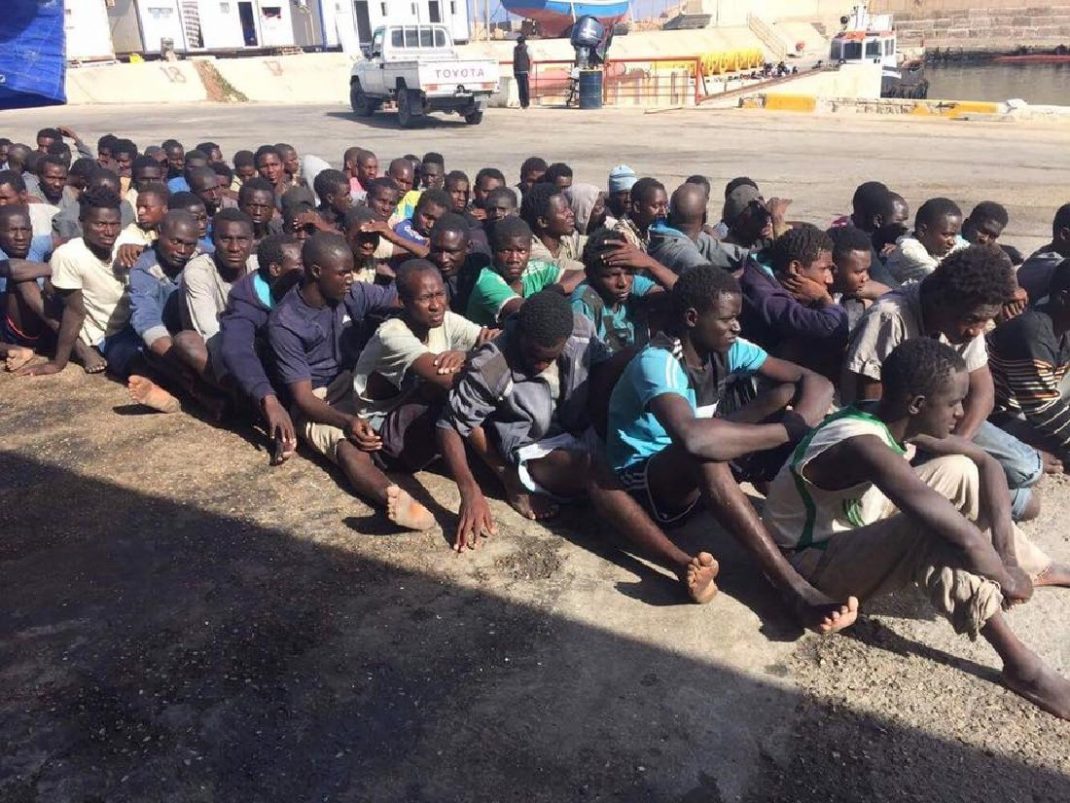
Still, official explanations have done little to ease public anger. Protesters continue to call for tighter controls and reject any form of migrant integration. Estimates of migrant populations vary widely. The Interior Ministry has spoken of figures reaching around three million, while the International Organization for Migration (IOM) places the number of registered and unregistered migrants at under one million, concentrated mainly in western Libya.
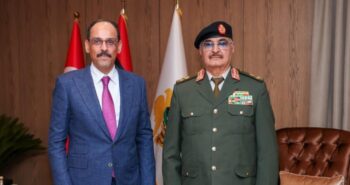
In an attempt to respond to public pressure without violating international obligations, Libya’s Presidential Council Chairman Mohamed al-Menfi recently toured central Tripoli, including Martyrs’ Square. His message tried to balance two positions: affirming humanitarian commitments while also stressing the need for organized and safe returns of migrants to their countries of origin.
A Distorted Labor Market
Behind the political noise lies a more structural reality. The majority of migrants in Libya—estimates suggest over 80%—work in economic sectors that are essential but largely informal. Construction sites in Tripoli, Benghazi, and Misrata, along with seasonal agricultural work in the south and desert oases, depend heavily on this labor force.
Libya’s economy shows clear symptoms of what economists describe as “Dutch disease,” where reliance on oil revenues distorts broader economic development. Public sector employment has expanded dramatically, absorbing roughly 2.2 million workers out of a population of about seven million.
In effect, the state has become the dominant employer, crowding out private-sector development. This imbalance has created a culture among many young Libyans that discourages manual or vocational work in the private sector.
As a result, migrant workers have filled a structural gap rather than a temporary shortage.
Most migrants work without formal contracts or legal protections, operating within an informal economy. This gives employers access to flexible and inexpensive labor, which helps reduce production costs. Over time, this arrangement has become embedded in the economic system, making migrant labor not just useful, but in many cases necessary.
At the same time, this dependency is reinforced by entrenched interests. Construction companies, agricultural businesses, and informal market networks benefit from the availability of low-cost labor. Any serious attempt to regulate this system, through work permits, fees, or enforcement, would likely face quiet resistance from those who benefit from the current arrangement.
World Bank studies indicate similar patterns in rentier economies with large public sectors, where citizens are often less willing to enter manual labor markets. Libya shares this pattern with several Gulf states and Mediterranean economies, where similar tensions between economic necessity and social resistance persist.
Instrumentalize Migration
As economic contradictions deepen, migration has increasingly become a political tool.
Competing authorities in eastern and western Libya often use the issue to shift attention away from domestic challenges such as inflation, electricity shortages, liquidity crises, and institutional fragmentation. In this context, migrants become a convenient symbol onto which broader frustrations are projected.
At the international level, migration has also become a bargaining chip. Libya’s geographic position on the Mediterranean makes it central to European migration routes, particularly toward Italy. As a result, migration control is frequently tied to financial assistance, security cooperation, and diplomatic engagement with European partners.
Meanwhile, the presence of large numbers of undocumented migrants creates indirect fiscal pressures. Many consume heavily subsidized goods and services—fuel, electricity, bread, and healthcare—without contributing to the tax base. In a system where public finance is already under strain, this deepens concerns about sustainability and fairness.
Urban centers are increasingly feeling this pressure. Public infrastructure—especially healthcare systems, water networks, and electricity grids—is already overstretched. This has contributed to a growing perception among Libyans that international attention and resources are disproportionately focused on migrants, rather than on struggling local communities.
The UN Framework and Structural
Blind Spots
Migration did not feature prominently as a standalone issue in the final outcomes of the United Nations Support Mission in Libya (UNSMIL) structured dialogue process.
Instead, attention was directed toward broader themes such as governance reform, economic restructuring, security stabilization, and national reconciliation. However, a closer reading of these recommendations suggests that migration is indirectly embedded within them. Issues such as labor market reform, private sector development, and human capital investment all address underlying drivers of migration dependence.
From this perspective, migration is treated less as an isolated crisis and more as a symptom of deeper institutional and economic dysfunction. The assumption is that without structural reform, migration pressures will persist regardless of border enforcement policies.
The Economic Contradiction
Libya’s migration dilemma cannot be separated from its economic model. The country is not only facing a migration challenge, it is confronting a structural imbalance in how its economy functions.
The central contradiction is clear: Libya depends economically on migrant labor while rejecting it politically and socially.
If public opinion demands the removal of migrants, a fundamental question remains: who will perform the labor that keeps the country functioning? Who will build homes, maintain infrastructure, work in agriculture, and sustain the informal economy that many urban areas depend on? Unless Libya undertakes serious structural reforms—redefining public employment, expanding private-sector opportunities, and encouraging young Libyans into productive labor—the system will continue to rely on migrant workers by default. Migration will remain both politically contested and economically indispensable.
Ultimately, Libya’s migration question is not resolved at its borders or detention centers, but in the structure of its economy itself.
Until that structure changes, policy responses will continue to oscillate between political pressure and economic necessity, without resolving the underlying dependency.
___________________