The second report of the UN fact-finding mission documents widespread abuse of migrants and activists in Libya and sets out to investigate mass graves allegations.
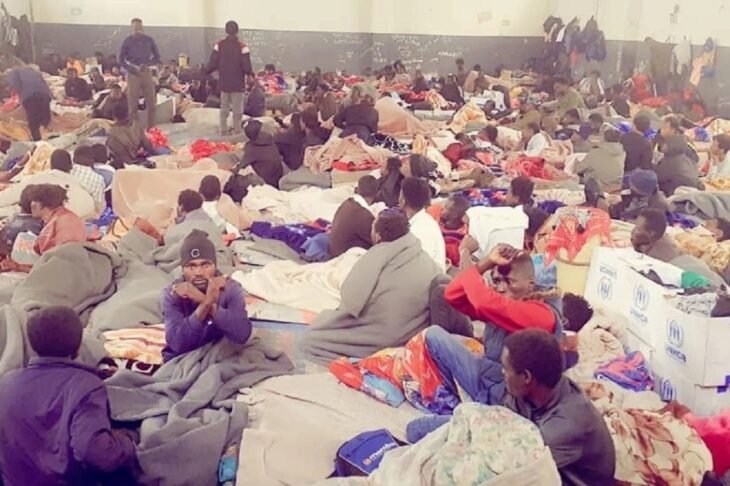
The second report of the UN fact-finding mission documents widespread abuse of migrants and activists in Libya and sets out to investigate mass graves allegations.
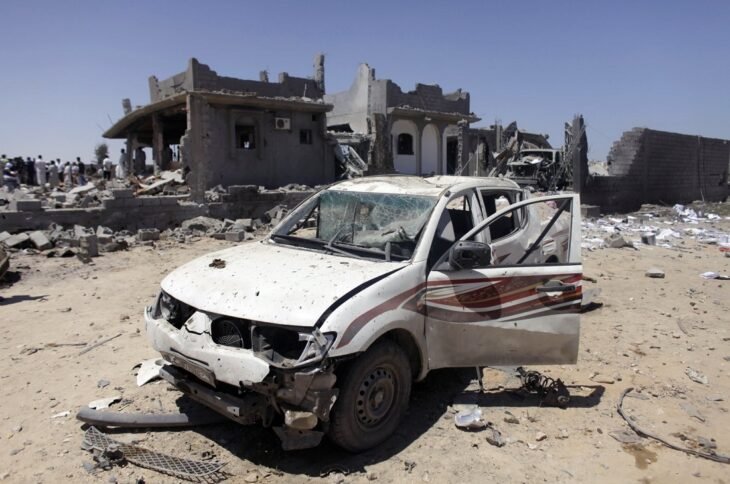

Eleven years after the start of the Libyan revolution, the country appears as deadlocked as ever in its quest to end the cycle of civil wars and political divisiveness that have marred the democratic prospects envisioned by the bold leaders of the 2011 uprising.
There are many roots to this pervasive stalemate: the manipulation of the country’s wealth by a new class of elites; the proliferation of armed groups and inability to conduct any meaningful security sector reform over the last decade; the blatant political and military interference in Libya’s affairs by external actors, including the ongoing deployment of thousands of foreign forces and mercenaries within the country’s borders; and ultimately, a failure by the Libyans themselves to compromise on a new path forward.
At the moment, the situation appears dim after an indefinite delay to the planned elections in December 2021, and the February 10 appointment of a rival prime minister threatening to split the country once again, or worse, provoke another round of violence. But there are some bright spots that call for hope. A renewed effort by UN Special Advisor to the Secretary-General, Stephanie Williams, could create a new timetable toward elections if she is properly supported by a majority of countries who have interests in Libya.
The warming of relations between the United Arab Emirates and Turkey, who backed opposite sides during Libya’s 2019-2020 civil war, is also a major shift in regional dynamics impacting the stability of Libya. With such a renewed regional consensus, it may become possible for Libyans themselves to forge a consensus on new elections based on an agreed constitutional basis—one of the key issues that prevented elections in 2021.
Once General Khalifa Haftar and his Libyan National Army retreated from Tripoli in June 2020, effectively ending another deadly civil war, the question for Libyans became how to secure a tenuous peace and put in place another political process that would unify the country and establish a legitimate government.
Notably, Haftar sabotaged then UN Special Representative of the Secretary-General Ghassan Salame’s plan to convene a national conference that sought to establish an agreed framework for pushing the country’s transition forward, when he launched his attack days before the event was scheduled to begin.
To add insult to injury, UN Secretary-General Antonio Guterres himself was on the ground in Libya to help facilitate the conference, and even went to meet Haftar in his headquarters to appeal for peace, which the general rebuffed. However, Haftar miscalculated his support in western Libya and encountered stiff resistance from an alliance of militia groups. A lengthy stalemate ensued until a surge in foreign forces backing Haftar, including Russian Wagner mercenaries, threatened to tip the balance of forces.
At that point, Turkey answered the Government of National Accord’s pleas for help and deployed drones, anti-air systems and fighters in early 2020, eventually forcing Haftar and his backers from the UAE, Russia and elsewhere to retreat to central Libya. An informal ceasefire line was established in June and formalized in October 2020.
The question for renewing a political process then focused on how to move beyond years of fruitless negotiations between Haftar and Government of National Accord Prime Minister Fayez Sarraj. Further, the legislative House of Representatives (HoR) and consultative High State Council (HSC) formed by the 2015 Libya Political Agreement also lacked legitimacy and authority given their length in office and questionable mandates. Still seeking to focus on a bottom-up, rather than a top-down, leadership-level political agreement, the United Nations Support Mission in Libya (UNSMIL) named a 75-member Libya Political Dialogue Forum (LPDF) that would be charged with establishing a new transition roadmap.
That effort entailed establishing a date for presidential and parliamentary elections on December 24, 2021, electing a new transitional government, and attempting to provide a constitutional or legal basis for holding the December 24 elections.
After electing Abdel-Hamid Debaiba as prime minister and Mohammed Menfi as president in February 2021 (defeating former interior minister Fathi Beshagha and chair of the House of Representatives Aguila Saleh), the LPDF bogged down amid reports of vote buying by Debaiba, and a change of leadership at UNSMIL to Jan Kubis, who lacked enthusiasm for the forum. The legal committee of the LPDF could not produce a constitutional basis for elections and therefore failed to achieve its primary purpose—to pave the way for mutually agreed elections.
In the absence of an agreed legal basis from the LPDF, Saleh drafted and passed an electoral law that Kubis accepted in September, despite questions of procedure and consensus within the HoR. The law would have established a strong presidential system, including authority over the military, which has always been Haftar’s long-term ambition. The technical provisions of the law offered few restrictions on potential candidates, especially those involved in potential illicit activity or even war crimes, allowing Saif al-Islam, wanted by the ICC for his role in the 2011 revolution, and Haftar, to enter the race.
As difficult as it would be to organize a national election in three months, the High National Elections Commission (HNEC) likely could have done so with clear guidelines on candidate eligibility. However, when nearly 100 candidates registered for president and thousands for parliamentary seats,[5] it became obvious that the elections would have to be delayed, if only to adjudicate their eligibility.
The four most prominent candidates, Saif , Haftar, Debaiba—who pledged not to run when he was appointed prime minister—and Beshagha, each had significant controversies surrounding their candidacies and could not even campaign nationwide. HNEC tried to defer eligibility questions to the judiciary, but given Libya’s dysfunctional legal system, no one ruled definitively on these issues.
As the clock ticked closer to December 24, technical and logistical issues, such as printing ballots with no definitive candidate lists, essentially inhibited the elections. Still, no party wanted to admit responsibility for the delay—HNEC insisted it was a political decision yet the HoR refused to claim ownership for it. Eventually, December 24 came and went with minimal attention or formal statements.
The international community, particularly the United States and its European partners, had promoted simultaneous presidential and parliamentary elections on December 24 as the policy priority through much of 2021. Even as late as a November 12, at an international conference in Paris, the assembled group called on “all Libyan stakeholders to commit unequivocally to the holding of free, fair, inclusive and credible presidential and parliamentary elections on 24 December 2021 as stipulated in the Libyan political roadmap,” even though the chances of that happening had become very slim by then.
The United States and its partners agreed that delaying elections was riskier than holding imperfect elections, given the limited authority of the Government of National Unity (GNU), the risk of renewed civil war among the main parties, and the demand of the population, of which 2.8 million had registered to vote. However, there was an alternative that the western allies never pursued.
Once it became obvious that the December 24 elections were an unrealistic expectation, given the variety of unresolved legal and constitution disputes, they should have worked to develop an alternative roadmap and timeline for the elections based on a revised and agreed electoral law. That never transpired, leaving another legitimacy vacuum on December 24.
Fortunately, the worst scenario of renewed violence did not materialize, in part because of the return of Stephanie Williams to UNSMIL after Jan Kubis abruptly resigned in December 2021. She shuttled among the main parties to achieve a limited consensus to avert violence and encouraged renewed negotiations over a new electoral timeline.
Williams’ diplomacy likely prevented an immediate crisis since Saleh and other opponents of Debaiba had long suggested the GNU’s legitimacy would expire on December 25, the day after the planned elections. Williams insisted that the original LPDF spanned 18 months, therefore giving an extra six months to address the questions of holding elections, ostensibly turning back the clock to summer 2021 when the legal basis for holding elections should have been resolved.
Although Saleh and his allies did not instantly cut ties with the GNU, he convened the HoR on February 10 and pushed through a constitutional amendment that empowered a roadmap committee to develop a transition plan to hold elections, and possibly a referendum, on the draft 2017 constitution within 14 months, i.e. by mid-2023. During the same session, there was a hasty vote appointing Beshagha to replace Debaiba as head of the GNU, giving him two weeks to form a government.
The international community responded to the vote with some hesitation, given its circumstances and the lack of transparency, but believed Saleh had support from at least some elements within the HSC. The statement reacting to the vote came from the UN Secretary-General’s spokesman that “takes note of” the adoption of the constitutional amendment and the “designation” of a new prime minister, without naming Beshagha, “in consultation with the High State Council.”
Initially, it appeared Beshagha had the means to oust Debaiba when he arrived in Tripoli the evening of the vote, but as the days passed, Debaiba succeeded in splitting the High State Council. He recruited a visible display of armed groups to support him and proposed his own version of a timeline that would aim for new elections by June. The HoR reconvened on March 1 and approved Beshagha’s proposed government with 30 ministers, but questions about the quorum again marred the proceedings.
As of early March, there are two electoral and constitutional scenarios and timelines based on Debaiba’s four-month plan and Saleh’s 14-month aspiration. Whether and when a referendum on the problematic draft 2017 constitution would transpire, in advance or subsequent to those elections, remains to be spelled out by either side, as each establishes committees to work out further details. UN Special Advisor Stephanie Williams has proposed an initiative to mediate these issues with six representatives each from the HoR and HSC.
What is clear is that Libyans have increasingly less faith in their leaders, and the two parliamentary bodies that came into being as part of the 2015 Libya Political Agreement have long extended their expected timelines. Yet the irony is that these institutions and their leaders are charged with replacing themselves, which they have little incentive to do unless guaranteed a reasonable chance at the polls.
The best path forward now is to mediate some compromise timeline between four and fourteen months, without holding a referendum on a full constitution, as that would threaten to delay the timeline indefinitely. Instead, they should aim to establish a minimal constitutional basis for holding elections, since elections should be held with an idea on what the responsibilities are for the elected individuals and bodies. And here, effective mediation can be achieved through the recent thaw in relations between Ankara and Abu Dhabi, who were on opposite sides during 2019-2020, but could now help secure Libya’s transition.
As noted above, one of the significant impediments to Libya’s transition has been the almost perpetual foreign interference by actors who have exacerbated local differences politically, economically, and militarily. No country has been innocent of this dynamic, and many have flagrantly violated the UN arms embargo nominally in place since 2011, as documented by years of UN Panel of Experts reports.
Often the Europeans have been divided between France and Italy, with France supporting Haftar at various times. Regional states have been divided between the UAE and Egypt, mainly backing Haftar and his loyalists in the East, and Turkey and Qatar supporting the West to varying extents throughout the years. Even the United States played a role in enabling conflict when President Trump’s White House signaled to Haftar that it would not object to his attack on Tripoli in 2019.
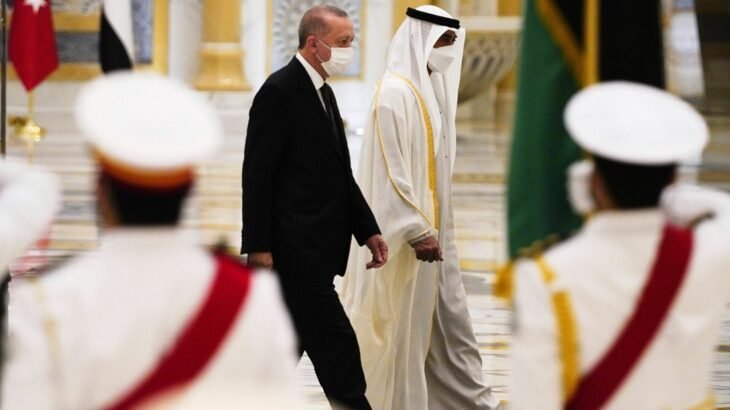
The warming of relations between Turkey and the UAE, and the respective visits by Crown Prince Mohammed bin Zayed in November to Ankara followed by President Erdogan’s February trip to Abu Dhabi, present an opportunity to expand on their economic, trade, and defense agreements to help facilitate a more durable peace in Libya. It would also mark a remarkable turn of events from two years ago when they were supporting opposites sides in Libya.
Relying on the former antagonists, who are distrusted in different parts of Libya depending on who they supported on the ground, may seem like a challenging premise. Certainly, the Libya conflict was not the impetus behind the Turkish-Emirati reconciliation, which is much more about Erdogan’s economic needs and Mohammed bin Zayed’s reassessment of the UAE’s interests in limiting regional conflict. Those mutual interests and the influence of both parties with influential Libyan and other outside actors, such as Egypt, could make them productive messengers if they work with the UN to support mediation on an agreed transition roadmap.
Turkey and the UAE could start by fulfilling the demand of the October 2021 ceasefire agreement[13] and remove their own and associated forces, although legitimate training and other activities, such as demining support, should be allowed to continue. Following their own actions, Turkey and the UAE could also press Russia to follow suit and remove their mercenary forces. With such steps, it is possible that past interference in Libya could be transformed to facilitate much-needed political breakthroughs.
Ben Fishman is a senior fellow in The Washington Institute’s Program on Arab Politics and former director for North Africa on the National Security Council.
_______________

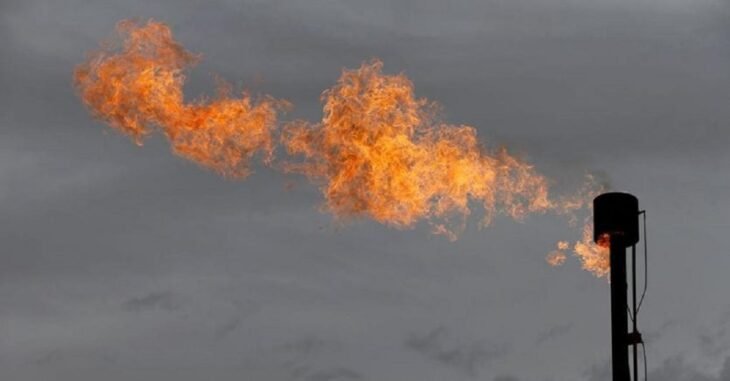


The ramifications of the Russian war on Ukraine are being felt across the world. The effects are likely to be particularly acute for countries in North Africa. The region is a major exporter of energy and raw material, and has had complex, sometimes contentions, relations with Europe, the US and Russia.
The US reportedly asked North African and Middle Eastern countries to increase their gas production to supply Europe.
Among the Maghreb countries that could step to the fore are Algeria and Libya, with Algeria harbouring the highest potential. Algeria is one of the world’s largest gas producers, and is among Europe’s top five LNG exporters. It could technically increase its gas supply to Europe through several operating pipelines running through Italy and Spain.
However, Algeria’s opaque domestic political decision-making, highly contentious relationship with neighbouring Morocco, and decades-long strategic alignment with Russia, stand in the way.
Algeria has a close relationship with Russia and the US largely based on strategic military synergies. In Libya, Russia put its weight behind the main spoiler – General Khalifa Haftar. For its part, the US has mainly focused on working with the UN and with Libyans interested in organising contested election processes.
Countries like Algeria are unlikely to step up to replace Russian gas supply without an implicit nod from Russia. European policy makers had hoped Algeria and Libya would alleviate European dependence on Russia. However, North African countries are acting based on their own calculus. This involves seeking concessions from Europe and the US on their priorities and managing their relationship with Russia.
This diminishes hopes of European policy makers expecting that Algeria and Libya would alleviate economic hardship.
Algeria, a major gas exporter to the EU, is walking a tight rope. It is undoubtedly the country with the most expansive relations with Russia in the region. This is requiring it to try and reconcile two conflicting principles. Living by its longstanding position on the sanctity of international borders while signalling its continuous unwavering support to its strategic military and diplomatic ally, Russia.
Algeria is Russia’s third largest weapon importer. In the lead-up to the Ukraine invasion, Algeria stopped short of signalling any antagonism towards its historic ally.
However, as the EU seeks new, sustainable alternatives to the sanction-stricken Russian energy exporters, Algeria is strategically positioned to fill the gap. It could, technically, meet Europe’s gas demands.
Algeria currently exports approximately 22 billion cubic meters (bcm) of gas annually via the TransMed pipeline to Italy. It could, increase this by nearly half the current rate. The Maghreb–Europe Gas Pipeline (MEG), linking Algeria’s largest gas field to Spain through Morocco was shut down in October 2021 when Algeria severed its relations with Morocco.
But Algeria seems to be reluctant to fulfil requests to increase its gas exports to Europe. Algeria won’t want to alienate Russia. Nevertheless it will want to take advantage of skyrocketing energy prices. It might also try and secure concessions from the EU and US on a number of issues the country deems strategic, such as Western Sahara.
The dispute over the Western Sahara territory has strained relations between Morocco and Algeria since the 1970s. Morocco took control of most of the territory in 1976. Algeria has provided military, diplomatic, and financial support to the Polisario Front ever since. The front is an armed insurgent group working for the independence of the territory. Decades and several UN mediation attempts later, the conflict continues to be intractable.
In 2020 the US administration recognised Morocco’s sovereignty over the territory as part of the tripartite normalisation agreement known as the Abraham Accords. Algeria was facing deep political strife and took a while to respond to the US recognition and Morocco’s perceived assertive posture.
It was only in 2021, when president Abdelmajid Tebboune consolidated his power base, that Algeria turned up the heat on Morocco. Among its retaliatory measures was the discontinuation of its longstanding agreement with Morocco on the transfer of gas to Spain through the MEG pipeline.
Algeria has expressed strong frustrations at the perceived Morocco-friendly positions of the European Commission and the US on Western Sahara. Algeria could well try to link gas capacity increases to a watering down of EU/US support for Morocco on Western Sahara. And it may have just found an ally for that: Spain.
The Iberian Kingdom is highly dependent on Algerian natural gas exports and views a potential blow out in North Africa as a direct threat to its national and economic security. With Algeria’s sustained political and economic boycott of Morocco, coupled with its unprecedented military chest beating, the region is closer to war than it has ever been since the 1960s.
Morocco, designated by the US as a major non-NATO Ally, has traditionally aligned itself with the US and the EU on key military and diplomatic matters. At the same time it has sought to maintain “positive neutrality” with Russia.
For its part, Algeria has been increasingly looking for clear signals from Russia about where it stands on the Western Sahara issue. It was in that context that Russia, in an extraordinary move, abstained in October 2021 from the UN Security Council vote on Western Sahara. This was preceded by President Putin’s Special Representative for the Middle East, Mikhail Bogdanov, receiving a high-level Polisario delegation in Moscow.
Russia’s actions were symbolically significant. But it didn’t go as far as fully embracing the desired Algerian position by vetoing the resolution, or, more radically, recognising Western Sahara as independent.
It was against this background that Algeria’s abstained in the March 3 UN General Assembly resolution on Russia. For its part, Morocco stated a no-show despite its tacit rejection of the Russian assault.
Libya’s oil minister has already announced that “Libya does not have sufficient reserves to make a difference.”
Since last month, Libya has plunged into another political crisis characterised by two competing governments. This jeopardises political progress the country had achieved in early 2021 when the Government of National Unity was established as the first national government unifying all parts of Libya since 2013.
The renewed power struggle has adverse effects on Libya’s production of natural resources: Libya’s oil production has fallen below 1 million barrels a day and the state-controlled National Oil Corporation halted shipments from the ports of Zawiya and Mellitah after armed actors once again shut down Sharara, the country’s biggest field.
In the current power struggle, Libyan politicians are reliant on local support but also international backers. High-ranking officials have been outspoken in their condemnation of the Russian attack. Nevertheless, Libya’s alliances are volatile. It still has Russian mercenaries in the country. In addition, Russia has proven far more flexible on the unpopular aim among many Libyan elites to conduct elections soon. This is something that the UN, US and European countries are pushing for.
Maghreb countries, despite their capacities, are unlikely to step up to replace Russian gas supply without an implicit nod from Russia. This could give way to complex new regional alignments and posturing.
However, the current Ukraine crisis and attempts by the US and the EU to “separate” Russia from its key regional allies (in this case, Algeria), coupled with what Algeria can offer the EU in terms of energy, could potentially shake the equilibrium in the Great Powers relations with the Morocco and Algeria dyad.
Sally Hayden

‘I loved you as if I had never seen anyone else in the universe.’ – Facebook status by a Sudanese refugee in Libya
‘The worst thing about distance is you don’t know whether they’ll miss you or forget you.’ – Facebook status by an Eritrean refugee in Libya
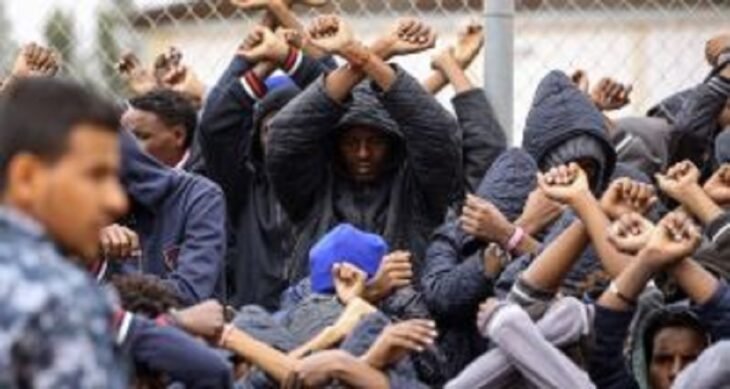
The sounds of humans hating each other rumbled outside Abu Salim detention centre one night, a week after the refugees were moved there, as one of the pregnant women, Helen, went into labour. Without other options, women pulled plastic bags on their hands to help, as men prayed and panicked about whether assistance would come. There was a hum of anxiety throughout the big hall. Aware that there was no medical worker available if anything went wrong, detainees prayed for the baby’s safe delivery. “It was the traditional way. But God was there with us,” one remembered later.
‘It’s too hard to find a woman in Europe… You have to marry someone from your own country’
The infant’s first breaths were those of the incarcerated, her deliverance praised by people who were waiting for their own. Like them, she would go without sunlight and nourishment; she symbolised desperation, but also hope. After coming into the world, she remained locked up: just another of the thousands of refugees and migrants trapped in indefinite detention in a war-torn country without a stable government, and one of roughly 640 children that were being held in “official” government-run Libyan detention centres at that time.
“Surprise. The pregnant woman I told you about has born a child” *
The backstory of the young parents of this girl was a reminder that love could blossom in the most unlikely places, even along an unpredictable and chaotic migration route that sporadically tore people apart. Helen escaped Eritrea in 2016 and made her way to Khartoum. Also in the city, though she did not know it, was Birhan, another Eritrean, who worked in a bakery. Both of them wanted to reach Europe.
 In January 2017 they ended up in the same vehicle, crossing the Sahara Desert and arriving in a smuggler’s warehouse. The man who transported them announced it would cost six thousand dollars to get in a boat, so Helen phoned relatives, well aware that if she could not raise the money she would be brutally tortured. They would stay in that warehouse for a year.
Birhan had no one to come to his aid. The smugglers beat him daily. “He broke my arm, he broke my head, he broke everything in my body,” Birhan recalled, referring to his smuggler. “He knew I didn’t have anything. He was not happy, he was so angry, he was so mad.” Birhan was even shot in the leg at one point.
Helen’s brother and other relatives clubbed together and raised the money she needed, but by this stage she had fallen in love with Birhan. More than that, she was two months pregnant. He told Helen to go on ahead of him, to get their baby to safety. The couple separated but Helen was not sent to the sea; the gang who took her claimed they had problems reaching the coast. Confusingly, the chief smuggler seemed to tire of beating Birhan and put him on a boat instead. He stayed at sea for 16 hours before he was intercepted and brought back to Tariq al Matar detention centre in Tripoli, then relocated to Ain Zara detention centre.
Helen remained with the smugglers. Her pregnancy meant she was sick every day. Birhan procured a phone to contact her captors, who demanded six hundred dinars to have her sent to Tripoli. She arrived at Ain Zara by car, six months pregnant, her stomach protruding. At the gate, she explained who she was, angering Ain Zara’s manager, who threatened to send Birhan to the police station. In the end, Helen was allowed inside. Birhan was present as their first child was born.
Weeks later, sitting in a conference room in a high-rise building during the UN General Assembly in New York, I used a press briefing with Natalia Kanem, the executive director of the UN Populations Fund, to tell her how Helen had given birth. I described the plastic bags used as gloves, hundreds of refugees bent in prayer, and the echoes of war outside. This was a woman turned back from the sea under EU policy, I said. This baby could have been born in Europe.
Kanem listened carefully. She said women should not be forced to give birth in detention centres and should have privacy, no matter where they were. “Any pregnant woman deserves her full human rights and dignity and it does not matter whether you’re a refugee,” Kanem said. “I believe the concern for the life of the mother and her newborn is something enshrined in the common will, which the definition of human rights represents.”
But Helen knew her baby was far from any concept of human rights. “I just want to get my baby in a perfect place, a good place, and live as a normal person,” she told me through WhatsApp from Abu Salim. Birhan echoed this. “My plan was just to escape [Eritrea], but now I have a wife and child to worry about,” he said. “I just want to work and have a normal, proper family.”
For Helen and Birhan, their surroundings now presented as a list of all the ways their child was in danger. A baby was a burden, the complication that could prevent their escape, but also their biggest motivation for getting out of there.
The first war subsided, but the Libyan guards who disappeared as fighting raged across Tripoli did not return full time to Abu Salim detention centre. In total, they were absent for nearly three months. One of the unexpected consequences of this newfound freedom was how many refugees began to fall in love. The Libyans had maintained that mixing between the sexes was haram – forbidden. Now, those rules were gone and they mingled freely.
Love doesn’t choose a place, every place there’s love. You start to meet a girl without the police. Everyone was sleeping in every corner.*
There were couples who had met in the smugglers’ warehouses or in the Sahara Desert. There was love that had grown over time, throughout the endless, spirit-crushing challenges, and love that had sprung in an instant. There was love that had bloomed from dependency, and there was love that arrived with the surging realisation that no one else would ever understand what their minds, bodies and souls had gone through.
You see amazing love. One woman waited one year until the man’s family could pay [the smugglers for him]. They met in the Sahara and she waited one year.*
The new romances lightened the general mood across the centre, but also made it harder for refugees pining sweethearts they had left behind. Some were not able to contact home at all, and they wondered if their partners were alive or dead, or had simply moved on, unwilling to wait for a lover in limbo. Mustafa, a good-looking guy with a bright smile and a fondness for selfies, told me his personal tragedy: the beautiful woman he was deeply in love with; the relationship he had unknowingly sacrificed to make this journey to nowhere. In photos he sent me, she smiled shyly into a camera. He had mapped out their life together, fantasised about their wedding. If he reached Europe she could come and join him there, he imagined, but he got stuck along the route.
Mustafa was from the border of Sudan and Eritrea. His girlfriend was Eritrean, and marriage was the only way she could avoid indefinite conscription. That meant the end of their future together. “Her mom said to my dad we can’t wait a long time because maybe the policemen will take her to the military camp,” Mustafa told me. As he counted seconds, days, years incarcerated in Libya, Mustafa’s father agreed the woman should wed someone else. “My story with her [is] finished,” Mustafa brooded. “Another man will marry her.”
To distract himself, Mustafa worked out in Abu Salim’s yard each day, fashioning weights with metal bars he found lying around. At each end he placed a plastic bottle filled with cement. He set himself challenges, but they did not stop Mustafa from thinking about his lost love constantly. He compared her fate to Eritrea itself – caught up in the whims of a dictatorship exercising brutal control over its population.
Dear Eritrea is like a sweet girl. A selfish person came and killed her love and made her like darkness!*
In Abu Salim, there was serious pressure on relationships. It came from the understanding that women were given priority for evacuation and, if they were married, their husbands would accompany them. Refugees usually flee without documents, or lose any they bring with them, so proof was unnecessary. It was not long before recently formed couples would have a conversation, reaching an understanding that they would register as married if the opportunity arose.
There were loveless relationships too, the women taking pity on the men. “It starts like a game and then they have a baby,” Essey would tell me about some of these. “If the woman is good [the man will] stay with her. It’s too hard to find a woman in Europe… You have to marry someone from your own country.”
This was not unique to Abu Salim. In Tajoura, a detention centre in eastern Libya, marriages were organised by letter. A man would write, giving his carefully worded script to a detainee who worked with the guards – the capos – before it was passed on to a woman in a separate cell. He may have never seen the woman in person but, if she accepted, for the sake of their evacuation bids they were together and in love.
In the days before an evacuation the guards in Tajoura would allow refugee couples to meet for the first time, for about 30 minutes. It was a chance to say hello and exchange bashful smiles, or to be met with steely eyes, hardened in pursuit of an escape route. These were Libya’s marriages of convenience.
In several cases the women did not consent. One refugee, who acted as a translator in Abu Salim when international organisations visited, told UNHCR he was married to a woman in the same centre without her understanding what he was saying. They were registered and he convinced her not to correct the mistake. Eventually, they were evacuated to Italy together, but she told friends she hated him.
Other times, men would pull out of the arrangements last minute. One young Somali man told me he came to an agreement with a woman in Tajoura whom guards allowed him to speak to for five minutes, face to face, after a day of forced labour. He later panicked, worried about the pressure of being responsible for a wife, and decided he could survive more easily alone. The woman was later evacuated with another man.
As the UN Refugee Agency began to register more detainees inside detention centres, a select number of refugees living in the city outside – including those who had bribed their way out before – began paying money to the guards to let them enter, desperate to have their asylum claims heard and their details taken by UNHCR. Married couples were particularly likely to come in, hopeful that they would be selected.
It was especially hard for those who were already married and had left spouses behind, whom they wanted to be reunited with one day. They could not allow a fake marriage to be listed on their documents and rule out the possibility of applying for family reunification down the line. “For someone like me, I’m married. My wife and son are suffering somewhere [but] UNHCR can’t believe that I am married unless they see my wife and my son. That’s unfair treatment,” one South Sudanese man in Tajoura said to me.
Years later, I travelled around Europe meeting former Libya detainees. Some were dead or disappeared
There were also people in detention with spouses already in Europe. One young Eritrean, Hamid, arrived in Germany in 2014 without a hard copy of his marriage certificate, which he lost while escaping. Even with it, the German authorities said the union would not have been recognised, as it was carried out in a church and not certified by the Eritrean government. Though he had gone ahead to save his wife, Kedija, the perils of the journey, she ended up having to make the same trip without his protection. Kedija was caught by the Libyan coastguard. After months in Ain Zara and Abu Salim, she called him saying she wanted to die.
I became aware of their case when a German pastor, who was looking out for Hamid in Germany, contacted me asking if there was anything I could do (I referred him to the UN). In late 2018 I interviewed Hamid, asking whether he felt his relationship could recover from this lengthy separation and all they endured apart. “Although the trauma we both have, I believe that we could live a normal life again,” he said. “We still love each other like five years ago. Love makes you strong and there is always hope.” He told me he was doing well: he found a job as a systems engineer, had an apartment, and was ready for her arrival, whenever it might happen. All he had achieved to date was for his wife.
Kedija was evacuated to Niger, en route to Europe, after being chosen by UNHCR for resettlement. It came too late. In November 2019 she revealed that she was pregnant with a baby from another man. She severed the relationship with Hamid and was resettled to another country instead of Germany. Later, she would lose her baby and attempt to reconnect with her husband, but he was unwilling to speak to her. He became depressed, unable to concentrate to the extent that he risked losing his job. The future he had projected for them, the goal which had kept him going for so long, had crumbled. Theirs was just another tragedy in the broad tapestry of destinies irrevocably altered by this inequitable, treacherous system.
Years later, I travelled around Europe meeting former Libya detainees. Some were dead or disappeared. Those I met in person would fill me in on the fate of others whose stories I had come across. Helen and Birhan, the couple whose daughter, Ikram, was born in Abu Salim detention centre as war raged in 2018, were eventually resettled to Canada. Their baby had grown into a healthy toddler with a wide smile, who loved dancing in front of the TV. I was passed Birhan’s number, and we spoke on the phone. “She changed my life,” he said with pride, as Ikram babbled in the background. “She’s smarter than average. She’s playing with me all the time… I love you, honey,” he added, the last part directed to his daughter. When she was older, he said, they would tell Ikram the story of where she came into the world; how brave her mother was; and how many people prayed for her survival.
Extract taken from The Fourth Time, We Drowned by journalist Sally Hayden, which is published by Harper Collins on March 31st
***
Sally Hayden writes from Africa for The Irish Times
_____________

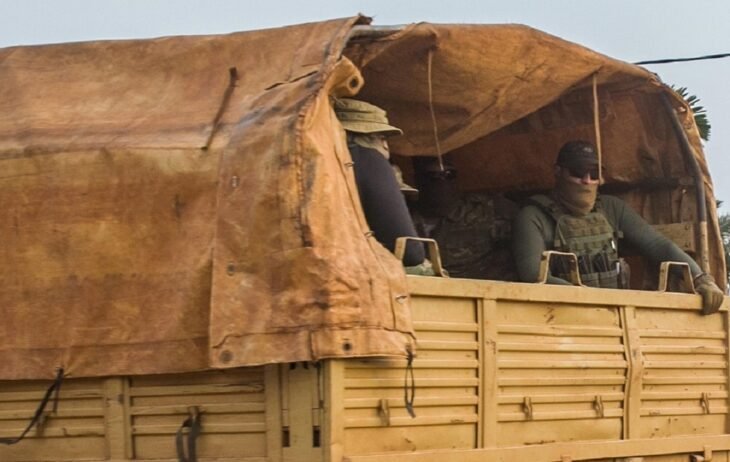
Russia’s Wagner Group has withdrawn about 1,300 of its mercenaries from Libya to Russia through Syria to participate in the Russian military operation in Ukraine, according to military and strategic expert Colonel Adel Abdel Kafi. Read More
Citizens of the Middle East and North Africa are feeling the impacts of the war in Europe on their food security, energy prices, and job markets. Read More

Now more than ever the Libyan parliamentary and presidential elections seem to be at risk of a soft military takeover – one that comes from inside the capital this time rather than from the eastern region.
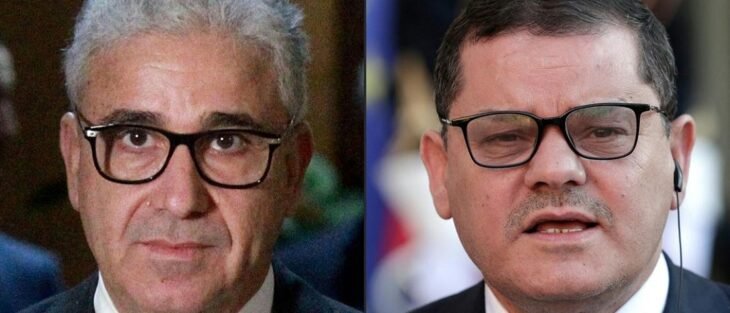
The current Libyan Prime Minister Abdul-Hamid Dbeibah, appointed last year as part of the UN-led peace process, has rejected the decision of the eastern-based House of Representatives to replace him with ex-Minister of Interior and fellow Misratan (from Misrata) Fathi Bashagha.
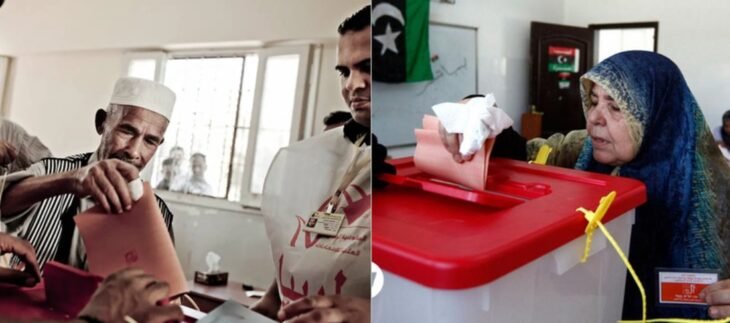
He made a bold promise to the three million Libyans who were ready to cast their votes last December that his government would deliver parliamentary elections in June, followed by a constitutional referendum and presidential elections.
Dbeibah made his promise of June elections official by notifying the UN Support Mission (UNSMIL) in a letter.
He explained his plan for the upcoming period of Libya’s political process and reiterated that his government would not leave office until parliamentary elections were held on 30 June 2022.
“Elections, if they were to be held in just over 100 days, need an uncontested authority that can secure the vote across the vast and divided territory of Libya”
However, elections need more than a letter of intention, especially in the case of a country as war-torn and politically disoriented as Libya.
Elections, if they were to be held in just over 100 days, need an uncontested authority that can secure the vote across the vast and divided territory of Libya – east, west, and south.
Yet for the time being Dbeibah seems to have only the west on his side, even though the advent of a rival PM, Bashagha, could leave him with half of the western region at most.
“Electoral security conditions are not quite there, to say the least, but the priority is to make headway on the legal front first,” Jalel Harchaoui, a Libya expert at the Global Initiative Against Transnational Organized Crime, told The New Arab.
“Concretely, the Government of National Unity (GNU) cannot be expected to ensure security for voters and for candidates in many places, including in Barqa [East Libya].”
Harchaoui says that keeping Barqa in mind, it remains to be seen whether any international pressure will be exerted on General Khalifa Haftar and his sons, who have much sway over electoral security in eastern cities like Benghazi and Ajdabiya.
He argues that a new legal framework must be enacted and this is the priority for the GNU this spring.
However, whether the GNU will be able to organise a secure and transparent vote at the local level, let alone the national level, is seriously unlikely, casting doubts on the June deadline for parliamentary elections, explains Alessandro Scipione, the Head of MENA news desk at the Italian Agenzia Nova.
“It is equally true that there are millions of Libyans who have the sacrosanct right to choose their leaders after so many years of wars, conflicts, and mockery by national leaders and the international community,” the Italian journalist told The New Arab.
“However, we must be honest and tell the Libyan people that unfortunately it is impossible to organise a credible, transparent, and secure elections by June.”
Two Misratans vie for power in Tripoli
Earlier this month, forces supporting the parliament-elected prime minister Bashagha were deployed on the eastern entrance of Tripoli, prompting the UN mission in Libya to warn against any escalation and mediation efforts by military leaders.
Bashagha dismissed concerns of war and stated that the armed forces were intended to provide security for his government to settle in Tripoli.
“Western Libyans who support Bashagha today resisted Haftar in 2019-2020 but still feel enthusiasm for Bashagha. The key question now is whether they are numerous enough to tip the balance and cause Dbeibah to flee the capital,” explained Harchaoui.
“So far, the pro-Bashagha elements haven’t been sufficient for him to physically enter Tripoli. But this might still happen in the coming days or weeks; it cannot be ruled out. Moreover, armed group leaders like Abdelghani Al-Kikli, who fought Haftar, could switch and go pro-Bashagha at any minute. Those surprises are entirely possible.”
Scipione agrees that the two rival PMs could end up head-to-head for the government seat in Tripoli. He explained that there is a risk that fighting breaks out between the rivals, on a much larger scale than what was seen on March 11.
“Since the Libyan revolution of 2011 devolved into civil war, foreign actors have enjoyed an extraordinarily strong grip on the ongoing political process in Libya”
International options
Since the Libyan revolution of 2011 devolved into civil war, foreign actors have enjoyed an extraordinarily strong grip on the ongoing political process in Libya.
Both rival PMs are now boasting about their meetings with foreign ambassadors and officials, especially with the US ambassador who seems to have managed to convince Dbeibah and Bashagha to sit for a dialogue to determine how the process will move forward.
Scipione says that at the moment the institution that enjoys the greatest international legitimacy in Libya is the UN-backed Presidential Council, adding that its role should not be underestimated, especially in the dispute between two rival armed coalitions.
“Elections without reconciliation will not be successful, therefore, the role of the Presidential Council is crucial today more than ever,” he told The New Arab.
The Presidential Council’s influence on the political process has been very weak but council head Mohammed Menfi told several political parties that he would adopt a constitutional basis for holding elections if there was no consensus within the joint committee of the House of Representatives and High Council of State.
“Such a drastic manoeuvre would enable the Presidential Council to issue new electoral laws via presidential decrees, in a way that bypasses the obstructionist influence of the two chambers.”
Harchaoui adds that in that eventuality it is possible to see a Turkish-backed countermove that could go after the very existence of eastern Libya’s security architecture.
“A geopolitical environment like the present one may be seen as an opportunity to cleanse Libya of any Russian presence. And if Haftar turns out to be inextricably intertwined with Moscow’s clandestine mission in Libya, then he may potentially be in serious trouble later this year,” Harchaoui told The New Arab.
Egypt, France, and Russia — the three main nations backing Bashagha’s government — designed their current strategy based on the assumption that Washington remains soft and the UN Special Advisor Stephanie Williams displays the same sort of complacency as her predecessor did last year.
“Electoral security in Libya remains unquestionably flawed, particularly in some municipalities, and the probability of elections in June remains slight”
“But 2022 is very different from 2021. As the Americans show firmness, Bashagha’s pro-Haftar government may end up in some serious impasse. That, in turn, may trigger the Haftar family into jacking up its aggressiveness and resorting to coercive moves like direct military pressure on Tripoli and a general oil blockade,” said Harchaoui.
As the June deadline for parliamentary elections draws near, the Libyan High National Elections Commission (HNEC) has not commented on Dbeibah’s promises nor on the initiative of the UN Advisor that proposes a new constitutional basis through a joint committee between the parliament and the High Council of State.
“The focus of some international diplomats in 2022 has been on encouraging Libyan institutions to produce a clearer, more robust legal framework for elections,” Harchaoui said, adding that in 2021 the HNEC did extensive work on logistics and organisation.
However, electoral security in Libya remains unquestionably flawed, particularly in some municipalities, and the probability of elections in June remains slight.
***
Abdulkader Assad is a Libyan journalist and political analyst covering the MENA region with a focus on Libya.
__________________
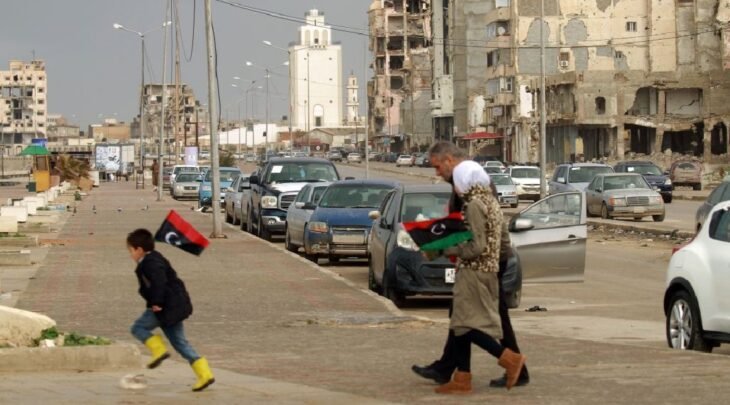

Over the past four months, the Tripoli-based Internal Security Agency (ISA) has arrested at least seven young men for peacefully exercising their right to freedom of expression and detained them arbitrarily with little or no contact with the outside world amid fears for their safety and wellbeing.
Other men and women, including those named in the video “confessions” and those who voiced their support for the seven arrested youth, have gone into hiding after being subjected to death threats and smear campaigns on social media.
“The ISA’s release of video ‘confessions’ is a flagrant violation of fair trial rights including the right not to self-incriminate. This unlawful and reckless move has incited hatred against a group of Libyans daring to peacefully express their views,” said Hussein Baoumi, Amnesty International’s Libya researcher.
“The Libyan authorities must stop the ISA’s vicious campaign against people who peacefully exercise their human rights. They must also ensure the immediate and unconditional release of all those detained in this campaign and the safety of those named in the ‘confessions’.
Crucially, the authorities must also launch investigations into the crimes under international law committed by the ISA, which include torture and enforced disappearances, with a view of bringing those responsible to justice.”
According to seven sources with direct knowledge of the events, the ISA arrested the seven young men between November and March 2022. Following their arrest, they were detained in the ISA’s Tripoli headquarters before being transferred to either Al-Jadida prison or the Mitiga prison, the latter of which is run by the Deterrence Apparatus for Combating Organized Crime and Terrorism — a militia notorious for its involvement in prolonged arbitrary detention, enforced disappearance and torture with total impunity.
The Libyan authorities must stop the ISA’s vicious campaign against people who peacefully exercise their human rights. – Hussein Baoumi, Amnesty International
Between December 2021 and March 2022, the ISA published videos of the seven men “confessing” under apparent duress to communicating with atheists, agnostics, Quranists, feminists, and secularists both online and in person. The men were forced to “confess” under coercive circumstances without the presence of lawyers.
The “confessions” were coupled with statements by the ISA, who congratulated themselves for combatting this “immoral” behavior and said the arrested men were opposed to Libyan and Islamic values. In the statement published on its Facebook account, the ISA said the detainees were conspiring to spread atheism, incite youth to travel outside Libya and promote “unorthodox” sexual practices in the name of freedom.
In the recorded “confessions”, detainees were coerced into labelling other activists and civil society workers both inside and outside Libya as “atheists, agnostics, Quranists, gays, lesbians or feminists.” Photos of some of those named, and other Libyan activists, were circulated on social media alongside calls for the ISA to arrest them for “undermining Libya’s morality”.
In at least one on-camera “confession”, a detainee also made references to communicating with international organizations, including Amnesty International.
In another video, a detainee names several diaspora Libyan activists and where they currently reside, as well as Libyan journalists living in Libya, and labels them as supportive of “atheism”.
One of the journalists named had criticized the ISA’s repressive campaign days before the video was published.
The ISA has also warned of the “immoral” influence that both local and international organizations have on society, accusing them of exploiting Libyan youth to spread “false ideas”. On 13 March, Tanweer, a Libyan organization that campaigns for LGBTI rights and women’s rights, announced its closure after its members were targeted by the ISA.
“The ISA must end its repression and vilification of Libyan civil society and international organizations. Its crackdown, carried out in the name of culture and religion, appears to be little more than a ploy to delegitimize human rights activists and silence calls to hold militias to account.
The Libyan authorities must protect activists and ensure that both national and international organizations are able to work freely and without fear of reprisals,” said Hussein Baoumi.
Background
Militia leader Lotfi al-Harari serves as leader of the Tripoli-based ISA, which is nominally under the control of the Prime Minister of the Government of National Unity and receives state funding.
Prior to his appointment initially as the deputy head of ISA in September 2020, Lotfi al-Harari was the deputy head of the Abu Salim Central Security Force militia, which has been involved in crimes under international law and other serious human rights violations since 2011, including arbitrary detention, torture and enforced disappearances.
Amnesty International has previously documented violations committed by ISA armed groups in eastern Libya, under the effective control of the Libyan Arab Armed Forces, and has since received evidence of increased cooperation between them and the Tripoli-based ISA.
In April 2021, Amnesty International documented the arrest of a Christian man in Tripoli by the ISA. He was accused of attempting to convert others to Christianity.
________________
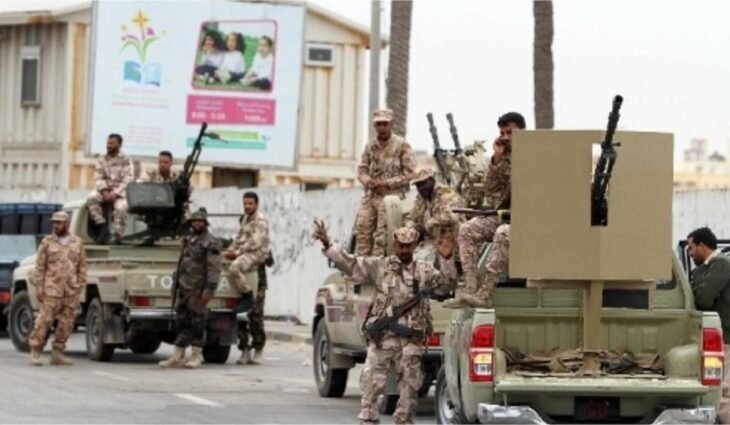

With the world focused on Ukraine, UN mediators are trying to avoid a political crisis degenerating into new violence in Libya, where Russia has long been a major player.
Bashagha came to power on the back of an alliance with eastern Libyan strongman Khalifa Haftar, Moscow’s main ally in Libya with backing from the Kremlin-linked Wagner paramilitary group.
But Dbeibah, who was installed last year as part of a United Nations-led peace process, has insisted he will only cede power to an elected administration.
Bashagha has ruled out using force to dislodge his rival, but the standoff has sparked fears of a return to violence in a country that has seen a decade of chaos since the 2011 revolt that toppled dictator Moamer Kadhafi.
The eastern-based House of Representatives appointed ex-interior minister Fathi Bashagha as premier in a challenge to the Tripoli-based administration Mahmud Turkia AFP/File
On March 10, pro-Bashagha armed groups deployed on the edges of the capital, raising fears of a confrontation that would end a fragile ceasefire in place since October 2020.
But Khaled al-Montasser, an international relations professor at the University of Tripoli, said Bashagha had placed a losing bet against Dbeibah.
Libyan armed forces troops loyal to the Tripoli-based government at a military graduation parade in Libya’s northwestern city of Misrata on March 3, 2022 Mahmud TURKIA AFP/File
“He thought that as long as he had the vote of confidence from parliament, he could easily get rid of the internationally-supported government,” said Montasser.
“It quickly became clear he was wrong.”
The UN, keen to avoid the collapse of a hard-won ceasefire in place for the past 17 months, has called for calm and offered to mediate in the standoff.
Last week, the permanent members of the UN Security Council avoided taking sides in the dispute — except Russia, which openly backed Bashagha.
Under-Secretary-General Rosemary DiCarlo warned in a briefing to the Security Council that “the Libyan executive is facing a crisis that could, if left unresolved, lead to instability and parallel governments in the country”.
Stephanie Williams, the world body’s top Libya official, has been urging the sides to accept mediation over a new constitutional basis for elections, a key bone of contention.
Libya’s interim Prime Minister Abdulhamid Dbeibah, on November 21, 2021 in the capital Tripoli Mahmud TURKIA AFP/File
She is set to meet representatives of the Tripoli-based High State Council in the Tunisian capital on Tuesday, but parliament has yet to respond publicly to her mediation offer or appoint its own delegates.
Analyst Faraj al-Dali told AFP that to avoid two rival administrations taking root, foreign actors should push for peaceful solutions and dialogue.
That would clearly show that “the international community and the United States don’t want to see war return in Libya, especially in the current context of the war between Russia and Ukraine”, he said.
US Ambassador Richard Norland, who met Bashagha in Tunis on Sunday, said “choosing one camp at the expense of the other is not an option”.
While diplomats are not openly discussing the possibility that Russia would push Haftar to install Bashagha in Tripoli by force, some believe he could use his control over oil export terminals as a weapon by halting shipments — at a sensitive time for European energy markets.
Pro-Haftar groups last week threatened to do just that, even as industrialised nations are pushing OPEC countries, including Libya, to boost production amid record high prices due to the conflict in Ukraine.
“Such a blockade would certainly serve Russia’s interests, as it would drive oil prices higher still,” said Libya analyst Wolfram Lacher.
Yet Bashagha, who has considerable backing from armed groups in Tripoli, could “theoretically” resort to force regardless of Russia’s next move, according to Montasser.
That would however “sign the death warrant” of his government, hurling it into “an armed conflict that could last months or even years”, he said.
The one hope for Libya could be that neither side has anything to gain — and both have much to lose — from a return to violence, he said. That could favour some form of political dialogue leading to a compromise.
_______________
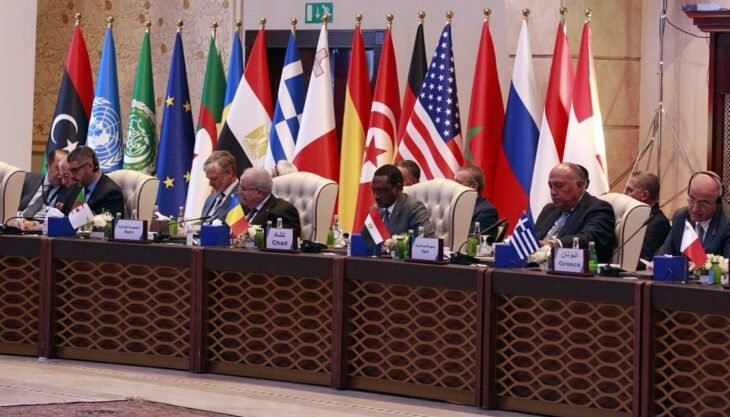

As the world witnesses the carnage in Ukraine, the determination by Ukrainians to defend and stand up for their country is both inspiring and humbling. The people of Libya understand this fight. Their country, too, has been torn apart as a proxy for disputes among outsiders.
Libya has faced a bloody decade of warfare but is now on the precipice of moving, finally, toward self-determination. The international community, particularly the United Nations, must do everything they can to encourage forward the momentum in Libya.
If they do so, the sentiment will signal that sovereignty and self-determination matter, especially when it’s under attack.
The Libyan people are hungry for progress rather than the stagnation they have suffered in the past several years. The United Nations helped set up a framework for elections and a period of transition afterward.
Unfortunately, Libyan leaders who committed to this process have ignored it and have focused instead on cementing their own power. Elections that were scheduled in December of last year were delayed. Leaders who were supposed to hand over power refuse to relinquish it.
Now, continued ambiguity has delayed the transition of authority from former Prime Minister Dabaiba to Fathi Bashagha, who was elected Prime Minister by the Libyan House of Representatives earlier this year. He has the support of a large segment of the Libyan people.
The Libyan people do not want this. They want unity and they want peace and progress. Prime Minister-designate Bashagha has gone to great lengths to ensure a transparent process that would give Libyans and the international community confidence in a new government. A roadmap was recently unveiled and Stephanie Williams, the representative of the United Nations Support Mission in Libya, praised it.
The role of the UN Mission is to offer technical support for the transition and elections. Therefore, it must make clear that forward progress is essential right now. If it miscalculates or is too reluctant to push forward, the result could be continued division. While the UN cannot technically choose sides, it should not have to because the difference between Debaiba and Bashagha is clear.
Former Prime Minister Dabaiba has had ample opportunity to lead Libya to the elections the Libyan people asked for and deserve. He delayed elections in December after breaking his pledge to not run for president. He now refuses to step aside despite the end to his mandate.

Just days ahead of the International Day of Happiness on March 20th, the United Nations has released its 2022 World Happiness Report to mark the day, with an analysis of the effects that the Covid pandemic have had on people’s quality of life between 2019 and 2021.
The brunt of the pandemic, coupled with a number of crises and other unfavorable factors, have had a great impact on the happiness of the citizens of the Arab region, especially Lebanon, which is going through the worst economic crisis in its modern history. In the report, the Mediterranean country ranked at the bottom of the list of Arab countries and the second-lowest amongst the least happy nations in the world after Afghanistan.
The United Nations report included 146 countries, and the level of happiness was determined by several indicators, most notably the average life expectancy of the population, GDP per capita, the prevalence of corruption, public trust, and generosity within society.
Lebanon is at the bottom of the ranking, while Egypt and Tunisia lag behind Iraq and Libya… Four Arab countries are among the top 50 countries in the World Happiness Report 2022. What’s your country’s ranking?
For the fifth year in row, Finland grabbed the top spot in the ranking, having the happiest population in the world. Its Scandinavian neighbors Denmark, Iceland, Sweden, and Norway soon followed. Germany, Canada, the United States, and the United Kingdom ranked from the spots of 14 to 17, respectively.
Meanwhile, the country ranked as the most unhappy nation in the world is Afghanistan, where the hardline Taliban movement took power last year.
In the Arab world, Bahrain topped the list of the happiest countries, ranking number 21 globally. It was followed by the UAE and Saudi Arabia in the 24th and 25th spots, respectively.
Despite their ongoing political decline and security and economic issues, Libya and Iraq achieved two relatively advanced positions, the 86th and the 107th, respectively. Whereas Tunisia and Egypt rank somewhat behind, at 120 and 129, respectively.
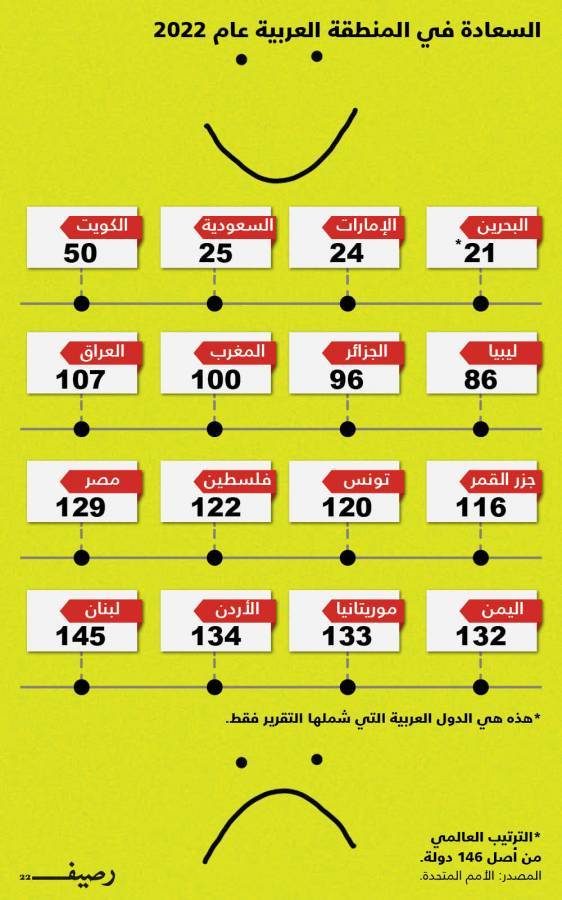
Yemen, Mauritania, Jordan, and Lebanon were at the bottom of the Arab ranking in terms of happiness, taking the 132, 133, 134 and 145 slots, respectively.
Out of 146 countries… 18 Arab countries figured in the World Happiness Report 2022, four in the lead and four among the most unhappy. Find what your country’s ranking is.
The United Nations has been observing the International Day of Happiness since 2013, in recognition of the relevance of happiness and well-being in the lives of people in every part of the world. The recent adoption of the 17 Sustainable Development Goals (SDGs) — which aim to end poverty, reduce inequality, and protect the planet — by the United Nations comes within a framework of efforts to achieve prosperity, well-being, and happiness for nations.
The United Nations General Assembly proclaimed March 20 as the International Day of Happiness, in UN resolution A/RES/66/281 of 12 July 2012.
The adoption of the decision came as a result of an initiative by Bhutan, a country that has recognized the supremacy of national happiness over national wealth and income since the early 1970s, and adopted the Gross National Happiness index, favoring it over the Gross Domestic Product.
 The Ukraine war will cast a dark shadow on the political, security, and economic situation in Libya should Russia use it as an excuse further to intervene.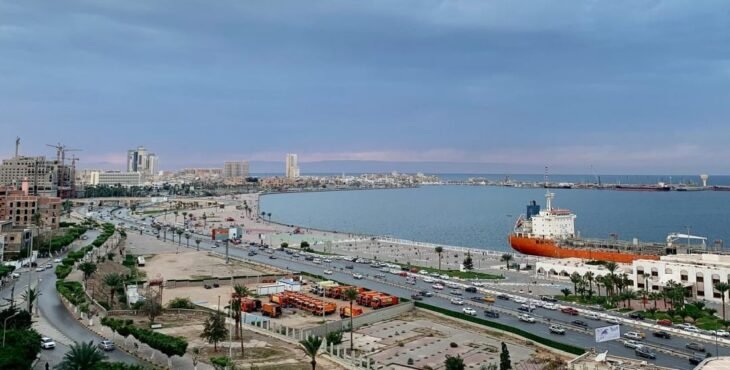
The question of whether the House’s confidence vote met legal requirements is a point of contention. In early February, Saleh, the House speaker, suggested ambiguously in meetings with diplomats that he would accept a vote result based on a simple majority (50 per cent plus one) of the members present. But the institution’s internal rules state that such a vote requires approval from 50 per cent plus one of all House members – not just those in attendance.
Saleh eventually agreed to hold the vote based on the total number of House members, but he never clarified how many members the House has and hence how many were needed for a quorum. Many of the original 200 members elected in 2014 either had resigned or were boycotting; some had been replaced, but the total number of deputies was nonetheless uncertain. Legislators gave the UN and foreign diplomats conflicting estimates of the remaining number of parliamentarians, ranging from 164 to 188. As a result, estimates of the quorum for a valid confidence vote varied between 82 and 94. Only after the vote took place did Saleh state that the quorum is 82.
The UN special adviser, Stephanie Williams, held a different view on the requirements for the vote. First, she agreed that a simple majority of House members suffices to pass a vote of confidence but added that the High State Council would also need to back the new government to ensure consensus between the rival assemblies (both of which were required in the 2015 UN-backed Libyan Political Agreement).
Secondly, she told the House speaker that in order for the new government to have the UN’s blessing, the confidence vote should be transparent and meet legal requirements, suggesting that the vote be broadcast on television and that members be required to visibly say the word “confidence” (thiqqa) aloud in order to register an affirmative vote for the new government. This procedure had been adopted for the vote of confidence in Dabaiba’s government and the UN wanted to replicate it to avoid the risk of a contested outcome.
The 1 March 2022 confidence vote wound up igniting controversies that had been on the back burner until then.
But the 1 March 2022 confidence vote wound up igniting controversies that had been on the back burner until then. That day, the House speaker counted 101 members in attendance, with 92 voting in favour. This number was close to or higher than the earlier quorum estimates. But video footage showed fewer attendees than 101, and only 88 names were read out during the roll call for the vote. The number of parliamentarians who pronounced the word thiqqa was unclear because they did not speak into microphones.
Things only got more confusing. On 2 March, parliament clarified that the discrepancy in numbers came about because eight lawmakers had dialled in from remote locations for security or health reasons, while others preferred to cast their votes anonymously after receiving threats from pro-Dabaiba armed groups. The House also changed the total number of those in favour of the new government to 96, adding to the confusion.
Bashagha said the ballot was “clear and transparent” and vowed to take office in Tripoli in “a peaceful manner”. The next day, however, Dabaiba called the vote a “coup” attempted through fraud. The UN also weighed in on the matter. On 2 March, the UN secretary-general’s spokesperson said the vote “fell short of the expected standards of transparency and procedures and included acts of intimidation prior to the session”.
Amid these developments and the ensuing controversies, only a few Libyans, primarily less prominent presidential candidates and civil society activists, are still publicly calling for simultaneous presidential and parliamentary elections as a matter of priority. Their hopes were dampened by the House’s sudden change of direction on the elections and its attempts to appoint a new government. They were also taken aback when foreign powers first seemed to offer support to the parliament’s plan to instal a new executive and then abruptly became ambivalent toward the electoral track, as discussed in Section IV below.
The Libyan group supporting installation of the Bashagha government and a constitutional track remains at loggerheads with the group that backs Dabaiba and proceeding with parliamentary elections. As noted, Saleh and his supporters in the House went ahead with swearing in Bashagha as prime minister. Dabaiba, still acting prime minister, denounced the move as illegitimate, saying he will hand over power to a new government only following elections.
Politicians in Misrata, hometown of both Bashagha and Dabaiba, say the city is divided. Both sides have the support of military factions. Misratan armed groups allied to Dabaiba on 2 March detained two of Bashagha’s cabinet ministers, who were subsequently released. Bashagha seems adamant about going to Tripoli and, on 10 March, reportedly moved toward the capital in a convoy of several hundred technical vehicles belonging to allied armed groups. The next day, they pulled back, however.
Whether the House is empowered to replace Dabaiba [as prime minister] was from the outset a matter of debate.
Whether the House is empowered to replace Dabaiba was from the outset a matter of debate. Saleh contends that the House has this prerogative, and that Dabaiba’s mandate expired on 24 December. According to this view, the election delay cannot justify extending the government’s life. Saleh appears to derive this position from his interpretation of the UN-backed roadmap.
Others, including pro-Haftar officials and anti-Dabaiba constituencies in western Libya, also support the prime minister’s removal. They allege that he violated his pledge not to stand in elections and misused public funds by allocating them to family members. The chief prosecutor, a member of this group, ordered the arrest of two cabinet ministers on fraud charges, respectively in late 2021 and January 2022. In an open letter addressed to the UN, 93 members of parliament stated that appointing a new government was not an end in itself, but rather a means of “stop[ping] the waste and great depletion of the state’s funds, which has exceeded traditional levels of corruption”, in addition to restoring confidence between rival factions and creating the conditions for elections to be held.
But Dabaiba’s supporters say the House has no right to sack the prime minister and appoint a new government, given that the interim executive was chosen through UN-backed negotiations. They say Saleh’s push to oust Dabaiba may have a personal element, as he lost out to the latter in those talks. They also say the animosity toward him is nothing but payback for his efforts to deny certain politicians access to state funds.
Dabaiba has a good working relationship with the head of the Central Bank of Libya, Siddiq El-Kebir, and has been able to tap into state funds for government operations and investments even in the absence of an approved budget law. (The House refused to pass such a law in April, following disputes with the prime minister on proposed investments he had to fund.) El-Kebir’s loyalty to Dabaiba is not set in stone, but legal problems surrounding the 1 March vote of confidence are likely to push the Bank’s governor to remain by the interim premier’s side for the time being. Without access to state funds, the new parliament-backed government will eventually have difficulty operating. If Bashagha manages to enter Tripoli and try governing from there, the Bank head could change his approach.
As the dispute has unfolded, divisions among foreign actors have mirrored Libya’s cleavages. From 2014 until 2019, several countries intervened heavily in Libya’s divided politics, with two de facto coalitions backing the opposing governments and military factions. The United Arab Emirates (UAE) and Egypt supported the east-based government and Haftar, while Turkey and Qatar stood with the government in Tripoli.
France, which had security cooperation programs with the UAE and Egypt and was angry with the Tripoli authorities over their alleged failure to curb trans-Mediterranean migration, was also embroiled – as, to a lesser extent, were other European countries and the U.S. (officially on Tripoli’s side, but at times greenlighting Haftar’s moves) and Russia (on Haftar’s side). Tensions among these external actors were high at times, but over the past two years, they have opened diplomatic channels to help manage the fragile stabilisation effort that is under way.
The de-escalation among foreign actors helped enable the rapprochement in Libya in 2020-2021.
The de-escalation among foreign actors helped enable the rapprochement in Libya in 2020-2021, and it has also contributed to these countries’ muted responses first to the disputes surrounding the failed elections and later to the quarrels over the legitimacy of the new parliament-backed government. For the moment, they appear to have little appetite for deepening the divisions or igniting renewed confrontation between their allies.
Nevertheless, foreign capitals have preferences for what ought to come next. Or rather, they had preferences prior to the controversial vote of confidence, but made quick recalculations after the vote.
Cairo had given its initial blessing to the House’s efforts to instal a new government, seemingly believing that Libya would benefit from an alliance among former enemies like Bashagha and Haftar. Beginning in early 2022, Egyptian officials actively supported reaching an understanding between the two and proceeding with the plan based on their deal.
Paris appeared to be following Cairo’s lead in supporting a deal between Haftar and Bashagha, in a U-turn from its lobbying in 2021, including among EU member states, for presidential and parliamentary elections.
Western diplomats say Doha also supported Bashagha’s bid, with some suggesting it is lending him financial support. Libyan politicians close to Qatar insist that it is staying neutral in the feud.
The same cannot be said for the UAE. Abu Dhabi previously bankrolled Haftar, also providing military equipment for his 2019 war on Tripoli. For now, however, it is pushing for Dabaiba to remain in power. Emirati officials oppose Bashagha due to his alleged responsibility in authorising the bombing of al-Jufra military base during the 2019 war, which killed a handful of Emirati pilots stationed there (allegedly to operate UAE-funded attack drones). The UAE also has financial ties to the Dabaiba family, which might provide another reason for its inclination toward the interim premier.
Russia and Turkey have been ambivalent about the way forward. Some Libyans suggest the two are not particularly supportive of the Haftar-Bashagha deal. That stance would be surprising in light of some historical facts. During the 2019-2020 war in Tripoli, Moscow was close to Haftar in opposition to Bashagha and Ankara was allied with Bashagha against Haftar. Private contractors from the Kremlin-backed Wagner Group have operated alongside Haftar-led forces, while Bashagha played a prominent role in securing Turkey’s military intervention on Tripoli’s side in 2020.
But it appears that Turkey reacted coldly to Bashagha’s overtures to Haftar. At the tail end of his first visit to the UAE since the two countries’ relations warmed in 2021, Turkish President Recep Tayyip Erdoğan said he prefers that Dabaiba stay in power until elections, echoing Abu Dhabi’s position.
For its part, the Russian foreign ministry blessed Bashagha’s bid for the premiership, but some Libyan politicians argue that, despite such statements, Russia remains wary of the deal, at least in part because Bashagha and Haftar seem to concur on the need to get rid of the Russian contractors as a way of obtaining U.S. support. The Kremlin’s confrontation with the West over Ukraine makes its strategy in Libya unpredictable.
The U.S. and European positions have been hard to discern. Generally speaking, Libya is not a priority file for Washington and its policy position is often the result of broader calculations vis-à-vis its other regional allies. Prior to December 2021, U.S. diplomats were vocal in their support of simultaneous presidential and parliamentary polls, at one point threatening to slap sanctions on spoilers. Today, Washington seems to prefer to watch politics play out on the ground. (Prior to the vote of confidence, however, Bashagha told Libyan interlocutors that he had Washington’s support. )
Other European countries, including Italy, also seem to be watching developments and preserving some flexibility. That said, a Western diplomat confirms that there was a general understanding among European capitals, Washington and London that should the Libyan parliament proceed with a vote of confidence that showed overwhelming support for a new executive and complied with the UN’s requirements, they would recognise it.
After the UN voiced reservations on the vote of confidence, no country, with the notable exception of Russia, officially recognised the new government.
But that did not happen. After the UN voiced reservations on the vote of confidence, no country, with the notable exception of Russia, officially recognised the new government. France, Germany, Italy, the United Kingdom and the U.S. issued a joint statement “taking note” of the UN’s position and calling on “all actors to refrain from actions that could undermine stability in Libya”.
Egypt and Saudi Arabia in a joint statement affirmed their support for a “Libyan-Libyan political process”, a reference to negotiations that had taken place between the House of Representatives and the High State Council, and reiterated their backing for the east-based legislative body. None made explicit mention of the parliament-backed prime minister, which was perceived to mean that they did not recognise his appointment. Tellingly, Bashagha’s request to hold a videoconference with foreign ambassadors accredited to Libya on 6 March fell through when he asked to be addressed as prime minister.
Foreign countries are thus not doing much to help find an exit to the Libyan impasse, but by taking a united stance in calling for negotiations and calling on Libyans to refrain from violence for now at least they are not making the situation worse. Their attitudes toward the issue may not become significantly clearer any time soon, as the Russian invasion of Ukraine seems certain to dominate their attention for some time to come.
All the manoeuvring of the last several months boils down to a single question: whether an elite pact is the best way forward for a country that emerged from years of civil war only eighteen months ago or whether elections should take precedence. There are legitimate arguments for both options. An elite deal, enshrining an alliance between rival factions, could provide a degree of stability and lessen the chances of a relapse into violence. Yet elections could mark a clean break from years of bad governance and restore legitimacy to Libya’s state institutions.
Both options also have drawbacks. An elite deal would empower actors with an interest in postponing elections indefinitely and anger the constituencies who are left out. Organising elections, on the other hand, would require resolving the many political and legal problems that led the elections commission to suspend the ballot in the first place. In addition, parties might contest election results, possibly giving rise to renewed violence.
Equally polarising are the arguments concerning the constitutional track. Its supporters say a new constitution is needed to define state institutions’ powers and responsibilities prior to elections. Its opponents argue that these negotiations will lead to a dead end and are just a ruse on the part of elites looking to stay in power.
The immediate priority should be to prevent institutional collapse.
While there is no obvious way forward, the stalemate is dangerous. The immediate priority should be to prevent institutional collapse. In practical terms, the parties need to kickstart political negotiations to avoid a scenario in which the rival governments once again turn the country into a patchwork of territories under the control of one administration or the other. In that scenario, the parties could re-enter a tug of war over the control of state institutions, especially the National Oil Corporation and the Central Bank, which respectively hold the key to generating and distributing state funds to the population.
For now, the House of Representatives, which backs the Bashagha government, has refused to take part in negotiations with the rival Tripoli-based High State Council – notwithstanding the offer from the UN special adviser, Stephanie Williams, to convene such talks. Only the High State Council has replied favourably. House members argue that as far as they are concerned, the new government is legitimate and the parliament has already endorsed a new political roadmap setting out procedures to review the constitution draft prior to elections.
For them, there is no need to start negotiations anew. They are banking on the belief that Bashagha will be able to enter Tripoli, persuading armed groups in the capital to side with him and the Dabaiba government to eventually leave. Should the situation pan out this way, which at the moment seems highly improbable, there is no doubt that there will be even fewer incentives for this camp to enter negotiations.
But the situation could well evolve in a different direction – either because of a deadlock between the two governments inside Tripoli or because the Bashagha-led government and its military allies prove unable to enter the capital or remain without international recognition and access to Central Bank funds.
In that case, the Bashagha group’s calculations might change, and negotiations might seem more appealing. Diplomats are hopeful that this scenario may be in the offing. They say they are already receiving private messages from Bashagha, and House Speaker Saleh, signalling willingness to embark on talks. These reports contrast with the parliament’s official statement on the matter.
The question then becomes what the talks should be about. For now, foreign stakeholders are ambiguous about the matter. The UN special adviser offered to mediate discussions of how to reach a “constitutional basis” for holding elections as soon as possible. This wording could imply anything from a full-fledged constitutional track aimed at reaching a final, approved draft constitution, after which elections will be held, to simply drafting a temporary legal framework to allow a ballot to take place.
On top of these options, diplomats suggest that some Libyans are still interested in trying to forge an elite deal on a new government. They believe that by changing some of the ministers in Bashagha’s proposed cabinet and opening up the deal to those supporting the Tripoli-based government, they might stand a chance of securing a sufficiently broad level of support for a grand bargain of sorts.
Consultations between rival factions aimed at forging another elite deal on a new cabinet at this stage should be given a chance.
Consultations between rival factions aimed at forging another elite deal on a new cabinet at this stage should be given a chance, even if they are highly unlikely to bear fruit. This latest attempt to instal a new government has deepened divisions between supporters of the rival prime ministers and the respective assemblies backing them, so the likelihood of their representatives agreeing on a new power-sharing agreement is low.
The UN special adviser could in principle encourage these talks to take place, but she is unlikely to host them given the transactional nature of forming a new government in Libya. That said, should a new power-sharing agreement come about within the next few weeks and should rival factions commit to supporting a new government, it is essential that the parliamentary vote of confidence of the new executive be transparent and in accordance with legal procedures. A rerun of the problems attending the 1 March vote would mar the outcome’s legitimacy and serve no one.
Should these efforts fail, the next option would be to open UN-backed negotiations on a new electoral roadmap. The UN can and is willing to host these. On the issue of which elections should be held and in what sequence, the debate is wide open, as public opinion and political factions remain polarised on the matter.
That said, some lessons learned from the problems of the past months can be distilled. The first is that Libyan politics remains dominated by a winner-take-all mentality and legal controversies over presidential candidates are unlikely to be resolved in a manner acceptable to all factions. As a result, a presidential ballot remains a hazardous choice that risks hitting a dead end, yet again. The second lesson is that embarking on a review of the draft constitution and going to a referendum could very well turn into an endless process that merely cements the status quo rather than enabling elections.
A more logical choice, albeit not currently the most popular one, might be in the first instance to opt for parliamentary elections to replace the legislature elected in 2014 and allow this new body to appoint a new government. In such an arrangement, the new parliament would also be tasked with deciding how to clear the pending hurdles for the draft constitution and subsequent presidential ballot, if the approved constitution so allows.
As mentioned, this option has important drawbacks. Libyans by and large see stand-alone parliamentary elections as a concession to Islamists whom they fear will rob them of their legitimate right to elect a president. Current legislators are also likely to oppose this path because it means they will lose their seats. Egyptian officials, who have actively opposed this option in the past, are also likely to lobby external actors and their Libyan allies to stage a boycott.
In that vein, they will need to vow to hold a presidential election in a second stage after legislative contests. They would also need to persuade the parliament to cooperate in order to secure passage of parliamentary election laws. Should the latter prove impossible, they will need to find ways either to circumvent the legislature or to persuade foreign partners to pressure their friends in the House to work toward this roadmap.
The UN and Western chanceries, which have thus far been under the influence of Egypt’s de facto veto on this course of action, should at the very least consider the option of parliamentary elections in greater detail than they have thus far to gauge its feasibility. While there is no guarantee of its success, this option does contain at least some contours of a workable roadmap toward elections. But whatever option Libyan negotiators choose, it is essential that foreign capitals remain united in supporting the way forward.
A return to war appears to be off the table for now, in large part because foreign backers of Libya’s rival factions have stepped back from the conflict and are distracted by Ukraine, and because Libyans themselves appear to be averse to more fighting. But this moment of calm could prove evanescent. Growing political rivalries throughout Libya could prompt armed groups to mobilise against the Dabaiba government in favour of a replacement. Even if they pull off that move without bloodshed, a legal and political battle would follow, with both Dabaiba and his putative successor claiming the premiership and vying for international recognition.
Rather than installing a new government at all costs – at the risk of dangerously deepening a nationwide rift and splitting the country once again in two – finding a consensual way forward should be the priority for all concerned. There is no right or wrong way out of Libya’s political impasse. Both of the main options – a new power-sharing deal and an electoral roadmap – deserve consideration. Negotiations to flesh out either a new interim government with broad consensus and uncontested parliamentary endorsement or a new and workable roadmap to elections would, without a doubt, be the best path for preserving a peaceful, united Libya.
Representatives endorsed a new political roadmap that charts a path toward a constitutional referendum followed by elections. Called Constitutional Amendment Number 12 and approved by 126 of the 148 House members in Tobruk on 10 February 2022, the plan is politically divisive and legally controversial. A close reading of this document reveals that the steps outlined therein could lead to an open-ended political transition that would never see elections.
Among Libyan politicians, opinion about the plan is split roughly in two. At first, the roadmap committees of the House and its Tripoli-based rival, the High State Council, agreed on the plan, but the majority of State Council members subsequently voted against it. House members, for their part, continue to consider it valid.
According to the roadmap, the House and State Council will first task a Committee of 24 experts to amend the 2017 draft constitution within 45 days. If the Committee of 24 does not agree on the amendments, the roadmap envisages the creation of a new committee appointed by the two assemblies to draft a temporary constitutional framework and election laws.
On the other hand, if at least two thirds of the Committee’s members agree on the proposed amendments, the new draft will be put to a popular referendum prior to elections. If it wins popular approval, the House will adopt it and plan elections according to the format outlined by the new constitution. That format could include legislative and presidential elections, and possibly also a ballot for a second chamber, the Senate.
If the new draft fails to be approved in the referendum, the Constitutional Drafting Assembly – a 55-member body elected in 2014 – will step in in lieu of the Committee of 24 to review the new draft (already amended by the Committee of 24) before putting it to a second referendum. If the new changes still do not yield popular approval, the roadmap states that the two assemblies themselves will draft a temporary legal framework and election laws.
Crisis Group has identified eight red flags in the roadmap, highlighting points at which the process could fail.
Red flag #1: The plan states that the referendum will be approved if 50 per cent of voters plus one in each of Libya’s three historical regions (Tripolitania in the west, Cyrenaica in the east and Fezzan in the south) support the draft constitution. As of yet, however, there is no law charting the boundaries of these three regions. As such, these are merely aspirational geographical areas rather than proper administrative territories sanctioned by law. Drawing these boundaries is politically sensitive; should lawmakers attempt it, the resulting tensions could postpone the electoral process indefinitely.
Red flag #2: The roadmap states that the High National Elections Commission needs to be “reconstituted” before a referendum or elections are held. This clause is also controversial. For example, just the appointment of a new Commission board is likely to spark tensions, because there is no consensus on what body is in charge of the Commission. Whether the House must appoint the board alone, or in agreement with the State Council (in accordance with a 2015 UN-backed agreement) has been a source of controversy since 2015.
Red flag #3: The decision to mandate the Constitution Drafting Assembly to conduct the second review should the first referendum not pass poses major problems. The Assembly was elected by popular mandate in 2014; it drafted and approved a constitution in 2017, which it wanted put to a referendum, but the plebiscite never took place amid political controversies. The Assembly has not reconvened since, nor has it issued a statement on its involvement in the new roadmap; some of its members have said they oppose the new plan.
Red flag #4: The roadmap does not state what the approval criteria are for the Constitution Drafting Assembly’s amendments: will they require a simple majority or a two-thirds super-majority of the Assembly’s 55 members? Nor does the roadmap indicate whether other criteria should apply.
Red flag #5: It is unclear what should happen after the constitution is approved in a popular referendum. There are no timelines for the House to adopt new election laws based on the approved constitution, or to hold elections. This process could become open-ended.
Red flag #6: If the Committee of 24 fails to meet the quorum needed to amend the draft constitution (seventeen votes), the roadmap states that the House and State Council must form another committee to draft a temporary constitutional framework and election laws. But it does not indicate how this new committee should be formed, or what the rules for the approval of these laws are.
Red flag #7: Should the Constitution Drafting Assembly fail to agree on amendments, the roadmap vaguely states that the House and State Council will adopt both a temporary constitutional framework and election laws. It does not clarify if the two houses should appoint another committee or if, as a literal reading of the text would suggest, the two houses would need to adopt a temporary constitutional framework and election laws themselves. In both cases, the vague wording could make the process open-ended.
Red flag #8: There are no timelines for the House’s adoption of election laws or to hold the elections if the popular referendum fails but the two rival assemblies agree at least on a temporary constitutional framework to govern elections.
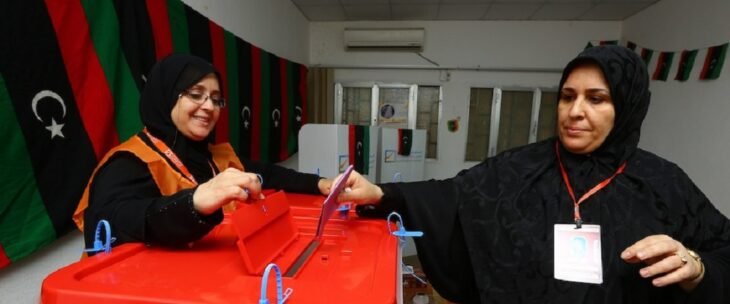
Alessandra Bajec

Since the Libyan electoral process failed to see the light in December, the war-torn country appears to be sliding back to division with a looming return to parallel governments while the UN presses on Libyan parties to focus on holding elections. Read More
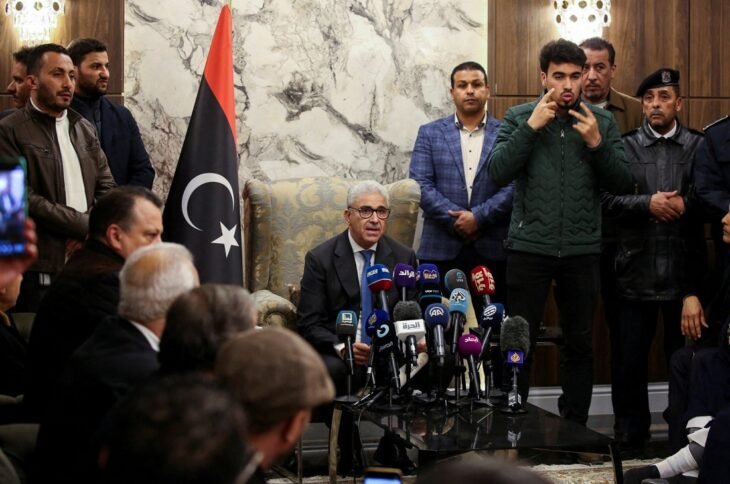
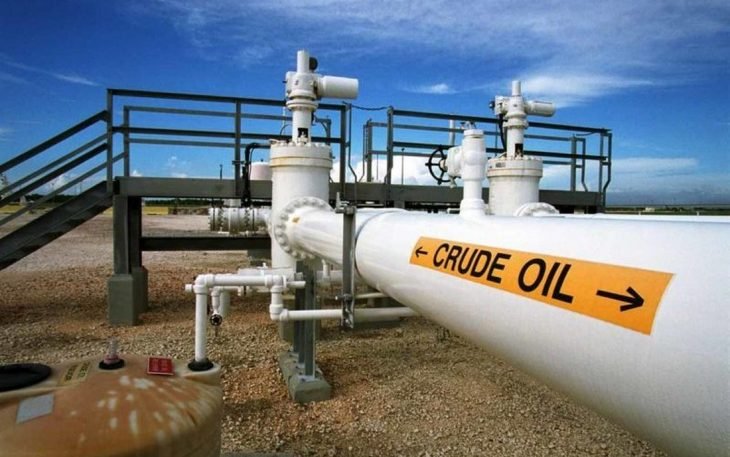
Ahmed Elumami and Angus Mcdowall

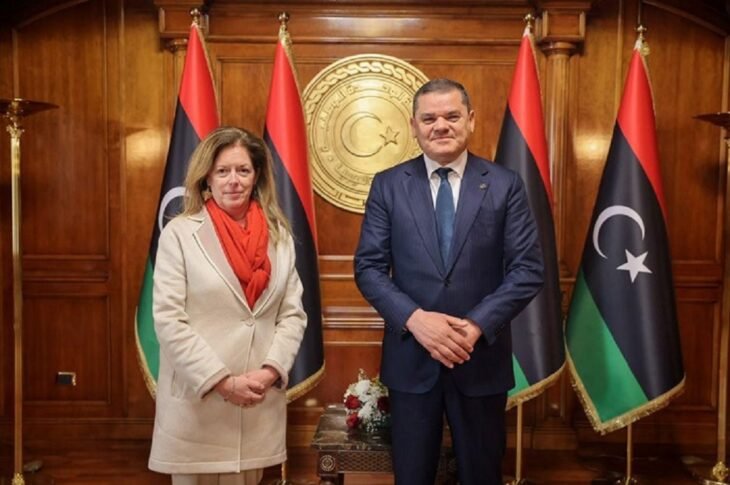
Over the last two weeks, the United Nations Special Advisor on Libya, Stephanie Williams, has been under sustained attacks across social media. Williams, who returned to Libya last December, is neither impressed nor responding.
The current stalemate is, as usual, the outcome of disagreements between Libya’s House of Representatives (HoR) and Higher Council of State (HCS), which led to the indefinite postponement of the 24 December elections. Both institutions are trying to stay in power, despite their failure.
Suddenly, and surprisingly, both chambers agreed and launched a new roadmap that called for the formation of a new government and for organising elections no later than 14 months—meaning no elections in 2022.
While this sounded promising, Williams knew it was only false hope and both institutions would resort to their old tactics of obstruction and delay. With years of experience behind her, she understands every political manoeuvre by Libya’s corrupt elite for what it really means.
She believes Libyans are on her side, based on the fact that three million citizens have registered to vote and 2.8 million have already collected their voting cards, ready to cast their ballots despite hurdles standing in their way. She still enjoys the support of major powers like the United States, France, Italy and the United Kingdom, beside the full trust of her boss,Antonio Guterres. However, the Russian invasion of Ukraine means the UN Security Council is unlikely to agree to anything of substance on Libya, despite promising her full cooperation when she visited Moscow last January.
Mrs. Williams – or the Iron Lady, as some politicians call her -told MEMO, that she feared an “impasse” between HoR and HCS is forthcoming. This is what happened when HCS announced that it does not agree with the election of Fathi Bashaga as the new Prime Minister, to replace caretaker premier, Abdul Hamid Dbeibeh. Not only that, but the roadmap adopted by both houses is conflicting with the roadmap adopted last year and approved by the UN. The issueis: the UN plan envisioned elections by June this year, at the latest, while the newly agreed document implies no elections before the end of 14 months period.
HoR and HCS have agreed to work together on a constitutional base; how that will happen and, most importantly, when, remains unclear. The constitutional base has long been a contentious issue between the two sides. The matter was not solved in previous talks and had not been settled even in Geneva when Stephanie led talks last year.
On 4 March, Mrs Williams asked both houses to name six members each, to work together under her supervision to develop the required constitutional base but, so far, the committee has not yet started work – if it will ever do so. She told MEMO that the ideal situation is to have such a committee establish a “sound constitutional basis” to enable the holding of elections as soon as possible. But, again, there are no guarantees that this will happen any time soon. Williams wanted the committee to finalise its work before April in order to have the elections organised in June, but this looks increasingly unrealistic, thanks to endless arguments between HoR and HCS.
Mrs Williams is also unclear about how to handle the fact that HoR has already sworn in a new cabinet led by Fathi Bashaga, while the outgoing Prime Minister is still refusing to handover power. When asked why she does not cut short the constitutional debate by simply calling for a referendum on the draft constitution, still pending since 2017, she said that this was not up to “the UN”, but a Libyan decision to be made by “relevant institutions”, who rarely agree on anything.
Despite all this, and the accusations against her – that she is deliberately stalling and delaying – Mrs Williams still thinks that Libyans, not the UN, should “own and lead” the political process and her role, and that of the UN, is only to help facilitate talks through “good offices” when the parties hit a dead-end.
Asked about the possibility of reviving the Libyan Political Dialogue Form (LPDF) to continue its work, she said “consultation” with the 74-strong group is ongoing, but refused to confirm if it will convene. Some LPDF members see the group as irrelevant now and that it needs reconstruction to gain new momentum and legitimacy. Stephanie Williams formed the LPDF to act as a mini parliament, almost 2 years ago, in order to circumvent the usual disagreements between HoR and HCS. It succeeded in electing Prime Minister Debeibeh, forming a new presidential council and setting the country on the path to the 24 December elections. However, LPDF failed to agree on a constitutional base for elections.
LPDF was also tainted by bribery allegations that helped the outgoing Prime Minister gain power. Despite being investigated by the UN’s Panel of Experts, the issue is still outstanding.
Many think the UN was not transparent in handling these serious accusations and this led to the current impasse, but Williams disagrees. She insisted that she took the matter “seriously” by referring it to the Panel of Experts and the Libyan Public Prosecutor. She seems to blame LPDF members for failing to give their testimonies to Libya’s Public Prosecutor to investigate and, at least one LPDF member, Zahra Langhi, has confirmed this.
Clearly, Williams is hitting a roadblock, particularly in relation to the new government. MEMO asked her if the UN recognises Bashaga’s government. She said that the UN is not in the business of “recognising or endorsing governments” because this is a “sovereign matter” for Libyans.
To Salem Belgassem, a Political Sciences Professor at the University of Benghazi, this is a “diplomatic way” of saying that the UN does not recognise the new government which is yet to arrive in the capital, Tripoli.
Major powers, including the US, UK, France, Germany and Italy have taken the same vague position. In their joint statement, published on the US Embassy In Libya‘s website, they expressed their “concern” about the threat of violence, while warning about the potential for violence and threatening sanctions against perpetrators. They reiterated their support for the UN and Williams but did not mention the new government.
After meeting Bashaga, on 12 March in Tunisia, the US Ambassador to Libya, Richard Norland, tweeted, commanding “HoR-designated PM Fathi Bashagha” while noting his interest in pursuing urgent “UN-facilitated negotiations” with Dbeibeh to ease him out of office. The tweet called for a peaceful approach to differences but did not side with Bashaga.
Despite all the setbacks and the shortcomings, Stephanie Williams is not yet giving up on Libya. She feels responsible for helping the Libyan people to decide their future.
_____________
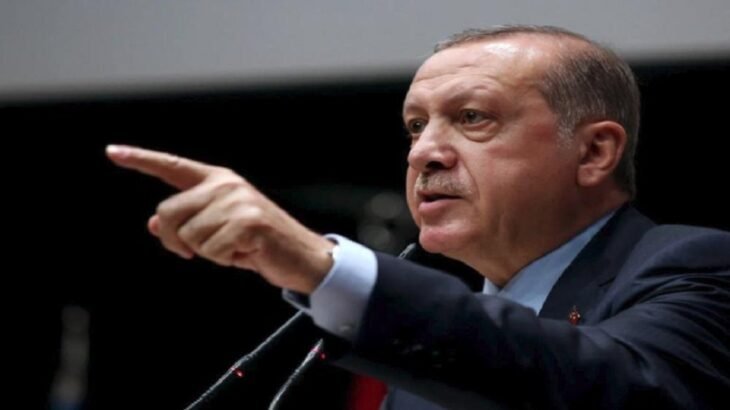
Fehim Tastekin

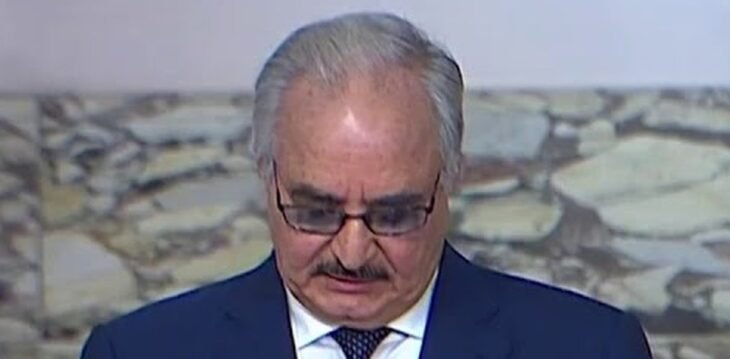
Umar A Farooq

A federal court in the US state of Virginia issued an order to continue the case, which was put on pause in November after federal judge Leonie M Brinkema ruled that it was “too closely intertwined” with the December elections in Libya.
In the November court order, Brinkema described how another judge presiding over Haftar’s cases was sent an email outside of proper legal channels by an individual claiming to represent Libya’s Government of National Unity (GNU).
Mark Zaid, an attorney for the families that are suing Haftar, said the next step involved taking a deposition, which would require the Libyan commander to answer questions about alleged war crimes, torture, and extrajudicial killings.
“The court allowing our lawsuit to proceed forward means we’re one step closer to accountability. There’s no stopping this litigation now,” Zaid told Middle East Eye.
In 2019, he led a failed assault on Libya’s internationally recognised government in Tripoli but was pushed back following Turkish military intervention.
His forces were accused of shelling civilian homes and either overseeing or directing the torture and execution of prisoners.
Following a ceasefire in October 2020 and the establishment of a unity government, the country was headed towards elections in December 2021. However, the polls were postponed and Libya continues to remain divided politically.
The lawsuits were first filed in September 2020 by two relatives of Haftar’s alleged victims, Ali Abdalla Hamza and Salimah Jibreel, who say that the commander of the self-styled Libyan National Army (LNA) is responsible for the deaths of their family members.
The lawsuit focuses on the LNA’s siege of Benghazi in 2016, particularly the district of Ganfouda, where repeated air strikes by Haftar’s forces pinned down hundreds of civilians.
Hamza says he had to flee his home in the area after it was bombarded and looted. His wife, two brothers and three sisters took shelter in an unoccupied apartment in a Ganfouda suburb where they ate tree bark and grass and drank water from puddles in order to survive.
The plaintiffs sued Haftar under the Torture Victim Protection Act of 1991, which allows non-US citizens to seek compensation from individuals who, acting in an official capacity for any foreign nation, allegedly committed torture or extrajudicial killing.
According to an investigation by the Wall Street Journal, Haftar has extensive property holdings in Virginia, including a 5,600 square-foot house in Great Falls, Fairfax County, valued at nearly $2.5m; a condo in Falls Church, Virginia; a three-bedroom ranch; and a $700,000 horse farm in the small town of Boyce.
***
Umar Farooq is a journalist based in Washington DC. He writes about social and political issues facing Muslim communities in the US, as well as foreign policy related to the Middle East.
_____________

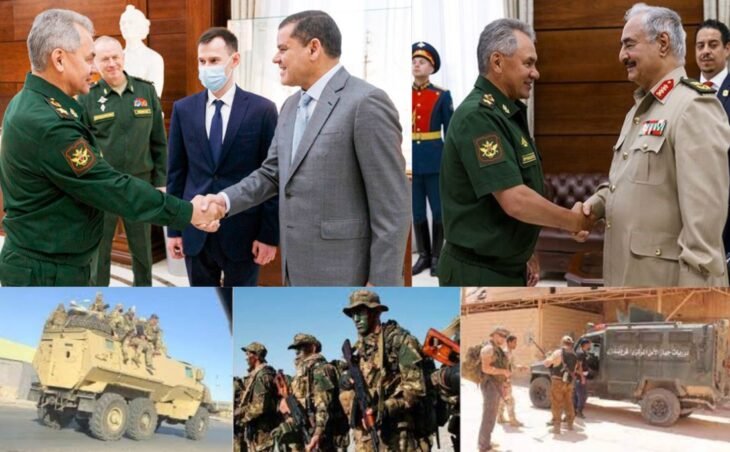
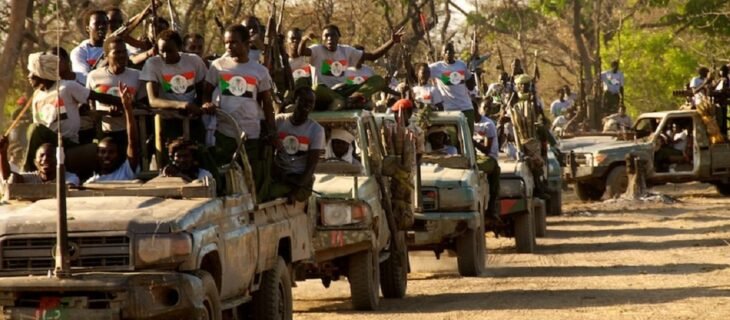
The Libyan American Alliance (LAA) zealously continues preparing the cases against Haftar, with ongoing coordination with prominent law schools and distinguished international legal institutions in this exceptionally monumental moment in the history of international, American, and humanitarian litigation. Distinguished lawyers passionate about human rights, including the former US Ambassador-at-Large for War Crimes Issues, Stephen Rapp, and former US Ambassador to the UN Human Rights Council, Keith Harper, have voiced their interest and support in the lawsuit against Haftar. LAA condemns the violence and terror generated by Haftar and the LNA, and continues to pursue equal justice and accountability for the Libyan people every day.


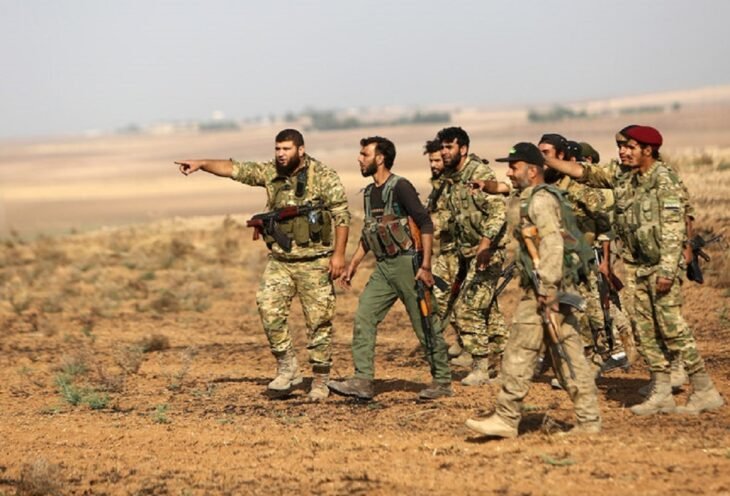
Russia has withdrawn hundreds of allied Syrian fighters from Libya, as reports emerge of the Kremlin pulling out of some of its operations in the Middle East amid its ongoing invasion of Ukraine. Read More
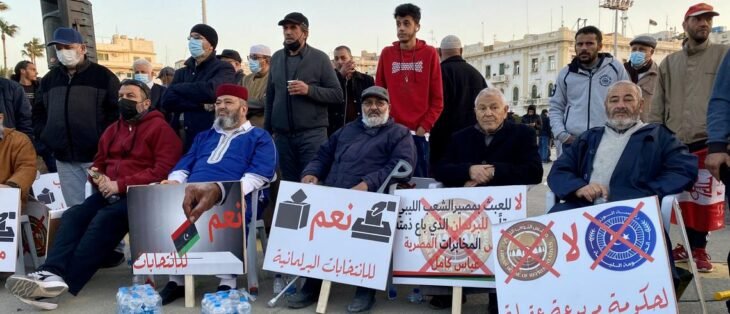

Libya’s political deadlock and recent crises have been neglected by the world following what is happening in Ukraine. This is what is currently taking place in the war torn nation.
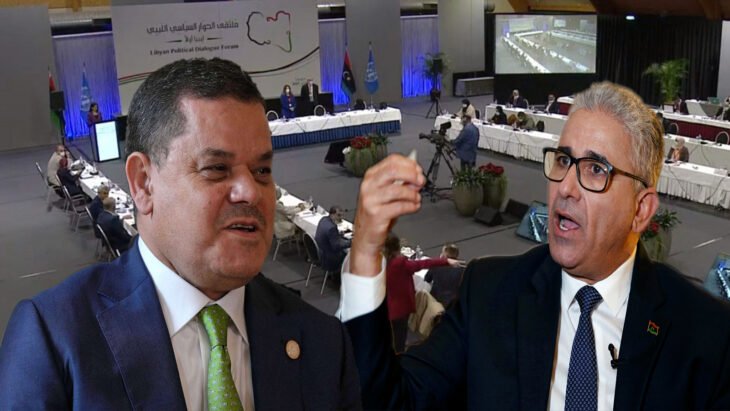
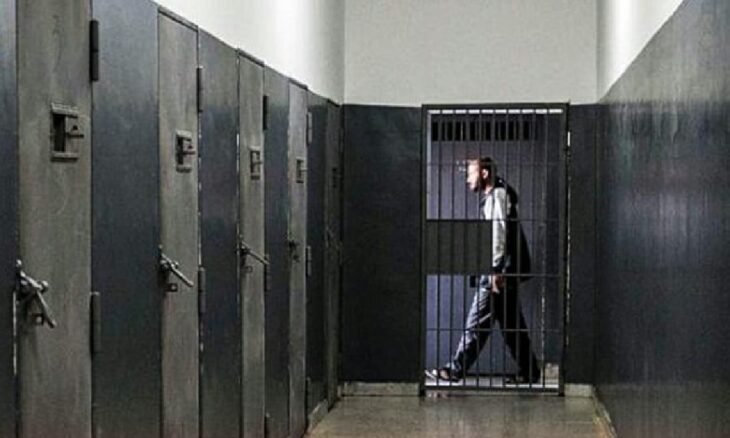
Targeted Unlawfully by Eastern Armed Groups
 An armed group associated with the Libyan Arab Armed Forces (LAAF) arbitrarily arrested at least 50 residents of the city of Derna following a January 16, 2022, prison escape, Human Rights Watch said today. Read More
After postponing presidential elections scheduled for December, Libya finds itself in a political gridlock that could easily spark more armed clashes.
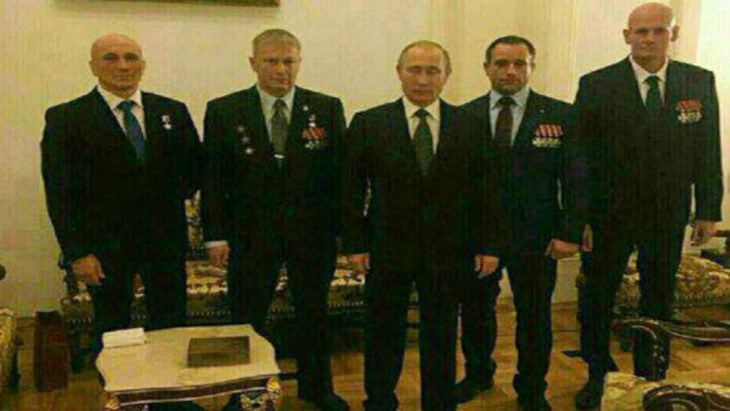
Kim Ghattas

One can trace a straight line from the overthrow of Libya’s dictator Muammar Gaddafi to today’s devastating war in Ukraine.
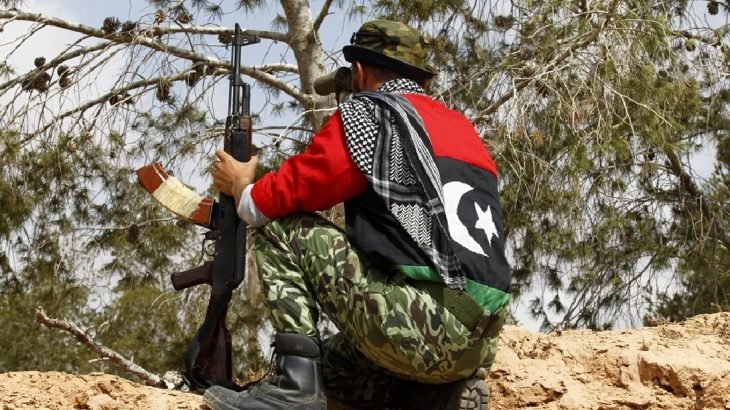

Libya’s parliament has approved a new government but the incumbent prime minister rejected the vote and vowed not to cede power, raising the risk of fighting among armed factions.
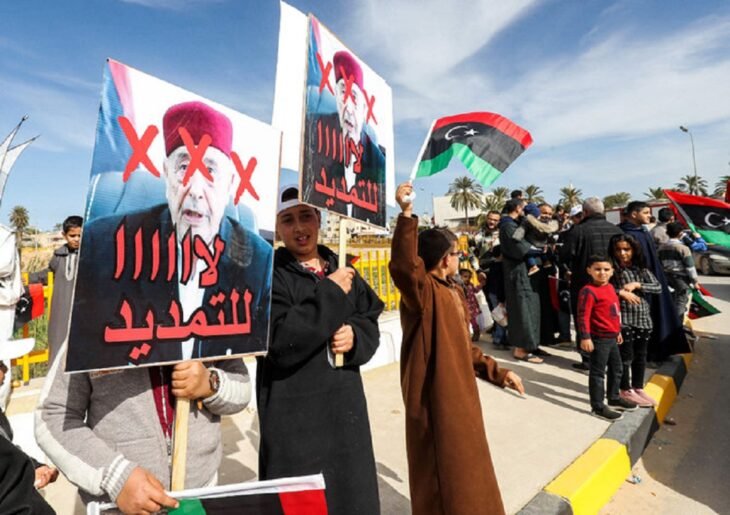
HAFED AL-GHWELL
Before the elections debacle in December last year, it was fairly evident that the prevailing interest among Libya’s political elite was sidelining the will of a plurality of Libyans who sought to choose their representatives in hotly contested polls. Since Muammar Qaddafi’s ouster in 2011, Libya has had at least nine governments and two civil wars but no presidential vote. Read More
Libya is facing political turmoil again. On February 10, the country’s parliament, the House of Representatives, voted to sack the current Prime Minister Abdulhamed Dbeiba and appoint Fathi Bashaga, the interior minister in the previous government and main architect of the resistance against General Khalifa Haftar’s attack on Tripoli in 2019. Read More