By Ulf Laessing

Inflation started reducing the value of Libyan assistant professor Seham Saleh’s state-paid earnings. So, she started selling drawings over the internet to help pay bills. Read More

By Ulf Laessing
Inflation started reducing the value of Libyan assistant professor Seham Saleh’s state-paid earnings. So, she started selling drawings over the internet to help pay bills. Read More
By Emre Gönen
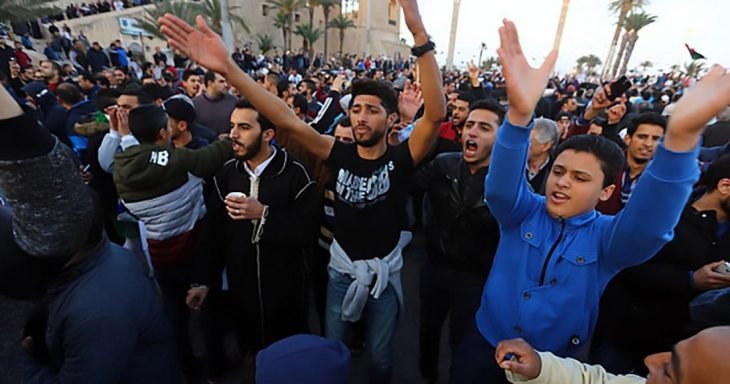
 It has almost become customary to start an article on Libya by saying, “once again the country is at war.” It is a fact that since 2011, the fall of Gadhafi, the dictator of the country, no central authority has been established. Read More

By Hülya Schenk
 Several international players, including Turkey, are involved in the ongoing civil war in Libya. Ankara supports the internationally recognized Libyan unity government. Read More

The dominant role of the Libyan National Army
By Noria Research
 This report is based on interviews conducted with a range of actors in Libya, Tunis, Cairo and Istanbul, including businessmen, administrators, victims of armed groups, LNA dissidents, local notables and others. Read More
By Metin Gurcan
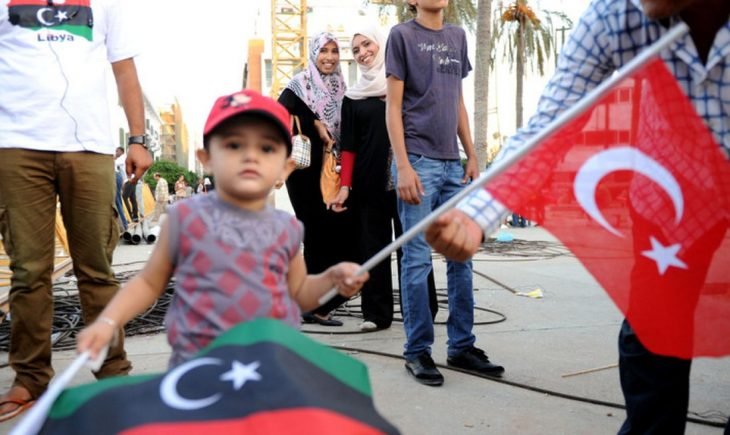
 Turkey isn’t hesitating to escalate the situation in Libya even though the Turkish government is already under pressure on multiple fronts. Why? Read More

By Jazia Gibril & Marwan Tashani

 The father, accompanied by his daughter, 13 or perhaps a little older, enters the District Court near his home and heads to the office of the judge of urgent and non-contentious matters. Read More
The dominant role of the Libyan National Army
By Noria Research
This report is based on interviews conducted with a range of actors in Libya, Tunis, Cairo and Istanbul, including businessmen, administrators, victims of armed groups, LNA dissidents, local notables and others. Read More

By Mustafa Dalaa

The capture of strategic town Gharyan by government forces ends Haftar’s march to Tripoli. Read More

By Heather Murdock
 The day after the battle for the Libyan town of Gharyan, burnt-out cars were flipped on the side of the highway and only a few shop owners opened their doors to see if they could do business. Read More

By Ulf Laessing & Ahmed Elumami
While Libya’s oil lies at the heart of three months of fighting over Tripoli and years of power struggles before that, water is becoming a far bigger concern for its people. Read More
The dominant role of the Libyan National Army
By Noria Research
This report is based on interviews conducted with a range of actors in Libya, Tunis, Cairo and Istanbul, including businessmen, administrators, victims of armed groups, LNA dissidents, local notables and others. Read More

By Ylenia Gostoli
 Calls to shut migrant detention centres in Libya gather pace after deadly air raid in Tripoli facility. Read More

 The UAE is accused of supplying fighters trying to seize Tripoli with anti-tank missiles made in the US. How did US-made anti-tank missiles sold to the United Arab Emirates (UAE) end up on the battlefield in Libya? Read More

By Jonathan Fenton-Harvey
 Initially buoyed with supreme levels of confidence, Khalifa Haftar has since struggled in his campaign to capture Libya’s capital Tripoli, with the UN-backed Government of National Accord (GNA) managing to repel his advances. Read More
The dominant role of the Libyan National Army
By Noria Research
This report is based on interviews conducted with a range of actors in Libya, Tunis, Cairo and Istanbul, including businessmen, administrators, victims of armed groups, LNA dissidents, local notables and others. Read More

By Tarek Megeris

This paper examines recent developments in the conflict and analyses the positions and interests of the many non-European foreign states that have intervened in Libya. Read More
The dominant role of the Libyan National Army
By Noria Research
This report is based on interviews conducted with a range of actors in Libya, Tunis, Cairo and Istanbul, including businessmen, administrators, victims of armed groups, LNA dissidents, local notables and others.
Some interviews were conducted remotely. The report also draws from information contained in official documents, some of which are confidential and are not sourced in this paper. Read More
By Tarek Megeris
This paper examines recent developments in the conflict and analyses the positions and interests of the many non-European foreign states that have intervened in Libya. Read More

Special Case (Libya)
 Libya is a Special Case for the fourth consecutive year. The Libyan Government of National Accord (GNA) struggled to govern large swaths of Libyan territory, as it did not exercise control in several parts of the country. Read More

By Ferhat Polat
 The latest territorial loss has put militia leader Khalifa Haftar in a weak position, and it is the right time for the international community to bring him to the negotiating table to help end the power struggle in Libya. Read More

 Government of National Accord has wrested Gharyan from Khalifa Haftar’s forces, capturing troops. Read More

 Lawsuit claims Haftar is responsible for ‘wrongful death’ of two Libyan men killed in offensive near Tripoli. Read More

By Jack Detsch
 The Donald Trump administration is seeing a “small” resurgence in the Islamic State’s numbers in Libya since strongman Khalifa Hifter began a bloody march on the capital Tripoli more than two months ago, the Pentagon’s second-ranking military official said. Read More

By Kirill Semenov
 On June 16, Fayez al-Sarraj, head of the Government of National Accord, proposed a plan to resolve Libya’s current crisis. Read More

100km from Tripoli, Gharyan was primary base for Harfar’s offensive against government in Tripoli. Read More

By Francesca Mannocchi
 As foreign arms fuel the conflict for control of Libya’s western capital, the mood in Tripoli is one of defiance – and resignation. Read More

Special Case (Libya)
Libya is a Special Case for the fourth consecutive year. The Libyan Government of National Accord (GNA) struggled to govern large swaths of Libyan territory, as it did not exercise control in several parts of the country. Read More

 Libya has been identified as a priority country for this work given the unstable security situation and the extensive fragmentation in the country in the years since the overthrow of Gaddafi, all of which has been shown to play out in a burgeoning online environment. Read More
By Francesca Mannocchi
As foreign arms fuel the conflict for control of Libya’s western capital, the mood in Tripoli is one of defiance – and resignation. Read More

 In a long and exclusive interview with the eastern-based The Libyan Address Journal, Khalifa Hafter, commander of the mainly eastern-based Libyan National Army (LNA), put forward his vision for Libya and repeated his motivation for launching his military attack on Tripoli on 4 April. Read More

By Adel Suleiman
 The Middle East is in so much disorder that chaos barely disappears in one place before it reappears in another. It is as if a hidden fiendish hand is controlling the destruction. Furthermore, it so happens that the flames only burn Arabs in the region and exhaust Arab resources. Read More

By Alex MacDonald
 BBC Arabic attitudes survey reveals 46 percent of young Tunisians identify as ‘not religious’. Read More

By Barah Mikail

It will still be a long time before Libyans stop paying the price of a malicious international game that grapples with the inability of their leaders to look beyond their own interests. Read More

By Abigail Watson
 Haftar cannot provide stability in the long-term, the sooner we learn this the sooner we stop perpetuating instability and violence in the places we intervene. Read More

By Mustafa Abu Sneineh
 In an interview with MEE, Aymen Seifennaser says all parties agree the conflict must end, but they disagree on the details of how to do it. Read More
Libya’s Second War of Post-Qadhafi Succession
By Jason Pack
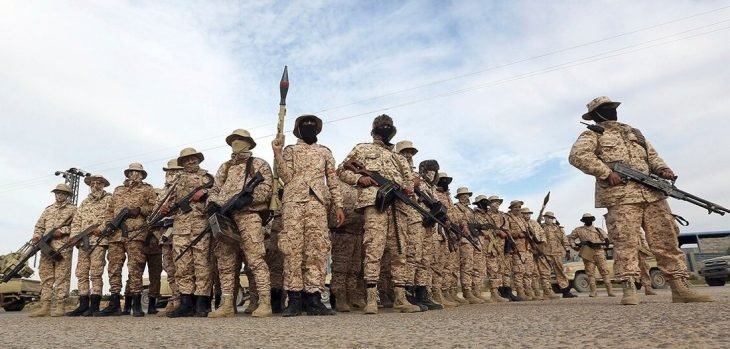
 In early April 2019, General Khalifa Haftar instructed the Libyan National Army (LNA) to take Tripoli by force, initiating Libya’s Second War of Post-Qadhafi Succession. Read More