This study seeks to inform the Libya socioeconomic dialogue participants on the costs and losses associated with conflict in Libya when discussing alternative socioeconomic frameworks for the country’s sustainable development. Read More
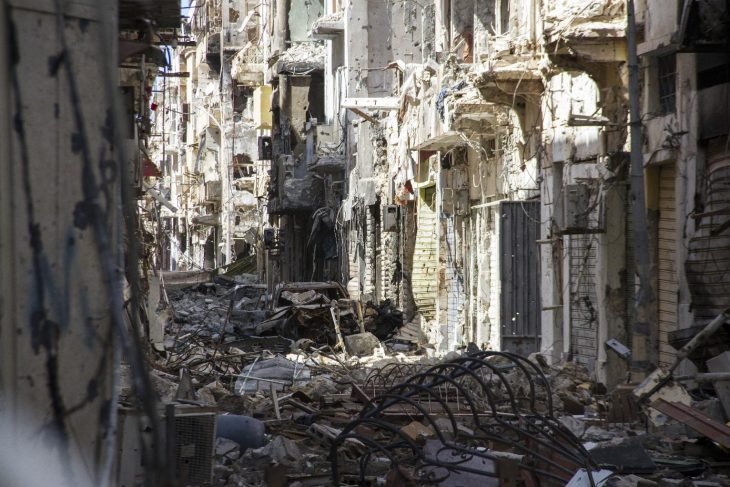
This study seeks to inform the Libya socioeconomic dialogue participants on the costs and losses associated with conflict in Libya when discussing alternative socioeconomic frameworks for the country’s sustainable development. Read More
Lucy Gorman
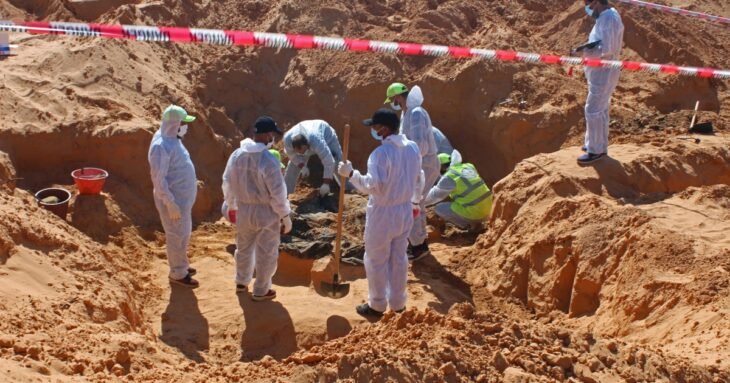
While conducting a Fact-Finding Mission in Libya, investigators from the U.N. say they have uncovered evidence of war crimes committed since 2016.The individuals conducted interviews, reviewed documents, and researched in Libya under the project created by the Human Rights Council in 2020.
A wide range of crimes were unveiled from violence against citizens, recruitment of child soldiers, mass killings, and torture that were all published in the report.
The conflict in Libya ran from 2011-2020 between forces backing rival governments across the State that had support from mercenaries, foreign fighters, and regional powers. The report highlighted a group of mercenaries from Wagner, a Russian security firm, where it is believed they committed the war crime of murder while shooting prisoners.
Mohamed Auajjar, a Moroccan Politician, served as an ambassador of the Kingdom of Morocco and chaired the three-person mission in Libya. He stated that “All parties to the conflicts, including third states, foreign fighters and mercenaries, have violated international humanitarian law, in particular, the principles of proportionality and distinction, and some have also committed war crimes.”
The Wagner company at the center of these allegations, is unable to be reached by news agencies such as Reuters. When asked in 2020 about Russian mercenary activity in Libya, President Vladimir Putin stated that if any Russians were fighting there they did not represent the Russian state.
Evidence for war crimes in Libya have been found across the nation especially targeting vulnerable populations. According to the Human Rights Council, their report documented the recruitment and participation of children in hostilities, killings and sexual violence against prominent women figures, and violence against vulnerable populations including LGBTQI persons.
It was also found that attacks were conducted on hospitals and schools and that migrants and detainees were particularly exposed to violations. According to Reuters, investigators found that Wagner personnel left behind a tablet with a map showing land mines that had been placed near civilian buildings killing individuals since June 2020.
The findings from the U.N. report are incredibly alarming as war crimes are a major violation of international law. These events raise urgent questions and concerns as these types of crimes, and specifically crimes against humanity, are not tolerated.
Libya has been characterized by violence and turmoil for the last decade with Russia, Egypt, and the UAE backing forces in the East and Turkey backing forces in the West. According to Reuters, much of Libya has been dominated by a myriad of armed groups battling for territorial control.
Amid the instability and violence during the civil war, investigators said there were “reasonable grounds” to believe that war crimes were committed in Libya and these may have amounted to crimes against humanity. Civilians endured suffering from the effects of war in essentially all aspects of their life including violence against them and constant worry over family.
Active combat in Libya had been paused since 2020 as all sides accepted a ceasefire and an interim government until an election can be held later this year. According to the United Nations, Libya assured the Council of Libya’s political will that it will promote human rights and that they would cooperate with the Mission in hopes of helping the current Libyan political state. Libya’s efforts include deterring all forms of violence through the creation of a unified government.
The U.N.’s Fact-Finding Mission proved to be critical in understanding the conflict in Libya and revealing the disturbing war crimes being committed. It is hopeful that the U.N. is working with the nation and other entities to address and manage these violations.

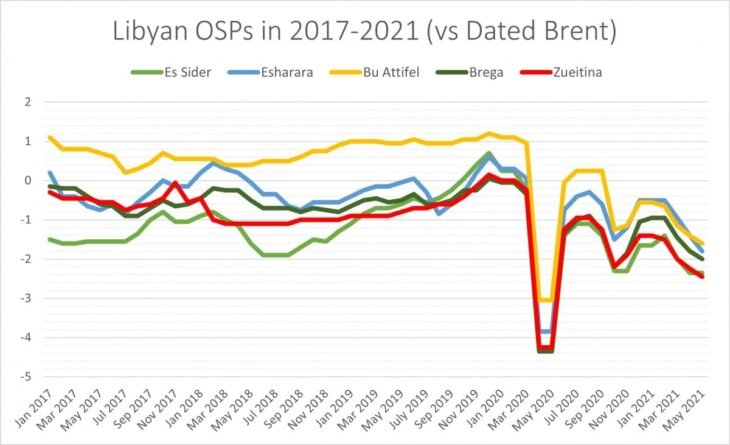
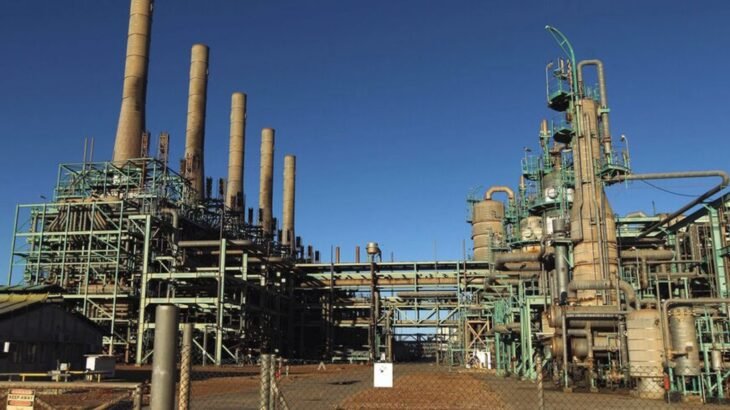
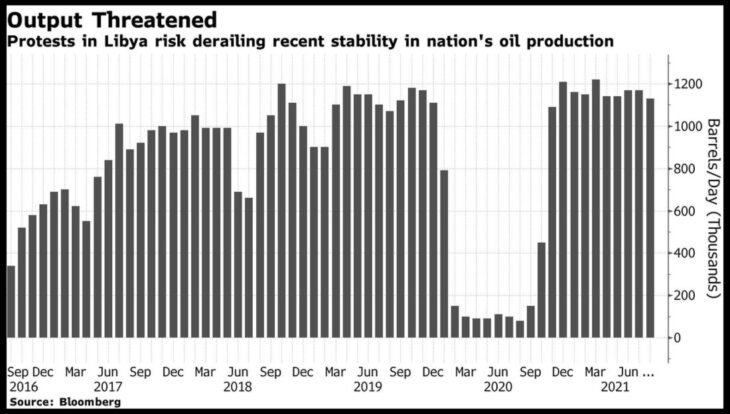
The resignation of Libya’s deputy oil minister, Refaat al-Abbar, last week threatens to make the current uneasy situation in Libya’s oil sector even worse. As it stands, Libya is currently producing around 1.2 million barrels per day (bpd) of crude oil, but has lans to increase this to 1.45 million bpd by the end of this year, 1.6 million bpd within two years and 2.1 million bpd within three to four years.
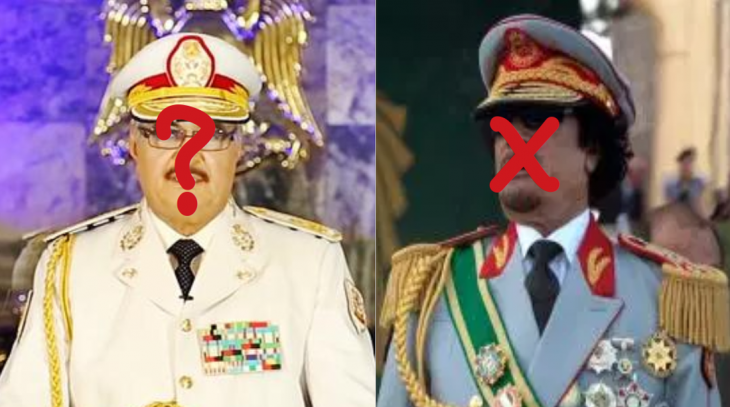
Things are not going well in American political circles for Haftar, it seems that his shares are in decline, and the US administration is no longer betting on him to take the helm in Libya, whether by armed force or through elections.
A strong indication of the validity of this hypothesis is the news published in last Thursday’s issue of the Wall Street Journal, where it stated that Haftar contracted with Lanny Dennis, aide to former US President Bill Clinton, and Bob Levinston, a former member of the House of Representatives, to promote and publicize him in the White House and other American institutions, adding that the first step of the duo, Dennis and Levinstone, in the project of recycling Haftar, is to remove the title of warlord that the American and Western press in general called Haftar on the eve of his failed attack on Tripoli in April 2019.
The value of the contract between the American duo and Haftar amounted to about one million dollars, and because money is the god that has no partner with Levinston and Dennis, the newspaper indicated that they justified their acceptance of the task despite the lawsuits filed against Haftar in American courts, on charges of war crimes and human rights violations, that Haftar’s advisors denied the charges and affirmed Haftar’s innocence of these allegations, as if this denial is sufficient and there is no reason to wait for the court’s ruling! Or even pay attention to the issue of the agreement of most newspapers to describe him as a warlord, or to read the reports of experts of the Security Council and human rights organizations, and the pleadings of the International Criminal Prosecutor before the Security Council.
Haftar did not need publicity and promotion with the American decision-maker during the past years, as successive administrations turned a blind eye to his crimes and violations, and did not seek to curb him by threatening to hold him accountable internationally, and the support reached its climax when former President Trump contacted him during his war on Tripoli, praising him for his security of the flow of oil and his war against terrorism, and the call was interpreted at the time as a green light for Haftar to proceed reassuringly in the invasion of Tripoli.
About a month before the move to contract with promoters in Washington, the US ambassador and special envoy to Libya, Richard Norland, summoned Haftar and met with him in Cairo, the meeting took place urgently on August 10, following a speech delivered by Haftar the day before, taking advantage of the anniversary of the founding of the Libyan army to announce that it would not submit to any authority, and that it would confront all conspiracies targeting his forces.
During this meeting, which took place late at night in Cairo, Norland expressed to Haftar his annoyance with what was stated in the speech, as it clashed with the international plan for a political solution in Libya, and that if he wanted to reach power, he had to present himself to the Libyans through elections to accept him or reject him and respect the choices of the people. “All roads to power are blocked except for elections”, this is the message of the American administration to Haftar after his military failure, and the situation worsened with the Russian incursion into Libya.
This development in the American position forced Haftar to appear on several occasions in civilian clothes, to promote himself in what resembled electoral festivals in cities and villages under his influence. But the matter requires moving in more than one direction by restoring American support by removing the image of the warlord from him through the Dennis and Livingstone company, and presenting him to the White House as a civilian leader ready to take off the military uniform, and give up the medals that his chest entailed to carry, and a potential candidate to win the Libyan elections.
Politically, Parliament Speaker Agilah Saleh initiated the issuance of the presidential election law, on conditions that allow Haftar to run in the elections, while maintaining his military position if he does not win, a law issued in violation of the road map, the Skhirat Agreement, the constitutional declaration and Security Council resolutions. Despite the international emphasis on holding the elections on the date set for them in the road map, Saleh’s unilateral issuance of the presidential election law will further obstruct it, and UN envoy Jan Kubis will surely retract his cautiously welcome position after the law was rejected by the Supreme Council of State, and 22 deputies, emphasizing not to vote on it in Parliament after discussion. All attempts by Haftar and his ally Saleh will eventually reap failure.
No promotion in the White House will bear fruit, because the number of crimes and violations of international law over the years is greater than all counter-propaganda, reinforced by lawsuits before the American judiciary that his defense team was unable to refute. No politician will venture to support a war criminal whose fate is inevitable to stand before justice, and any elections that are uneven with all constitutional and security conditions will be rejected. The most that he can do is to further obstruct the political solution, and he has succeeded in this several times before, most recently by blowing up the National Forum with his sudden attack on Tripoli. Will he succeed this time too?
_____________

Sami Zaptia
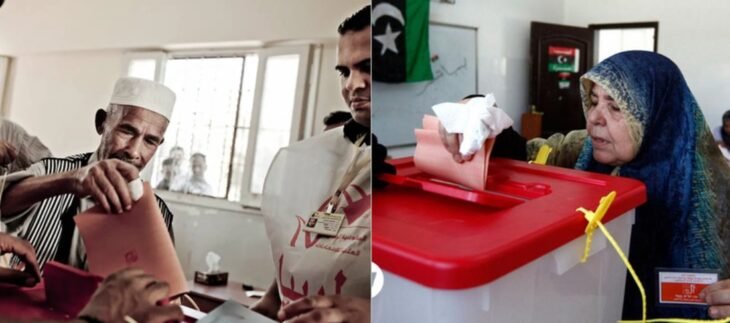
Reacting to his own parliament, House of Representatives member for Tarhuna, Abu Bakr Ahmed Said, said it is important that parliamentary and presidential elections be held simultaneously – not thirty days apart as prescribed by the election law issued by the HoR on 3 October.
The HoR member said:
He concluded: ‘‘No to the extension of parliament’s term beyond the 24 December 2021, and yes to the parliamentary and presidential elections.’’
***
New parliamentary election law based on individual not parties or list system | (libyaherald.com)
HoR approves parliamentary election laws | (libyaherald.com)
HoR Committee completes drafts of 2021 election laws at Rome meeting | (libyaherald.com)
HoR Committee arrives in Rome for four-day deliberations on election laws | (libyaherald.com)
HoR Committee arrives in Rome for four-day deliberations on election laws | (libyaherald.com)
Over 51,000 new voters recorded on the electoral register | (libyaherald.com)
Hafter calls on Aldabaiba government to implement the Berlin Agreement in full | (libyaherald.com)
HoR has begun preparing election law: Saleh to Kubis | (libyaherald.com)
_______________

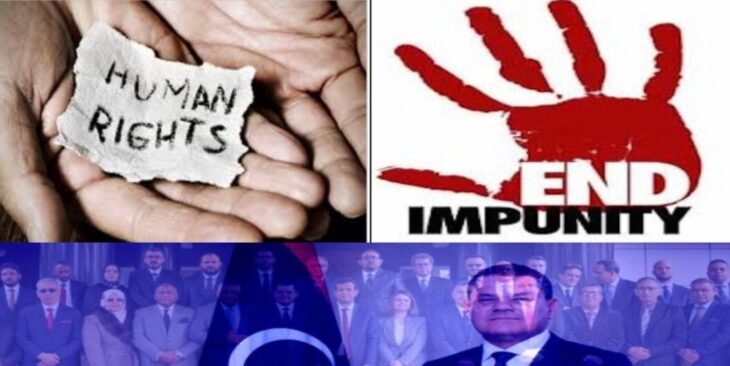
Libya has likely committed war crimes and crimes against humanity since 2016, according to United Nations investigators. Read More
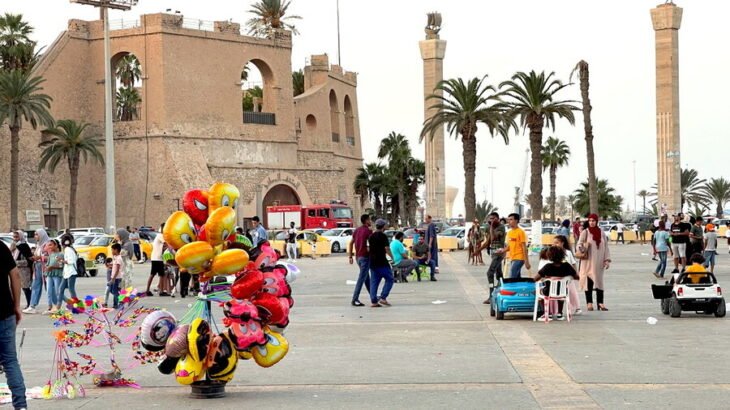

Once chaotic and violent, the North African nation is taking key steps toward reconciliation – if an election is held and foreign forces leave.
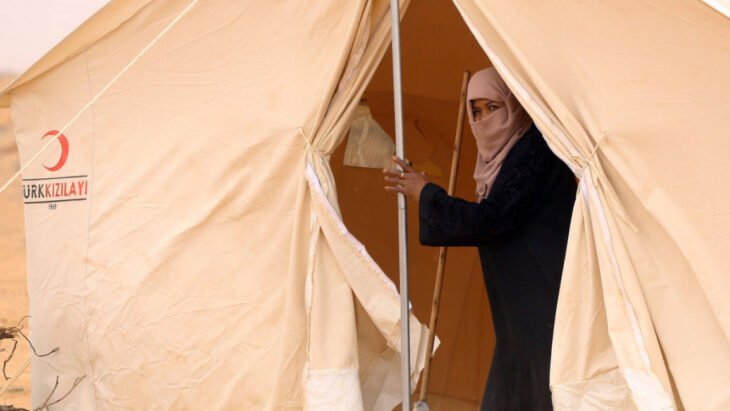

War crimes and crimes against humanity, including the use of child soldiers, have been committed in Libya since 2016, a United Nations investigation revealed on Monday.
The Independent Fact-Finding Mission on Libya, commissioned by the UN Human Rights Council, said migrants and detainees were particularly exposed to violations.
Landmines have killed or maimed many people; Europe-bound migrants face abuse in detention centres and at the hands of traffickers; detainees languishing in horrific conditions in prison are tortured; while prominent women have been killed or have disappeared, the mission’s report said.
“There are reasonable grounds to believe that war crimes have been committed in Libya, while violence perpetrated in prisons and against migrants there may amount to crimes against humanity,” the mission said in a statement.
The unrest in the north African country has had a dramatic impact on Libyans’ economic, social and cultural rights, as borne by attacks on hospitals and schools.
“All parties to the conflicts, including third states, foreign fighters and mercenaries, have violated international humanitarian law, in particular the principles of proportionality and distinction, and some have also committed war crimes,” said Mohamed Auajjar, who chaired the three-person mission.
The mission said it had identified individuals and groups – both Libyan and foreign – who may bear responsibility for the violations, abuses and crimes.
The list will remain confidential until it can be shared with appropriate accountability mechanisms.
Though the Libyan judicial authorities are investigating most of the cases documented in the report, the process “faces significant challenges”, the experts said.
In June 2020, the Human Rights Council – the UN’s top rights body – adopted a resolution calling for a fact-finding mission to be sent to Libya. The move had Tripoli’s support.
The experts, appointed in August last year, were charged with investigating alleged violations and abuses of international human rights law and international humanitarian law committed in Libya since 2016.
Auajjar was joined by and fellow human rights experts Chaloka Beyani and Tracy Robinson.
They gathered and reviewed hundreds of documents, interviewed more than 150 individuals and conducted investigations in Libya, Tunisia and Italy.
Their report documents the recruitment and direct participation of children in hostilities, plus the enforced disappearance and extrajudicial killings of prominent women.
Oil-rich Libya has been torn by conflict since the 2011 toppling and killing of dictator Moamer Kadhafi in a NATO-backed uprising, with rival administrations vying for power.
“The findings unveil a dire human rights situation,” the report said.
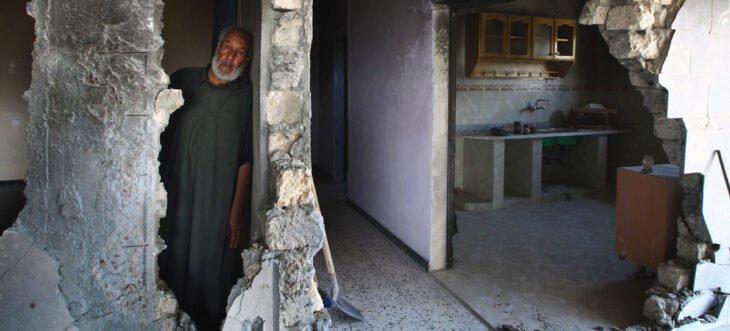
The experts said civilians had paid a heavy price for the hostilities, notably due to attacks on schools and hospitals, while anti-personnel mines left by mercenaries in residential areas have killed and maimed civilians.
Meanwhile migrants seeking passage across the Mediterranean Sea to Europe are subjected to a litany of abuses in detention centres and at the hands of traffickers, said Beyani.
Violations are committed “on a widespread scale” by state and non-state actors, “with a high level of organisation and with the encouragement of the state – all of which is suggestive of crimes against humanity,” the Zambian expert said.
Meanwhile in prisons, some detainees are tortured on a daily basis, the report said.
“Arbitrary detention in secret prisons and unbearable conditions of detention are widely used by the state and militias against anyone perceived to be a threat to their interests or views,” said Robinson.
“Violence in Libyan prisons is committed on such a scale and with such a level of organisation that it may also potentially amount to crimes against humanity.”
The report will be presented to the Human Rights Council in Geneva on Thursday.
The experts want the council to extend their mandate for a further year.
_______________
Sami Zaptia
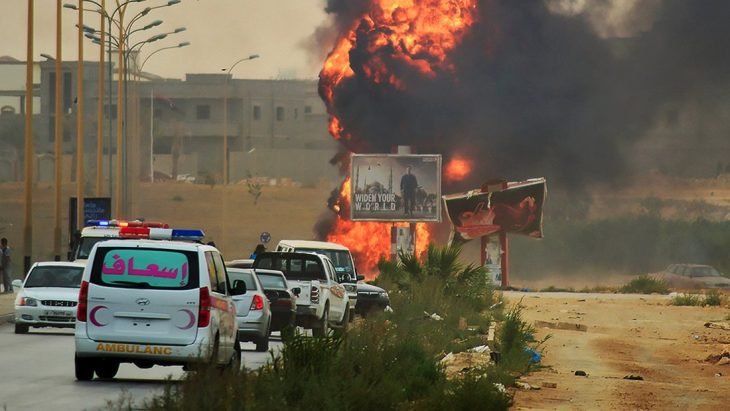
As part of efforts to promote a sustainable peace process in Libya and prevent a renewed relapse of violence, the United Nations Economic and Social Commission for Western Asia (ESCWA) has launched on Saturday a “Vision for Libya: Towards a State of Prosperity, Justice and Institutions”, which is the most comprehensive and deepest in terms of addressing the economic, social and institutional policies needed to chart Libya’s future path. Read More
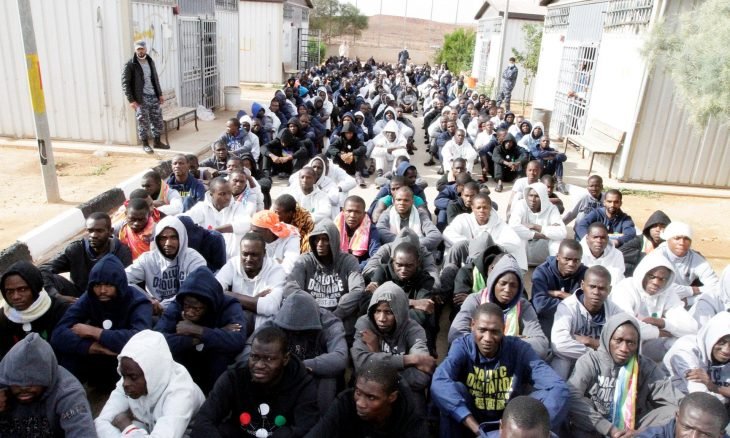
A major crackdown in western Libya has resulted in the detention of 4,000 migrants, including hundreds of women and children, according to officials.
The raids took place on Friday in the western town of Gargaresh as part of what authorities described as a security campaign against undocumented migration and drug trafficking. The interior ministry, which led the crackdown, made no mention of any traffickers or smugglers being arrested.
The United Nations (UN) said one migrant was killed and at least 15 others injured when Libyan security authorities carried out the raids.
“Unarmed migrants were harassed in their homes, beaten and shot,” the UN humanitarian coordinator for Libya Georgette Gagnon said.
Gargaresh, a known hub for migrants and refugees, is about 12km (7.5 miles) west of the Libyan capital, Tripoli. The town has seen several waves of raids on migrants over the years, but the latest one was described by activists as the fiercest so far.
“We are hearing that more than 500 migrants including women and children have been rounded up, arbitrarily detained and are at risk of abuse and ill-treatment,” said Dax Roque, Libya’s director of the Norwegian Refugee Council, in a statement on Friday.
“Migrants and refugees in Libya, particularly those without legal residency in the country, are often at risk of arbitrary detention. Torture, sexual violence, and extortion [are] rampant in Libyan detention centres,” the statement added.
The prisoners were gathered in a facility in Tripoli called the Collection and Return Center, said police Colonel Nouri al-Grettli, head of the facility. He said the migrants have been distributed to detention centres in Tripoli and surrounding towns.
A government official said authorities would “deport as many as possible” of the migrants to their home countries. He said many of those detained had lived without documents in Libya for years. The official spoke on condition of anonymity because he was not authorised to brief the media.
Since the 2011 NATO-backed uprising that removed and killed longtime leader Muammar Gaddafi, Libya has emerged as the dominant transit point for people fleeing war and poverty in Africa and the Middle East, hoping for a better life in Europe.
Human traffickers have benefitted from the chaos in the oil-rich nation and smuggled people through the country’s lengthy border with six nations, before packing them into ill-equipped rubber boats in risky voyages through the perilous Central Mediterranean Sea route.
Tarik Lamloum, a Libyan activist working with the Belaady Organization for Human Rights, said the raids involved human rights violations against the migrants, especially in the way some women and children were detained. He did not elaborate.
Some thousands of refugees and migrants are held in official detention facilities, some controlled by armed groups, as well as an unknown number in squalid centres run by traffickers.
Sara Prestianni, a migration officer at Euromed rights, said the situation for migrants in Libya was becoming “more worrying” due to the “use of violence”.
“The only solution … is to open a humanitarian corridor that can let people go out from Libya and reach the European territory in a safe way, otherwise, people will stay in detention suffering mistreatment,” Prestianni said.
____________

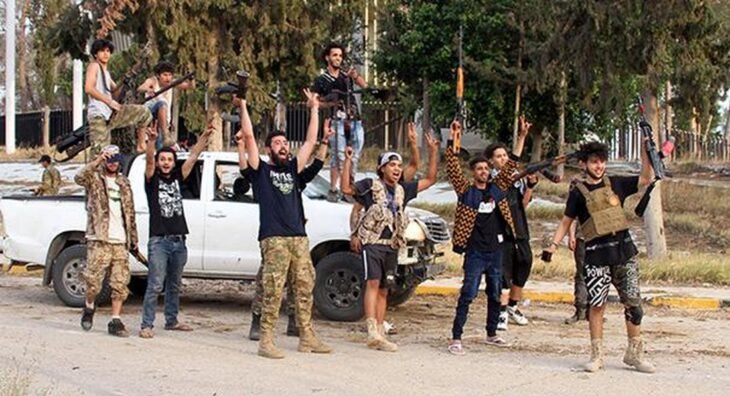
 How a sibling rivalry at the heart of the Gadhafi family split the Libyan regime in its final years — and, to this day, still affects Saif al-Islam Gadhafi’s chances at influencing post-revolution Libya.
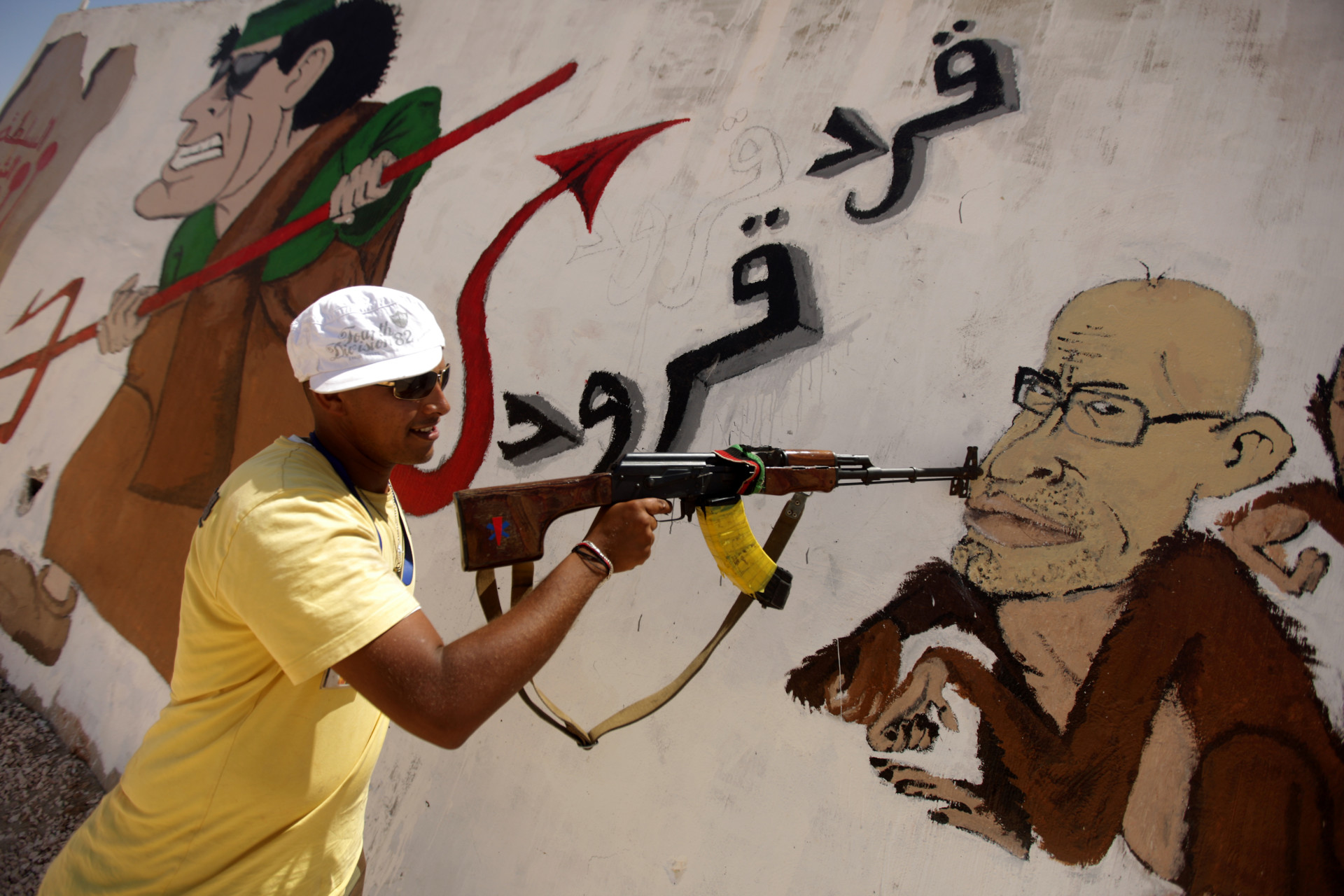
Ahead of potential elections in Libya this December, elites and armed leaders across the country’s political spectrum scheme and scramble, in hopes to exploit, circumvent or thwart the U.N.-prescribed contest. Amid already high uncertainty, the late Libyan leader Moammar Gadhafi’s surviving offspring seem to have a knack for adding to the confusion by making headlines, as though to remind the embattled North African nation that the former regime, toppled 10 years ago, isn’t quite done shaping its fate. On Sept. 5, the government in Tripoli released one of Gadhafi’s sons, Saadi, who flew out of the country after seven and half years spent in a Tripoli prison. Mere weeks earlier, as part of a much-noticed feature, The New York Times Magazine published the first picture in years of Saadi’s older and more important brother, Saif al-Islam.
Since 2017, the international press has often given the impression that Saif could gain a wide following in post-revolution Libya. After a period of captivity in Zintan, southwest of the capital, he has been preparing a high-profile comeback, which his sympathizers predict will substantially alter the country’s political landscape. “Saif puts everyone in agreement,” a supporter once assured Le Figaro, a French daily. According to this narrative, when the 49-year-old emerges onto the political stage, the “Greens” — Libyans who believe that the Gadhafi rule should not have been overthrown in 2011 — will finally mobilize and merge into a unified movement that will then attract an even wider constituency.
Such predictions are hard to reconcile with the not-so-distant past: The 2000s revealed Saif to be a polarizing rather than a unifying persona. Moammar never earnestly clarified his plans for succession — and, had he done so, it’s not certain Saif would have been first in line. Amid political dysfunction, hatred flourished between Saif and his younger brother Mutassim. The autocrat used his sons’ mutual rivalry to buy time and remain alone in power. This spawned a rift among the regime’s most crucial supporters, who couldn’t agree how to govern — or who should govern Libya. Any realistic diagnosis of Saif’s chances in 2021 requires revisiting the fractures that predate the 2011 uprising, the main one being the profound strife at the heart of the Gadhafi family.
When Gadhafi’s seven children reached adulthood in the 1990s, they entered the select circle of elites who enjoyed dominance over Libya’s economic institutions. The self-effacing Mohammed (1970-), Gadhafi’s only child by his first wife Fethiye, oversaw Libya’s telecommunications sector, keeping away from politics. Much less modest and predictable were Mohammed’s half-sister and five half-brothers, all born to Gadhafi’s second wife Safiya. Some of them, such as Mutassim (1974-2011) and Hannibal (1975-), were given leading military functions as well as business privileges. The same would go for Saadi (1973-) after a positive doping test in Italy derailed his career as a professional soccer player in 2003. And, distinct from his siblings, there was Saif al-Islam (1972-), Safiya’s first child, who was also his mother’s favorite. A part-time artist with a degree in urban engineering, Saif was never asked to look after security affairs. He took on humanitarian responsibilities in his mid-20s. Soon, Saif and Mutassim were competing over financial schemes, a contest that later became outright political.
In April 1999, the U.S. and the U.K., seeing that Libya had renounced terrorism, kickstarted a normalization of relations by allowing a temporary lifting of U.N. Security Council sanctions that had been imposed after the Lockerbie bombing in 1988. Gadhafi had to hand over the prime suspect in the case, Abdelbaset al-Megrahi, to a Scottish tribunal in the Netherlands.
That year, Gadhafi helped Saif bolster his humanitarian foundation by setting up and funding an array of charities under it. To the world at large, the autocrat tacitly presented the young man as his potential successor — not necessarily out of authentic conviction, but because he judged that Saif would best appeal to Western sensibilities. Gadhafi wanted more than a permanent removal of sanctions — he sought the reintegration of Libya into the international community, including much-needed Western investment in the country’s degraded energy sector and crumbling infrastructure. This reintegration, however, would require more than bilateral conversations about terror reparations and other security concerns that Washington considered its main priority. Gadhafi and his advisers assumed that Western powers would be more open to improving relations if his regime showed signs of transition to a softer, more liberal form of governance. They thus made a show of taking ostensible steps toward pluralism in two domains: the economy and politics. A similar logic applied inside the country, too, where superficial softening in governance helped Gadhafi portray himself as giving voice to the new generation of Libyans.
As he used Saif to project a sense of political and economic liberalization, the Libyan autocrat was busy consolidating tighter control over the security sector. Gadhafi created a range of ultra-loyal “battalions” that reported directly to him. These kataeb were designed to counterbalance the regular armed forces, which Gadhafi underequipped and marginalized because of previous army-led coup attempts. Here, too, he used his sons. In 2000, Mutassim, a former medical student, was given command of a newly created praetorian unit, the 77th Tank Battalion, headquartered near Bab al-Aziziyah, his father’s sprawling, palace-like compound. Endowed with lavish amounts of advanced equipment, Mutassim expanded his unit into other locales. He had his men conduct exercises with live ammunition, an unusual practice for such a young unit. The 77th Battalion’s fast-growing arsenal, in conjunction with Mutassim’s habit of concealing his unit’s war games from the military police, raised the suspicion of senior figures in the security establishment.
In 2001, Libya’s then-military intelligence chief Khalifa Ahneish reported to Gadhafi that his hot-tempered son Mutassim might be planning a coup. More likely, the 27-year-old lieutenant colonel’s unit was merely encroaching upon Ahneish’s turf. But regardless, Gadhafi took the matter seriously and ordered the 77th disarmed for inspection. Mutassim — who was not with his men — remotely instructed them to stand their ground as he took refuge in Egypt. After a tense standoff, Gadhafi’s own units seized the 77th’s camps by force.
The government of Egyptian President Hosni Mubarak, a friend of the elder Gadhafi, had to intervene as a mediator between Mutassim and his dad. As tensions simmered, the young Libyan, stripped of his battalion, remained in quasi exile in Cairo, allowed only to retain his formal military rank. To compensate, Gadhafi put his youngest son Khamis (1983-2011) in charge of a brand new battalion, the 32nd Reinforced Brigade, entrenched at strategic points around the capital, including the nearby town of Tarhuna. Prevented from traveling, Mutassim lived in boredom in Cairo’s hippest districts for several years. Back home, Khamis proved to be militarily competent, disciplined and loyal to his father, and he maintained good relations with all of his siblings. His 32nd Brigade would later become the nation’s preeminent force, attracting attention from foreign states keen to build up Libya’s military capacity, including the U.S. and the U.K. Yet Khamis, who was uninterested in politics, never came close to filling the void that Mutassim’s absence had left in the capital. Neither did Saadi, who had taken on promoting purist Salafism in Libya.
Soon after the U.S. concluded a deal with Tripoli in December 2003, whereby Libya scrapped its tentative program to develop weapons of mass destruction in exchange for its eventual reintegration into the international community, Gadhafi enlarged Saif’s foundation. He helped him launch a comprehensive reform project called Libya al-Ghad (“tomorrow’s Libya”), whose purpose was to promote the country’s modernization in the eyes of both domestic and international audiences. The economic component of this project featured tens of billions of dollars’ worth of construction projects, mostly executed by Turkish and Chinese conglomerates.
The West wished to see Libya open up its markets and privatize its businesses, but Gadhafi tolerated no genuine movement in that direction. He was so loath to decentralize his nation’s wealth that he offered no leeway to Saif in the economic realm, preferring to grant him modest latitude on the political front instead. The most significant of these concessions was allowing Saif to amnesty some of Libya’s Islamists. The thaw started with a handful of small token gifts to a weakened political party, but it later grew to include the rehabilitation of hundreds of hardline militants.
In October 2004, political prisoners accused of belonging to the Muslim Brotherhood went on a hunger strike in the infamous Abu Salim fortress. Tripoli seized on the incident to showcase the regime’s new openness to reform. Gadhafi authorized Saif to undertake talks with Libyan Muslim Brotherhood leaders exiled in England and Switzerland. As a result of the negotiations, a few Muslim Brotherhood-labeled prisoners were released from Abu Salim in September 2005; 84 more were freed the subsequent year. Saif courted the foreign press, using the government’s reconciliation with the Islamists as a means of acquiring greater stature in Libyan politics. In interviews with Western journalists, he also downplayed the substantial resistance his moves were encountering from members of his father’s inner circle.
Among those who opposed reforms was Mutassim, who, since his return from Cairo in 2006, had become embroiled in a fierce rivalry with the now-ascendant Saif. Gadhafi had brought Mutassim back because he did not want his family to appear divided. More parochially, several regime insiders asked for Mutassim’s presence as a check on Saif’s reformist push, which enjoyed the support of a few liberal politicians, such as Prime Minister Shukri Ghanem, Foreign Minister Abdel Rahman Shalgam and most personalities associated with the Libya al-Ghad effort.
While Gadhafi père sought to appear equidistant between the two brothers, he developed an ambivalent preference for Mutassim, despite the latter’s volatility and his involvement in yet other power grabs. Underlying each incident was Mutassim’s protest that the regime was exceedingly vulnerable. Reverting to his preexile instincts, he revived his 77th Battalion, increased its ranks and stealthily acquired weapons, including Western-made items.
There were moments when Gadhafi constrained Mutassim by executing his subordinates and shuttering his Camp 77 base. But, barring a few brief exceptions, the leader maintained Mutassim in Tripoli. The Egyptian-backed son had become a vital pillar to the regime’s fragile equilibrium. He received support from Revolutionary Committee leaders (semiformal local authorities), such as Mohammed al-Majdoub, and other conservatives, such as Education Minister Ahmed Ibrahim. What bound these figures to Mutassim was their shared attachment to the status quo and their antipathy toward political Islam. They feared that Saif’s “reforms” might resuscitate the Islamist networks behind a failed yet ambitious insurgency plan in northeastern Libya in the mid-1990s, which had been dismantled only through intense repression.
Over time, the two brothers’ antagonism became the main ideological dilemma facing the Gadhafi regime. Mutassim’s thirst for harsh authoritarianism was self-consistent. The same could not be said of Saif’s advocacy for a softer mode of governance. By making this rhetoric his path to attaining power, Saif seemed oblivious to the contradictory nature of his own status: the liberal son of a despot unwilling to relinquish power. Worse, the Libyan population’s considerable frustration at how the country was run meant that if the system moved away from authoritarianism, as Saif prescribed, there would be no guarantee that he or any member of the Gadhafi family could stay in the Libyan picture.
In any case, Saif’s repetitive pleas for a constitution, democracy and alternation in government started to become troublesome. To reassure the Revolutionary Committees and the rest of the old guard, Gadhafi nationalized Saif’s satellite television channel. He did not take the rest of Libya al-Ghad away from him, however — the Supreme Guide was aware that Saif represented hope for the country’s youth.
By October 2008, Libya al-Ghad had met almost all of Gadhafi’s expectations. U.S. Secretary of State Condoleezza Rice had visited Tripoli in person; a U.S. ambassador to Libya was confirmed; and Libya’s legal liability in U.S. terror cases was erased thanks to the full payment of compensation to the victims. Foreign companies were returning, and some low-level security cooperation with Western powers had begun. With sanctions removed and oil prices on a bullish trend, living conditions improved in Libya. But Saif was caught in his own momentum. Perhaps because he spoke English well and had studied in Europe, earning a (disputed) doctorate degree from the London School of Economics, he enjoyed fawning attention by the Western media, which often portrayed him as the heir apparent. But in the power corridors of Tripoli, the story was different. Gadhafi never designated Saif as his successor, nor did he ever fully empower him to act as an official representative of the government. He did, however, appoint Mutassim to the position of national security adviser.
The rising tension between the two brothers was seldom appreciated by foreign observers; indirect clues would occasionally leak to the outside world. Within the space of a few months, both men received a personal audience with Rice in Washington. In late 2008, weeks before the President George W. Bush left office, Saif met briefly with Rice — on the condition, though, that he meet with human rights organizations first. Once Barack Obama entered the White House, it was Mutassim’s turn to be welcomed in Washington. Secretary of State Hillary Clinton posed with him for a public appearance and lingered only briefly on human rights and the need for political reforms, letting the intelligence community emphasize counterterrorism cooperation. Mutassim, whose specialty was hard security, felt emboldened by the deferential reception.
Meanwhile, Saif — despite his proclaimed “retirement” from politics in 2008 — continued some of his activities under the increasingly distracted eye of his aging and decadent father. Libya al-Ghad became subjected to the growing influence of Turkey and Qatar, both of which had longstanding ties to the noted Libyan Islamist and dissident Ali al-Sallabi, based in Doha. In 2008, Sallabi worked with Saif to persuade Tripoli to free 90 members of a militant jihadist organization, the Libyan Islamic Fighting Group (LIFG), from Abu Salim. Unsurprisingly, this move to rehabilitate hardline Islamists angered Mutassim and his conservative supporters.
Saif could pursue his outreach to Islamists thanks to the backing of Abdullah al-Senussi, then head of Libya’s military intelligence. Al-Senussi, who was also Gadhafi’s brother-in-law and right-hand man, was renowned for his ruthlessness against all dissidents. By the mid-2000s, however, al-Senussi no longer considered Libya’s Islamists an existential threat. He reckoned that these still-mortal enemies, after years in his dungeons, had become manageable.
There were other reasons why al-Senussi, a member of the powerful tribe of the Megarha, protected Saif’s work. Not only was he interested in the embezzlement opportunities afforded by Libya al-Ghad, but he also sought to help restore the honor of his tribe by securing the release of the convicted Lockerbie bomber, Megrahi, from a Scottish prison. In August 2009, Saif delivered the ailing al-Megrahi’s release, thanks to Qatari help. But al-Senussi’s ability to use Saif for his own interests triggered the resentment of Gadhafi’s tribe, the Qadhadhfa.
Under the influence of Qatar, Saif doubled down on negotiations that resulted in the release of hundreds more LIFG members in 2010, including leader Abd al-Hakim Belhaj. Doha’s diplomatically ingenious (and financially munificent) activism painted a halo of success around Saif. But the young, soft-spoken “un-Gadhafi,” as The New York Times dubbed him, did not have a clear plan. Dozens more LIFG members would be freed even after the first armed insurgency erupted in the eastern city of al-Bayda on Feb. 15, 2011.
The contradiction between Mutassim and Saif contributed to the regime’s disjointed response to the 2011 revolt. It came to a head on the evening of Feb. 20, 2011, just before Saif gave a much-anticipated address to the nation on television. His midnight speech could have put Libya on the path to reconciliation. But Mutassim, backed by his father, pushed Saif to be inflexible, defiant and belligerent — and Saif complied. After a few conciliatory remarks, his monologue segued into a crescendo of threats. By vowing to “fight to the last man, woman and bullet,” he let Libyans and foreign states know that all of his reform work in the previous decade was null and void. Saif had irreversibly aligned himself with Mutassim’s worldview.
Upon Tripoli’s fall in August 2011, Gadhafi and Mutassim went to Sirte, a coastal city 280 miles to the east, while Saif, alone with a few bodyguards, hid in Bani Walid, another loyalist holdout located inland, closer to the capital. On the same day that Safiya, Mohammed, Hannibal and their sister Aisha (1976-) fled to Algeria, a NATO airstrike killed Khamis in Tarhouna, where he was still fighting the rebellion. At summer’s end, shortly after Saadi entered Niger, Saif and Mutassim crossed paths for the last time in Bani Walid where Mutassim had come to meet with the city’s leaders. Noticing his elder brother’s unsolicited attendance, Mutassim blamed him for enabling the very actors, Libyan and foreign, now destroying the regime. The following month, NATO-backed rebels killed Mutassim and his father as they tried to exit a besieged Sirte. Before that, Saif had managed to leave Bani Walid for the Libyan Sahara. Zintan’s rebels captured him near Awbari in November 2011.
Gadhafi evaded the challenges of leadership succession till the end. Throughout the 2000s, he merely balanced the ambitions of his sons, often playing one against the other. And in the regime’s final stages, the late Mutassim was arguably the more likely heir.
The victims and opponents of the Gadhafi regime have not forgotten that the onetime progressive sided with his father and Mutassim at the outbreak of the civil war.
Now, 10 years on, the conventional wisdom is that popular frustration with the chaos of post-2011 Libya will be enough to inspire a groundswell of support for Saif, the dead dictator’s most preeminent surviving son. This implies that Libyan citizens’ nostalgia about the former regime, or mere optimism about Saif’s ability to learn and grow, will provide a bedrock of enthusiasm for his return to national politics. That assumption is unrealistic: The victims and opponents of the Gadhafi regime have not forgotten that the onetime progressive sided with his father and Mutassim at the outbreak of the civil war. As for the regime’s supporters, many were alienated by Saif’s actions in the 2000s. Some of the tribal elders, Revolutionary Committee leaders and security chiefs of the pre-2011 era still matter today. In the same way that they needed Mutassim in the late 2000s, they now need a similarly tough Green leader capable of commanding an armed coalition and corralling the tribal and security chiefs. This was never Saif’s strong suit. Plus, a chunk of the loyalists remember that Saif paved the way for the anti-Gadhafists and opportunists who ultimately overthrew the regime in 2011.
Some of the still-active Greens might be tempted to use Saif as a figurehead to project the illusion of cohesion — a trick that could also be adopted by Gen. Khalifa Haftar, the commander based in eastern-Libya, or even his rivals in the western city of Misrata. But this would be, at best, a shallow and ephemeral position for Saif to occupy. In sum, few faction leaders in today’s Libya have forgotten what Saif’s inconsistency can cost them.
If, despite being wanted by the International Criminal Court, Saif manages to reenter his country’s political arena, he will find it difficult to come across as a credible standard-bearer for any specific set of values. Strive as he might for relevance, it is likely to remain beyond his reach.
****
_______________


Khairiya Farag Hafalesh
 Numerous socio-political factors have wreaked havoc on Libya’s democratic institutions and hindered the advancement of women’s rights. The constitutional rights of women must be recognized and implemented to achieve the equitable society so many hope for. Read More
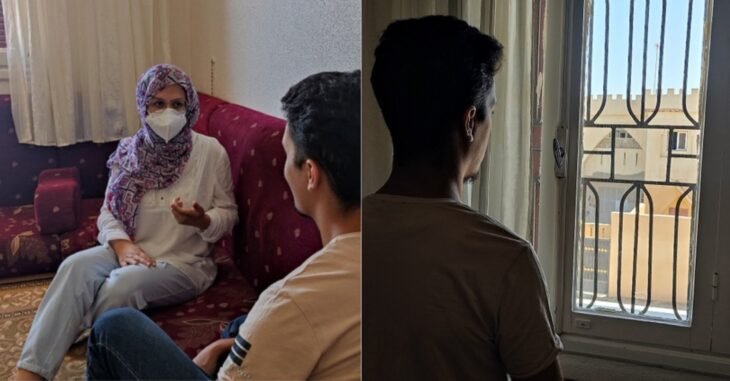
” My diploma has lost all value”

A decade of conflict has weighed heavily on Libya, a country with a rich cultural heritage and home to a generation of youth with dreams of successful careers and economic security. Read More

Sasha Toperich and Debra Cagan

 Haftar is not Libya’s only problem, but he is the largest obstacle preventing his country from moving forward. Read More
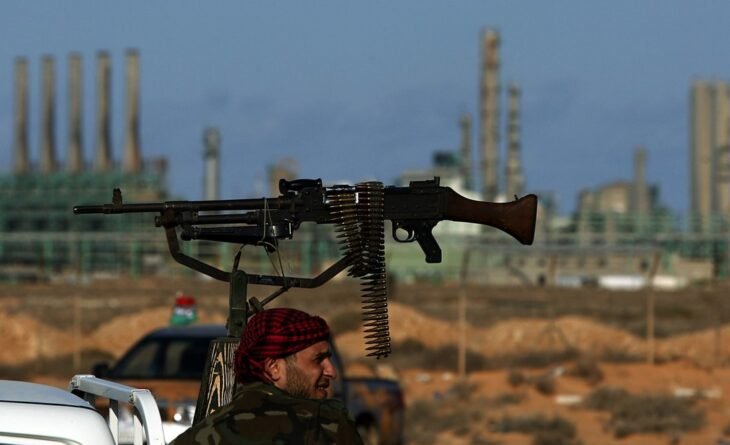
 Growing discord between oil ministry, NOC Minister Oun, NOC Chairman Sanalla clash over key oil policies Platts Analytics expects Libyan supply to be volatile in coming months. Read More
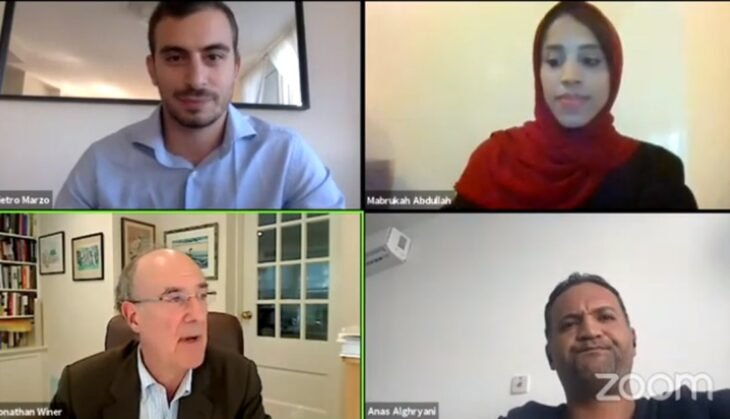

The Middle East Institute (MEI) and the North African Policy Initiative (NAPI) are pleased to announce the fourth in a series of roundtable discussions inviting engaged Libyan youth to share their perspective on the key issues facing their country’s future. Read More
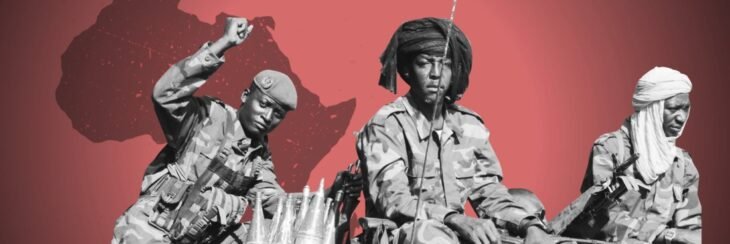
Mattia Toaldo

This brief sets out a new agenda for European support for Libya’s transition, starting with the idea that the current focus on the training of the Libyan armed forces should be broadened.
Neil Munshi

In 2017, Precious was approached by a woman in her neighbourhood who offered her an incredible opportunity: leave her corner of southern Nigeria for Italy, where she could work as a seamstress and send money back to her family. Read More
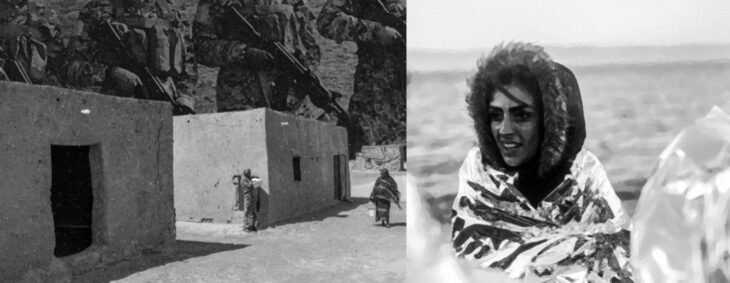
Rawasi AbdelJaleel
 Aisha – as she asked to be called – the twenty-four-year-old now residing in the Libyan capital, Tripoli, left her country in May 2014, fleeing abject poverty that has mired Sudan for years. Read More
Mattia Toaldo
This brief sets out a new agenda for European support for Libya’s transition, starting with the idea that the current focus on the training of the Libyan armed forces should be broadened.

Tarek Megerisi
 With the warlord Khalifa Haftar emerging from defeat doing deals with the wily political survivor Aguila Saleh and a corrupt Prime Minister Dbeibah in place, Libyans gain no measure of security and face a bleak future. Read More
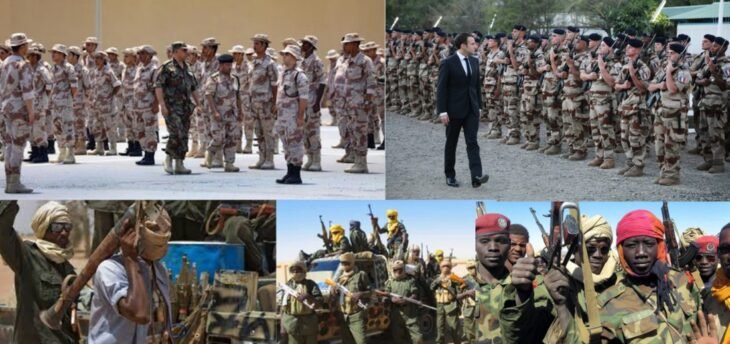
Mattia Toaldo
This brief sets out a new agenda for European support for Libya’s transition, starting with the idea that the current focus on the training of the Libyan armed forces should be broadened.
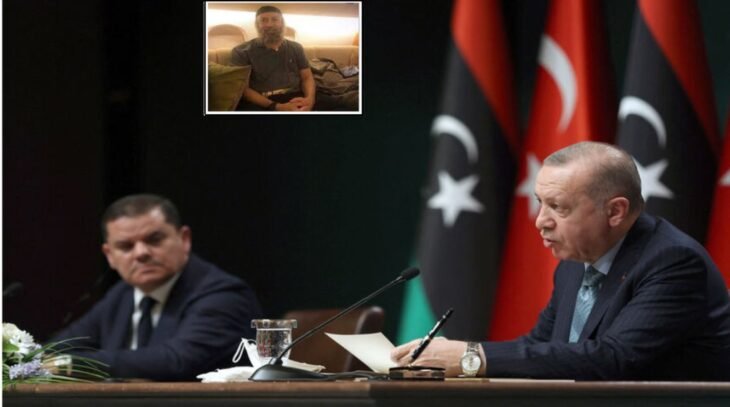
Fehim Tastekin
 Realizing that its current allies are not sufficient to secure Turkey’s interests in Libya, Ankara is now seeking to include Gadhafi family members into its calculus. Read More
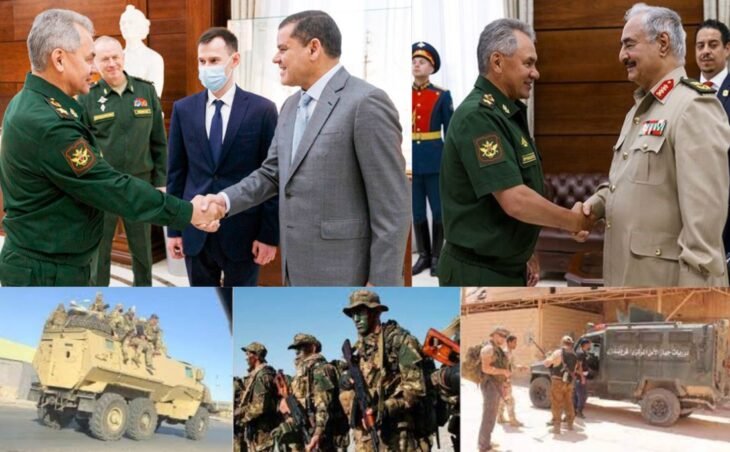
Frederic Wehrey & Andrew Weiss
 The challenge for Western policymakers is to avoid viewing Russian activism in the Eastern Mediterranean and North Africa through an exclusively zero-sum lens. Read More
Mattia Toaldo
This brief sets out a new agenda for European support for Libya’s transition, starting with the idea that the current focus on the training of the Libyan armed forces should be broadened.
PART (II)
Excluding loyalists and growing authoritarianism
Libya’s civil war has left scars that few among the victors care to heal. The cities and towns of Libya that supported Gaddafi have been marginalised legally and politically when not violently.
Even more disturbing, this treatment has been applied to any individual or group considered to have been loyal to the old regime, be it because of service in the government or tribal kinship.
Marginalisation of these so-called loyalists has worked in several ways.
First, according to some estimates, almost one million Libyans have fled to neighbouring countries, especially Tunisia and Egypt, for fear of retribution.
Second, individuals who had been sometimes even loosely associated with the Gaddafi regime in the early years have since lost their jobs as government officials or their political positions, previously under the no-longer-functioning Integrity Commission, and now as a result of the commission working under the Political Isolation Law (PIL), which was approved by the GNC under the physical threat of the militias on 5 May 2013.
This law alone caused the resignation of the then Speaker of the GNC (and de-facto head of state) Mohammed Magarief and the political marginalisation of Mahmoud Jibril, the head of Libya’s largest political party, the National Forces Alliance.
According to the Human Rights and Democracy report issued by HM Foreign and Commonwealth Office, “The Political Isolation Law, if implemented to its fullest extent, could effectively lead to 10,000 – 20,000 civil servants, former Ambassadors and members of the judiciary connected to the Gaddafi regime, being prevented from participating fully in political life”.
A verdict from the Libyan Supreme Court on the PIL is pending, although it is not clear whether it will come. Revoking the PIL (or at least referring its implementation to the courts on a case-by-case basis) is a strictly political matter that may be solved either by the new parliament or by the expected new constitution.
Meanwhile, the GNC approved the law on transitional justice on 8 December 2013, which applies to all victims, both the revolutionaries and those who suffered retaliations after the revolution. According to the law, the Truth Finding Commission should ascertain the facts; then the judiciary would proceed with trials; and finally the victims would be compensated.
Ultimately, though, the effectiveness of the transitional justice law relies on the functioning of the judiciary, which is severely jeopardised by the threats to judges and lawyers alike. Some courts have been closed for up to a year for this reason.
It is in this environment of lawlessness that political assassinations can go unpunished. In eastern Libya alone, the murders of 50 security, military, judicial, and civil society leaders were carried out in February 2014 alone.
But violence is not the only component of this rising authoritarianism. Decree 5/2014, issued by the GNC, forbids the activities of any media outlet that is deemed “hostile to the February 17 revolution and whose purpose is the destabilisation of the country or the creation of divisions among Libyans.”
Resolution 13/2014, approved on 24 January, discontinued scholarships for students studying abroad and salaries and bonuses for Libyan employees for “taking part in activities inimical to the February 17 revolution”.
Both definitions leave wide margins of discretion to decision-makers applying the law.
The unsteady rise of local governments
During the revolution and the civil war, local councils (whether civilian or military) played a crucial role in co-ordinating forces at the local level and defending communities.
Many of these councils continue to operate today with a peculiar intertwining of the political and military dimensions. Only some of the over 100 municipal councils are elected: elections were held in 17 of them during the fall of 2013, and a new wave of elections took place between April and May 2014, including in Benghazi and Tripoli.
The remaining councils were either self-appointed by revolutionaries or elected outside of national legislation in 2012. Most of the existing municipalities lack the capacity to handle even basic services, not to mention to carry out urban planning.
Their budget should be assigned by the national government, but this is proceeding very slowly. Despite this confusion, many Libyans see local councils as the only credible and legitimate state institution, and therefore some experts advocate a policy of decentralisation of power.
While decentralisation is particularly important in restarting public services and increasing popular participation in the transition, the existence of a strong central government is still key to guaranteeing the rule of law and equal rights.
The impending economic disaster
Starting from the summer of 2013, a combination of labour strikes and occupations by militias and other armed groups have stopped production at several oil facilities in all corners of Libya.
Production fell from 1.4 million barrels per day (bpd) in early 2013 to 150,000 bpd at the time of publication. The blockade of Libya’s oil fields has had disastrous effects on its economy and public finances. Few other economies in the world are so dependent on oil and gas, which, in Libya, amounts to 65 percent of its GDP, 96 percent of the exports, and 98 percent of government revenues.
As in other rentier states, Libyan citizens pay little or no taxes and rely on a vast system of government subsidies on essential goods to make ends meet.
These amounted to 11 percent of GDP in 2013.21 Unsurprisingly, the World Bank estimated a drop in GDP by 9.4 percent in 2013, with a projected drop of 9.7 percent in 2014. Economic scenarios vary enormously, based on whether production restarts or not: GDP could grow by 25 percent if energy output goes back to normal or shrink by as much as 15-20 percent if the blockade continues.
As a result, public finances are being shored up using the reserves of the Central Bank. While large, these are neither all liquid nor infinite: they were estimated at $122 billion in 2013, but they are projected to drop to $100 billion in 2014 and to $82 billion in 2015 if current levels of high expenditure and low revenue continue.
Actors on the ground seem to have a different perception. The head of the reserves at Libya’s Central Bank, Musbah Alkari, recently stated that, at current levels, foreign currency reserves could guarantee the functioning of the Libyan state for another three years.
If one also adds the roughly $50 billion of reserves held by the sovereign fund of the Libyan Investment Authority (LIA), it seems that policymakers and militia leaders have no incentive whatsoever to get their house in order – any time soon at least.
Reliance on reserves rather than on oil and gas fields could even be seen as an asset for the central government in its fight against local power centres, if the central government was not the by-product of some of these power centres.
This is of course a very short-term perspective. Nevertheless, it must be kept in mind when trying to understand the calculations of Libya’s main actors. In the short term, the economic crisis is both an effect and an accelerator of the security and political crisis: shrinking resources tend to create more demand in which resources are often seized through violent means.
The oil blockade has also increased the sense of insecurity among the population: for many months now, rumours of the imminent end of gasoline supplies have proliferated, causing long queues at gas stations with all the destabilising effects that this yields.
In the long term, therefore, the Libyan economy must diversify to limit the rentier state and put an end to the blackmail of rival groups blocking oil fields.
Can national dialogue be part of the answer?
Over the course of several months, Libya had more than one national dialogue in place at the same time.
With Libyan, UN, and international endorsement of an independent National Dialogue Preparatory Commission headed by Fadel Lamen, however, Libyans now have a single body, which is widely recognised, tasked with activating the longawaited national dialogue process.
This is despite the formal existence of a national dialogue within the GNC and several ad-hoc meetings between power brokers that are labelled as “national dialogue” or “reconciliation”.
Even so, Lamen’s commission is struggling to have its budget approved by the GNC. The role of the UN Support Mission in Libya (UNSMIL) in the dialogue could help, both materially and in applying some lessons learned from Yemen’s experience, which was also UN-supported.
In fact, discussion is underway for the creation of an international fund managed by the UN to which donor countries could contribute. After a slow start in January 2014, the preparatory commission is currently engaged in a listening tour in many cities and villages far from Tripoli.
The work of this preparatory commission should lead to the creation by late May 2014 of a 300-member National Dialogue commission, which will be composed of elected individuals, individuals nominated by the organisations they belong to (political parties as well as militias, for instance), and individuals appointed by the preparatory commission itself, particularly with regards to experts and independents.
The National Dialogue commission intends to build consensus around a National Charter, which may play the same role as the preamble of a constitution, setting out the main elements of Libya’s new identity. After this first phase, the National Dialogue commission will deal with specific issues, such as security, justice, reconciliation, and the distribution of wealth.
The process will not entail negotiations or votes but rather approval by consensus. The requisite for joining the consultation led by the preparatory commission is Libyan citizenship. However, this concept is not as universal as it may seem at first glance.
Many members of the Tebu minority had their citizenship withdrawn during the Gaddafi years, and many other Libyans who fled Libya after the revolution and the ensuing civil war, and who cannot return for security reasons, are being disenfranchised.
Militias will be allowed to participate in the dialogue, provided they leave their weapons at the door. How far outside the door they will be left, however, will be a matter of goodwill, given the absence of a depoliticised security force. While the initial goal was to agree on the National Charter by April 2014, it is now evident that the process will take longer.
To be fair, even more than with the constitution, time is not of the essence here. A speedy but non-consensual process would leave all the major problems of Libya where they stand today.
***
Mattia Toaldo is a Policy Fellow at the European Council on Foreign Relations where he works on Libya, the Israeli/ Palestinian conflict and on the European policy in the Middle East and North Africa. In 2011-2013 he was a fellow at the Institute for the Americas in London and a postdoctoral fellow at the British School in Rome and for the Society for Libyan studies where his work focused on Western reactions to the Arab uprisings.
___________
Mattia Toaldo
This brief sets out a new agenda for European support for Libya’s transition, starting with the idea that the current focus on the training of the Libyan armed forces should be broadened. Read More
Jason Pack
 Oil production shutdowns are increasingly likely as several players in the sector push their own agenda. Read More
Paul-Anton Krüger
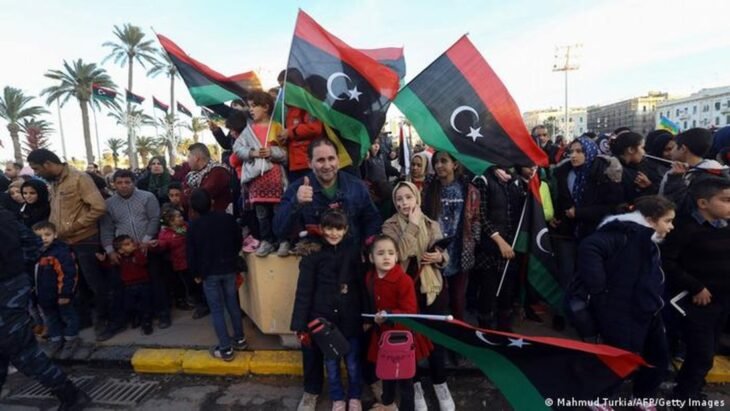
 Foreign Minister Maas reopened the German representation in Tripoli after seven years. But it is questionable whether the peace process and the planned elections are on the right track. Read More
Alessandro Scipione
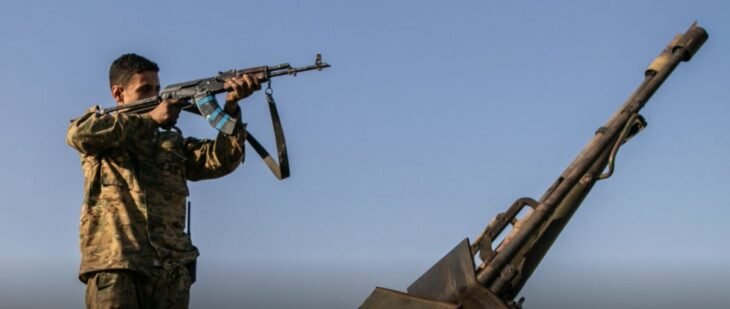
 The United Nations plan to bring Libya to the elections by the end of the year is about to collapse, with the risk of prolonging the agony of a country that in theory boasts the largest oil reserves in Africa and that until ten years ago was main ally of ‘Italy in the Mediterranean. Read More
Nuruddin Farah
 The changing of the thematic agenda on Libya is a yearly affair. International organizations operating in and around the country meet in working groups to decide what area of activity is the easiest to focus on in the unstable country. Read More
Salma El Wardany & Hatem Mohareb
 A fresh wave of protests at Libyan oilfields and ports is threatening to derail months of stability in the OPEC member’s crude production and exports. Read More
Simon Watkins
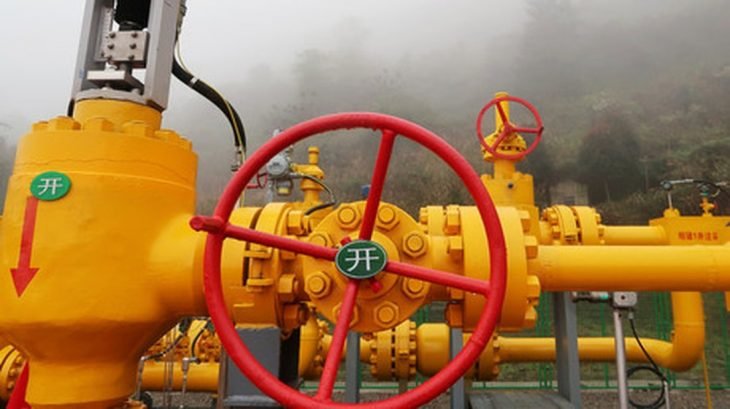
With its crude oil production already the subject of various ongoing political divisions since the onset of civil war in 2011, another rift has opened up, this time between Libya’s Oil Minister, Mohamed Oun, and the chairman of its National Oil Corporation (NOC), Mustafa Sanalla. Read More
Tarek Megerisi
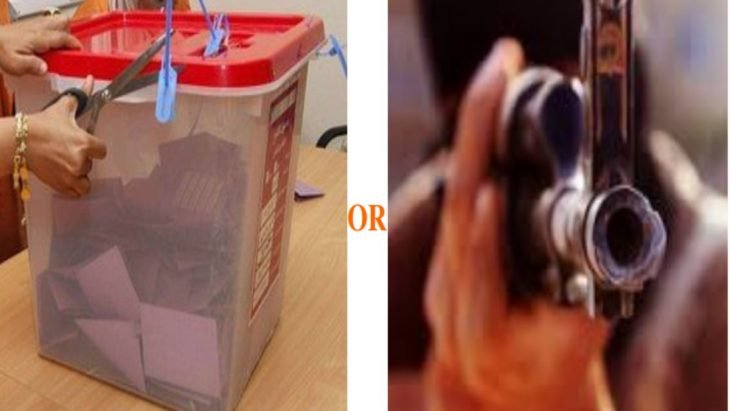
The announcement, with great fanfare late last year, that Libya would hold elections in 2021 was meant to be the highlight achievement of a political dialogue brokered by the United Nations that aimed to end a decade of chaos in the country. Read More
Alta Vermeulen
 In October 2011 Libya’s civil war came to an end. After eight months of brutal civil conflict and instability Libyans were free from Gaddafi, but faced yet another challenge: building a new country for themselves after the Libyan transitional government declared the country liberated.
After rebel fighters found Gaddafi near his hometown in Sirte, and shot him in the head, the Libyan people were described as not only liberated but also as collectively relieved and free. Yet the vacuum left in Libya had to be filled, and it was up to the National Transitional Council (NTC) to complete that task.
During Gaddafi’s years of unchecked power the dictator managed to demolish ideas of state, institutionalism and community. Civil and political organisations suggesting alternatives were quickly removed from the local political arena. Still, some of Gaddafi’s worst acts may not have been oppression and murder, or the squandering of national wealth.
The acts which leave the post-Gaddafi Libya in turmoil to recover is amongst others the disruption of the culture of the political community and the undermining of the growth of the cultural components required for development.
NATO – Then and now
In June 2011 NATO’s secretary general, Andrew Fogh Rasmussen, urged the international community to prepare for a post-Gaddafi Libya, as the NATO alliance then extended its UN mandated campaign to include more air strikes and to protect the civilians.
According to Mr Rasmussen real progress had been made at that stage and NATO actions had prevented a massacre in Benghazi in the east – at the time the rebel’s stronghold – and in the rebel-held city of Misrata in the west.
Regarding a post-Gaddafi Libya, Rasmussen warned that the UN and other bodies should be ready to work towards ensuring a smooth transition to democracy. This statement indicated that the NATO’s plan was to ensure only the removal of Gaddafi and that the responsibility for further transition and development would be left to the UN and other bodies – NATO’s work being done.
NATO officials insisted that any future operation would not include alliance troops on the ground in Libya and would only come in support of other international organisations, which would likely be a stabilisation mission led by the UN.
Shortly after the brutal execution of Gaddafi the UN began with talks with the NTC on the country’s transition to a democratic state. Leaders of the rebellion planned an eight-month deadline to organise elections, once they have made a ‘declaration of liberation’.
Subsequent developments proved that none of these talks and declarations would make the transition any easier, nor would it speed up the process.
After the ‘liberation’ of the state, NATO committed to continuing its military air support for the revolution, though the general secretary did stress that it was not an indefinite plan and that the current operation would only continue as long as there was a clear threat against the civilian population, but not a second longer.
True to that promise, NATO announced a full withdrawal of troops to be set for the 31st August 2011. Whether all threats to the civilian population had been removed is a question yet to be answered. NATO described the Libya mission as one of the most successful missions to date, in spite of widespread criticism of its unchecked distribution of weaponry to local forces.
At the time, British Defence Secretary Philip Hammond said that the armed forces can be proud of their hard work and that it has assured the liberty of the Libyan people. In hindsight the question can be asked – exactly which Libyan people were he referring to?
The United Nations
Playing a managing role in Libya’s democratic transition is bound to be a difficult task, given the decades of brutal rule. The political and security challenges that faced the country were not only those of the legacy of authoritarian rule, but also the dysfunctional state institutions and confusion around political norms.
Regarding this difficult task, the UN Support Mission in Libya (UNSMIL) provided government officials with advice on issues regarding national political dialogue and priorities for the transitional period.
The United Nations Support Mission in Libya is a special political mission established in September 2011 by the UN Security Council in its Resolution 2009; at the request of the Libyan authorities following six months of armed conflict to support the country’s new transitional authorities in their post-conflict efforts.
All UN activities for the Libyan people are guided by the principle of national ownership. UNSMIL was mandated for an initial period of three months and extended for another three months thereafter.
The Security Council, in its Resolution 2022 in December 2011 expanded the mission’s mandate and it was further modified when the Security Council extended the Mission for 12 more months in March 2012.
In March 2013, Resolution 20195 extended the mandate once again for an additional 12 months.[8] The continued extension of the Mission led not only to confusion amongst the Libyan people, but also left a large gap for the NTC to prove their worth.
UNSMIL has substantive staff in political affairs, human rights transitional justice, mine action, demobilisation, development, women empowerment, public information and communication, as well as support services staff.
UNSMIL assisted Libyan authorities – at their request – to organize the General National Congress elections, one of the cornerstones of Libya’s democratic transition as stipulated in the National Transitional Council’s Constitutional Declaration.
Efforts focused on technical and operational advice to key interlocutors, principally the High National Election Commission (HNEC) during the elections that took place on 7 July 2012.
Libya’s 2012 elections and its aftermath
For some, the transitional government could have been described as largely ineffective – delivery systems for public goods were broken down, and armed militia groups exerted violent strength without fear of punishment.
The time between the ‘liberation’ of Libya and the democratic elections can easily be described as chaotic and presented an opportunity for some to take revenge and settle scores. National elections offered the only way to escape a situation where Libya was fast becoming one of Africa’s failed states.
After the historic parliamentary election in June 2012, the UN showered Libya with praise for handling a successful election amidst difficult circumstances.
The election was the first democratic election in 47 years. Around 65% of the electorate turned out to vote. Given the frail nature of the political landscape in Libya, who won and lost in the elections was not a simple process.
With the longevity of the Gaddafi regime in the background, Dr. Ahmed Jehani, head of the Libyan Development Policy Centre and former chairman of Libya’s transitional Stabilization Team, accurately described Libyans’ reactions to the elections as a child’s response to a new toy – full of curiosity.
Between Jbril’s liberal coalition, the Muslim Brotherhood, and Al Watan, a sudden swell of previously unrealised political sentiment arose within the population. This new political rivalry proved another factor which left the aftermath of the 2012 elections not quite as stable as claimed by participating organisational bodies.
2013 – The possible final chapter for ‘post-Gaddafi Libya’?
In July Libya’s national assembly passed a law providing for the election of a committee to draft a new constitution following the overthrow of Gaddafi.
The 60 members of the constitutional committee will be elected by popular vote, and will have 120 days to draft the charter. They will be divided equally amongst Libya’s three regions: Tripolitania in the west, Cyrenaica in the east and Fezzan in the south.
The model resembles the committee that drafted Libya’s pre-Gaddafi constitution, implemented when it became an independent state in 1951. Those responsible for drafting the constitution will need to take into account not only the local and cultural tensions, but also the new political-, and old tribal rivalries in Libya.
On the constitutional committee, six seats will be reserved for women and another six will be given to members of the Amazigh (Berber), Tibu and Tuareg communities. Candidates will stand as individuals, not representing political parties.
The country desperately needs a viable government and system of rule so that it can focus on reconstruction and healing the divisions created by the civil war and toppling of the Gaddafi-regime in 2011.
Armed violence and lawless areas caused mostly by the collapse of totalitarian rule of Gaddafi and the continuing power of rebel militias has crippled governance in large areas of the state.
A sharp decrease in oil production is only one of the economic implications caused by the ineffectiveness of the states’ security forces, in spite of the efforts of the General National Congress elected for an 18-month term in 2012.
The reality calls for a national political dialogue that seeks agreement on the priorities for the rest of transitional period. UNSMIL has provided government officials with advice on issues of such dialogue. UNSMIL has been supporting the efforts of the Libyan Government and people to ensure the success of the democratic process, which has been underway since the end of the Gaddafi-regime.
The risks regarding the new constitution and governance of Libya should not be underestimated; the road to democracy is not as quickly paved as previously thought by the UN. The transition to a successful democracy remains a challenge, for both the Libyan government and other bodies involved, like UNSMIL.
Security and political challenges still plague the country and areas of concern remain the treatment of detainees, border security, the continuing weak state of security sector institutions and the ever present threats from the south of the country.
As important as a constitution and elections may be for ushering in a new political beginning for Libya, the Libyan people will continue to endure the legacy left to them over the decades of totalitarian rule. Being ruled by a bizarre set of laws with no political coherence, drawn up in a Green Book is not a time soon to be forgotten.
***
Alta Vermeulen – Faculty Member, Political Science, University of the Free State.
___________