Archive - 2021

Turbulent 2021 for Middle East and North Africa

While reconciliation among Gulf nations gave hope, Gaza war, dismissal of civilian governments in Tunisia, Sudan were dampeners.

Ali Abo Rezeg
The Middle East and North Africa (MENA) region continued to witness plentiful events in 2021, from reconciliation among Gulf nations to Israel’s onslaught on the blockaded Gaza and the removal of civilian democratic governments in Tunisia and Sudan.

Read More

Libya: Extent of Gaddafi’s financial support for IRA stunned British intelligence

Libyan leader provided the group with $45m in cash, according to secret documents released by Ireland’s National Archives

Suffering from extensive sanctions following the bombing of a Pan Am airliner over Lockerbie in 1988, the Libyan leader Muammar Gaddafi in the summer of 1992 decided to reveal details of his support for the IRA in a bid to repair relations with Britain

While the information about the number of arms shipments, which Britain immediately shared with the Irish government, as generally in line with London’s own estimates, British intelligence was shocked at the amount of financial aid.

Having been told the figure of over $12.6m in cash – the equivalent of roughly $45m in today’s money – British officials said: “Libya has given PIRA (the Provisional IRA) far more money than we had thought”.

Meanwhile, a Gardai memo to the Department of Justice in June 1992, part of the documents released on Tuesday, outlined in detail the arms shipments from Libya to Ireland between March 1973 and October 1987. 

Supplied in five shipments – one in 1973, and two each in 1985 and 1986 – the arms were detailed as 1,450 Kalashnikov automatic rifles; 180 pistols; 66 machine guns; 36 rocket-propelled-grenade launchers; 10 surface-to-air missiles; ten flame-throwers; 765 grenades; 5,800kg of Semtex explosive; 1,080 detonators; and almost 1.5 million rounds of ammunition of various types.

The shipments finally came to an end in October 1987 when France intercepted a sixth shipment, stored aboard the cargo ship MV Eksund.

Libya also handed over the names of IRA members who had received military training in Libya, although the vast majority of names appeared “to be nom de plumes which were assumed by PIRA personnel to disguise their travel to Libya”.

‘Gaddafi is mad’

The state papers, released under Ireland’s 30-year rule, showed Libya had earlier tried to get Dublin to help in repairing relations with Britain. 

In 1988, Tripoli told the Irish Embassy in Rome said it wanted its “good friends in Ireland to help them in their objective”. 

However, Ireland’s foreign ministry was not interested, believing Libya was “trying to use us as a vehicle for gaining international respectability”.

The documents also reveal that Irish Taoiseach Charlie Haughey and the British Prime Minister John Major met at Government Buildings in Dublin in December 1991 to discuss intelligence indicating Libya was responsible for the Lockerbie bombing. 

“There is no doubt that Libya is responsible for the blowing up of the Pan Am flight… The thing is, what do we do? Libya is a terrorist state,” said Major.

Haughey replied that Dublin would support whatever UN or G7 action was taken even if it hurts the Irish economy.

“The trouble is that Gaddafi is mad,” Haughey cautioned, with British officials saying Egypt had tried to “bring him around” but without success. 

Gaddafi ruled Libya from 1969 until his overthrow and death during the Arab Spring in 2011.

_________________

Read More

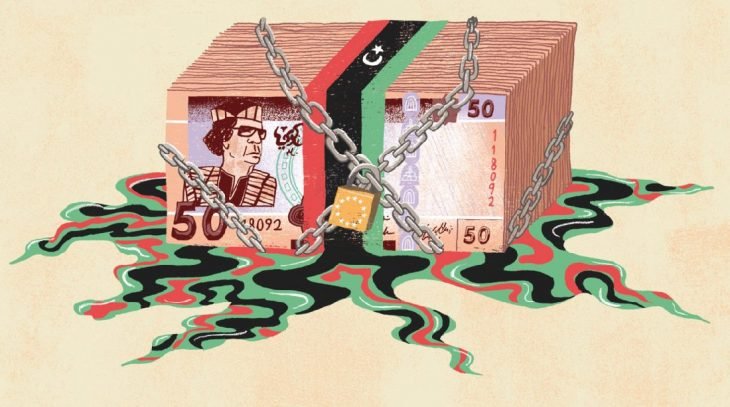
Libya: Investing the Wealth of a Nation (2)

 The extraordinary story of Libya’s overseas investments and seemingly endless battle over their control

Tim Eaton

PART (II)

 The asset freeze and the rest of the iceberg

Back in 2011, following protests in Libya, the international community was quick to freeze assets it deemed could be used to fund the Gaddafi regime’s military campaign. UN Security Council Resolution 1970, passed on 28 February 2011, announced an asset freeze on specific members of the Gaddafi family. Read More

The Next Day Scenarios

Abdullah Al-Kabir, a Libyan writer 

Some analysts and observers of the Libyan issue have noticed the sudden amendment made by Aqila Saleh to the President’s Elections Law, regarding the minimum age for a candidate, and reducing it from 40 years to 35.

At the time, suspicions went that the reason for this amendment was to allow one of Haftar’s sons to run for the elections, because most of the terms of candidacy were designed to nominate Haftar and prepare the way for his victory, and if any unexpected development occurred and Haftar was excluded or refrained, his son would run in his place.

This amendment was not a desire or a suggestion from the MPs, but rather a suggestion by the High National Elections Commission, which during the time of mobilization for the elections, turned as a destination to the western ambassadors, and the MPs did not hesitate to approve or amend the last version of the law, which may a major active country was behind it, for the purpose of pushing a new candidate from outside the well-known political and military blocs.

But opinion polls do not indicate the possibility of winning a candidate other than the well-known controversial names. How can the voters be persuaded of an unknown figure who has no chance of competing with senior figures, and then this non-controversial  candidate will not be the dark horse in these elections?

But pushing an unknown, non-controversial figure is possible if things go towards establishing a new political agreement, as happened in the Skhirat Agreement, no one expected Fayez Al-Sarraj to be chosen as president, and the same thing was repeated in the Geneva Agreement through the list of Menfi and Dbeibah.

One of the contingency scenarios, after the postponement of the elections became likely, is to go to another political settlement by forming a new government that includes all parties, and obtains local and international acceptance comparable to what the current government enjoys.

As usual, the UN mission, with the active countries behind it, supervises the formation of this government through the Political Dialogue Forum, or from the candidates after a first round of elections, the results of which are expected to be close due to the large number of applicants, with the exception of the most fortunate names, which do not exceed five, most notably the Prime Minister of the Government of National Unity, Abdel Hamid Dbeibah and Saif Al-Islam Gaddafi.

The controversy over the legality of the Prime Minister Abdel Hamid Dbeibah’s candidacy to run in the competition is heading towards the formation of a wide bloc of candidates to face him as the expected winner, after judicial appeals failed to expel him. Therefore, the map of alliances will change sharply in order to achieve a missing balance with him.

As for Saif  Al-Islam Gaddafi, given the strict Western stance in excluding him, and this may be done accidentally through judicial appeals. If he bypasses the appeals and returns to the race, the path will change towards a political settlement that will not enable him to play an influential role, or the election law will be re-drafted to invalidate his candidacy, as the US-British position did not leave any room for the possibility of accepting him in a leadership position that would force them to deal with him.

The point is that the intensity of the international and regional conflict for different and sometimes conflicting goals, with the protracted dispute over who will take the position of the UN envoy to succeed the resigned envoy, and the reliance of some candidates on international support, may push the continuation of managing the crisis and freezing the conflict, with an acceptable settlement through the Political Dialogue Forum, or after a first round of presidential elections, after which the 10 or 20 highest votes will be chosen to achieve a settlement and share power in a new government.

In addition to these expectations, USA, along with some allies, may push other suggestions that satisfy most of the parties to the conflict, and not push matters towards provoking the Russian opponent, or dragging the country into a new war, as the complex chaotic scene is open to all expected and unexpected ends.

The return of past ghosts from election gate

The December election fever continue with the candidacy of Khalifa Haftar, with all his criminal record, and Saif Gaddafi, who is wanted by the local and international judiciary, for the presidency in Libya, and then came a third, with the candidacy of Aqila Saleh, the Speaker of the House of Representatives (HoR), he is the one who granted Haftar ranks, titles, and legitimacy to commit his horrific crimes, before the people adopted the constitution and decided the type of state they preferred, and the system of its powers.

Is it a presidential or parliamentary republic or will it be a monarchy? Will it adopt the federal system or will it remain centralized? Where do the powers of the president end and the powers of HoR and the government begin? There is no constitutional basis for the authority to be formed by elections. This confirms that the elections, especially the presidential elections, are no longer a purely Libyan affair, but rather an international goal that achieves the interests of several countries whose interests intersect and conflict with Libya.

Saif did not find any legal impediment to prevent him from running in the presidential elections, according to the law enacted by Aqila Saleh, with detailed conditions that fits him and Haftar, leaving the door open for their return to their previous positions in the event of failure, and excluding a strong candidate, their chances of winning diminish with his presence and he is the Prime Minister of the Government of National Unity, Abdul Hamid Dbeibah. Aqila deliberately did not include a term in the conditions of candidacy that prevents the wanted person from running for elections, because Haftar is wanted by the judiciary with an arrest warrant issued by the Public Prosecutor after his televised coup in February 2014.

But things sometimes go in unexpected paths, and they were not planned or taken into account. Candidates will be presented to all Libyan legislation that are related to civil rights, not only to the terms of the Aqila presidential elections law, then the scope of the conditions expands and extends to the fields that Aqila and his group of MPs sought to avoid, until the competitors’ chances are reduced or they are eliminated, and the presidency comes to be obedient to him or his staunch ally Haftar.

The election fever and the controversy over all its details will continue to escalate as we get closer to its date, there is no complete certainty that the path is actually moving towards its implementation, the circle of objections to its laws is widening, and the rejection of the candidacy of Haftar and Saif Gaddafi is a fixed position in the west of the country, to the point of threatening to close the polling stations, and there are no guarantees that the Ministry of Interior will be able to implement its plan to secure all polling stations, in Haftar’s security regime remained in control of the east of the country.

Hence, all possibilities, including postponement, are available despite the international insistence on implementing it, without ignoring the risks of this postponement, which some local and regional parties are seeking, for the current fragile stability.

Regardless of the expected political developments in the midst of this shift in power, and the expected and unexpected changes in the map of alliances between the enemies and friends of yesterday, the return of the ghosts of the past does not at all indicate a setback or retreat of the revolution, and that change is around the corner from its abort, and the return of the old regime with its rules, pillars, and alliances through the natural heir Saif Gaddafi or the hybrid Haftar.

This moment is not different from the struggle that preceded it between the forces of revolution and change and the forces that oppose it, but rather it is the natural extension of it. This is the essence of the conflict, no matter how different the masks behind which the remnants of the former regime and Haftar hid their faces, to jump on power and resume rule with the tools and rules of dictatorship.

The most eloquent description of this moment in which the collapsed regime returns through the specter of Gaddafi, seeking to restore his power, is the saying of the Italian philosopher Gramsci. “Old is dying and new is born.”

Undoubtedly, the dying will be prolonged and childbirth will be difficult. But the death of the old is inevitably coming, and the new must be born after all this labor, pain and blood, the moment of change emerged a decade ago, and the struggle is continuing towards its affirmation and dedication, despite all the obstacles and conspiracy. After inhaling the air of freedom, peoples will not return to the stench of tyranny.

The shining proof is that the Arab peoples in Syria, Tunisia and Sudan did not surrender, and the continuation of their struggle by all means until the remnants of the dark past regimes were forced to submit and surrender to the will of the people to see the future. The Libyan people will not be an exception. Rather, they may be the closest to achieving the desired change and implementing their will to liberate and establish the state for which generations have struggled for more than half a century.

_____________

Read More

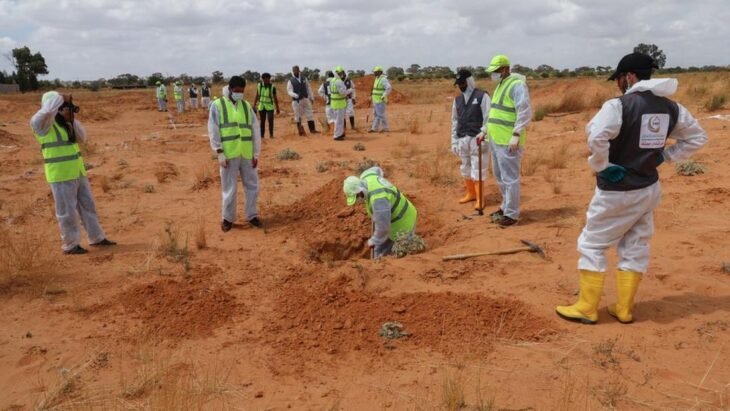
The Tarhuna Holocaust

Abdularazag Al-Dahesh, a Libyan journalist and writer

The Deputy head of the Presidential Council, Musa Al-Koni, did not open the Tarhuna file, but rather reopened a deep wound that had not been mended.

Every time there was new news about the discovery of another mass grave, like paying loans in installments.

Al-Koni put us in a photo of a retrospective, in which Libya is shown in a taxi, while a passenger asks: Have we arrived in Rwanda?

Nobody knows how many mass graves, nor how many victims? Because the truth is also buried in a mass grave, which is not the last.

The killers were not only in military uniforms, as many wore white rags, wiping knives with a handkerchief to ward off sedition.

As a result of this catastrophe, the victims died, suffocating our silence, our indifference, and even pretending to be in a deep sleep.

Thus we need the truth, and the whole truth, even if it is buried in Jupiter, and not the city of The Hague.

Justice is not revenge, tolerance is not impunity, and humanitarian issues are not the Joker in playing political cards.

We must track down the perpetrators of the Tarhuna Holocaust so that Tarhuna does not chase us, as the worst death is to live with a crisis of conscience.

Shall we take another flight back to Rwanda on the restorative justice boat, where there are no more serious and no victims?

The massacres and “Kill the Cockroaches” speech no longer have a place except as photographs in the Genocide Museum in the capital, Kigali.

***

Background

Tarhuna city former stronghold for warlord Khalifa Haftar

 The Euro-Mediterranean Human Rights Monitor welcomed the efforts of the Research and Identification of Missing Persons after discovering two new mass graves that contain corpses of people who have not been identified yet, in the city of Tarhuna, in the agricultural zone known as “Mashro’a Al-Rabet”.

In a brief press release on Saturday, Euro-Med Monitor stated that the Government of National Accord have discovered about 27 mass graves in Tarhuna, 93 kilometers southeast of the capital Tripoli, after expelling the Kaniyat militia, accused of killing, kidnapping, arresting, and torturing hundreds of the town’s citizens.

Since the Kaniyat militia took control over the city of Tarhuna, the residents of the city reported about 338 cases of disappeared persons, which the militia carried out against its opponents. Most of them were disappeared during the battles that took place in the period between April 2019 to June 2020.

Since last June, the Research and Identification of Missing Persons discovered about 120 corpses, including those of children and women. Some of the discovered graves contained whole bodies while some others contained body parts, most of which were found in the agricultural zone.

The crimes the Kaniyat militia committed in Tarhuna, including murder and enforced disappearance, are crimes against humanity, which fall within the duties of the International Criminal Court (ICC) and require prosecuting and holding the perpetrators accountable under the principle of command responsibility.

Euro-Med Monitor calls on the United Nations to provide forensic experts to identify the bodies of the missing, to assist the Government of National Accord in its investigation, and to make the necessary efforts to reveal the fate of the perpetrators and bring them to a fair trial.

______________

Read More

Libya: Investing the Wealth of a Nation (1)

The extraordinary story of Libya’s overseas investments and seemingly endless battle over their control.

Tim Eaton

 PART (I)

Attention is once again focused on Libya as the political process being convened by the United Nations (UN) has agreed the appointment of a new interim government to see Libya through to elections at the end of 2021. Read More

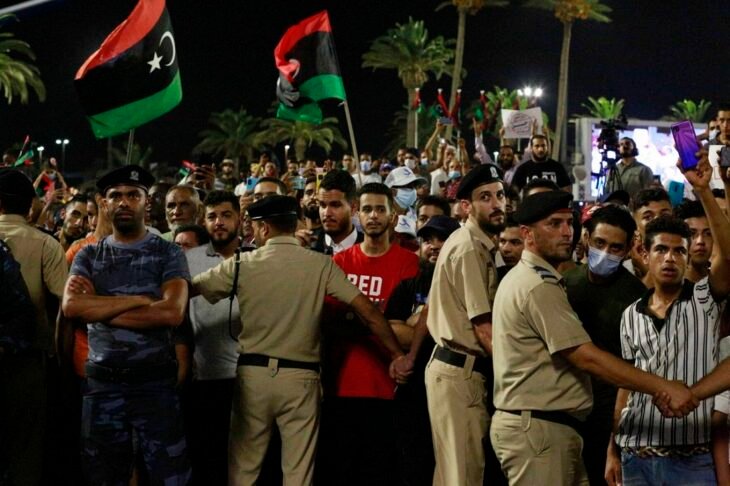
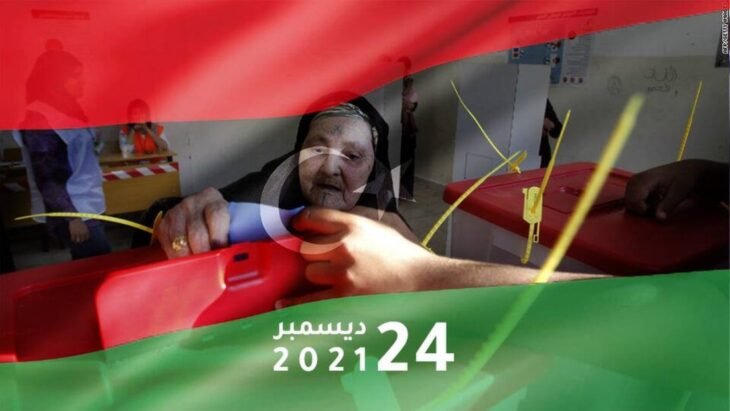
In Libya, anger and uncertainty after polls delayed

Libyans express frustration after presidential election scheduled for December 24 was indefinitely pushed back.

Libyans have reacted with a mix of anger and hopelessness after authorities announced the postponement of a crucial presidential election initially scheduled to take place on Friday.

The electoral commission on Wednesday suggested the vote – aimed at ending a decade of chaos in the country – be pushed back by a month, owing to a lack of preparedness and disagreements between various political forces on the legal basis of the poll.

Mohammed al-Wafi, a resident of the capital, Tripoli, could not hide his dismay as he affirmed that the Libyan people were “thirsty” for the elections.

“We refuse to postpone the elections. I am talking about the opinion of the entire Libyan street. We, as citizens of the south [region], support holding the elections on time, frankly,” al-Wafi said.

The electoral board has suggested pushing the vote back by a month to January 24, but given the animosity between the eastern-based parliament and authorities in Tripoli, agreeing on a new date will be far from easy. 

Some 2.5 million Libyans had collected their voter cards, out of a population of seven million.

But the vote has been made complicated by a deepening rift between the rival leadership that emerged in the country’s east and west following the NATO-backed uprising that removed longtime ruler Muammar Gaddafi in 2011.

To start with, there is Speaker Aguila Saleh’s insistence that Libya first proceed with a presidential vote before parliamentary elections can take place.

Critics hold that Saleh, who heads the eastern-based House of Representatives and is running for president, views the vote as a winner-take-all contest.

This is a prospect that has unsettled many Tripoli residents, including Ahmed Baiyed, who said the vote could have resulted in a president whose powers would be ambiguous in the absence of a constitution.

“I’m happy the presidential elections aren’t happening. To hold elections, you have to have a foundation. Our foundation is a constitution,” Baiyed told Al Jazeera.

“If we don’t have a constitution that identifies what kind of governing system we have, and the powers a president has, how can we vote for a president?”

This was a view shared by Othman al-Amari, who regretted that parliament has been unable to deliver after many years in power.

“We need to have parliamentary elections first, and then a presidential one,” he said. “The parliament has been in power for several years and they haven’t done anything.”

And then there were disagreements over who should be allowed to run in the election.

The three most prominent candidates – Khalifa Haftar, Saif al-Islam Gaddafi and Abdul Hamid Dbeibah – were also the three most divisive.

Haftar was unacceptable to many in western Libya after his 2019-20 assault on Tripoli that smashed parts of the capital. Gaddafi, the son of the former ruler, was convicted of war crimes by a Tripoli court and is detested by many of those who fought in the 2011 revolt.

Dbeibah, the interim prime minister, had promised when he was installed to the post that he would not run in an election. His continued work as prime minister in the run-up to the vote led many of his rivals to say he had an unfair advantage.

Hopes dashed

The delay is another setback in Libya’s interminable transition, after 42 years of one-man rule and a decade of civil war.

The era under Muammar Gaddafi from 1969-2011 was marked by brutal repression, but Libyans did benefit from a generous welfare system paid for by revenues from Africa’s biggest oil reserves.

But the revolt that toppled Gaddafi turned into a complex war dragging in mercenaries and foreign powers. The country’s infrastructure and economy steadily degraded, with electricity cuts and runaway inflation becoming the norm.

In Tripoli, Dbeibah’s interim government has been working to sign reconstruction contracts and revive the city, heavily damaged by Haftar’s 2019-2020 attack.

Were those efforts all in vain?

Businessman Ibrahim Ali-Bek believes war could easily break out again.

If it does, “normal citizens will pay the price”, he said.

At the other end of the country in Benghazi, the birthplace of the uprising against Gaddafi, residents face similar problems.

Engineer Mohamed El-Jadi says he took part in the uprising in the hope of “more freedom and prosperity”.

El-Jadi said he was disappointed by the delay in the elections.

“Our standard of living has dropped, our salaries haven’t changed despite inflation and we’re living in an unstable environment,” he said.

“The main players in the conflict, who mostly then decided to stand in the elections, knew they had little chance of winning. That’s why they disrupted it,” he said.

______________

SOURCE: AL JAZEERA AND NEWS AGENCIES

WHY LIBYA’S ELECTION HAS COLLAPSED AND WHAT COMES NEXT

Libya said on Wednesday its planned election would not take place but it has not set a new date or worked out how to move forward to avoid a return to conflict.

This sets out the main issues and what might happen next.

HOW DID WE GET HERE?

Libya fell apart after the 2011 uprising against Muammar Gaddafi and split in 2014 between warring eastern and western factions. The peace process follows the collapse in 2020 of eastern commander Khalifa Haftar’s 14-month assault on Tripoli.

Eastern and southern areas are held by Haftar’s LNA, with western areas including Tripoli held by various armed forces that backed the government there.

A year ago the United Nations held talks between delegates from all factions to chart a path forward. They agreed to install a unity government to rule until simultaneous parliamentary and presidential elections on Dec. 24.

WHY HAS THE ELECTION BEEN DELAYED?

Libya’s old institutions, along with major factions and potential candidates, did not agree on rules for the election including its schedule, what powers the new president or parliament would have, and who could run.

Parliament speaker Aguila Saleh, who is a presidential candidate, issued a law setting a first round of the presidential election for Dec. 24 with a second round run-off and the parliamentary election to come afterwards.

Putting the presidential vote first meant the election came down to a winner-takes-all contest between candidates from violently opposing factions.

Other political institutions rejected the law, accusing Saleh of passing it without any proper parliamentary process.

However, Saleh’s law formed the basis of the electoral process and disputes over it grew wider as very divisive candidates entered the contest.

WHO ARE THE MAIN CANDIDATES?

Some 98 people candidates registered for the presidential race – including some who were seen as unacceptable in parts of the country or to powerful armed factions.

Saif al-Gaddafi registered despite his conviction in absentia by a Tripoli court in 2015 of war crimes during the rebellion that ousted his father Muammar Gaddafi in 2011.

Eastern commander Khalifa Haftar, whose Libyan National Army waged a destructive 14-month offensive against Tripoli, is rejected as a possible president by armed factions and many people in western areas.

Abdulhamid al-Dbeibah, the interim prime minister, had promised not to stand for election when he was appointed. Other candidates say his presence on the ballot is unfair.

Without clear agreement on the rules, let alone on who would enforce them or adjudicate disputes, the electoral commission, the parliament’s election committee and the fragmented judiciary were unable to agree a final list of eligible candidates.

WERE THERE OTHER PROBLEMS?

Most of Libya is controlled by armed forces that back rival candidates and without extensive independent monitoring there would likely be claims of fraud or voter intimidation.

Two incidents last month showed the risks. Fighters closed a court to stop Gaddafi’s lawyers lodging an appeal against his disqualification. And the electoral commission said fighters had raided several of its offices, stealing voting cards.

A disputed result could rapidly unravel the peace process, replicating the aftermath of the 2014 election when warring factions backed rival administrations.

WHAT COMES NEXT?

The electoral commission has suggested a one-month delay but the parliament may seek a longer one. Negotiations continue among candidates, Libya’s political institutions and foreign powers.

A short delay may not be enough to resolve the arguments that derailed Friday’s vote. However, fixing those problems could require more time, raising questions over whether the interim government could stay in place.

The future of Dbeibah and his government during the coming period has rapidly become one of the main topics of dispute among rival camps.

WHAT ARE THE RISKS OF ANOTHER CONFLICT?

If the peace process falls apart there is a risk that eastern factions could again form a breakaway government at war with Dbeibah’s administration in Tripoli. However, analysts think that is unlikely for now.

The more immediate risk is that a political crisis could add fuel to local disputes between rival armed groups that have mobilised in western Libya in recent weeks, leading to a new round of fighting inside the capital.

_________________

Reuters

Read More

Libya, 70 Years Ago

Regardless the fact that Libya today suffers from problems related mainly to the wrong interventions that exacerbated the situation over many years until it got to where it has reached today, ranging from fragmentation in its institutions and a decline in the services provided to its people, and a deterioration in the standard of living of the citizen who happened to be the most affected by the political, security and social instability, as it also suffers from freezing of its assets, restrictions on flights, and the travel of citizens.

Many international and regional organizations have left the Libyan territory. Libya, at the same time, boasts of natural resources extending over a huge area of one million, 760 thousand square kilometers, and a coastline of 1900 km, the longest among the African countries bordering the Mediterranean Sea, and a population close to seven (7) million, with a very low population density (3.74 people/square kilometer), for comparison, the average population density in the world is 14.7 people per square kilometer. In addition to that, Libya boasts of a proud people that refuses to allow any external party to control their country, and faces all dictates, which seek to impose any system or ideology on the governing of the country.

A people who are fully aware of what happened to their country, and fully appreciative of the international efforts and the efforts of brothers and friends to find ways out of the crisis in Libya, the solution therefore should be by the Libyans themselves, cutting off all the blatant interventions that took place since 2011, until this day, and attempts to impose a certain vision, to serve certain geopolitical interests.

Especially since Libya is practically a virgin land, full of treasures that have not yet been discovered, which is what makes it the focus of attention and coveted by many in the world.

The stability and prosperity of Libya will serve a significant contribution to the stability and prosperity of the countries of this continent, building its independent future, and enjoying freedom and sovereignty over its lands, after a century of exhausting the continent’s natural resources, and then its human resources.

That is why the countries of the continent, individually and within the framework of the Union, should work towards aiding Libya to gain its stability, and the faster that happens, the more value added to the efforts to advance our dear continent.

Some groups and personalities, who rather unfortunately, seek to obstruct the democratic path in Libya that is agreed upon by the international community, and supported by neighboring countries and the African continent at large, given the importance of Libya to the stability of the southern coast of the Mediterranean basin, Africa, and the Arab world, only do so for fear of the rise of this great continent with its enormous human potentials and natural resources, which, despite its organized and chaotic looting, are still replete with many of them.

The hands of the clock only moves forward, and surely Libya will start a fresh page based on what the world has witnessed with regards the momentum towards the democratic process, in terms of the massive turnout of people to register in the elections, the high number of candidates in the race for the presidential seat and parliamentary seats, which propagates unlimited confidence in a bright future for Libya, bypassing the crises of the past, and healing the wounds of its children.

It is also necessary to turn over the page on the differences of the past, and for all those who had regional, tribal, ethnic or even ideological differences to join the ranks of the Libyan people, to mobilize all their abilities and capabilities in creating a constructive atmosphere for fair and transparent elections worthy of the Libyan people, for the new Libya must start with personalities open to all bar none, with a high level of competence and acceptance by the majority of the Libyan people, uniting and not separating them, as well as looking for common grounds to operate and not differences, ethnic and ideological classifications.

I am absolutely certain that the Libyan people are a people who appreciate the magnitude of the tragedy they have gone through, and nothing more than the civil war and fratricidal fighting teaches what life means, and what the concepts of stability, security, peace and prosperity mean.

The Libyans will succeed together in choosing the competencies that will save their country from its long repression, enhance the atmosphere of reconciliation and understanding and overcoming the past.

No one wins in a civil war, rather, everyone loses in it. Neither side will impose its viewpoint by force in light of the post-Coronavirus world, the virus that has managed and is still able to defeat us all, without war tanks or cannons. What wins is logic, what wins is achievements on the ground, what wins is serving the Libyan citizen, raising the issues of the people and the supreme Libyan interest above any whims, political or personal interests.

The priority after the elections, which we hope will take place as scheduled, or if it is postponed, then let it be for a short time, should be unifying the Libyan army under a unified banner that preserves the rights of all officers and military without exclusion, legalize the situation of the weapons deployed in Libya, secure the vast borders of the large Libyan state, look out for the interests of the Libyan nation and give them priority over any narrow partisan, tribal or regional interests, and do everything possible to avert any conflict, God forbid. We hope that African and Arab countries will always help the Libyan people to overcome their ordeal.

There is no doubt that Ghana is one of these countries on which we Libyans are relying, knowing well the depth of our bonds, and through the human capabilities which Ghana possesses with experience in peacekeeping operations and conflict resolution and there is also no doubt in saying that through Ghana’s non-permanent seat in the Security Council, it will be a voice for its Libyan brothers, communicating their woes and hopes in the international community with sincerity and enthusiasm, and this is what a brother hopes from his brother.

An entire generation of patriots, who are educated, aware, and experienced, from the sons of modern Libya, will not allow Libya to turn into a failed state.

-__________________

A Tense Libya Delays Its Presidential Election

Mona El-Naggar and 

Libya’s Parliament declared that it would be impossible to hold a long-awaited presidential election on Friday as scheduled, a delay that risked further destabilizing the oil-rich North African nation, which has been troubled by division and violence in the decade since the dictator Col. Muammar el-Qaddafi was toppled and killed in a revolution.

Read More

Libya – Is a Democratic Polity Within Reach?

Anticipation that Libya would, within a couple of months, have a polity established through democratic elections, was rudely punctured.

In the beginning of December 2021, the High State Council (HSC), an advisory body installed through a 2015 peace agreement but not recognised by all political entities, issued a statement that the scheduled first round of the Presidential elections on December 24, should be delayed till February 2022 after resolving differences over rules and the legal basis of the elections. The statement also said that the presidential and parliamentary elections should both take place on the same day, as was originally demanded by the U.N. roadmap.

The fighting in Libya between General Khalifa’s east Libya based Libyan National Army and the recognized government ended in 2020 following Haftar’s failure to take Tripoli which had been bolstered by Turkish troops and Syrian mercenaries.

A ceasefire deal was negotiated in October 2020 under the tutelage of American diplomat Stephanie Williams who had recently been appointed the UN Representative following the resignation of Jan Kubis. The agreement led to an agreement on a transitional government in early February 2021.

A roadmap was drawn up to hold the Presidential elections in December 2021. But the House of Representatives Speaker Aguila Saleh Laws issued laws in September-October 2020 for the conduct of the elections. His critics accused him of issuing the laws without a quorum or a proper vote in parliament and after intimidation against some members.

The net result was uncertainty about what would prevail-the UN defined roadmap or the laws issued by Aguila. This confusion was cited as a reason necessitating a postponement of the first round of the Presidential election. International powers and the U.N. had maintained their stance that polls must go ahead but had now stopped referring to the planned Dec. 24 date in public statements.

There was clear evidence that the Libyan people wanted democratic elections to take place quickly. Media reports said that thousands had registered to be parliamentary candidates.

The President of Libya is elected through a two-round system for a five-year term. The 2021 Libyan presidential election had been scheduled to be held with the first round on December 24 2021, and the second round on 24 January 2022.

Registration of candidates for the Presidential elections Registration for presidential candidates opened on November 7 2021 and lasted until November 22 2021. A total of 98 individuals, including two women, had sought to contest the elections. Among the notable names were the late Muammar Gaddafi’s son Seif al-Islam Gaddafi, Khalifa Haftar, commander of the Libyan National Army, Aref Nayed, Chairman of the Ihya Libya Party, influential former interior minister Fathi Bashaghaf and caretaker Prime Minister Abdul Hamid Dbeibeh.

Libya’s current election laws bar Dbeibah from being a candidate given his current position from which he had not suspended himself at least three months before the polling date as per the election law.

A preliminary list of 73 presidential candidates was released by the High National Election Commission on 24 November. Twenty-five candidates were disqualified from the election, including Seif al-Islam Gaddafi, Nouri Abusahmain, Bashir Saleh Bashir, and Ali Zeidan. With December 24 fast approaching the High National Election Commission said it would not release the final list until all legal issues had been settled. In a country dominated by numerous armed factions, accusations were being freely hurled about the intimidation and bribing of judicial and administrative officials to sway the final list of candidates.

The role of the factions became apparent when armed men surrounded the court in the southern province of Sabha which was hearing Seif ul Islam’s plea against his disqualification. After the over throw of Late Muammar Gaddafi In 2015, the Libyan Dawn militia, the military arm of the Muslim Brotherhood’s parliament, had put Seif on trial, sentenced him to death, and ordered the Zintan fighters to transfer him to Tripoli for execution. They had not and instead released him after only two years. Seif had also been wanted by the International Criminal Court on charges of crimes against humanity related to the uprising against his father.

With the delay in announcing the final list of candidates less than a week before the vote, there was almost no time remaining for the final list of candidates to campaign across Libya, giving a possible, but not definite, advantage to those who were already well known.

Among this select group were Seif ul Islam with his tarnished past; General Khalifa Haftar, a one -time reported CIA asset and a favourite of Egypt and the UAE, whose reported dual nationality-though denied by him- could disqualify him; influential former interior minister Fathi Bashaghaf and the person who could perhaps be a possible consensus candidate – Parliamentary Speaker Aguila Saleh. Saleh was well known because of his present position and was also seen as neutral as it was possible to be in Libya. All these known candidates promised progress and peace and prosperity though some of their individual pasts prompted scepticism about such promises.

But what would be the reality after the elections? Very strict international monitoring is called for if the elections were to be at all credible. But would they resolve the decades long tensions between the east and west allowing a once prosperous nation to rebuild its economy?

Was a stable polity even possible with the continuing presence of thousands of foreign fighters and troops who, as per the October 2020 cease-fire agreement, should have left within three months ? Would those contesting the Presidential elections forego their ambitions if they lost to a rival? Or would Libya, with each of the strong men commanding armies, regress to civil war again?

The answers to these questions would lie in the election results-if indeed the UN and the supporters of Haftar and the current government can ensure that the elections are actually held.

________________

Read More

The Ramifications Of A Lack Of A National Identity In Libya

Alamin Shtiwi Abolmagir*

As the Taliban retook Afghanistan, President Putin of Russia marshalled events there as evidence of the injudiciousness of Western policy.

In his interpretation, it was proof that the time had come for the West to end the “irresponsible policy of imposing foreign values from abroad” and decried the counterproductive desire to “build democracy in other countries according to foreign templates … and completely ignoring the traditions by which other nations live”.

While, all too often, Putin has deployed such concepts in justification of the autocratic rule he imposes in Russia and his allies impose around the world, there is something to be said for such caution on the part of the West when it comes to another country that finds itself in grave danger: Libya. 

Late last year, the UN announced that national elections would take place in Libya on 24 December 2021 following talks in Tunis. On 8 September, the House of Representatives ratified a law mandating direct presidential elections, shortly after which the embassies of major Western powers backed the UN’s call for elections to be held according to the schedule.

Ján Kubiš, the head of the UN’s Support Mission in Libya, not too long ago, called for elections to be held that are as “inclusive and credible elections as possible under the demanding and challenging conditions and contradictions”. He warned that failure to hold elections could deepen divisions and ignite conflict. Rather, imperfect elections – and, in fact, any elections at all given the present situation in Libya – as Kubiš appeared to support, would be more likely to prompt a period of political instability than aid Libya on its path to progress.

Thus, just shy of a month before presidential elections are meant to take place, rather than marking Libyan independence day with elections that ostensibly will see the county move forward, it looks increasingly likely that holding elections so soon will deepen the present crisis in Libya. The beginning of this is already evident, with a slew of court rulings excluding the likes of Saif al-Islam Gaddafi and Khalifa Haftar from contending in the upcoming election. 

Whispering Bell, a risk management consultancy, recently warned that opposition to elections in the western parts of Libya may result in “direct attacks on election-related assets”, including those of the High National Elections Commission and even potential candidates. Fighting in Tripoli earlier this month was the worst in a year.

A certain level of state capacity is required in order for elections – and elections considered legitimate by the population – to be held. Libya, at present, sorely lacks sufficient state capacity. Similar issues plagued elections scheduled for 2018 before they were suspended owing to outbreaks of violence. Then, ISPI noted that “among the people formally called Libyan, we’re a very long way from elections being uppermost in their minds.” The same sentiment holds true today.

ISPI also noted that it is the sense of Libyan nationhood – or lack thereof – that will determine Libya’s fate in the near term. It is there that focuses in the country should be channelled. At present, given the noticeable lack of a national identity, elections would, as above, more likely harm the country than aid it. As Igor Cherstich, an expert on Libya at UCL, wrote in 2011, “Any force attempting to take the reins of the country must demonstrate national legitimacy”. At present, that is a distant possibility.

What is as crucial, in the long run, as halting violence, then, is working toward the establishment of comprehensive national identity in Libya. The achievement of the latter, in fact, is highly likely to have a positive impact on the former and is a central prerequisite to successful elections.

As has long been the case in Libya, individuals draw their identities from tribal, familial, or regional factors, undermining any coherent sense of national identity. Such divisions can be traced back to Italian colonisation policies in the country, which divided Libyans. That is perhaps little wonder in a society divided into 140 main tribes and plethora of sub-tribes. Thomas Friedman even went as far as to argue that Libya was not “real country”, rather merely a bunch of “tribes with flags”. As the United Nations Development Programme foresaw, the entrenchment of divisive political and militia groups in the decade since the overthrow of Gaddafi has undermined the re-establishment of an inclusive national identity. 

Instead of marking independence day with such potentially harmful elections, then, Libyans should look to the man who took the crown on that day in 1951: King Idris. The reimposition of the rule of the Senoussi clan established under the 1951 constitution would see Libya restoring the unitary state which once existed, reflecting the consolidation of a unifying Libyan national identity. The pertinence of that movement, interrupted by Gaddafi’s 40 years of tyranny, although historically been limited to the east of the country, is more evident today than ever before. 

Others have indeed taken up the cause, including genuinely grassroots movements in favour of the restoration of the system devised by the 1951 constitution. Their position, however, warrants far greater – and far more serious – consideration. Instead of focusing on international efforts that have thus far amounted to nothing and divide the country more than they unite it, those interested in the future of Libya must look towards movements whose essence stem from a desire to create the basis for what is so sorely lacking in Libya today; cohesive national identity. 

***

*Alamin Shtiwi Abolmagir is the Deputy Director of the Libyan Organization for the Return of Constitutional Legitimacy.

Read More

Arab Spring: Why western narratives still miss the point

Miriyam Aouragh & Hamza Hamouchene

Uprisings that began in 2010 were about more than anti-authoritarianism and broken promises, but mainstream analyses tend to focus on Orientalist tropes.

Anniversaries have symbolic power, which can be a good opportunity to take stock of what happened and reflect on the positives and negatives. They can also be dynamic moments where we think about how to move forward. 2021 constitutes such a moment, as it coincides with the 10th anniversary of the Arab Spring. 

Back in 2011, a wave of revolt spread across the Middle East and North Africa region, in what came to be called the Arab Spring. The uprisings shook the world. In Tunisia and Egypt, they ignited historic upheavals in North Africa and beyond, as people cheered the toppling of the dictatorial Ben Ali and Mubarak regimes, and looked ahead to meaningful changes in their lives.

These uprisings, like most revolutionary situations, released enormous energy; an unparalleled sense of renewal and a shift in political consciousness. 

The narrative advanced is one of despair and hopelessness: the uprising was not worthwhile – it would have been better to remain in poverty and chains

The peoples of the region are all too familiar with the racist stereotypes in the facile falsehood that “Arabs and Muslims are not fit for democracy and are incapable of governing themselves”. Imperial and colonial dominance over the region have led to it being viewed in some quarters as a homogeneous entity, systematically reduced through negative tropes.

Orientalist imagery of conflict and wars, ruthless dictators and passive populations, terrorism and extremism, rich oil reserves and expansive deserts – such rigid representations of “the Other” are a hallmark of the type of political and geographic violence that has been so well articulated by Edward Said.

The uprisings shattered many of these stereotypes and debunked numerous myths. The winds of revolution that began to blow in December 2010 spread from Tunisia to Egypt, LibyaSyriaYemenBahrainJordanMorocco and Oman. The emancipatory experience was contagious, inspiring people all over the world: activists in Madrid, London and New York, whether calling themselves the Occupy movement or the Indignados, were all proud to “walk like an Egyptian”. 

Deep polarisation

While the last three to four decades have seen attempts to delegitimise radical change through revolution, following the shortcomings and defeats of decolonisation efforts in various parts of the Global South, emancipatory revolutions and uprisings will continue.

Yet, we cannot deny that what started as inspiring uprisings against authoritarianism and oppressive socioeconomic conditions – demanding bread, justice and dignity – morphed into violence and chaos, profound polarisation, counter-revolution and foreign intervention. Various people’s movements found themselves pitted against entrenched authoritarian and counter-revolutionary forces bent on suppressing them. All were met with resistance from the state, often in conjunction with global capital and foreign interference.

The military coup in Egypt ended up restoring a much more ruthless and repressive form of dictatorship. The brutal descent into civil wars in Syria, Libya and Yemen, and the series of crackdowns in Gulf countries such as Bahrain, highlighted the cruel logic of proxy war, so reminiscent of the colonial schemes known all too well across the region.

Tunisians mark the anniversary of the Arab Spring in Tunis in 2016 (AFP)

Tunisia, which had seemed to be the exception to this gloom and doom, is now in a fragile position. And the deep polarisation (Islamist versus secularist) imposed on the masses have distracted them from the key socioeconomic issues that originally launched the uprisings. 

Some mainstream commentators have argued that the Arab Spring gave way to an “Islamist winter”, with Islamist forces coming to power in some countries. Other progressive voices have been less pessimistic, offering a more historically nuanced perspective that views these events as part of a long-term revolutionary process, with ups and downs, periods of radicalisation and counter-revolution.

The latter view received some vindication when, eight years after the 2010/11 events, a second wave of uprisings gripped SudanAlgeriaIraq and Lebanon, followed by a return to the spotlight this year of the unending and heroic Palestinian struggle – all highlighting people’s determination to continue fighting for their rights and sovereignty. 

New horizons

The momentous events that have unfolded between 2010 and 2021 have opened new horizons for people to express their discontent and demand radical change and reforms, forcing almost every government in the region to make political and economic concessions. 

Various misconceptions have also emerged, including attempts by the mainstream media, western governments and international financial institutions to portray the uprisings merely as revolts against authoritarianism, seeking the stunted type of political freedoms and democracy that exist in western countries. This avoids any class analysis and separates politics from economics, ignoring the fundamental socioeconomic demands of bread, justice and dignity.

But the distortions did not stop there. The Tunisian and Egyptian uprisings were dubbed by western commentators as “Facebook and Twitter revolutions”, exaggerating the role of social media in fomenting them. Another dominant, but no less superficial, framing interpreted the revolts as primarily youth uprisings against the older generation – the product of a “youth bulge” in affected countries. 

A decade later, mainstream narratives commemorating the 10th anniversary have gained little insight. Reports speak of failed and lost revolutions, and of broken promises. But the dominant tone is captured in the headline of a Guardian article published last December, referring to Mohamed Bouazizi, the street vendor who set himself on fire, catalysing the Arab uprisings: “‘He ruined us’: 10 years on, Tunisians curse man who sparked Arab Spring.”

The narrative advanced is one of despair and hopelessness: the uprising was not worthwhile – it would have been better to remain in poverty and chains. Such interpretations must be strongly challenged and deconstructed in order to advance a more nuanced, less idealistic reading of the revolutionary process. 

Revolutionary dynamics are complex, coming with inevitable crises, shortcomings and failings.They are imbued with counter-revolutionary tendencies and encroached upon by reactionary forces. That people in the region are continuing to revolt highlights this complexity. 

Ultimately, the ideas people hold about revolutions can significantly affect their outcomes, which is why we must reflect upon and learn from past uprisings.

***

Miriyam Aouragh is a Dutch-Moroccan anthropologist. She is a Reader at the Communication and Media Research Institute, University of Westminster. She is the author of the book Palestine Online and the forthcoming Mediating the Makhzan. Her research and writings focus on cyber warfare, grassroots digital politics and (counter-) revolutions.
Hamza Hamouchene is the North Africa Programme Coordinator at the Transnational Institute (TNI). His writings appeared in the Guardian, Huffington Post, Counterpunch, Jadaliyya, New Internationalist and openDemocracy.
______________

Libya’s elections are on December 24. But should they be postponed?

Karim Mezran

Presidential and possibly parliamentary elections in Libya are forthcoming. Set for December 24, the elections are stirring widespread debate among policymakers and experts alike.

The question is whether holding them now represents the best path forward for the country, or whether postponing them indefinitely does. While electing representative governments may seem to be the most effective way to achieve greater freedom to many Western democracies, there are reasons to believe that holding elections in Libya now may create more violence after a decade of civil war.

Read More

Libya, Where To? Scenarios for the Future

Read More

Different Nations for One Libya

Read More

Libyan Armed Groups and the “Day After” Elections

Read More

The Next Rounds of Libya’s Great Game

The contest over who gets to decide Libya’s transition has long been fought on two levels, the domestic and international ones.
While Libyan politicians and personalities have been known to deftly play international actors to advance their goals, international influence over Libya has swelled to such an extent that foreign states can now choose to keep Libya at peace, or plunge it into war, and are dealing to decide Libyan elections. Libya’s future depends as much on the kindness of strangers, as it does on Libyans remembering the virtues of sovereignty.

Read More

US lawmakers warn against foreign interference in Libya’s election

Sean Mathews

State Department official pushes back against claims Libya is not ready for 24 December poll, saying electoral ‘machine’ is rolling.

Democratic Congressman Ted Deutch, chairperson of the House Foreign Affairs Subcommittee on the Middle East, North Africa and Global Counterterrorism, said that with barely two weeks to go before the 24 December election, “the stakes for US interests and the Libyan people are very high”.

Libya, an oil-rich country, has been rocked by turmoil since a US-backed Nato intervention overthrew long-time leader Muammar Gaddafi in 2011.

‘As Libyans prepare for elections, it is critical that these be undertaken without the presence of coercive or interfering efforts by foreign governments’ – Republican Congressman Tim Burchett

In 2019, the country descended into full-scale war when eastern-based commander Khalifa Haftar launched an assault on the UN-recognised government in Tripoli.

The fighting devolved into a proxy conflict with the UAE, France, Egypt and Russia backing Haftar’s forces, and Turkey intervening on the side of the Tripoli government.

A UN-brokered ceasefire in October 2020 ended the fighting and ushered in an interim government tasked with steering Libya towards elections. However, the country remains divided into warring eastern and western halves.

While western powers, such as the US, have pushed Libya’s political leaders to stick to the UN election schedule, some analysts and officials warn that holding a vote too early risks imperilling the tenuous transition.

‘I am going to vote’ 

Questioning whether the US was doing enough to consider the potential danger of holding a vote when armed groups continue to wield power across vast amounts of territory, Democratic Congressman John Connally said, “sometimes having elections in countries that don’t have any democratic tradition can actually lead to more instability because they are not ready”.

In a forceful response, Karen Sasahara, deputy assistant secretary of state for North Africa, said that nearly three million Libyans had registered to vote and that the “electoral process machine is moving forward”.

“They [Libyans] know what is going on with the militias… They have seen it and lived through this and they are like, ‘I am going to vote. I am going to have this right’.”

“They are watching what we say. They are watching what every Libyan politician says about the elections because they want it to happen,” she added.

Other lawmakers raised concerns that foreign powers, many of whom continue to deploy armed actors on the ground, will seek to influence the vote.

The UN estimates that 20,000 foreign proxies remain in Libya, including several thousand Chadian and Sudanese fighters, Russian Wagner Group mercenaries, and Turkish backed forces.

Lawmakers take aim at foreign fighters

“As Libyans prepare for elections this month, it is critical that these be undertaken without the presence of coercive or interfering efforts by foreign governments,” said Republican Congressman Tim Burchett.

Last year, the US imposed sanctions on entities linked to the Moscow-backed Wagner mercenary group and its founder, Yevgeniy Prigozhin, in part over their role in Libya’s conflict.

Sasahara said that “the Russians are definitely looking to get a foothold into the continent [of Africa] and Libya is an extremely attractive launching pad for them”.

Turkey’s military presence also came under fire from lawmakers. In addition to dispatching thousands of Syrian mercenaries to the conflict, Ankara has established a formal military presence in Libya and is reportedly trying to develop a naval base along its Mediterranean coast. 

Turkey, whose military intervention is widely credited with turning the conflict in favour of the government in Tripoli, has pushed back on calls that it withdraw its forces, claiming they were invited in 2019 by the country’s internationally recognised government. 

Sasahara said she believed a successful election would remove the “pretext” Turkey uses to justify its military position. “I think it would be very difficult for any country to defend its extensive military presence there [after elections].” 

In another round of questioning, the US official appeared to cast doubt on claims that Moscow and Ankara had staked out military positions in Libya in return for lucrative construction and energy projects.

When asked by Democratic Congressman Brad Sherman if the US was “aware of any plans that would provide tens of billions of dollars of profit to either Russia or Turkey as a result of their involvement [in Libya]”, the US official replied, “No.”

‘Million dollar question’

The lawmakers also tried to gauge the trajectory of internal actors inside Libya, who have increasingly been squabbling amongst themselves over the electoral framework and eligibility of candidates for the presidential race. 

One contender is current Prime Minister Abdul Hamid Dbeibeh, a Gaddafi era construction magnate who initially promised not to run for office as part of an agreement that made him head of the interim government earlier this year.

Dbeibeh has used his position to dole out state funds to Libyans and has won some support across the east and west with programmes including state payments of more than $8,000 to newly married couples.

He is joined in the race by other contentious figures such as Saif al-Islam Gaddafi, the son of Libya’s former strongman, and Haftar, who critics say is responsible for war crimes during his assault on Tripoli.

As the election date approaches, there are already signs that some factions in Libya may be positioning themselves to dispute the poll.

Khaled-al-Mishri, head of Libya’s High Council of State, and a close ally of Turkey, called last month for a boycott of the vote after previously claiming the electoral laws had been written by Haftar’s foreign backers.

Libya’s interior minister pointed to a recent standoff at a courthouse in the country’s south between supporters of Haftar and Gaddafi as evidence that the security situation in the country did not permit holding elections on time.

Asked by Burchett if Libya would remain stable in the case of a Gaddafi or Haftar victory in December, Sasahara said that it was “the million dollar question, and it’s one that every Libyan is asking themselves”

________________

Read More

Libya, here we are: here is the decisive date for the elections

The elections in Libya are increasingly uncertain in less than three weeks from the date of December 24, the day in which more than 2 million Libyans will vote for the future president and (perhaps) to renew the Parliament of 2014.

Diplomatic sources confirmed to Insideover that now, in order to understand how the new Libyan descourse will go, we need to wait for 10 December. For that day, however it goes, all the candidacies must be filed and, all appeals and counter-claims, the electoral campaign lasting at least two weeks must start. Otherwise, the vote will be automatically postponed for technical reasons.

In a few hours it will therefore be understood whether Libya can really go to the vote and with whom after the “battle” of the electoral appeals, which has seen some candidates playing dirty. However, the timing for the release of the official list of candidates depends on the next moves of the president of the High Electoral Commission, Imad al Sayeh.

 At the time of writing, it is underway in Qubbah, stronghold of the Speaker of the House of Representatives Agulah Saleh , a face to face meeting that could prove decisive.

Who are the candidates

No candidate had an easy way into the election. They all roughly had to face quite a few tragicomic episodes before seeing their name on the electoral roll. Starting with the son of Gaddafi . 

When he filed his quest at the constituency, Muammar’s political heir appeared on video in a traditional suit, a long beard and three fewer fingers on his right hand. We hadn’t seen himself in public for ten years, so his candidacy represented an important turning point in the electoral race. But there was no shortage of immediate appeals against him. 

Gaddafi is officially wanted by the International Criminal Court and this could make Libya, in the event of the election of the deceased dictator’s son, a president who will be unable to visit the West like the former Sudanese president Omar al Bashir .

Not only. Saif al Gaddafi was also sentenced to death in 2015 for his alleged role in the 2011 war , but received an amnesty from the Tobruk parliament. For days his lawyers were unable to file the appeal. Not for lack of arguments, but because of some militias linked to the army of General Khalifa Haftar,

They physically blocked the wayto lawyers in the Sebha court . Only on 2 December the appeal was filed and won, with Gaddafi officially (at the moment) admitted into the race.

Haftar presented the documentation in a Benghazi militarily controlled by him. It is difficult even to think that some Cyrenaica judge could put a spoke in the wheels of the strong man of Cyrenaica. 
A very strong candidacy would be that of the outgoing premier Ddedeiba .  But even that, there was no lack of appeals and twists. When the green light was given to the government he led, the premise was that no member of the executive should then stand for election. But the prime minister has become popular especially in the Greater Tripoli area , which boasts more voters and is likely to be decisive for the vote.

And in the end, every bureaucratic quibble was overcome. In truth, Ddedeiba should not have run for both, the position he held and the dual Canadian citizenship. Someone in the Libyan capital managed to file them, but they were for some reason rejected. 

After all, Haftar also has US citizenship and yet he was admitted to the game. Unclear rules and rules deriving from under-the-table agreements are creating various situations that are far from clear. However, it was to be expected. In Libya there is no state and therefore the real rule is that of the interests of the individual parties. 

Other important candidates are those of former Interior Minister Fathi Bashaga , and former Deputy Prime Minister, Ahmed Maitig. Both are from Misrata, like the outgoing premier. 

The candidacy of Aref Al Nayed should not be underestimated . There is also his signature among the plaintiffs against Ddedeiba. A native of Benghazi but belonging to the Warfalla tribe , the largest in Libya based in the west, Al Nayed nevertheless welcomed Ddedeiba’s admission to the electoral race with reconciling phrases. In total, there could be more than 90 candidates. But before you can have a complete picture, you have to wait for the date of December 10th.

The road to elections in Libya appears, as a frenetic race full of unexpected events. There is very little time available and the electoral process has been hampered by the so-called ” spoilers “, ie the forces that intend to spoil the stability. 

With the appeals phase closed and the list of participants announced, the electoral campaign should start lasting at least two weeks. That’s why December 10 is really the last useful date to avoid a postponement of the vote. It should also be emphasized that the way in which voting will take place is still not clear. 

The International Conference on Libya in Paris last 12 November reiterated in black and white the importance of holding free, fair, inclusive, credible and above all simultaneous presidential and parliamentary elections on 24 December 2021.

Yet, according to the bizarre laws issued by the Houseof the Representatives, the vote will be “stew”, with a first round of the presidential elections on 24 December and a second round in mid-February in conjunction with the parliamentarian: a bit like playing the Champions League final in two halves, at a distance of almost two months from each other. Not exactly the best.

UN, out of the game?

All this while the United Nations no longer seems to touch the ball. UN envoy Jan Kubis  succeeded in the arduous undertaking of winning the coveted ” wooden spoon ” for worst special representative  by resigning from office on November 17. Already last August 27 on  Insideover  we predicted that the United Nations plan to bring Libya to the elections was leaking from all sides. Yet it didn’t take a glass ball. 

The mandate of Slovakian Kubis will cease completely as of 10 December and his replacement, British diplomat Nicholas Kay , has been blocked by Russia’s veto from the Security Council.

UN Secretary General Antonio Guterres played his last card by reinstating Stephanie Williams, a former interim UN envoy for Libya. Last night, in fact, the number one of the Glass Palace  nominated  the US diplomat as “special adviser for Libya”, a position that allows you to immediately take action and circumvent Moscow’s veto. Sources in Tripoli quoted by ” Agenzia Nova ” report that “most likely we are moving towards a postponement of elections which Williams will have to manage”.

Main sponsors behind the candidates

In a context such as the Libyan one, where international interests have been concentrated for a decade, it is reasonable to expect foreign involvement in the elections. That is, each international actor could in fact bet on its own candidate. 

Outgoing Prime Minister Ddedeiba seems to be getting many to agree. He is a moderate, he has shown government skills at least in Tripoli, he has good relations especially with Italy and Turkey , his election would not displease the US. 

There seems to be good harmony with Draghi, as demonstrated by the bilateral meeting held in the Libyan capital last April. An eventual victory for Saif Al Gaddafi would create some embarrassment in the West. US and France wouldn’t take it very well. Russia would be betting on him . When his candidacy was in doubt, it was from Moscow that urges came in his favor. Perhaps, but it is not certain, Saif would also have sponsors in the United Arab Emirates .

For its part, Paris could look favorably on the advance of Fathi Bashaga, with whom it has formed good relations especially in recent months. On the other hand, the one who seems to have run out of allies is Khalifa Haftar. 

The general has always moved autonomously, giving headaches in the past to his own sponsors, from France to Russia, passing through the Emirates. Perhaps only Egypt of  could support him, but the impression is that the creator of’ Operation Dignity is in deep trouble.

Ongoing Dysfunction of Libyan Politics Threatens Elections

Sami Hamdi 

Washington believes that elections in Libya can establish a new unified political legitimacy that can accelerate the process towards peace. The problem, however, is that the Libyan factions on all sides are preparing to violently reject the results.

Libya is due to hold elections on December 24 in a bid to establish a new unified authority that can lead the country out of its brutal chapter of civil war into an era of political dialogue and national reconciliation. Yet, despite suggestions of hope and change that an election process might usually be associated with, the overwhelming sense is that these elections will either be delayed or spark another round of war as parties prepare to reject unfavorable results.

The reality is that Libyan parties across the spectrum, and in both the East and West of the country, do not want elections. For the factions in the East that include warlord Khalifa Haftar and the Speaker of the House of Representatives Aguila Saleh, the prospect of elections threatens to create a new legitimacy for an authority that is not under their control. Worse, they will be pressured internationally into recognizing this authority and subjugating themselves to it.

Haftar has categorically stated in televised speeches that he will not “subject [his] army to a political authority.”

Haftar has categorically stated in televised speeches that he will not “subject [his] army to a political authority.” Until now, both Saleh and Haftar have been disingenuously asserting the contested legitimacy of the House of Representatives that was elected in 2014 and then ousted by the Tripoli factions that violently rejected their defeat at an election marred by low turnout.

The House of Representatives survived the various UN-brokered agreements between the warring factions as the official parliamentary body with legislative powers. These elections, however, threaten to bring an end to this dubious legitimacy that both Saleh and Haftar have used to pass laws in their favor without accountability.

For the factions in the West, the matter is just as complex. Unlike Haftar who has been able to impose himself on swathes of territory in Libya, both in the East and South, in Tripoli the factions continue to compete and remain mired in division and infighting. Despite having come close to annihilation during Haftar’s assault on the capital in 2019, the brush with defeat, that was only averted by a Turkish military intervention, did not inspire any reconciliation that might give rise to a unified bloc capable of imposing itself.

The continued wrangling was on full display when the Presidential council led by Khaled al-Mishry announced that the Foreign Minister Najla Mangoush was to be barred from leaving the country pending an investigation. The Interim Prime Minister Abdul Hamid Dabaiba (also spelled Dbeibeh) responded by defending his foreign minister and asserting that the Presidential Council had no power to make such decisions. For observers, the situation was seen as Al-Mishry seeking to check a PM that is clearly becoming stronger and more influential.

For these competing factions in the West of Libya, the elections threaten to completely upend the fragile status quo and reshuffle the political scene. Holding elections has the potential to relegate those who enjoy power to the side-lines of politics and elevate those currently on the side-lines to the highest echelons of Tripoli’s political scene.

While Libya’s factions do not want elections, they have struggled to resist the international pressure to hold them.

Yet, while Libya’s factions do not want elections, they have struggled to resist the international pressure to hold them. More specifically, they have struggled to resist Washington’s assertion that they must take place irrespective of the fragile political and security environment.

Just as the Trump administration sought a quick fix to Libya’s civil war by allowing Haftar to assault Tripoli on the basis that a decisive military victory would put an end to instability, the Biden administration is seeking a quick fix by ramming through an election process on the basis that it will end the question of legitimacy and accelerate the political process.

Biden has impressed upon the Libyan factions that any spoilers will be punished all while seeking to rein in the international competition that has exacerbated the conflict. US aid to Egypt’s military has been cut. A jittery Saudi Arabia has reconciled with Qatar. Turkey and the UAE are in a rapprochement process.

Each of the regional actors is re-adjusting its foreign policy priorities on the basis that the Biden administration will not tolerate what the Trump administration did. Biden has also sought to contain its European allies, and Vice President Kamala Harris was dispatched to the Paris conference to prevent Macron’s attempt to seize the initiative and hinder the political process.

Moreover, the Biden administration has given the impression that it does not differentiate between the Libyan factions. In other words, it does not view the conflict in terms of “good versus evil”, or “right versus wrong”. There has been no attempt by Washington to prevent Haftar from running in the election despite pending court cases and accusations of war crimes. Instead, his trial in the US has been postponed until after the elections.

Similarly, Saif al-Islam Gaddafi is under an arrest warrant by the International Criminal Court (ICC) and charged with “two counts of crimes against humanity: murder and persecution, allegedly committed in 2011 in Libya.”

There also appears to be no real effort to affirm the rules of the Libyan Political Dialogue Forum which stipulated that the interim PM Dabaiba would not be able to run for office. Dabaiba has in fact confirmed his candidacy.

There is a continuation of a pragmatic US policy to work with individual factions across the spectrum.

There is a continuation of a pragmatic US policy to work with individual factions across the spectrum. In 2016, Washington worked with the militias of Misrata in the West on issues related to terrorism. And, Haftar was praised in 2019 by Donald Trump for his efforts against terrorism.

Issues related to the horrific mass graves discovered in Tarhuna that suggest evidence of war crimes appear not to have moved Washington which appears prepared to recognize the results of contested elections even if it delivers those accused of war crimes. For Washington, it does not matter who wins. What matters is the establishment of a new political legitimacy in order to unify the political field.

Washington’s insistence on elections has meant that until recently, none of the Libyan parties wanted to be seen as the “spoiler”. The parties instead have sought to bide their time in the hope that a rival will blink first, derail the process, and force a delay in the elections. But months passed and no one blinked.

Yet, while one might consider this a positive development, the reality is quite the opposite. The reason none of the parties “blinked” is because there is an implicit consensus that the elections are destined to fail, even if they take place on time.

Herein lies the crux of the problem. The issue in Libya is not elections. Libya has had elections in the past in 2012 and in 2014. In 2014, the problem was not elections. Rather, it was the refusal of the Libyan parties to recognize the results of the elections that were tarnished by low turnout and held following an attempt by the incumbent parliament to unilaterally extend its mandate.

The parties that lost proceeded to launch an armed takeover of the capital. And Haftar had already begun his military campaign in the East prior to the elections on the pretext that the General National Congress (GNC) had transgressed by unilaterally extending its mandate.

The situation in Libya today resembles that of 2014. The environment is tense. Factions are armed. There is no political consensus on the legitimacy of elections, nor even on the constitutional framework that should govern the process. The only difference this time is that there is a more open assertion by Libyan factions that they are preparing to reject unfavorable results.

“The factions of the West will take up arms and resist [if Haftar wins the elections].”

In an interview with Aljazeera, the head of the Presidential Council Khaled al-Mishry, who was also one of the architects of the overthrow of the results of the 2014 elections, said that “the factions of the West will take up arms and resist [if Haftar wins the elections]”.

Ironically, the loudest advocates for elections in Libya today are those associated with autocracy and authoritarianism. Khalifa Haftar, Saif al-Islam al-Gaddafi, and others are all apparently keen to see the election process through, not because they suddenly support the democratic transition, but because they believe that irrespective of what happens in the election process, they will continue to play a significant role in the next chapter.

For Haftar, elections are a win-win situation. If he wins, he is President. If he does not, he has the military strength to resist all attempts at enforcing the results. Saif al-Islam believes that the nostalgia for the security of the past, as well as the increasing international prioritization of stability over democracy, means he stands a good chance of winning the popular vote and securing international recognition.

Meanwhile, it is clear that the environment in Libya is not conducive to free and fair elections. Candidates from the West are highly unlikely to be afforded the freedom by Haftar to campaign in the East. Likewise, Aguila Saleh, Saif al-Islam Gaddafi, and Khalifa Haftar are hardly likely to be permitted to campaign in the West.

There are concerns that election results will be determined by the barrel of the gun; not a free exercise of the right to vote.

Kidnappings, forced disappearances, coercion, and arbitrary use of force remain prevalent across Libya, raising concerns that the results of any elections will be determined by the barrel of the gun; not a free exercise of the right to vote.

But then, perhaps that is no longer the priority for the international community which is more interested in stability and security as economic and political crises fuel nationalist tendencies and social polarization.

In reality, the problem is that these elections may not even achieve the stability and security that is being sought and appear more likely instead to ignite another war, one that promises to be even more bitter than the last. Yet, it may well be that the elections are delayed, or that only the parliamentary elections are conducted (instead of the presidential). Despite the December 24 date fast approaching, there is a real possibility that they will not go ahead.

Meanwhile, there is an unusual phenomenon emerging in Libya that bodes ill for the aspirations of those Libyans who were inspired by the Arab Spring wave. The perceived frontrunners of the elections from both the East and West of the country are all political figures from the Gaddafi era: Khalifa Haftar, Saif-al Islam Gaddafi, and the Prime Minister Abdul Hamid Al-Dabaiba. This in itself is a damning indictment of the democratic transition, but also a failure of the NATO-backed opposition that no longer inspires a healthy alternative vision as it once did.

***

________________

Read More

Libya’s Elections and Stability

Nada Ahmed
With Libya preparing to hold elections in December this year, concerns related to their legal framework threaten the whole process and raise questions about the effectiveness of ensuring Libya’s stability in the short and long term.

Read More

The post-Haftar stage

Abdullah Al-Kabir

The horizon has become blocked in front of Khalifa Haftar, and his political future is dependent on the developments of the American position on the Libyan crisis and the entire region, and judging by previous experiences, his fate, as well as the fate of his dynasty and his partners, is almost becoming clearer.

The Libya Stability Law, which was approved by the US House of Representatives, and is awaiting the approval of the Senate, will be a sword shed on many of the leading figures in the scene, led by Haftar. And because his sons were at the center of his bloody project after he granted them military ranks and assigned them to the highest positions in his militia, their fate will not differ from the fate of those who preceded them in crime from the sons of murderous leaders, as Saddam Hussein and Gaddafi are not the last of them.

There is an American insistence on holding the Libyan elections on time, and in the face of this slowdown in taking the necessary steps leading to them, America and Western countries are activating their diplomatic arsenal in parallel with the threat of sanctions, which may be disrupted by the Russian veto and the supportive Chinese position if they are discussed in the Security Council. Therefore, a special law was introduced in the Libyan situation that gives American institutions at all levels the space required to move and confront the Russian incursion into Libya and the Sahel region, which threatens their interests and the interests of its allies, and confuses the calculations of its upcoming conflict with China.

A few weeks before the House of Representatives voted on the law, Haftar’s agents concluded a contract with two lobbying group to promote Haftar in American political circles, and arrange meetings for him with officials in the White House, for the purpose of propaganda and showing American support for him in the Libyan presidential elections, but the contract was annulled after voting on the law, as lobbying group and public relations companies will not find an official who will accept to meet Haftar, who seems to have some chapters of the law completely tailored to him.

The trial before which Haftar is being tried in absentia now in Virginia, USA, in several cases, will be just a prelude to other cases that will be brought against him for committing war crimes against humanity during the years he ignited wars in Libya under the pretext of fighting terrorism, culminating in the attack on Tripoli in April 2019, before defeating his forces and mercenaries and their fleeing, dragging the tails of defeat after more than a year, leaving behind ruins, mines and mass graves.

His defense team did not present any pleadings to refute the charges against him, because he does not have any counter-arguments to stand up to the strength of the evidence presented by the victims’ lawyers, contenting himself with trying to immunize him from prosecution with allegations that he bears presidential responsibilities, claiming that Libyan laws punish those who provide information containing secrets belonging to the Libyan state with the death penalty, and the court rejected this alleged immunity, and gave Haftar two weeks to appear before it and be questioned before the verdict is issued.
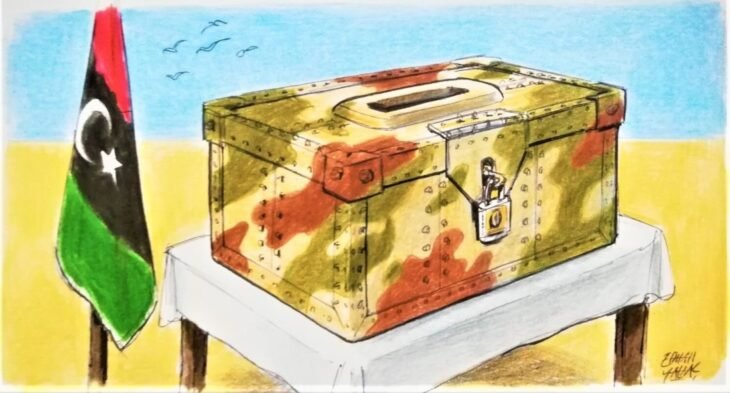
Some news refers to an offer made by some of the major powers to provide a safe exit for Haftar, stability in the Emirates, and to stop obstructing the path of transformation in Libya. I am certain that the offer is correct, or at least it was presented as an option with a number of other options that America is studying with its allies, to make the political settlement successful in Libya, but it is necessary first to stabilize the situation in his areas of influence and prevent the spread of chaos. And if this news is true or become the best options. Will Haftar accept and obediently go into safe exile, abandoning the dream that has been imagining for decades in ruling Libya in the manner of Gaddafi?

Given the extent of the crimes committed by his forces and their documentation in several international reports, and the availability of the conditions for filing cases against him in Libyan and international courts, it is likely that he will not accept the offer, which will not protect him from prosecution for the remainder of his life.

There is a precedent for this: The former Chilean tyrant Pinochet remained immune from the judiciary even after his departure from power, but as soon as he traveled outside Chile, the international judiciary began to prosecute him for crimes and violations during his rule in Chile. He was held under house arrest for a year and a half in London, and his illness or advanced age did not prevent him from being pursued, but his inability to appear in court because of his severe illness prompted the Spanish judiciary to stop prosecuting him, and Britain allowed him to return to Chile to complete his days in isolation in one of its remote villages.

It is known that Pinochet turned against the elected Chilean President Salvador Allende in the seventies of the last century with the support of American intelligence, as he was one of its prominent agents in Latin America to confront the communist expansion, then it abandoned him after his expiration, as it usually does with its clients when they expire.

It seems that Haftar’s validity for American interests is nearing its end, and the issuance of the Libya Stability Law, and the termination of the contracts promoted by America to win the presidency of Libya in the upcoming elections, and the frequency of talk about a safe exit are only strong indications of the approaching phase of post-Haftar, which may be delayed if he chooses to escalate and not surrender to his inevitable fate. Does he still have some cards to continue playing and his popular credit has almost run out?

_____________

Read More

The Summit for Democracy Skips the Arab World

Ben Fishman

To address the region’s democracy gap, Washington needs to develop consistent messaging on reform objectives and help its partners focus on achievable goals such as protecting free speech, dissidents, and civil society.

On December 9-10, the Biden administration will host a virtual Summit for Democracy as an opportunity to showcase how governments can still deliver for citizens amid a global rise in autocracy and populism. Toward that end, participating nations will be asked to make commitments on combatting corruption, defending against authoritarianism, and promoting human rights, with a focus on initial measures that can be implemented ahead of an in-person summit in 2022 or 2023.

Notably, of the 110 countries invited from every region of the globe, only one was chosen from the Arab world. More than a decade after the Arab Spring, the summit is an indictment of that movement’s failures and an acknowledgement of authoritarian resurgence and vitality in the Middle East. Israel is one of only two countries scheduled to attend from that region. The lone Arab invitee—Iraq—remains torn by constant civil conflict, while Tunisia was dropped from the list after President Kais Saied’s July power grab shook up the region’s best prospect for a healthy Arab constitutional democracy. Even so, the summit provides an opportunity for Washington and its democratic partners to recommit to fostering reform, good governance, individual freedoms, and human rights in the Middle East.

Quantifying a Poor Track Record

The shortcomings of Arab democratization have been well documented over the past twenty years. The landmark 2002 Arab Human Development Report cited limited political freedoms, a lack of female empowerment, and a knowledge deficit as core obstacles to the region’s advancement. Two years later, Arab foreign ministers issued a joint statement committing to expand participation and decision making in the political and public spheres, uphold justice and equality among all citizens, respect human rights and freedom of expression, ensure judiciary independence, and advance the role of women in society. In doing so, they essentially acknowledged that external factors such as the Iraq war or the Israeli-Palestinian conflict were not the source of the region’s troubles. Despite their ambitious agenda, very limited progress occurred in the years leading up to the 2011 uprisings.

After the initial enthusiasm of the Arab Spring protests, many governments responded with measures that were wholly or partly aimed at avoiding deep change, including further repression (Bahrain, Egypt), limited reform (Jordan, Morocco), or, worse, the outbreak of civil war (Libya, Syria, Yemen). In the past decade, only Tunisia took steps that improved its Freedom House score, with the exception of some early electoral events in Egypt and Libya shortly after the mass protest movements of 2011. Other countries have stagnated or even regressed—for instance, Egypt now ranks lower than it did during the last year of Hosni Mubarak’s rule.

The Freedom House numbers for the Middle East are even more stark when compared to the rest of the world. The organization scores countries on a scale of 100, awarding 1 to 40 points for performance on political rights and 1 to 60 points for civil liberties. For the period 2011-2021, the average score for Arab countries is just 27—and that number decreases to 25 without Tunisia’s outlier performance. Iraq, the Arab world’s sole representative to the Summit for Democracy, scored 29 this year, which the organization considers “Not Free.” In contrast, the global average score for 2021 was 56.

Scholars have attributed the authoritarian resurgence since the Arab Spring to many factors: the specific traits of the region’s governments; their relationships with the security forces that protect them; the leaderless nature of many opposition movements; the fact that authorities were able to recapture much of the digital space used to organize the 2011 protests; the intervention of anti-democratic actors; and in some cases the breakdown into civil war. According to Freedom House, such factors have made the region as a whole 6 points less free than it was in 2013.

What Can Washington Do?

U.S. foreign policy will always face contradictions between interests and values, particularly in the Middle East, where many of the states that routinely violate human rights are the same ones that Washington relies on as partners for security, energy, and peace initiatives. The United States has two fundamental tools for mitigating these contradictions and pushing its values of reform, democracy, and human rights: (1) diplomacy, including public and private messaging; and (2) assistance programs to aid reformers, activists, and receptive governments.

Reengage diplomatically. Just before the Arab Spring, Washington sought to emphasize the need for reform across the Middle East in order to address the bubbling demands of the region’s citizens. As President Obama wrote in his memoir, “Under the emerging plan, U.S. officials across agencies would be expected to deliver a consistent and coordinated message on the need for reform; they would develop specific recommendations for liberalizing political and civic life in various countries and offer a range of new incentives to encourage their adoption.” The key concept was consistency of messaging from all parts of the government, including the Defense Department and intelligence agencies, which are generally the least inclined to focus on reform issues because of the nature of their relationships with foreign actors. Yet these channels are often the most important because regional military and intelligence officials tend to be far more influential than diplomats. In any case, Obama’s draft plan was soon superseded by crisis management, and a long-term focus on reform became implausible.

For the upcoming summit and its proposed “year of action,” the United States should reengage on these issues by focusing on the most achievable goals. These include improving freedom of speech and protecting journalists and activists in partner countries—especially Egypt, Jordan, and Morocco, whose crackdowns have increased of late. Such improvements will require frequent, high-level messaging to senior regional officials noting that the administration cares about these issues.

A vocal contingent in Congress and the human rights community has called for using arms sales as leverage to compel progress on such matters. Yet there is little evidence that this approach translates into more freedoms, and it directly contradicts the Biden administration’s overriding security objectives in the region—especially that of countering Iran’s military encroachments, weapons proliferation, and other destabilizing activities. In the short timeframe before the next summit, a more effective and achievable approach would be to maintain consistency of messaging on country-specific goals related to free speech, civil society, and governance.

Reevaluate and increase assistance funding. Democracy assistance comprises a tiny fraction of U.S. foreign assistance, especially in the Middle East, where the majority of funding goes to the militaries of Egypt, Israel, and, to a lesser extent, Jordan and Iraq. In 2019, programs aimed at encouraging partners to “govern justly and democratically” comprised less than 3.5 percent of total U.S. assistance to the region—a ratio consistent with the 3.9 percent average seen from fiscal years 2003 to 2019. Over the same period, around 25 percent of non-security-related assistance was dedicated to democracy programs.

In total, the United States provided $5.37 billion in democracy assistance to the region in 2003-2019, and $1.9 billion after the Arab Spring. These programs were limited to ten recipients over the past decade: Egypt, Iraq, Jordan, Lebanon, Morocco, Tunisia, and Yemen, along with Libya, Syria, and the West Bank/Gaza during certain periods. The remaining countries in the Middle East either refuse to accept such assistance or are too wealthy to legally receive it.

A future Washington Institute study will closely examine U.S. programs that support civil society organizations, elections, institutions such as legislatures and municipalities, and more. Yet for the purposes of this week’s summit, and in light of the region’s track record, it is quite clear that the contents of these programs need to be reevaluated. Moreover, the actual overlap between good governance, economic reforms, and democracy in the Middle East should be scrutinized. The administration wants to demonstrate that democracies can deliver by emphasizing the importance of anti-corruption efforts. Yet the United Arab Emirates and Qatar have the highest scores in the Middle East—and among the highest globally—on Transparency International’s Corruption Perceptions Index, even though they remain two of the region’s least free countries.

To address these contradictions and the Middle East’s general democracy gap, the United States should develop consistent messages on reform objectives over the next year, helping its regional partners focus initially on protecting free speech, dissidents, and civil society. Washington should also evaluate democracy assistance programs and expand them appropriately. And when the second Summit for Democracy convenes, the goal should be to include more than one Arab state.

***

Ben Fishman is a senior fellow in The Washington Institute’s Geduld Program on Arab Politics.

_________________

Read More

Can Libya Become A Global Oil And Gas Power Once Again?

  • The decision last week by Libya’s Government of National Unity to approve the sale of Hess Corporation’s stake in the Waha oil concessions could reignite Libya’s oil boom.
  • While there may be a short-term drop off in output from Waha, in the long-term it will likely return to their previous impressive levels.
  • Ongoing political struggles could hurt the countries oil industry, but recent proposals from the oil and gas ministry on revenue sharing could help reduce those tensions.

Read More

The fall of Agilah

Abdullah Al-Kabir, a Libyan writer 

What happened during the past week constituted a practical rehearsal for the milestones of the upcoming elections. The shell fired by the Speaker of House of Representatives (HoR) to withdraw confidence from the National Unity Government rebounded on him, revealing his low popularity while he was preparing to contest the elections.

The broad popular movement, which rejected it, forced him to go out to justify it via satellite channels twice, which reflects the state of shock he suffered, due to a folly that was not calculated with accuracy that suits the accuracy and sensitivity of the stage a few meters away from the election exam.

In his second appearance, he opened the door to retracting the decision to withdraw confidence from the government, trying to exonerate himself by placing the matter on the deputies. He indicated that consultations with the Highest Council of State (HCS) were continuing, after he had long denied the HCS’s partnership in drafting some laws in accordance with the political agreement.

Before his second appearance, Saleh waited for the scene of the demonstrations supporting him in Cyrenaica, hoping that thousands would gather, in order to confront the Government of National Unity in a new stadium that shook off the dust and returned to its effectiveness, but the meager few that came out in Benghazi, in parallel with the stops and statements in other cities in the east in support of the government, melted the ice Illusions revealed the truth in favor, He rushed to appear on a popular program giving a speech of retreat.

As usual, he repeated the reasons for withdrawing confidence from the government by focusing on the contracts it concluded with abroad, in line with the reasons for people’s support for the government, by reiterating his call to the government to continue supporting the youth, improving people’s conditions, and providing them with all services.

He rushed to appear on a popular program giving a speech of retreat. As usual, he repeated the reasons for withdrawing confidence from the government by focusing on the contracts it concluded with abroad, in line with the reasons for people’s support for the government, by reiterating his call to the government to continue supporting the youth, improving people’s conditions, and providing them with all services.

Saleh wants people to believe his concern for the Libyans’ money, due to the debts that foreign contracts may cause to the Libyan state. Immediately, social media and media sites retrieved the talk of some representatives about the corruption and waste of money, and published the bills of his boss Saleh’s extravagant expenses in luxury hotels. Outside the country, memories of his support for bloodshed returned, giving legitimacy and support to Haftar’s war on the capital, spreading destruction, devastation and mass graves.

Saleh wants people to believe his concern for the Libyans’ money, due to the debts that foreign contracts may cause to the Libyan state. Immediately, social media and media sites retrieved the talk of some MPs about the HoR corruption and waste of money, and published the bills of its speaker Saleh’s extravagant expenses in luxury hotels outside the country, and the memories of his support for bloodshed returned, giving legitimacy and support to Haftar’s war on the capital, spreading destruction, devastation and mass graves. Whoever claims to be keen on preserving money must first be keen to save blood, for it is first and more important than money and construction.

The Libyans describe the fortunate that the wind collects firewood for him, and this is what happened with the Prime Minister of the National Unity Government, Abdel Hamid Dbeibah, and the wind here is the stupidity of Saleh, who thought that he was playing politics with unparalleled skill, a veteran journalist who left the country for more than a quarter of a century, but remained captive to his regionalism, did not hesitate to describe Saleh as a shrewd fox.

While the truth is neither cunning nor political capabilities, but rather an exploitation of the contradictions of international interests around Libya, and the desire of active countries to calm the conflict prompted them to overlook its transgressions and intransigence. Just as the referee of a football match avoids the offenses of an arrogant and reckless player with influence in a backward country in order to bring the match to safety.

The development of the fabricated crisis by the Speaker of Parliament and some political parties, and the appropriate climate for escalation by the Prime Minister, prompted the international parties to intervene by calling on the parties to calm down and not escalate, and the message from the ministerial conference held in New York, on the sidelines of the annual meeting of the United Nations General Assembly, was clear.

There is no retreat from the December elections, and all parties must agree on the constitutional basis and election laws. For the first time with the new UN envoy Kubis, the UN mission issued a firm statement that downplays the importance of Saleh’s parliament’s decision, stressing that the government will continue its duties until the formation of a new government after the elections.

Exciting developments in a short time will prompt all parties to review their positions, and search for all possible options to remain on the scene, after the emergence of two variables that were not taken into account.

The return of the movement to the street, the rise of the prime minister’s star by his approach to the people, and his endeavor to meet their needs such as providing a grant to young people who are about to marry, implementing Parliament’s decisions to increase salaries, and initiating maintenance work for some facilities and roads, as well as his distinguished personal qualities.

His simplicity, and his uniqueness among all the passing personalities in the political scene, in addressing people in an informal language, sitting, talking and joking with them in cafes and other public spaces without pretension, and not showing the lavish manifestations of power. It had a profound impact on this change in the political scene.

The Libyans, like all Arab peoples, show loyalty to the king or ruler, and chant for his life and the perpetuation of his power, but deep down they hate him. Their muffled anger provokes manifestations of the domination that surrounds him. And their submission to him is only due to his power, his possession of the tools of oppression, and his ability to kill. While they voluntarily accept submission to the non-authoritarian ruler who avoids provoking them with extravagant appearances, is not superior to them, and lives on a level equal to their middle.

The apparent reason for killing Kulaib bin Rabia, the first king of the Arabs, was his killing of the she-camel of Al-Basous, so war broke out between Bakr and Taghlib for forty years. But the hidden reason is his exaggeration in vanity and arrogance and his contempt for others, a behavior that ignited feelings of hatred and resentment in the hearts of the contagious tribes, because it is an abhorrent approach that is unpalatable to the Arabs.

All polls and opinion processes indicate the overwhelming superiority of Dbeibah over all potential contenders in the presidential battle if presidential elections are held, and if his government’s good performance and its bias towards the people by working to improve their living conditions and mitigating the effects of the crisis on them, are the most important reasons for people to come out in support of him against Agilah Saleh’s decision and his party, and then the rise of his political star, the most important reason is his closeness to people, his humble behavior with them, his patience, and his simple and unpretentious speech, as he removed the stereotyped image of the ruler and the sultan, and active in the collective memory pictures of revered examples in history of the humble ruler who seeks to serve the people and not dominate them.
The last chapter in the parliament’s dispute with the government changed many of the rules of the political game, and then the scene of last Friday will redraw the map of political alliances, as much as Dbeibah will be ecstatic with this amazing success in polarizing the street, Saleh and his staunch ally Haftar will suffer from the effects of the shock, and they will not have much time to maneuver and shuffle the cards over the international insistence on implementing the elections on time.

________________

Read More

Libya — adrift in a fragmented world

HAFED AL-GHWELL

The world’s dizzying array of crises, from COVID-19 to climate change, intensifying great power rivalry, and even the US “rationalizing” its presence in the Middle East, may seem a disjointed assemblage of unfortunate coincidences. However, these seemingly endless woes are a symptom of a conspicuous interregnum in global geopolitics. Read More

Protesting Against Inhumane Treatment in Libya, Refugees Call Out UNHCR

Alessandra Bajec

For more than two months, thousands of refugees stranded in Libya have been protesting on UNHCR’s doorstep in Tripoli, demanding respect for their human rights and basic dignity.

Some 3,000 migrants and refugees have spent the last couple of months camped out on the streets of Libya’s capital, Tripoli, staging an open-ended protest outside the offices of the United Nations High Commissioner for Refugees (UNHCR) to denounce the inhumane conditions they face in Libya, and claim protection and safety.

The sit-in kicked off at the beginning of October after the Libyan authorities conducted a brutal crackdown on migrants, asylum seekers, and refugees in the western neighborhood of Gargaresh, near Tripoli. Security forces arrested more than 5,000 people, including many recognized as refugees by the UN refugee agency, in what the Libyan administration described as a large-scale security campaign against illegal migration and drug trafficking.

The sit-in kicked off at the beginning of October after the Libyan authorities conducted a brutal crackdown on migrants, asylum seekers, and refugees.

Unarmed migrants were harassed in their homes, beaten, and shot during the operation. They were then rounded up over several days and sent to detention centers in Tripoli and surrounding towns.

Among the demonstrators are many of those who survived the October raids. Others are survivors of violent pushbacks to Libya while attempting to cross the Mediterranean, and those who suffered torture, arbitrary detention, persecution, and extortion before fleeing detention centers.

Such a demonstration is unprecedented. After seeing no change in spite of all advocacy efforts by human rights activists and international humanitarian organizations, the gathered migrants— who are of different nationalities from Sub-Saharan Africa, mainly Eritreans, Somalis, Ethiopians, and Sudanese— formed a self-organized assembly.

They nominated their own spokespeople to advocate for all of them and inform the public through social media by posting photos and videos, explaining the dire situation of men, women and children refugees in the North African country.
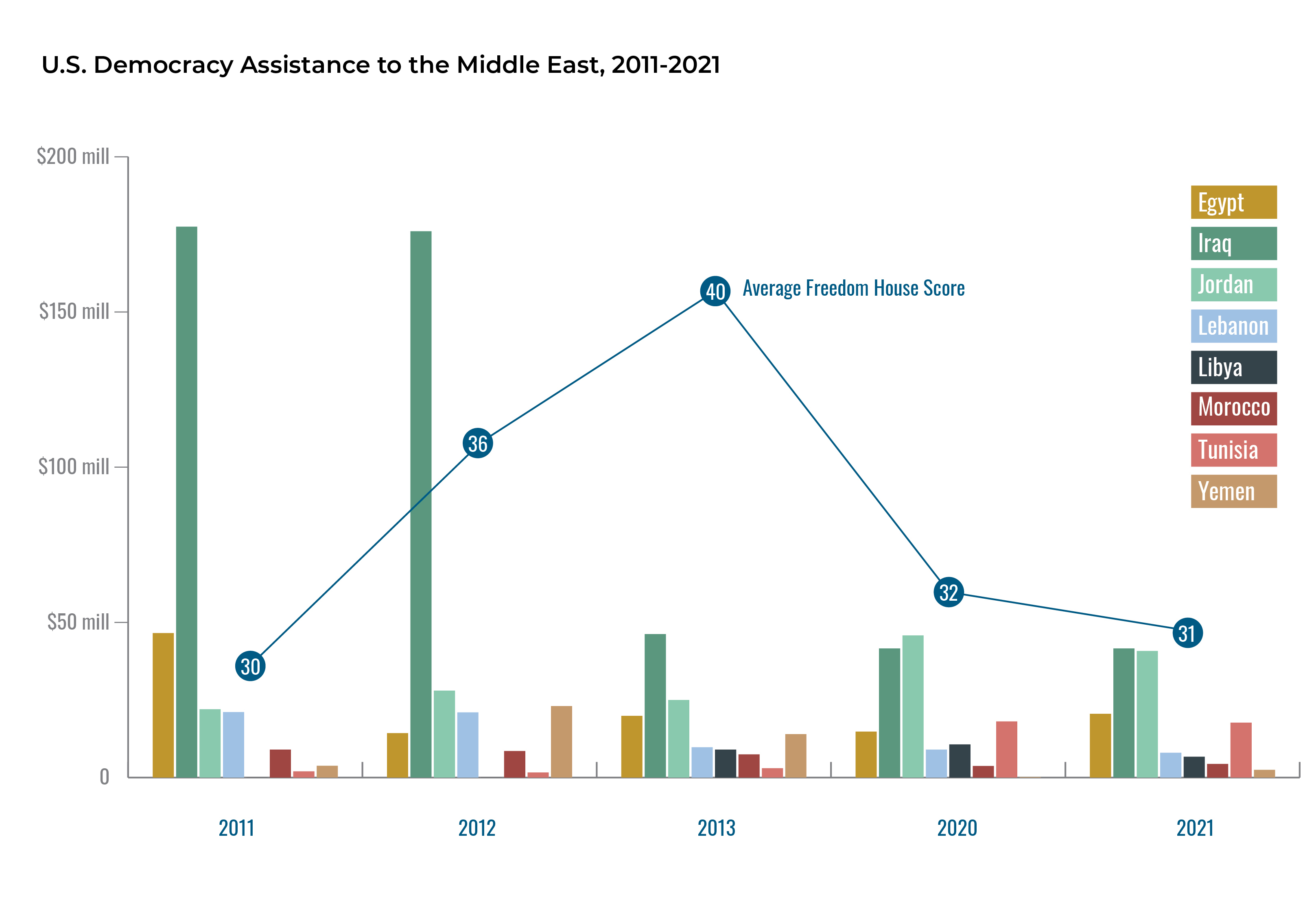
Through the Twitter account “Refugees in Libya,” the group has spoken up about their unacceptable living conditions.

Sleeping in a makeshift encampment, the protesters are in a poor, degrading state. In many cases, these are people with bodies scared with injuries endured under torture from traffickers. They are affected by severe malnutrition with no proper food. And although they raise money among themselves, it is not enough.

They are also sick with tuberculosis and other diseases that spread in the overcrowded, unsanitary detention camps they were held in. There are no public toilets available to them. And many of the refugees are in desperate need of medical aid. Pregnant women and girls have been giving birth at the encampment since public hospitals almost systematically deny migrants access to healthcare.

They are also sick with tuberculosis and other diseases that spread in the overcrowded, unsanitary detention camps they were held in.

“People are going hungry and freezing. They are forced to urinate and s**t wherever they can in the open air,” David Yambio, from South Sudan, one of the coordinators of the Refugees in Libya group and among the people who have been staying outside the UNHCR center, told Inside Arabia. He said there have been routine incidents of harm and abuse towards migrants from the local community as a result of the sit-in camp in the area.
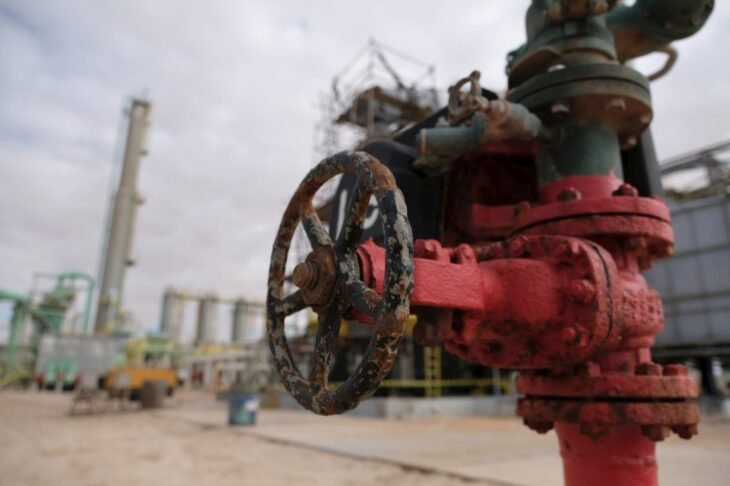
“We feel like we’ve been abandoned, we’re not recognized as humans, our rights aren’t respected nor protected,” the refugee activist complained. “We created this group [Refugees in Libya] to raise our voices because we knew we had no other weapon to use.”

The protesters are demanding an end to the violence and immediate evacuation to safe countries. They are also calling on the Italian authorities and EU member states who are directing funds to Libya to make sure the forcible deportation to Libyan migrant detention facilities stops and to press for the closure of these facilities and the release of detainees.

By camping in front of a community center run by UNHCR, the migrants are hoping to be protected from further raids as they fear ending up in detention. Several of them have papers from the UN agency proving they have refugee status.

But as days and weeks have gone by, the scores of refugees demanding their legitimate rights have found closed doors from the UNHCR’s side. They are losing trust in the very people who are responsible for protecting them across borders.

The refugee agency temporarily suspended the community center’s aid operations for security reasons following the October crackdown. Although, it provides some limited aid to migrants elsewhere in the capital. The UNHCR is caught between restrictions imposed on it by Libyan authorities and the lack of will from Europe to find real solutions. Moreover, the agency has not engaged cooperatively with the people camped out in front of its premises to work towards possible resolutions or alternatives.

Violence erupted outside the agency’s head office in Tripoli on November 7 amid tensions with migrants demanding urgent aid and a quick departure from Libya. The group of refugee activists blamed the UNHCR staff and its security guards for the confrontations and slammed them for discriminating against African refugees, who were stopped from accessing the registration center, even as they allowed refugees of Syrian nationality to enter.

The mission chief of the Libyan agency, Jean-Paul Cavalier, said on Channel 4 in early October that his organization is not in the position to evacuate the refugees encamped near the UNHCR’s center— who are desperately seeking to leave the country— since Libyan authorities suspended humanitarian flights in recent months. Yet, despite the flights recently resuming, they are still infrequent and will benefit a very limited number of people.

The atrocities that migrants, asylum seekers, and refugees in Libya are exposed to have been known for a long time to the international public as well as to EU member states and institutions. Torture, sexual abuse, extortion, and serious ill treatment are commonplace in Libya’s overcrowded detention facilities, as rights groups have widely documented.

Human rights NGO Lawyers for Justice in Libya (LFJL) published a joint report, “No way out” in late November, providing first-hand accounts of survivors that detail the systematic abuse of refugees and migrants, namely arbitrary detention, slavery, murder, rape, and other inhumane deeds.

This report argues that these cruel acts may amount to crimes against humanity and, as such, the International Criminal Court (ICC) should investigate.

This report argues that these cruel acts may amount to crimes against humanity and, as such, the International Criminal Court (ICC) should investigate and prosecute armed groups, militias, and Libyan state actors involved. It also questions the role that the EU and its member states have in enabling these crimes.

In collaboration with survivors, the European Center for Constitutional and Human Rights (ECCHR), the International Federation for Human Rights (FIDH), and the Lawyers for Justice in Libya (LFJL) also filed a statement on grave crimes against refugees and migrants at the ICC, requestioning the opening of an investigation.

Europe’s migration policy infamously contributes to these crimes through its policy of supporting Libya intercepting asylum seekers and migrants at sea.

In the first nine months of 2021, the EU-trained and equipped Libyan coastguard captured more than 25,000 people and returned them to the war-torn country, according to the International Organization for Migration (IOM). Over 1,100 migrants were reported dead or presumed dead off Libya’s shores.

Back in Tripoli, the crowds of African protestors continue to make their struggle heard around the world. They feel let down and forgotten, but they have no one else to turn to for help.

“Things are very, very tough, but we keep pressing our demands. We don’t have another option, we have nowhere to go,” David uttered while alluding to the refugees’ precarious conditions in front of the shuttered UN facility. Concluding: “We don’t want to die here. This is why we’re appealing to the international community to step in.”

***

Read More

Haftar Sought Israel’s Blessings Before Announcing his Bid for Libya’s Presidency

Israel’s support for anti-democratic movements and authoritarian regimes in foreign lands should not surprise anyone, given it’s anything but a democracy at home. Warlord and ex-General Khalifa Haftar is only the latest aspiring dictator seeking Israel’s support in his just-announced bid for Libya’s presidency.

CJ Werleman

While profoundly anti-Palestinian and ham-fisted in nature, the Trump administration’s Abraham Accords were essentially a continuation of President Obama’s “Pivot to Asia” national strategy, which depends largely on extricating the United States from the Middle East, both militarily and diplomatically.

The logic is that if Israel’s security is assured, and its Arab Gulf partners are aligned behind it, then the US can shift its focus and concentrate its resources against a rising and expansionist China in the South China Sea, disregarding the Palestinians, democracy, and human rights.

When the United Arab Emirates (UAE) and Bahrain became the first signatories of the US-brokered Arab Pact to “normalize” Israel’s apartheid regime, regional analysts hailed the Abraham Accords as a “triumph for authoritarianism.”

The deal was a “reminder of why Israel, one of the region’s few democracies, prefers that its Arab neighbors not be democratic,” noted Shadi Hamid, a senior fellow at the Brookings Institute.

Certainly, “prefers” is one way to describe Israel’s fondness for autocrats and dictators over democracies, but preference doesn’t fully contextualize how the Israeli state is proactively supporting anti-democratic forces and undermining burgeoning democratic movements throughout the Middle East and North Africa (MENA).

Israel is a force multiplier for the latest crop of wannabe dictators.

In fact, one could describe Israel as a force multiplier for the latest crop of wannabe dictators.

On November 1, a private jet owned by the Libyan warlord General Khalifa Haftar, who leads what human rights groups view as among Africa’s most violent militia groups,  otherwise known as the Libyan National Army, departed from Dubai and landed at Tel Aviv’s Ben-Gurion Airport. On board was the ex-general’s son, Saddam Haftar, who was appointed by his father to serve as his right-hand man.

Saddam’s mission was clear: Seek military and diplomatic support from Israel by promising to establish diplomatic ties with Tel Aviv, should his father be successful in his bid to head the national unity and reconciliation government in Libya after the December 24 elections, as reported by the Israeli newspaper Haaretz.

According to The Times of Israel, “The son of Libyan warlord Khalifa Haftar reportedly visited Israel last week for a secret meeting with Israeli officials in which he offered to establish diplomatic relations between the two countries in return for Israeli support.”

Indeed, on November 16, Khalifa Haftar, the blood-thirsty commander and former CIA asset, officially announced in a television address that he would run for the presidency of Libya in December.

To be clear, Haftar has put himself in a position to contest the North African country’s leadership only after waging a more than five-year-long terrorist campaign against the internationally recognized Libyan government in Tripoli and pro-democracy and anti-dictator Libyans.

Not only does Haftar face charges of war crimes in three separate lawsuits filed in the United States, but the International Criminal Court (ICC) has also accused him of carrying out a “pattern of violence that involves the indiscriminate air strikes and shelling of civilian areas, arbitrary abduction, detention and torture of civilians, extrajudicial killings, enforced disappearances and pillaging of civilian property.”

When I spoke with Ahmed Sewehli, a British Libyan pro-democracy activist who co-founded the Misrata Psychiatry Department in Libya, he said it’s become “quite fashionable” for wannabe despots to seek military and diplomatic assistance from Israel.

“If you want to become the dictator of an African or Arab country, go and seek support from Israel.”

“If you want to become the dictator of an African or Arab country, go and seek support from Israel. Especially when you’re on the back foot, like Haftar has been since his one-year assault on Tripoli came to nothing,” Sewehli told Inside Arabia.

There are also credible claims Israel conspired with the Sudanese military to overthrow Sudan’s democratic transitional council last month, putting in place a military dictatorship that has left the capital Khartoum soaked in the blood of pro-democracy protesters.

“I was shot along with nine people,” a protester told BBC News. “There were no warning shots, they just started to fire. The military…they’re like animals. Maybe animals are better.”

Not only did Sudanese military officials secretly visit Israel in the weeks leading up to the coup, but an Israeli delegation, which included defense and intelligence officials, also traveled to Khartoum in the days after the overthrow of the democratic transitional council,  according to the Times of Israel.

Unsurprisingly, Israel’s closest Arab allies, the UAE and Saudi Arabia, have also been accused of backing the coup, having always been “uncomfortable with the democratic transition,” and promising the military junta they will deliver infrastructure projects over the medium term.

The Biden administration is publicly urging Israel to “utilize its ties” in Sudan to restore the civilian-led transnational government. This demonstrates a willingness by Israeli Prime Minister Naftali Bennett to exert Israeli force and influence far beyond its borders without the go-ahead from its number one benefactor – the United States.

This conduct, according to Yonatan Touval, a senior foreign policy analyst at Mitvim: The Israeli Institute for Regional Foreign Policies, “betrays misguided diplomatic and strategic thinking.”

“Western powers are unlikely to accept the counter-revolutionary putsch in Khartoum. It is one thing to overthrow an Islamist leadership, even if it was democratically elected; it is another thing altogether to derail a political process that holds out the promise of a Western-oriented democracy,” Touval says.

Then, of course, there’s the way in which Israel derives huge profits from the sale of its repression management technologies and strategies to authoritarian regimes, as revealed by The Guardian.

NSO Group Technologies sold its Pegasus spyware with the “encouragement and official mediation of the Israeli government.”

Haaretz also uncovered that NSO Group Technologies sold its Pegasus spyware for hundreds of millions of dollars to the UAE and other Arab Gulf states to monitor pro-democracy and anti-regime activists, with the “encouragement and official mediation of the Israeli government.”

Ultimately, of course, Israel’s support for anti-democratic movements and autocratic regimes in foreign lands should not surprise anyone, given it’s anything but a democracy at home.

The Jewish state is well aware that the overwhelming majority of the Arab populations are against its repression and ethnic cleansing of Palestinians in East Jerusalem and the occupied West Bank. And in fact, popular sentiment globally is increasingly shifting against Israel as both US-based Human Rights Watch and Israel-based B’Tselem accuse the self-proclaimed Jewish state of operating a system of apartheid.

It seems that a change in Israel’s unofficial motto as “the only democracy in the Middle East” may be long overdue. Israel today belongs to the same club of tyrants as the UAE, Saudi Arabia, Egypt, and other military putschists and aspiring tyrants in the MENA region.

Read More