By Fathi Al-Fadali
It should be noted that the call for elections in Libya has rattled the Libyan political scene, and succeeded in shaking up political bodies in decision-making positions in the Libyan arena. Read More
By Fathi Al-Fadali
It should be noted that the call for elections in Libya has rattled the Libyan political scene, and succeeded in shaking up political bodies in decision-making positions in the Libyan arena. Read More
By Raouf Farrah
While many Amazigh were marginalized and discriminated against during the Gaddafi era, they are now the vanguard in promoting minority rights. Read More
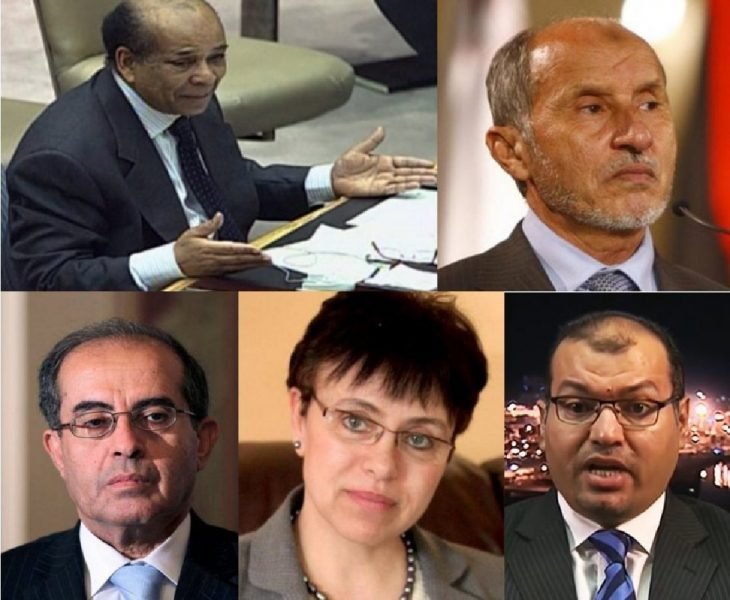
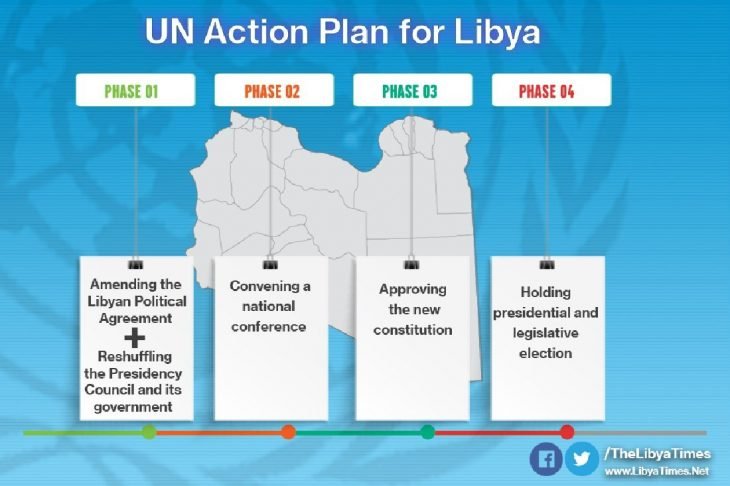
The July 2017 peace plan the UN worked out is still limping along. The UN backed GNA (Government of National Accord in Tripoli) has continued to weaken while the HoR (House of Representatives government in Tobruk) now controls or contests most of the country. Read More
By Azeem Ibrahim
Though it continues to be overshadowed by the conflicts in other parts of the world, the civil war in Libya is still going strong. Read More
By Bill Roggio & Alexandra Gutowski
The United States launched a record number of airstrikes in Yemen and Somalia in 2017, and more importantly has reinitiated the targeting of terrorists in Pakistan and Libya. Read More
By Karlos Zurutuza
Despite the advances they have made since 2011, Libya’s largest minority still struggles for its most basic demands. Read More
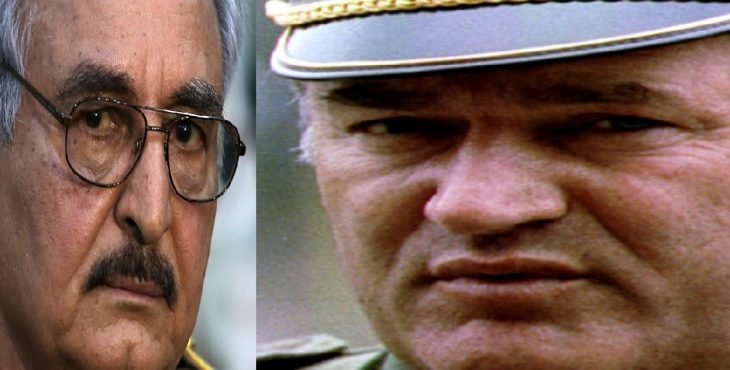
By Mark Micallef and Tuesday Reitano
Migrant arrivals in Europe from Libya have dropped, but interventions could undermine Libya’s peace process. Read More
The recent assassination of Salah Al-Qatrani, a Libyan activist, marks the 201st political assassination in the country since 2017 and the first of 2018. Read More
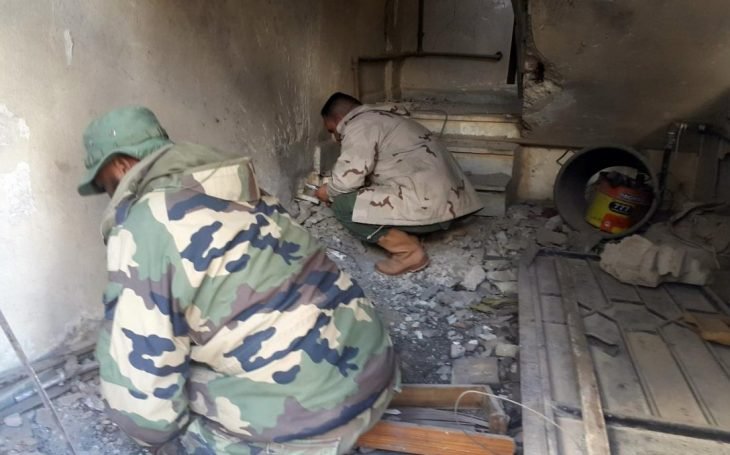
By Robert Springborg
The negative political and economic trends that characterised the Middle East in 2017, look set to intensify in 2018. At whatever level one reviews the region’s prospects for the coming year, they look bleak. Read More
By Jazya Gebril
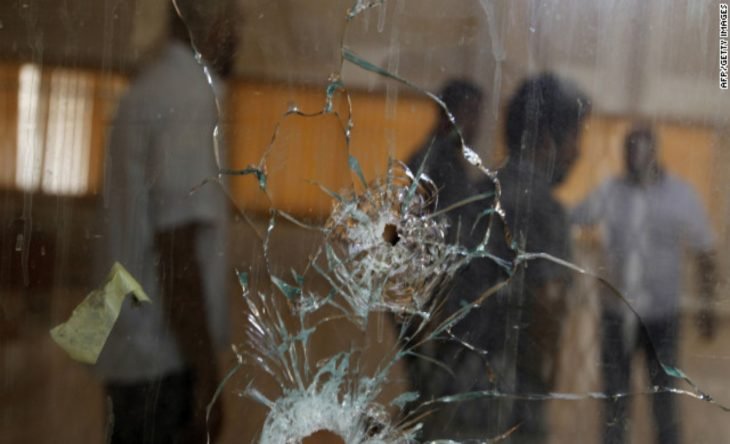
On September 25, 2017, the Wahbi al-Bouri Cultural Center in Benghazi’s area 602 screened a documentary about mines. Read More
Other Opinion: Haftar’s confusion makes him contradicts himself
By Sami Zaptia.
Khalifa Hafter, commander of the Libyan National Army (LNA), the Libyan army recognized by the Tobruk-based House of Representatives (HoR), has said that Libya is not ready yet for democracy. Read More
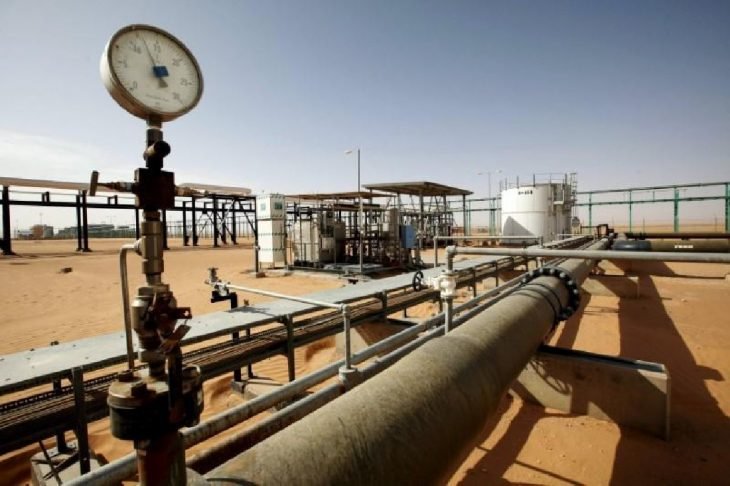
Libya earned $14 billion in oil revenues in 2017, nearly three times more than in the previous year, allowing it to halve its budget deficit, the central bank said, amid a partial recovery in oil output despite continued political and economic turmoil. Read More
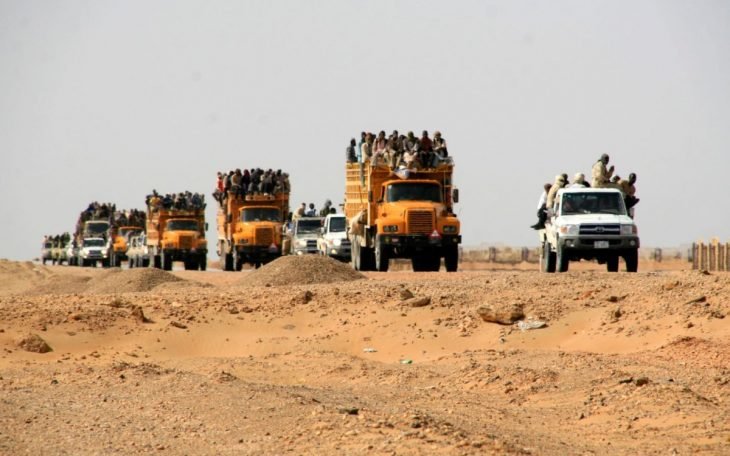
By Sudarsan Raghavan
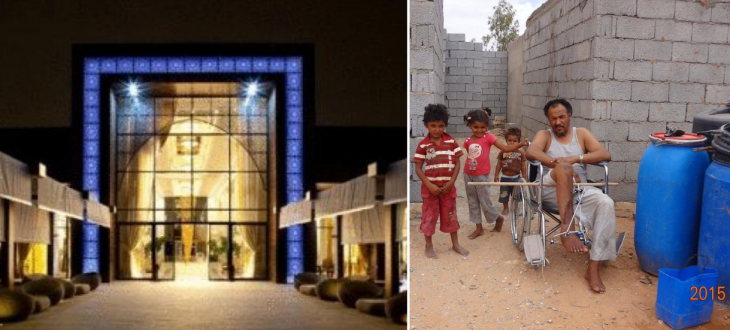
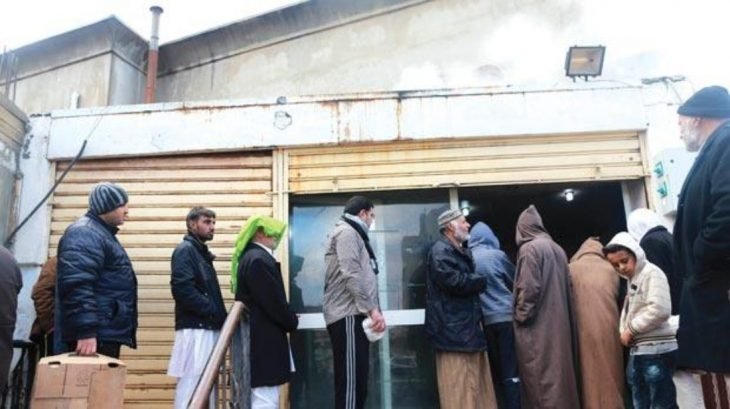
At one end of Al Nahda Street, three families with small children live in a shell-pocked townhouse with an unexploded bomb embedded in its roof. At the other end, an old man has spent weeks eating one meal a day. He is on the edge of begging. Read More
By Charles Bremner
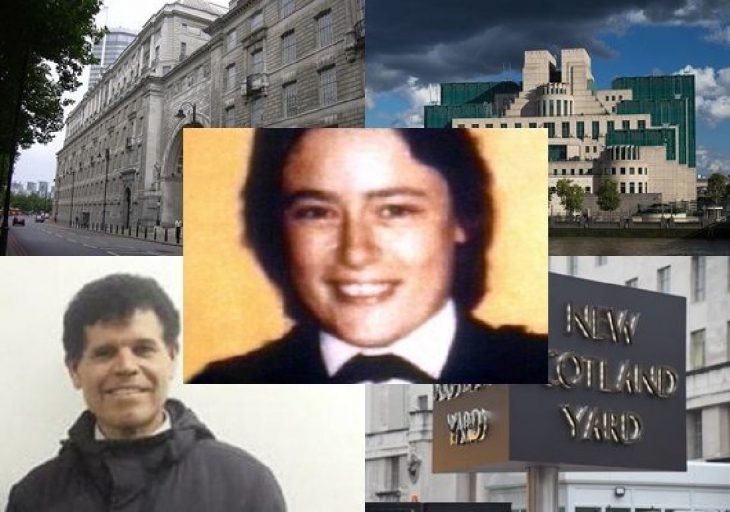
A businessman is to be deported to France after being arrested at Heathrow airport on a warrant from French judges investigating claims by the Gaddafi family that it bankrolled the presidential election campaign of Nicolas Sarkozy. Read More
By Abdullah Ben Ibrahim
A heavily armed brigade from Tarhuna city, known as Kani Brigade, took control on Sunday of Garabulli (Castelverde) town, some 70 km east of Tripoli, and forced the Presidential Council brigades stationed in two checkpoints out of the town. Read More
By Senussi Bsaikri
I have looked into the motives of the Dignity Operation the early days of its launch, and the focus of this debate was on two fundamental elements. Read More
By Mustafa Fetouri
In a surprising move, Gen. Khalifa Hifter, Libya’s eastern military strongman, announced his acceptance of elections in Libya as a way out of the political deadlock in the war-ravaged country. Read More
Summary: continuing anarchy. Limited bloodshed but the population suffering. UN efforts stalled, elections not very likely. Read More
Since 2014, Libya has been split between rival military factions and governments. Economics student Mutassim Al Misrati lost his leg in an RPG attack in April 2014 while fighting in Benghazi, his home city. Read More
Libya’s 2017 death toll of 433 people included 79 children and ten women, according to figures released by the National Human Rights Commission in Libya (NHRCL). Read More
By Nadine Dahan
Rabie al-Jayash was accused of espionage for using the minority language and possessing a book written in the Amazigh alphabet. Read More
No one is free until everyone is.
By Benjamin L. Crump,
The word “slavery” typically evokes images of Civil War-era America, of a time when the North and the South were at each other’s throats and blacks were forced into arduous work without pay or fair treatment. Read More
Libya’s political transition after February has been marred by a prolonged period of political fragmentation, violent conflict, and economic dislocation, Tarik Yousef – from Brookings Doha Center has stated. Read More
By Joseph Hammond
Libya is becoming a mercenary’s dream with multiple factions competing for hired guns from across the Middle East and Africa. Regional experts and a report released by the United Nations make this abundantly clear. Read More
By Martin Lemberg-Pedersen
In recent weeks, the unfolding tragedy of refugees stuck in the Libyan migration system has caught the eye of the European public. The conditions they face are terrible: beatings, torture, systematic rape, slave trade and killings. Read More
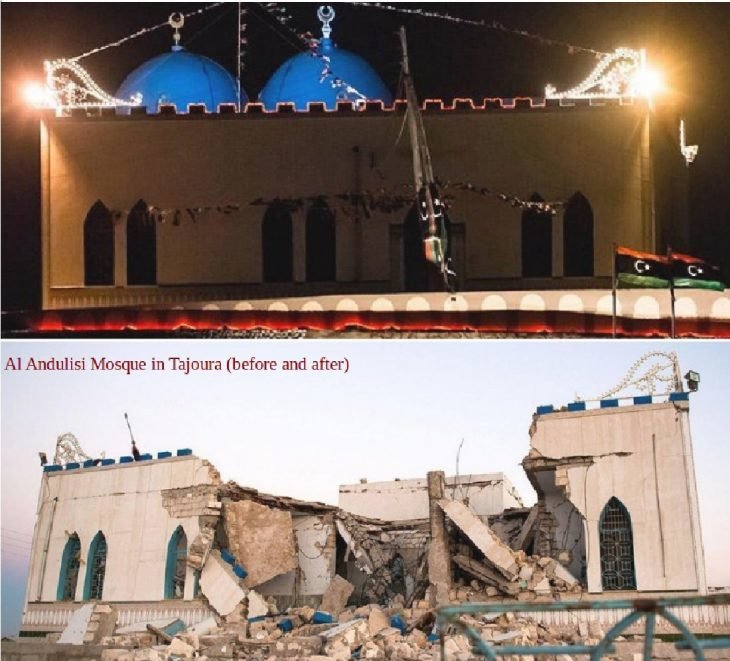
Libya is in danger of losing a huge part of its cultural heritage. Ongoing conflicts are partly to blame, but some historical shrines are being deliberately destroyed, the graves they house defiled. Read More
By Irina Slav
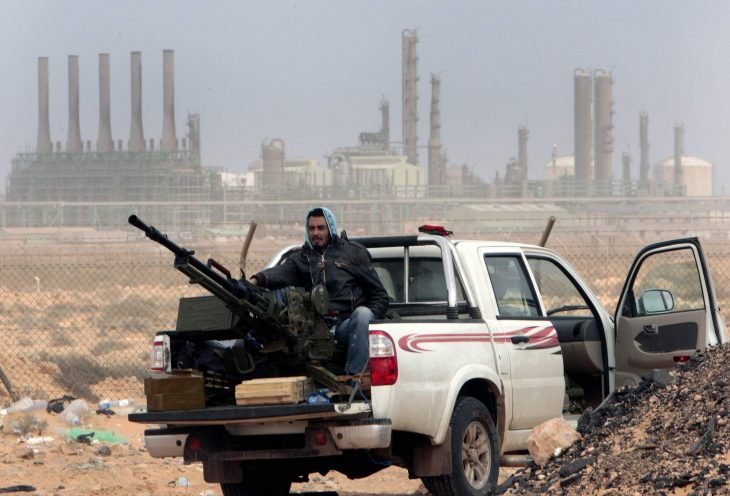
Islamic State forces in Libya may be planning an attack on the country’s so-called Oil Crescent, where its export terminals and many fields are located, a senior official from the U.S. Africa Command told Asharq Al-Awsat. Read More
By Afra Aksoy
A total of 433 people, including 79 children and 10 women, were killed during violence in Libya in 2017, according to a human rights group Monday. Read More
By Milena Veselinovic and Isa Soares
On a frosty autumn night, young women stand on street corners in a run-down industrial estate in Turin, Italy.
From 1 December to 31 December 2017, the United Nations Support Mission in Libya (UNSMIL) documented six civilian casualties – five deaths and one injury – during the conduct of hostilities across Libya, a drop for a second consecutive month. Read More
By Mary Fitzgerald
Introduction: In Libya there are very few truly national actors. The vast majority are local players, some of whom are relevant at the national level while representing the interests of their region, or in most cases, their city.
Many important actors, particularly outside of the largest cities, also have tribal allegiances.
Since the summer of 2014, political power has been split between two rival governments in Tripoli and in Tobruk, with the latter having been recognised by the international community before the creation of the Presidency Council (PC) – the body that acts collectively as head of state and supreme commander of the armed forces – in December 2015.
Several types of actor scramble for power in today’s Libya: armed groups; “city-states”, particularly in western and southern Libya; and tribes, which are particularly relevant in eastern and southern Libya.
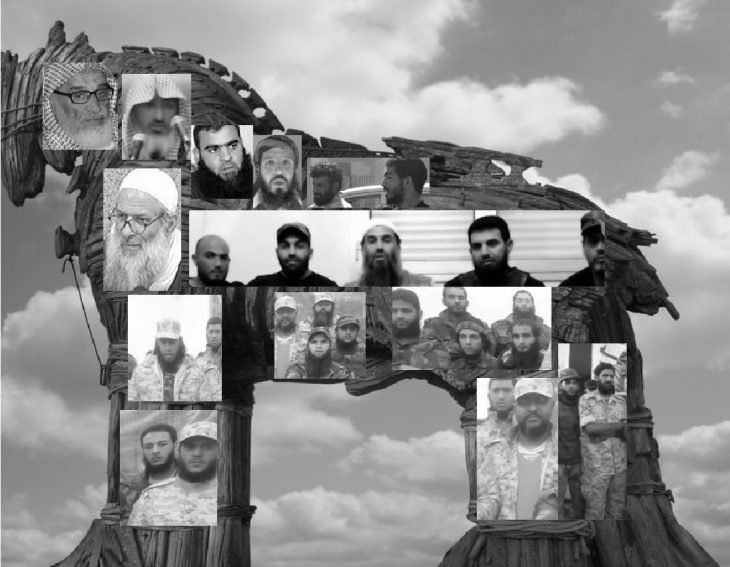
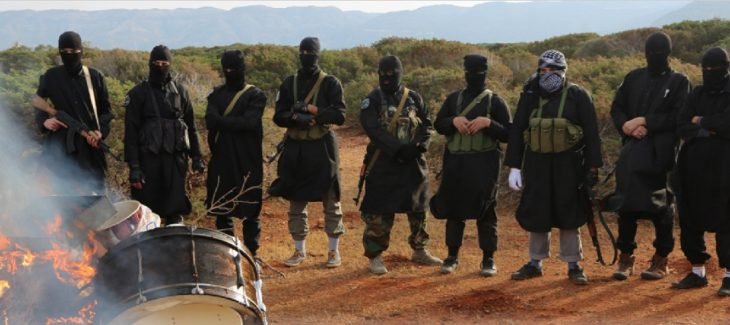
JIHADISTS IN LIBYA
Libya’s jihadist network can be divided along generational lines, starting with those who emerged in the 1980s. Many from that older generation fought against Soviet-backed forces in Afghanistan.
These veterans later created a number of groups in opposition to Muammar Gaddafi, the largest of which was the Libyan Islamic Fighting Group (LIFG) which is now defunct.
Several former LIFG figures, including its final leader, Abdelhakim Belhadj, played key roles in the 2011 uprising and went on to participate in the country’s democratic transition, forming political parties, running in elections, and serving as deputy ministers in government as in the case of Khaled Sherif at the Ministry of Defence.
This did not sit well with the second and third generation of jihadists – among the former were those who fought in Iraq after 2003, among the latter were those who fought in Syria after 2011 – who lean towards more radical ideologies and reject democracy as un-Islamic. The Libyans that have joined ISIS tend to come from the second and third generations.
Local returnees from Syria helped form Libya’s first ISIS affiliate in the eastern town of Derna in 2014. Many had fought as part of ISIS’s al-Battar unit in northern Syria before returning home to replicate the model with help from senior non-Libyan ISIS figures.
The leadership of ISIS in Libya has always been dominated by foreigners. Its leader earlier this year was Abd al-Qadir al-Najdi, whose name suggests Saudi origins. He replaced an Iraqi whom the US claims it killed in an airstrike in eastern Libya in 2015.
ISIS leader Abu Bakr al-Baghdadi recognised the presence of ISIS in Libya in late 2014, declaring three wilayats or provinces: Barqa (eastern Libya), with Derna as its headquarters; Tarablus (Tripoli), with Sirte as its headquarters; and Fezzan (southwestern Libya).
ISIS was driven from its first headquarters in Derna in 2015 by a coalition of forces which included the Derna Mujahideen Shura Council, an umbrella group comprising fighters led by local jihadists including LIFG veterans, who joined with army personnel who had rejected Khalifa Haftar and his Operation Dignity campaign.
The same alliance later routed ISIS from its remaining redoubts on the outskirts of the town.
In early 2015, ISIS began to build its presence in Sirte, which was Gaddafi’s former hometown and one of the regime’s last hold-outs.
Prominent ISIS cleric Turki al-Binali and other senior figures visited Sirte as the group began to consolidate control.
It did so by reaching out to locals who felt aggrieved over the city’s marginalisation in post-Gaddafi Libya. However, the group met some resistance as a number of residents attempted an uprising, which was then brutally quashed.
ISIS tried to impose a system of governance on the city, using public executions to instill fear. Sirte became ISIS’ stronghold in Libya until May 2016 when a coalition of Misrata-dominated forces known as Bunyan al-Marsous (BAM) declared war on the affiliate there.
The BAM operation, which was accompanied by over 400 US air strikes on ISIS targets in and around Sirte, declared victory in early December.
ISIS also had a smaller presence on the outskirts of Sabratha, a coastal town in western Libya, until a combination of US airstrikes and attacks by local forces – including former jihadists from that first generation – managed to uproot the militants earlier this year.
In Benghazi, those fighting Haftar’s Operation Dignity include Libyan and foreign members of ISIS. Although Sirte was the group’s ostensible base, ISIS sleeper cells operate in Tripoli and other cities and towns in Libya.
While the Pentagon estimated there were over 6,000 ISIS fighters in Libya prior to the BAM operation, the UN and many Libyans believed that the actual number was much lower.
Many of these fighters fled Sirte before BAM forces entered the city. They then travelled in three directions: south-west towards Sebha, west towards Sabratha and south-east towards the border with Sudan.
Most foreign intelligence estimates hold that the group now has upwards of 600 fighters, mostly scattered across Libya’s south-west and central regions, with notable concentrations around Bani Walid and the area south of Sirte, including the Jufra hinterland.
US air strikes on ISIS targets in late 2017 followed increased activity by the group in Libya since the middle of the summer.
In August its Amaq news agency claimed that 21 LNA members had been killed or injured in a raid on an LNA checkpoint in the Jufra region. In October ISIS claimed responsibility for a suicide attack on the court house in Misrata, killing at least three.
ANSAR AL-SHARIA AND OTHER AL-QAEDA AF-FILIATES IN LIBYA
Formed in 2012 by former revolutionary fighters calling for the immediate imposition of sharia law, Ansar al-Sharia’s first branch was set up in Benghazi, but affiliates also emerged in towns such as Derna, Sirte and Ajdabiya.
After being driven from these cities and towns or weakened by defections to other al-Qaeda-linked groups or ISIS, Ansar al-Sharia announced its dissolution in May 2017.
The UN put Ansar al-Sharia on its al-Qaeda sanctions list in 2014, describing it as a group associated with Al-Qaeda in the Islamic Maghreb (AQIM) and Al-Mourabitoun.
Both groups mentioned also have a presence in Libya, both in the south and cen-tral/eastern regions, largely through Libyans who once worked with them elsewhere, particularly in Algeria, before returning home after Gaddafi was ousted.
Ansar al-Sharia ran training camps for foreign fighters, including a significant number of Tunisians, travelling to Syria, Iraq and Mali. Individuals associated with Ansar al-Sharia participated in the September 2012 attacks on the US diplomatic mission in Benghazi.
While they were, at the core, an armed group, Ansar al-Sharia adopted a strategy between 2012 and 2014 that focused on preaching and charitable work to build popular support and drive recruitment. As a result, it became the largest jihadist organisation in Libya, with its main branch being stationed in Benghazi.
In response to Haftar’s Operation Dignity, Ansar al-Sharia’s Benghazi unit merged with other militias to form the Benghazi Revolutionary Shura Council (BRSC) in summer 2014.
As ISIS tried to co-opt existing networks when attempting to expand in Libya from early 2015, tensions grew between it and Ansar al-Sharia (and by extension with the
latter’s associates in AQIM and Al-Mourabitoun) as they competed for members and territory. The rivalry between what remains of ISIS in Libya and al-Qaeda-associated groups is likely to define Libya’s jihadist milieu for some time.
***
Mary Fitzgerald – Mary Fitzgerald is the Irish Times award-winning foreign affairs correspondent. She is a journalist and researcher specialising in the Euro-Mediterranean region with a particular focus on Libya.
____________
Source: A quick guide to Libya’s main players
By Mary Fitzgerald
Introduction: In Libya there are very few truly national actors. The vast majority are local players, some of whom are relevant at the national level while representing the interests of their region, or in most cases, their city. Read More
By Mattia Toaldo
Introduction: In Libya there are very few truly national actors. The vast majority are local players, some of whom are relevant at the national level while representing the interests of their region, or in most cases, their city. Read More
An armed group in Kufra town, southeast Libya, attacked on Friday the shrine of Imam Mahdi Senussi, the father of Libya’s former king Idris Senussi, and exhumed his body. Read More
By Edward Yeranian
Egypt and its North African neighbors are facing terror threats, economic pressures and political uncertainty as a year of regional turmoil draws to a close and a rocky future looms on the horizon. Read More
By Osama Abu Irshaid
In a matter of a few days, the UAE created two diplomatic crises with Turkey and Tunisia. Read More