Tarek Megerisi
With the warlord Khalifa Haftar emerging from defeat doing deals with the wily political survivor Aguila Saleh and a corrupt Prime Minister Dbeibah in place, Libyans gain no measure of security and face a bleak future. Read More
Tarek Megerisi
With the warlord Khalifa Haftar emerging from defeat doing deals with the wily political survivor Aguila Saleh and a corrupt Prime Minister Dbeibah in place, Libyans gain no measure of security and face a bleak future. Read More
Mattia Toaldo
This brief sets out a new agenda for European support for Libya’s transition, starting with the idea that the current focus on the training of the Libyan armed forces should be broadened.
Fehim Tastekin
Realizing that its current allies are not sufficient to secure Turkey’s interests in Libya, Ankara is now seeking to include Gadhafi family members into its calculus. Read More
Frederic Wehrey & Andrew Weiss
The challenge for Western policymakers is to avoid viewing Russian activism in the Eastern Mediterranean and North Africa through an exclusively zero-sum lens. Read More
Mattia Toaldo
This brief sets out a new agenda for European support for Libya’s transition, starting with the idea that the current focus on the training of the Libyan armed forces should be broadened.
PART (II)
Excluding loyalists and growing authoritarianism
Libya’s civil war has left scars that few among the victors care to heal. The cities and towns of Libya that supported Gaddafi have been marginalised legally and politically when not violently.
Even more disturbing, this treatment has been applied to any individual or group considered to have been loyal to the old regime, be it because of service in the government or tribal kinship.
Marginalisation of these so-called loyalists has worked in several ways.
First, according to some estimates, almost one million Libyans have fled to neighbouring countries, especially Tunisia and Egypt, for fear of retribution.
Second, individuals who had been sometimes even loosely associated with the Gaddafi regime in the early years have since lost their jobs as government officials or their political positions, previously under the no-longer-functioning Integrity Commission, and now as a result of the commission working under the Political Isolation Law (PIL), which was approved by the GNC under the physical threat of the militias on 5 May 2013.
This law alone caused the resignation of the then Speaker of the GNC (and de-facto head of state) Mohammed Magarief and the political marginalisation of Mahmoud Jibril, the head of Libya’s largest political party, the National Forces Alliance.
According to the Human Rights and Democracy report issued by HM Foreign and Commonwealth Office, “The Political Isolation Law, if implemented to its fullest extent, could effectively lead to 10,000 – 20,000 civil servants, former Ambassadors and members of the judiciary connected to the Gaddafi regime, being prevented from participating fully in political life”.
A verdict from the Libyan Supreme Court on the PIL is pending, although it is not clear whether it will come. Revoking the PIL (or at least referring its implementation to the courts on a case-by-case basis) is a strictly political matter that may be solved either by the new parliament or by the expected new constitution.
Meanwhile, the GNC approved the law on transitional justice on 8 December 2013, which applies to all victims, both the revolutionaries and those who suffered retaliations after the revolution. According to the law, the Truth Finding Commission should ascertain the facts; then the judiciary would proceed with trials; and finally the victims would be compensated.
Ultimately, though, the effectiveness of the transitional justice law relies on the functioning of the judiciary, which is severely jeopardised by the threats to judges and lawyers alike. Some courts have been closed for up to a year for this reason.
It is in this environment of lawlessness that political assassinations can go unpunished. In eastern Libya alone, the murders of 50 security, military, judicial, and civil society leaders were carried out in February 2014 alone.
But violence is not the only component of this rising authoritarianism. Decree 5/2014, issued by the GNC, forbids the activities of any media outlet that is deemed “hostile to the February 17 revolution and whose purpose is the destabilisation of the country or the creation of divisions among Libyans.”
Resolution 13/2014, approved on 24 January, discontinued scholarships for students studying abroad and salaries and bonuses for Libyan employees for “taking part in activities inimical to the February 17 revolution”.
Both definitions leave wide margins of discretion to decision-makers applying the law.
The unsteady rise of local governments
During the revolution and the civil war, local councils (whether civilian or military) played a crucial role in co-ordinating forces at the local level and defending communities.
Many of these councils continue to operate today with a peculiar intertwining of the political and military dimensions. Only some of the over 100 municipal councils are elected: elections were held in 17 of them during the fall of 2013, and a new wave of elections took place between April and May 2014, including in Benghazi and Tripoli.
The remaining councils were either self-appointed by revolutionaries or elected outside of national legislation in 2012. Most of the existing municipalities lack the capacity to handle even basic services, not to mention to carry out urban planning.
Their budget should be assigned by the national government, but this is proceeding very slowly. Despite this confusion, many Libyans see local councils as the only credible and legitimate state institution, and therefore some experts advocate a policy of decentralisation of power.
While decentralisation is particularly important in restarting public services and increasing popular participation in the transition, the existence of a strong central government is still key to guaranteeing the rule of law and equal rights.
The impending economic disaster
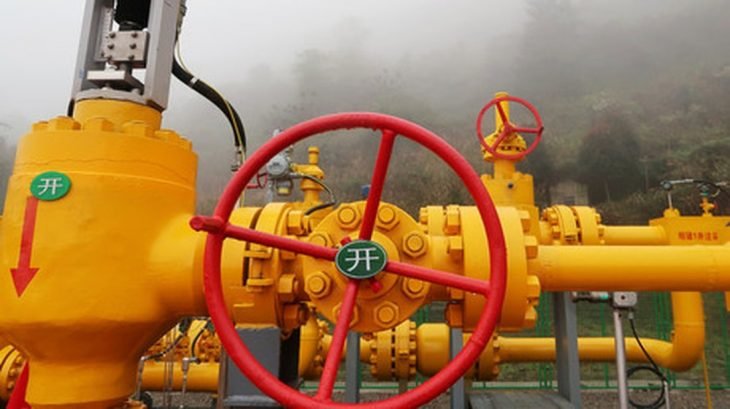
Starting from the summer of 2013, a combination of labour strikes and occupations by militias and other armed groups have stopped production at several oil facilities in all corners of Libya.
Production fell from 1.4 million barrels per day (bpd) in early 2013 to 150,000 bpd at the time of publication. The blockade of Libya’s oil fields has had disastrous effects on its economy and public finances. Few other economies in the world are so dependent on oil and gas, which, in Libya, amounts to 65 percent of its GDP, 96 percent of the exports, and 98 percent of government revenues.
As in other rentier states, Libyan citizens pay little or no taxes and rely on a vast system of government subsidies on essential goods to make ends meet.
These amounted to 11 percent of GDP in 2013.21 Unsurprisingly, the World Bank estimated a drop in GDP by 9.4 percent in 2013, with a projected drop of 9.7 percent in 2014. Economic scenarios vary enormously, based on whether production restarts or not: GDP could grow by 25 percent if energy output goes back to normal or shrink by as much as 15-20 percent if the blockade continues.
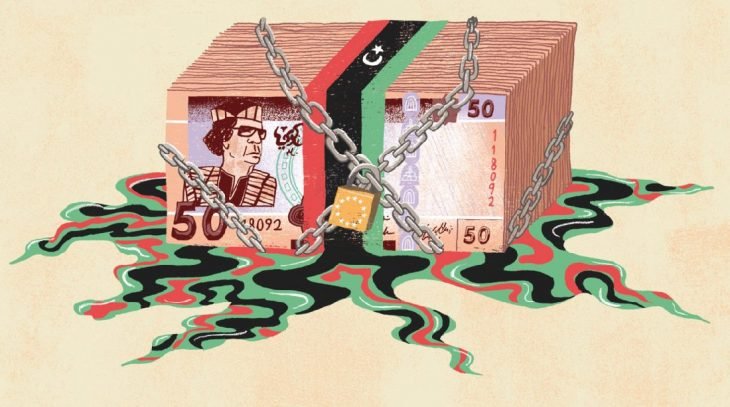
As a result, public finances are being shored up using the reserves of the Central Bank. While large, these are neither all liquid nor infinite: they were estimated at $122 billion in 2013, but they are projected to drop to $100 billion in 2014 and to $82 billion in 2015 if current levels of high expenditure and low revenue continue.
Actors on the ground seem to have a different perception. The head of the reserves at Libya’s Central Bank, Musbah Alkari, recently stated that, at current levels, foreign currency reserves could guarantee the functioning of the Libyan state for another three years.
If one also adds the roughly $50 billion of reserves held by the sovereign fund of the Libyan Investment Authority (LIA), it seems that policymakers and militia leaders have no incentive whatsoever to get their house in order – any time soon at least.
Reliance on reserves rather than on oil and gas fields could even be seen as an asset for the central government in its fight against local power centres, if the central government was not the by-product of some of these power centres.
This is of course a very short-term perspective. Nevertheless, it must be kept in mind when trying to understand the calculations of Libya’s main actors. In the short term, the economic crisis is both an effect and an accelerator of the security and political crisis: shrinking resources tend to create more demand in which resources are often seized through violent means.
The oil blockade has also increased the sense of insecurity among the population: for many months now, rumours of the imminent end of gasoline supplies have proliferated, causing long queues at gas stations with all the destabilising effects that this yields.
In the long term, therefore, the Libyan economy must diversify to limit the rentier state and put an end to the blackmail of rival groups blocking oil fields.
Can national dialogue be part of the answer?
Over the course of several months, Libya had more than one national dialogue in place at the same time.
With Libyan, UN, and international endorsement of an independent National Dialogue Preparatory Commission headed by Fadel Lamen, however, Libyans now have a single body, which is widely recognised, tasked with activating the longawaited national dialogue process.
This is despite the formal existence of a national dialogue within the GNC and several ad-hoc meetings between power brokers that are labelled as “national dialogue” or “reconciliation”.
Even so, Lamen’s commission is struggling to have its budget approved by the GNC. The role of the UN Support Mission in Libya (UNSMIL) in the dialogue could help, both materially and in applying some lessons learned from Yemen’s experience, which was also UN-supported.
In fact, discussion is underway for the creation of an international fund managed by the UN to which donor countries could contribute. After a slow start in January 2014, the preparatory commission is currently engaged in a listening tour in many cities and villages far from Tripoli.
The work of this preparatory commission should lead to the creation by late May 2014 of a 300-member National Dialogue commission, which will be composed of elected individuals, individuals nominated by the organisations they belong to (political parties as well as militias, for instance), and individuals appointed by the preparatory commission itself, particularly with regards to experts and independents.
The National Dialogue commission intends to build consensus around a National Charter, which may play the same role as the preamble of a constitution, setting out the main elements of Libya’s new identity. After this first phase, the National Dialogue commission will deal with specific issues, such as security, justice, reconciliation, and the distribution of wealth.
The process will not entail negotiations or votes but rather approval by consensus. The requisite for joining the consultation led by the preparatory commission is Libyan citizenship. However, this concept is not as universal as it may seem at first glance.
Many members of the Tebu minority had their citizenship withdrawn during the Gaddafi years, and many other Libyans who fled Libya after the revolution and the ensuing civil war, and who cannot return for security reasons, are being disenfranchised.
Militias will be allowed to participate in the dialogue, provided they leave their weapons at the door. How far outside the door they will be left, however, will be a matter of goodwill, given the absence of a depoliticised security force. While the initial goal was to agree on the National Charter by April 2014, it is now evident that the process will take longer.
To be fair, even more than with the constitution, time is not of the essence here. A speedy but non-consensual process would leave all the major problems of Libya where they stand today.
***
Mattia Toaldo is a Policy Fellow at the European Council on Foreign Relations where he works on Libya, the Israeli/ Palestinian conflict and on the European policy in the Middle East and North Africa. In 2011-2013 he was a fellow at the Institute for the Americas in London and a postdoctoral fellow at the British School in Rome and for the Society for Libyan studies where his work focused on Western reactions to the Arab uprisings.
___________

Mattia Toaldo

This brief sets out a new agenda for European support for Libya’s transition, starting with the idea that the current focus on the training of the Libyan armed forces should be broadened. Read More
Jason Pack
Oil production shutdowns are increasingly likely as several players in the sector push their own agenda. Read More
Paul-Anton Krüger
Foreign Minister Maas reopened the German representation in Tripoli after seven years. But it is questionable whether the peace process and the planned elections are on the right track. Read More
Alessandro Scipione
The United Nations plan to bring Libya to the elections by the end of the year is about to collapse, with the risk of prolonging the agony of a country that in theory boasts the largest oil reserves in Africa and that until ten years ago was main ally of ‘Italy in the Mediterranean. Read More
Nuruddin Farah
The changing of the thematic agenda on Libya is a yearly affair. International organizations operating in and around the country meet in working groups to decide what area of activity is the easiest to focus on in the unstable country. Read More
Salma El Wardany & Hatem Mohareb
A fresh wave of protests at Libyan oilfields and ports is threatening to derail months of stability in the OPEC member’s crude production and exports. Read More
Simon Watkins

With its crude oil production already the subject of various ongoing political divisions since the onset of civil war in 2011, another rift has opened up, this time between Libya’s Oil Minister, Mohamed Oun, and the chairman of its National Oil Corporation (NOC), Mustafa Sanalla. Read More
Tarek Megerisi
The announcement, with great fanfare late last year, that Libya would hold elections in 2021 was meant to be the highlight achievement of a political dialogue brokered by the United Nations that aimed to end a decade of chaos in the country. Read More
Alta Vermeulen
In October 2011 Libya’s civil war came to an end. After eight months of brutal civil conflict and instability Libyans were free from Gaddafi, but faced yet another challenge: building a new country for themselves after the Libyan transitional government declared the country liberated.
After rebel fighters found Gaddafi near his hometown in Sirte, and shot him in the head, the Libyan people were described as not only liberated but also as collectively relieved and free. Yet the vacuum left in Libya had to be filled, and it was up to the National Transitional Council (NTC) to complete that task.
During Gaddafi’s years of unchecked power the dictator managed to demolish ideas of state, institutionalism and community. Civil and political organisations suggesting alternatives were quickly removed from the local political arena. Still, some of Gaddafi’s worst acts may not have been oppression and murder, or the squandering of national wealth.
The acts which leave the post-Gaddafi Libya in turmoil to recover is amongst others the disruption of the culture of the political community and the undermining of the growth of the cultural components required for development.
NATO – Then and now
In June 2011 NATO’s secretary general, Andrew Fogh Rasmussen, urged the international community to prepare for a post-Gaddafi Libya, as the NATO alliance then extended its UN mandated campaign to include more air strikes and to protect the civilians.
According to Mr Rasmussen real progress had been made at that stage and NATO actions had prevented a massacre in Benghazi in the east – at the time the rebel’s stronghold – and in the rebel-held city of Misrata in the west.
Regarding a post-Gaddafi Libya, Rasmussen warned that the UN and other bodies should be ready to work towards ensuring a smooth transition to democracy. This statement indicated that the NATO’s plan was to ensure only the removal of Gaddafi and that the responsibility for further transition and development would be left to the UN and other bodies – NATO’s work being done.
NATO officials insisted that any future operation would not include alliance troops on the ground in Libya and would only come in support of other international organisations, which would likely be a stabilisation mission led by the UN.
Shortly after the brutal execution of Gaddafi the UN began with talks with the NTC on the country’s transition to a democratic state. Leaders of the rebellion planned an eight-month deadline to organise elections, once they have made a ‘declaration of liberation’.
Subsequent developments proved that none of these talks and declarations would make the transition any easier, nor would it speed up the process.
After the ‘liberation’ of the state, NATO committed to continuing its military air support for the revolution, though the general secretary did stress that it was not an indefinite plan and that the current operation would only continue as long as there was a clear threat against the civilian population, but not a second longer.
True to that promise, NATO announced a full withdrawal of troops to be set for the 31st August 2011. Whether all threats to the civilian population had been removed is a question yet to be answered. NATO described the Libya mission as one of the most successful missions to date, in spite of widespread criticism of its unchecked distribution of weaponry to local forces.
At the time, British Defence Secretary Philip Hammond said that the armed forces can be proud of their hard work and that it has assured the liberty of the Libyan people. In hindsight the question can be asked – exactly which Libyan people were he referring to?
The United Nations
Playing a managing role in Libya’s democratic transition is bound to be a difficult task, given the decades of brutal rule. The political and security challenges that faced the country were not only those of the legacy of authoritarian rule, but also the dysfunctional state institutions and confusion around political norms.
Regarding this difficult task, the UN Support Mission in Libya (UNSMIL) provided government officials with advice on issues regarding national political dialogue and priorities for the transitional period.
The United Nations Support Mission in Libya is a special political mission established in September 2011 by the UN Security Council in its Resolution 2009; at the request of the Libyan authorities following six months of armed conflict to support the country’s new transitional authorities in their post-conflict efforts.
All UN activities for the Libyan people are guided by the principle of national ownership. UNSMIL was mandated for an initial period of three months and extended for another three months thereafter.
The Security Council, in its Resolution 2022 in December 2011 expanded the mission’s mandate and it was further modified when the Security Council extended the Mission for 12 more months in March 2012.
In March 2013, Resolution 20195 extended the mandate once again for an additional 12 months.[8] The continued extension of the Mission led not only to confusion amongst the Libyan people, but also left a large gap for the NTC to prove their worth.
UNSMIL has substantive staff in political affairs, human rights transitional justice, mine action, demobilisation, development, women empowerment, public information and communication, as well as support services staff.
UNSMIL assisted Libyan authorities – at their request – to organize the General National Congress elections, one of the cornerstones of Libya’s democratic transition as stipulated in the National Transitional Council’s Constitutional Declaration.
Efforts focused on technical and operational advice to key interlocutors, principally the High National Election Commission (HNEC) during the elections that took place on 7 July 2012.
Libya’s 2012 elections and its aftermath
For some, the transitional government could have been described as largely ineffective – delivery systems for public goods were broken down, and armed militia groups exerted violent strength without fear of punishment.
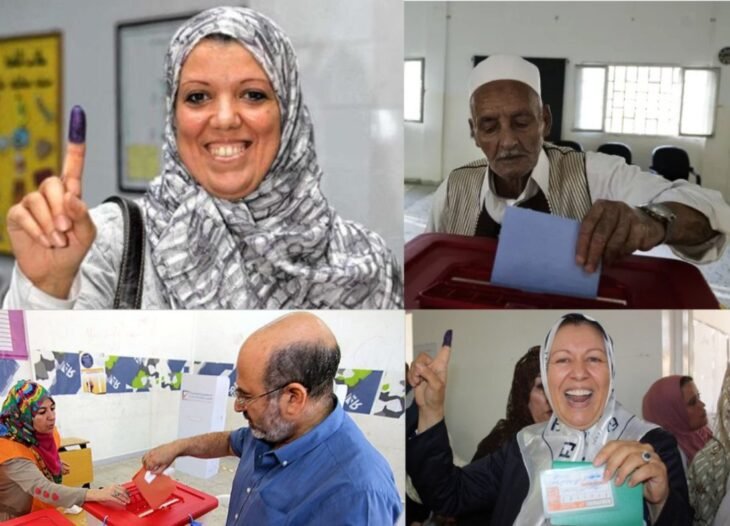
The time between the ‘liberation’ of Libya and the democratic elections can easily be described as chaotic and presented an opportunity for some to take revenge and settle scores. National elections offered the only way to escape a situation where Libya was fast becoming one of Africa’s failed states.
After the historic parliamentary election in June 2012, the UN showered Libya with praise for handling a successful election amidst difficult circumstances.
The election was the first democratic election in 47 years. Around 65% of the electorate turned out to vote. Given the frail nature of the political landscape in Libya, who won and lost in the elections was not a simple process.
With the longevity of the Gaddafi regime in the background, Dr. Ahmed Jehani, head of the Libyan Development Policy Centre and former chairman of Libya’s transitional Stabilization Team, accurately described Libyans’ reactions to the elections as a child’s response to a new toy – full of curiosity.
Between Jbril’s liberal coalition, the Muslim Brotherhood, and Al Watan, a sudden swell of previously unrealised political sentiment arose within the population. This new political rivalry proved another factor which left the aftermath of the 2012 elections not quite as stable as claimed by participating organisational bodies.
2013 – The possible final chapter for ‘post-Gaddafi Libya’?
In July Libya’s national assembly passed a law providing for the election of a committee to draft a new constitution following the overthrow of Gaddafi.
The 60 members of the constitutional committee will be elected by popular vote, and will have 120 days to draft the charter. They will be divided equally amongst Libya’s three regions: Tripolitania in the west, Cyrenaica in the east and Fezzan in the south.
The model resembles the committee that drafted Libya’s pre-Gaddafi constitution, implemented when it became an independent state in 1951. Those responsible for drafting the constitution will need to take into account not only the local and cultural tensions, but also the new political-, and old tribal rivalries in Libya.
On the constitutional committee, six seats will be reserved for women and another six will be given to members of the Amazigh (Berber), Tibu and Tuareg communities. Candidates will stand as individuals, not representing political parties.
The country desperately needs a viable government and system of rule so that it can focus on reconstruction and healing the divisions created by the civil war and toppling of the Gaddafi-regime in 2011.
Armed violence and lawless areas caused mostly by the collapse of totalitarian rule of Gaddafi and the continuing power of rebel militias has crippled governance in large areas of the state.
A sharp decrease in oil production is only one of the economic implications caused by the ineffectiveness of the states’ security forces, in spite of the efforts of the General National Congress elected for an 18-month term in 2012.
The reality calls for a national political dialogue that seeks agreement on the priorities for the rest of transitional period. UNSMIL has provided government officials with advice on issues of such dialogue. UNSMIL has been supporting the efforts of the Libyan Government and people to ensure the success of the democratic process, which has been underway since the end of the Gaddafi-regime.
The risks regarding the new constitution and governance of Libya should not be underestimated; the road to democracy is not as quickly paved as previously thought by the UN. The transition to a successful democracy remains a challenge, for both the Libyan government and other bodies involved, like UNSMIL.
Security and political challenges still plague the country and areas of concern remain the treatment of detainees, border security, the continuing weak state of security sector institutions and the ever present threats from the south of the country.
As important as a constitution and elections may be for ushering in a new political beginning for Libya, the Libyan people will continue to endure the legacy left to them over the decades of totalitarian rule. Being ruled by a bizarre set of laws with no political coherence, drawn up in a Green Book is not a time soon to be forgotten.
***
Alta Vermeulen – Faculty Member, Political Science, University of the Free State.
___________
Ashraf Boudouara

The European Union has for years invested its diplomatic efforts, as well as millions of Euros, into bringing a sense of security to Libya, ostensibly protecting Europe from the pressures of migratory flows via the Mediterranean, illicit drug trafficking, and the broader destabilizing effects of the Libyan Civil War. Read More
Samer Al-Atrush
The United States has proposed a staggered Libyan presidential election ending in the autumn of 2022, in a bid to salvage a roadmap for polls in December resisted by the transitional government and other Libyan factions, according to a document obtained by the Africa Report. Read More
Followers of the Muslim mystical tradition in Libya are working to renovate and preserve their heritage despite war. Read More
Ruslan Trad
The chaos caused by the US withdrawal from Afghanistan and the entry of the Taliban into Kabul has drawn attention away from other regional conflicts. Read More

In-depth: An investigation by Al-Araby Al-Jadeed, The New Arab’s sister publication, reveals a thriving drug trafficking network between Syrian and Libyan ports, led by a convicted criminal with dual nationality. Read More
Ezieddin Elmahjub
This paper focuses on the Libyan experience with social networking platforms in actualising democratic change in the uprising of 17 February 2011.
Pushing for December elections when compromise is so clearly impossible puts the future of Libya at risk
Mitchell Riding
Even an extra day of talks couldn’t bring a compromise between the 75 Libyan delegates meeting near Geneva in June. Read More
What’s at stake for the Maghreb, 10 years after Gadhafi’s overthrow
Yasmina Abouzzohour
Decade after the overthrow of longtime dictator Moammar Gadhafi, Libya is set to hold elections this December to produce a unified government. As the date approaches, the country’s Maghreb neighbors — Tunisia, Algeria, and Morocco — are showing intensified interest in its ongoing peace process. Read More
Ezieddin Elmahjub
This paper focuses on the Libyan experience with social networking platforms in actualising democratic change in the uprising of 17 February 2011. Read More
Peter Fabricius
As December election plans falter, the country’s warmaker, General Khalifa Haftar, returns to haunt the peace process. Read More
Ezieddin Elmahjub
This paper focuses on the Libyan experience with social networking platforms in actualising democratic change in the uprising of 17 February 2011. Read More
Libya has been embroiled in a multi-phase civil war since the overthrow of long-time ruler Muammar Gaddafi by Western-backed rebels in 2011. The country has been split between rival administrations since 2014, while militias and lawlessness have proliferated, oil production has fallen and infrastructure has been destroyed. Read More
The real multi-billion dollar question is whether Libyan leaders can hold the scheduled elections on time and hence send a reassuring signal to the international community. Read More
Talha Köse
All actors that want a democratic political system in Libya must bridge their differences and focus on strengthening the legitimacy of the election process. Read More
Ufuk Necat Tasci
The country’s elections and transitional justice process will fail without holding Khalifa Haftar and his supporters accountable. Read More
Hakki Öcal
‘If Libya wins this battle against the EU and U.S., they will have their country back’
The U.S. opposition to Gadhafi, the late Libyan dictator, had started even before the Libyan operatives planted a bomb on Pan American Flight 103 in 1988, killing all 243 passengers and 16 crew in what became known as the Lockerbie bombing. With a total of 270 fatalities, it is still the deadliest terrorist attack in the history of European aviation.
Gadhafi had finally accepted responsibility for the Lockerbie bombing and paid compensation to the families of the victims, in 2003; but it was too late, an international coalition had been put together to topple the Libyan regime and its downfall had already begun. The Central Intelligence Agency (CIA) and Defense Intelligence Agency (DIA) had recruited a group of Libyan officers in Chad in the Chadian-Libyan war.
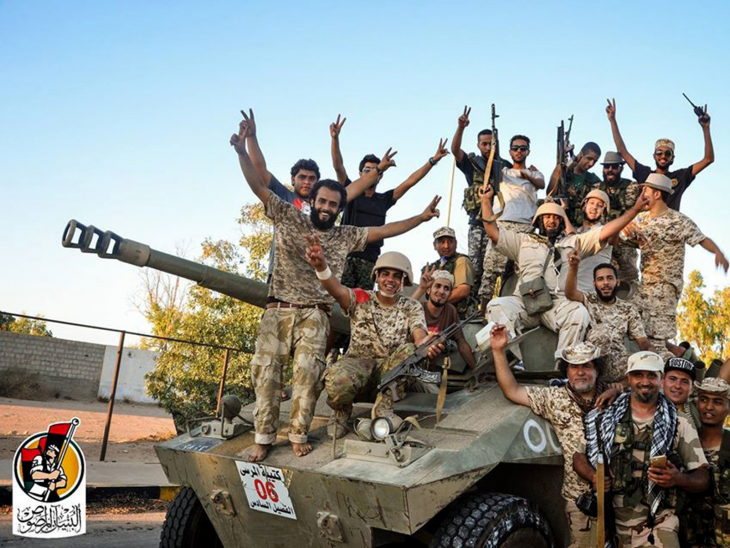
At the time a colonel, Khalifa Haftar and nearly 700 of his men were captured as prisoners of war. Gadhafi had disavowed Haftar and the other Libyan officers to save himself from the ire of the U.S. and other European states supporting Chad. But he had earned himself a powerful enemy in Haftar, who, promoting himself to general and then aligning with the National Front for the Salvation of Libya (NFSL), a U.S.-supported opposition group, organized an attack on his former boss from Zaire.
However, the U.S. had not provided the financial aid it had promised to Zaire. Haftar and his army were expelled to Kenya, and the CIA had negotiated a settlement around 1990, moving Haftar and 300 of his soldiers to the United States under the U.S. refugee program. Once in the U.S., he became a citizen. He then tried his hand once again in March 1996, taking part in a failed uprising against Gadhafi in the mountains of eastern Libya, but retreated home to McLean, Virginia, the neighborhood where the CIA is headquartered.
Meanwhile, after Tunis and Egypt, the Arab Spring had spilled into Libya, causing two bitter civil wars in 2011-12 and 2014-20. Estimates of causalities in the Libyan civil wars vary from 2,500 to 25,000.
Haftar’s return
Haftar, now having promoted himself to the rank of lieutenant general, returned to Libya and joined the Libyan revolution. His spokesperson announced that Haftar had been appointed commander of the military, but the National Transitional Council denied this. Abdel-Fattah Younis was commander-in-chief of the armed forces, while Haftar had assumed the third most senior position as the commander of ground forces.
Younis was assassinated later that summer, and Haftar appointed himself as the overall commander of the new Libyan army, proclaiming his loyalty to the revolution that overthrew Gadhafi and underlining his military experience.
In February 2014, Haftar, in a televised announcement, said that the General National Congress (GNC), the elected parliament, had been dissolved and that he was creating a caretaker government to oversee fresh elections. Haftar urged Libyans to support him against the GNC.
Luckily, his appeal did not lead to a general uprising. His announcement was soon dismissed by the then-acting Prime Minister Ali Zeidan and Haftar’s actions were condemned as “a ridiculous coup bid.” But, with the help of his CIA and DIA handlers, Haftar began a coordinated air and ground assault against the Libyan parliament forces.
To cut a long story short, after three years of fraternal fighting, in July 2017 Haftar announced in a televised speech that he had finally taken full control of Benghazi, the second-largest Libyan city and home to large oil fields and export facilities, declaring he had purged the area of conservatives.
But the other part of Libya was in the hands of the Government of National Accord (GNA), the recognized representative of the Libyan people. The European nations, especially France, that had been showing a very strange interest in Libyan affairs since 2011 and the U.S., which had fortified Haftar’s position with heavy weapons, did nothing as the country was dismembered. Since then every year they have uttered a few perfunctory words at the opening of the U.N. General Assembly (UNGA) about how strongly they support the idea of a unified Libya. That is all.
Why Turks in Libya?
Enter Turkey! What international sources describe as “the Turkish military intervention in the Second Libyan Civil War” was anything but military. Turkey expressed its support of the U.N.-recognized GNA and in January 2020 the Grand National Assembly of Turkey (TBMM) authorized a one-year mandate to deploy troops to Libya, if necessary.
The Turkish military deployed dozens of on-the-ground advisers to provide training and operational support, air support through unmanned aerial vehicles (UAVs), a handful of intelligence operatives, as well as three navy vessels to support Libyan ground forces. It was also reported that in addition to the deployments of its own troops and equipment, Turkey was hiring and transporting Syrian fighters from the Turkish-backed Syrian National Army to support and bolster the manpower of the GNA.
In addition to the military support, Turkey and the GNA signed a maritime boundary treaty in order to establish an exclusive economic zone (EEZ) in the Mediterranean Sea. With it, they now claim rights to ocean bed resources. Greece and Egypt had infringed upon Libya’s sovereignty over its maritime resources.
As expected, the Egyptian And Greek governments, allies of Haftar’s Tobruk government, denounced the Turkish-GNA maritime and military deal. Egypt’s parliament approved a bill for the deployment of its army to Libya in the name of national security and fighting terrorists; but so far, the Egyptian soldiers have yet to show up.
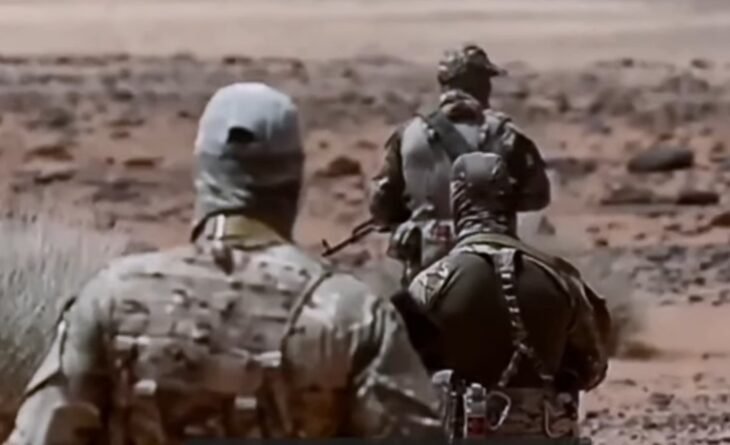
Russia also fell in with the Haftar camp, supporting him with the Wagner Group, a Russian paramilitary organization. This is still the most enigmatic situation in the whole Libyan puzzle. When asked, the Russian officials simply say the Wagner group is a private company and it is not owned and operated by the government.
What has happened in the 16 months since the Turkish-Libyan maritime and military deal has come in effect?
A. The GNA has successfully started implementing the U.N. approved unification plan, and is now just one election away from unification.
B. The Europeans and their allies in Egypt and the United Arab Emirates (UAE) have been silenced.
At this point, all the curious minds are wondering why the U.S. has been so silent. After all, Haftar is their citizen and – other than the Russian boys – the military equipment he is using belongs to them.
Wonder no more! The Americans have begun oh-so diplomatically joining the chorus. Richard Norland, U.S. special envoy for Libya and ambassador to Libya, very kindly invited Turkey to leave Libya and voiced the U.S.’ wish that Turkey and Russia begin to discuss “the departure of the Syrian fighters on each side.”
Moreover, yet very diplomatically, he adds that “getting the departure of Russian and Turkish forces themselves is going to be ‘a little difficult;'” however, encouragingly he adds that “the 5+5 Joint Military Commission also can play a role in this.” The U.S. envoy finally lets the cat out of the bag:
“There are a number of significant figures in the Libyan political and military scene right now. Gen. Haftar is clearly one of them, and his influence in helping, particularly in unifying the military institution in the country, could be significant.”
Ambassador Norland was clearly the best-qualified person to be sent to Libya to repair the harm done by his own country. Born in Morocco, a graduate of Georgetown University, with masters’ degrees from Johns Hopkins University and the National War College, having served in the State and Defense departments, a speaker of Russian, French and Arabic, Norland should know that he isn’t chasing a pipe dream. Or does he?
Better yet, let us ask this veteran diplomat whether Turkey resembles the “old Turkey” that would leave Libya at the snap of the U.S.’ proverbial fingers? Why should Turkey leave the Libyan commanders in “the 5+5 Joint Military Commission” alone against the commanders representing not only Haftar but Egypt, the UAE, Greek, Russian and possibly Israeli interests?
Why did your U.N.-recognized schemes fail to unify the country prior to Turkish involvement? Why should Turkey now leave Libya alone when the elections are so close to taking place?
If Libya wins this battle against the EU and U.S., Libyans will have their country back. They have already paid dearly. They don’t have time for the games the Europeans and Americans want to play in a bid to claim a bigger share of the Libyan oil. The whole world knows the beat the U.S. wants to hear from Haftar’s drum.
***
US invites Libya’s political actors to compromise for elections
Political actors in Libya must achieve the necessary compromise in order to meet the expectations of the people for fair and free elections, the United States ambassador to Libya, Richard Norland, said Tuesday.
Norland visited Egypt, Turkey and Morocco between Aug. 10 and 16, and met with senior officials, according to a written statement from the U.S. State Department.
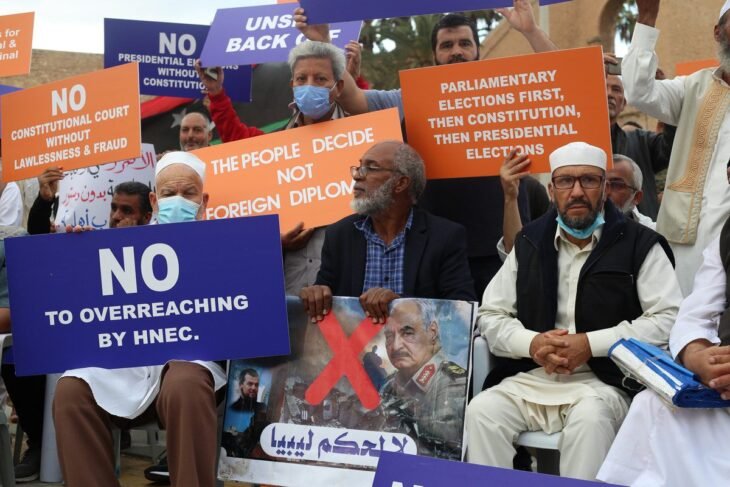
Focusing on the urgency of establishing the legal framework and constitutional ground needed for the parliamentary and presidential elections to be held on Dec. 24, Norland said that as a necessary step toward a stable, united and democratic Libya, prominent Libyan figures must ensure the necessary compromise to meet the people’s expectations for fair and free elections.
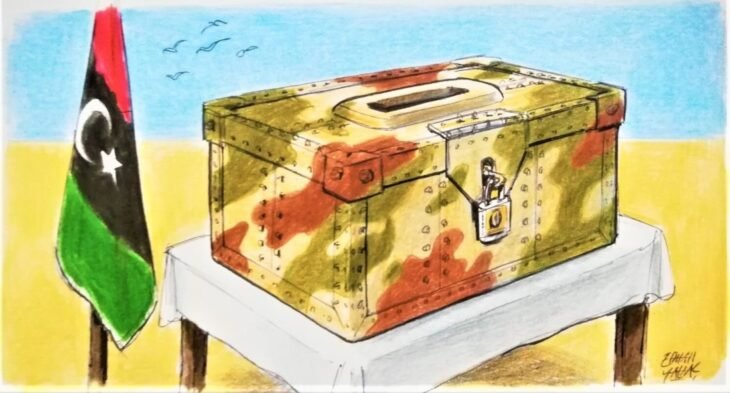
The ambassador also underlined that the continued development and stability of the political and security process in the country would lead to greater economic opportunities, foreign investment and the well-being of Libyans.
Norland, who also met with putschist Gen. Khalifa Haftar, the leader of the illegitimate armed forces in eastern Libya, in Cairo, the capital of Egypt, expressed the U.S. support for the Libyan people to elect their leaders through an open and democratic process.
The U.S. ambassador to Libya on Friday paid a visit to Turkey for talks with top Turkish officials on boosting U.S. support for Libya’s general elections set for this December.
The envoy’s visit comes after Libyan delegates failed to reach an agreement for the December elections.
Libya has been torn by civil war since the ouster of late ruler Moammar Gadhafi in 2011.
On Feb. 5, Libya’s rival political groups agreed during United Nations-mediated talks to form an interim unity government to lead the country to elections this December.
On March 16, an elected transitional authority, made up of a unity government and a presidential council, assumed their duties to lead the country through a transitional phase to parliamentary and presidential elections slated for Dec. 24.
___________________

A fragile peace in Libya is at risk as foreign powers jostle over election candidates
Henry Meyer & Mirette Magdy

Libya’s presidential elections this year were meant to be a key marker in the oil-rich North African state’s return to stability after years of civil war. Instead, they risk unleashing more chaos as outside powers try to leverage their preferred candidates into place. Read More
It began with the rise of the oppressed and ended with the production of new oppressors
Abdul Rahman Zayed
A decade of the revolution of the oppressored against the oppressor, which produced new oppressors. Read More
Mohamed Saied
US Ambassador to Libya Richard Norland met with Libyan National Army (LNA) commander Khalifa Hifter in Cairo Aug. 11, amid international efforts to salvage a UN-brokered road map for Libya. Read More
Sarah Vernhes
Representing the unity of the country, the new Libyan government is struggling to prepare for the December elections and to obtain the departure of foreign forces. As for Marshal Haftar, he has not said his last word. Read More
Igor Yanvaryov
In Libya, conflict is escalating between the commander of the Libyan National Army (LNA), Khalifa Haftar, and the Government of National Unity (PNU) in Tripoli, which was created this year as a result of a compromise between the western and eastern regions of the country. Read More