Abdullah Al-Kabir, a Libyan writer
What happened during the past week constituted a practical rehearsal for the milestones of the upcoming elections. The shell fired by the Speaker of House of Representatives (HoR) to withdraw confidence from the National Unity Government rebounded on him, revealing his low popularity while he was preparing to contest the elections.
The broad popular movement, which rejected it, forced him to go out to justify it via satellite channels twice, which reflects the state of shock he suffered, due to a folly that was not calculated with accuracy that suits the accuracy and sensitivity of the stage a few meters away from the election exam.
In his second appearance, he opened the door to retracting the decision to withdraw confidence from the government, trying to exonerate himself by placing the matter on the deputies. He indicated that consultations with the Highest Council of State (HCS) were continuing, after he had long denied the HCS’s partnership in drafting some laws in accordance with the political agreement.
Before his second appearance, Saleh waited for the scene of the demonstrations supporting him in Cyrenaica, hoping that thousands would gather, in order to confront the Government of National Unity in a new stadium that shook off the dust and returned to its effectiveness, but the meager few that came out in Benghazi, in parallel with the stops and statements in other cities in the east in support of the government, melted the ice Illusions revealed the truth in favor, He rushed to appear on a popular program giving a speech of retreat.
As usual, he repeated the reasons for withdrawing confidence from the government by focusing on the contracts it concluded with abroad, in line with the reasons for people’s support for the government, by reiterating his call to the government to continue supporting the youth, improving people’s conditions, and providing them with all services.
He rushed to appear on a popular program giving a speech of retreat. As usual, he repeated the reasons for withdrawing confidence from the government by focusing on the contracts it concluded with abroad, in line with the reasons for people’s support for the government, by reiterating his call to the government to continue supporting the youth, improving people’s conditions, and providing them with all services.
Saleh wants people to believe his concern for the Libyans’ money, due to the debts that foreign contracts may cause to the Libyan state. Immediately, social media and media sites retrieved the talk of some representatives about the corruption and waste of money, and published the bills of his boss Saleh’s extravagant expenses in luxury hotels. Outside the country, memories of his support for bloodshed returned, giving legitimacy and support to Haftar’s war on the capital, spreading destruction, devastation and mass graves.
Saleh wants people to believe his concern for the Libyans’ money, due to the debts that foreign contracts may cause to the Libyan state. Immediately, social media and media sites retrieved the talk of some MPs about the HoR corruption and waste of money, and published the bills of its speaker Saleh’s extravagant expenses in luxury hotels outside the country, and the memories of his support for bloodshed returned, giving legitimacy and support to Haftar’s war on the capital, spreading destruction, devastation and mass graves. Whoever claims to be keen on preserving money must first be keen to save blood, for it is first and more important than money and construction.
The Libyans describe the fortunate that the wind collects firewood for him, and this is what happened with the Prime Minister of the National Unity Government, Abdel Hamid Dbeibah, and the wind here is the stupidity of Saleh, who thought that he was playing politics with unparalleled skill, a veteran journalist who left the country for more than a quarter of a century, but remained captive to his regionalism, did not hesitate to describe Saleh as a shrewd fox.
While the truth is neither cunning nor political capabilities, but rather an exploitation of the contradictions of international interests around Libya, and the desire of active countries to calm the conflict prompted them to overlook its transgressions and intransigence. Just as the referee of a football match avoids the offenses of an arrogant and reckless player with influence in a backward country in order to bring the match to safety.
The development of the fabricated crisis by the Speaker of Parliament and some political parties, and the appropriate climate for escalation by the Prime Minister, prompted the international parties to intervene by calling on the parties to calm down and not escalate, and the message from the ministerial conference held in New York, on the sidelines of the annual meeting of the United Nations General Assembly, was clear.
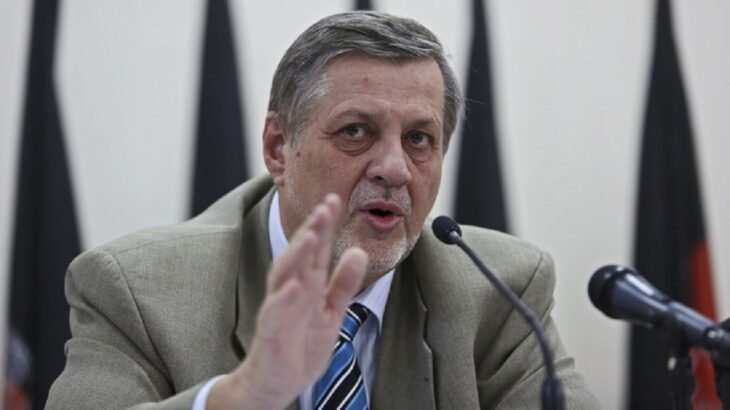
There is no retreat from the December elections, and all parties must agree on the constitutional basis and election laws. For the first time with the new UN envoy Kubis, the UN mission issued a firm statement that downplays the importance of Saleh’s parliament’s decision, stressing that the government will continue its duties until the formation of a new government after the elections.
Exciting developments in a short time will prompt all parties to review their positions, and search for all possible options to remain on the scene, after the emergence of two variables that were not taken into account.
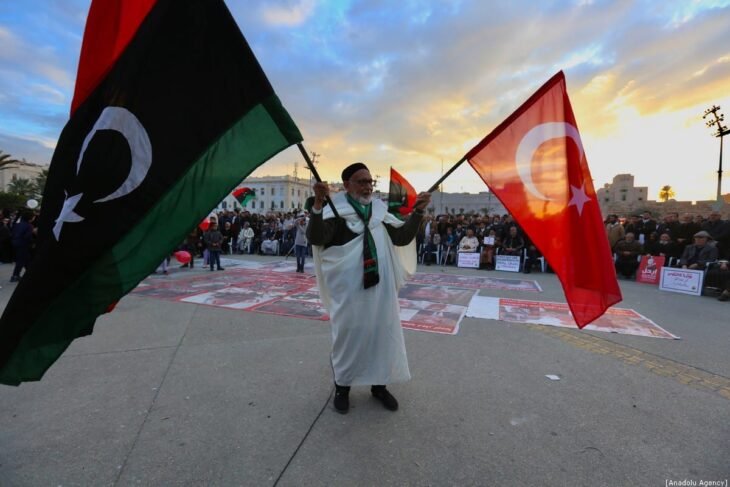
The return of the movement to the street, the rise of the prime minister’s star by his approach to the people, and his endeavor to meet their needs such as providing a grant to young people who are about to marry, implementing Parliament’s decisions to increase salaries, and initiating maintenance work for some facilities and roads, as well as his distinguished personal qualities.
His simplicity, and his uniqueness among all the passing personalities in the political scene, in addressing people in an informal language, sitting, talking and joking with them in cafes and other public spaces without pretension, and not showing the lavish manifestations of power. It had a profound impact on this change in the political scene.
The Libyans, like all Arab peoples, show loyalty to the king or ruler, and chant for his life and the perpetuation of his power, but deep down they hate him. Their muffled anger provokes manifestations of the domination that surrounds him. And their submission to him is only due to his power, his possession of the tools of oppression, and his ability to kill. While they voluntarily accept submission to the non-authoritarian ruler who avoids provoking them with extravagant appearances, is not superior to them, and lives on a level equal to their middle.
The apparent reason for killing Kulaib bin Rabia, the first king of the Arabs, was his killing of the she-camel of Al-Basous, so war broke out between Bakr and Taghlib for forty years. But the hidden reason is his exaggeration in vanity and arrogance and his contempt for others, a behavior that ignited feelings of hatred and resentment in the hearts of the contagious tribes, because it is an abhorrent approach that is unpalatable to the Arabs.
All polls and opinion processes indicate the overwhelming superiority of Dbeibah over all potential contenders in the presidential battle if presidential elections are held, and if his government’s good performance and its bias towards the people by working to improve their living conditions and mitigating the effects of the crisis on them, are the most important reasons for people to come out in support of him against Agilah Saleh’s decision and his party, and then the rise of his political star, the most important reason is his closeness to people, his humble behavior with them, his patience, and his simple and unpretentious speech, as he removed the stereotyped image of the ruler and the sultan, and active in the collective memory pictures of revered examples in history of the humble ruler who seeks to serve the people and not dominate them.
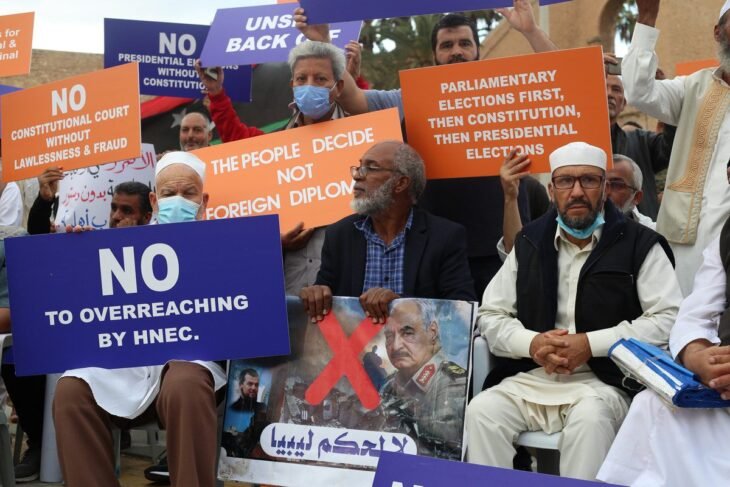
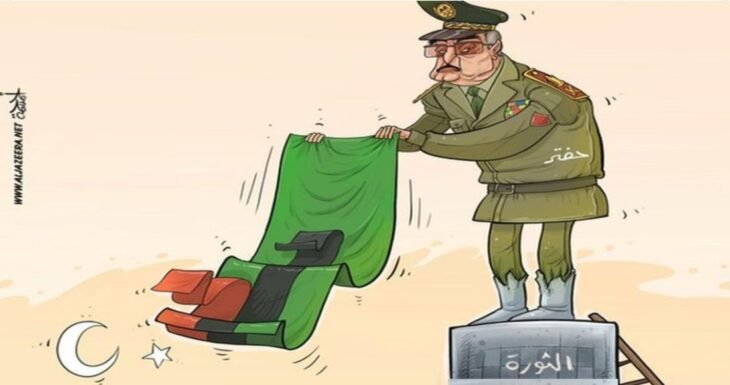
The last chapter in the parliament’s dispute with the government changed many of the rules of the political game, and then the scene of last Friday will redraw the map of political alliances, as much as Dbeibah will be ecstatic with this amazing success in polarizing the street, Saleh and his staunch ally Haftar will suffer from the effects of the shock, and they will not have much time to maneuver and shuffle the cards over the international insistence on implementing the elections on time.
________________




















![Gaddafi son to run for president - Cartoon [Sabaaneh/Middle East Monitor]](https://i2.wp.com/www.middleeastmonitor.com/wp-content/uploads/2021/11/IMG_3882.jpg?resize=933%2C579&quality=85&strip=all&zoom=1&ssl=1)





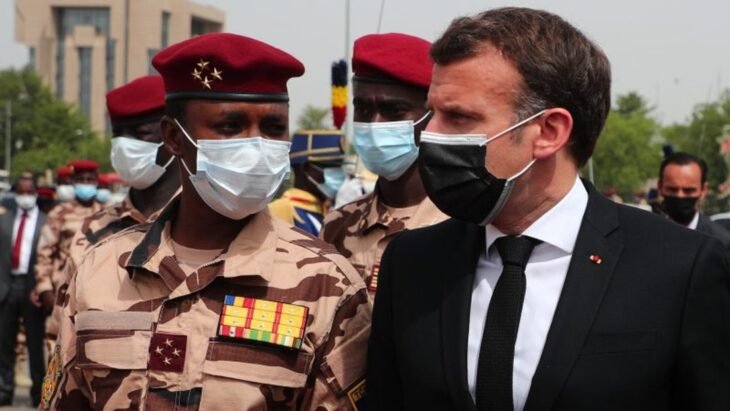
 Faced with dwindling soft power, France is aiming to play the hero in the Middle East and North Africa to enhance its economic and political interests while positioning itself as a dominant actor in the region.


 Bouteflika’s passing will not alter the autocratic and corrupt nature of the Algerian regime, mostly because he was one of its architects and fastidiously applied himself to consolidate the system during his 20-year reign as President.