Archive - February 2022

The Tradeoff Between Promoting Unity and Reducing Opportunities for Conflict in Libya

Khaled Zeo

 The breakdown of talks in Geneva as well as Berlin held under the auspices of the UN comes after a series of failures on the part of Libyan stakeholders to find common ground. This has been seen in regard to a series of significant issues, including the format of the now delayed December elections, and the formation of a cohesive government in the new Libyan state. Read More

What is fueling Libya’s instability?

Analysts fear the country could plunge into further chaos after a failed bid to hold a presidential election in December.

A year ago, Libya looked to be on a fragile path towards democracy after more than a decade of civil war. Now, it appears to be sliding back towards strife and division. Read More

Libya Fast Facts

CNN Editorial Research

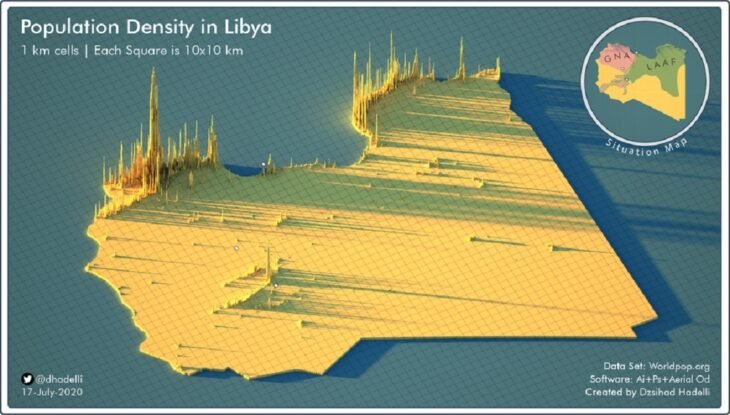
Here’s some background information about Libya, an oil-rich country in North Africa bordering the Mediterranean Sea and Egypt, Tunisia, Algeria, Chad, Niger and Sudan.

About Libya (from the CIA World Factbook)

Area: 1,759,540 square kilometers (slightly larger than Alaska)

Population: 7,017,224 (July 2021 est.)

Median age: 25.8 years

Capital: Tripoli

Ethnic groups: Berber and Arab 97%, other 3% (includes Greeks, Maltese, Italians, Egyptians, Pakistanis, Turks, Indians and Tunisians)

Religion: Sunni Muslim 96.6%, other is 3.4%

Unemployment: 30% (2004 est.)

Other Facts

Libya has proven oil reserves estimated at 48.4 billion barrels, the most in Africa.

Moammar Gadhafi ruled Libya from 1969 to 2011. In the 1970s and 1980s, he was known for supporting Palestinian terrorist groups. In the late 1990s, Gadhafi made steps toward rapprochement with the West.

A Libyan civil war began in 2011 with clashes between the government and rebel forces, and that fueled a second war that is still ongoing. The administration of General Khalifa Haftar, in eastern Libya, is often at odds with the Western-backed government based in Tripoli, the Government of National Accord (GNA). There are also multiple tribes competing for control of Libya’s dwindling oil wealth, as well as militant groups, including ISIS, scattered across the vast country.

According to the UN International Organization for Migration (IOM), there are 316,415 Internally Displaced Persons (IDPs), and 567,802 total IDP returnees from 2016 to 2019. (as of October 1, 2020)

Timeline

1911-1912 – Italy gains control of the area comprising modern day Libya from the Ottoman Empire.

1940-1943 – During World War II, Axis and Allied forces battle in Libya. After the Axis troops are defeated, Italy withdraws, and Libya falls under French and British control.

November 1949 – A United Nations resolution calls for the establishment of a sovereign state of Libya by January 1952.

December 24, 1951 – King Idris I proclaims the independence of Libya.

1959 – Significant oil reserves are discovered.

September 1, 1969 – A group of army officers led by Gadhafi overthrows Idris.

1977 – The General People’s Congress (GPC) replaces the Revolutionary Command Council (RCC), which has led the country since the 1969 coup.

1979 – Gadhafi resigns as secretary-general of the GPC but remains the de factor ruler of Libya.

August 1981 – US Navy jets shoot down two Libyan fighters in a confrontation over the Gulf of Sidra.

March 1982 – The United States imposes an oil embargo on Libya.

January 1986 – Gadhafi draws a “line of death” across the Gulf of Sidra, which he claims is Libyan territory, and warns the United States and other foreign ships not to cross it.

March 1986 – Libya fires missiles at a US aircraft flying inside the “line of death.” In retaliation, the US Navy destroys at least two Libyan patrol boats in the Gulf of Sidra.

April 1986 – In response to the Libyan sponsored bombing of a German disco frequented by US soldiers, the United States bombs targets in Libya.

December 21, 1988 – Pan Am Flight 103 explodes 31,000 feet over Lockerbie, Scotland, 38 minutes after takeoff from London. Two hundred and fifty-nine people on board the New York-bound Boeing 747 are killed, along with 11 people on the ground.

September 19, 1989 – UTA Flight 772, a French airliner, explodes over Niger. One hundred and seventy passengers and crew members are killed. In 1999, six Libyans are tried in absentia and convicted in a French court.

April 15, 1996 – The United Nations imposes sanctions on Libya over the 1988 Pan Am Flight 103 bombing in Lockerbie and the 1989 Niger bombing.

April 5, 1999 – Libya hands over Lockerbie bombing suspects Abdel Basset Ali al-Megrahi and Lamen Khalifa Fhimah to be tried under Scottish law in The Hague. The United Nations suspends sanctions against Libya.

January 31, 2001 – Megrahi is found guilty of the Lockerbie bombings and is sentenced to life in prison. Fhimah is acquitted.

September 2003 – UN sanctions against Libya are lifted.

December 2003 – Libya announces that it has agreed to end its program of developing weapons of mass destruction.

September 2004 – US President George W. Bush issues an executive order that ends most economic sanctions against Libya and lifts a ban on travel to Libya which had been in effect since 1981.

June 2006 – The United States removes Libya from its list of state sponsors of terrorism.

January 2008 – Libya takes a rotating seat on the UN Security Council.

August 14, 2008 – Libya and the United States sign an agreement over claims relating to injuries or deaths in the 1986 bombing of the German disco, the 1988 Lockerbie bombing, and the 1989 French airliner bombing.

October 31, 2008 – The United States receives $1.5 billion from Libya, settling claims from the 1980s bombings.

January 2009 – The United States and Libya exchange ambassadors for the first time since 1973.

August 2009 – Convicted Lockerbie bomber Megrahi is released from a Scottish prison on humanitarian grounds. Megrahi, reportedly suffering from terminal cancer, returns to a hero’s welcome in Libya.

September 23, 2009 – Gadhafi addresses the UN General Assembly. In the 1.5-hour speech, he criticizes the United Nations and the Security Council and suggests that they should be moved out of New York.

May 2010 – Libya is elected to a three-year term on the UN Human Rights Council.

February 2011 – Demonstrations break out against the rule of Gadhafi in Benghazi and Tripoli. The protestors are reportedly attacked by security forces, warplanes and helicopter gunships, resulting in hundreds of casualties. These protests spread through the country, igniting the 2011 Libya Civil War.

February 22, 2011 – Gadhafi appears on television to dispel rumors that he has fled the country, vowing he will never leave Libya, and “will die as a martyr at the end.”

February 26, 2011 – The UN Security Council imposes sanctions against Libya, including an arms embargo and asset freezes. The Security Council also refers Libya to the International Criminal Court for investigation of crimes against humanity.

May 16, 2011 – The chief prosecutor of the International Criminal Court, Luis Moreno-Ocampo, requests arrest warrants for Gadhafi, his son Saif al-Gadhafi and his brother-in-law, saying the court has evidence that the three committed crimes against humanity during the Libyan civil war.

August 24, 2011 – The National Transitional Council (NTC), the rebels’ political movement, claims rebels now control 90% of the country and plans to move ministries from its base of Benghazi in the east to Tripoli. The NTC will have the primary responsibility for the restoration of law and order when the conflict is over.

October 20, 2011 – Gadhafi dies of a gunshot wound to the head after being captured by rebel forces in his hometown of Sirte, Libya.

October 23, 2011 – Libya’s interim leaders declare the nation’s freedom in Benghazi, where uprisings against Gadhafi’s regime began in February, officially ending the civil war.

October 27, 2011 – The Security Council votes unanimously to end military operations in Libya. The adopted resolution effectively cancels the NATO mission in Libya as of October 31, 2011.

October 30, 2011 – It is announced that two sites containing chemical weapons have been found in Libya. Prime Minister Mahmoud Jibril says the Organization for the Prohibition of Chemical Weapons (OPCW) has been notified.

October 31, 2011 – The NTC elects Abdurrahim El-Keib, an electrical engineering professor, as the acting prime minister.

November 19, 2011 – Saif al-Islam is captured after a firefight in southern Libya.

November 23, 2011 – El-Keib names 25 people to the Transitional Executive Board, Libya’s new cabinet.

December 16, 2011 – The Security Council lifts sanctions on the Central Bank of Libya and the Libyan Foreign Bank.

May 20, 2012 – Megrahi dies in Libya at 60 years old, the only person convicted of the 1988 bombing of Pan Am Flight 103.

July 7-8, 2012 – Elections are held for the 200-seat national assembly; there are more than 3,500 candidates in the first elections in Libya in 42 years.

July 17, 2012 – Results show the National Forces Alliance, a coalition of 58 political parties, wins the most seats in the 200-seat election, 39; the Justice and Construction party, a Muslim Brotherhood affiliate, came in second with 17 seats.

August 8, 2012 – Libya’s NTC hands over power to the General National Congress.

September 11, 2012 – US Ambassador Christopher Stevens and three US diplomatic staffers are killed in an attack on the US consulate in Benghazi. Initially, the cause is alleged to be an anti-Islam video produced by an Israeli-American, but it is later determined to be a terrorist attack.

September 12, 2012 – The General National Congress names Mustafa Abushagur prime minister-elect and gives him approximately three and a half weeks to form a crisis government proposal.

October 7, 2012 – Abushagur is voted out of office with a “no confidence” 125 to 44 vote against his proposed cabinet.

October 14, 2012 – Ali Zeidan is elected as the country’s new prime minister.

October 20, 2012 – Official sources report fighting in the former Gadhafi stronghold of Bani Walid where at least 200 government forces are wounded, and 14 government and pro-government militia members are killed. Among those killed is Khamis Gadhafi, 29, the youngest son of the former leader.

February-March 2014 – Violence levels in Benghazi spike, with assassinations, kidnappings and bombings becoming near daily occurrences. While no group has claimed responsibility for the rising violence in Benghazi, residents and officials blame the violence on Islamist extremist groups.

March 11, 2014 – Libya’s parliament votes Zeidan out of office after months of political infighting. Defense Minister Abdallah al-Thinni, who is sworn in after the vote, will hold the position of premier until a replacement is picked.

April 13, 2014 – Al-Thinni resigns after an attack on himself and his family. The General National Congress must approve. Until then, al-Thinni says he will continue his work as a “caretaker.”

May 4, 2014 – The General National Congress (GNC) elects Ahmed Maiteeq as Prime Minister. However, some members of the parliament reject the appointment and ask al-Thinni to stay in place because Maiteeq’s appointment failed to reach a quorum and therefore is illegitimate.

May 18, 2014 – Operation Dignity forces storm parliament and call for the suspension of the General National Congress (GNC).

June 9, 2014 – Libya’s Supreme Court rules Maiteeq’s election as prime minister was unconstitutional. Al-Thinni remains the interim prime minister.

June 15, 2014 – Ahmed Abu Khatallah, the suspected mastermind behind the 2012 bombing of the US diplomatic compound in Benghazi, is captured. In June 2018, Abu Khatallah is sentenced to 22 years in prison.

June 25, 2014 – A new parliament is elected.

July 13, 2014 – Islamist militants launch Operation Libya Dawn, in an effort to take control of the Tripoli International Airport, which has been under the control of moderate militias since the fall of Gadhafi.

July 14, 2014 – All air traffic in and out Tripoli is suspended. Also, the United Nations announces that it has evacuated its staff.

July 26, 2014 – Military and civilian personnel from the US embassy are evacuated from Tripoli.

August 4, 2014 – The first session of the new parliament, called the House of Representatives (HOR), is held in Tobruk.

September 1, 2014 – Parliament reappoints Thinni, who resigned just days before, as prime minister and asks him to form a new government.

November 6, 2014 – The Libyan supreme court rules the June elections were unconstitutional and illegal, dissolving the House of Representatives. The HOR ignores the ruling.

January 22, 2015 – Operation Dignity forces take control of the Libyan Central Bank in Benghazi.

February 15, 2015 – Islamic militant group ISIS releases a propaganda video which appears to show the beheadings of 21 Egyptian Christians on a Libyan beach.

February 16, 2015 – Egyptian warplanes stage airstrikes against ISIS targets in Libya in retaliation.

February 20, 2015 – Three simultaneous suicide car bomb blasts kill at least 30 and injure more than 40 in Gobba, Libya. Wilayat al-Barqa, the Libyan branch of ISIS, claims responsibility for the explosions.

May 26, 2015 – While in the eastern city of Tobruk to attend Parliament, Prime Minister al-Thinni survives an attempted assassination.

December 17, 2015 – In Skhirat, Morocco, Libya’s rival warring factions sign a UN-brokered peace agreement to form a national government.

December 17, 2017 – Haftar says he no longer recognizes the UN-backed national government established by the 2015 agreement.

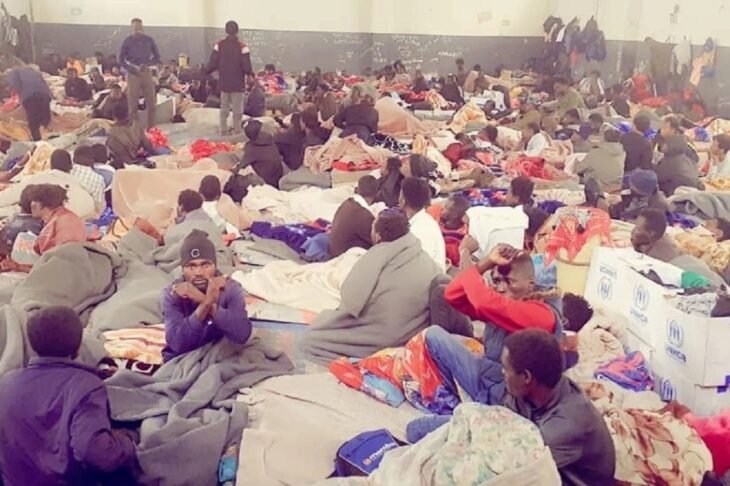
June 2018 – A UN report finds that over the course of two days, 215 people drowned after leaving Libya for Europe. There are between 700,000 and 1 million migrants in Libya, according to the UN IOM. Tripoli’s location at the edge of the Mediterranean makes it a popular checkpoint for those all over the continent trying to escape conflict by fleeing to Europe.

November 5, 2018 – The UN Security Council adopts a resolution that keeps the pressure on suspected human traffickers and sexual abusers in Libya, following an undercover report by CNN’s Nima Elbagir and Raja Rezak that revealed trafficking of women in Libyan camps, as the observed captives were sold to the highest bidder.

April 4, 2019 – General Haftar orders his Libyan National Army (LNA) to advance on the capital city Tripoli, the base of the country’s UN-backed government, the GNA.

April 9, 2019 – In a statement, UNICEF calls on all parties to refrain from “committing grave violations against children” — including the recruitment of children as soldiers — as it warns that more than half a million children are at “direct risk” in Libya as Haftar’s forces advance.

January 17, 2020 – UNICEF releases a statement calling for a durable peace agreement to be reached “for the sake of each and every child.” Tens of thousands of children and civilians in Libya continue to suffer “grievously” amid the violence and chaos of the country’s longstanding civil war.

December 22, 2021 – The Libya High National Elections Commission declares force majeure. The presidential election, scheduled for December 24 is postponed indefinitely due to questions regarding the list of candidates and other issues.

January 11, 2022 – Stephanie Turco Williams, the UN special adviser on Libya, tells CNN that it is still possible for Libyans to cast their ballots by June, in line with the UN-brokered 2020 roadmap towards national elections. “It’s important for us to see an electoral event in this time frame.”

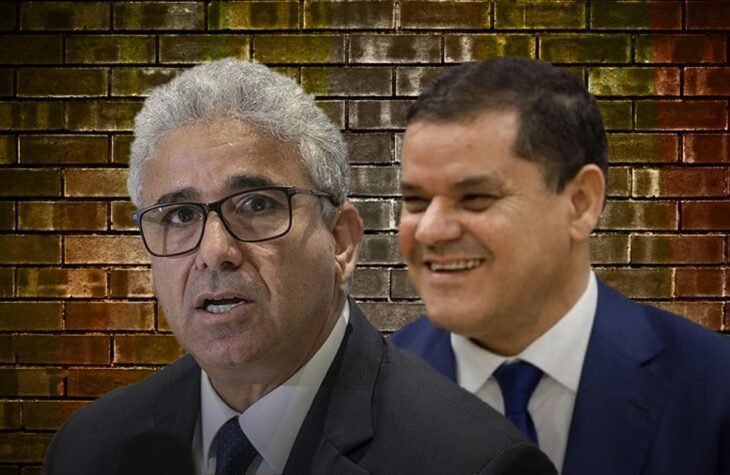
February 10, 2022 – Libya’s eastern-based parliament speaker, Aguila Saleh, declares Fathi Bashagha prime minister-designate, to replace current interim premier Abdulhamid al-Dbeibah, according to a UNSMIL statement. Al-Dbeibah refuses to recognize the vote. Turco Williams meets with both four days later and stresses the importance of Libyan stability and unity.

_______________
A timeline of how Libya got to this point

Many in the country were hopeful during the revolt against the Libyan dictator, Muammar Gaddafi, but time has eroded that optimism.

It has been eleven years since the Libyan people took to the streets and revolted against the country’s long-ruling dictator, Muammar Gaddafi, to have a democratic country that would provide equality, democratic rights and a democratically elected government. Read More

Russia’s Wagner Group in Africa

Influence, commercial concessions, rights violations, and counterinsurgency failure

Federica Saini Fasanotti

ussia is intensifying its competition with the United States in Africa. In its asymmetric race, Russia uses nominally private, but in fact state-linked actors such as the private security company the Wagner Group and the infamous St. Petersburg “troll farm” the Internet Research Agency (IRA). Both are a major threat to democracy and rule of law in Africa and beyond. Read More

Libya’s Rising Leaders: The Unheard Voices of a Generation to Come

Al Jazeera Centre for Studies released a new book entitled, Qadat Libya as-Sa’idun: Aswat Gheir Masmu’a la Jil Qadim (Unheard Voices of the Next Generation: Emergent Leaders in Libya), authored by several writers and researchers in conjunction with the 11th anniversary of the 17 February revolution that ousted Colonel Muammar Gaddafi’s rule. Read More

Libya’s Renewed Legitimacy Crisis

Ben Fishman

Washington and Europe need to clearly signal that they will not endorse any new governing arrangements until all local actors peacefully adhere to a negotiated political roadmap.

On February 10, Libya’s House of Representatives (HOR) hurriedly voted to appoint former interior minister Fathi Bashagha as the country’s next prime minister. He is slated to replace Abdulhamid al-Dabaiba, who has served as head of the internationally recognized Government of National Unity (GNU) for just over a year.

HOR chairman Aguila Saleh orchestrated the vote, arguing that the current GNU’s tenure expired in December after planned presidential and parliamentary elections were postponed. Bashagha now has two weeks to submit a cabinet for HOR approval.

Dabaiba has remained defiant, however, reiterating that he will not step down until he can hand power to a nationally elected government. He also pledged to submit a new election timeline that would see voting take place in June and suggested that the parliamentary election could precede the presidential vote (the debate over sequencing them helped stymie the December vote). At the same time, the HOR approved a new fourteen-month transition timeline whose details will be specified later by a designated committee.

Depending on the balance of political and security forces in Tripoli—where Bashagha arrived shortly after being tapped by the HOR—the coming days could produce a shift in government. To ensure that the latest developments advance rather than exacerbate Libya’s stalled transition, the United States and its partners should forestall any recognition until a clear, consensual electoral timeline is established.

Lack of Agreed Roadmap Leads to Electoral Chaos

Libya’s decade-plus transition has been marred not just by lengthy civil wars, but also by the lack of an agreed roadmap with clear timelines to establish constitutionally based elected bodies. Absent this roadmap and a functioning judicial system, multiple executive and legislative institutions have claimed legitimacy and challenged their rivals.

Technically, Libya still operates under an amended version of the interim 2011 Constitutional Declaration drafted by the self-appointed National Transitional Council, the political body that opposed Muammar Qadhafi during the revolution. An elected sixty-member Constitutional Drafting Assembly produced a draft constitution in 2017, but that document remains controversial, as does a subsequent referendum law.

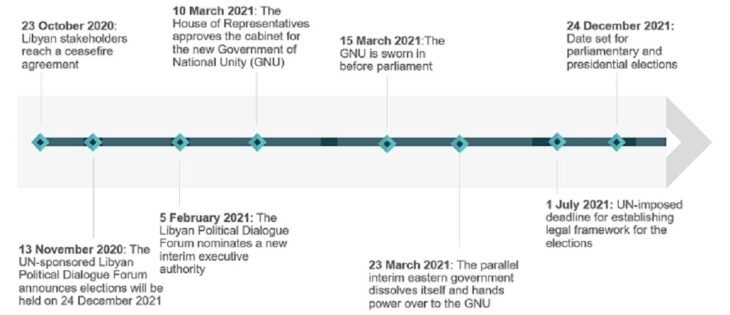
In late 2020, the Libyan Political Dialogue Forum (LPDF) set December 2021 as the next election date, but its efforts to design a constitutional basis for holding that vote stalled due to ineffective UN leadership, and later due to the controversial manner in which Dabaiba was appointed last February amid accusations of buying HOR votes, which damaged the forum’s credibility. In September, Saleh spearheaded the approval of an elections law that would have created a super-empowered president and a weak parliament, among other controversial aspects.

A rush to run for president ensued, with over 100 people seeking the nomination amid limited vetting standards and judicial reviews regarding the qualifications of the most controversial candidates—in particular, Gen. Khalifa Haftar, Qadhafi’s son Saif, and Dabaiba, who had previously pledged not to run for president. That scramble, among other logistical issues, made it impossible for the elections commission to adequately prepare for voting in such a compressed timeline.

Alternative Paths Ahead

The most immediate question provoked by Bashagha’s appointment is whether Libya will revert to split governments—which last year’s creation of the GNU had sought to resolve after years of division—or, worse, military conflict. In the longer term, the country needs to negotiate a new political roadmap, but no one has set forth a clear path to get there.

Technically, the original LPDF roadmap extends through Dabaiba’s proposed June election date. On February 13, he tasked his justice minister with proposing a new elections law, which would include the prospect of holding a constitutional referendum. But organizing and running both a referendum and national elections in four months is unrealistic.

The HOR’s preference—lengthening the election timeline to fourteen months—would give more space for these processes, but it also runs the risk of indefinitely delaying the parliamentary and presidential votes if the constitutional referendum stalls. Presumably, Saleh’s preferred scenario is to have Bashagha serve as prime minister while he remains chair of the HOR—a position he has held for seven years and seems content to occupy indefinitely if he cannot contend for the presidency.

One plausible option is a hybrid approach in which the parties negotiate a limited constitutional basis for holding elections as originally envisioned by the LPDF. This would require drafting an interim constitutional document delimiting the key institutions of government, their respective authorities, and candidate qualifications while leaving broader legal issues (e.g., citizen rights) for a later process. The eastern-based HOR and the consultative, Tripoli-based High State Council could agree on such a path, but their on-again, off-again relationship makes this unlikely without active UN mediation.

Significant International Leverage

Despite their current preoccupation with the Ukraine crisis, the United States and its European partners can and should intervene diplomatically to prevent Libya from re-dividing and bring the country back to the electoral track. In a February 11 statement, Secretary-General Antonio Guterres “took note” of the HOR’s vote to adopt the new fourteen-month timeline and appoint Bashagha as prime minister “in consultation with the High State Council”—a reaction that indicates the rival bodies are already in active negotiations. Beyond this wait-and-see approach, Washington and Europe should adopt a four-part strategy to restore the prospects for legitimate, constitutionally based elections.

First, the GNU remains the internationally recognized government, so the HOR cannot replace it just by holding a single legally and procedurally dubious vote. Western officials should make clear privately and publicly that their views of the GNU will not change unless all local actors accept a peaceful handover to a new government—otherwise, the result will be an unrecognized government with limited authority and, most important, restricted financial viability.

Second, the West should support a UN-mediated process to establish an agreed constitutional basis and timeline for elections. Regardless of the HOR roadmap committee’s pending recommendations, these elements must be negotiated with the High State Council. If the rival bodies fail to agree on a process, then the UN should be empowered to strike a compromise between Dabaiba’s four-month proposal and the HOR’s fourteen-month timeline. Any UN proposal would be limited to outlining the sequence and timing of elections; the nearly 3 million citizens who are registered will ensure that the elections process remains “Libyan-owned.”

Third, Libya’s supporters must preserve current momentum on the economic and security tracks. The dialogue aiming to unify the Libyan Central Bank with its breakaway eastern branch could restore economic well-being to the country and end certain practices that have sown division, such as paying armed groups through illegitimate means. Further, unity cannot occur without bolstering the security dialogue that has aimed to solidify the October 2020 ceasefire, remove foreign forces, and restructure a unified, national armed forces. A split government would jeopardize these steps forward.

Finally, Washington should push for broader international acceptance of an agreed transitional roadmap by taking advantage of the thaw in relations between Turkey, Egypt, and the United Arab Emirates—key actors that have been on opposite sides of Libya’s recent conflicts. Although the post-Qadhafi legal vacuum has produced yet another legitimacy crisis, each of the above diplomatic interventions can help steer the transition back on course.

***

Ben Fishman is a senior fellow in The Washington Institute’s Program on Arab Politics and former director for North Africa on the National Security Council.

_______________

Read More

Libyan tyre merchant wheeling and dealing for power

Coming days will test political agility of one-time militia leader and politician, now prime minister

Sean Mathews

In the op-eds he is prone to write in western newspapers, Libya’s newly appointed premier Fathi Bashagha strikes a conciliatory tone. He says he wants to bring a “diversity of voices” to factious politics and put the oil-rich country on “a path to unity”.  Read More
Turkey rethinks Libya policy

Libya’s rekindled power struggle has left Turkey in an ambivalent position and might force it to review its alliances.
Fehim Tastekin

fehimtastekin.jpg

Libya’s interim prime minister, a close ally of Turkey, has been rejected by parliament in a rekindled power struggle in the war-torn country. But his replacement is no stranger to Ankara and might help it make peace with eastern Libya.
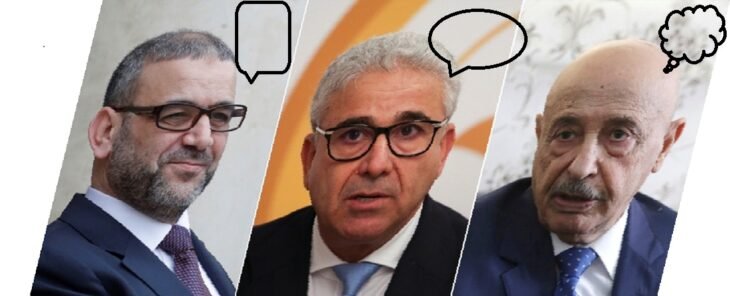
The latest political twist in Libya saw adversaries of Turkey team up with allies of Turkey to unseat interim Prime Minister Abdul Hamid Dbeibeh, Turkey’s man in Tripoli. The House of Representatives, based in the eastern city of Tobruk, chose former Interior Minister Fathi Bashagha to form a new interim government Feb. 10 on the grounds that Dbeibeh’s mandate ended Dec. 24, when elections were supposed to be held under a UN-brokered peace plan but failed to go ahead. The Libyan National Army of eastern commander Khalifa Hifter supported Bashagha, who is expected to form a new government in two weeks.
Earlier in the week, the House of Representatives approved a road map to hold elections within 14 months. The UN Secretary-General’s special Libya adviser, Stephanie Williams, has sought to convince the parties to have the elections by June. 
Bashagha was a prominent ally of Turkey in 2019 and 2020, when Hifter’s forces, backed by Egypt, Russia and the United Arab Emirates, marched on Tripoli, and Ankara lent military support to the Government of National Accord to break the siege. But in the ensuing UN-sponsored process, in which the warring parties agreed on a new interim administration, Bashagha engaged in close dialogue with Egypt, France and the United States, shrugging off his image of “Turkey’s man.” 
Bashagha was a vocal opponent of Dbeibeh’s presidential candidacy during the preparations for the failed elections. Eventually, he aligned with Hifter and Aquila Saleh, the House of Representatives speaker, to pave the way for the Feb. 10 move against Dbeibeh. Bashagha’s machinations may be harming his credibility in Turkey’s eyes, but Ankara has refrained from any open reaction.
Counting on the support of Turkey, the United States and several European countries, Dbeibeh defied the parliament’s move, arguing that a parallel administration will derail efforts to unite Libya. He vowed to hand over the mandate to an elected government only and sought to keep Tripoli’s military forces on his side. Fawzi al-Nuwairi, the deputy parliament speaker who appears to align with Ankara, convened a meeting with 40 parliamentarians in Tripoli Feb. 7 in a bid to form a bloc against Saleh. Several civic groups also lent support to Dbeibeh. 
And on the eve of the vote at the House of the Representatives, Dbeibeh reportedly survived an assassination attempt in Tripoli. 
How long Dbeibeh’s resistance can continue depends on the foreign powers that recognized the incumbent leadership in February 2021. Williams has urged the Libyan parties to focus on holding elections rather than forming a new interim government, which meshes with the priorities of Ankara and Washington. 
But the international actors who now favor Dbeibeh staying on until elections might change tune in the face of developments on the ground.
Another key factor will be the military forces and militia in Tripoli. Government-paid forces and some rival militia might cause trouble for Bashagha, and Bashagha’s loyalists in Tripoli and Misrata might cause trouble for Dbeibeh. Some claim no premier could take hold in Tripoli without Turkey’s blessing.
Many have argued that Dbeibeh’s defiance would result in a parallel administration, reverse the process of uniting Libyan institutions and even rekindle armed conflict. Still, the Misrata clique, the staunchest opponent of the Saleh-Hifter pair, is not monolithic. Ahmad Maiteeq, a prominent Misratan and former deputy chair of the presidential council, allegedly struck a deal with Hifter and Saleh to withdraw from the contest for prime minister in favor of Bashagha.
In fact, Ankara had already realized that the Tripoli-Misrata camp was becoming too unstable to rely on. The main criticism Ankara faced over Libya at home was that it became a party to the war and put all its eggs in one basket, jeopardizing national interests. After all, Ankara has failed to guarantee the two critical deals on military cooperation and maritime borders that it signed with the Sarraj government. Saleh, who has denied parliamentary ratification to the deals, is now at the forefront of the move for a new government. Tripoli is no longer a place from where Turkey could sway the course of events. 
Khalid al-Mishri, the head of the High State Council who has been close to Ankara, appears to be readjusting his position as well. Speaking after a secret meeting with Saleh in Morocco in early February, he cautioned that any new government installed unilaterally by the House of Representatives would be “stillborn” and unable to operate in Tripoli. Nevertheless, he added, “We agreed in principle on replacing the government, though this is not a priority for us.”
Dbeibeh, for his part, charged that a thirst for “power and money” was driving an alliance between the military (Hifter) and the Muslim Brotherhood, which have traded accusations of terrorism in the past. 
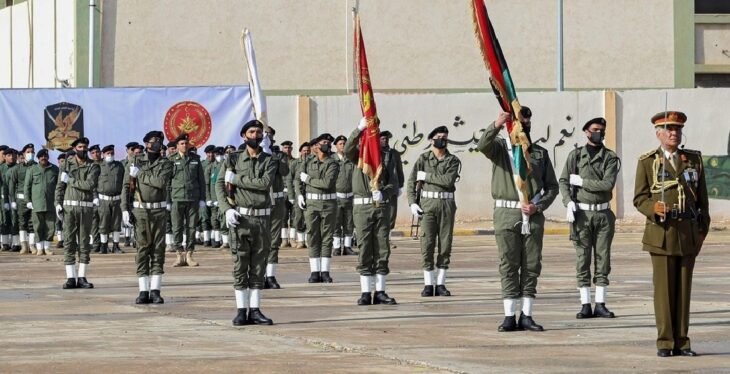
On Feb. 8, Dbeibeh joined Turkish commanders at a military graduation ceremony in Tripoli, giving the impression that he retains Turkey’s backing. His quest for support took him also on a secret trip to Cairo, but he reportedly returned empty-handed. According to Africa Intelligence, Dbeibeh met with his Egyptian counterpart, but his requests to meet with the influential foreign minister and intelligence chief remained unanswered.
A day after greenlighting a government change, Mishri held talks with Turkish Foreign Minister Mevlut Cavusoglu — a likely sign that Ankara is flexible on government options. In its Feb. 10 session, the House of Representatives decided to also form a commission to draft constitutional changes, a move in line with Mishri’s call for constitutional amendments before elections. 
Amid the shifting dynamics in Libya, dialogue with the eastern camp has become inevitable for Ankara. Turkey’s ambassador to Tripoli met with Saleh in al-Qubah Jan. 19. He then visited Benghazi, Hifter’s stronghold, accompanied by members of Turkish-Libyan business groups. Benghazi’s mayor welcomed the guests.
A Libyan parliamentary delegation, led by Nuwairi, visited Ankara in December, meeting with President Recep Tayyip Erdogan, Parliament Speaker Mustafa Sentop and Cavusoglu. The delegation included two parliamentarians said to be close to Hifter. The two sides agreed to set up a parliamentary friendship group. 
The thaw between Ankara and eastern Libya is important both in terms of healing Libya’s divisions and broadening Ankara’s maneuvering room in post-war Libya.
Turkish political and military influence may stand out in Tripoli, but Ankara seeks to also salvage economic ties with the east, including myriad construction projects in Benghazi, which Turkish contractors were forced to abandon due to the conflict. Preparations are already under way to resume flights to Benghazi. Turkish exports to Libya increased nearly 65 percent to $2.4 billion last year, according to Turkey’s Foreign Economic Relations Board. Restoring friendly ties with the east could push the figure much higher. 
But whether Ankara’s problem with Hifter is resolved remains uncertain. Ankara may hope that Bashagha will care for its interests, but none of its calculations could be guaranteed in a new government equation involving Hifter.
The critical question now is this: Will Turkey protect Dbeibeh or encourage Bashagha to forge ahead? Or will it let things slide? For now, Ankara appears far from its hawkish, interventionist stance in 2019. If protecting Dbeibeh proves costly, it may well opt to go with Bashagha and make peace with the east.

_______________

Read More
REBUILDING LIBYA’S ECONOMY ON NEW AND SUSTAINABLE GROUNDS (2)

Amal Bourhrous

PART (II)

Putting renewables at the centre of post-conflict economic reconstruction

Reducing dependence on hydrocarbons demands placing a diversification process at the heart of economic reconstruction, thus moving away from the rentier state model towards a more sustainable political economy. Such a call for diversification in Libya is not new. Read More
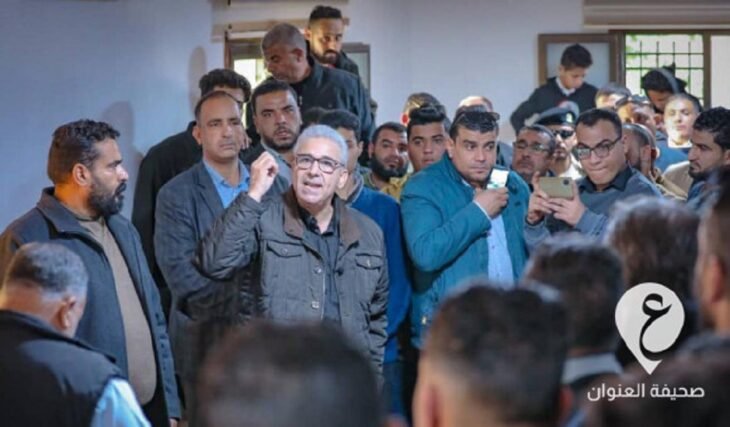
The weaponisation of Libya’s elections

Anas El Gomati

Libya was supposed to hold elections early this year. Instead, it now has two rival political administrations — a return of the divisions of the past. 
Libya is entering a new cycle of its political crisis. In December 2021, a mere 48 hours before polls were supposed to open, the elections were postponed. Emad Sayah, the head of Libya’s High National Election Committee (HNEC), declared it to be a case of force majeure. He then proposed to Libya’s parliament, the House of Representatives (HoR), to reschedule the elections for 24 January 2022. This deadline has now also passed. But rather than resolve and reschedule elections, the HoR appointed a new rival Prime Minister Fathi Bashagha on 10 February, dividing Libya between two rival political administrations.

Read More

Five things to know about Libya’s political crisis

A deepening political deadlock has raised fears of further instability in the oil-rich, conflict-torn country.

Libya has been mired in instability since a NATO-backed uprising removed longtime ruler Muammar Gaddafi in 2011.

The oil-rich country split between warring factions in the east and the west in 2014, but last year the transfer of power to a new interim Government of National Unity (GNU) raised hopes for peace and the reunification of the country and its institutions.

Now, a new power struggle has raised fears of further instability, including the return of parallel administrations and the risk of an armed confrontation.

Why did elections fail?

Abdul Hamid Dbeibah was installed in March last year as head of the United Nations-backed GNU in the capital, Tripoli, and was tasked with leading the country to national elections on December 24.

But after months of uncertainty, the electoral commission on the eve of the polls suggested they be pushed back, as a parliamentary committee tasked with overseeing the process said it was impossible to hold the vote as originally planned.

The vote was ultimately cancelled amid disputes between rival factions on laws governing the poll and disagreements over the candidates. The Tobruk-based parliament, which mostly backed eastern forces during the country’s war, declared the GNU invalid.

Parliament speaker Aguila Saleh, who was a presidential candidate, had issued a law setting a first round of the presidential election followed by parliamentary polls a month later.

Political institutions rejected the law, accusing Saleh of passing it without a proper parliamentary process, while others rejected holding the presidential vote first, saying it would mean the election would come down to a winner-take-all contest.

What’s the latest power struggle?

On Thursday, the Tobruk-based House of Representatives appointed former interior minister Fathi Bashagha as the new prime minister, saying this decision followed Dbeibah’s failure to hold the polls.

Bashagha flew to Tripoli from Tobruk, thanking Dbeibah for his work and pledging “to open a new chapter” and “reach out to everyone”. But Dbeibah, who this week survived an apparent assassination attempt, has rejected the attempts to replace him. He has said he would “accept no new transitional phase or parallel authority” and would hand over power only to an elected government.

He also described the parliament’s move as an attempt to enter Tripoli by force and promised to draft a new election law to solve the political crisis.

What does the East-based administration want?

Saleh and other east-based legislators on Thursday voted in favour of a set of constitutional amendments that put forward a new plan for the country’s transition to a democratically elected government.

The legislators have also argued the mandate of Dbeibah’s government ended on December 24. They say the interim leader became a polarising figure since he announced in November his presidential bid, breaking his pledge not to run in elections when he was appointed as interim prime minister.

Bashagha stands as a powerful figure in western Libya, and is believed to have links to armed militias in Misrata that played a key role in defending Tripoli against a 2019 military offensive from the east led by renegade military commander Khalifa Haftar.

What steps has Dbeibah taken so far? 

Dbeibah has warned that naming a new prime minister would lead the country back to “division and chaos” after nearly two years of relative calm.

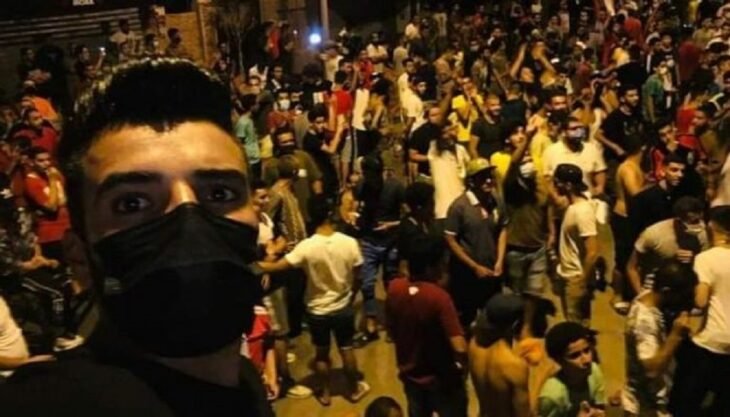
He also called for street protests to denounce the appointment of a new transitional government, adding that he has started consultations to agree on a new roadmap to hold elections in June, the date the UN mission in Libya wants for a rescheduled vote.

How has the UN reacted?

The UN, Western powers and even some members of parliament had previously called for Dbeibah to stay in his role until the election.

Asked during a daily press briefing on Thursday whether the UN continued to recognise Dbeibah as interim prime minister after Bashagha’s appointment, spokesman Stephane Dujarric said “the short answer is yes”.

“We are trying to get details of the decision made by the other legislative body,” Dujarric said.

________________

Read More
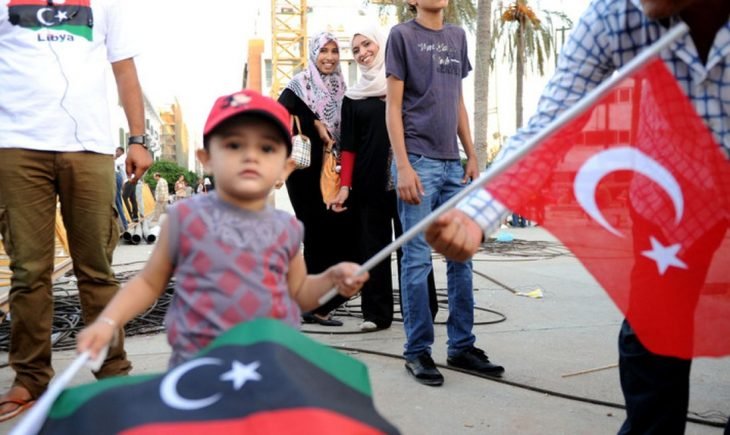
Moving Libya Forward

Fathi Bashagha

Libya has again reached a crossroads. Against great odds, the Libyan people have persevered to move our country forward on a path of stability, unity and prosperity. It is in this spirit, and out of respect for the desires of more than 2 million Libyans who believe our country’s road to democracy starts at the ballot box, that I have accepted the support of my fellow countrymen to hold the position of Prime Minister. Read More
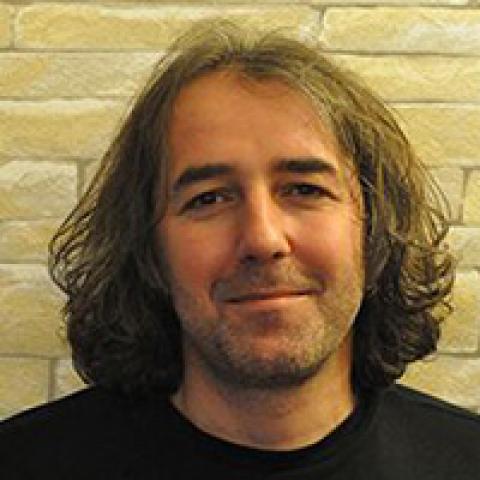
Partition, war, or democracy: Where is Libya heading?

Ufuk Necat Tasci
While the world’s attention is focused on the Ukraine crisis, another hot spot of the last decade, Libya, could be on the brink of partition following attempts by the eastern-based Tobruk Parliament, the House of Representatives (HoR), to select a new PM and install a rival government.

Since the elections of 24 January were postponed following the failure to establish a constitutional basis for the vote, and the candidacies of controversial figures like Saif Al-Gaddafi and Khalifa Haftar, various political fronts have formed both internally and externally. 

Last week, it was announced by the HoR that the UN-backed Government of National Unity’s (GNU) mandate had expired, despite the UN-sponsored Libyan Political Dialogue Forum (LPDF) roadmap making it crystal clear that the mandate is valid until June 2022. 

In January, the UN’s special advisor in Libya, Stephanie Williams, said it is still “very reasonable and possible” for the country’s 2.8 million voters to cast their ballots by June in line with the UN-brokered 2020 roadmap.

Despite this, the speaker of the HoR, Aguila Saleh, last week announced that the eastern-based parliament will be installing what they call a “new government” to replace the UN-backed and internationally recognised GNU and its head, Prime Minister Abdul Hamid Dbeibah, on 8 February.

“Since the elections of 24 January were postponed, various political fronts have formed both internally and externally”

Another official from the HoR, Abdullah Blehiq, also called on the UN and other international actors not to intervene in Libya’s domestic affairs or try to oppose the HoR’s move.

In response, Libya’s PM Dbeibah said Aguila Saleh was taking the country to the brink of division, while Libya’s High Council of State (HCS) also called the move “unacceptable and inapplicable”. 

Williams, likewise, criticised the announcement, saying she wants the HoR to set out a credible political process as quickly as possible that answers the question that almost three million Libyans are asking: what has become of our elections? 

“The attempts by the House of Representatives (mainly those members controlled by Aguila Saleh and Khalifa Haftar) and more recently (those aligned with Bashagha and other western politicians who pledged support to Haftar) to create a new government is a way to confuse the situation even further and put an end to the aspirations for elections once and for all,” Abulkader Assad, a Libyan journalist, told The New Arab.

Dr Guma El-Gamaty, a Libyan academic and politician who heads the Taghyeer Political Party in Libya, said that there certainly exists a risk of going back to square one with another parallel government in the east.

“However, it will be difficult for the GNU to be replaced as the majority in the west of Libya, [which] will reject a change of government at this time and will insist on the need to hand over to an elected government,” he told TNA

“Saleh is rallying all tribal and political support for making a scene by forming a parallel government to twist the arms of the international community, especially those of UN adviser Stephanie Williams, and the only gain he wants is taking Dbeibah and Saif Al-Islam Gaddafi out of the presidential race,” Assad says. 

According to Dr El-Gamaty, Saleh and Haftar will not succeed in changing the PM as several countries and the UN will not recognise any new government. 

The role of Haftar

“Saleh has control over the HoR and there are few voices inside parliament that are trying to block his agenda. Egypt, France, and Russia back Saleh, and ultimately everything he does is in line with Haftar’s interests that help him to pursue his agenda too,” El-Gamaty told The New Arab

Furthermore, Assad thinks that the PM card is now being used by Saleh and Haftar to appease their new allies in the western region, particularly former interior minister Fathi Bashagha and former vice chairman of the Presidential Council Ahmed Maiteeq. 

“They (Aguila Saleh and Khalifa Haftar) find a way for themselves to infiltrate west Libya and probably a way to get Haftar a tour in Tripoli”.

During the pre-election process, Russia-backed Saif Al-Islam Gaddafi’s candidacy, along with the massive support for Dbeibah among the Libyan public, were the two biggest dangers Haftar faced. When you consider the fact that Haftar’s candidacy was enabled mainly by the US, France, and Egypt, it seems that Washington, Paris, and Cairo are no longer on the same page as Moscow. 

On the other hand, the notion of ‘infiltrating the west’ could be a possibility, as many believe that either Bashagha or Ahmed Maiteeq will try to establish what they call ‘new PM’. Another possible scenario could be to abandon the rhetoric of ‘unification’ and instead try to establish another distinct administration in the east that would enjoy the support of the UAE, Egypt, and France.

France will most likely not be on the same page with Russia following the threat of the Moscow-backed Wagner mercenary group’s increasing presence in West African countries like Mali. 

Before the agreement between Mali and the Wagner Group, which is owned by Putin’s henchman and chief, Yevgeny Prigozhin, Macron’s France was working in collaboration with the Wagner Group in Libya in support of warlord Khalifa Haftar.  

Therefore, it could be likely that Aguila Saleh and Khalifa Haftar eventually abandon Tripoli to those who support the UN-backed and internationally recognised GNU while trying to establish a different ‘authority’ in the east which would enjoy the wealth of Libya’s oil crescent, which is mainly controlled by Haftar’s forces.  

“A possible scenario could be to abandon the rhetoric of ‘unification’ and instead try to establish another distinct administration in the east that would enjoy the support of the UAE, Egypt, and France”

Wagner’s aim has been to increase Moscow’s opportunities in becoming a main player in the oil industry and reconstruction projects as, through Haftar, they have managed to position themselves in the oil crescent region and in a very strategic geographical area.

Now, following divisions between France and Russia in light of the Ukraine crisis, Aguila Saleh and Khalifa Haftar’s strategies seem aimed at enabling them to gain future bargaining power.

Those who submitted their candidacy documents to head the HoR’s ‘new government’, like Bashagha, Maiteeq, Aref Al-Nayeed, and many others, are all on the same side. This combination of former western officials and eastern-based figures will try to reflect Saleh and Haftar’s ambitions in the form of a widely held consensus.

In any case, they know that the new cabinet will not be able to remove Dbeibah from power because of the stance taken by the UN, the US, Turkey, the UK, Qatar, and the overwhelming majority of Libyans. So, they could instead cause a crisis of legitimacy while acting together with former western figures like Bashagha and Maiteeq.

“Saleh and Haftar are fully aware that they can’t legitimise a new PM without either going to war again against the western region, a seemingly impossible choice now because Russia and the UAE have bigger fish to fry in Ukraine and Yemen, respectively, or using it as a pressure card on the UN to spoil the political process,” Libyan journalist Abulkader Assad told TNA.

Amid all of this, it has also been announced that Haftar has returned to his so-called position as leader of the General Command of his self-styled Libyan National Army (LNA).

At this point, it should not be forgotten that despite the long-lasting crisis between western Libya and Haftar, the GNU under the leadership of Dbeibah has paid most of the wages of LNA members. So, Haftar needs to make sure that there is no crumb of sympathy left for the Libyan PM. 

The militias and leaders of eastern Libya have seen that they have no chance of getting enough votes to legitimise themselves. A third scenario could be forming a new parallel government, with Fathi Bashagha being the east’s PM, a so-called military headed by Haftar, and foreign affairs led by Maiteeq and advised by France, the UAE, and Egypt, as per the rumours.

In each case, what awaits Libya seems to be either war, uncertainty, or parallel administrations that will take the country back to square one in the future. 

A struggle between the west and east is almost certain to continue. Tensions between the US, Russia, France, and European countries could also exacerbate divisions in eastern Libya, with foreign powers engaging with rival eastern leaders.

***

Ufuk Necat Tasci is a political analyst, journalist, and PhD Candidate in International Relations at Istanbul Medeniyet University. His research focuses on Libya, proxy wars, surrogate warfare, and new forms of conflict.

________________

Read More

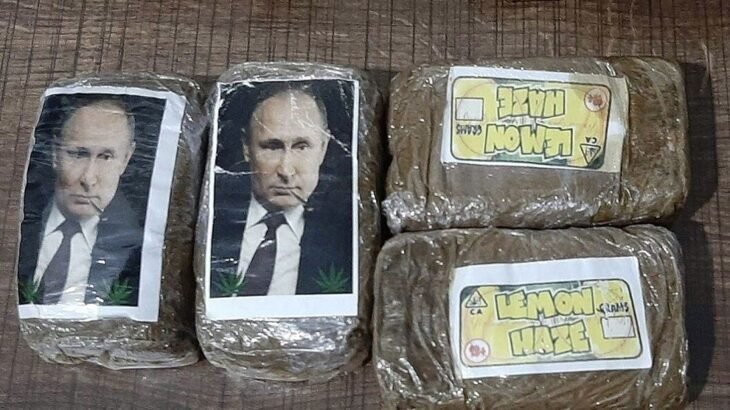
Drugs Stamped With Putin’s Portrait Wash Up on Libyan Beach

The Moscow Times

A huge batch of drugs stamped with portraits of Russian President Vladimir Putin washed up on the beach in a Libyan coastal town, the Libya Observer outlet reported on Sunday. 

Police in Al-Marj in the northeast of the country said 323 blocks of hashish, each wrapped in plastic and imprinted with the Russian president’s face, had been found by a local resident. 

They didn’t disclose the weight of the haul and said it probably washed ashore after a boat containing smuggled drugs sank. 

Photos of famous people and logos of large companies often decorate packages of smuggled drugs, Russian news agency Znak reported. 

Just a few days before this discovery, residents found large amounts of hashish washed up on beaches in the Libyan towns of Talmitha and Boutraba. 

Instead of Putin, these packages were stamped with pictures of the notorious Colombian drug lord Pablo Escobar.

The best of The Moscow Times, delivered to your inbox.

******

Libya: Police pounce on drugs stamped with Putin portrait

Local resident discovered 323 of the hashish bars wrapped with images of Russian president washed up on a beach
Libya’s anti-drug squad on Monday announced the discovery of 323 bars of hashish wrapped with images of Russian President Vladimir Putin.

The 250-gram bars were found in Al-Marj in the country’s northeast, an anti-drugs authority official told AFP.

The bars were reported to have washed up on a beach and been discovered by a local resident.

Pictures of the pot cache were passed around on social media, each bar wrapped in cellophane and topped with a photograph of the Russian leader with a grim expression and black tie.

Photos of famous people and logos of large companies often decorate packages of smuggled drugs, according to the Libya Observer.

Just a few days before the Putin discovery, large amounts of hashish washed up on beaches in Talmitha and Boutraba. 

The packages were stamped with pictures of the Colombian drug lord Pablo Escobar.

Drug and alcohol trafficking have exploded since Libya collapsed into lawlessness after a 2011 revolt that toppled longtime leader Muammar Gaddaf

________________


Libya’s parliament to appoint new PM, increasing tensions

Samy Magdy 

Libya’s parliament said Monday it will name a new prime minister this week to head the transitional government, a move that will likely lead to parallel administrations in the already chaotic nation.

Two candidates — former Interior Minister Fathi Bashaga and Minister-Counsellor Khalid al-Baibas — have submitted their bids to replace Prime Minister Abdul Hamid Dbeibah. They appeared in a parliamentary session Monday in the eastern city of Tobruk to present their plans.

Parliament Speaker Aguila Saleh said a vote to name one of them as prime minister will take place Thursday, following consultations with the High Council of State, an advisory body based in the capital of Tripoli.

The effort to replace Dbeibah stems from Libya’s failure to hold its first presidential election during his watch. It has been a major blow to international efforts to end a decade of chaos in the oil-rich Mediterranean nation.

Dbeibah has repeatedly said he and his government will remain in power until “real elections” take place. He has accused Saleh, the speaker, of fueling the division in the country.

The prime minister, who hails from the powerful western city of Misrata, also urged the crafting of a new constitution before heading to elections.

Saleh, the influential speaker, said lawmakers adopted a roadmap to hold the presidential election within 14 months after agreeing on constitutional amendments.

He said a parliamentary committee will hold consultations with the High Council of State to craft the needed amendments within a week. Libya is governed by a constitutional declaration since the 2011 Arab Spring uprising.
“We approved the parliament’s demand to change the government, but it is necessary to determine the constitutional path for the elections first,” he told a news conference Sunday in Tripoli.

The parliament’s move to appoint a new government is a setback to the U.N. mission in the country, which advocates for rescheduling the presidential vote as early as June.

U.N. deputy spokesperson Farhan Haq said Monday negotiations were ongoing with Libyan parties to try to avoid a return to “the sort of discord and disarray that has marked the past decade.”

“We do implore the Libyan parties to take a look back at what the last years have brought and see in that, that there’s really no future to that approach,” he said when asked about concerns that Libya could return to rival political authorities.

Armed groups in western Libya have already announced their objection to changing the government. They called for local and international parties to help agree on a roadmap with a specific timeframe to make changes to the constitution, achieve national reconciliation and unify the military.

Dbeibah, a powerful businessman from Misrata, was appointed prime minister in February last year as part of a U.N.-brokered, Western-backed political process. His government’s main task was to steer the deeply divided country toward national reconciliation and lead it through elections.

Libya has been wrecked by conflict since the NATO-backed uprising toppled then killed longtime dictator Moammar Gadhafi in 2011. The country was for years split between rival administrations in the east and west, each supported by militias and foreign governments.

The presidential vote has faced many deep-rooted challenges, which remain unsolved. Those include controversial candidates and disputed laws governing elections as well as the deep mistrust between rival factions.

***

Associated Press writer Edith M. Lederer contributed from the United Nations.

ِ____________________

Read More
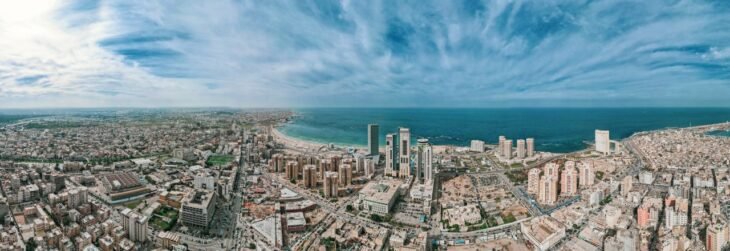
Embarking on Libya’s Noble Foray Into the Future

Khaled Sari
On Saturday the 22nd of January, activists from across the civil society spectrum in Libya gathered over Zoom with one purpose in mind; publicly declaring their support for the 1951 Libyan Independence Constitution.

Despite the political turmoil which has engulfed the country since the Arab Spring began in Tunisia in 2011, a strong civil society movement which supports a return to our historical constitution, has always existed in Libya. These supporters, who represent a significant number of Libyans from across the country, see the restoration of the 1951 constitution as the only way to shape their future.

Libya has been through an immeasurable amount of internationally led initiatives, all aimed at providing Libya with long term “solutions”. Only over the course of the past decade, one can count the UN-brokered Skhirat agreement in December of 2015, the 2017 Paris meeting, the 2018 Palermo conference alongside Mohammed bin Zayed’s Abu Dhabi gathering in February 2019. Followed by Putin and Erdogan’s joint call for a ceasefire in 2020, alongside the first (2020) and second (2021) Berlin conferences alongside UN-sponsored talks in Geneva, each and every one of these efforts amounted to nothing.

The main reason behind these, perhaps well-intentioned but failed attempts, was the simple fact that none of these efforts had any grounding in Libyan history or the support of the Libyan people. Reaching consensus in a society as heavily divided as that of Libya, is a significant challenge. However, placing our faith in our history will undoubtedly provide us with a solution that is closer to the hearts of citizens of our nation and which has the potential to assist in competing factions finally putting their differences aside.

This was the catalyst of Saturday’s meeting which sought to once and for all provide an authentically Libyan solution to the issues which have been plaguing the country for over a decade. The first of these is the preservation of our territorial integrity which has for too long been challenged by foreign actors. It is high time that a long term resolution for our country’s ills is found that ensures the exclusion of foreign elements from shaping the future of our great land.

The second issue the gathering sought to underscore was the need to build an inclusive future for all members of Libyan society. For far too long, our country has excluded citizens of certain political persuasions, cultural backgrounds or those who hold different opinions. Every Libyan deserves equal opportunities, protection of basic rights alongside access to justice. This has been impossible in a country which for so long has lacked a cohesive national identity.
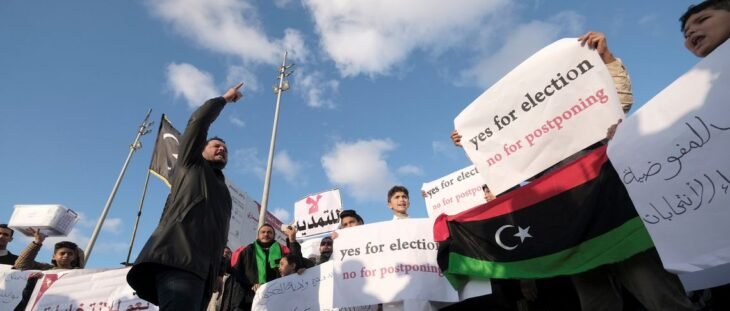
These two issues are indeed intertwined with the third issue which the conference sought to highlight, namely, our demand to return to constitutional legitimacy under the leadership of our Crown Prince Mohammed El Hasan el Rida el Senussi. As the sole heir to the throne of King Idris, passed down through the late Crown Prince Hassan, Prince Mohammad is the leader our country has yearned for.

With leadership claims grounded in historical fact that cannot be upended by foreign or domestic elements, from an ideological standpoint, Prince Mohammad serves as an anchor, offsetting challenges to stability posed by foreign elements. This is strengthened by his position as  the scion of a family which has been in Libya for centuries and founded the Senoussia movement, briniging with it Islam, to the country. Furthermore, historical memories of the reign of King Idris, which saw religious tolerance, gender equality and security for its citizens, reflects the future which Libyan’s would like to see for themselves today.

Bringing together journalists, academics, human rights defenders and political activists, Saturday’s gathering was indeed revolutionary. It would have been unimaginable that such a gathering would even have taken place a mere decade ago. Representing not only themselves, but a wide range of segments of Libyan society, those attending over Zoom broadcasted a powerful message; a rejection of foreign attempts top shape the future of the country alongside a return to historical, constitutional, legitimacy under the leadership of the only man who can help Libya exit the current quagmire and begin its noble foray into the future.

***

Khaled Sari is Co-ordinator of the National Movement for the Restoration of Constitutional Legitimacy in Zliten, Libya.

_____________

Read More

Conditions remain ‘hellish’ as EU marks 5 years of cooperation agreements

Over 82 000 refugees and migrants returned to Libya since deals were struck

Conditions for refugees and migrants in Libya ‘hellish’

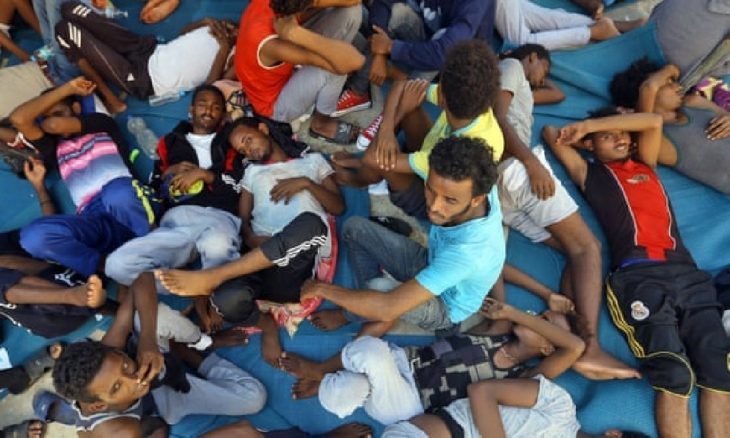
The European Union must stop helping to return people to hellish conditions in Libya, Amnesty International said today as the bloc marks five years of formal cooperation to intercept refugees and migrants attempting to cross the Mediterranean. The number of people intercepted at sea and returned to Libya in the last five years is over 82 000.

Men, women and children returned to Libya face arbitrary detention, torture, cruel and inhuman detention conditions, rape and sexual violence, extortion, forced labour and unlawful killings. Instead of addressing this human rights crisis, the Libyan Government of National Unity (GNU) continues to facilitate further abuses and entrench impunity, as illustrated by its recent appointment of Mohamed al-Khoja as director of the Department for Combating Illegal Migration (DCIM). Al-Khoja was previously in effective control of the Tariq al-Sikka detention centre, where extensive abuses have been documented.

“EU leaders’ cooperation with Libyan authorities is keeping desperate people trapped in unimaginable horrors in Libya. Over the past five years, Italy, Malta and the EU have helped capture tens of thousands of women, men and children at sea, many of whom ended up in horrific detention centres rife with torture, while countless others were forcibly disappeared.”

Matteo de Bellis, Researcher on Migration and Asylum at Amnesty International

“It is high time to put an end to this callous approach, which shows a complete disregard for people’s lives and dignity. Instead, rescue efforts must ensure people are taken to a place of safety, which, as reiterated by the UN Secretary-General just days ago, cannot be Libya.”

The EU started assisting the Libyan Coast Guard in 2016, and interceptions began the same year. Cooperation increased with the adoption of a Memorandum of Understanding between Italy and Libya on 2 February 2017 and the adoption of the Malta Declaration signed by EU leaders in Valletta just a day later.

The agreements provide the bedrock for continuing cooperation that outsources the patrolling of the central Mediterranean to Libyan coastguards by providing speedboats, a maritime coordination centre, and training. The agreements were followed by the establishment of a large sea area where the Libyan Coast Guard is responsible for coordinating search and rescue operations. These arrangements, overwhelmingly funded by the EU, have since enabled Libyan authorities to disembark people intercepted at sea in Libya, despite it being unlawful to return anyone to a place where they face serious abuse.

Migrants and refugees both in and outside of detention in Libya are systematically subjected to a litany of abuses by militias, armed groups and security forces with impunity. On 10 January 2022, militias and security forces fired live ammunition at refugees and migrants camped in front of the Community Day Centre of UNHCR in Tripoli, and arbitrarily arrested hundreds. They are held in overcrowded and unsanitary conditions in the Ain Zara detention centre in Tripoli, where guards subject them to further abuses and deny them adequate food and water. The migrants and refugees had been staging a sit-in outside the Community Day Centre building since October 2021 calling for protection in response to a previous raid by militias and security forces that saw thousands rounded up and many others left homeless.

“Italy and the EU must stop aiding these appalling abuses and start ensuring that people at risk of drowning in the central Mediterranean are rescued promptly and treated humanely,” said Matteo de Bellis.

“The EU and its Member States must suspend any cooperation leading to the containment and human rights abuses of people in Libya, and instead focus on opening urgently needed legal pathways for the thousands trapped in Libya in need of international protection.”

Matteo de Bellis

Background

In 2021, Libyan coastguards — supported by Italy and the EU — captured 32,425 refugees and migrants at sea and returned them to Libya. This is by far the highest figure on record and three times the number recorded the previous year. During the year, 1,553 people died or disappeared at sea in the central Mediterranean.

Libya: ‘No one will look for you’: Forcibly returned from sea to abusive detention in Libya

Europe: Plan of Action – Twenty steps to protect people on the move along the central Mediterranean route

In a report dated 17 January 2022, the Secretary-General of the United Nations said he felt “grave concern” at continuing human rights violations against refugees and migrants in Libya, including instances of sexual violence, trafficking and collective expulsions. The report confirms that Libya is not a safe port of disembarkation for refugees and migrants” and reiterates a call to relevant Member States “to re-examine policies that support interception at sea and return of refugees and migrants to Libya”. The report also confirms that the Libyan Coast Guard has continued to operate in ways that put the lives and well-being of migrants and refugees attempting to cross the Mediterranean Sea at grave risk.

Despite acknowledging this, an internal report by the Commander of the EU naval operation Eunavfor Med Irini, leaked by the Associated Press on 25 January 2022, confirms plans to continue capacity-building programmes for Libyan coastguards.

Italy’s current deal with Libya expires in February 2023 but will renew automatically for another three years unless authorities cancel it before this November, as Amnesty International is calling on the Italian government to do.

___________________ Read More

UN experts: Darfur rebel groups make money in Libya

 EDITH M. LEDERER

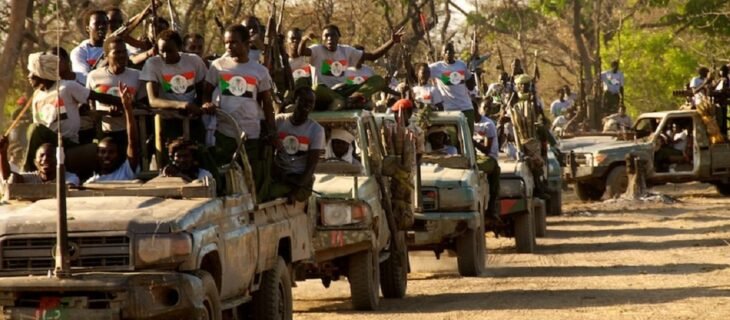
U.N. experts say rebel groups in Darfur that signed a peace agreement with the Sudanese government in 2020 continue to operate in Libya and profit from opportunities provided by the civil war and lack of government control in the oil-rich north African nation. Read More

Will the UN allow a parallel government to be established in Libya?

Nothing is certain and everything is debatable in Libya following the postponement of elections.

Since the long-awaited presidential elections of Libya – originally scheduled for December 24, 2021 – were postponed due to lack of constitutional basis and the candidacies of controversial figures, divisions in the north African country have worsened. 

Most recently, the eastern-based Tobruk Parliament, House of Representatives (HoR), has announced that the UN-backed Government of National Unity’s (GNU) mandate has expired and it will be installing a rival government.

Announcing the decision, speaker of the HoR, Aguila Saleh, on Monday, said his parliament kicked off the submission process for candidates’ paperwork for the prime ministry to replace the internationally-recognised GNU’s head, Prime Minister Abdulhamid Dbeibah and install what they called a ‘new government’ on February 8. 

The spokesman of the HoR, Abdullah Blehiq, on the other hand, said candidate documents will be accepted until the hearing session on February 7 and the official list to be announced a day after.

Blehiq also said the HoR would call on stakeholders such as the UN and foreign countries to not intervene in the domestic affairs of Libya in case they oppose the process. 

Commenting on the technical side of the process, the head of HoR’s roadmap committee, Nasser Al-Deen Mahana said the elections can be held between 10-12 months adding that during this period Libya needs a stronger government which operates throughout the country. 

Libyan PM Dbeibah responded by saying that the HoR speaker, Aguila Saleh, is trying to take the country to the brink of division and further fragmentation.

The Libyan PM told Al Jazeera his government will continue its work until elections and added that following a series of conversations with all international actors he had been assured that they would oppose the attempts of HoR and Saleh to create a parallel transitional process. 

Libya’s High Council of State (HCS) also rejected the development saying that it pursues one track and ignores the paths initially agreed on by all parties. The HCS stated its opposition to the attempts and called them ‘unacceptable and inapplicable’. 

Based on the initial agreements which were accepted by both the GNU and HoR, the parliamentary and presidential elections must take place after the amendment of a new constitution agreed by all parties.

Amid the debates around the fate of Libya’s long-awaited elections, the special adviser to the UN secretary general, Stephanie Williams said; “My fear is that some people may now manoeuvre for a prolonged period of delay. The HoR exists off a mandate that it was given in elections 3,700 days ago. It has been seven years, seven months since Libya went to the national polls. The other chamber, the High State Council, was elected 10 years ago. Their shelf life has long expired. This is ultimately a struggle over assets, power and money. That is quite a motive to hang on.”

“I want the HoR as quickly as possible to set out a credible political process that answers the question that almost 3 million Libyans have asked, which is: what has become of our elections? It is entirely possible for the HoR to put elections back on track, and for an electoral event to happen by June,” Williams added. 

Criticising the HoR while reminding it of its main responsibilities, she said, “Instead they have turned their attention to the musical chairs game, and the formation of a new government to replace the GNU. Before discussing a new government whose mandate would be unknown, the HoR should set an election date.”

The special adviser also added that the possible formation of two governments in the country could trigger the re-emergence of Daesh in the south of Libya. 

Amid the unprecedented rise of tensions in the war-torn country, even the fate of Stephanie Williams is uncertain as Russia and the US last week were at odds over extending the UN mission in Libya that ended on January 31. 

Moscow and Washington were deadlocked when the UK proposed a resolution vote to extend UNSMIL’s mission until September 15 as Russia intended to veto the text before proposing its own resolution for a vote, which could have also been vetoed by the US.

During a Security Council meeting on Libya on January 24, Russia’s Ambassador to the UN, Dmitry Polyanskiy, offered to appoint a new mediator in Libya. In the following days, UN spokesperson, Stephane Dujarric, reaffirmed Un Secretary-General Antonio Guterres’s full support for Williams.

_______________

Source: TRT World

Read More