Yassin K. Fawaz
The paradox of post-Gadhafi Libya is not that it was captured by one foreign patron, but that it was abandoned too many.
Muammar Gadhafi was toppled in 2011 with Western bombs and Libyan blood. What came after was not liberation, but vacuum. America, having helped oust the dictator, promptly lost interest. Europe fumbled. The United Nations produced roadmaps that nobody obeyed. Into the void poured every power with an agenda, Russia, Turkey, the United Arab Emirates, Egypt, Italy, France and others. Yet more than a decade on, Libya belongs to none of them. It is a country run by nobody, for nobody, except its warlords.
The paradox of post-Gadhafi Libya is not that it was captured by one foreign patron, but that it was abandoned too many. Each has meddled; none has stabilised. Libya has become an orphan of geopolitics, too important for outsiders to ignore yet never important enough for any to take responsibility. Its oil reserves make it a prize, its location on Europe’s doorstep a temptation. But its politics remain a stalemate, sustained by foreign indulgence and domestic greed.
This was not inevitable. When Gadhafi fell, Libya still had the rough outline of a state: ministries, a central bank, an oil company with global partners. What it lacked was the security and diplomatic scaffolding and political culture to make those institutions work together. Only America had the weight to provide that scaffolding. Instead it stepped back, leaving Europeans divided in their pursuit of Libya’s spoils and regional players emboldened. The result was a free-for-all in which militias flourished, revenues were carved up, and the idea of a national project slowly withered.
Today Libya is not a failed state so much as a stalled one: neither collapsing nor recovering, neither captured nor free. It is a monument not to American overreach but to American absence.
The revolution that never was
The uprising of 2011 began with chants in Benghazi and Misrata, inspired by the Arab Spring. It ended with a French-led NATO air power smashing Gadhafi’s convoys, rebels storming Tripoli and the colonel dragged from a culvert and killed. Western leaders congratulated themselves. Libyan insurgents celebrated.
But the “day after” never came. Barack Obama had no appetite for a stabilisation mission. Britain and France, loudest in calling for intervention, offered little beyond rhetoric. Italy, with oil interests at stake, pressed for contracts rather than governance. The UN dutifully drafted blueprints for elections and national councils. None materialised.
The violence soon reached America directly. In September 2012 Ambassador Christopher Stevens was killed in Benghazi, when Islamic militants stormed the US mission. His death was more than a tragedy; it was the predictable outcome of Barack Obama’s weak foreign policy of “leading from behind.”
Washington had intervened to help topple Gadhafi, but shrank from the burdens of stabilisation. A lightly protected diplomatic mission was left exposed in a city overrun by militias. You cannot topple a regime halfway. If America intervenes without stabilising, the vacuum becomes deadlier than the dictatorship. The lesson was stark: either you go all in, or you do not go in at all.
By 2012 militias ruled the streets. The national army was a fiction. Assassinations multiplied. Embassies packed up. In 2014 rival parliaments emerged in Tripoli and Tobruk, each with its own backers, each claiming legitimacy. Libya slid into civil war. America chose the halfway house, and Libya has lived with the consequences ever since. That retreat looks stranger when set against America’s past pragmatism.
Under George W Bush, Washington was prepared to do business even with Gadhafi himself. In 2003 the Libyan long-time ruler renounced weapons of mass destruction. Within a few years Condoleezza Rice was visiting Tripoli and American oil firms were rushing back. If Libya was valuable enough to rehabilitate a tyrant, why was it deemed expendable once that tyrant was gone?
The answer lies less in Libya than in Washington. Iraq had soured Americans on “nation-building.” Barack Obama wanted out of the Middle East. Libya was seen as Europe’s problem, not America’s. Yet leaving such a strategic prize, Africa’s largest oil reserves, a gateway to the Sahel, a launch pad on the Mediterranean, to squabbling warlords and meddling middle powers was a choice. And it is one that haunts Libya still.
The free-for-all
The absence of the United States created a vacuum into which every mid-level power inserted itself. The UAE armed and funded Khalifa Haftar, the strongman of the east, with drones, cash and political support. Turkey backed Tripoli, sending advisers, drones, and later Syrian mercenaries. Russia deployed Wagner fighters, carving out bases in the east and south.
Egypt, sharing a porous border, meddled to contain Islamists and migrants and safeguard its economic interests. Italy fretted about migration and ENI’s energy contracts. France covertly supported Haftar while professing neutrality. Its political class will be haunted for years by Gadhafi’s illegal financing of Nicolas Sarkozy’s presidential campaign.
Each patron acted tactically. None wanted the cost of reconstruction. None had the reach to impose order. They were strong enough to spoil but not to settle. Libya became a chessboard where every piece was pinned, unable to move but impossible to remove.
Oil, which might have united the state, became the prize that kept it divided. Libya holds Africa’s largest proven reserves. Its National Oil Corporation (NOC) still commands respect abroad, selling crude to international buyers. But revenues flow into the Central Bank in Tripoli, where they are diverted into patronage. Haftar periodically blockades fields to extract concessions.
Every foreign sponsor eyes hydrocarbons. Italy leans on ENI to secure gas for Europe. France’s TotalEnergies seeks its slice. Turkey and the UAE insert themselves into contracts. Russia eyes concessions in the south. Instead of building legitimacy, oil entrenches dysfunction. Every new project abroad becomes another rent for warlords at home.
Why America mattered
No other power had the legitimacy or tools to stabilise Libya. America was NATO’s spearhead in 2011; its word carried weight with Libyans and Europeans alike. It alone had the diplomatic clout to corral allies, the financial leverage to police oil revenues and the deterrent power to restrain spoilers.
Its disengagement mattered in three ways. Diplomacy without weight: UN envoys produced roadmaps, but every faction had a foreign patron to veto progress. Without American backing, no plan stuck. Security without umbrella: militias flourished, each tied to an external sponsor. Only the US could have imposed a security framework. Economy without order: oil revenues became spoils. America could have enforced transparency. Its absence left the treasury open to looting.
For Libyans the lesson was clear: outsiders might intervene briefly, but they would not stay. The rational strategy was not compromise but waiting, bargaining and pocketing rents.
A decade on, Libya is frozen. In the west, Abdulhamid Dbeibah’s Government of National Unity presides over ministries and the central bank but relies on militias to control Tripoli’s streets. In the east, Haftar’s Libyan National Army rules by repression and clientism. His son Saddam now plays envoy abroad, groomed as heir. Both sides sometimes fight, more often collude. They divide oil revenues, share contracts and keep their foreign patrons happy.
Ordinary Libyans endure blackouts, fuel shortages, inflation and unemployment. Services barely function. A generation has grown up with no memory of a working state. Municipal councils occasionally deliver modest improvements, but national elites suffocate them, fearing competition for patronage.
Foreign limits
Foreign patrons remain. Turkey anchors Tripoli, the UAE bankrolls Haftar, Russia lurks with Wagner. Egypt interferes. Italy and France compete through energy firms. Yet all face limits. None can impose unity. None wants the bill for reconstruction. They meddle to block rivals, not to build stability.
Europe’s gamble is energy. ENI has poured billions into gas fields and pipelines. Rome hopes Libyan gas will replace Russian supplies. Yet hydrocarbons do not heal; they divide. Each new contract entrenches the carve-up. Europeans may secure molecules, but not governance.
Russia uses Libya as leverage in its wider confrontation with the West. Turkey treats it as a bargaining chip in the eastern Mediterranean. The UAE uses it to project influence. For all of them Libya is not an end but a means. That is why, despite years of meddling, the country belongs to none of them.
Ironically, even after years of disengagement, America retains the most leverage. Both Tripoli and Benghazi court its approval. Dbeibah craves recognition to shore up his legitimacy. Haftar seeks American attention to offset his dependence on Russia and the Gulf. International oil companies look to Washington as guarantor.
No deal is truly bankable without America’s nod. That makes Washington the one power both sides cannot alienate. The tragedy is that it has been unwilling to use this leverage to push for real renewal. Instead, it has confined itself to modest aims: keep oil flowing, prevent partition, discourage Russian expansion.
US re-engagement?
Change may finally be coming. The Libya file is now being handled by Massad Boulos, a senior adviser close to the White House. I know him well and have a great level of respect for him, his son is like a brother to me. My own presence in President Trump‘s world goes back further: before and after Mr Trump’s first victory in 2016. Taken together, it means that if anyone understands how to reach Donald Trump, it is those of us who have been in his orbit from the very start. And I know Massad is capable. Yet confidence alone is not enough.
The only way anything will shift is if Washington puts its leverage into play. America has tools no one else can match: sanctions that bite, financial levers that starve factions of cash, and, if necessary, military pressure. Both camps in Libya understand this, as do the outsiders who have profited from the vacuum. Under Donald Trump, American policy is not likely to be dressed up in lofty ideals. It will be tough, unapologetic and focused on results. If that toughness is brought to bear, Libya may at last move up the ladder of Washington’s priorities after more than a decade in the wilderness.
Libya is often cited as an example of Western overreach. It is better understood as an example of American absence. The US helped topple a dictator but refused to take responsibility for the aftermath. Rivals were not strong enough to replace it. They only exploited the vacuum.
The consequences extend beyond Libya. The lesson to would-be rebels across the Arab world was clear: America might back uprisings tactically, but it would not stick around to build states. To allies in Europe the message was equally stark: without American leadership, even NATO’s victories turn hollow.
Libya could have been different. With its small population, vast resources and proximity to Europe, it might have been a success story of the Arab Spring. Instead it became an orphan of geopolitics, abandoned by the powers that toppled its tyrant and picked over by lesser predators.
Meetings in Rome, Berlin or Tunis are hailed as breakthroughs. They are theatre. Oil contracts signed in Tripoli or Benghazi are touted as progress. They are spoils. For Libyans, the reality is stasis: a country that belongs to nobody because the only power that might have anchored it chose not to.
Libya is a monument not to imperial hubris but to abdication. It is what happens when America withdraws: not a prize for others, but a void for all. A decade on, the country is still waiting to be claimed, above all by its own citizens.
***
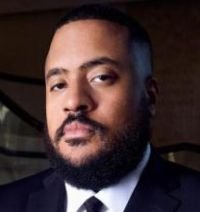
Yassin K Fawaz is an American business executive, publisher and security and terrorism expert.
_____________________