By Michael Young
In an interview, Jean-Pierre Filiu discusses his recent book on the mechanisms of survival adopted by Arab regimes. Read More
By Michael Young
In an interview, Jean-Pierre Filiu discusses his recent book on the mechanisms of survival adopted by Arab regimes. Read More
By Edith M. Lederer
The U.N. envoy for Libya warned Monday that the oil-rich country’s “perverse economic model” based on corruption and trafficking in people and goods “must be shattered” to end its political crisis and progress toward stability and democratic elections this year. Read More
By Olivia Cuthbert
For a brief period after the Libyan uprising of October 2011 in which Qaddafi was killed by rebels, hope rose in the country’s exiled communities. Read More
By Abdulkader Assad
Little has been known or even touched upon by media and the press about the millions of dollars militias have been making in illicit dealings in Libya black market, especially the capital Tripoli. Read More
By Samer Muscati
Over a decade of chronicling human rights violations around the world, I’ve taken thousands of photographs. But there is one that is especially dear to me. Read More
By Ashish Kumar Sen
US National Security Advisor John Bolton infuriated North Korea by suggesting that Libya’s experience with denuclearization could serve as a model for Pyongyang to give up its nuclear weapons. The comment sparked swift condemnation from North Korean officials. Read More
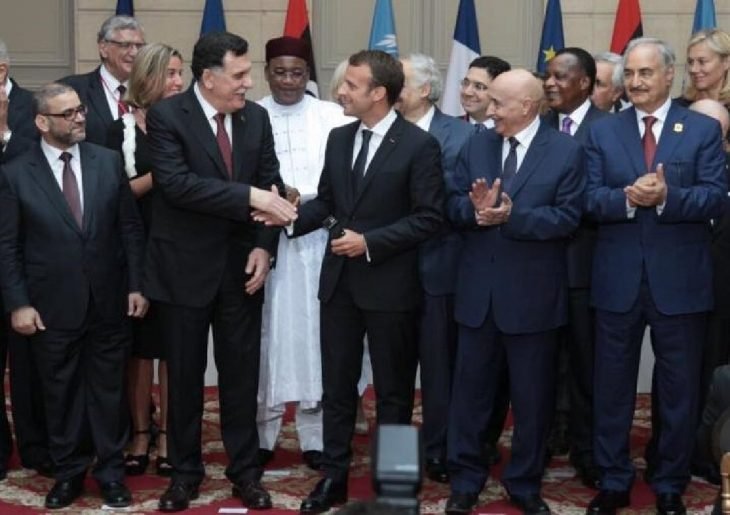
France has been doing it all to keep position near the forces of east Libya self-styled army led by Khalifa Haftar
By Abdulkader Assad
France has proposed an initiative to end Libya’s political impasse by holding parliamentary and presidential elections by the end of 2018 as per a United National timeline. Read More
By Jalel Harchaoui
To maintain his reputation as Libya’s only savior, Haftar is now more likely to make dramatic moves against declared enemies and inside his own camp. Read More
Displaced Libyans find it hard to restart their lives, impossible to go back
By Ulf Laessing
With two brothers in jail, the family house gone and her papers lost in the battle for Benghazi, Fatma is finding it hard to restart her life at the other end of Libya but impossible to imagine going back. Read More
Review By Dexter Filkins
In 2011, a vast uprising of ordinary people across the Arab world appeared initially as a moment of exhilaration — the Arab Spring, it was called — but very soon, nearly everywhere, it collapsed into mayhem. Read More
By Sami Zaptia.
At a press conference held in Tunis on Monday, the Geneva-based Centre for Humanitarian Dialogue (HD) announced that the first phase of the Libyan National Conference process had concluded. Read More
By Ahmad Khalifa
Seven years after the Libyan revolution of February 2011, the political landscape in the country has changed dramatically. Read More
Conflict Parties in Derna Should Abide by Laws of War
Forces under Gen. Khalifa Hiftar have started a land and air operation to wrest the eastern city of Derna from an alliance of militant armed groups, Human Rights Watch said today. Read More
By Darine El Hage
More than two years after the United Nations began leading an internationally backed peace process for Libya, that effort faces severe challenges. Read More
Interview with Christophe Biteau, MSF Head of mission in Libya – May 2018
Christophe Biteau, head of mission with Médecins Sans Frontières (MSF), has been working in Libya since September 2017. Based on MSF activities to assist migrants and refugees in Bani Walid region and in detention centres located in Khoms and Misrata, he shares his analysis of the current situation. Read More
By Nadine Dahan
There is a warrant out for the arrest of Mahmoud al-Werfalli, who is accused of war crimes, but he has remained at large for nearly a year. Read More
By Francesca Mannocchi
A fringe Salafist group is slowly building huge influence on several fronts in Libya’s chaos, and locals are saying the rise of an ultraconservative Islamist militia looks very familiar. Read More
By Dr Barah Mikaïl & Simon Engelkes
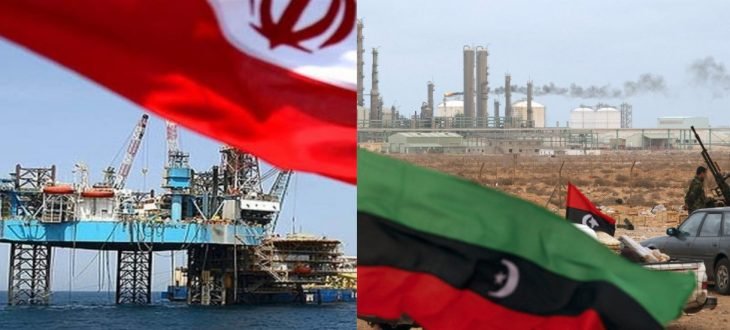
Despite limited improvements, the Libyan economy still lingers well below its potential, obstructed by continuing violent conflict and political uncertainty.
***
PART TWO
Stabilize the banking sector, overcome divisions of the internal market, and rebuild trust in institutions
In economic terms, the true decision maker in Libya is the Libyan Central Bank (LCB). However, even the LCB hardly provides official and reliable data and statistics on the country’s economy.
The most recent information available dates back to 2016, and even then, not all the data available was necessarily reliable. Nevertheless, there are some indications that can help understand where the country stands economically.
From a financial point of view, the Libyan economy is divided into three main sectors: banking (83 percent), insurance (16 percent), and investment (1 percent). While inflation is said to have stood officially at 26,3 percent for the month of February 2018, in reality, inflation goes as much as five times higher.
This situation comes mostly as a consequence of the activity of the black market, but also because the entire country tends to align virtually to the rates practiced in Tripoli.
Businessmen and their activities also contribute to the increasing inflation, since many of them – while they keep working in their original businesses – also find interest in currency trading.
Besides, Libya has a low industrial and manufacturing activity, which explains why the market is flooded by Turkish (in the West) and Egyptian (in the East) products.
With its heavy dependency on oil revenues, the economic situation in Libya was better placed before 2011. In the 2000-2010 period, agreements signed between Libya, the International Monetary Fund (IMF) and the World Bank (WB) had allowed Libya to benefit from a positive conjuncture.
But since 2011, the worsening of the political and security situation had a deep impact on the country’s economy.
After the revolution in 2011, public funds were spent unwisely in numerous state institutions due to major expectations by the population and the budget deficit widened into the revenues from taxes and customs.
In 2015, 36 percent of the central bank’s reserves were used to pay for the national budget. A year later, 70 percent of the budget was drawn from the reserves.
The country’s currency reserves of $120-130 billion were burned at a rate of $20 billion a year, to the effect that now, only an estimated $20-30 billion are left. Bank runs and large cash outs lead to the liquidity crisis at hand today.
Experts confirmed that more than $40 billion, the “real money,” are outside the banking system and about 60 percent of state expenditures go to ‘officials’ on its payroll.
The mistrust that citizens feel towards their institutions adds to this uncertainty and results in the population squirrelling away their foreign or local printed money reserves rather than handing it over to the banks.
Representatives of the banking sector present at the roundtable accentuated the need to rebuild this trust in financial structures and the Libyan dinar.
All of this led to a catastrophic economic situation fixable only though a coherent economic strategy and a set of measures coordinated amongst central and local government officials as well as stakeholders in the banking sector.
Remedies to this situation exist, but they require serious political reforms and a revolution in habits. Solutions can only be straightforward, and some consider that they can only come through dispositions that would include the backing of families with giving them an additional financial aid, restricting the importation of selected products in order to increase prospects for national production, issuing a new currency so that the crisis of liquidities is limited, reducing the state control over the economy, having better state management and good governance, more effectively controlling the currency rates, unifying financial and economic institutions, starting with the LCB, and putting an end to subventions on oil products.
A stable Libyan currency adequately managed by a united LCB is crucial for the future of the country.
Include local governance structures in economic negotiation and implementation processes
Notwithstanding, there are some existing institutions that are able to define common priorities for the Libyan economy: local governance structures.
One example with regards to infrastructure is the Committee for the Transfer of Competences of the Local Administration which has started several initiatives that nevertheless need backing by a stronger and a more determined political actor.
Given that the Tripoli-based Ministry of Local Governance is, according to its own employees, not concerned about the tensions between Libya’s East and West, this might be a window of opportunity that should be exploited.
As effectively governing municipalities can stabilize the country not only in terms of providing and maintaining sustainable infrastructure, local structures need to be supported, state institutions need to be rebuild, and the economic and governance systems within Libya need to be decentralized.
In light of municipalities being at the heart of Libyan society and economic aspects composing the core of instability in the country, local governance should not only be on the priority list for the central government, but be enabled to bear the main responsibility in service provision.
Decentralization requires a gradual delegation of powers on the basis of municipality performance. The establishment of a Ministry of Local Governance by the GNA is thus a crucial step in supporting local sources of revenue as an alternative to the resources of the central government.
Not only due to the large geographical distances between the municipalities, the local coordination of administrations is not an easy endeavor.
In fact, some of the main issues prevailing in Libya are those related to the lack of proximity, both at the level of the relation between the central authorities and the municipalities, and between political/executive structures and the society at large.
Neglecting this side will only make it more difficult for Libyans to benefit from improvements in the health sector, sanitation, Foreign Direct Investments, and issues such as the future of IDPs and the impact of migration movements on the country.
This is where “changing habits” and promoting a deep, revolutionary reform of local management and governance is crucial.
Thus, Libya is clearly in need of clear regulatory frameworks and policies for local governance as well as a long-term vision of how municipalities can foster local investments in infrastructure to ensure service provision, guarantee state accountability, and bring an end to corruption.
Dismantle criminal networks fueling a ‘shadow economy’ and cut economic links to militias
The black market has evolved into the controlling element behind the prices in the whole Libyan economy. Lifting this headlock necessitates a clear strategy on how to deal with the parallel markets and an action plan in order to narrow the gaping difference between the official and unofficial currency exchange rates.
Many experts agree that the only unified and most active economy in Libya today is the parallel market, which is less impacted by political disputes and conflict than the divided formal economy.
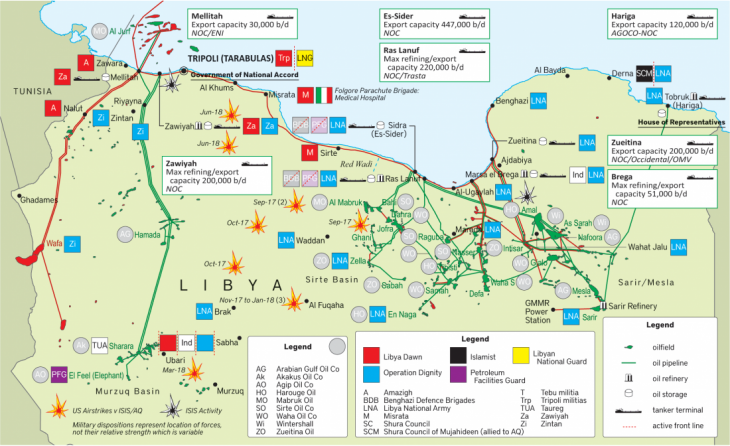
Any attempt for a solution must account for the fact that there is a network of interests intertwined with all kinds of criminal activities, ranging from the smuggling of oil and other subsidized goods to weaponry and human beings, and ingrained into the socioeconomic fabric of numerous local communities.
The Libyan regime under Gaddafi exerted a certain level of control over the smuggling business. Since then, open competition has taken over and provoked local conflict.
The absence of stable statehood and dominant security actors led to a professionalization of the smuggling economy and – following the spread of armed groups – required smugglers to hire personnel for armed protection which again gave rise to an informal protection market.
All throughout the country and empowered by Libya’s hybrid security sector, militias are fighting over control of smuggling routes; oil, gas, and transportation infrastructure; the control over borderland territory; state bodies; economic and trade nodes along the coast; and the predation of state revenues in what has been termed a war economy that depends on the dispensation of violence.
Given the fact that a lot of the liquidity in Libya is consumed by armed groups and local militias, these economic links must be interrupted by efforts to reintegrate members of armed groups into the economy and find alternatives to the central distribution of public wealth in order to preserve stability.
The wealth of the militias exceeds billions of dinars and any solution requires the inclusion of the local governance level.
Conclusion
Libya lacks the presence of a long-term vision for its economy and this will not change until it becomes clear who exactly is taking decisions.
Infrastructure and basic social services, such as health and education, are deficient, but reverting this situation needs time, money, and foreign investors.
Oil reserves are important and exploring them accurately could help overcoming the crisis of liquidity and the budgetary problems that Libya is facing.
Nevertheless, while having a regular and efficient oil production is critical for the country, positive achievements also need Libyans to clearly set the responsibilities for their core institutional bodies, such as the NOC and the LCB.
An often raised question in this regard is on what basis oil benefits will have to be distributed.
Libya desperately needs to adopt extensive economic reforms before the situation totally slips out of the hands of those still executing some influence.
Accurate reforms, however, need to be based on a good assessment and a correct understanding of the current situation in the country.
In order to achieve that, Libya requires effective leadership under a government perceived as legitimate by the majority of its population.
While all eyes are on Libya’s – possible – upcoming elections, going to the polls might not necessarily contribute to solving the issues at hand, at least for the time being.
This is where Libya will most probably need the few truly influential leaders to agree on feasible power-sharing before they develop accurate economic policies that would benefit the country.
This, however, still sounds like wishful thinking for now.
***
Barah Mikaïl is Founding Director of Stractegia and Associate Professor at Saint Louis University in Madrid. He is a Senior Fellow at the Foundation for International Relations and External Dialogue (FRIDE) and a Senior Researcher on geopolitics and security-related issues. He worked before as a senior researcher on Middle East and North Africa and on water issues at the Paris-based Institut de Relations Internationales et Stratégiques.
Simon Engelkes is Libya Project Coordinator at the KAS Regional Program South Mediterranean/Tunis.
______________
By Ian Cobain & Owen Bowcott
Previously secret documents discovered in Tripoli shed fresh light on MI6’s links with Tripoli and Tony Blair’s role. Read More
By Fatima Boudchar
I was abducted from exile in Southeast Asia and secretly jailed in one of Libya’s worst dungeons. But the worst torture of my life wasn’t done to me by Qaddafi’s thugs. It was done in Thailand at the hands of the C.I.A. Read More
By Francesca Mannocchi
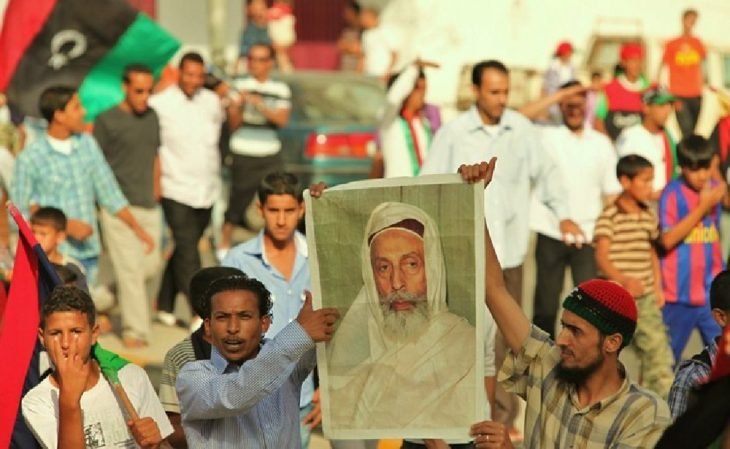
A fringe Salafist group is slowly building huge influence on several fronts in Libya’s chaos, and locals are saying the rise of an ultraconservative Islamist militia looks very familiar. Read More
By Dr Barah Mikaïl & Simon Engelkes
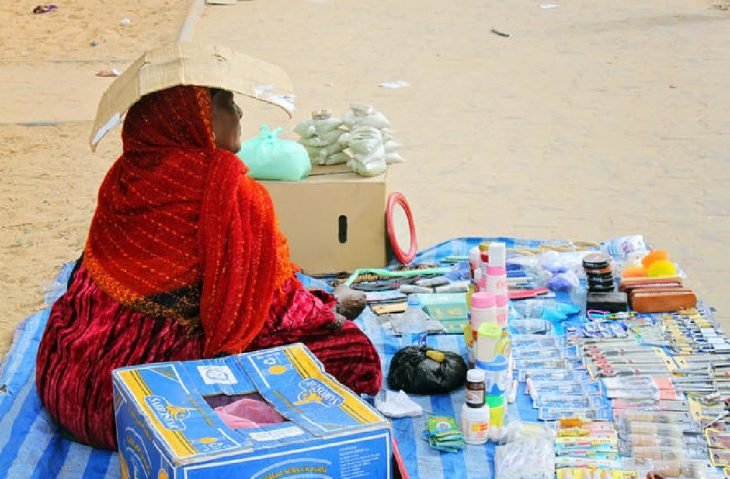
Despite limited improvements, the Libyan economy still lingers well below its potential, obstructed by continuing violent conflict and political uncertainty. Read More
By Nicole Winfield
Seventeen Nigerian survivors of a 2017 migrant boat sinking have filed a case with the European Court of Human Rights accusing Italy of violating their human rights by “subcontracting” their rescue to Libya. Read More
By jill lawless
A senior U.K. lawmaker says he expects the government to apologize for its role in the capture of a Libyan dissident after Abdel Hakim Belhaj, 52, and his wife Fatima Boudchar say they were turned over to Gadhafi’s government in 2004 after British intelligence helped the CIA kidnap them in Thailand. Read More
By Stephanie Kirchgaessner & Lorenzo Tondo
International observers warn illicit practice is costing Libyan authorities nearly $1bn a year. Read More
Crisis Group Middle East and North Africa Briefing N°57 – Tunis/Brussels, 8 May 2018 Download PDF Read More
By Tsvetana Paraskova
Malta’s authorities have failed to act to prevent an oil smuggling ring sneaking fuel out of Libya into Malta, despite the fact that the ringleaders of the illicit transfers have been arrested by Italian police and Libyan authorities, an investigation by the Daphne Project reveals. Read More
By Karim Mezran & Erin Neale
In the ongoing effort by international and domestic actors to solve the political deadlock in Libya, the spotlight is on UN Special Envoy Ghassan Salame. Read More
Crisis Group Middle East and North Africa Briefing N°57 – Tunis/Brussels, 8 May 2018 Download PDF (710.41 KB) Read More
By Abdullah Ben-Ibrahim
The National Commission for Human Rights in Libya (NCHRL) has welcomed the military buildup of Khalifa Haftar’s self-styled army around Derna and its imminent assault on the city, saying the operation aims to free the city from what it called “terrorist groups.” Read More
By Ellen Laipson
It has become conventional wisdom that the Middle East’s popular uprisings of 2011 failed, and that the prospects for true democracy in the region are dim for the foreseeable future. Read More
By Jim Naureckas
New York Times Cairo bureau chief Declan Walsh went to Benghazi, Libya, which is in ruins, to find out how it got that way. “When I went to Benghazi, I was guided by one main question: How did the city come to this?” he declares in his multimedia presentation, which combines text, audio, video and large-format photography. Read More
From 1 to 30 April 2018, the United Nations Support Mission in Libya (UNSMIL) documented 31 civilian casualties – four deaths and 27 injuries – during the conduct of hostilities across Libya. Read More
By Rashid Khechana
Swiss journalist Maurine Mercier started to take an interest in the Arab-Islamic culture and its societies after completing her studies in international relationships at the Geneva Institute for International and Development Studies. Read More
By Carmelo Cruz
Libya’s strongman Khalifa Haftar, who was being treated for a heart condition at a Paris hospital, has recently returned to his oil rich nation. Read More
By Kevin Allison
Khalifa Haftar, a charismatic general-turned-warlord, became a key power broker after the fall of the dictator Muammar al-Gaddafi. Read More