Author - ab_mnbr

Islam and the West: Recognition, Reconciling, Co-existence or Collision (1/2)

By Ashur Shamis

In a personal contribution, Ashur Shamis calls for a dialogue between the West and the Muslim world. This is a chapter from the e-book ‘The Future of the Middle East‘ co-produced by Global Policy and Arab Digest, and edited by Hugh Miles and Alastair Newton. Freely available chapters will be serialised here and collected into a final downloadable publication in the spring.

***

It is all about history, or how you read it. A question. Where do the roots of conflict between the West (formerly referred to as Christendom) and the world of Islam, really lay? For, it is this conflict that has shaped and bedevilled world history over the last millennium, fuelling mistrust, giving way to conspiracy and counter-conspiracy on both sides, and leading to subjugation and armed resistance.

In this paper I will argue for a proposal for a non-political forum in which intelligent, enlightened and well informed individuals from the western and the Islamic worlds can share in dialogue and debate to arrive at solutions that can make a difference. By doing so, it is hoped that the idea itself will be honed and developed by others. However, before we can do that, it is necessary to provide a historical overview.

A new power is born

Barely two decades after the death of prophet Mohammed (570 – 632), the Islamic conquests exploded in all directions. In its first century, Islam swept over North Africa, the Levant and Asia Minor, meeting varying degrees of resistance. It reached Spain by 711 AD and crossed over to France in 730 AD.

In all the regions that Islam went to, it was adopted by people of all colours, race, or ethnicity. The majority of the new societies and populations also adopted Arabic as their lingua franca. Within less than two generations, it became the language of daily transaction, laws, philosophy, literature, arts, commerce and sciences, from Spain to Iran and from Tajikistan and Bukhara to central Africa.

The Muslims built up a multifarious civilisation and an empire that brought together different ethnic and racial groups including Asian, Indian, Chinese, Persian, European, Turk, Balkan, as well as Arab.

Islam created a truly global identity where one could travel, and settle, from the Indian to the Atlantic Oceans without any restrictions. The Abbasid Caliph, Harun al-Rashid (763 to 809 AD), seeing a cloud in the sky was reported to have said “let your water fall where it may, the benefit shall be mine”.

Nonetheless, the Muslim empire, or caliphate, had its share of divisions and internal civil strife. The vast majority of these internal conflicts were due to political and economic greed, and the ambitions of powerful men. Nevertheless, the underlying body of Muslims largely remained intact, representing what is called in Arabic, al-Ummah, the nation of Islam.

Professor Albert Hourani sums it up, saying: “the political changes did not destroy the cultural unity of the world of Islam; it grew deeper as more and more of the population became Muslims and the faith of Islam articulated itself into systems of thought and institutions”.

The contribution of Muslims, of every genre, to the world during that period is undisputed, even in the West. It is due to this human heritage, which was partly inherited by Muslims from the classical world, that human civilisation was able to progress through some tough times.

It was the tremendous translation movement, initiated and cherished by the ninth-century Muslim Caliph al-Ma’moun (786 – 833 AD) that paved the way for major developments in Europe including the Enlightenment, the Renaissance, the Reformation, the scientific and the industrial revolutions.

The advantage of these developments was that they adopted a secular approach, totally divorced from the Church. Freed from dogma, thinkers focused on human achievement: they studied classical texts, including Arabic and Persian ones, history, literature, science and philosophy. Thus, a creative mix of Islamic, Western and classical cultures occurred.

Zealots turned Crusades

However, before these developments could take place a darker chapter in Christian-Muslim relations was opened early in the 11th century. In 1095 European Christians, mainly from France and Italy, arrived in Palestine bent on taking the city of Jerusalem back from the Muslims, whom they called ‘pagan Persians’. They came to be known as ‘crusaders’ and they were fuelled by religious zealotry.

Their arrival was a monumental event based on a sustained European propaganda campaign of misinformation, distortion, and manipulation, lead by heads of Churches from Western Europe. They sowed the seeds of animosity between Islam and Western Europe, and they started something whose ripples are still with us today.

Following roughly 400 years of crusades, the conquest of Constantinople, now called Istanbul, in 1453 gave Islam a crucial toehold in Europe once again. The resulting rise of the Ottoman Caliphate, a symbol of Islamic rule, gave the Muslims a new impetus to pursue their goals and expand far and wide. This allowed for a crucial new energy for Islam to keep going for another four centuries or so.

The West turning the table on Islam

By the late 19th century, the Ottoman Empire had self-destructed. Then in the early 20th century Europe and the United States vied with one another to carve up and share out the lands of Islam. The ‘sick man of Europe’ was dying. India and most of Mesopotamia went to the British. The Arab Maghreb fell to the French. Egypt went from the French to the British. And in 1916 the notorious Sykes-Picot agreement put paid to Islam’s central power in Istanbul, tearing most of the land under its control to pieces.

In many ways, the newly fashioned Muslim/Arab world has been in a state of fluid transformation ever since. It has never seemed to take control of its social, political and economic destiny.

Internally, it has been in a constant state of turmoil, with factionalism, sectarianism, dictatorships, political disunity and military coup d’états.

Externally, it has not been able to decide what direction to take. Divisions, foreign interference, and chasms of all description have been visited upon it. The propensity to subjugation is arguably as palpable today as it was during the years of colonisation.

A century of disasters

Over the last 100 years the break-up of the Muslim world has proceeded at an unprecedented scale. During the period of the two World Wars, which should be called the European wars (1914-1943, with 57m dead and more than 100m maimed), the Muslim world was still, in the main, under the direct dominance of the West.

By the end of the second war Muslim countries started gaining a sort of token ‘independence’ from their colonial masters. However, in 1948 the creation of the state of Israel added another complicating factor to the Muslim world. 

The fifties and the sixties were the years of the oil boom, which proved a double-edged sword. It brought numerous advantages; a game-changer that propelled some Muslim countries to the forefront of modernity. But some consider it a curse that brought the evils of corruption, profligacy, excess, and the squandering of wealth on an unprecedented scale.

For example, it made the whole of Arabia, Iraq, Iran, Libya and Algeria the focus of the West, for whom oil and gas are so critical. And a new geopolitical strategy was developed in order to secure control over the Middle East. In those oil-producing countries differences between rich and poor were quickly accentuated, resulting in huge social and economic problems. This dichotomy continues to bedevil the Arab / Muslim psyche until today.

Throughout the fifties to the nineties the Muslim nations were plagued with military take-overs and the emergence of dictatorships. Iraq, Pakistan, Iran, Egypt, Turkey, Syria, Yemen, Libya, the Sudan and Tunisia all were under such regimes for years. They have often proven catastrophic, with the plunder of national wealth on a colossal scale, the degradation of freedom, governance, human injustice, and a total distortion of the Arab and Muslim character.

The 1980s were particularly determinantal. The Iranian Revolution (1979), the Soviet occupation of Afghanistan (1980), the assassination of President Sadat of Egypt (1981), the rise of Jihadism and so-called ‘political Islam’, the emergence of al-Qaeda (1989), and Iraq’s war with Iran.

Fractured but resilient

The Muslim world at the moment looks fragmented and hopeless; impossible to be able to put together again for all the goodwill in the world. Its most vexing internal division is between Sunni and Shia Muslims. Throughout the Muslim world this division plays itself out through discrimination, local conflicts, interstate warfare and regional rivalries.

It also provides opportunities for the West and others to interfere in the affairs of sovereign Muslim states. If Muslims are to move forward, they have to tackle this aspect of their being.

Emblematic of this is the contemporary tensions between Saudi Arabia and Iran, and the stance of influential allies such as the US and Britain. However, for Saudi Arabia to open a new front with Iran, encouraged by the West is clearly foolish. It would represent the continuation of a historic pattern in which the West has had undue influence in the region.

For example, America and Britain colluded in 1953 to overthrow the elected national government in Iran. Following this, it took the Iranians nearly thirty years to wrest their country back from dictatorship and forge their own future.

The West writ large

Is the West’s attitude toward Islam and Muslim nations the result of deliberate policy or misunderstanding? Is it a ‘clash of civilisations’ born out of a fundamental mismatch between the two, or is it a product of greed, jealousy, and hatred.

On the other hand, is the Muslim image of the West the outcome of religious fanaticism, or a deep-seated animosity and mistrust that goes all the way back to the crusaders and their misguided sojourn to ‘free’ Jerusalem from ‘the pagans’?

Is this ‘clash of civilisations’, which has in our time given birth to Islamophobia, inevitable or imaginary? The political elite, the Church officials and the tycoons of international media have played a central role in this sordid narrative, fuelling an aversion to Islam and the spread of Islamophobia. Is there a way that these two gigantic sections of the human race can be reconciled? Or, are they condemned to a war of attrition against each other in which one is a loser and the other a winner, a zero-sum game, for generations to come? Is this collision inevitable?

.

To be continued ….

***

Ashur Shamis is a distinguished Libyan writer and long-time political activist. When Gaddafi came to power in 1969, he was studying Aeronautical Engineering in the United Kingdom. In 1977 he obtained an MA in Middle Eastern studies from the University of Birmingham. Since 1971, he lived in exile in the UK. He turned to journalism and political activism. From 1980, he was a target for Gaddafi’s physical “liquidation squads”, and, with others, instrumental in founding one of the most effective opposition groups, the National Front for the Salvation of Libya. He went on to oppose the Libyan regime until its fall in 2011. From 2002, he was founder and editor of the influential website ‘Akhbar Libya’ until his return to Libya in 2011, after 40 years in exile. He has a long record of political and human rights activism on Libya. He is also an associated editor of http://international.minbarlibya.org/

__________________


Don’t close borders, manage them: how to improve EU policy on migration through Libya (3)

By Mattia Toaldo

The refugee crisis, as we know it, led the EU to re-think its migration policy in a way that seemed unthinkable just a few years before. This analysis describes the outdated European approach and the process of Europe’s rethinking its assumptions to improve its policy on migration through Libya.

***

What Europe should do

Despite its best efforts, the EU has far fewer instruments at its disposal compared to member states, and unfortunately, few of these instruments are likely to reduce migration or make it more manageable. But Europe is not without alternative options that could create a win-win situation, including opening legal channels for migration and returning irregular migrants; establishing safe and quick procedures to guarantee asylum to refugees; reinforcing the Libyan economy and its local communities; building respect for the rule of law and human rights; and finally, broadening the scope of the EUBAM Libya.

Opening legal migration channels to close illegal ones

According to the United Nations High Commissioner for Refugees (UNHCR), about 61 percent of those who arrive in Italy from Libya do not qualify for any form of protection. The return of these undocumented migrants to their home countries is one of the EU’s top priorities, but it is unlikely to be fulfilled in the absence of readmission agreements (i.e. forced returns) with several countries of origin.

Some migrants are exploiting loopholes in the current Italian legislation, which automatically labels some nationals economic migrants rather than refugees eligible for asylum. For example,, Moroccans or Bangladeshis are generally labelled economic migrants and ordered to leave Italy within seven days of arrival. In the absence of a readmission agreement, many such migrants use these seven days to ‘go underground’ and find a job in the informal sector.

Even though readmission agreements are key to managing irregular migration, putting them into effect has so far proved a daunting task. Unlike with the Turkey-Balkans route, migrants taking the central Mediterranean route originate from multiple countries and the mix of countries is constantly changing. The EU and its member states have not, so far, been able to make any significant progress on the issue of forced returns, in part due to the failures of the current European approach.

At present, the EU offers financial assistance and development aid to secure readmission agreements with countries of origin, but this assistance is usually insufficient to offset the profits that local smugglers make from irregular migration.

For these countries, deals based on ‘EU money in exchange for smaller flows’ present an attractive opportunity: reduce flows enough to justify European payments while increasing the bribes requested from migrants and smugglers who continue to make their way to Europe. Even for smugglers, a small reduction in migration flows helps business: when there are fewer available ‘tickets’ the trip to Europe becomes more expensive.

If the EU or some of its member states want to implement quick and effective readmission agreements additional incentives are required that target both the governments and the people of the countries of origin.

One such incentive could be visas for migrants in exchange for a commitment to swiftly take back all citizens of the same country who have arrived illegally on EU territory. Issuing visas would not only enable Europe to manage migrant flows, but boost remittances to countries of origin too − a win for both sides. The worldwide flow of remittances is estimated by the World Bank to be worth over $400 billion dollars annually and it far outweighs any development aid money the EU can offer. This kind of ‘aid’ costs nothing to the taxpayer.

Legal migration arrangements would also undercut human smuggling, because only migrants who have never attempted illegal migration would be granted visas. To facilitate absorption and integration, visas for economic migrants could be set at one quarter of illegal arrivals in 2016 from each country, or any other fraction of past flows that is both realistic in terms of absorption in EU countries and attractive for countries of origin. Visas could be assigned by lottery to all citizens of the country of origin who have never attempted illegal migration and who register for the programme.

The EU does not need to reinvent the wheel on this issue. It already has mobility partnerships with some countries, through which visa issuance is linked to more effective border controls by countries of origin and transit, although the overall focus of these partnerships was prevention of illegal immigration rather than labour mobility.[22] So far, only Tunisia and Morocco among North African countries have mobility partnerships with the EU. No mobility partnership has been signed with any sub-Saharan countries. 

The European Commission has, on numerous occasions, considered a ‘grand bargain’ that accepts some legal migration for stricter implementation of readmission agreements. These deals have been dropped in many cases because of political constraints (even mentioning legal economic migration sounds toxic to the European electorate). But even if there was public buy-in, the EU has its hands tied because it holds very few powers for issuing work visas, most of which rest in the hands of member states.

The EU may not have the overall power to issue work visas, but it could incentivise member states to get on board with its plans, particularly if there is a clear link between granting work visas for legal migration and being protected from illegal migration by readmission agreements. This system could be implemented either through enhanced cooperation, as per the Lisbon Treaty, or through multilateral agreements between interested EU member states and each country of origin or transit.

Fair and quick procedures for asylum-seekers

Readmission agreements come into force when an asylum-seeker’s application is rejected or when an economic migrant is trying to illegally enter an EU member state. However, the system for processing asylum-seekers, and assessing the validity of their applications, needs to be improved to make it fairer and more efficient.

Today, asylum-seekers disembarking in Sicily can wait months, if not years, for their cases to be adjudicated. Italy recently changed its legislation to speed up asylum processing, but at the expense of eliminating in-person interviews. Instead, asylum-seekers must submit a short recorded clip explaining their situation, without any interaction with the panel. Although this change in procedure may reduce processing time − eliminating the wait time for asylum interviews − it undercuts the evaluation process by preventing applicants from effectively presenting their case.

Ultimately, the dilemma that comes with choosing between thorough processing (which takes time), and high-level but quick processing, is a false one. It is possible to be both thorough and efficient. The European Stability Initiative, a think-tank focused on southeast Europe and migration issues, published a comprehensive proposal which recommends that an EU Asylum Mission be deployed to EU ports of disembarkation, such as Sicily. This mission would “deal with claims within four weeks, while ensuring the quality of decisions through quality control mechanisms and trained staff, backed up by competent interpreters and with available legal aid”.[23] This proposal offers a viable option for improving the asylum application process.

In addition, setting up an effective screening mechanism for asylum-seekers would help eliminate the need for them to risk the dangerous Mediterranean boat crossing in the first place by allowing for mechanisms in which asylum-seekers reach Europe safely and their applications can be quickly and fairly assessed. The EU should promote humanitarian corridors and sponsorships (see the Canadian model) for refugees, enabling EU individuals, organisations, or local communities to take responsibility for accepting and managing the resettlement of refugees. These refugees would be identified near their country of origin and be flown directly to Europe with a temporary visa, further undercutting the business model of smugglers. They would then undergo the fast and fair processing described above and their visa would have territorial limits, so they would not be allowed to leave the country of destination until their application has been fully processed.

***

Mattia Toaldo is a senior policy fellow for the Middle East and North Africa Programme at ECFR where he focuses on Libya and migration.

_________________

Democracy and the Arab axis of tyranny

By Soumaya Ghannoushi

The Qatar-Gulf crisis is a battle rooted in the aborted first wave of the Arab Spring. So far, Arab despots have succeeded in curbing democratic change in the region, but their latest tactics come with much higher risks. Read More
Why UAE and Egypt support Haftar in Benghazi?

Eyewitnesses, in Benghazi, said that Emirati and Egyptian airstrikes carried out air attacks on the areas of Souq Al-Hot, al-Sabry, and central Benghazi to help the forces of the House of Representatives (HoR) that led by General Khalifa Haftar. The air raids caused an enormous devastation in Benghazi. Read More

Anti-Qatar blockade is a consequence of its support for Arab Spring

By Karim Traboulsi

What really lies at the heart of Gulf accusations against the Qataris? American academic and Middle East affairs analyst Professor Gary Sick talks to The New Arab. Emboldened by Donald Trump’s support, Saudi Arabia, the UAE and Bahrain are consolidating their counter-revolution in the region, and Qatar is one of the last few remaining ‘loose ends’ of the Arab Spring. Read More
Libya: Once an Opportunity, Now Hell for Migrants

By Asharq Al-Awsat

Back in the days when Gaddafi was leader, Libya was billed as a top destination for those looking for jobs and money. But it has turned into the seventh circle of hell for migrants whose experiences range from exploitation verging on slavery to kidnapping and torture. Read More

UN report cites numerous sources of illegal funding for Libyan militias

By Sami Zaptia

A UN report has concluded that ‘‘a variety of sources of funding are available to (Libyan) armed groups’’, assessing that there are ‘‘four important sources of funding: fuel smuggling, trafficking in persons, interference with institutions and the local arms trade. Previous findings on income from other criminal activities and State financing remain relevant’’, the report said. Read More
Libya, a smuggling hypermarket

By Javier Martin

Powerless against the disarray and growing anarchy that spreads around smuggling – of oil, gasoline, weapons and people – Hasan Dhawadi, mayor of the Libyan city of Sabratha, raised the alarm. Read More

Bleeding Fuel

A nighttime maritime patrol is a lesson in Libya’s permeable sovereignty.

By Frederic Wehrey

This will be a hot pursuit tonight,” the coast guard captain tells me. It is dusk over Tripoli’s harbor and we are standing in the control room of the Kifah, an aging, German-made patrol boat. Read More
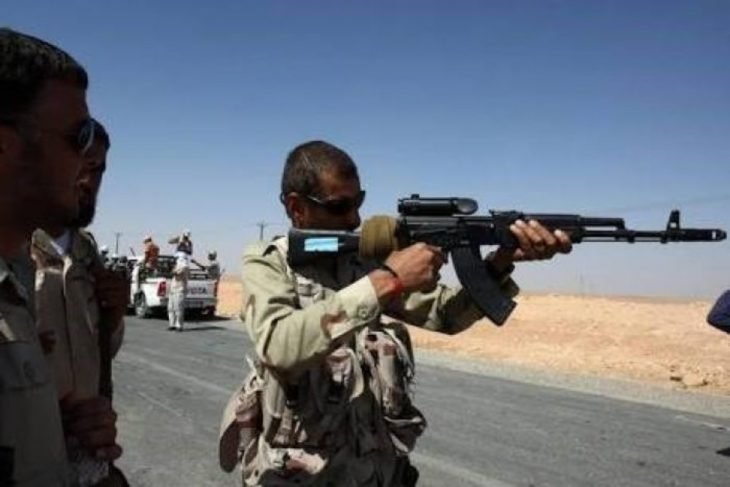
Why The Campaign Against Qatar Is Doomed

By David Hearst

It has been apparent for some time that the war against the Islamic State (IS) group and its forebear al-Qaeda is by no means the only show in town in the Middle East. In fact, for most of the time, the war on terror has been a sideshow. Read More

Mapping Libya’s Jihadists (2)

By Jason Pack – edited by Rhiannon Smith

Six years after protests first erupted in February 2011 against the brutal and repressive rule of Qadhafi, Libya remains a country beset by deepening political fragmentation, bloody internecine conflict and accelerating economic decline. Read More
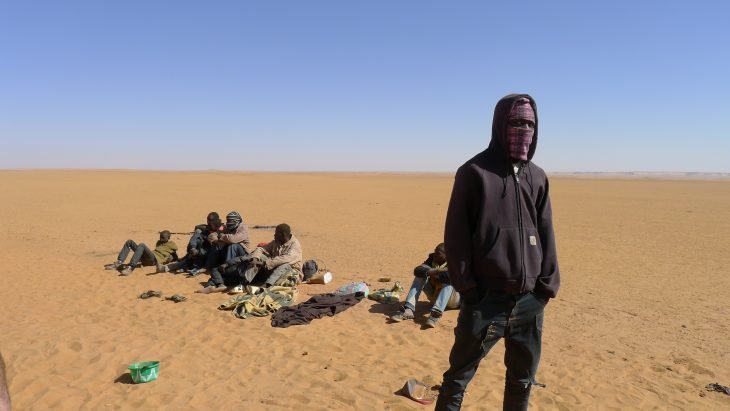
Mr. Magafe, the Libyan Warlord Who Feeds On Immigrants

By Mohamud Hassan

Somalis are very good at nicknaming things and even people. The name Magafe literally means the one who never misses in Somali and that is what Somalis use to describe a Libyan warlord who has made a business out of kidnapping poor immigrants heading to Europe via the Sahara desert. Read More

Mapping Libya’s Jihadists (1)

By Jason Pack – edited by Rhiannon Smith

Six years after protests first erupted in February 2011 against the brutal and repressive rule of Qadhafi, Libya remains a country beset by deepening political fragmentation, bloody internecine conflict and accelerating economic decline. Read More

Qatar-Gulf crisis: Who are the ‘terrorists’?

By Abdullah Al-Arian

On May 21, US President Donald Trump headlined a widely celebrated summit in Saudi Arabia bringing together the heads of state of the Gulf Cooperation Council (GCC) and many of their regional allies to affirm their commitment to the never-ending battle against “terrorism”. Read More