By Carnegie Team (*)
 Long-standing pillars of the Arab order—authoritarian bargains and hydrocarbon rents—are collapsing as political institutions struggle with the rising demands of growing populations. Read More

By Carnegie Team (*)
Long-standing pillars of the Arab order—authoritarian bargains and hydrocarbon rents—are collapsing as political institutions struggle with the rising demands of growing populations. Read More

By Adrian Hanni
 When two Libyan men hijacked Afriqiyah Airways Flight 209 last December from Sabha to Tripoli and diverted it to Malta, they interrupted the shooting of the film Entebbe, which was taking place at Malta International Airport. Read More

By Mattia Toaldo
 Libya’s three governments and numerous militias have been vying for power and territory. However, they share an interest in increasing oil production and having money to spend. Read More

By Prof. Abdallah Shamia
 Anyone who has followed the Libyan economy would stand bewildered and wonder how is it possible to achieve and accomplish a quantum leap for an economy that is wrecked, weak, and suffering from the brunt of many problems and incurable diseases that require radical surgeries. Read More

By Waleed Al-Tellily
 Many people around the world don’t know much about the other life inside the wounded Libya other than that they read about in media. Read More

By Edward Fox
 Academic recognition can be hard to come by, especially for students from countries in the midst of civil war. But four Libyan scholars, two in Canada and two in the United States, have recently received plaudits for both their academic work and their social conscience. Read More

 Libya today is a failed state, plagued by hollowed or nonexistent institutions, a collapsing economy, endemic violence, and the rise of localized, subnational identities. Read More

By Sarah J. Feuer
 To read the newspapers is to believe that Tunisia, the small country that sparked the Arab Spring, is the only one still on a recognizable path to democracy, in large part thanks to the conciliatory nature of the country’s leading Islamist party, Ennahda (“Renaissance”). Read More

By Anissa Belhadj
 The Ennahda leader tells MEE he is working with the Tunisian, Algerian and Egyptian presidents and the UN to bring Libyan parties together. Read More

By Suliman S. Al-Shahomy
 It is not possible now to speak about the efficiency or feasibility of any economic policies that could save the current crumbling situation. Read More

By Christopher Coats
 The deeply tribal nation has been sharply divided since the 2011 ouster of longtime dictator Moamer Kadhafi, with rival militias vying for influence and control of oil resources. Read More

By Almunji Alsaidani
 Tunisia- Former Tunisian Foreign Minister Rafik Abdul Salam, who is also a leader in Ennahda Party, revealed the role Tunisia and his political party have been playing in convincing Libyan parties of the necessity of reaching a political solution for their crisis. Read More
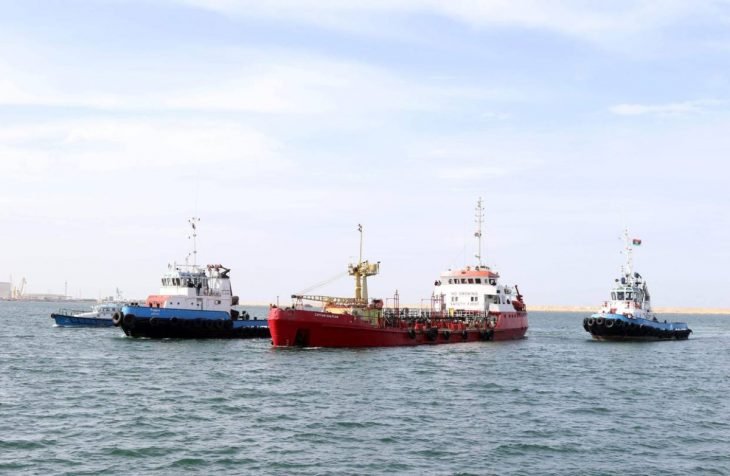
 Libya has launched its most wide-ranging investigation into corruption in the oil sector since the 2011 revolution, with a raft of warrants and travel bans issued against petrol company executives. Read More


Italian police arrested four people on suspicion of smuggling arms, including helicopters and surface-to-air missiles, into Libya and Iran between 2011 and 2015 in violation of international embargoes, Malta Today said Italian media reported. Read More
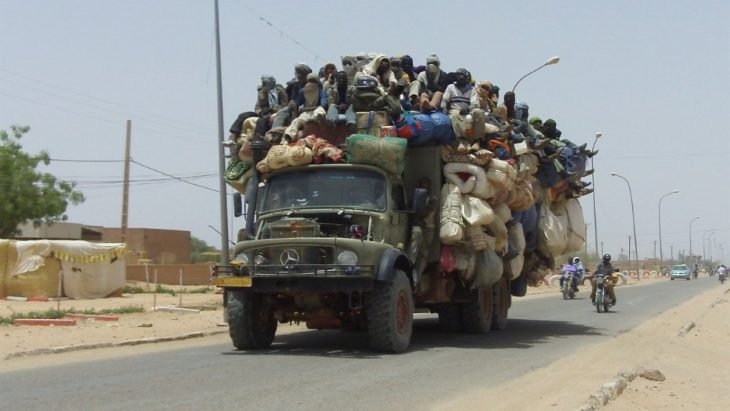
By Kristy Siegfried

The European Union has been touting a faulty figure for migration reduction through key transit country Niger as it looks to expand a policy of giving more development aid to African nations if they crack down on people smuggling and migrants, IRIN can exclusively reveal. Read More

By Perry Cammack and Marwan Muasher

 Carnegie’s Middle East program is releasing a major new report on the state of the Arab world. Read More

By Ben Fishman
 If the Trump administration steers away from the internationally backed unity government and toward the Russian/Egyptian-backed strongman, Khalifa Haftar, it risks ending Libya’s fragile accord and sparking another civil war. Read More

By Lamine Ghanmi
 To secure its place as regional military power, Algeria is likely to do everything in its power to prevent major attack. Read More

 When making critical decisions, states tend to fall back on deep-rooted tradition, which has been built up over centuries of experience in the areas of governance and politics. Read More

By Mattia Toaldo
The Maltese plan is less about managing migration and more about reducing the numbers arriving in Europe at any cost. Read More

By Shibley Telhami
 President Trump announced a ban on Muslim immigrants into the United States, as Shibley Telhami writes. However, polls conducted in the last year show that, despite his electoral success, Trump’s views on Islam and Muslims do not have wide support among the American public. Read More

By Karen Dabrowska
 The Jewelled Tales of Libya Exhibition in London’s Arab-British Centre was an amazing joint venture between traditional jewellery collector Najlaa el-Ageli, vintage photographs collector Hala Ghellali and contemporary Libyan photographer Sassi Harib. Read More

 The Libyan camps where traffickers hold would-be migrants resemble concentration camps, German diplomats say. Their report comes as the EU mulls a migration deal with the North African country. Read More

By Alessandra Bocchi
 Migration deal between Italy and Libya could resemble one reached in 2008, when Italy agreed to donate more than $4 million to help Libya stop migrants leaving its shores. Read More

By Lt. Col. (ret.) Michael Segall

In recent months, Russia has been ramping up its involvement in the Libyan sociopolitical crisis, which has been ongoing since the removal of its ruler, Muammar Qaddafi. Read More

By Patrick Wintour
 The international community has lost moral authority in Libya and can best help the country by acting to end oil smuggling and providing investment to boost production, the chairman of the Libyan National Oil Corporation, Mustafa Sanalla, has said. Read More

By William Burns, Jonathan Winer, Frederic Wehrey


 Summary: Jonathan Winer, who has served as the U.S. State Department’s special envoy for Libya and Senior Advisor for Mojahedin-e Khalq Resettlement, speaks with Carnegie’s Frederic Wehrey. Read More

Russia has agreed to arm renegade general Khalifa Haftar, one of the key players in the Libyan civil war, according to a source within the Algerian military. Read More

By Shadi Hamid
 After eight taxing years under George W. Bush, the Cairo speech was meant to propose a stark shift and a “new beginning.” Read More

 The European Commission has suggested that five Schengen zone members should be allowed to continue with border controls for a further three months. The checks were put in place in the open-border area in 2015. Read More

By Charles Kurzman
 President Donald Trump is reportedly planning to restrict refugee admissions and deny visas to individuals from seven Muslim-majority countries his administration deems a terrorist risk ― Syria, Iraq, Iran, Libya, Somalia, Sudan and Yemen. Read More

 The fluctuations in successfully addressing this issue were particularly apparent in Libya. The Islamic State (ISIS) seized control of Sirte in May 2015, incorporating the coastal city as a key area of its global caliphate. Read More

By Tuesday Reitano & Mark Shaw

 Europe seems to think force and arms are the solution to reducing people smuggling in the volatile and fluid Libya. Even Gaddafi knew better. Read More

By Solomon Dersso
 Soon after the peaceful transition of power from Barack Obama to Donald Trump in the US, Gambia’s crisis was also resolved without a single gunshot. The embattled President Yahya Jammeh appeared on national TV announcing his decision “to relinquish the mantle of leadership”. Read More

By Heba Saleh
 War-weary Libyans should have had reason to hope after Isis was finally pushed out of its stronghold of Sirte and the country doubled its oil production. But a renegade general who appears ever closer to Russia is putting the rare progress at risk as he seeks to expand his territory in the north African state. Read More

By Charlie Savage
 Before ceding power, the Obama administration quietly removed a former extremist stronghold in Libya from a list of combat zones where United States counterterrorism drone strikes are authorized without obeying special rules intended to prevent civilian deaths, officials said on Friday. Read More