
Matt Tipton
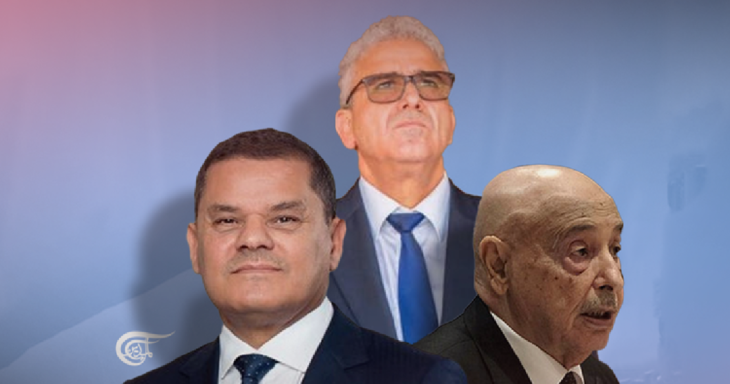
The final round of negotiations between the two opposing administrations in Libya have been taking place this week in Cairo. Read More
Matt Tipton
The final round of negotiations between the two opposing administrations in Libya have been taking place this week in Cairo. Read More
Nadeen Ebrahim

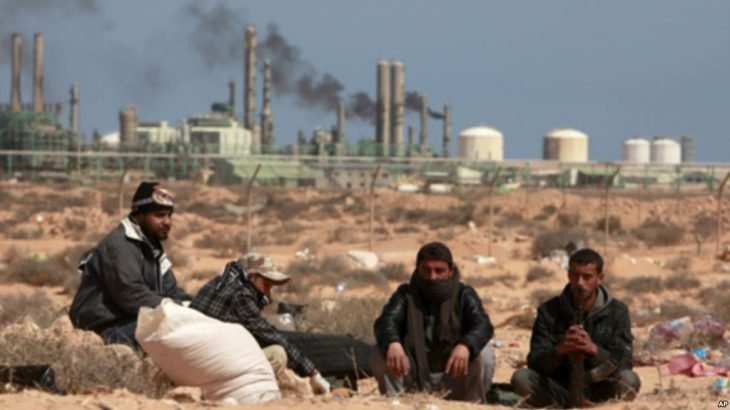
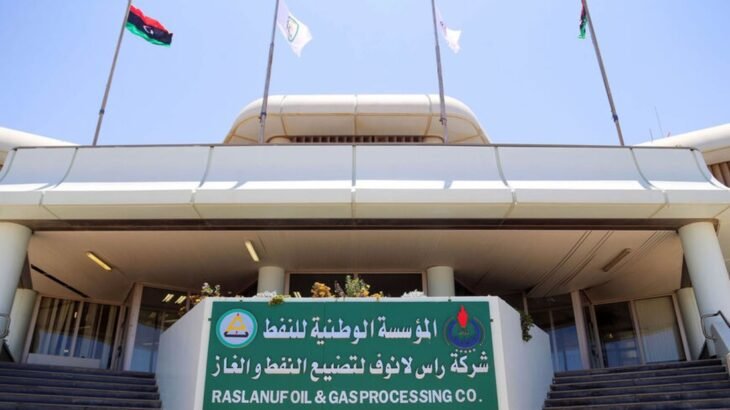
Libya was thrust back into the spotlight last week when it announced that it is pumping a million fewer barrels of oil than it did last year. Read More
Erica Gaston
By any definition, Libya is a so-called fragile state and a high-priority challenge for international security. Read More

Wolfram Lacher
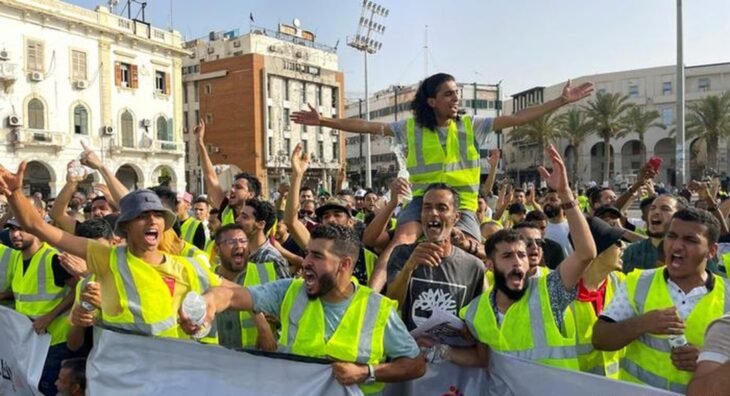
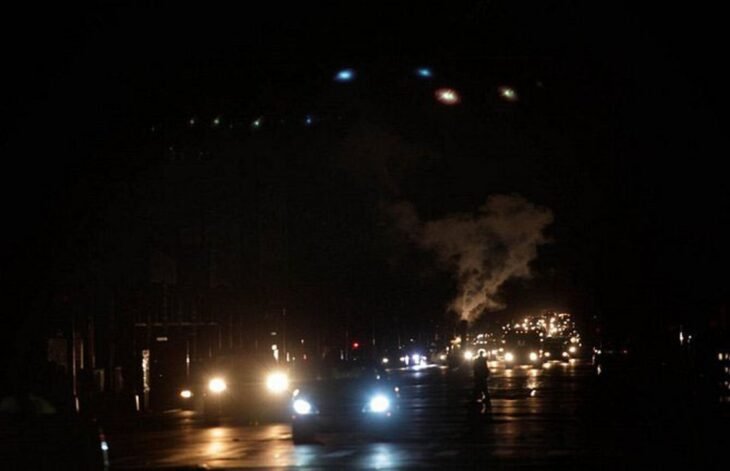
The summer heat came early to Tripoli this year, and it brought back travails that compounded the sense of crisis provoked by growing military tensions in the capital. As people switched on their air conditioners, they drove up demand for electricity, forcing the state utility company to impose rolling blackouts of four hours or more.
State institutions, private businesses and families then turned to their generators, whose demand for fuel provoked shortages at gas stations in the city, worsened by the lack of generators at some gas stations, which can’t operate through outages.
By the time I left Tripoli in early June, lines of cars stretched for miles, with frustrated drivers waiting long hours for fuel so they could get to work or bring their children to school.
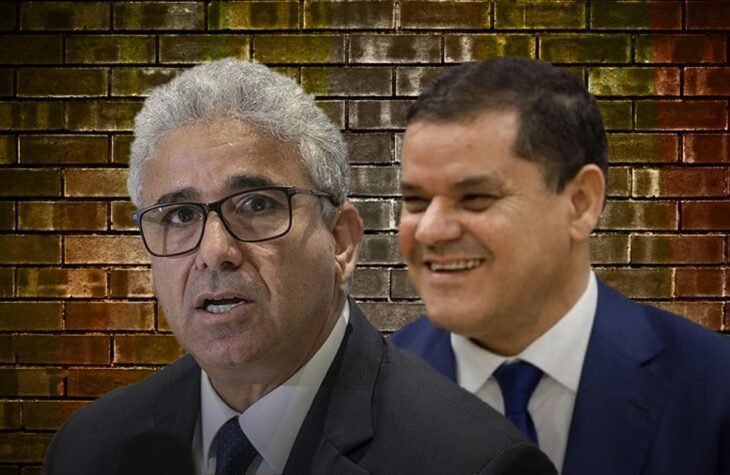
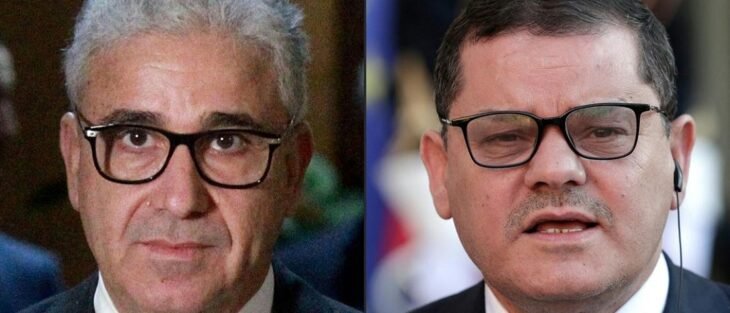
When Prime Minister Abdel Hamid Dbeibah formed his unity government in spring 2021, he had vowed to address Libya’s chronic electricity deficit as a matter of urgency. But the heat wave caught up with him just as Dbeibah is facing a direct challenge from the rival administration of Fathi Bashagha, who since March has unsuccessfully attempted three times to seize power in Tripoli.
In the latest of these bids, on May 17, a few days before I arrived, Bashagha sneaked into the capital in the middle of the night. He relied on one local armed militia for protection — the Nawasi Brigade — and hoped his arrival would persuade others to support him. Instead, an armed group opposing Bashagha’s takeover attacked the brigade’s bases in central Tripoli. By dawn, a militia that maintained neutrality in the dispute escorted Bashagha out of Tripoli, narrowly averting further escalation.
Bashagha and Dbeibah have returned Libya to the state of division between rival administrations that had prevailed since the outbreak of civil war in 2014 until the formation of Dbeibah’s government last year.
The renewed split emerged after elections scheduled for December 2021 were canceled, sinking Libyans’ hopes that the country’s long-standing legitimacy crisis might end.
Controversies over presidential candidates’ eligibility to run led to the cancellation of elections. These included Dbeibah, who had promised he would not run when he became prime minister; Moammar Gadhafi’s son Saif, who had been sentenced to death in Tripoli and faced an arrest warrant from the International Criminal Court; and warlord Khalifa Haftar, whose forces continue to control the country’s east and center despite their defeat in June 2020 following a brutal, yearlong campaign to seize power in Tripoli by force.
When Dbeibah and Saif unexpectedly emerged as the frontrunners, other candidates decided the risks of losing were too great and pushed behind the scenes for the elections to be canceled. Among them were Haftar and Bashagha, who as interior minister had been a key figure in the resistance to Haftar’s Tripoli offensive.
Having been deprived by Dbeibah of any chance at winning the elections, the two former enemies allied to form a new competing government and drive Dbeibah out of power.
That alliance shows how long-standing certainties in Libya’s conflicts have vanished: Like Dbeibah, Bashagha hails from Misrata, a port city that is home to some of western Libya’s most powerful armed groups and has been staunchly opposed to Haftar.
While Bashagha’s pact with Haftar has found few supporters in Misrata, he has sought to compensate for this by enlisting various armed groups from Tripoli, Zawiya and Zintan that had also fought Haftar — but more recently turned against Dbeibah because of disputes over positions, budgets and contracts.
Dbeibah, meanwhile, is now styling himself as the figurehead of the anti-Haftar forces, whose ethos is rooted in the 2011 revolution — an incongruous disguise, given that Dbeibah had grown rich before 2011 as a prominent public sector executive under Gadhafi.
Instead of replacing Dbeibah, Bashagha has ended up heading a parallel administration. There are many reasons for this. While Dbeibah’s reputation for corruption has alienated many across the country, Bashagha has failed to offer a convincing alternative.
Like Dbeibah, Bashagha formed a government of almost 40 portfolios whose primary function is to allow factions to enrich themselves. Members of the eastern-based Parliament extorted positions for themselves or their relatives, and the key interior and foreign affairs ministries were given to particularly ill-reputed figures.
Blatant procedural irregularities in government formation left Western governments reluctant to formally back Bashagha’s government. The absence of international recognition weakened Bashagha’s hand in trying to persuade armed groups in Tripoli to facilitate his takeover.
Most of all, Bashagha has been hamstrung by his excessive reliance on Haftar, whose appointees head the finance, planning, defense and communication ministries. Giving Haftar the lion’s share of portfolios limited what Bashagha could distribute to western Libyan factions — in other words, to the groups that control territory in and around the capital.
For months this spring, militia leaders exploited the competition between the two prime ministers by proposing to sell their support to the highest bidder — and Bashagha could offer little more than promises.
Bashagha’s alliance with Haftar and the competitive market of loyalties it created speak to the raw transactionalism now driving Libyan power politics. But opportunism alone cannot explain Bashagha’s difficulties.
Most leaders of armed groups that fought against Haftar now accept that no political solution can be reached without him. But they see Bashagha’s government as having handed Haftar far too much influence, paving the way for him to seize overall power — the continuation of his Tripoli offensive by other means.
“Trojan horse” was a term I heard often when Bashagha came up in conversations in Tripoli and Misrata. Among the militias, opposition to Bashagha goes far beyond support for Dbeibah.
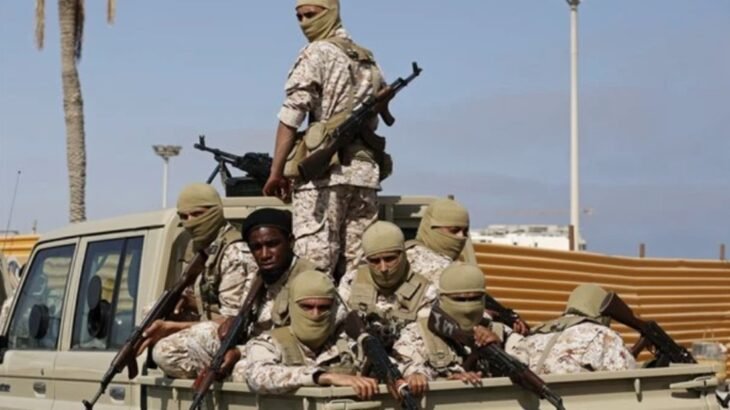
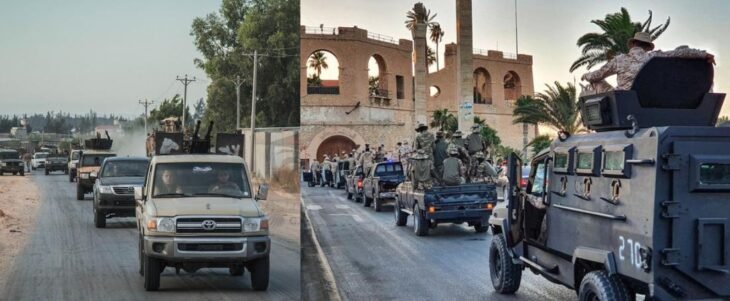
Competition between the two governments is stoking tensions between two emerging military coalitions in western Libya. Small clashes and demonstrations of force punctuated my visit to Tripoli.
After I left, militias on opposing sides of the political divide fought for hours in central Tripoli, causing a panicked flight for safety by families out to enjoy the summer evening. In the wake of Bashagha’s most recent failure to seize power in the capital, members of Dbeibah’s entourage and militia leaders opposed to the Bashagha government feel strengthened.
Mahmoud ben Rajab, a leading figure from the western city of Zawiya, dismissed Bashagha’s western Libyan allies as merely posturing: “They’re surrounded from all sides. Whenever they’ve brought out their technicals [pickups with mounted guns], they ultimately returned to their bases without firing a single shot.”
But the anti-Bashagha camp lacks ideas on how to move forward. Seen as a unifier when he took office, Dbeibah has been tarnished; the popularity he enjoyed last year is long gone, and he has irrevocably lost his status as foreign powers’ official interlocutor in Tripoli.
Equally important, he has great difficulties in accessing state funds. Most checks Dbeibah handed out to armed groups to buy loyalty have not cleared in recent months, since the central bank governor has tightened the purse strings.
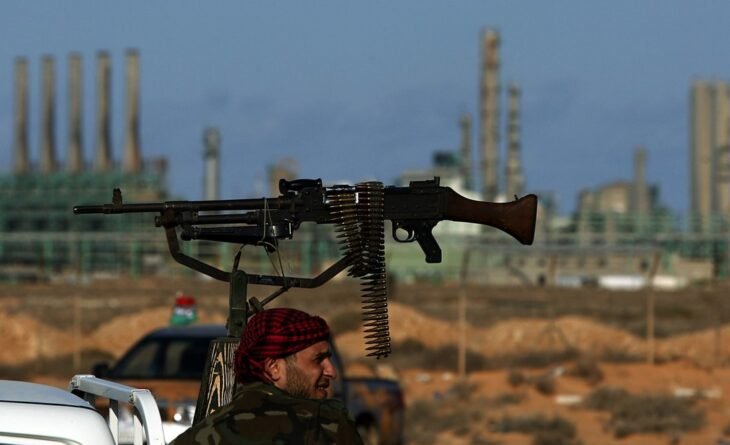
Haftar has partially shut down oil production in areas under his control to dissuade the National Oil Corporation from transferring revenue to the central bank.
The U.S., for its part, has sought to discourage the central bank from granting Dbeibah access to funding, in an effort to broker arrangements to get the oil flowing again.
The pro-Bashagha camp similarly overestimates its prospects. Militia leaders aligned with Bashagha maintain that key armed groups in Tripoli are secretly on board with him. In fact, Bashagha has no other option but to try to seize power in Tripoli: The balance sheets of commercial banks headquartered in eastern Libya no longer sustain the debt-based financing strategy used by the previous parallel government in the east.
Likewise, those western Libyan armed groups that have come out in support of Bashagha now have little choice but to persevere. By stoking insecurity with frequent but small confrontations, they may create the impression that Dbeibah has lost control and thus broaden acceptance of a Bashagha takeover.
Meanwhile, they are plotting ways to tilt the balance of forces in their favor — including by joining up with their erstwhile enemies: Haftar loyalists from western Libya, who had been exiled or laid low since the defeat of his Tripoli offensive.
“Just now, I got a call from R.B. [a pro-Haftar militia leader from Zintan]. He’s telling me, let’s go enter Tripoli together,” a Zintani militia leader who had fought against Haftar in the last war told me.
For Haftar, backing the Bashagha government undoubtedly has benefits even if it cannot take office in Tripoli: Getting western Libyan armed groups to fight each other is a boon for Haftar and could allow him to regain a foothold in the region.
Pro-Bashagha militia leaders simply shrug off the suggestion that their feud with Dbeibah serves Haftar’s interests — they know it does, but getting back at Dbeibah has priority. “I’m with Fathi [Bashagha] to spite Abdel Hamid [Dbeibah],” one of the rare Misratan militia leaders still backing Bashagha told me.
Libyan observers and Western diplomats alike frequently downplay the danger of these growing tensions by asserting that Libyans are tired of war. The narratives of past conflicts have certainly been exhausted: revolution and counterrevolution, Haftar’s wholesale demonization of his enemies as Islamists, his adversaries’ rejection of any negotiated settlement with him.
And the bulk of western Libyan armed groups do not consider the struggle between Dbeibah and Bashagha worth fighting for. They are increasingly tired of both figures and looking for a third way out of the crisis. But it’s also possible that Libyans and Western diplomats are deceiving themselves.
When listening to militia leaders on both sides of the divide discuss the prospect of armed confrontation, I am reminded of similar conversations I had prior to previous conflicts in Tripoli.
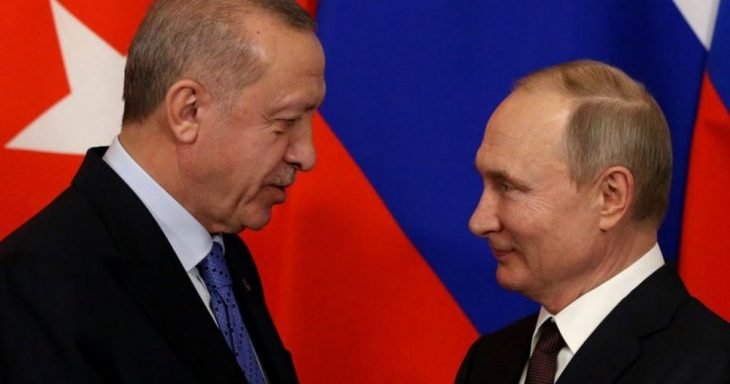
Ultimately, Libya has enjoyed relative calm since the defeat of Haftar’s Tripoli offensive, not because of war fatigue, but because the Turkish and Russian military presence had established a balance of power that Libyan actors had no way of overturning.
Conflict among western Libyan armed groups would change this, since Turkey has sought to avoid taking sides in the tug of war and would be reluctant to intervene in support of either side.
Further escalation appears to be the path of least resistance. While a critical mass of actors favors a negotiated solution that would sideline both Dbeibah and Bashagha, currently there is no forum for talks.
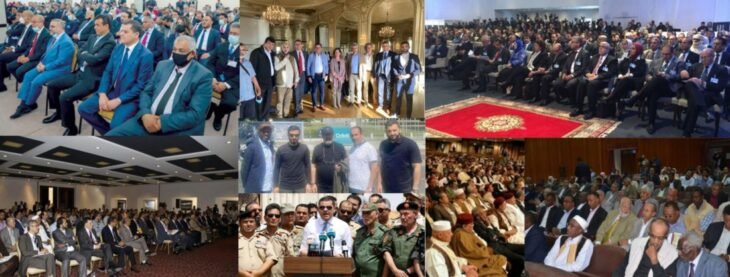
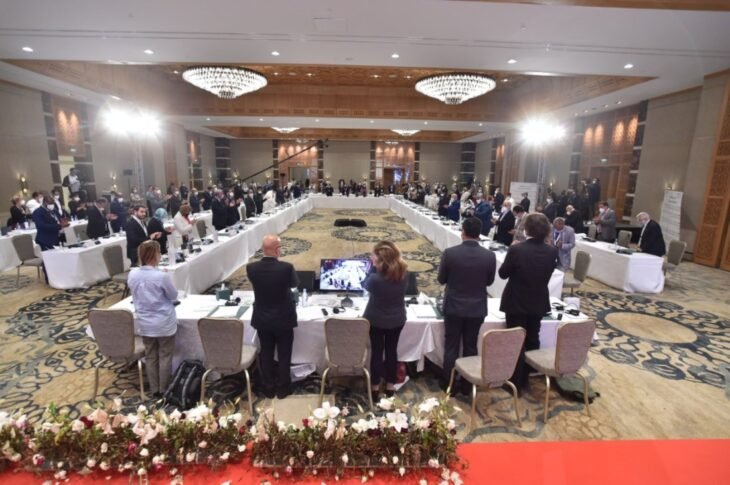
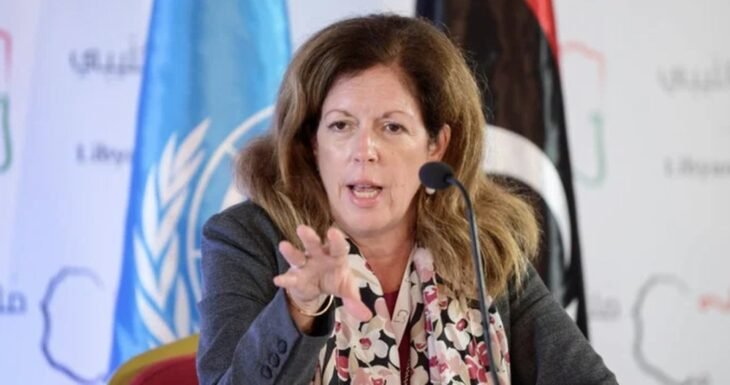
The United Nations has lost the initiative to Egypt, which has hosted negotiations between Libya’s two legislative bodies on a legal framework for elections. But in mid-June, those negotiations ended without a result — a predictable failure, since both bodies have proven repeatedly that their supreme interest lies in their own perpetuation.
Haftar’s sons are meeting with western Libyan militia leaders in Morocco and Egypt to discuss ways forward, but the range of participants is insufficiently broad and the objectives of host governments dubious.
Western governments, busy with other foreign policy priorities, display little appetite to help build a new political process that could provide a more broadly recognized forum.
Even if a new process is eventually agreed to, whether before or after an escalation in Tripoli, it is likely to gain only a cautious reception. Many Libyan political actors are skeptical that a new round of negotiations could avoid past mistakes — like a partial deal to divide ministries that falls apart within a few months.
And after last year’s deceit, few now talk about elections as a realistic scenario for the short term. As one politician who before the latest war had led outreach efforts to Haftar told me: “We may just have to wait for Haftar to die.”
***
Wolfram Lacher is a senior associate at the German Institute for International and Security Affairs in Berlin.
________________

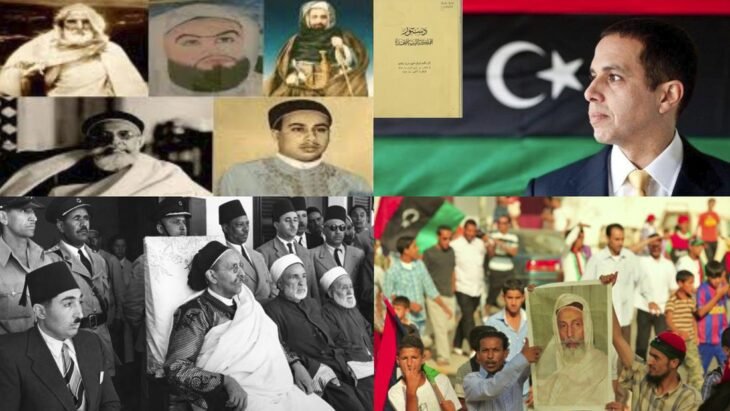
Mohammed el-Senussi (The crown prince of Libya)

Bring back the Independence Constitution of 1951.
Libya was founded as a democracy.
It is not too late to be a democracy again.
Shelby Grossman, Katie Jonsson, Nicholas Lyon, and Lydia Sizer
In this study, we use Libya as a case toassess how social media content about a polarizing, conflict-related event varies bythe country of the information producer. We created a dataset of Facebook postsabout a strongman’s attack on Tripoli in 2019. Read More
Sarah Dadouch
Libya’s oil production has almost completely halted because of a political stalemate, officials told media, during a time of heightened global concerns over the supply of crude. Read More
Mauro Indelicato
Sooner or later it had to happen: when the situation in Libya becomes serious, oil is the first weapon used by armed groups to dictate their own law. Read More
Shelby Grossman, Katie Jonsson, Nicholas Lyon, and Lydia Sizer
In this study, we use Libya as a case to assess how social media content about a polarizing, conflict-related event varies by the country of the information producer. We created a dataset of Facebook posts about a sHaftar’s attack on Tripoli in 2019. Read More

Thomas M. Hill
We asked a group of Libya experts for their views on recent events and what we might expect in the days and weeks to come. Read More
Mathieu Galtier
A year and a half after Khalifa Haftar’s offensive ended, and a little over a month before a possible presidential election, Tripoli has been reborn. However, this rebirth has not lessened the Libyan capital’s endemic ills. Read More

Simon Watkins


A new blockade of Libyan oil facilities has greatly reduced production levels, hitting an already tight global market and adding to fears an internal political stalemate could spark new fighting. Read More

Hafed Al-Ghwell
A troubling sense of deja vu has settled over Libya in recent months, following the escalations that capped the failure last year to hold general elections and finally end a senseless struggle between rival governments with self-proclaimed mandates over post-Muammar Qaddafi life in the country. Read More
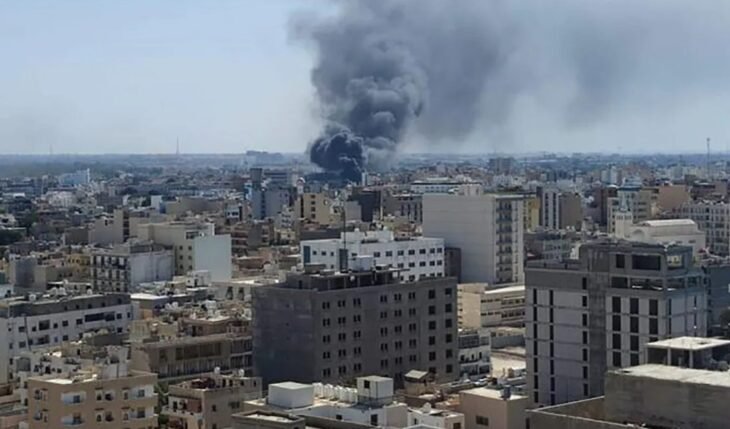
A night of clashes between militias in the heart of a residential district of the Libyan capital Tripoli raised fears on Saturday of escalating violence in the conflict-riven country. Read More
Adam Ciralsky

While spooks, treasure hunters, and lawyers search for cash, gold, and antiquities, Libya offers a lesson—and 1,001 cautionary tales—about how to recoup loot from kleptocrats. Read More

Adam Ciralsky

While spooks, treasure hunters, and lawyers search for cash, gold, and antiquities, Libya offers a lesson—and 1,001 cautionary tales—about how to recoup loot from kleptocrats. Read More
Stefano Stefanini|

While the European spotlight is on Putin’s war in Ukraine, a powder keg threatens to explode a few miles from the Italian coast. Now is the time to deal with Libya. In your interest and ours. The comment of the ambassador Stefano Stefanini. Read More
Mary Fitzgerald

Libyans could be forgiven for feeling an uneasy sense of déjà vu in recent months. Last year many had hoped the country was finally moving on from a long struggle between rival authorities. But the Tripoli-based Government of National Unity, or GNU, that was established in 2021 as part of the United Nations-led political process has been challenged since March by a rival government appointed through a disputed parliamentary vote. Read More
Adam Ciralsky

While spooks, treasure hunters, and lawyers search for cash, gold, and antiquities, Libya offers a lesson—and 1,001 cautionary tales—about how to recoup loot from kleptocrats. Read More
Oussama Romdhani
It took a failed attempt by Bashagha to force his way into Tripoli last month to draw international attention to the Libyan crisis after it had been dwarfed by the Ukraine war. Read More
Stefano Marcuzzi
Since 2011, the EU role in the Libyan conflict has been characterized by an almost acritical faith in soft power, and in a strict adherence to the principles of UN political leadership and Libyan ownership. Unfortunately, soft power proved insufficient to stabilize Libya, the UN was too often paralyzed by veto-players, and the local ownership principle turned out to be a double-edged sword. Early EU failures magnified intra-EU divisions, making EU action even less consistent. This allowed external players to expand into Libya and ultimately overshadow the EU. The Union can invert the trend only by deciding to play a stronger political role. Read More
Lisa Anderson
Over the last seventy-five years, the endlessly shifting coalitions on the chessboard of Arab regional politics seem to have played by the same rules of the game. Yet, as private interests have become a major source of political power, there have been major changes in the powers and purposes of the players. Read More

For many Libyans, the clashes that erupted in the capital of Tripoli last month, sporadically recurring ever since, were an all too familiar deja vu of street fighting, reverberating gunfire and people cowering inside their homes. A video circulated online showing a man shouting from a mosque loudspeaker “Enough war, we want our young generation!” Read More
Stefano Marcuzzi1
Since 2011, the EU role in the Libyan conflict has been characterized by an almost acritical faith in soft power, and in a strict adherence to the principles of UN political leadership and Libyan ownership. Unfortunately, soft power proved insufficient to stabilize Libya, the UN was too often paralyzed by veto-players, and the local ownership principle turned out to be a double-edged sword. Early EU failures magnified intra-EU divisions, making EU action even less consistent. This allowed external players to expand into Libya and ultimately overshadow the EU. The Union can invert the trend only by deciding to play a stronger political role. Read More
Shane Quinn
Gaddafi had managed to maintain the structure of the Libyan nation, since his assumption of power in 1969. Following Gaddafi’s fall, the Brazilian author Moniz Bandeira wrote that Libya as a state “had disappeared. Real power was represented by 60 sectarian and tribal militias, armed and in conflict with each other. Read More
Lord Aamer Sarfraz
In Ukraine, the West has received a much overdue wake-up call and is kicking its foreign policy back into gear. The fight for Ukraine is a microcosm of a larger fight, for our own security and for a rules-based international order that has an unrivalled track record in creating peace, stability and prosperity. The stakes have never been higher. Read More
Lisa Anderson
Over the last seventy-five years, the endlessly shifting coalitions on the chessboard of Arab regional politics seem to have played by the same rules of the game. Yet, as private interests have become a major source of political power, there have been major changes in the powers and purposes of the players. Read More
Elia Preto Martini
Like most of its North African peers, Libya has been grappling with rising wheat costs following the outbreak of the Russia-Ukraine war. Combined with the April blockade of a number of oil plants, the country is particularly vulnerable and unable to benefit from the global rise in oil prices. Read More
Samy Magdy
For many Libyans, clashes that erupted in the capital of Tripoli last month were all too familiar — a deja vu of street fighting, reverberating gunfire and people cowering inside their homes. A video circulated online on the day, showing a man shouting from a mosque loudspeaker “Enough war, we want our young generation!” Read More
Ufuk Necat Tasci
Armed clashes triggered by Sirte-based leader Fathi Bashagha’s attempt to unseat the UN-recognised Tripoli government highlight the volatility of Libya’s political crisis. Read More

On May 17 – five months after the cancellation of national elections planned for December 24—divisions in Libya worsened when supporters of rival governments established by leaders in the east and west clashed in Tripoli. Read More
Mary Fitzgerald
Libyans could be forgiven for feeling an uneasy sense of déjà vu in recent months. Last year many had hoped the country was finally moving on from a long struggle between rival authorities. But the Tripoli-based Government of National Unity, or GNU, that was established in 2021 as part of the United Nations-led political process has been challenged since March by a rival government appointed through a disputed parliamentary vote. Read More
Chris Doyle
Former UN representative in Libya Ian Martin’s latest book offers an honest assessment of NATO’s US-backed intervention in Libya and, as the country continues to struggle for stability, whether things should have been done differently. Read More

The UN panel said it continues to investigate the deployment of Wagner fighters and the transfers of arms and related materiel to support its operations. Read More
Miral Sabry Al Ashry

Violent fighting took place inside the Libyan capital, Tripoli, and its streets witnessed clashes and exchanges of fire, with violent clashes erupting in the city of Al-Zawiya. Read More