Jalel Harchaoui and Bernardo Mariani

Perceptions of Non-Western Approaches to Peacemaking
Interviewees see the competing interests between foreign powers engaged in Libya as a challenge because they exacerbate existing tensions. There is also a highly polarised range of perceptions about these foreign actors.
Every foreign state involved in Libya may appear as the most constructive peacemaker in the eyes of some interviewees—and as a deleterious interferer according to others. This divergence is a testament to the deeply fractured character of Libya’s political landscape.
One senior politician, formerly with the eastern-based government, sees the UAE and Russia as having potential to be at the “forefront of actions aimed at re-establishing peace and stability in Libya”. However, he also points out that any future Russian peace-building role in Libya “hinges on the withdrawal of the Wagner army from the country”, something that, in his opinion, the Russian leadership should seriously consider.
LNA military commanders praise the role of the UAE, which is perceived as a benevolent country that “has reached out to and tried to help the Libyan people”, and with a governance system — “a strong state, with a solid authority, a true vertical of power” (ibid) — that is very compatible with Libya’s need to restore law and order.
The Emirati economy, which has been able to diversify away from the traditional oil sector, is also seen as a model for Libya to aspire to. Finally, one interviewee argues that given that the UAE is a largely tribal society, “Abu Dhabi can and should mediate between Libya’s tribes.
They can also act as mediators between rival cities and rival armed groups. The Emirati can talk to the various actors”. Views of Turkey’s role in Libya among LNA supporters are unsurprisingly negative. They see Ankara’s “Islamist type governance model” as having a “destabilizing influence in many parts of the Middle East and North Africa region”.
According to this view, letting Turkey influence Libya’s diplomatic, political, or military affairs would be tantamount to allowing the Muslim Brotherhood to take control of Libya’s institutions and the governance system. Under such a scenario, argues one interviewee, “me along with everybody else in the military are going to be in danger.
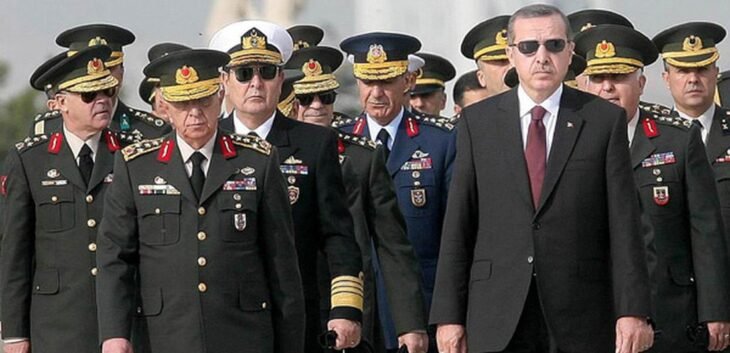
Just look at what Erdogan did to his own armed forces after the failed coup of July 2016: he went ahead and threw a lot of military officers in jail”. Similar, if not worse, are LNA supporters’ perception of Qatar, which is seen as a destabilising actor that is “actively against the emergence of a strong military in Libya” and has instead supported terrorist organisations in cities like Benghazi.
Although such criticism is hyperbolic, Doha has supported some hard-line groups in Libya between 2011 and 2016, including the armed group Benghazi Defense Brigade, which was formed by Libyan Islamist Ismail al-Sallabi in May 2016 thanks to Qatari money.
Supporters of the Tripoli government often hold diametrically opposing points of view. Among them, there is, for example, deep mistrust of the UAE, which is perceived as wanting to impose an authoritarian type of governance that concentrates power in the hands of one leader or small elite, without any truly democratic institutions.
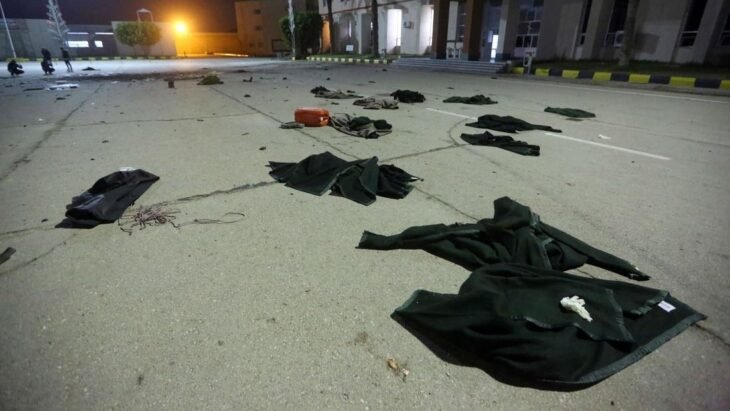
According to one interviewee, through its malign influence, the UAE is poised to “destroy Libya’s existing capabilities and assets, particularly oil ports and other hydrocarbon assets, as well as Libya’s maritime transport”. He accuses the UAE of having committed serious crimes in Libya, “such as the July 2019 airstrike on the Tajura migrant centre or the January 2020 airstrike on the Hadhba military academy”, referring to the militaryacademy attack of January 2020, documented by the BBC.
Like the UAE, Russia’s intervention in Libya finds many critics among GNU supporters. In their view, Russia’s aim in Libya is not to promote peace or help with state building, but rather to control Libya’s gas and oil production to exert pressure on Europe. On the contrary, they consider Turkey and Qatar forces of peace that “do not seek to promote a governance model based on militarism”.
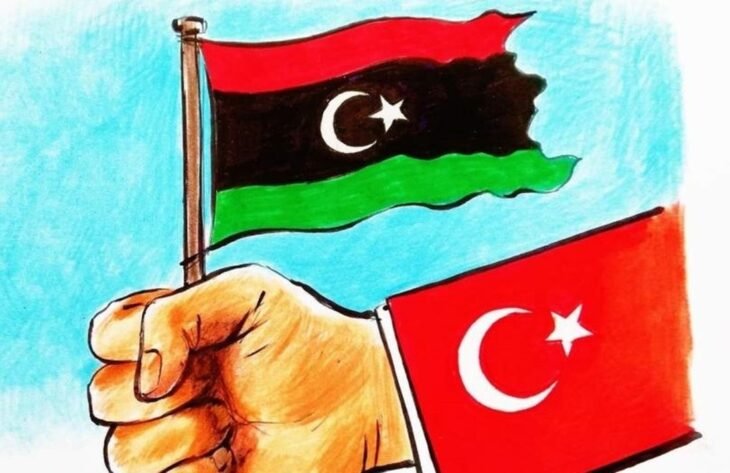
Turkey is seen as having intervened in Libya mainly to secure its own economic interests, but they believe that a strategic relationship and cooperation with Turkey will help with reconstruction across all sectors of the economy, including energy, transport and infrastructure. Among LNA supporters, views of China tend to be positive. According to one interviewee, Libyans “can and should cultivate diplomatic economic ties with China”.
In this view, letting in more Chinese workers, who are renowned for their work ethic and cheap labour, would be a win-win for Chinese corporations investing in Libya and also for the Libyan people who would benefit from the quick delivery of well-executed projects, especially in the fields of engineering and construction.
China’s economic role in Algeria, including the deep-water port project in Cherchell, is given as an example of such a partnership. As a major world power, “that has had almost nothing to do with the Libyan conflict since 2011”, China is also perceived as a potential “compelling mediator”, in contrast, for example, to Russia, which is seen, even among some LNA members, as taking sides in the conflict and as unable to act as an honest broker or peacemaker.
However, China’s image is often not positive in the eyes of Libyans supporting Tripoli. They are sceptical about the viability of any Chinese peacemaking role in Libya, due to what they perceive as a lack of effective peacemaking by China elsewhere, a lack of popular support in Libya, and opposition by Western countries, which “would be furious if China played any significant diplomatic role in Libya”.
One former Libyan minister is wary of the risks of “debt trap diplomacy” when dealing with China and adds that “a diplomatically assertive Beijing would put Libya in the crosshairs of global rivalries, which frankly we could do without at this stage.
We Libyans must bear in mind that if China enters our country’s affairs through the door of reconstruction, it will inevitably enter all other fields, including politics, geostrategy and ideology”. Even the Libyan interviewees with the most pronounced political bias regarding foreign meddlers expressed a potential willingness to allow those nations, with which they bitterly disagree, to play a greater economic role in Libya.
A former minister, who condemned the role played by the UAE during the 2019-2020 war, noted that “the possible ascendancy of the UAE as a neutral mediator in Libyan politics and Libyan affairs necessitates a profound change in the Emirati government’s strategy and way of thinking towards Libya”.
Stated differently, if such economic cooperation enables Libyans to rebuild their country and, while doing so, acquire new skills by interacting with foreign partners, many Libyans would be prepared to turn the page on the bellicose behaviour that foreign interferers demonstrated during the past decade.
By raising the economic stakes through construction efforts across all Libyan provinces, this dynamic would incentivise various factions to adopt a less rigid, warlike attitude. It is noteworthy that, at present, some major players in the Libyan conflict—such as the UAE—fulfil only a minor role in Libya’s ongoing economic reconstruction efforts.
In July 2022, Abu Dhabi was instrumental in precipitating a change in the leadership of the National Oil Corporation, a key economic institution responsible for almost all of Libya’s income. But it still remains to be seen whether the UAE will inject capital or send some of its talent in Libya. Separately, questions persist as to whether or not Egypt will contribute to Libya’s reconstruction.
One senior Western diplomat underscored the great potential of Egyptian companies when it comes to participating in the recovery, noting that Libya’s eastern neighbour “has superb workers at a variety of different levels and sectors who were working in Libya before, including Egyptian Copts, who used to work safely in Libya before”. Cairo is deeply interested in increasing the number of Egyptian workers residing in Libya.
Conclusions
Foreign interference in Libya by Western and non-Western countries alike over the past decade has exacerbated the divisions and antagonisms within the country.
Senior Libyan figures interviewed for this paper have emphasised that, despite regional and great-power competition, there is still room for all foreign states engaged in Libya to play a positive role in the country’s reconstruction and help create opportunities for economic growth.
The concrete ability of foreign powers to mobilise non-military assets and expertise to assist Libya in rebuilding itself, as well as to help it manage its economy efficiently, is perceived as a natural platform through which novel forms of dialogue and new channels of communications should be cultivated.
Libyan interviewees believe that such a new economy-centred approach could also be leveraged for political and mediation purposes. This is a meaningful finding because it points to potential avenues for reconciliation.
Indeed, responses from the elites interviewed for this report highlight reconstruction as an area upon which foreign states that have been responsible for exacerbating Libya’s crisis during the past decade might decide to concentrate their efforts.
By doing so, they would acquire a more positive image in the eyes of Libyans. However, there is a great deal of uncertainty about Libya’s short-term future. At the time of writing, Libyans were not waging war against each other, but neither were they agreeing to an election or any other unification effort. Nor were they truly reconciling.
Fault-lines have been shifting amid higher tensions, which points to more volatility ahead compared to the recent calm. In addition to the Libyans’ own unwillingness to end their crisis in a durable manner, the activism of some external players may further reduce the probability of Libya’s rival factions achieving de-escalation.
The year 2021 offered an approximate preview of what a less violent Libya could resemble: the GNU avoided war and attached great importance to economic revival and infrastructure reconstruction. But the dynamics on display during 2021 could not be sustained.
There is a risk of relapsing into war, involving physical destruction, armed violence and a deterioration of Libya’s already-fractured institutional landscape, including in the economic realm. In such a scenario, the “economic reconstruction” incentive will lose its potency among foreign meddlers while economic sabotage, political fait accompli and military coercion may become once again their primary tools of influence.
Another possible path for 2022 is one wherein Libya could manage to avoid further polarisation as well as a relapse into war. In that case, foreign states whose behaviour in Libya has thus far been either exceedingly aloof or too bellicose, may still embrace a more constructive, peacemaking role, which would further their economic interests while creating new dialogue opportunities vis-à-vis a wide array of Libyan interlocutors.
For Libya to avoid conflict relapse, two necessary conditions must be fulfilled:
(a) no foreign state involved in Libya should encourage or seek frontal clashes;
(b) no meaningful Libyan group should do so, either.
Three types of phenomena may endanger the fragile equilibrium above. The current status quo may be deemed unsatisfactory in the view of Ankara or Moscow. Such an assessment would push one of the two Eurasian powers to deliberately upset the balance of power in Libya using force or economic sabotage.
Moreover, the broader geopolitical context, such as the war in Ukraine, may also jeopardise the current restraint between Russia and NATO members, such as Turkey, Britain, or Italy, on the Libyan file.
Finally, other players, whether Libyan or foreign, may choose to disrupt the precarious equilibrium that has prevailed since June 2020. In all cases, international diplomats must not take the calm that characterised 2021 for granted.
They should help maintain a balance on both a political and an economic level between the main sides, Libyan and foreign alike. Although rapid reconstruction cannot substitute for the solid promotion of transitional political and security frameworks, economic considerations are of paramount importance when it comes to consolidating Libyan peace in 2022 and beyond.
***
Jalel Harchaoui is a researcher specialising in Libya, and an Associate Fellow with the Royal United Services Institute, London. His work concentrates on the North African country’s security landscape and political economy as well as the role of foreign states.
Bernardo Mariani is a freelance conflict prevention and peacebuilding consultant based in Austria, with specialist knowledge of China. Since 2005, he has managed and implemented research and policy dialogue projects on the implications of China’s growing role in global security affairs.
_____________