Author - ab_mnbr

The Russian Invasion Could Cause a New Arab Spring

Matteo Pes

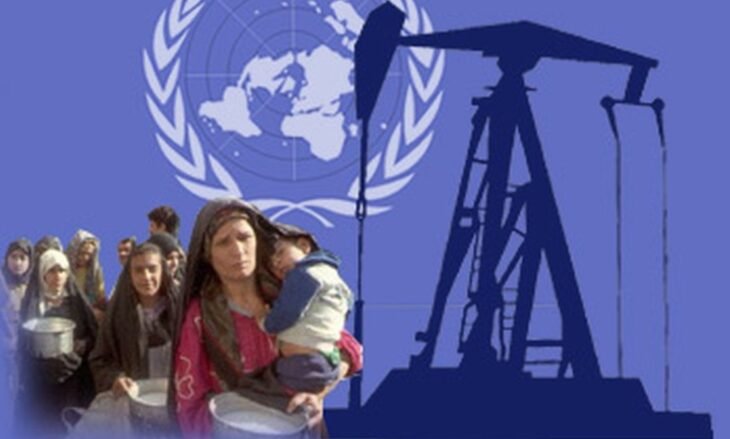
The invasion of Ukraine and the following sanctions appointed on Russia have European nations alarmed about access to natural gas, on which they have long depended. The war has boosted pressure on energy resources, especially by increasing the prices of gas, oil and coal. But it is not just a matter of energy supplies for European countries. The global food market is also at risk. Read More

An anatomy of chaos in State destruction

Mustafa Fetouri

According to the United Nations roadmap adopted in November 2020, Libyans should have cast their votes to elect a legislative and president on 24 December, 2021, but that did not happen. As a measure of precaution the roadmap mandated another attempt to be made no later than 23 June 2022, which also meant the end government of Dbeibah’s mandate. Read More

Midwives: The unsung heroes of reproductive health response in Libya

Salman Khalid

I have seen it all with mixed feelings as with devastation, suffering and pain caused by the conflict in the most testing times of our history, I have witnessed audacity of our people to build back better and observed joy and hope that every newborn has brought to Libya and its future,” says Hakima, 57, a midwife in Tripoli’s University Hospital. Read More
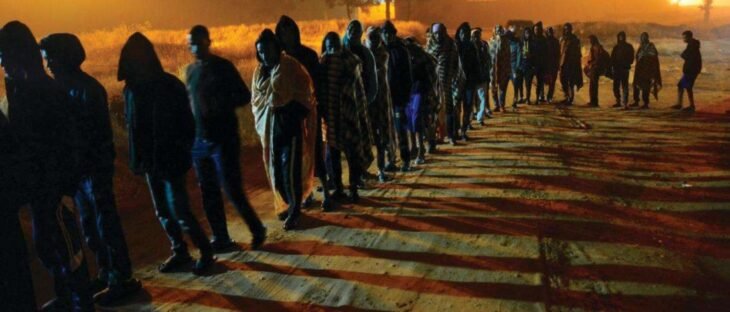
Libya losing $60 million a day in oil shutdown

Hamza Mekouar

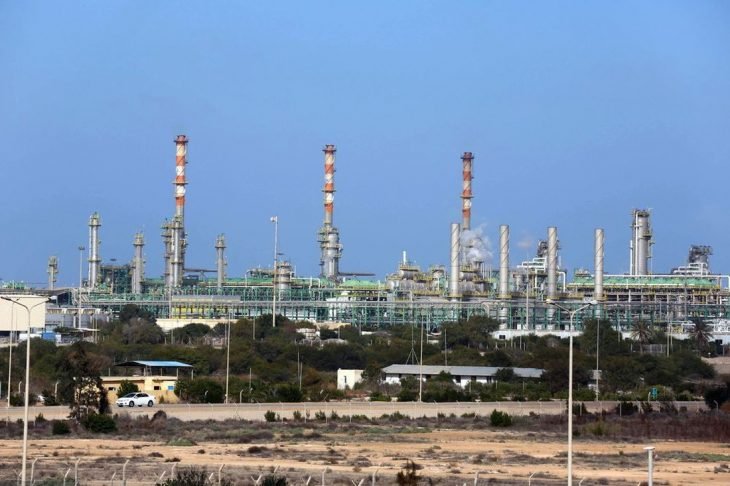
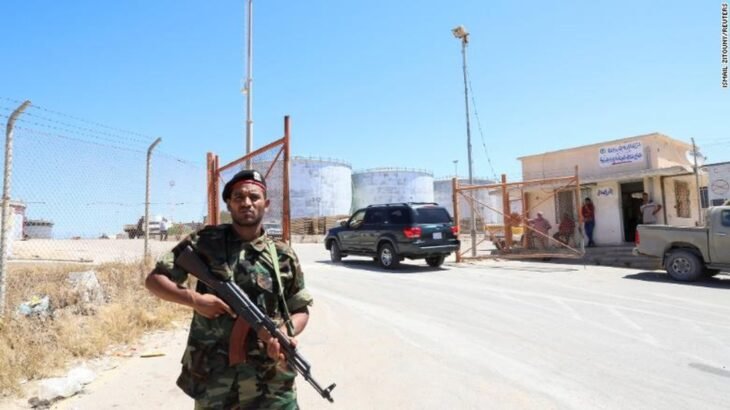
Libya is losing tens of millions of dollars a day from the shutdown of its oil facilities, while global prices are at their highest in years, the country’s oil minister told AFP.

Oil is the lifeblood of the North African country trying to move past a decade of conflict since the fall of dictator Moamer Kadhafi in a 2011 NATO-backed uprising.

But since mid-April, Libya’s two major export terminals and several oil fields have been held hostage to the country’s latest political schism.

“Production has fallen by about 600,000 barrels a day,” half the prior level, Oil and Gas Minister Mohammed Aoun said in an interview with AFP at his office in Tripoli.

“Calculating the sale price at $100 a barrel, losses are at least $60 million daily,” he said.

Since Russia began its invasion of Ukraine in February, triggering Western sanctions, global crude prices have reached levels unseen since 2014.

On Friday the US benchmark West Texas Intermediate crude traded above $106 per barrel. The price of Brent crude exceeded $109 a barrel.

The Libyan closures follow the selection in February of a new prime minister, Fathi Bashagha, by Libya’s eastern-based parliament in a direct challenge to Tripoli-based interim Prime Minister Abdulhamid Dbeibah.

– ‘Loss of confidence’-

Analysts say eastern Libyan forces who back Bashagha have forced the closure of the oil facilities in a bid to press Dbeibah to step down, but the incumbent insists he will only hand power to an elected successor.

The political bloc supporting Bashagha is aligned with Libya’s eastern-based strongman Khalifa Haftar, who in 2019-20 led a failed offensive against Tripoli, when his forces also blockaded oilfields.

Haftar’s external backers include Russia, which belongs to the OPEC+ crude producers’ group.

“The closures affect the petroleum infrastructure, especially the pipelines, harming Libya’s reputation and leading to a loss of confidence on the international market,” said Aoun, whose position did not exist until Dbeibah’s appointment in 2021.

“When you deliver a given quantity to a customer and the next day you can’t, Libya loses its place” on that market, he added.

Washington’s embassy in Tripoli on Wednesday said it was “deeply concerned” by the Libyan oil closures and said they should end immediately.

On the political dimensions of the shutdown, Aoun limited himself to saying: “Apparently, those calling for the closure say they have demands for the development of their regions.”

He said he had put in place a committee which is “in contact with actors in different regions” to try to end the shutdown.

– ‘Natural resources’ –

But Aoun also said he opposed “blackmail” as a means of pressure.

According to analysts, the latest blockade was triggered by the National Oil Corporation’s agreeing to transfer $8 billion in oil revenues to Dbeibah’s government in exchange for emergency operational funding.

This upset the eastern camp.

Libya sits on Africa’s largest known oil reserves, but output sank to near zero at various points during its conflict.

Libya’s oil production was between 1.5 million and 1.6 million bpd before the 2011 uprising.

“The Libyan state is rich in natural resources… and has assets for developing solar and wind power, ports, tourism,” the minister said, calling for a reduction in fossil fuel dependency.

Libya depends on revenues from its oil and gas exports, which in 2021 raised more than $21.5 billion, the highest level in five years, the NOC said in January.

The NOC is one of the few institutions in the troubled country to have stayed intact — and largely neutral in the face of political wrangling — since 2011.

But relations have been tense between NOC chief Mustafa Sanalla and Aoun, who has repeatedly tried to sack him.

“Bickering doesn’t interest us, only production,” Sanalla has said.

In the interview, however, Aoun accused the NOC chief of not respecting laws governing the sector “and exceeding his prerogatives.”

__________________

Read More

Libya is a ‘market of human beings’

Many African migrants and refugees see crossing the Mediterranean Sea as the only chance for a better life. Sally Hayden tells their harrowing stories in My Fourth Time, We Drowned.

Read More
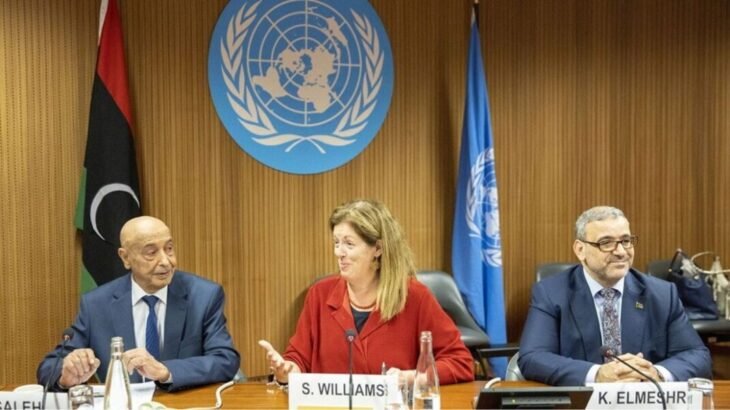
A Political Road map to Economic Recovery in Libya

Hatim Gheriani

As Libya continues to look for a  path forward following the cancellation of the anticipated December 24 first round of presidential elections, Libya has seen a slew of high-level figures speak out nervously about the country’s uncertain path to functional governance and peace.

In October, both Libyan Foreign Minister Najla Mangoush and now former U.N. special envoy for Libya, Jan Kubis, spoke of the importance of a peaceful transition, with Kubis warning of the potential risk that elections pose, renewing conflict and dividing the country should they not go as planned.

The aftermath of the cancellation is expected to be particularly troubling, sparking the resumption of armed conflict between the various parties competing for power in the country that has been wracked by turmoil and violence for over a decade. The best case scenario of a peaceful delay of election and eventual transition of power does not preclude the country beset by factionalism and division from returning to conflict further down the line, especially if the ‘success’ of ‘liberal democracy’ in other MENA states is anything to go by. Even the supposed Arab Spring success of Tunisia currently seems fraught.

Amidst this political anxiety, economic problems also continue to be apparent in the North African country. Indeed, from the very outset of Libya’s strife a decade ago analysts were noting the economic uncertainty that was being ushered into what was a relatively wealthy country and one holding some of Africa’s largest oil reserves. Oil production, the country’s most vital export industry has particularly suffered with  production constantly under threat from plunder.

Meanwhile, the Governor of the Central Bank of Libya, Saddek Elkaber, highlighted in a September interview how political fragmentation was hobbling Libya’s ability to carry out financial transactions big or small due to the crippling impacts of rent-seeking rival factions. Kaber himself is a controversial figure, a survivor of numerous efforts of political elites to either court or control him.

In short, valuable assets, industries, and the basic ability of Libyans to productively engage with their economy have all been held hostage by the country’s political chaos. Projects like the construction of a $1.5 billion port in Susah offer hope for the return of meaningful investment and infrastructure development that will enrich the country and bring renewed prosperity to its citizens. However, this all hinges on political developments that cannot be counted on and a mid to long term guarantee of stability that is far from certain.

With much of this economic malaise stemming from the political situation, some have suggested that an alternative solution to the one being pursued could be an answer. This was recently brought to the attention of the academic community by the Cambridge Middle East and North Africa Forum, a Cambridge University based think tank focusing on UK policy towards the Middle East and North Africa. Taking a unique applied history approach, the project highlights the potential for the 1951 constitution and with it the monarchy to serve as a potential starting point for resolving the Libyan crisis.

Furthermore, a number of prominent publications such as The New York TimesThe New Statesman, and The National Interest have all featured pieces evaluating the potential for stability generated by the return of the country’s 1951 constitution that was cast aside in the coup of 1969 that saw the end of Libya’s system of constitutional monarchy and the overthrow of King Idris I.

If restored, the 1951 constitution would see a constitutional monarchy encompassing an elected parliament, separation of powers,  minority protections, freedom of expression, an independent judiciary and so on….- in other words the basis of a functioning democracy.  This would all be under the unifying figure of Crown Prince Mohammed El Senussi, who could stand above the fray of politics and serve as a “respected father figure.” The fact that this construct already served Libya well during a period many Libyans now refer to as “the golden years”, makes it a more realistic path to democracy than any of the approaches under consideration since 2011.

This position has not merely been the speculation of writers and analysts in western publications but has also been heard on the Libyan street and from senior Libyan figures, with Mohamed Abdel Aziz, the Libyan Minister of Foreign affairs proposing constitutional monarchy under the 1951 arrangement as the ideal solution to unify the country as early as 2014.. The benefit of this system is that it provides a state figurehead that is above combative politics but restrained by the constitution and parliament, providing a means for the monarchy to mediate the many tensions in the country and in doing so, maintain the stability needed to develop and grow.

Not only are the Senussi family well respected by many on account of their long history in the country and a lineage that traces back to the Prophet Mohammed (like the Jordanian and Moroccan royal families), but they have also had their hands clean of the blood spilt in recent decades. This is unlike front-runners in the now indefinitely delayed election.  Consider the field – presumptive Gaddafi heir Saif al-Islam Gaddafi, presumptive warlord Marshal Khalifa Haftar, the more and more less interim President Abelhamid Dabaiba or the Parliamentary Pretender Fathi Bashagha.  If any of these wins, the outcome is most likely more fighting, not less and more economic chaos and suffering, not less.

Indeed, it is hard to think of any candidate current or future that will be capable of commanding respect from Libya’s various factions and capable of being seen as being in some way above the competition for power and spoils. Moreover, the constitutional framework is already there, framed specifically for the purpose of forging a nation from disparate traditions and geographies. Forging a new constitution in the current turmoil is likely to amount to little more than a new focus for conflict.  For bringing stability to a warring country and providing a leader capable of driving reconciliation and reconstruction, a constitutional monarch under the 1951 constitution may just be the best, if not the most expected solution.

***

Read More

Libya misses out on oil price boom as political divide continues

A shutdown of Libya’s main oil fields shows the political differences that still hamper the country.

Read More
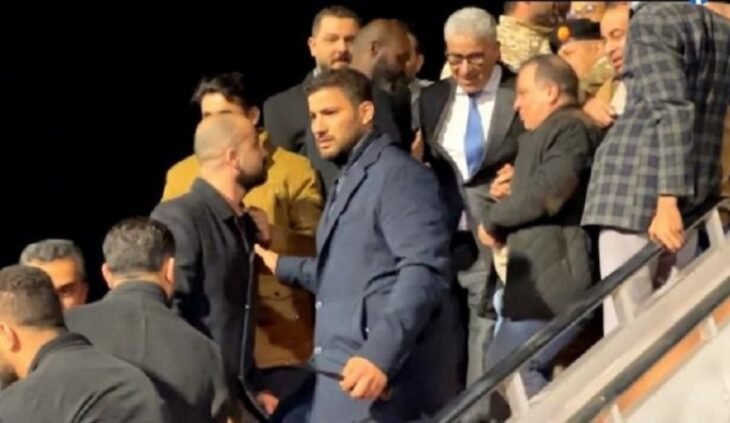
Libya oil production outage a ‘convenient coincidence’ that helps Russia

William Watts

Libya is split between rival governments, a legacy of the ouster of longtime ruler Muammar Gadaffi in a 2011 uprising.

A Tobruk-based parliament in February appointed a new prime minister, Fathi Bashagha, a direct challenge to the United Nations-backed government in the capital Tripoli led by interim Prime Minister Abdul Hamid Dbeibah, noted Helima Croft, head of global commodity strategy at RBC Capital Markets. Read More

It’s Time for the West to Pick a Side in Libya

Now is the time for Washington, Paris, and Rome to get off the fence and collectively mount pressure for interim Prime Minister Abdul Dbeibah to go.

Edward P. Joseph, Wolfgang Pusztai, and Hani Shennib

Russia’s war in Ukraine has finally turned the fate of chaotic Libya into a critical question for the United States and its allies France and Italy. If Washington, Paris, and Rome act decisively, they can stabilize Libya while tightening the pressure on Russian president Vladimir Putin. But hesitation could see Libya deteriorate further, to Moscow’s benefit.

As the Organization of the Petroleum Exporting Countries (OPEC) continues to balk at pumping more oil, Libya remains exempt from the cartel’s production and sales cap. The country could easily double its production to two million—or, with some modernization, even three million—barrels a day, according to the head of Libya’s National Oil Corporation (NOC), Mustafa Sanalla. Achieving those impressive numbers would dampen the historic oil shock that OPEC has predicted will be caused by the potential sanctions-induced loss of Russia’s seven million barrels a day.
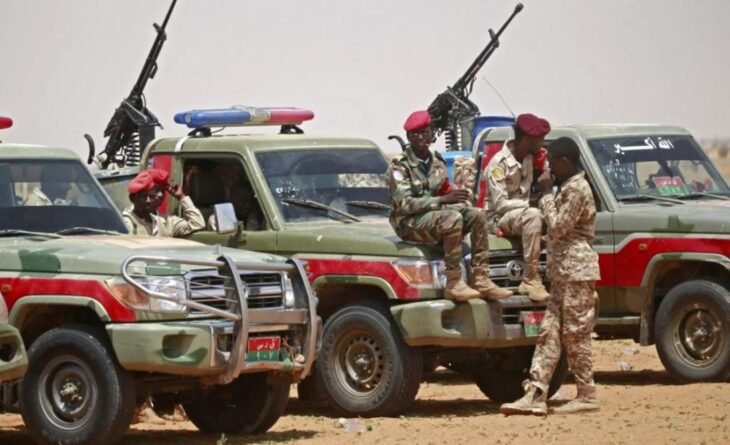
Unfortunately, continuing turmoil threatens Libya’s oil production. In the capital, Tripoli, financial mismanagement plagues the NOC. Despite record revenues, the NOC has mounting debts, leaving it short of funds for salaries, maintenance, and new equipment. Spot shutdowns of wells by disgruntled militias in the west of the country, overseen from Tripoli, have become commonplace. Meanwhile, political deadlock with Cyrenaica, the oil-rich eastern region of Libya, threatens the bulk of oil production at a time when limited global supply and spiking prices are keeping the Russian economy afloat.

The emergence of a potential consensus-building prime minister, Fathi Bashagha, offers Libya its best chance at stability since the civil war broke out eight years ago. The critical task for the United States, France, and Italy is to give Bashagha a chance to govern by salvaging the latest United Nations-guided international peace process.

One main obstacle stands in the way: the prime minister of Libya’s interim Government of National Unity, Abdul Hamid Dbeibah, refuses to resign, which he committed to doing when he accepted temporary reins one year ago. In another flagrant violation of the terms for power, the defunct prime minister put his name forward as a candidate for president, helping to scuttle long-anticipated elections scheduled for last December.

The eastern-based House of Representatives—itself a carry-over institution without legitimacy—passed a no-confidence motion against Dbeibah in September 2021. Last month, the House voted to replace Dbeibah with Bashagha—but only after coordinating the move with the rival, Tripoli-based High Council of State. This rare example of east-west political coordination was itself a breakthrough in deeply polarized Libya.

Like Dbeibah, Bashagha hails from Libya’s pivotal city, Misrata, a fiercely independent stronghold beholden neither to Tripoli in the west, nor Benghazi, the center of power in the east. Bashagha has managed to attract support from Marshal Khalifa Haftar, the notorious commander of the Benghazi-based Libyan National Army (LNA). Infuriated by Dbeibah’s refusal to step down, last week Haftar instructed the five LNA military representatives to walk out of security talks in the Joint Military Commission. This is more than a formality. The “5 + 5” forum guarantees the UN-brokered (and monitored) Geneva truce between the forces of each side.

​​The eastern Libya representatives demanded the closure of roads and airports connecting the east and west of the country. De facto guardians of the Libyan oil and gas oil fields in Cyrenaica and Fezzan (the southern region), the representatives also threatened to shut down production until Dbeibah yields his position to Bashagha. Following an appeal by Ambassador Richard Norland, the U.S. special envoy for Libya, Haftar initially backed off the threat. Four days later, on April 14, militias in the east and south partially blockaded oil fields and terminals, a step triggered by a dispute over Libya’s all-important oil revenue. The NOC had transferred $8 billion of frozen funds to the Ministry of Finance’s accounts—controlled by the Dbeibah government at the Central Bank of Libya. The transaction defied the request of the eastern House of Representatives for a freeze on such transfers until Dbeibah steps down.

A total shutdown of the eastern and southern wells by Haftar could trigger a forcible response, reigniting the conflict and deepening divisions, potentially to the breaking point. Russia would be the clear winner.

​​Locked in a never-ending, zero-sum contest over oil revenues and power, none of Libya’s leaders have clean hands. Haftar also torpedoed a potential breakthrough for Libya back in 2019 on the eve of a UN-prepared national conference. The conference was the culmination of a painstaking, consultative process aimed at achieving broad consensus. Instead, Haftar’s reckless, futile assault on Tripoli wreaked havoc and massively deepened the polarization and suspicion between Libya’s east and west. Haftar’s ambitions increased the east’s military and political dependence on Russia, while eventually triggering decisive Turkish military intervention on behalf of Tripoli.

In the wake of Haftar’s retreat and the ensuing battlefield stalemate, the UN launched another Libyan political dialogue in late 2020—this time with a narrow group of representatives handpicked by former UN representative on Libya Stephanie Williams. Instead of a transparent, inclusive conference, delegates to the Libyan Political Dialogue Forum met behind closed doors with scant consultation. Amidst allegations of vote-buying, the UN brokered an agreement in March 2021 under which Dbeibah took power—on a strictly interim basis.

In his short time in office, Dbeibah has aggravated Libya’s bleak condition. According to his opponents, the interim prime minister allegedly misused public funds to cling to power. With mounting liquidity problems, the government is struggling to keep Dbeibah’s promises, which included an increase in salaries and bonuses for an array of occupational groups. Of the six months’ worth of child and family allowances promised by Dbeibah by the beginning of Ramadan, only a portion has been paid out.

The financial crisis is the result of years of rampant corruption, currency manipulation (through flagrant abuse of letters of credit), profligacy (typical abuse of a rentier economy), conflict, and the cost of maintaining “security” in the capital through often-feuding militias. Dbeibah’s “achievement” is to have taken the Libyan economy over the cliff.

According to his critics in the east, Dbeibah has continued to deprive Cyrenaica of funds for its public servants and army, despite previous agreements, while giving funds to militias to secure his position in the capital. The Dbeibah family has been investigated for financial crimes in the United Kingdom and Canada and for embezzlement of billions of dollars from Qaddafi-era transactions. Dbeibah is personally accused of corruption and nepotism, allegedly having directed millions of dollars to companies and individuals associated with his family.

With a looming food crisis stemming from the war in Ukraine, Libya lacks the agricultural or financial capacity to intervene and cushion the inevitable blow to its citizens. Erratic measures by the current government, including price controls, have backfired.

Dangers abound in the greater Tripoli area, as security has been left primarily to an array of militias. Rival militias and gangs clash several times a week. Street crime, burglaries, and kidnappings are a daily risk for the people of Tripoli and other larger cities across Libya. Human trafficking and the smuggling of drugs, weapons, and consumer goods is a country-wide phenomenon.

At first, Dbeibah turned a blind eye to the security situation, as he did not have his own military power base to challenge the mighty militias. Now, he needs militia forces to deter his rival, Prime Minister-elect Bashagha, from returning to Tripoli.

The emergence of a figure like Bashagha—with backing across the country—represents Libya’s best hope in years. Unlike Dbeibah, Bashagha earned a strong reputation while in office, both as a capable leader and skilled politician. The former air force captain led the Ministry of Interior, where he helped guide Tripoli’s defense against Haftar’s assault on the capital two years ago. With his power base in Misrata and his success in holding off Haftar’s Tripoli invasion, Bashagha cannot be assumed to be intimidated or manipulated by Haftar the way that the chair of the House of Representatives, Aquilah Saleh, is in the east.

Bashagha is as well-positioned as any figure in Libya to navigate the critical steps with key stakeholders, which could finally lead the country to national elections. A strong, consensus figure is needed to ensure that the polling is conducted fairly and that the results are respected by all parties, including Islamists, Ghadafi loyalists, and Haftar.

But Bashagha’s wily businessman-opponent, Dbeibah, retains two powerful assets: the militias and the Central Bank of Libya. Several of the larger Tripoli militias—bankrolled by Dbeibah—have established an umbrella force, the “Constitution and Elections Support Force,” which risked a violent confrontation by blocking Bashagha from entering Tripoli on March 10.

As long as the Central Bank provides the Dbeibah government with access to official funds, then Bashagha cannot rule. U.S. special envoy Norland has proposed international oversight for Libya’s oil revenues. Under this regime, only funds to cover salaries, subsidies, food imports, and key infrastructures would be transferred to the Central Bank, and only under international supervision. Other revenues would remain frozen at the Libyan Foreign Bank. Grand Mufti Sadiq Al Ghariani and other Dbeibah supporters spoke out immediately and harshly against the U.S. proposal.

Attempting to assert his authority, Bashagha held his first official cabinet meeting in the remote city of Sebha in the south. If he cannot obtain or consolidate his position in the capital, then Libya could inch towards de facto breakdown between Tripolitania and Cyrenaica, with Russia a likely instigator. Moscow has wielded influence in the east through Haftar since the signing of a military agreement aboard a Russian ship in 2016. Russia has repaired and replenished aging military equipment and weapons from the Qaddafi era. Additional Russian kit has percolated through the quasi-official Wagner Group, which has conducted military actions on behalf of Haftar’s Libyan National Army.

____________________

Read More

Putin Is Deploying Mercenaries in Ukraine That Terrorized Libyans

Frederic Wehrey 

The last time Russian forces tried to topple an internationally recognized government it was in a country far from Eastern Europe and on a far smaller scale than today’s war in Ukraine. But what I saw in Libya was no less terrifying for civilians and similarly corrosive to national sovereignty—a testing ground, of sorts, for the conflict now raging in Ukraine.

That includes the use of mercenaries, which U.S. officials say President Vladimir Putin is resorting to as regular Russian forces falter, the death toll among Russian troops rises, and atrocities take center stage. In the fall of 2019, I was reporting from Tripoli as roughly one thousand fighters from the so-called Wagner Group—a private military company that essentially functions as Putin’s secret arm—and some regular Russian military personnel joined the militia forces of a Libyan warlord in an effort to oust the sitting government.

In Libya, the Wagner fighters made a difference. While certainly sub-par by Western military standards, they nonetheless undermined the morale of government forces with relentless firepower and lethal precision, especially in the form of well-aimed sniper shots, with high-caliberanti-materiel rifles. One commander on the government side told me that thirty percent of the deaths in his unit were due to Russian snipers. And during a Wagner mortar barrage, I witnessed fear and panic in the ranks that I’d not observed in previous conflicts in Libya, including the months-long battle against the Islamic State.

But Libyan civilians bore the brunt of the Wagner onslaught. Entire families had died in the dust-strewn ruins of homes obliterated by Russian shelling. Months later, mines and booby-traps emplaced by Wagner fighters would kill dozens more.

All of this prompted little pushback in Western capitals. Worse, two U.S. allies, France and the United Arab Emirates, abetted the Russian-led attack on Tripoli with diplomatic and military support. And while the invasion failed to overthrow the Libyan government, its aftermath left Russian military forces firmly entrenched in airbases and oil facilities in southern and eastern Libya.

In Ukraine, Russia appears to be repeating its Libya playbook. After failing to decapitate the Ukrainian government and seize the entire country, Moscow has pivoted to shearing off swaths of territory and freezing Ukraine’s conflict into a stalemate that stymies Kiev’s economic and democratic progress and its integration with the West. And in late March, Pentagon and Western intelligence services reported that up to a thousand Wagner fighters, hardened by battle in Libya and an even bloodier intervention in Syria, are redeploying to Ukraine.

There, Wagner will find a foe that is far more competent and better equipped than Libya’s militias and one that has already shattered the morale of Russian conventional forces. But by throwing more manpower into the Ukraine war, along with air defense systems and artillery, these mercenaries could still undermine the prospects for a durable peace and sow the seeds for future conflict. Specifically, by shoring up pro-Russian forces in the separatist territories of Donetsk and Luhansk in southeastern Ukraine, they could help wrest enough land from Ukrainian government control to create a new reality on the ground that gives Putin newfound leverage.

But to the extent they violate the rules of war—targeting civilians, or committing abuses like those uncovered on the outskirts of Kyiv, where reports say Wagner operated—Putin’s mercenaries will intensify an already atrocity-ridden campaign, and make it more likely that rank-and-file Russian soldiers will act with more brutality. But they are also likely to stiffen Western resolve in Ukraine. What the Wagner Group did in Libya without drawing much of an outcry—along with its even more destructive campaign in Syria and its murderous meddling in Africa, epitomized by a reported massacre in late March of hundreds of civilians in Mali by Wagner and Malian government forces—will not go unnoticed in Eastern Europe.

Putin’s adventures in the Middle East and Africa constituted his bid to expand Russian global influence, whittle away the U.S.-led international order, and nudge the world toward greater multipolarity—all while reaping economic spoils. They were successful in part because they happened in regions of the world that were deemed less important to Western policy interests and that, in the view of some Western elites and media outlets, were long accustomed to proxy wars and bloodshed and were “less civilized” than Europe.

His attack on Ukraine has thankfully produced an admirable commitment to action by the U.S. and its European allies, including sanctions on Russia and the provision of military and humanitarian assistance to the Ukrainian people. But the contrast between this degree of Western mobilization toward Ukraine—evident most starkly in Europe’s welcoming of Ukrainian refugees—and the West’s previous indolence toward Russian abuses of non-Europeans is morally bankrupt. It underscores the need, at the very least, for a more inclusive notion of interdependent human security, between the countries of the Global South and the Global North.

***

Frederic Wehrey is a senior fellow in the Middle East Program at the Carnegie Endowment for International Peace. A former U.S. military officer with tours across the Middle East and Africa, he is the author of The Burning Shores: Inside the Battle for the New Libya (Farrar, Straus & Giroux, 2018). He is writing a history of African and Middle Eastern resistance to European imperialism during the interwar period for Liveright / W.W. Norton.

_________________

Read More

Hafter’s army is ‘brutally crushing’ freedom of expression and peaceful assembly in Libyan territories under its control: Amnesty

The eastern Libya-based Internal Security Agency (ISA), a collection of powerful armed groups operating in areas under the control of Hafter’s Libyan Arab Armed Forces (LAAF – formerly the Libyan National Army – LNA), is arbitrarily detaining at least nine peaceful protesters and a journalist incommunicado after they participated in a demonstration in Sirte, Amnesty International said today. Read More

EU sanctions head of Russian mercenary group Wagner

Agnes Szucs

Bloc targets 2 businessmen with asset freeze, travel ban for violating Ukraine’s territorial integrity.

The European Union on Thursday added the head of the Russian mercenary company the Wagner Group to its blacklist for actions violating Ukraine’s territorial integrity.

The EU imposed asset freeze and travel ban on two more individuals for their role in “undermining the territorial integrity and sovereignty of Ukraine” and for benefitting from “the illegal annexation of Crimea or the destabilization of eastern Ukraine,” the Council of the European Union said in a statement.

One of the new entries is Yevgeniy Viktorovich Prigozhin, “the founder and unofficial head of the Wagner Group” who is responsible for deploying mercenaries in Ukraine and “a prominent Russian businessman with close ties to President (Vladimir) Putin and the Russian Ministry of Defense,” according to the statement.

“Some of his companies has been benefitting from large public contracts with the Russian Ministry of Defense following the illegal annexation of Crimea and occupation of eastern Ukraine Russia-backed separatists” it also said.

The other sanctioned person is Ukrainian businessman Serhiy Vitaliyovich Kurchenko who “took control of several large metallurgical, chemical and energy plants in the separatist-held areas with support from pro-Russia separatists,” the Council explained in its decision.

Since the beginning of the Russia-Ukraine war on Feb. 24, the EU has imposed five sets of sanctions on Russia for violating Ukraine’s territorial integrity and sovereignty.

The new update brings the total number of people that the EU has sanctioned over undermining Ukraine’s territorial integrity to 1,093.

The EU has also banned coal imports and luxury goods exports to Russia, as well as barring Russian and Belarusian banks from operating in the SWIFT international banking system.

– Wagner Group

According to a resolution adopted by the European Parliament in November, the activities of the Wagner Group correspond to the expansion of Russia’s influence zone, therefore it is highly likely that Russia is in charge of the funding, training, management, and operational command of the paramilitary group.

The US Defense Department considers the private mercenary company a proxy force for the Russian state.

The Wagner Group has reportedly been deployed in Crimea and eastern Ukraine since 2014.

According to the European Parliament, they have also intervened in the Central African Republic, Syria, Sudan, Mozambique, Libya, the Central African Republic, and Venezuela.

___________________

There is a danger of the Arab region becoming an unlivable zone

Hafed Al-Ghwell

Read More

How Turkey Transforms Libya

Anas El Gomati

Turkey’s decisive military power determined the outcome of Libya’s last civil war, with bilateral agreements leaving a lasting imprint on both countries whilst transforming the regional order and balance of power in the process.

Libya has undergone a major social, political and economic transformation over the decade since the overthrow of the Gaddafi regime in 2011 during the Arab uprisings.

Despite early promises of a peaceful transition of power after elections in 2012, Libya has suffered civil wars resulting from power grabs by retired General Khalifa Haftar backed by the United Arab Emirates (UAE), Egypt, France and Russia. However, Turkey’s high profile military role in the 2019 civil war to support the former Government of National Accord (GNA) transformed the fortunes of local actors, and the geo-political balance of power that had been unchallenged until their entrance.

The move served as a demonstration of Ankara’s growing aerial and military capabilities, willingness to confront regional rivals supporting the power grab, and a resurgence of its diplomatic ambitions. In the process Libya’s 2019 civil war became a two-sided battleground where a multitude of geo-strategic rivalries and major geo-political fault lines were exposed following Turkey’s dramatic intervention. Ankara’s policy is driven not only by what happens in Libya, but by Libya’s geo-strategic coastline, the regional geo-political conflict, and its own domestic economic crisis.

Factions that are difficult to navigate

The recently published Bertelsmann Transformation Index (BTI) 2022 states that the clashes over the elections in 2014 led “to the de facto split of Libya into two rival entities respectively backed by changing alliances of national, regional and international actors.” The report highlights how these factions are difficult to navigate – a reality which has been hardened by Turkey’s military intervention in Libya. Ankara was drawn to Libya’s civil war at the request of the former GNA to defend the capital at the peak of the conflict in November 2019. The GNA had been unable to receive diplomatic support or sanctions against Khalifa Haftar from the United Nations Security Council (UNSC) which authorized the government in 2015.

It was later revealed that France and Russia, key members of the UNSC, had been discretely supporting Khalifa Haftar, leading to the GNA requesting military support from Turkey who signed a maritime and security memorandum as a basis to intervene. The agreement transformed the local power dynamics in the capital but also drew attention to the valuable portion of Libya’s shared maritime boundaries with Turkey in the process.

The MoU was predicated on Turkey intervening militarily to defend the GNA against Khalifa Haftar’s power grab in Tripoli in exchange for a geo-strategic coup de grace by Turkey and Libya rewriting and challenging the conventional maritime boundaries of its economic competitors in Greece, Cyprus, Egypt, Israel in the gas-rich Eastern Mediterranean basin. This allowed Turkey to block any attempt by Greece, Cyprus, Egypt or Israel, organized in the Eastern Mediterranean gas forum, to exclude Turkey from the share in the riches beneath the sea to which it lays claim.

Set on collision course

Turkey’s military intervention in Tripoli in late 2019 set it on a collision course with a powerful regional actor and rival, the UAE, who have carried the financial and military burden of Haftar’s wars. By 2019, the UAE financed Russian mercenaries to capture the capital from the ground, whilst conducting drone strikes on Tripoli in an attempt to install Khalifa Haftar by force. The UAE alongside Egypt have been driven to Libya since the Arab Spring protests threatened to topple authoritarian regimes across the region under the guise of “fighting terrorism”.

Libya’s similar tribal social structures and massive oil wealth sparked a particular fear that its democratic transition could provoke protests in the UAE, and has drawn it to support a series of military coups across the region in neighboring Egypt and Sudan, as well as supporting Khalifa Haftar’s repeated coup d’états since 2014.

Turkey, back then still a multiparty democracy that supported the Arab Spring in the hope of profiting from the ideological sea change in 2011 has not been immune to the turning of the political tides in the region over the last decade. Ankara accuses the UAE of supporting a failed military coup in Turkey in 2016, and has been increasingly hostile with military regimes that have taken power from the Arab street since 2011 across the region.

Turkey’s battle with the UAE was a geo-political confrontation between regional military powers with existential rivalries  and irreconcilable ideological visions of the post Arab Spring regional order. Turkey’s deployment of Syrian fighters to Libya was high profile, but its drone strikes on the UAE’s air defense systems were high impact, collapsing Haftar and the UAE’s Tripoli campaign, and establishing a stalemate in the summer of 2020.

Economic opportunities and lifelines

These dynamics have allowed for the UN to agree a ceasefire and begin a peace process since late 2021 that led to the appointment of a new Government of National Unity (GNU), but also allow Ankara and Abu Dhabi to explore diplomatic de-escalation. In November 2021 Turkish President Erdogan received Emirati Crown Prince Mohamed Bin Zayed, for the first time in nearly a decade.

The two countries signed trade deals with some suggesting it formally marked the end of hostilities. Whilst the ideological stance of both countries looks irreconcilable over the long term, and a diplomatic rapprochement remains elusive, trade agreements that mask political disagreements restrain both countries from military confrontation in Libya.

This has much to do with Turkey’s own domestic economic crises that have compelled it to explore economic opportunities and lifelines, whilst balancing its geo-strategic and geo-political objectives. Libya is estimated to need to spend 100 billion dollars in post war reconstruction, with Libya’s planning minister stressing “the lion’s share” of contracts would go to Turkey, which would mark an important economic lifeline.

Turkey has also secured its geo-strategic interests with a renewed commitment from the GNU whilst building relationships with their rival parliament the House of Representatives allied to Haftar, as an insurance policy to uphold the maritime boundaries with Ankara.

Finally, Turkey has been able to maintain its security cooperation with the new GNU despite the end of the war in an attempt to transform Libya’s military structures in a way that reflects its political desire to counter the UAE’s political objectives with Khalifa Haftar’s LAAF. Whilst Turkey may have transformed Libya, its experience in Libya has profoundly changed Turkey’s geo-strategic fortunes, geo-political outlook and the regional order.

***

Anas El Gomati – Sadeq Institute, Founder and Director

______________________

BTI Tranformation Index

Read More

Russians unlikely to leave Libya, despite Ukraine war

Despite rumours that Russia’s Wagner will fight in Ukraine, analysts expect the paramilitary group to stay in Libya. 

Russia’s Wagner Group, a shadowy paramilitary organisation tied to the Kremlin, has played a significant role in Libya, supporting renegade military commander Khalifa Haftar’s self-styled Libyan National Army (LNA) in the country’s civil war.

Read More

That underlines the red line between Libya and Ukraine

A red line underlines seems to link the destinies of  Libya  and  Ukraine . Two countries thousands of kilometers apart, yet linked by a common destiny of chaos and conflict. In February 2014, Russian President  Vladimir Putin  launched the military operation in Donbass, thus starting the invasion of Ukraine.  Read More

The repercussions of the Ukrainian crisis on Libya

Dr. Hatem Sadek

Signs of conflict appeared when Russia renewed its endeavor to end the tasks of the UN mission in Tripoli, a few weeks before the start of the discussion about extending its term and appointing a new head for it. Russia also stressed its refusal to empower veteran American diplomat Stephanie Williams and prevent her from obtaining international legitimacy beyond her mission as Special Adviser to the Secretary-General of the United Nations in Libya.

Read More

Russia-Ukraine war: Rising food prices raising malnutrition risk in Middle East, says Unicef

UN body warns that if situation in Ukraine continues, it will severely impact children in countries already struggling with severe economic crises.

Rising food prices brought about by Russia’s invasion of Ukraine are increasing the risk of malnutrition for millions of children in the Middle East and North Africa, the UN children’s agency (Unicef) warned on Thursday.

Ukraine and Russia account for a third of global wheat and barley exports, which countries in the Middle East rely on to feed millions of people who subsist on subsidized bread and bargain noodles. They are also top exporters of other grains and the sunflower seed oil that is used for cooking.

Countries in the Middle East and North Africa, meanwhile, import more than 90 percent of the food they consume.

Unicef warned that if the situation continues, it will severely impact children in the region, especially in Egypt, Lebanon, Libya, Sudan, Syria and Yemen, countries that were struggling with conflicts and severe economic crises even before the war in Europe began.

“With ongoing conflicts, political instability, the COVID-19 pandemic and the Ukraine crisis, the region is witnessing unprecedented hikes in food prices coupled with low purchasing power,” Adele Khodr, Unicef regional director for the Middle East and North Africa, said in a news release.

She added that the number of malnourished children is likely to drastically increase.

The countries that are the most impacted by the war in Ukraine are Yemen, Sudan, Lebanon and Syria, according to the UN body. In those countries, over 9.1 million children are under the age of five, and a total of almost 13.8 million children and women are in need of nutrition interventions.

On average, nearly one in five children is stunted or too short for their age, while the average number of children who are too thin for their height is seven percent, the report said.

In Yemen, a staggering 45 percent of children are stunted and over 86 percent have anaemia, according to Unicef. A lack of iron can cause anaemia and a reduced IQ.

‘Breaking point’

The United Nations’ World Food Programme (WFP) previously warned that the war in Ukraine could also drive millions of people in the Middle East into food poverty and lead to food insecurity globally, as the soaring costs for food staples are stretching people’s resilience to a “breaking point”.

The WFP said that Russia’s offensive had contributed to surging costs of flour and vegetable oil ahead of the Muslim holy month of Ramadan – when people across the region typically gather in the evening for meals with friends and family to break the daily fast.

According to the agency, the cost of the basic food basket in Lebanon – the minimum amount of food a family needs per month – has soared by 351 percent in the past year.

Meanwhile, Syria saw a 97 percent hike, while in Yemen the cost of a basic food basket increased by 81 percent in the past year. The three countries, all reliant on food imports, also reported sharp currency depreciation.

Lebanon imports 52 percent of its wheat from Russia. As a result of the blast at the Beirut port in August 2020 which destroyed the city’s grain silos, the country’s infrastructure can only hold about one month’s supply of wheat.

Meanwhile, fears are growing among aid agencies over the possible impact a disruption to wheat supplies will have on Yemen, which imports more than 30 percent of its wheat from Russia.

Egypt is witnessing soaring rises of unsubsidised bread and last month a government spokesperson said that the country only has nine months before its wheat reserves dry up, leaving the country in greater fear of a disruption of supply from both Moscow and Kyiv.

___________________________

Read More

Egypt steps up efforts to calm Libya

Baher al-Kady

Egyptian President Abdel Fattah al-Sisi met with head of the Libyan Presidency Council Mohammad Menfi in Cairo to discuss the future of the political process in Tripoli, amid Cairo’s renewed efforts to end the political chaos and divisions in the neighboring country.

Egypt has recently taken both overt and covert steps to settle differences and end the state of rivalry between Libya’s political forces, as it considers the situation in Libya along its western border to be linked to its own national security.

Egypt is coordinating with various international forces to ensure stability for Libya after more than a decade of chaos and bloody events following the killing of Libyan leader Muammar Gadhafi on Oct. 20, 2011, and a popular revolution that toppled his 42-year rule. 

To this day, Libya is struggling toward reaching a democratic path by holding presidential and parliamentary elections, which were scheduled to take place on Dec. 24, 2021, before they were indefinitely postponed.

In this context, Egyptian President Abdel Fattah al-Sisi held a series of meetings in the past months to discuss the Libyan issue, with the aim to achieve the Libyans’ interest and preserve the unity of Libyan territories. The latest such meeting was held between Sisi and the head of Libya’s Presidential Council Mohammad Younes Menfi at the Heliopolis Palace March 29.

The official spokesman for the Egyptian presidency, Bassam Rady, said in a statement that the meeting tackled all issues that support the stability of Libya, within the framework of Egypt’s efforts to support Libyan institutions in fulfilling their responsibilities and role. 

The two officials also discussed the need to hold presidential and parliamentary elections in Libya and end the transitional phase in a way that achieves unity for the Libyans, the right to self-determination and choice of leadership and representatives, according to Rady.

Salah Halima, the former assistant foreign minister, told Al-Monitor, “Egypt’s interest lies in creating a consensus between the Libyan parties to ensure the success of the political process and hold fair elections that fulfill the will of Libyan voters.” 

He stressed that Libyan security is inseparable from Egyptian security. “Libya is our neighbor, and we share historical ties and have common interests at all levels. Therefore, Egypt is devoted to Libya’s stability and reconstruction, and consultations are underway to send Egyptian workers to Libya. Egypt’s and Libya’s national security is one and the same.”

According to Rady’s statement, Menfi praised during his meeting with Sisi Cairo’s viral role and tireless efforts to restore security and stability in Libya by supporting comprehensive national reconciliation efforts among Libyans, reunifying state institutions, and backing the implementation of the recommendations reached through international efforts to remove all mercenaries and foreign forces from the country to ensure Libya’s unity, security and sovereignty.

Hassan Nafaa, professor of political science at Cairo University, told Al-Monitor, “This meeting falls within the framework of Egyptian efforts to open channels of communication with all parties to the Libyan crisis to help them reach a comprehensive settlement that is sustainable and preserves Egyptian interests at the same time, and to see through the political process in Libya without foreign interference.”

He added, “Egypt will undoubtedly continue its efforts with all Libyan parties. It is clear that a real settlement cannot be reached unless the local parties agree on a unified vision and reduce their dependence on foreign parties.”

Abdel-Sattar Hetitah, a journalist and researcher specializing in Libyan affairs, told Al-Monitor that Egypt is keen to establish stability throughout Libya, and for this reason, it supports the decisions of Libya’s eastern-based parliament, including choosing Fathi Bashagha to head a new government. 

However, he continued, Egypt is aware that achieving stability in Libya is difficult in light of the emergence of obstacles to the decisions taken by the Libyan parliament. The obstacles are both domestic — represented by the interim government of Libyan Prime Minister Abdul Hamid Dbeibeh and his supporters who are refusing to hand over power — and regional and international, Hetitah said, adding that the Libyan President Council led by Menfi is key in acting as a mediator to reach satisfactory solutions to local and foreign parties in Egypt’s opinion.

Hetitah added, “Egypt is trying to prevent any armed clash between the Libyans, because such a scenario would negatively affect Egyptian national security. Egypt also knows that supporters of Dbeibeh include extremist cross-border individuals, and if any confrontations occur and Dbeibeh wins against Bashagha’s factions, this would mean a new defeat for the eastern parliament and the Libyan National Army protecting the east and the south in Libya. Such a defeat would imply the return of the threat of extremist expansion in the eastern Libyan region along the Egyptian borders, which would be unacceptable for Egypt.”

On the meeting between Sisi and Menfi, Rady, the presidential spokesman, said in his statement that the pair also reviewed the internal political scene in Libya and agreed on the need to intensify coordination between the two parties during the coming period to follow up on the developments of Libya’s transitional phase.

In this context, Hetitah said, “Some international parties consider Menfi the savior of Libya’s legislative future. Three authorities are competing over this future — the parliament, the High Council of State and the Libyan Political Dialogue Forum, which was formed under UN auspices. All three could not agree on a date to hold the elections or the way of conducting them. A proposal was put forward suggesting that the Presidency Council could be an alternative and issue binding legislation for all. I think Egypt also discussed such a solution with Menfi. But all matters in Libya are still pending, without any specific vision so far.”

In a clear continuation of the struggle over power in Libya, Dbeibeh continues to refuse to hand over power to the new Libyan government headed by Bashagha more than a month after it was sworn in by the eastern-based parliament. Dbeibeh says he would only hand over power to an elected government. 

In his speech during a virtual meeting held April 6 with head of the European Union delegation to Libya Jose Spadel, head of the Foreign Affairs Committee in the Libyan parliament Youssef Aqouri called on the EU to urge Dbeibeh to respect the parliament’s decisions and the rules of democracy and hand over power, since his government (Dbeibeh’s) failed to organize the elections. Jose, for his part, stressed the commitment of the EU to work with the Libyan parliament to support the stability of Libya.

Mohammed Fathi al-Sharif, an Egyptian journalist, a researcher in Libyan affairs and head of the Arab Center for Research and Policy Studies, told Al-Monitor that Libya is in constant consultations with Egypt because the Egyptian state has contributed to the stability of Libya and hosted many meetings regarding the Libyan issue. 

He added, “Egypt has also launched several initiatives, including the Cairo Initiative (in June 2020). Most of the provisions of this initiative were included in international proposals on Libya. The initiative shows that Egypt is open to all parties in all parts of Libya, and it is able to reunite the Libyan people to serve their interests. Meetings between Sisi and all the political actors in Libya were held as well in that spirit.”

Regarding Dbeibeh’s refusal to hand over power, Sharif believes that since he acceded to power, Dbeibeh has been implementing foreign plans aimed at prolonging and complicating the Libyan crisis in favor of the Muslim Brotherhood and some militias.

***

Read More

Moscow’s Southern Accent?

The Ukraine war will reshape Russia’s influence in the Middle East, the Mediterranean, and Africa.

Marc Pierini

It is too early to speculate about where the Russian invasion of Ukraine will stop. But it is already important to look beyond the horizon and analyze the role that Russia will be able to play in the regions to its south. Read More

‘Regimes are temporary but the semi-sovereigns’ power is forever’

Jason Pack’s timely new book Libya and the Global Enduring Disorder (Oxford University Press, February 2022) sketches the myriad sinews of connections linking Libya, Ukraine, Syria, and Egypt with the major hubs of the global economy. He contends that hot spots like Ukraine and Libya showcase certain fundamental truths about how the specific dysfunctionalities of the neo-liberal globalization of post-Statist economies have generated novel forms of corruption, oligarchy, and kleptocracy — affecting geopolitics everywhere.

Drawing on multidisciplinary source material in Arabic, Russian, and English, Pack demonstrates that dysfunction in key economic and strategic nodes like post-Soviet Ukraine and post-Qaddafi Libya had led to the rise of neo-populist leaders in the West. His book examines Libya and other hotspots as microcosms to glean the fundamental principles of our new post-post Cold War era.

***

This dovetails with developments in other post-Soviet and statist economies. As corrupt statist oligarchic systems break down, history has shown that their economic structures will not be comprehensively replaced. This tends to leave the most powerful individuals as those with insider access to semi-sovereign economic institutions rather than those with most entrepreneurial abilities.

In Libya, Russia, Egypt, and Ukraine during the Enduring Disorder, semi-sovereign institutions are where much real power has been vested—no matter how many changes of regime appear to take place. In Ukraine, in particular, post-Soviet semi-sovereign institutions dictate the nature of political competition, as the lucrative opportunities for illicit enrichment they generate can be monopolized by the family members and loyalists of the current ruler—just as access to semi-sovereigns can in Libya. This trend was particularly pronounced during the tenure of Viktor Yanukovych.

The types of illicit gains and the economic structures involved in Ukraine are eerily similar to those in Libya. Natural gas, for example, arrives in Ukraine from Russia and is sold internally and externally at non-market prices, just like refined petroleum products are in Libya. Ukraine traditionally overpays Gazprom for its gas. And Russia uses those profits to support its favoured politicians in Ukraine in order to sustain the system. Separately, subsidized gas is monopolized by semi-sovereign institutions like Naftogaz or RosUkrEnergo. Frequently, it is then illegally sold or smuggled at a price closer to the higher global market price (this step is done by the militias in Libya).

Ukraine spends roughly 7.5 percent of its budget on energy subsidies, and various preferred entities are able to use their preferential access to subsidized products to make staggering amounts of money. If Libya was not a crude producer and had to purchase all its crude for domestic refining and import all the extra refined product needed for domestic usage and then subsidize it, such subsidies would account for 7 to 10 percent of the typical Libyan budget. In both cases, a large part of these inefficient government subsidies simply goes into the hands of oligarchs, criminal gangs, and militias.

Another source of Ukrainian corruption comes from procurement fraud, whereby semi-sovereign entities issue non-transparent tenders for projects like airports, roads, and stadiums. They are then awarded to overpriced bids that have been placed by incumbent powerholders and oligarchs who use shell companies to pocket the difference between the services rendered and the fees charged. This is not wholly dissimilar to how ODAC procurement corruption operates.

One result of the kinds of economic structures Libya and Ukraine possess is a fierce and sometimes violent competition among elites to maintain their control of the money-generating semi-sovereign institutions. The other is protracted low-level wars fuelled by cycles of hot money emanating from the semi-sovereigns. These conflicts also engender tacit alliances of status quo players from both sides who benefit from the conflicts’ continuation as they impede fundamental economic reforms. Another result is that institutional elites from former regimes are difficult to fully depose and usually retain the ability to make a comeback due to their embedded networks at the unelected semi-sovereigns.

The Ukrainian story is therefore not so dissimilar to events in Libya, where after ten years of chaos without a firmly established political sovereign, the first non-military personality to properly wield patronage networks to create genuine governance happens to be Abdul Hamid Dabaiba. He is also the first post-Qaddafi prime minister to have inherited the legacy networks of one of the Qaddafi regime’s most powerful institutions, ODAC.Even Ukrainian President Volodymyr Zelensky, who ran for election in 2019 on an anti-corruption and anti-oligarch ticket, has been unable to quash accusations of being beholden to Ihor Kolomoisky, one of Ukraine’s most powerful billionaires. Kolomoisky’s wealth derives from his oil and media empire and his role in co-founding one of Ukraine’s first private commercial banks, ingeniously named PrivatBank. He is currently under investigation in the United States for embezzlement and fraud of funds from Ukraine’s para-statal institutions by PrivatBank. U.S. courts are able to have jurisdiction due to Kolomoisky’s surprising decision to acquire commercial real estate in Cleveland, Ohio of all places.

This process is also similar to how the Egyptian Army and connected security apparatuses were briefly deposed from power but then returned with a vengeance. The Army has been the real power behind the throne since Gamal Abdul Nasser’s death. Its control over the Egyptian economy had become so vast that it came to function like a semi-sovereign institution. Its decision to switch its support to the protesters in the early days of February 2011 brought about President Hosni Mubarak’s downfall. A year later, the Army was briefly dislodged from power when its preferred candidate lost the June 2012 elections and Mohammed Morsi, the Muslim Brotherhood-aligned candidate, won the popular vote.

However, after less than thirteen months, Morsi was deposed in what amounted to a bloodless coup. He had proven unable to progress on his political agenda due to an inability to control the Army’s power centres in the economy and ministries. Now, nearly eight years later, it is widely accepted that the ‘new’ Egyptian regime under Abdel Fattah el-Sisi is not so different from the old regime under Mubarak, as it derives its power base from the most powerful institutional networks of the old regime—the Army and the intelligence services. In the words of Egyptian political commentator and activist Sawsan Ghareeb: “Sisi’s power base is the deep state. Both are simply an extension of Mubarak’s regime. Sisi’s regime derived its strength and survival from the deep state and the Mubarak network [otherwise Sisi would not have been able to retain power and Egypt would be ungovernable].”

Tangential benefits

It would be incorrect to say that Qaddafi ingeniously created ODAC and its sister organizations to ‘hack global capitalism’ or to create an institutional powerhouse that would keep his allies in control of Libya after his demise. He created it and similar entities to help him govern Libya as well as to enrich his cronies and pilfer Libyan state coffers. Yet to achieve those aims, these organizations needed to employ special legal structures and have corporate veils constructed around them. It just so happened that once these structures were in place, they provided the tangential benefit of being ideal vehicles to pervert the tendering, invoicing, and legal conventions on which interstate commerce rests.

Similarly, post-Soviet Russia’s most powerful leader, Vladimir Putin, emerged from one of the Soviet Union’s most powerful institutions: its intelligence services. Yet the Soviets did not create its intelligence services to hack Western elections or manipulate news coverage. Both the Soviets and Qaddafi created their signature semi-sovereign institutions to help them stay in power. Although they failed to achieve that function, their truly unique capabilities came to light later.

This is just like with drug development. Frequently, a new molecule is initially identified as a promising therapy for a given condition, but then fails in the clinical trial to show sufficient results. Yet having been created, catalogued, and stored, its truly ‘killer app’ is discovered at a later moment by another research team.

Why has global capitalism been so susceptible?

It is gradually becoming apparent that the West’s centuries-old democratic institutions are less robust than had once been assumed. The same is true with our supposedly free markets. Markets rely on trust. No law and enforcement system can ever detect all the malevolent actors at play in the market, especially if certain legal structures like subsidies reward those who game the system.

To the extent that they ever functioned properly, free markets and open democratic electoral systems were always incredibly fragile as they rest upon various contradictions remaining submerged, most participants agreeing to play by the rules of the game, and most malcontents being unable to cause a raucous. Slightly more animosity, slightly less trust, and slightly more fake news always had the potential to tip the scales towards total system meltdown. Given the inherent fragility of democratic socio-political harmony, it is not surprising that neo-populist contagion emerging naturally and introduced by social media from Russia was able to exacerbate previously submerged cultural conflicts in Western political institutions.

Equally important to the political story is the economic one. Authoritarian and post-socialist economies inadvertently devised genius vehicles for injecting similarly damaging contagion into global capitalism. In the case of Libya, this was done by the seemingly simple ploy of issuing lucrative contracts through vehicles that appear to be Libyan state entities but then cannot be proven in international courts to constitute parts of the Libyan state. This allows those entities to be able to break contracts with limited international legal liability.

…. .

Excerpted from Libya and the Global Enduring Disorder by Jason Pack. Copyright © 2022 by Jason Pack. Excerpted with permission by Oxford University Press.

_________________________

Read More

North Africa’s strategic importance to the West

HAFED AL-GHWELL

Decades of post-Cold War marginalization, coupled with the War on Terror limiting foreign policy options, has appeared to reflect the waning strategic relevance of North Africa to both Washington and Brussels.

Despite the region’s distinctly Arab identity and culture, Africa’s broader status as the “forgotten continent” created a blind spot in Western perspectives and policies concerning the Middle East and North Africa, especially in the period between the fall of the Berlin Wall and the 2011 uprisings.

Unsurprisingly, decades of minimal attention interlaced with perfunctory overtures will ultimately inform short-sighted security-centric policies and limited interventions at the expense of sustained, mutually beneficial cooperation that prioritizes the region’s growth and development, delaying its positive transformation.

In recent years, however, a changing landscape is transforming ambivalence into the sort of dynamic engagement that will unlock the full potential of a region situated between Europe, the Middle East and sub-Saharan Africa.

To Western policymakers, the proliferation of transnational militant extremist groups, growing south-north migratory flows, the fragility of domestic sociopolitical environments, the intensification of great power competition, and an abundance of energy resources — in what is virtually Europe’s backyard — are elevating North Africa into a permanent fixture of the West’s engagement with the region.

Corruption, porous borders and illicit flows of arms, drugs and persons across the region’s more fragile states provide fertile ground for extremist groups, despite a flood of counterterrorism funding and multilateral interventions to curb organized crime. Meanwhile, about 400,000 sub-Saharan Africans attempt to migrate north each year, transiting through countries in North Africa where many of them become stranded, exacerbating socioeconomic tensions and fueling instability.

Particularly troubling developments in the region include Russia’s growing activities and emphatic displays of Beijing’s largesse so close to NATO’s southern flank, at a time when the transatlantic alliance has yet to account for its contributions to the instability in parts of North Africa, nor has it developed and deployed effective tools to address the root causes of some of the region’s woes.

There are growing concerns in some Western capitals that further entrenchment of China and Russia in North Africa will undermine democratization processes and the promotion of better governance. A protracted conflict in Libya, for instance, has devolved into a messy extraterritorial affair, creating a bifurcated state and a post-civil war transition that is now susceptible to interference by competing geopolitical and regional interests.

It is a little unfortunate that narrow self-interest and security priorities still drive North African policy in Washington and Brussels, given how wholly inadequate they are at delivering acceptable outcomes. Nonetheless, it is a positive sign that the focus is shifting from reactionary interventions toward more proactive engagement.

The proximity to Europe and a sprawling coastline along one of the world’s busiest maritime routes are not the only lenses or dimensions through which to assess North Africa’s clear strategic importance to the West. Despite a preponderance of woes, including conflict, political instability, COVID-19 and extremist groups, the region still boasts a combined gross domestic product of $700 billion, along with a population of just over a quarter of a billion — and rising. 

North Africa’s strategic importance is undeniable but the abrupt shift in foreign policy priorities due to the conflict in eastern Europe will continue to limit how the West interacts with the region. 

Millions of out-of-work or underemployed youth mean there is substantial untapped human capital that, if fully harnessed, could be an unrivaled engine for boundless growth, buoyed by strong links to a $15 trillion trading bloc just next door. Additionally, Morocco, Algeria, Libya and Egypt have very high solar energy potentials in a world actively seeking to reduce dependence on fossil fuels, and create avenues for less-painful transitions away from hydrocarbons to the export of clean energy.

However, lapses in meaningful engagement and failed partnerships over the years have, directly or indirectly, led to some of North Africa’s fragile domestic landscapes. Many are now riddled with governance failures, growing illiberalism, rising poverty, worsening socioeconomic disparities, and extremely low confidence in governments dominated by an exclusionary elite.

The Arab Spring was a rare opportunity for Western governments to quickly recalibrate their approaches to North Africa away from narrow self-interests or ad hoc interventions toward a more substantive engagement. The tide of woes in the decade that followed has become a massive indictment of how a preference for politically inexpensive ambivalence and disinterest only nurtures catastrophic outcomes in such a strategically vital part of the world.

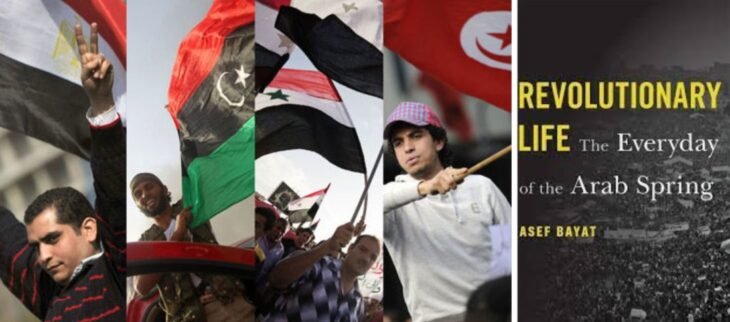
It is likely that today’s tremors — such as the preponderance of governance grievances, COVID-19, high unemployment and bleak futures — will unfurl fresh waves of protests and give birth to dynamic political movements to dislodge entrenched elites. In other words, North Africa stands at the precipice of a second Arab Spring, which the West will need to navigate exceedingly well to prevent the region succumbing to a crippling instability that poses grave risks. After all, unstable North African states can easily become breeding grounds for militant extremist groups currently active in the Sahel, or havens for malign actors sponsored by geopolitical rivals.

Thankfully, the degree of Western engagement with North Africa has been on the rise lately, mostly to counterbalance encroachments by geopolitical rivals and sustain crucial economic and historical links. However, until Western policy is fully demilitarized, less patronizing and transformed to better align with the demands of North African citizens, any engagement will not materially reduce the risks of an implosion, particularly the kind that fuels anti-Western sentiment.

The Biden administration’s multilateral strategy, which emphasizes burden-sharing and diplomatic leadership, is facilitating close coordination with Brussels, affording the US and Europe opportunities to develop sustainable, complementary North Africa strategies combining foreign assistance, investment flows, diplomatic outreach and trade.

North Africa’s strategic importance is undeniable but the still palpable economic effects of COVID-19 and the abrupt shift in foreign policy priorities due to the conflict in eastern Europe will continue to limit how the West interacts with the region in the short-to-medium term.

Over the long term, however, the tumultuous decade that followed 2011 clearly demonstrated the tragic and costly consequences of inaction despite numerous warnings of the grave threats posed by Western disinterest and self-serving, ad hoc overtures. Clearly, North Africa needs more engagement and smarter interventions, not less, as the region and its citizens look to safely navigate an unsettled global order.

Growing inflows of external aid and investments from the West do provide opportunities for the region to foster economic growth and stability, but any progress will always be short-lived if governments persist in sidelining good governance and much-needed reforms at the behest of an out-of-touch elite.

The West would be wise to pursue transformative engagements by, for instance, sticking to the conditionalities attached to their assistance and resisting the temptation to weaken them for the sake of defending narrow economic and security interests. Moving away from the focus on good governance will do no good to either side, even if it is politically expedient.

***

Hafed Al-Ghwell is a senior fellow with the Foreign Policy Institute at the John Hopkins University School of Advanced International Studies. Twitter: @HafedAlGhwell

Read More

The Risk Of Political Instability In Libya

Ahlam Abdalla

As of Wednesday, March 16th, 2022, United Nations Under-Secretary General for Political and Peacebuilding Affairs, Rosemary DiCarlo, voiced her fears that Libya may return to its previous instability. With this statement, she called for an election in Libya as soon as possible. This is an attempt to unite Libya.

This political stability began because Libya failed to hold the election that was supposed to take place on December 24th, 2021. This election was supposed to be held under the UN, precisely for their reconciliation effort. As a result, DiCarlo informed the UN Security Council that with the support of the UN initiative, they both together would cause the committees from Libya’s House of Representatives and High State Council to convene as an effort to help both parties reach an agreement on when the election should take place.

As a result, the House of Representatives named a new prime minister. Fathi Bashagha, a former interior minister, has been elected to lead an interim government in February. However, previous interim prime minister Abdul Hamid Dbeibeh refused to step down. Lawmakers in Libya claim that Dheibeh’s status as a Prime Minister expired when the election meant to take place in December of 2021 never happened.

As a result, Stephanie Williams — a UN special adviser to Libya — has asked the House of Representatives and High State Council to appoint six members for a joint committee. Both parties responded positively to this suggestion. Furthermore, Williams offered to mediate discussions between both Ddeibeh and Bashagha.

With the ongoing crisis that appears to be solved for now, DiCarlo also bought the attention of the UN council about the many human rights struggles that persist in Libya. Moreover, DiCarlo warned that there have been an increase in tensions pertaining to human rights. She brings attention to the increase of “hate speech, defamation and threats, as well as incitement to violence and acts of violence against activists, journalists and political actors, including women” the United Nations states in a news article. Furthermore, the United Nations reports that human rights activists have been detained by both state and non-state figures and that refugees continue to be thrown into detention centers.

In conclusion, Under-Secretary General DiCarlo fears instability may return to Libya since they have failed to hold an election in late December of 2021. Within Libya, both the House of Representatives and the High State Council have been in conflict with one another. The former instated a new interim Prime Minister as they argue that since the election failed to happen, the status of the previous Prime Minister — Dbeibeh — had expired. However, Ddeibeh refused to step down. As a result, the UN’s special adviser to Libya, Stephanie Williams, urged both parties to reconcile by appointing six members from each party to create a committee. Both parties agreed, and tensions seemed to have ceased for now.

With the help of DiCarlo and Williams, a crisis has been avoided for the time being. However, there are still many pressing concerns within Libya. In addition to all this, DiCarlo directs the UN’s attention to the ongoing humanitarian crisis within Libya. DiCarlo discusses that there have been violent attacks on human rights activists, women, journalists, and others. She additionally speaks on how refugees are continuing to be thrown into detention centers. Although trouble within Libya persists, luckily, those in power are beginning to draw the attention of others to help sort out these issues.

_________________

Read More

Will Libya meet Europe’s gas needs instead of Russia?

Walaa Ali

The European Union (EU) is officially going to rely heavily on Libya to diversify its energy sources, away from Russian oil and gas, while the Libyans hope that this will contribute to pushing Europe to speed up resolving the country’s crisis to secure production and export operations.  Read More

The New U.S. Plan to Stabilize Conflicts: The Case of Libya

Dr. Elie Abouaoun and Thomas M. Hill

An effort under the Global Fragility Act can build on Libyans’ demonstrated grassroots peace building.

Almost 11 years after ousting the dictatorship of Muammar Qaddafi, Libya remains a largely ungoverned land divided among warlord-led factions that fight with support from rival foreign countries. Libya’s instability resonates widely, permitting the trafficking of weapons to the Sahel and migrants to Europe. Repeated peace efforts have failed to help Libyans form a unified national government, yet Libyans continue to show the capacity to overcome communal divisions and build peace at local levels. That demonstrated capacity offers an opportunity that can be expanded by the U.S. government’s decision, under its Global Fragility Strategy, to direct a new peacebuilding effort toward Libya. Read More

Does Libya send fighters to Ukraine?

Read More